NFTs Past Present and Future with Floor's Chris Maddern
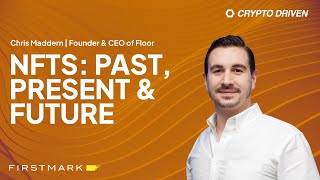
Chris Maddern, CEO of Floor, explains why NFTs work better as membership keys and software licenses than art. He describes Floor's mobile app approach to onboarding and partnerships, and identifies what could revive the market: brand activations, better liquidity tools, and improved market sentiment.
Chapters
Foreign.
Hi, Chris. Welcome to Crypto Driven. So happy to have you here today.
Hi, Lisa, thanks for having me.
Do you want to start off by introducing yourself and telling us what you're building at Floor?
Sure, yeah. Hey, I'm Chris Madden, co founder and CEO of Floor. At Floor, we're trying to build a more accessible and more understandable world of NFTs, leading with a mobile app which puts simple UX at the front to make your NFTs understandable and gradually help you explore more of the world of NFTs. And through that, hopefully make more people find the world of NFTs both as an asset class, but also as it expands into a utility and access token, a membership, help make that seem less daunting and more something that's for you and not for crypto nerds.
Absolutely, yeah. As you know, I'm a huge fan of Floor. Been a proud holder of Gen 2 and Gen 3 tokens over the past year and it's been really impressive watching you build in public and, you know, continue delivering value to your community, no matter what's happening in the market. So huge kudos to you and really happy to be chatting all things NFTs with you today.
That's amazing and thank you for your support and being with us on the journey. It was pretty wild how, you know, both in terms of growing the user base, but also in terms of like raising around pretty much everyone who's been involved in helping us. It turns out it's actually been involved for a long time and has been an early supporter, an early token holder, an early app user. I think almost all of our investors were also users of the product before they invested, which is pretty fun.
You know, apart from talking about Floor and your journey, I want to go on a little bit of a NFT journey with you. A past, present and future, if you will. So would love to start with your past. You know, when did you get into NFTs? How did you get into NFTs? And what was that aha moment for you that made you want to spend more time in this space and then eventually start a company in the space?
Yeah, I was. I was a little late and probably overcompensating because of that in many ways. So mine was kind of summer to early fall of last year and I'd heard a lot about them. I've been kind of notionally involved in crypto since 1516, more involved through the Block. When Mike left the company that we founded together to create the Block and joined as an advisor and then Later a board member. And so I've been kind of very notionally involved, kind of aware of crypto, but was slow to really research NFTs, largely because I think, like many people, was turned off by, by the culture of just very expensive pictures of monkeys, which didn't really excite me. And so I think I was a follower here in that enough smart people that I respected started taking it seriously. And so I thought I had to kind of go and figure out what's there and why to take it seriously. And so I explored a few paths. Obviously buying some NFTs was one, building something on the blockchain and creating an NFT series, which I actually never launched. But like so many NFT projects, and then, you know, gradually, eventually, I think a lot of that early stuff fell flat. I think the first half dozen NFTs I bought I was like, okay, so now what?
And then building something was kind of cool and I started to see some of the power. But I'll be honest, my imagination didn't quite pull me all the way forward myself. And I think it was the first NFT that I had that got me into a discord that actually had something on the other side that I was interested in. But it was the first time that I saw an NFT as a key, not as a picture. And I think that for me was a really interesting aha moment of oh, we're not trading pictures. This is kind of a new model for ownership and provable ownership for the Internet. And when you start applying that to use cases, it becomes incredibly powerful because when you have a standard that both can represent those things, but one non fungible is liquid. And because there are standards can be traded on marketplaces and can be, can have kind of free royalty streams because they're built on top of programmable money. I think that was where I started getting really, really interested. And that was when I stumbled into the problem that ultimately became Floor, which is it is punishingly difficult to understand not just which NFTs to go buy, but even if you just buy a few, like how they're doing. And that was the problem statement that led me to going down the path that led to what is Floor today.
The year you joined the space 2020 year was by far the biggest year for NFTs ever. You know, we saw, you mentioned some of this, but we saw trading volumes explode. There were new collections launching. It felt like every day.
Dozens a day.
Dozens a day, exactly. I guess from your vantage point, what do you think was causing, obviously there's some speculation. But what do you think was causing that boom? You know, what were some of the exciting things that were fueling the demand for NFTs during that time?
Well, while I love the idea that it wasn't pure speculation, and I love the idea that we'll have an NFT market that isn't pure speculation in the future, I truly believe the unfortunate honest underlying truth is a mixture of speculation and meme culture. And I think just in crypto in general today there's real product market fit for so few things. And in fungible tokens we have product market fit for custodian based speculation on premium tokens. And then in NFTs we have this kind of slightly more meme driven. But speculation on pictures of animals doing things is essentially where we're at. I think things like proof starting to emerge, things like cpg, things like Floor. I think we were probably one of the first examples of a real meaningful kind of software licensing utility almost for an nft, which I think is really interesting, like use the product, the token value actually goes up. So you make money by using the product, but also have to jump in and support it. I think that's been a really cool thing to see happen. But I think what was fueling like 90% of why people were joining the space in 2021 and why they therefore needed the Floor app. So we're only one degree removed away from this because we're very much a product about a product in terms of NFTs was a mixture of kind of meme and speculation.
I guess during that age of memes and speculation, what was it like to be building really an ecosystem company where you had to partner with projects and collections and find those quality communities amid a bunch of less high quality ones. How did you sift through that?
Yeah, and I don't want to make a values judgment about every other project that's not on the same mission that we're on. I think there's a lot of like good people doing fun things that they're enjoying and you know, they're learning about the blockchain and you know, making some money. And there's nothing wrong with that. There's definitely people who are actively scamming people and rugging and you know, obviously that's bad. I think, you know, a few things. One, I think we've had to be very clear about what Floor is and isn't in that, you know, a lot of people, particularly like when you do have days that people get really excited, like when we announce the Fundraise the market got really excited. We had a token of gen generation of tokens that still hadn't minted out. It minted out very quickly. It got to the top of icy tools. People started buying them speculatively. Like that's actually a worst case for us. We don't want people to be buying floor tokens for pure short term speculation. It'll probably be a poor short term speculative asset. I think it could be a strong long term speculative asset. But you know, that's not our focus. And I think people who buy it with that in mind, you know, have the worst experience of anyone who joins the community. And so for us it's just like trying to be really clear about what we are and aren't. We're here to build and build something that's valuable and we think that the way that the market works, you'll likely have a great chance to come along with us in that journey by being a holder. But you know, token price isn't one of our primary kind of motivators as a business.
And then, you know, being careful and your values aligned in who you choose to work with. And you know, we put some guidelines in place so we don't work with undocs founders and you know, we made that rule. You don't have to be publicly doxxed, but if you're not, you'll dox yourself to us. We have a formal process for that. We'll essentially do like a KYC verification. Like if we're going to bring your product to our community, we want kind of serious protections to understand that we know who you are and that you know, you're as the consequences are as real to you as they are to us and to our holders. Because there's this whole like I don't think that pseudonymity is necessarily a bad thing, particularly as time goes on and people can build on chain reputation. And I think there'll be entire businesses around on chain reputation. They'll be super cool. I think that anonymity is purely a bad thing because I think that it separates accountability from actions. And humans are not very good at operating in environments where accountability and actions are completely separated. And so I think there'll come a time where it might be safe to deal with pseudonyms even without doxxing. I don't think we're quite there yet. I don't think we have the tools to understand it. But in the meantime we work with doxxed folks and then we try and do in everything thinking about our partnerships as a product Just do less and do the right things. We're never trying to be the loudest or the fastest to move on any particular trend, but we like to think that when we do it, we'll do it well and thoughtfully and in a way that's good for our partners, but also good for our holders and good for the long term trend trajectory of Floor as a product and a business and a community.
And I think just speaking as a community member, you guys have done a great job of, as you said, being very thoughtful and deliberate, but also being really transparent about processes, future launches, what the community has asked for, why you chose a particular partner, and I think that goes a long way.
That's really kind. Thank Goaj. That's awesome. And yeah, you're definitely seeing it as it is. It's, I think not only to you, I think to both us and to probably many of the people involved in the project, it wasn't always 100% clear exactly how things were going to land and were there full time jobs, could we go and build something that was. And it was really actually the community that made it happen by sticking around and growing itself and showing us that there was something there. When you have thousands of users using a product that even on the slowest of NFT days all come back and check the app 10 times a day and are telling their friends about it, that's the kind of lightning in a bottle that you don't get very often. And so it just became obvious that we had to lean in.
Absolutely. Maybe just last question. On this crazy year that we all went through, what do you think we accomplished in the space as a whole? And maybe there's like a floor version of what you guys learned and obviously accomplished a bunch. But.
What advancement do you think the NFT space made while all of this crazy adoption and speculation was happening?
Yeah, I think there's been a few things that emerged that are really interesting. One, I think that utility is starting to be defined a little bit more and I think as a space we've started to reject some of the dumber ideas of utility, like Merch is not utility. And I think that utility tokens have separated slightly out from just utility attached to kind of PFP style things. So like the existence of things like Proof and CPG and.
Prism and other people following a simple. A similar model of tokens that really just exist to drive access to things I think is a really, really, really interesting trend. And it's kind of becoming a new category of tokens. As you think about the Long, long term, ultimately, what we now call NFTs will remember as describing everything that now exists that's powered by the Internet, as the Internet, and are going to become a number of different domains that have their own names and their own concepts and metaphors and abstractions. And I think we're starting to see those first separations. And so you're starting to see, yeah, okay, it's not just art. There's also this subset of, you know, membership tokens, like the FWBS and the proofs. And then there's these other things that are like actually like software application keys, like the prisms and the floors. And I think we'll see those start to evolve more independently. And so I think we're seeing the first seeds of turning a thing that was homogenous, which is NFTs, into multiple different things that will fork out of it. And I think many of them will actually solve user problems and have user opportunity. And I think another one that branched out is Stepn, which showed us it can be fun to play with NFTs. And I think that that's a really powerful, like products do one of two things. They solve a user problem or they move a user closer to being an aspirational version of themselves. And I think games and fitness and putting that together, like definitely for one of the first times showed something that I'd called a product and a game on top of NFTs, which I think is really cool. And I hope to see more of that in 2022 and 2023, kind of where, yes, NFT is power it because it's a really powerful digital construct that has all these programmable money concepts and like provable digital ownership and standards compliance and interoperability with other things. But the way that you know, is because you get the benefit of those, you don't care that it's an nft. You care because you want to do the thing it lets you do. I think there's some places in Defi, again, like a whole different branch of NFTs that like won't even use the same words in time of like representing defi positions with NFTs that are like now tradable and liquid in themselves and can kind of like move ownership of a yield position. Super interesting. Like that is such an interesting financial instrument. It's a totally different thing from a tradable piece of art to a software license. And those things are going to fork out. And I think that the big win that we got from it is starting to see those things separating A little bit. I think we acknowledged our trust and safety problem as an industry for the first time. I think, you know, all crypto things start from the viewpoint of the kind of technical elite, which is this idea that somehow you should know better and that if you get hacked it's your own fault and you should manage your keys better and all of that stuff. I think we realize that that's not how 100 million people or a billion people, like 5 billion people are going to use crypto. It's just not feasible. And so I think there's a lot of people working on really interesting solutions to that problem. They're key to adoption. I don't know what we're going to do there for Floor. I think we take a very partner first viewpoint to a lot of the harder problems, but there's lots of places that people just aren't doing a good enough job today for us to bring to market the quality of experience that we want. And we're going to pick one or two of those places and we're going to build there. And that's one that we have, particularly with Christine on board and with some of my past experience, the depth of understanding about how that space operates to potentially make that one. And I think thinking about how on chain and custodial kind of work together is a really, really interesting problem space that needs to be solved to onboard, you know, even, even 50 to 100 million users, let alone billions, as we.
Are now in somewhat of a bear market in terms of just overall volumes, floor prices, that kind of thing, you know, in line with the broader crypto market. What do you, what have you seen change in the NFT community? And I guess, you know, how do you, how do you, or how do you not change that strategy at Floor in terms of how you're building your community and your user base?
Yeah, like we talked about this a little bit, just because I think it would be undiligent not to. But the truth is, and it's almost unfortunate to say, I think we're in the best possible position in that our user base is actually still active. We didn't really lose any engagement inside of kind of our core community. We just raised a pretty large round of funding that was designed to give us 24 plus months and designed to weather a bare market if that was what we had to do. And so now my belief and our belief in NFTs as a key kind of principle of the future of the Internet is completely unchanged. And so now we get two years to go and build in what we believe while the rest of the world is being convinced at a less fast pace that has impacts on short term growth. But in terms of thinking about the five to ten year plan, this is the time to go and build and really focus on thinking about what we think the people are going to need at the end of that, whether it's six months, year, 18 months, two years to build what we think is going to be really compelling.
You lose some of the dopamine, the fun of being at the center of an industry that people are really excited about. I also personally buy and sell NFTs. It's always better when numbers are going up and to the right and down to the right. But it is what it is.
I think there's kind of two views. There's inside of our community and outside inside. I definitely think people have gone a little quieter, but the vibes have stayed very, very positive. And I think a community is defined not by how they interact with you or you with them, but how they interact with each other. And I think that to a large extent, Floor has become a home for a pretty decent number of the people who hang out there. It doesn't even really matter if NFTs are up or down. Like they're still going to go hang out with their NFT and crypto curious friends in the discord crypto. Twitter's definitely gotten a little quieter, a little bit sadder, a little bit more resentful in places you get less replies to your GMs, so there's a little bit less of that daily dopamine hit, but it'll be back.
It hasn't materially changed anything for us from a strategy standpoint.
Yeah. And I think it's a testament to again, the quality of the community built, how deliberately you grew the community that you haven't seen really any change in usage. I think that's the most that you could hope for. Right. And gives you a lot of testing ground in this bear market to continue to experiment and launch and all that stuff.
Yeah, wildly. We didn't really know how it was going to go. We just launched the App Pass last week and we've onboarded thousands of new users during the bear market, which is. Yeah, honestly, I did not know how many people were going to be looking for new NFT stuff right now. But there really is a core community of, I think it's a few tens of thousands, if I had to guess, who are either through weight of bags or just belief in industry are here for the long haul. And so I think that the biggest place it maybe has changed strategy a little bit is we know that we want to build for.
Regular people who see opportunity both in terms of potentially NFTs as an asset class, but also NFTs as all of the other great things we know they're going to become increasingly. And the community that's here today that we can actually get access to is much more of a power user community. And so we've constantly played this line with, yeah, we have to build for the audience that's here today. We have like, we can't go and build a product for which there is not a user. We have to build a product for which there is a user today with a mind to making sure that we stay in a position where we're constantly also confident we're building in direction that gives us the ability to serve those new people as they come in. And when the time's right, we'll be there to put the bridge down. Um, and so I think as long as we're in a bear market, we should assume that we're going to get majority like insider users versus kind of outsider users. And that definitely has some strategy impacts. But even inside of the world, you know, we're trying to build for the casual and curious user, not like the degen. We're not building like Icy Tools intentionally.
Makes a ton of sense. I know. Along with the app passes last week you also announced a bunch of new discovery features, some that have launched, some that are coming very soon. So can you talk a little bit about that and how that ties into the vision for Floor?
Yeah, so we launched first version of Discover, which is Floor, up till now has just been about your NFTs, it's been about what's in your wallet, what's happening with them. And Discover is the first time we're stepping out of that. And I think about it as kind of concentric circles in understanding the world of NFTs. At the center, you have kind of the simplest, which is, okay, you got some stuff in your wallet, help you understand that how much is it worth, what's happening to it? Like, how do you go join the discord for those projects if you want to? Like, can you see pictures of your assets, like all of that stuff and then going out from there, it's helping you discover your next assets. So helping you understand what else is out there, what you might like, what people who own the things that you own also own kind of simple discovery algorithms like that. And so Discover is our first step into helping you find your next favorite nft. We have lots of interesting things coming around and I think these start to dovetail with bringing new users on. So like imagine. Okay, cool. Welcome. Let's answer a few questions and find you some candidates for your first PFP collection. So which of these things interests you? What price range are you looking in? Great. Here's five collections that make great beginner PFPs that you can go start browsing around and find something that represents you and that you want to have as your first pfp. I can imagine discovery features like that being really, really great for onboarding new folks and then just slightly more when you think about.
Products that give users more flexibility. Today we're a very opinionated product that has very few options for users to either creatively express themselves, to curate themselves, or to like just go and discover things themselves. So a few things coming down the road, like generalized search, something that we want to make sure we get right watched, allows you to then watch those collections and build kind of a curation of things that you want to keep around with you. But then there's a lot of other, you know, we have this community today in the discord and we have this kind of portfolio tracker app and today the social doesn't really meet the app very much. Increasingly we're going to bring more of that kind of interactivity and tools for creative expression around NFTs into the app so that users can do that. There don't have too much more to share on that bit right now, but that's the, that's the goal for 2022.
That's really exciting. I've been, I was really excited about the Wash feature because that's one that I'm, I'm constantly just opening a bunch of OpenSea tabs in my Safari and trying to watch them and this, this is going to make my life so much easier. And maybe a far off question, but you know, you talked about some of the interesting emerging utility, future utility. So as you see NFTs specializing verticalizing in terms of use case, does floor cover the whole range of NFTs or does that continue to be more of the like art focus or community focus set? Have you thought about that?
I'm sure you have, yeah, at length. It's actually a really interesting, it's a really interesting question largely because in some ways the thesis that this world verticalizes and we see like the idea that the word NFT essentially becomes a misnomer and is no longer used to kind of describe this bucket of things.
Yep.
And then on the flip side, building an NFT kind of aggregator and tracker almost seem at conflict with one another. And, and so I think really the question is just what's the product and on what time horizon? And so I think in the next two to three years, those, I think NFT sticks with us. And I think that we see a verticalization of marketplaces. And I actually think that fragmentation of liquidity inside of those marketplaces creates a real opportunity for aggregation, both of discovery, of seeing yourself in one place, and of aggregating liquidity. And I think aggregating liquidity is where a lot of the revenue opportunity sits inside of this space. Because like, as we've seen with everyone who's tried to create a marketplace, NFTs do not lend themselves to competitive marketplaces. Well, because liquidity is not fungible. Liquidity is like literally non fungible, which makes it really, really hard to stand up a marketplace because you have to source 100% of the liquidity and like one for one. And so if you can capture audience and attention, then all of a sudden imagine a world where someone lists an asset on OpenSea through the floor app, but we also list it in our own Seaport clone that creates its own shared order book for floor users and we don't charge a fee on that. So you can imagine either pooling through open contracts, which I think some increasingly, particularly non eth, all liquidity is on chain in Solana, for example, which is such a cool Solanaism that I don't think we'll ever get to on eth.
So I think in the near term, and call it the three, maybe even five year term, aggregating all of that stuff into one place becomes really, really valuable. I think in the 10 to 15 year term that probably if you think about any industry, you bundle and you unbundle and you bundle and you unbundle. I think then you end up having to almost disrupt yourself as we unbundle NFTs into these kind of like in individual verticals. That for me right now is a little bit of a black box that is there and sat in my head. But I try not to worry about too much because honestly, I think goal number one is just make sure that we build something that's sufficiently useful that in this three to five year period we can demand the attention by serving users, by making sure that this is the most convenient place to start and to discover and to kind of use as your launch pad into this whole world of NFTs.
And then we'll figure out how and whether and why to unbundle from there.
Yeah, absolutely. Well, super exciting. Clearly you're thinking super, super long term, but also super, super.
So really excited to see what you guys continue to launch and obviously we'll continue being a proud member of the community.
And on that note, thank you for being a token holder and thank you for the awesome questions. I saw you thinking about that question and I was like, oh, she's going to ask a really good but really hard question. But I love it.
Awesome. Well, on that note, I want to move into a bit of a rapid fire lightning round. So what's your biggest NFT miss and your biggest win to date?
Wow. Right now I bought a Moonbird at 42. That doesn't feel awesome right now, but I think in the long term that'll probably feel better.
Yeah, that's a hold.
My biggest win by far was Creeps. So we exclusively launched Creeps.
Probably me too. Thanks to you.
Creeps was such a big win for so many people.
Next one. Does Discord win or a different platform for Web3 communication?
I think Discord will be around for a bit. My guess is some other people will make other products. I just don't know that it's really a problem long term that exists. Like when we have a million users, I don't expect even 50,000 of them to want to be in a chat room with us. And that's just not what real humans. That's not the relationship most real humans have with the products they use.
Yep.
Back to NFTs. What do you think is the most undervalued or under the radar NFT that you believe in?
So hot dogs I think are definitely right up there. It's a favorite in the floor Discord. I think they're like 007 ETH or something right now and they're just really cute and funny and people love them.
I think things like Crypto Coven right now feel incredibly underpriced. I'm definitely thinking about just going taking a big position there. Robotos, like the team behind Robotos are incredible humans that are building.
The art's awesome. They have a deal with time, they're working on stuff. I think they're at like 0.2 something. I think chainrunners will actually long term play. They have a really strong dedicated community and if you think about provenance, Chain Runners was for whatever reason, basically the moment that every VC realized that NFTs existed. And so that's, I think an interesting moment.
Last question. As we look into the near future. What do you think brings NFT out of the bear market?
I think something with crypto markets to never forget is we can just decide to not be in a bear market. There is no fundamental pricing mechanic and so.
It really just takes us deciding because that, you know what, we're done with the bear market, let's all just buy stuff again. So I think it's possible it's just a completely irrational. We just decide we're bored of NFTs not being worth money and change that.
Outside of that.
I think it's possible that we see the first interesting kind of brand activation of NFTs. There's a lot of people working on stuff like I'm aware of at least a couple dozen projects that, you know, could have meaningful traction. Coinbase fell flat on their face, but I don't think we should count them out. I think Coinbase just has this incredible pool of like built in users and then there's kind of this other movement right now which is around kind of generalized NFT liquidity and automated market making. And I definitely think there could be a DeFi for NFTs wave that could definitely pull us out of where we're at right now.
Well, awesome. This was so enlightening, interesting and fun. Thank you so much for the conversation, Chris, and for spending the time with me.
Thank you for having me. This was super fun. Thanks.
More from Chris

Ship or Die Accelerate 2025: Why Everyone Should Refocus on Mobile (Chris Maddern, Johann Kerbrat)
Breakpoint 2024: Product Keynote: Rally: Your Social Wallet (Chris Maddern, Christine Hall)
Digitized | Spotlight Ep. 1: Floor - The NFT Everything App w/ Chris Maddern and Christine Hall
How We Can Build Products that are Designed for the Next Billion Users - Talk at NFT.NYC 2022