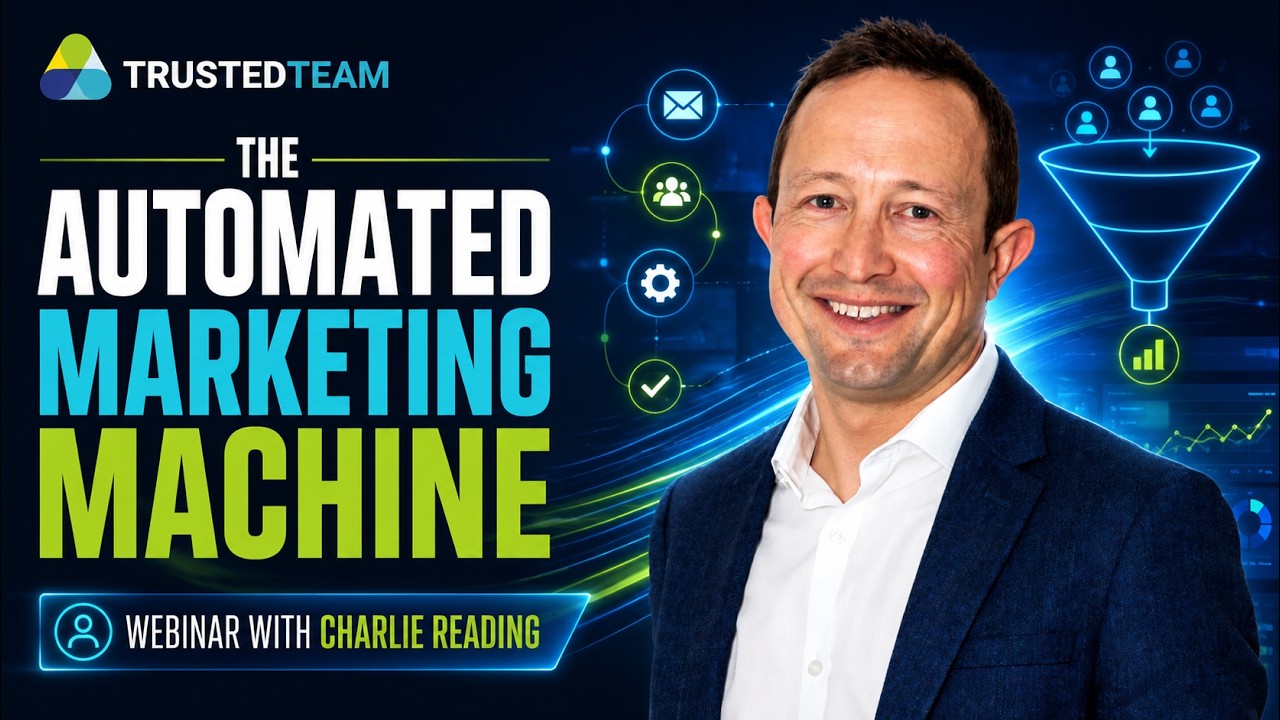
Produce, Publish and Promote a Book Free Webinar

This content was created by Charlie Reading. This content was uploaded by Charlie Reading. This is a YouTube webinar titled "Produce, Publish and Promote a Book Free Webinar" (uploaded 2026-08-04). The content appears to be a presentation-style webinar aimed at authors or self-publishers covering how to produce, publish, and promote a book. No speakers or dialogue are provided in the excerpt/metadata, though the video likely features a host/presenter and attendees.
Chapters
It looks like we've got most of the people I was expecting, but not all. So we'll give it one more minute and then we will get going. Because this, honestly, there has never been a better time to become a published author. Genuinely, this is such an exciting time for this sort of opportunity, I think. And so if you decided that 2026 was the year you were going to become a published author, It is the time. It is the best time to produce a book that there has ever been, and it is going to be— I'm going to show you how. I have never done this workshop in this format before. I've done webinars a couple of years ago about how to produce a book, but this is much more detailed, much more how-to, and I reckon that you can do this in a tiny fraction of the time that it has taken me to write books, and I reckon if you wanted to, you could do it in 3 months, and that's hence the title. So I— but I warn you, I've never delivered this workshop in this way before, so I've got quite a lot to say on this topic. It may or may not take as long as 2 hours. I might have wrapped up in an hour and a half and have time for questions, But we'll see how it goes because I just want to give you as much value as possible while we're doing this. So without further ado, let's get going on how you can produce, publish, and promote a book in just 3 months. Because it is now possible and you don't have to listen to me. I'll give you examples of where that's happened. But why? Why would you want to write a book? Why would you go to the hassle, even if it does take 3 months? Why is it worth bothering? Well, you know, maybe at the moment you're not finding as many of your ideal clients as you would like, and perhaps you're actually having to go out and find those clients by networking or by kind of making videos all over YouTube and Facebook, or maybe you're having to kind of just work really hard to find those clients. And when they come to you Perhaps they don't actually see the value that you truly create and why you're better than your competitors. So maybe you end up then getting your fees haggled down because they don't really see the true value that you're going to deliver them. And perhaps, as well, you're battling under so many other tasks. Maybe you've started a book. Maybe you've wanted to write a book for years, but you're like, oh my God, this is just going to take me forever. It's too big. A challenge to do, it's never gonna get out there. And perhaps also what you're finding is that in your work, particularly if you run your own business, and I appreciate not everybody here might do, but I think most of the, well, the names that I know on the list run their own business. Perhaps at the moment, the more you run your business, the more you find that the love is draining out of it because getting bogged down by doing more and more of the admin and compliance and regulatory and management type stuff and less and less time spent doing the one or two things that you genuinely love and the reason that you actually got into doing whatever it is that you do. And really, so unfortunately, this is the struggle that I see so many entrepreneurs having, struggling to find enough clients. They're kind of buried under a mountain of work, and they actually start falling out of love with their business. Well, imagine a time where you're generating a constant flow of your ideal clients, that people are just knocking on your door to work with you, and that when they meet you, they only want to work with you. They see the value you're going to create, they're willing to pay the fees that you want to charge, and they're just desperate to work with you because they see you as the expert of your field. And imagine a time So that means that your business is growing fantastically well, but also imagine a time where you don't actually have to work anything like as hard as you are at the moment, so that you can enjoy the other things outside of work, whether that's running the length of the Pennine Way, or whether that's going out cycling with your family, or whether it's keeping yourself fit and healthy, whether it's spending time with those people you care about, all of that sort of stuff, because actually that, of course, we all know that is just as important, actually even more important than the work that we do. And then imagine when you go to work, it's more fun than fun. When you're at— you only work as many hours as you want, but when you do, you absolutely love doing what you do. Well, that's the opportunity that a book can present to you. And over the course of, um, this morning, I'll try and explain why and how. Um, but because the, the problem that I see— and I've built and sold 3 businesses, I've built another 3 businesses since those— and what I've seen seen is this pattern that we seem to go through. And most businesses are restricted, their growth is bottlenecked and restricted by the founder. Everything, all the new business has to come through the founder, and therefore that is the biggest restriction. And it's only when they start to build out an automated marketing machine that they can push past that and they can build an exponential growth business. Because now growth starts to happen whether they're there or not. Now what happens then is that most become really time poor and they kind of suddenly get super busy with— they kind of crack the client marketing machine nut and they become really busy and their work-life balance falls to bits. And then a few do go off and learn or get coached on how to build a balanced business life, and those are the ones that then can push forward. But, but still a lot of those businesses are restricted. Still, they still need to be managed by the founder. And actually, it's when you truly kind of step aside and you build a self-driving business, that's where you have the most saleable or scalable business possible. Um, and so this is why it's so important, because to get— we've, we've got to get to this exponential growth business where it's actually growing with us. And a book is a brilliant tool to do that with. And of course, what we often find ourselves doing is that we end up dealing with the wrong clients. We don't— we, you know, particularly when we start a business, we end up attracting the wrong people, which means we become a busy fool. We end up servicing people that don't really— can't really afford to pay us what we need to for the living that we, we, we desire, but also when we're not working with those people that are really ideally suited to us, we end up— it actually takes us more time rather than less. So we become this busy fool as opposed to the focused achiever. And finally, if we're looking— what we're trying to do in business is we're trying to stand out. And so any opportunity to stand out and look different is an amazing opportunity to drive our business forward. And of course, a book is one of the ways that we can do that. I built this video actually in AI. I'm going to talk a lot about AI, but I built this one in AI to help you, to help us stand out. So I'll just show it to you. Oh, this is the one without sound. I don't know where my sound has gone. It's supposed to say, are you trying to stand out from the crowd? Did you spot the woman in the red dress? If you've seen The Matrix, you'll know. Anyway, no more videos, but clearly the sound's not working for some reason. Um, okay, so why is a book the best way to stand out? Well, let me tell you a quick story. We had a really wealthy couple come into my financial planning business a few years ago. Great clients, like ideal clients, perfect clients, really wealthy, needed what we'd got to give. Unfortunately, he was super busy, I was super busy, and we just could not find a time that would work for both of us. Now, this was probably 10, 12 years ago, and at the time I had one junior advisor that worked for me. Um, and so because— just because we couldn't get the diaries to align, I, um, said, look, Tom's gonna have— normally I would look after you coming into this business, but we just can't make that work, so I'm going to get Tom to, to look after you, um, and walk you through our financial planning process. And he was like, "Yeah, okay, that's fine." But I said, "What I'll do is I'll pop in during the meeting because I'll be in the office that day. I'll just pop in for 10 minutes, introduce myself, and then I will, you know, I'll have to leave again." And when I did, this weird thing happened because, you see, I felt really guilty that I could only give him 10 minutes, but he was massively grateful that I even popped in for the 10 minutes. And he repeatedly said so. And I did so the second time he was in the office, and he was like so grateful. And it got me scratching my head. I was like, why has this happened? Why am I feeling so guilty about this? And yet he's super grateful from just getting 10 minutes of my time. Actually, it would have been about 13 years ago, actually. It was about 2 years after I published my first book. And when I thought about this, I thought, well, actually, what's going on here is that my book has positioned me as the expert. And I've gone from being guilty about not seeing him and not doing his financial planning and only giving him 10 minutes. But because he now sees me as the expert on this field, he's chuffed to bits just to get 10 minutes. And he's more than happy to follow the advice of one of my team that's following my process., and it was kind of a light bulb moment as to this book has transformed the way that people see me in this business. And it's actually something that we, within the Trusted Team, we coach the people on a concept called the Expert Lead Accelerator. Some of you all know that name. Some of you on this call have been through that, some not yet, because it's so powerful. When you position yourself as the expert, it can put you so far ahead of everybody else that people are knocking down your door to work with you. And there's never been a better time to do this. You know, we live in this incredible opportunity, this incredible time where AI is speeding up everything. And so there's never been a better time to do this. Um, you know, my— that Dream Retirement book took me 3 months— sorry, 3 years to write it. But with AI, it doesn't have to take you a fraction of the time. And the reason this is so brilliant and AI is such a game changer on this is because if you read Sapiens by Yuval Noah Harari, and he's more recently written a book about AI called Nexus, which is also equally good. But if you look at— if you read Sapiens, which is basically the brief history of humankind, the single biggest reason why Homo sapiens out-evolved the Neanderthals and became the dominant species on Earth was one reason and one reason only: our ability to have conversation. And AI is now the first time we have alien intelligence, as Yuval Noah Harari would term it, or artificial intelligence that can also converse and speak. And actually, if you've— if you read up on the subject, it's starting to speak to itself in its own language that we don't even understand. So It's the first time we have another species that can converse, and so therefore that can massively help us deliver this sort of content. It also allows us to speed things up. So I'm a big Ironman athlete, as most of you or some of you on the call know, and in an Ironman I have to swim 2.4 miles, cycle 112 miles, and then run 26.2 miles. In theory, I could run the 112 miles, um, and not use the bike. It would be— I would be able to do that, um, in the Ironman and still qualify. The reason I don't do that is because it would take me exponentially longer. Like, I just tried to run 100 miles, uh, and I got 58 miles in and my knee gave way after 17 hours. So The bike allows me to do that 112 miles in about 5 hours, 5 hours, 20 minutes, 5 and a half hours, something like that, depending on the course. So the bike gets me to my destination so much quicker. And that is what AI can do for us when it comes to writing a book. And then there's this sort of final concept as to why I think this is such a brilliant time to do this is AI is the opportunity to automate the repetitive. But what I'm not suggesting, you know, you're probably not going to lose your job to AI anytime soon. You will lose your job to somebody using AI. Because what that empowers them to do is to automate the repetitive and humanize the exceptional. And so AI is a way to speed up all of the mundane repetitive things that took us lots of time and now to allow us to do the human elements of our business so much better. And part of that is sharing knowledge and then And part of that is engaging with people. And this is why now is the best time ever to write a book and the easiest time ever to write a book. So that's kind of why I think this is such a powerful concept. But you may be asking, because there's a few people on here that don't, you know, I don't know that I've ever spoken to before. I don't recognize the names anyway. So you may be asking, who is Charlie Reading? Why on earth would I listen to him on this subject? Well, like I said, I've built 3 businesses and sold them. But my main business within the 3 that I've sold was a financial planning business called Efficient Portfolio. Um, I built it, I set it up to deliver the best financial planning we possibly could. So we went off and embraced cash flow forecasting and all that kind of stuff right from an early age. But initially it was just me, and then it was me plus 1 assistant, and it was a massive struggle. I was drowning in work and I was experiencing all the problems I described earlier. So what I did was I went out and found the best coaches in the world to help me on my journey. And as part of that journey, I, I realized that we needed to help our clients at a much deeper level. And so in 2015, um, I, I know I already gave you the, the spoiler on this. In 2015, I had a book published called, um, The Dream Retirement: How to, uh, Protect You, or How to Secure Your Money and Retire Happy. Um, and that book led on to a bit of a roller coaster of success for us as a business. So we ended up becoming an award-winning financial planning practice, winning Best Financial Planning Practice in the Midlands. But that book led on to a real roller coaster of success for positioning me as an expert. So I started getting featured on LBC Radio, cover of industry magazines, mainstream newspapers, TV. I spoke— I was asked to speak on stages literally all around the world. So Miami, Nashville, Singapore, lots of stages in the UK. And because the book got me there, by being a published author on this, on a subject, I became the expert. And though, and that book was what got me into those opportunities. What's interesting though is when I want to position myself as the expert, when I share that I was on TV, on LBC radio, on staged all around the globe. That also positions me as the expert. And so the book helps get you on, on, gets third-party endorsement. Third-party endorsement takes it to an even greater level. That is why it's such a great opportunity. And, and just to kind of finish that speaking piece off, I've been following the artificial intelligence, AIP, kind of development for quite a long time. And actually, this, this talk here which I did to 11,000 financial advisors in Miami in 2019, was actually about how artificial intelligence was going to completely transform and be a huge threat and opportunity to financial advice. So something I've been following for quite a long time, um, and that's why I think now I can help you see, A, how to write a book, but how to use AI to do it really quickly. So I've since sold Efficient Portfolio and those other businesses, um, uh, but like I said, I've set up 3 since, but the main one I, um, work in and the one that I'm here to sort of talk about today is a business called The Trusted Team, which is a business that helps professional service, uh, business owners build a saleable and scalable business whilst working less and enjoying more. So like I said, that's called The Trusted Team. It's a coaching business. And so now I've actually— before I sold Efficient Portfolio, I wrote 4 books on financial planning. But also just recently, and this is why I've kind of been able to master the AI piece, I just recently had my 5th book published, The Business of Endurance. And this book we did in a tiny fraction of the time. I can't say it was done in 3 months. I'd be lying if I did. But that's only because I picked it up, put it down, picked it up, put it down. And I was also tying it in with interviewing specific people on my podcast of the same name. But it took me a fraction of the time. And I'll give you an example. I wrote 3 chapters in an afternoon. Now, historically, if I'd written 1 whole chapter in an afternoon, that would have been a massive achievement. So at least 3 times quicker than I ever wrote any of my previous books. But this hasn't just worked for me. So one of the guys I've coached in the Trusted Team, a guy called Bhavesh, he did produce, publish, and start promoting his book, The Wealth Framework. You might be able to see where he took his inspiration for the COVID from, in 3 months. And that is going to be a game changer for his business over time. It really, it really is. And, you know, so that's going to massively position him as the expert in front of his ideal clients, and it will allow him to grow his business much faster than he would have done previously and in less time. So before we dive in, I just want to share with you a couple of concepts around AI that I think are important to bear in mind, because in terms of using it to help you to produce this book, it's going to be a significant— like, there's significant lessons here that we can use. The first is what I call the MAP model, and it stands for Mentor, Assistant, Critic. And really, it's— this is a principle that we can use with AI that doesn't just apply to book writing, it's anything, but it applies really well to book writing, and I'll use book writing as the example. So, ment— basically, what you, what you want to do with the MAP model is think about these are the 3 ways that AI can help me achieve something. The first thing is, the first way is to mentor me. So I don't know how AI can help me write a book. So, well, I can, how can AI help me with that? I can ask it. So, hey ChatGPT, how can you help me write a book? It already knows a fair bit about you and it will mentor you in helping you write that book. It'll tell you the specific things it can do for you to make that book easier. The next step is to then use it as your assistant. Now help me on those things. So, for example, write, help me write a chapter on the dream retirement, and it will help you write that chapter. And then finally, use it to critique its work and your work. Act as a New York Times editor and review this chapter and tell me 5 ways we could make it better, 5 ways we could make it more impactful, you know, whatever you want to do. So it will tell you how it can help you, it'll then help you, and then it'll make the help it's given you even better as a critic. And so that's one principle you want to use in, in AI, particularly when you're doing something like a book. The second principle is the For a book, you could go to ChatGPT and you could tell it to write your book. And it'll do the whole thing. You could have low input on it pretty much at all. And it will do the whole thing. And are you going to feel satisfied with that? Is it going to really be your book? No. It's going to be ChatGPT's book, isn't it? It's not going to have your real essence. It's not really going to sound like you. It's not really going to be your book. So one thing that I would, one principle that I would stick to when it comes to using AI is best described by how I use my Tesla. So I've been driving Teslas since 2017, and in the Teslas they have autopilot feature. Now, I, as I said to you right at the start, I've just moved to Cornwall, but until recently we had a house in Rutland and a house in Cornwall. Well, we still have both actually. We're just now gonna have to do it the other way around. So we lived in Rutland and we were coming down to Cornwall regularly, which was a 5.5-hour drive, charging aside. So what I would do is I'd jump in the Tesla, and Rutland's got some pretty funky country roads, so I would drive the funky country roads, get onto the motorway, stick on autopilot, and pretty much Tesla would drive me almost all the way to Cornwall. And then, at the point at which you turn off the A30 to go to St. Agnes and you return to some pretty funky Cornish roads this time, I take over and I do the last bit. And that's really the way that we want to think about using AI. We want to set it up for huge success by starting it on the right path. We then want to use the technology to deliver 80% of the time, 80% of the content, 80% of whatever it is you're doing with it. And then you want to add your human and personal touch on the end as well to make it truly yours and even better. Now, a lot of people are coming into AI going, "Oh, I tried to get it to do this thing and it didn't do it. It did a rubbish job." Well, okay, did you spend the 10% at the start really setting it up for success? And did you spend the 10% at the end really fine-tuning it and making it truly yours? Because if you didn't, you can't expect it to do it. It's no different if you gave this to an employee. Was it— take on a brand new employee and you go, right, I want you to be a financial advisor, off you go. How good a job do you think they would be? They wouldn't. But if you gave them a whole load of training and then you also gave them some feedback after they'd done a piece of the work, you've got a much better chance of getting good results. And that's how we need to approach using AI, the 10-80-10 rule. And then a final just piece of housekeeping really. I predominantly, in terms of which AI are we talking about here, I predominantly use ChatGPT. I think it does the best job for most things. So we obviously all find that we're using Gemini now when we go to Google. Copilot sits in our Microsoft suite and does a pretty average job when you try to engage it, sometimes better than others. You could use Claude. I know Charlotte, who works for me, that's on this call, she tends to have a bias towards using Claude, but that's because she's kind of grown up using it in the AI age, grown up using Claude more and building her automations within that. I've done it within ChatGPT. If I'm honest, Gemini, Claude, ChatGPT, they're all kind of much of a muchness. So I think just use whichever one you've already kind of built all of your experience into. Some of the examples I'm going to use today are more ChatGPT focused just because that's what I use. But nowadays they're kind of all keeping up with each other, probably Copilot aside. Every time I try and use that, I'm disappointed with it. Okay, so how do we produce a book and how do we do it quickly? Because when I first wanted to write Dream Retirement, I had no clue what I— actually, when I first set a goal to write a book, I didn't even know the subject, let alone the title or how to write it or anything. I just wrote on my 3-year goals to have a published book 3 years from now. I did that in September 2012. And I had no clue as to what that meant. But what I knew I had to do is in that first year, I need to have a subject, a working title, and to have started. That's all I had to do in the first year. Took me 12 months to do it as well. But what has happened by setting that goal is that I have programmed my subconscious. One of the reasons why I talk a lot about goal setting, what I was doing is I was programming my subconscious as to what to look out for. And gradually over time it worked it out even though it wasn't at the front of my attention. So we're trying to go from A) creating a concept, because some of you will have the concept, the topic that you want to write about. Some of you might not even have that, and we want to get you through that and to first draft as quickly as possible. Well, to kind of explain how we can do this better now than ever before, I want to tell you the story of AlphaGo, and a few of you on this call I know will have heard me tell this story before, before, um, but AlphaGo, um, was, uh, the story of AI taking on Lee Sedol, one of the best human beings on the planet, playing the game Go. Now, Go is a bit like chess, um, but just way more complicated. They say that there is more variations or combinations of, um, board layouts in a game of Go, or in, in the, the game of Go, than there are atoms on planet Earth. So it's, it's exponentially more complicated than chess. And they said for a while, you know, AI will beat a human at chess. Um, and of course it did. It went on to beat Garry Kasparov, and now a free app on our phone would do the same. Um, but they said it will never beat a human at Go, or the best humans at Go. Well, spoiler alert, it won 3-1 against Lee Sedol. And this was AlphaGo, created by, um, by Google. But actually, the interesting thing about this wasn't the fact that the AI beat Lee Sedol. It was move 37 in one of the games. So when AlphaGo plays move 37, both the commentators and when interviewed afterwards, Lee Sedol, everyone thought that move 37 was a glitch. It was a bug in the system. It's like, why would it play that move? It makes no sense to play that move.. But it did play that move. And by the end of that game, it won because of move 37. So humans had been playing the game of Go for 2,000 years, and they hadn't unlocked an entire sort of group of strategies that AlphaGo was able to unlock having played Go for a matter of days. So we can use AI to ideate and create brilliant concepts for our book if we know how. And just to finish this story, by the way, they then— Google went on to create AlphaGo Zero, which they created two of. They only gave it the rules of Go. They didn't teach it like strategies or anything. And they just got AlphaGo Zero One to play against AlphaGo Zero Two. And it just taught itself by playing each other. And then at the end of this teaching process, they got AlphaGo Zero to play the original AlphaGo that beaten Lee Sedol 3-1, and it won 100-nil. So if we don't think that this can do a better job of coming up with concepts for our book, then we are sadly mistaken. But the best way to use it is to elevate our own thoughts and use AI as a thought kite to elevate our thoughts to a higher level and to bring, um, and bring them in. So that's, that's really where we, um, want to take this. And, and what you want to be thinking about is, you know, I've written— I wrote 4 books on finance. I didn't try and write all 4 at the same time, but the reason I wrote 4 books was we concluded we had 3 ideal clients. We had those ideal clients that were in the lead-up to retirement, that were worried about retirement but also worried about how they were going to live life after they stopped work. So we wrote The Dream Retirement. Then we, we knew that entrepreneurs were our ideal client as well, and they had a different set of concerns and motivations. So therefore we wrote Entrepreneural Happiness. We also knew that beyond retirement, the wealthy clients were more worried about sort of leaving legacy, inheritance tax, all of that sort of stuff. So we wrote The Life Legacy Gift. And then we realized that our future clients would probably well-earning, you know, high-earning professionals at the sort of start of that journey. So we wrote Smart Money to reach them. So the key is, you've got the key to identifying what book you should write is who is your ideal client. This book is there to serve your ideal client. So, uh, it's got it. So that's the reason why I went after the dream retirement and the retirement market, because I knew at the time, you know, I was one of the few financial advisors had gone off and done G60, which was sort of the most, um, the highest qualification in pensions. So we were ending up getting a lot of pension advice coming in, and I was having more and more conversations with clients about retirement. I was like, that's the subject, that is where I'm adding most value. A, because of my expertise, but B, because of the conversations I've been having with people. So you've got to pick your book based on what will add most value to those ideal clients. And pick one. If you've got 3 ideal clients, just pick one. Don't try and do one book that serves everyone because it'll serve no one. Pick the book that will serve your ideal clients and do that one, even if it means in due course you have to do another one. And by the way, if you do two, the second one will be even quicker and even better than the first one. Now you may be struggling to kind of work out what that is, um, and historically that meant, like when I did The Dream Retirement, you spent like 9 months kind of reading stuff, going to seminars and going to workshops and all those sorts of things and stewing on this concept, and it kind of taking like 9 to 10 months to, to gestate into the idea that becomes your book. Now, of course, you can use AI to brainstorm. So do. You know, there is— I think there's nothing more powerful. You know, firstly, if you just ask ChatGPT, what do you know about me? It'll blow your mind in telling you what it already knows about you. So therefore, if it already knows that much and it's already smarter than most human beings, then what better tool to use to help you brainstorm the best book for your ideal client. So as long as you know who your ideal clients are, and let's be honest, if you don't, maybe ChatGPT can help you narrow that down, but then use it to help brainstorm what book you create for them. And I'll come back to sort of the overriding message later on, but it's an incredibly powerful tool to do that. And then, of course, you might sort of— it might not immediately come up with the right answers, but ultimately you will come up with the right answers if it asks you the right questions, which it will if you ask it to help you brainstorm. But, of course, what you can also do is just say, "Give me the 10 best ideas on this," and use it to just kind of generate loads of ideas that you then pick from. 'Right, okay, of those 10, I like this one more. Give me 10 more like this that I could do.' And that's another way of brainstorming. It's such a brilliant tool for massively increasing your thought process, i.e., giving you so many more considerations and going, 'All right, yeah, actually that's good, but I don't like this bit, so let's now take that and just say—' And it's almost like the evolution of an idea. But by, by using AI to throw out loads more ideas right at the start. So that's how I would suggest you come up with the concept. I'd also suggest you think about the conversations you have with your clients. So when Sir Alex Ferguson tried to sign Paul Gascoigne, Sir Alex Ferguson is running the richest club in the country, Manchester United. Gazza's the young prodigy playing for Newcastle United. And he's desperate to sign him. And if you read Reading, he talks about how desperate he was to sign him. You know, he took along Sir Bobby Charlton, you know, famous Geordie and amazing England player, to kind of help close the deal as to how he was going to turn Gazza into the best player in the UK, in, or in England. And, um, but he failed. He didn't ever sign Gazza. Gazza signed for Spurs. And Gazza signed for Spurs because Spurs offered to buy his mum a house in Sunderland. Now let's be honest, a house in Sunderland at that time was probably £20,000. Do you think the richest club in the country would have offered to buy his mum a house in Sunderland if they'd known that was the most important thing to him? Of course they would. The problem is they didn't ask. So the best way you can really get to the heart of what your book should be about is by asking your current ideal clients. And he specifically asked them, you know, what worries and concerns do you have that you need us to overcome? And if they're already a client, you've already overcome them, you can go back to those early conversations or you can just ask them now, when you came to us, what were your deepest worries and concerns that we helped you overcome? And what opportunities did you have that we helped you maximize? Because what I realized, and I'd been doing this for a few years before, you know, when I conceptualized writing a book, and what I realized was, yes, I had been talking to our clients about money, because as a financial advisor and helping them in retirement, that's what I thought it was all about. But what I realized was actually, yes, they were worried about how they could afford to retire, but they were equally worried about how they were going to spend their time in retirement and how they were going to stay fit and healthy in their retirement, because they'd seen so many examples of people becoming a shadow of their former self. So the reason I wrote The Dream Retirement not the How to Retire, you know, How to Become Financially Free book, was because actually I was giving them what they wanted as well as what they needed. And that's what I would encourage you to do, is to find those ideal clients, narrow down who they are, and think about really what are all of their worries and concerns, and how can I write a book that serves them at a much deeper level than just the transactional piece that I want to help them with. Financially. And I could of course, um, kind of draw on my experience from the coaching I'd received in terms of time management and kind of bucket list type stuff and health and well-being. So I brought all of that into one book, and that served two purposes actually. It meant that it helped our existing clients at a deeper level because yes, I'd helped them with the financial planning piece, but it was now an opportunity to help them go further and make their time, and even better, but something that I wasn't planning to do, you know, I wasn't planning to do kind of wellbeing retreats for them because we didn't have time to be doing that. So it helped them at a deeper level, but it was also, it then resonated massively with our ideal, with our future ideal clients. When our ideal clients saw it and went, you're right, it's not about just the money. Yes, I'm worried about the money, 'But actually, what I'm really worried about is my time when, you know, am I going to be bored when I pack up work, or am I going to lose my health and turn up my toes 6 months after retiring?' It resonates with them. So if you've really got to the core of their worries and concerns, then you can deliver a book that actually gives them both what they want and what they need. So the next stage is to deliver a book that they actually want to read. Now, if I'd written a book that was all about pensions, you'd probably find a few financial advisors would have read it, but no ideal clients would have read it. So you've got to make this a compelling read. And even if I wrote a book about pensions, most financial advisors wouldn't want to read it. So you will notice already that I tell stories, and I tell stories as a segue into a topic because stories work in a very magical way. They break down the barriers, they allow people to— it's how we've evolved as Homo sapiens, is telling stories around the campfire. They give the message that we need to receive in a way that allows us to remember it, engage with it, empathize with it, and then utilize it. And so I want to give you an example, and this is an example that I did genuinely, I did this for the workshop I delivered for the Trusted Team members 2 weeks ago. And I told them a story of a friend of a friend who was in the US, and he was traveling around the US for work, and he goes to a bar in the evening at some random hotel that he's staying at on his travels, and he gets chatting to this rather beautiful lady, have a couple of drinks at the bar, and the next thing he knows is he wakes up in a bath of ice and he's freezing cold. And he looks— so takes his head up out of the water a little bit, he looks down at this bath of ice and he can see it's sort of blood-tinged. And next to the bath is his mobile phone and a note. And this note says 'Call 911 immediately, seek medical attention.' So he calls 911 and describes the scene, and the lady on the phone says, 'Can you just reach behind your head and see if there is a pipe coming out of the water?' And he says, 'Yes, there is.' And she said, 'Right, stay completely still, an ambulance is on the way. Unfortunately, you've been the victim of a kidney-high theft. Somebody has harvested your kidney. It seems to be— there's a spate of these incidents happening in this particular town at the moment. We're on our way, do not move. Now that is the story, actual— actually urban myth, or rural rumor as we call it in this part of the world, of the kidney heist. But it's a memorable story. Now let me change things up. If you use trusts to protect your assets, you'll be able to leave your money more tax efficiently to your children and to their children, and you'll be able to protect it if they get divorced on their journey. You'll be able to minimize tax, and you'll be able to make sure if they, if, if they inherit it too early then they don't go and blow it, you know, like have the best freshers week ever but then kind of not a motivated life thereafter. Okay, let's compare those two. We've got the kidney heist and we've got the trust explanation. Now when we did this two weeks ago as an example, the following day numerous times we ended up talking about the kidney heist because it remained in people's minds. It stuck. It's an urban myth. It never happened. The clue was a friend of a friend. If you ever hear that, it's, it's an urban myth. It never happened, but it sticks in your mind because it's a story. Now interestingly, if I told you the trust piece before I told you the story, there's zero chance you'd remember that. It's really important. It's far more important information than knowing the story of the kidney heist, but you wouldn't remember it. Now actually what ended up happening was because I told the kidney heist first and then I tell you about the trusts, now people could remember it. And we were having this conversation in the mastermind session that we do the day after the Trust the Team workshop, and people were remembering the trust stuff because of the impact, even though they're not really— I mean, they're very loosely related, but we created that that feeling. People don't remember what you say, they remember how you make them feel. So when you tell stories, it changes the way you create impact. Another great example of this is how stories make anything more compelling. So there was a load of people that did some research on eBay. They bought a whole load of crap on eBay and they spent a total of, um, $250. They bought a toy horse for a dollar, they bought paper, um, globe paperweight, all sorts of crap, $250. They relisted exactly the same items, exactly the same, except they added a story to each. And what they did was, like, for the toy horse, oh, I'm clearing out my daughter's bedroom, she's moved away to university and I've got to get rid of this. She loved this as a kid, but there's just no room for it anymore. Anymore. That toy horse that they bought for a dollar, they sold for $102. The globe paperweight that they sold, that they bought for $1.59, they sold for $197. All because they added stories. They turned $250 into $8,000 because they added a story. They made everything, made every product more compelling because it came with a story. So stories are incredibly powerful. They are also the best way to break through the curse of knowledge, because the problem is that when you become the best expert— let's say you're the best financial advisor, the best accountant, the best solicitor— it's really difficult to go back to explaining something in a way that is without all of your expertise and knowledge. It's so difficult to— like, I mean, you— and it's like, you see young financial advisors, oh yeah, right, you need to, um, instead of having an ISA, you need to have a SIP, and a SIP is much better because it's better than a DB pension, this, and you're like, there's all this knowledge flying around and acronyms coming out of every orifice, and yet the client has no clue what you're talking about. One of the best ways to break through the curse of knowledge for everyone is through the art of storytelling. You tell a story and people get the message, and then they take action. But also what seems to happen is when you start listening to a story those sort of shutters that come down when you think somebody's selling to you disappear. They don't come down because it's like, he's just telling me a story. He's not trying to sell to me, he's telling me a story. You listen much more intently. And I already told you the example of the wealthy couple, but that's an example of how I've used a story to kind of give you a concept as to why writing a book is so important. I gave you the story of driving to Cornwall. And that was an example of how we can use AI. I gave you the story of AlphaGo. That was an example of how you can use AI to speed up your thought process or come up with better ideas. Or the story of Sir Alex in Gaza, or the story of the kidney heist. All of these stories I'm using as segue into a topic, and that is the best way to create your best book. So I find my best stories, like the first time I completed an Ironman, I find those stories and I go, well, what's the lesson that I can learn from that? How can I segue that into one of the messages I want them to benefit from as a book? Because of course, with a business book— this is only about business books, I should have said this right at the start, but this is only about how you use a book in business. As a business book, you're trying to give them the lessons that they need, but also you want them to see you as the expert and take action and come and use your service. Really, that's the aim of the book, isn't it? So you use these stories to segue in. Now you'll notice some of those stories weren't my— this story and the wealthy couple story, they're my stories. There's other stories that are not my stories that are in there, and then like Sir Alex Ferguson, and then there's like parables and urban mythy type stories like the kidney heist. I'm using a variety of different stories. So my suggestion is you build up a tool that we call in the Trusted Team the Story Playbook. You build a massive list of all the stories that you resonate with, stories that you find yourself telling down the pub, stories that you find yourself, that are just unique to you. You build out this massive Story Playbook, stories that you've heard that you can really relate to, and you then, you, and that is the first step. I'll explain how you use them in a second, but the first step, once you know the topic, is all— well, actually, even before you know the topic, build a story playbook. Create this huge list of stories that you could tell that will find their way into your book somewhere. Not all of them, but some of them. The most important story, of course, is the story that positions you as the expert. So as a financial advisor, I used to tell the story of me being a farmer's son and falling into a scene that I could only describe as being a bit like the the film The Wolf of Wall Street, you know, pinstripe suits, white shirts, sales, sales, sales, commission hungry, selling the whole way through. But that's because that story then positioned me as the expert. I actually told you my book expert positioning story right at the start of this webinar. I told you about the fact that I struggled. I went off and sought out the best coaches and I Uh, yeah, and I then wrote The Dream Retirement, and that book led on to a roller coaster of success for me and the business. So that's the— you build your story, but you build a story with a, with a specific structure. And if you look at films like The Lion King, they're all built around a very key structure. They're all built around actually a three-act storytelling. Um, and if you went back and looked at my story— yeah, I haven't got time to go into this today you would see it was all broken out into 3 acts. And so actually what you need to do as part of your story is think, well, which of the stories in the Story Playbook really kind of come together to position me as the expert? It's something that we call the expert story in The Trusted Team, but it's really important for you to master that story because that story needs to definitely be in that book. Not always at the start, definitely not the first chapter, there's a particular structure as to how you lay it out. But maybe the third chapter, or you can weave it throughout the book in chunks. Like, you might give Act 1, Act 2, and Act 3 at different stages in the book to position you as the expert. But it's really important you work out what that is, and if you want any help crafting that, I can, you know, share that with you later. And then comes the magic, because what you really need to do is you need to kind of establish what the book structure is. So you've come up with your topic, you then need to come up with some chapters, and within those chapters you'll have a pretty good idea of what you're going to cover. But if you don't, brainstorm with ChatGPT. So you might say, let's take them with, um, the dream retirement. I want a book that's about helping people create the dream retirement. So what would be in a book around that? Well, obviously there's an understanding of money, there's an understanding of, of pensions, there's an understanding of investing, there's avoid making the stupid investment mistakes, there's principles that you need to learn around sort of compound interest and all of that kind of stuff, and the importance of cash flow forecasting. But then there's also the pieces around, you know, how you spend your time, things like concepts like bucket lists, goal setting, and then there's the health and well-being piece. So you map all of those out as your 10 to 15 chapters. Seems— that seems like a good number, but don't be wedded to that. I don't think that's overly important. And then what you would ask yourself is, okay, if I was going to take one of those chapters, what would be the common questions that a client would ask me? And so it might be, if we take the chapter on on lifetime cash flow forecasting? Well, what would a client ask me? What is a lifetime cash flow forecast? Why is a lifetime cash flow forecast important? How can lifetime cash flow forecast help me see into the future? How can it allow me to make better decisions? How can it allow me to have the peace of mind of enjoying my retirement? How does it allow me to spend my money at the start of retirement when I'm young, you know, as young and healthy as I'm ever going to be, and have a lower income later in retirement when I want? All of those sorts of questions. Map out all of those questions. So you've now got a chapter breakdown and a subset of chapter breakdowns, each chapter broken down into, into subsections. And the way I do this is through mind mapping. I use a tool called AYOA, A-Y-O-A. It's just a, it's just a good online mind mapping tool, and I'll map all of this stuff out because it's the way I see things. It just is a really good visual tool for me. But also what you'll find yourself doing is, oh, actually, that would fit better in that chapter. I'll switch it to there, and you'll drag it around. But then what I do is I look down my story playbook and start pairing off obvious stories. So for example, one of my stories was about when I tried to drive from London to Brighton with no sat nav or map just by following road signs, and I get horribly lost. Um, and we're going down for a party. So that's just one of the stories that I would tell, and it was a segue into why, why a lifetime cash flow forecast is so important, because it's your ability to see into the future. It's your sat nav into your financial future, as opposed to essentially trying to drive somewhere by following road signs where you just got no chance. Um, So, um, so that would— I would drag that story into lifetime cash flow forecasting. I would drag, um, a story about, uh, um, you reap what you sow was a kind of message, um, that I wanted to, um, lay down in the, um, uh, in the dream retirement. So I tell a story where my— I really want this Metallica box set as a kid, and my dad says, right, well, if you're going to dig the vegetable garden for the weekend, I'll buy you the box set. I actually didn't, by the way. I was too lazy at the time. I decided I didn't want it that much, but that was probably a better lesson. So you create, you pair off these stories and you build out this mind map. So you now have your structure and you now have a story to tell that leads you into each of those concepts. And what that will mean is you end up with a really compelling read because it's full of stories, some of which are yours, some of which are others, and it's got the lessons in and you've got the structure. But it also— what it really means is every time you sit down to write, you know exactly where you're going next. And when it's like, oh, just tell the story of when you were at the Hillsborough disaster, okay, fine, I know, I know what the story of me being at the Hillsborough disaster was, so therefore I can write that story really easily. And now I'm going to go into this, I'm going to segue into this subject. It becomes really, really easy to sit down and write. And that's actually the biggest problem most people have is they sit down and go, oh, I could sit down and write today. I've no idea what I'm going to write. But by doing it this way, it's already planned out in advance. You then need to build a framework around this. And I didn't do this for The Dream Retirement initially, although I went back and did it later on. But the framework is what makes it more memorable. It also is what turns it into a product. It's basically you saying, This is how me as the expert is going to bridge the gap for you, the ideal client, between where you are now with your current worries and concerns and missing out on your opportunities to how you're going to get to eliminating those concerns and maximizing those opportunities. And this is really common with a lot of books. You take The Seven Habits of Highly Effective People, that's obviously built around a framework. The Chimp Paradox, built around a framework. The Five Love Languages, built around a framework. Um, so actually, again, you need to build a framework around this. It's really, really important. I didn't realize how important it was to start. We now coach this stuff in the Trusted Team called the Framework Formula because these frameworks build up the value of your business. It means that stuff is unique to you. He who names it owns it. So if you build it, name it, then people will remember it, but they'll own— there's only one place they can get that, and that's by coming to you. So like I said, at the time of The Dream Retirement, I didn't know this, um, but I did retrospectively go back and build the Efficient Money Method, which is essentially the content that went into The Dream Retirement. Uh, when I wrote Entrepreneurial Happiness, I'd learned from the errors of my ways, and I built this around a 3-step framework. Um, and again, I did the same for The Life Legacy Gift. And what it also means is when you then come to inevitably speak about the topic, you can remember the topic, you because you know the steps that are involved. The final story that's really important is the story of why you wrote this book, because when you come to talk about this book, if you immediately go, "I wrote this book," everyone's gonna be like, "Oh God, he's just trying to sell his books." So what you need to do is you need a segue story to get the shutters down on that topic too. And this, I suppose, this story piece could have gone into the promote bit, but I'm gonna share it now. So I actually, I was, you know, set the goal to write a book, didn't know what it was going to be about, kind of bouncing around ideas. And then I'm listening to the Freakonomics podcast, and there's a story about Dr. Josef Zeimuller who's done some research on blue-collar workers in Zurich or in and around Switzerland. And essentially what the outcome was, was the earlier people retired, the younger they died. So we crave retirement, early retirement, because we think it will be good for our health. It's actually the complete opposite. It's actually bad for our health. And so I got thinking about this. I was like, wow, that's amazing, isn't it? That means that people are really bad at retiring. So therefore, actually, this is something I can really kind of relate to, having spoken to people, and I can help them with this. So ultimately, that is why I wrote The Dream Retirement. So every time I was on LBC Radio, BBC Radio, whatever it was, and I had the opportunity to tell them about the book The Dream Retirement, I didn't just launch in. I told them that story, and then that led me into why— that's why I wrote The Dream Retirement. And at this point, you've told a story, the guards are down, and they're like, all right, okay, yeah, now 'Now I see it, and now I also want to read it.' So that's the final story that you need to master. Now, AI is amazing at so many things, and one of the things it's amazing at is analyzing other things, particularly information, whether that be numbers or words. And there's an amazing study that was done. So they basically said they wanted to see if ChatGPT could outperform form human physicians in assessing medical case histories. And so what they did was they got 50 physicians and they said, right, okay, what we're going to do is we're going to give you these medical case histories to analyze. Then we're going to get another load and we're going to get you to analyze them, but we're going to give you a ChatGPT to help you. And then finally, we're going to have this third group where just ChatGPT is going to do it. And by the way, this was at the point where we were at ChatGPT-4. We're now at ChatGPT 5 or 5.2. So this is not even the best version of ChatGPT. And the outcome was that when physicians did it on their own, they got a 74% accuracy. When they were given ChatGPT, they got that accuracy up to 76%. But ChatGPT on its own got 90%. So it was better at analyzing the case histories than the physician plus ChatGPT. The human got in the way of the AI. So how can we use it to help us on our journey to write a book? Well, the first thing we can do is we can get it to analyze our own voice. So the best way you can do this is to give it as much of your existing content as possible. Now of course this is easier if you've already written 4 books because you can upload those manuscripts and you can go, basically, tell me what I sound like. And I, I got ChatGPT, I gave it as many blog articles as I could find, as many— but obviously all of our books, as many— everything I could think of that I could get access to quickly that I had written, I uploaded it into ChatGPT and I said "Create me a document that describes what it sounds like, what Charlie Reading's writing sounds like." So it's all the tonality, it's the language, it's the way I speak, all of that tonality stuff. And it created a really brilliant document that describes exactly what it sounds like to sound like Charlie Reading speak. And the reason that this is important is then what I can do is I can create a custom GPT. Now I don't know if you've seen, hopefully some of you, most of you are probably using custom GPTs to a greater or lesser extent. These are incredibly powerful tools, so I'd really encourage you to do this. But what you want is a custom GPT that sounds like you. So what I did was I gave my Charlie Reading author GPT all of the previous books and blogs that I'd written, but in addition, I gave it that document that then described what it sounded like to be Charlie Reading. And so therefore it can now write like me, and I can go to that ChatGPT, that custom GPT at any time, and I can say, write an article, write an email, write this, and it will sound like me. And occasionally it'll spit something out that I don't think does sound like me, so I'll go back into the GPT and say, no, no, I don't want to use this phrase, or never start a sentence like this. And amazingly, it sounds like me. So that is the key to getting it then writing in a way that sounds like you. You could also have it as your research assistant. Deep research, if you're— and by the way, you've got to use paid ChatGPT. It's just better, gives you extra features, one of which is deep research. This is huge. If you wanted to go and do some research, if you haven't used Deep Research, have a play. But essentially what it means is you give an instruction, but instead of it giving you an immediate response, it goes off and spends like 15, 20 minutes doing the research and it'll quote all of the different resources that it's used. It is unbelievable. So you can use it as your book research assistant. Come on, find me 5 medical cases that kind of back this concept up and put them together in a kind of short summary. It's incredible. So That will massively help you in that process. The next key is when you start to produce the book, to actually write it, you want to create really smart prompts. The way I did this was I broke each chapter up into 3. And what I would do is I wanted a nice opening story, like right in the middle of the action, dive straight in, a story about Let's say, let's— my book Business of Endurance, it might start with Mark Allen in the middle of the Ironman, which was the most famous Ironman World Championships in Kona, Hawaii in 1989. And he's right on the Queen K Highway and the sweat's pouring down his face and he's battling it out with Dave Scott. Start with a story, get them going, wow, this is— this is— this is— I don't know where this is going, but it's really interesting. That would be my start to every chapter. And if, by the way, if you read The Business of Endurance, you'll see now that I've told you this, that each chapter is structured like this. Then what I want is a— and I want to take a lesson from that story, but I want that lesson to be just the segue into the more detail of the chapter. And for somebody like that, I love— so the chapter The, the person, the author that best does this, I think, is Malcolm Gladwell. He writes these beautiful stories that weave off in all sorts of places, like, where on earth is he going with this? But then at the end of it, there's a lesson, and that kind of triggers the rest of the chapter. So that's how I would start each chapter. The middle of the chapter, I then want lots of other small stories that each have the sort of sub-lessons to it. And for this, I like using the style of either Matthew Syed or Dan Pink. You know, they do this brilliantly of kind of going into detail and little story here and more lesson from this and a bit more story here, another lesson from this. Brilliant sort of weaving of content. And then finally, I want to sum up the chapter with a motivational, like, now let's actually take action based on what we've learned here and how can we do this ourselves. And there's nobody better on the planet at doing that than Tony Robbins. So here was my secret. I would start each chapter with a prompt that said, these— this is the topic of the chapter, this is what I want to cover, these are the key points for me. Um, I, I want to start this chapter with a story about this. Here's a summary of that story, but I want you to write it in the style of Malcolm Gladwell, let's say. And I'd vary who this was. I've got a list of authors that I really rate in different areas, and it would write it. And 9 times out of 10, it has done a brilliant job of writing up that story in a way that sounds like me but is in the style of, of Gladwell. And then I'll give it the next prompt and go, right, okay, now I want the middle of the chapter. These are all the stories that I want to weave into it. These are the lessons I want to leave into it. I want it to sound a bit like that sort of style of Dan— or Sound like me, but in the style of Dan Pink. And off it goes. Brilliant job. Again, there's a bit more tweaking there needed, but most of it's done. And then now let's sum up this, what we've learned here in the style of motivational action-taking style of Tony Robbins. This is why I want to be included. This is how I want it to relate to what we do in business rather than just, you know, what lessons can we take in business from this lesson in endurance sport. And we end up with this motivational chapter. And I had this set prompt for the first third, the middle third, and the third third. I had 3 different prompts that I would use. I'd then have a different prompt to critique it. And it meant that every time I sat down to write the book, all I had to do was come up with what are the key lessons I want to get into it? What are the key messages? What are the stories that I want to use within there? And it will do most of the work for me, and it sounds like me. It is genuinely brilliant. And of course, sometimes with a book you've already got the content, just not in the format of a book. So when we— Charlotte and I published the Smart Money book, um, how to create financial freedom for people at the start of their financial journey, um, that one could be a bit more generic. It's just aimed at younger people, children of clients, all that sort of stuff. I actually didn't write a word of that book, uh, and this was obviously pre-AI. I'd spoken it in seminars and webinars, and then Charlotte turned my words into the book, which is why we co-authored it. So actually, you may already have all the content you need. You may just need to recycle it into a book. That's also exactly pretty much what I did with The Business of Endurance, albeit it was a consolidation. So you know, I've done over 150 interviews of some of the best, um, or most interesting endurance athletes on the planet, whether it was Alistair Brownlee, whether it was Louise Minchin from The Breakfast Sofa, um, whether it was Dave Scott and Mark Allen in the Iron War, Julie Moss crawling across the Ironman finish line, Sharon Davies, all of these amazing people. And success leaves clues, doesn't it? And so what I realized is there's a whole load of the same sort of conclusions that were coming out of the area of nutrition or out of trusting the process or out of avoiding injury and disaster. Um, so that's what the Business of Endurance was. It was consolidation of the best ideas from over 150 interviews of the most successful endurance athletes on the planet. Um, I'd already got the content elsewhere, and so therefore I could use AI to help me convert that content in one from one form to another form. And if you've got it on video already, then you can use— I mean, it's great. It's getting easier and easier to do this. There's ChatTube, there's VoxScript, there's loads of ways you can now take a transcription of a video. So if you've spoken it, like maybe you did a webinar on a subject, it's very easy to then convert that, get the transcript, convert that into the content you need for the book. Last point on this produce piece, and I'm conscious I'm kind of talking quite a lot here, but like I said, there was a lot to get through. This is the longest section, though, by the way, is to schedule the time that you're going to do this. Really, the secret to my success in getting the dream retirement finished and actually executed it in the 3 years, pretty much exactly almost to the month, that's 3 years from the day I wrote that goal, was because what I learned was I needed to just block out time each week to do it.. And so if you want to do this in 3 months, it's absolutely achievable, but you are going to have to block out some, a reasonable amount of time, obviously, depending on how long you want the book to be. A business book should be no less than 30,000 words, no more than 60,000 words, which actually was a mistake I've made a couple of times because The Dream Retirement was 90,000 words and Entrepreneurial Happiness was originally, I wrote 90,000 words, but it ended up being published at 60,000. So between 30,000 and 60,000 words, but you could do that in, like, if you put aside a day a week, you would do it in 3 months. I have little doubt. So schedule that time and you'll get it done. The next piece is actually, like, once you get to that point, you'll have your first draft written, and really that's the tough bit. At that point, the rest of this is easy. So how do we get it published? Well, there's several different ways you can use— you can get it published. You can go to a traditional publisher, um, and they may or may not pay you for the book up front, uh, and, uh, they will publish the book for you. Um, if you, if you want to go down this route, you've got to already have a very good following. The first question they'll ask you is, how many books are you going to sell to your audience? And if you don't have like 10,000 followers on one of the platforms, they'll go, well, you're not going to sell them, because we all think that a traditional publisher is going to sell the books for us. No, they expect you to sell the books, and they only want to publish your book if they think you can do that. So that's going to be the key message. If that's you and you've got a huge following, then that's potentially a good route, because obviously you'll get the opportunity to take a shelfie, as I call it, you know, go into a bookshop and take a photo of yourself with your book. And, you know, get you into airports and all that sort of stuff. But unfortunately, that's not the right route for most people, particularly if you want to use this as a book to promote your business. What's going to happen is it's going to take like potentially 18 months for them to publish the book, and you'll be like, I want to get on and use this now, I don't want to wait 18 months. Also, they'll tell you that you can't promote your business too much in it, or you can't say this, or it needs to look like this. And so you're going to lose the control and you're going to lose the time efficiency as well. So personally, I don't think for most people traditional publishing route is the best route. I have been down that route, by the way. Entrepreneurial Happiness was published by a traditional publisher, and I was really disappointed with what they did with it. Um, it's a great book, and you know, I love the book, but they did a rubbish job of promoting it. Um, The next option is completely self-published. You do it all yourself, uh, put it onto Amazon or something like that, and it's all done in the way that you want to do it. And the great thing about that is you've got complete control, not just when you publish it, but at any point in the future. You can create version 2, version 3 without having to worry about it if you decide to change your business or whatever. Um, so that's brilliant, and you could just print as many copies as you want when you want them. You can send them all around the world direct from Amazon, just really, really simple. And then there's the hybrid, and we've done books like that as well. We did The Business of Endurance that way. We did, we did The Life Legacy Gift that way. And then there's also these hybrid publishers, which is essentially where you pay a firm to be your publisher and you retain the control. It's quick. Like a self-published route, but they're essentially doing it for you. That's what I did for The Dream Retirement. That's what we did to a certain extent for Smart Money. Um, and that's a good way if you don't have the resources or the experience and you want to just get this done, uh, then that's a, a good way of having somebody support you on that journey. And I can see that that's a still a great route, gives you the benefits of self-publishing but the support of having a publisher. I think it's less necessary now than it used to be. It's much easier now to publish a book than it ever has, and hopefully what we're giving you today is, is setting you up for success on that. By the way, I'm definitely going to be going until 11 o'clock, so I'm hoping everyone's got that long. I— but I will definitely be finished by 11 o'clock because I have to be. There'll still be some time for questions at the end, but I'm clearly trying to give you as much value as I possibly can here. Now, when it comes to then publishing a book, obviously you need a book cover. I have played around with AI quite a lot on this, and AI, early AI, early versions of ChatGPT and DALL-E and Midjourney were a bit rubbish, but it was a good start in terms of me brainstorming it. And then I started playing around with different platforms like Gemini and, and, um, uh, Midjourney, and obviously ChatGPT brought in imagery through DALL-E and Ideogram. And I started getting an idea of what I wanted. And actually, what's brilliant about this stage is it took, it took weeks of going backwards and forwards with the publishers for The Dream Retirement to come up with a final book cover, whereas this can now take hours opposed to days. You can have 100 different book cover concepts in a day, and then you go, right, okay, actually, that's what I like. So this is the process I went through I actually really like Ideogram for anything that's image-based. I think it's the best AI tool for creating image that I've found. Certainly until recently was the only one that did text well. I know that things like ChatGPT and Gemini have got better at that recently, but I just really like it. It gives you, if you've got the paid-for version, it'll give you 4 different iterations of each image you ask for. So it's just a really quick way of brainstorming concepts and it allows you to start going, actually, 'Yeah, I quite like this.' And you can see how the book evolved, and eventually we ended up with that as the COVID which obviously we really like, otherwise we wouldn't have picked it. But it was all designed on AI. We still have to get it— you have to send it to an image editor just to get it kind of done in the right proportions and the right quality for it to actually go on a book. But ultimately it cost— it saved us a huge amount of time and a huge amount of money getting to this cover design. So like I said, I think Ideogram is great for that, but you can play around with the others as well. I just think particularly for book covers, that was the one that worked better for me. Of course you can use it as your editor. I've already told you, you know, tell it to read at the end of each chapter, act as a New York Times editor, critique this chapter and then rewrite it based on those recommendations. So that's a great strategy. But again, do it at the end of the book. Give it the whole book and go, what did I miss? What was the bits that should have been there that were— what's the bits that are surplus to requirement? How could I make this an easier, better read? And just make it a better book by using AI as your critique. You might want to turn it into an audiobook. Now, I haven't done this with AI. I have tried it. Here's an example of why we didn't. We did try it. We tried to use ElevenLabs to be our narrator, but I think we haven't had another go. And actually, Charlotte, this is something we need to have another go at because I think now potentially we could do this. But when we tried to turn it into an audiobook using AI cloning my voice, it didn't sound quite right. Oh, you're not going to get sound again. I don't know why. So anyway, I can't show you, but I gradually became posher and more Australian as it went on. And also the pauses weren't quite right, but I have no doubt that they would be significantly better now than it was then. And of course, the benefit of doing it this way is then if you want, you know, I want to become Carlos Reading and have the Spanish version of my book, it'll read it in Spanish. And you can, you know, you can have your book translated into however many languages you want at the kind of press of a button. So that's one of the reasons why mastering that is great. One thing to bear in mind with though is the last time I kind of dug into this, if your book has been read by an AI narrator, I don't think you can list it on Audible. I don't know if that's changed or not, but if that is the case, then it's probably worth going on to Fiverr or Upwork and paying a human to narrate it for you if you want it as an audiobook, if that's still the case, because clearly most people get their audiobook from Audible. And then finally, you might want some visuals for your book. There's an AI tool called Napkin that'll have you creating infographics that can kind of explain the sort of concept that you're doing. So that's worth playing around with. In reality, most of this section is actually not the bit that I do. I get the book to first draft and then I pass it to Charlotte and say, please take care of the rest. Obviously with the image, the COVID image and that sort of stuff, I wanted a significant amount of input on that, but really after that I lose interest. So one of the things that we teach our people in the Trusted Team to do is to build standardized processes so that it can be done multiple, multiple times. It's a process that we call the outstanding operations, and we optimize those through a process called the Outstanding Operation Optimizer, which is a bit of a mouthful. And so rather than me trying to teach you this bit, I figured it might just be easier to give you the video outstanding operation that Charlotte did for this particular area. So what I'll do is I will put that link in the chat at the end, or Charlotte can put that link in the chat while we're doing this actually. So if you want to watch that and basically just give it to one of your team so they know how to publish the book once you finish the first draft, you can, you can do that. So it's a done-for-you video. It'll just explain how you do it. And that's an example of an outstanding operation that you can have in your business. Okay. Onto the final piece, promote. So really what we're trying to do here is we're not, we are trying to promote the book, But really what we're trying to do is promote you and your business through the book, and it is a different thing. And the book is your best business card. And the reason the book is your best business card is because people don't throw away a book. I have got— I've still got books that people gave me years ago. I've got no intention of reading them, but I still own them because I can't bring myself to throw them away. Now, if they'd given me a brochure, it would have been in the bin a month after I met them. If they'd given me a business card, it would have been in the bin a day after I met them. But a book is still sitting on my bookshelf. And what that means is I have had people come to me 10 years after getting my book and say, "Oh, it's my book. Your book's been sitting on the bookshelf until it was the right time, and now it's the right time. I know exactly where to find you because the book's still sitting here." And I still hold, you know, and like somebody gave me a book on capital allowances. It's not a very compelling book, is it? But I still have that book, and were I to need someone, an expert on capital allowances, I know that I could track that guy down because I've got his book sitting on my bookshelf. So promote yourself through the book, and that's really the key, is how you can make a success of of it, because what I haven't shared with you already is I made over £1 million in fee income into Efficient Portfolio that we could directly attribute to the book The Dream Retirement. There'd be lots of other fees that we didn't ever kind of completely— it was, you know, they read the book, but they also came to this seminar or they came to this golf day or whatever, and it was a factor, but that we could directly attribute to— it was over £1 million in fee income. And so therefore it's really compelling to use this. You're not going to get rich by selling books, uh, you'll get rich by how you use that book to promote your business. And that's why this step is really, really important. And so how are you going to do this? Well, obviously create a bit of a fanfare at the start, create a book launch. Um, you know, we did a book launch for The Dream Retirement, uh, like signing session and all this sort of stuff, and But that's a great thing to create some attention and invite people that you want to have that book come, you know, to come along. Nice thing for clients, all of that sort of stuff. The second thing is to make a press release about it. Send it out to as much of the press as you possibly can. We did this and I ended up on BBC Radio. I ended up on a few other radio stations. I ended up with a few speaking gigs. And, um, oh, Charlotte is saying the chat is disabled. Of course it is, uh, it's even disabled for us. So what we'll do is we'll follow up with everyone after it with an email, and within that I'll give you that outstanding operation, um, video of how to get the book published, um, on Amazon. Uh, but yeah, so send the press release out and people will pick up on it, and suddenly you'll find yourself in the papers, in the local papers, on the local radio station, on national radio stations, not to— because it's an interesting topic to talk about. But what's immediately happening there is the media are now seeing you as the expert on this subject. So when they want to talk about that subject, they're going to invite you on because you're the expert. So it's a great opportunity to get that message out there. So that's two tools that you can use. And of course, when it comes to writing about your book,, and whether that's writing the press release, whether that's writing marketing emails, whether that's writing, um, social media content, AI is a huge help in this process. One of the ways I would suggest that you get AI to help you in this is, um, is through a particular marketing copy technique called PASS. PASS stands for Problem, Agitation, Solution, and if you tell ChatGPT or whatever platform you use or whatever LLM you use to use the PASS model, it'll know what you mean immediately. So essentially what you're going to do is you say, you know, the problem with retirement is that it's not just about the money, it's about what you do in your time and how you stay fit and healthy. Because the problem is that most people become a shadow of their former self and they don't live a long, healthy and happy retirement. They actually live a pretty boring, broken, brief existence. After they stop work. That's your problem— agitation. And you know, the, the shame of it is we only get one life, and we worked our socks off during our working life to deserve this retirement and to do the bucket list. And yet most people don't get to do this. It's really kind of get the fork in there and twist it. And then finally, solution. And of course, actually, that's why I wrote the book The Dream Retirement, because the dream retirement is really going to help people not just create their dream retirement from a financial perspective, but also in terms of how they spend their time and how they improve their well-being. Pass marketing. So you can use that to make your marketing copy so much more powerful. The next thing you can do is the power of referrals. And so I built the whole Business of Insurance podcast, 150+ episodes on referrals. So what I would do is I'd get somebody on the podcast. And people repeatedly said to me, I have no idea how you get such great guests on your podcast. And we did. And the way we did it, the secret we did, the secret way we did it was after every interview, once we've built this great rapport with this particular person, we would then say, who else do you know that you'd be happy to introduce to, that you think would make for a great podcast? And of course, everyone in these spaces knows somebody. And so they'll— they would be introducing us to other great people that we would— and, and this is brilliant when it comes to having a book. So for example, when I wrote the Business of Endurance book, what I did was I sent a copy to lots of the people that I talked about in that book. So this is Mark Beaumont. Mark Beaumont set two round-the-world records for cycling, both supported and unsupported. Phenomenal endurance athlete, also incredibly successful in business, has run private equity funds and all sorts. And Mark, very kindly, without really being— sort of being prompted by us, but kind of subconsciously, subliminally, goes on LinkedIn just before Christmas, says, book recommendation for you guys, think this book is brilliant, love Charlie's podcast, etc. You're like, that means all of his followers are now— and I was getting messages from people had bought the book on the back of this going, "Love this," and tagging me in it. So this is a brilliant way of now getting your book out there. If you're mentioning other people within that book, you can— they will then endorse that book as well. And that's that third-party endorsement. And generally speaking, all of these people have far greater followings than I do. Of course, you can use AI to clone yourself and market it in lots of clever ways, like we did with this particular ad, but like I said, I haven't worked out why I've got no sound coming out of this at the moment, so I'm going to skip through this. But just to spoil the effect, this is real me speaking in this ad, but then this was AI Charlie speaking. So we were using AI Charlie to create ads for the marketing of a particular event that was actually for an event called Unleash the Power of AI. So you can use your AI clone, you can use AI to create lovely banner ads and all of that kind of stuff. You get some of those might even be moving ones like this, this one here that we created with the, with the sad owl that is, is working every hour God sends. And really you want to learn how to use these different tools, not just yourself, but with your team, because if you upscale your team with the power to do this to really embrace AI, it becomes a game changer. That's where really you can triple your business, is if you upskill your team. And it's the main reason why we built a thing called the AI Masterclass, because the AI Masterclass was a way that we could allow the people that we coached in the Trusted Team not just to learn AI themselves, but to give it to their team to empower them and to triple the productivity of the business. So really what we want to be doing is we want to be using our book as what we would call an attraction marketing device. We want to be able to give it away for free. And I know your skin is going to crawl at that moment. No, no, no, I've got to sell it for £20, £10, whatever it is. You've got to put a price on it. You've got to put a price on the back to give it value. But then we want to use it as an attraction marketing device. And I'll give you an example. So when I was on LBC Radio, I was on quite a few Sunday evenings. It was always a dial-in around retirement or money of some sort. And I have no idea who's listening to LBC Radio that evening, but what I do know is that I want to attract the ideal clients that are listening to us. I don't know who they are, but I want to attract them. Them. So somebody would phone in and ask about pensions this or final salary pension that, whatever it is, and I would find a way throughout the interview to say, oh, you know, that's why I talk about this in my book, The Dream Retirement, or I'd give the segue story like I told you earlier, like, you know, about Professor Joseph Zeimuller. That's why I wrote The Dream Retirement. And by the way, if you go to our website 'You can download this book for free,' because they're thinking, 'Oh, bloomin' bloke is just trying to sell more books, isn't he?' And then you go, 'Oh no, you can have it for free,' and they go, 'Oh wow, that's actually— he's not trying to sell any books, he's happy to give me his book for free.' So off they go to your website, exchange their email address and hopefully the telephone number as well. If you— that my recommendation would be that they give you their email address their telephone number, and in exchange they get a digital copy of your book for free. And of course, what you then have to build is an automated marketing sequence of emails that will flow to them, and that might be inviting them to other events. And I genuinely had people turning up to events that we did 2, 3 years after we stopped doing LBC Radio, and you'd be speaking to them and they'd be like, "Oh yeah, well, I downloaded your book." when I heard you on LBC Radio, I kind of listened to it or read it or whatever, because we created an audiobook for The Dream Retirement. Listened to it, read it, whatever. And then a few months ago, you invited me to this event, and I thought, oh yeah, okay, I'd love to do that. So all automated, all I've done is drop out— drop the fact that we've got this attraction marketing device, and the time and automation has done the rest. So give your book away for free online as a free download. If you're really cagey about this, or if you're using a traditional publisher which won't allow you to do this, just do the first 3 chapters. That's what we had to do with Entrepreneurial Happiness, with the publisher not happy with complete free download for maybe obvious reasons, because that's the only way they were going to make any money. The second key thing with the book is to make sure that within the book there's something for them to download, because of course whether they buy the book or whether they download the book from your system, you still want to make sure you capture their contact details and you still want to be able to build that automated marketing machine. So therefore, within the book, so for example, within the Life Legacy Gift, we gave them a download called the Life Legacy Planner, and that was basically a document they could build up over time that they would leave to their next generation that told them everything was important. Not just where their important documents were and what they wanted to happen, but also like who— what they wanted to happen to their pet and all that kind of— what clubs they were members of and all those sorts of things. So give them something to download so that you capture their details within it, and then use the power of reciprocity to make this thing work for you. The best example I can give you of this is when Dr. Cialdini was writing his book Influence. As an experiment, they sent out, I think it was 100 Christmas cards to complete strangers. They put their name and address on the back of the envelope, and for something like 65% of those people that had received a Christmas card from a complete stranger, they got one back. No clue as to who it was, but they felt so compelled to send a Christmas card back because of the power of reciprocity, even though they didn't know who it was, that they did. And we can use this principle in— once we've got a book, brilliantly. So for example, you're going to want to give it to prospects. Give the book away to people that you know who are your ideal client, because it's going to position you as the expert. Expert. Give it to people when they embrace your business for the first time, if they haven't already got it, because it's a brilliant way of them learning more about why you are the expert, which means they're much more likely to carry on through to becoming a client. But also, you've built up this reciprocity, so they're going to feel grateful for that. So again, they're going to want to pay you back. And then if you're giving it to your clients, don't give them one copy, give them two. Give them 2 copies, and then yes, they've got one for themselves, but they've got one to give to a friend that makes them look good. Again, you're building up that reciprocity, but they're passing your best business card to a future ideal client. So it's a brilliant tool, and in fact, within what we talk about in the Trusted Team, we talk about how a book can help you on so many levels. We have a system called the Referral Revolution, I've touched on reciprocity. Engagement is all about how you stand out as a business, and a book is a brilliant tool that you can use within that. But really, at all steps of the referral revolution, you can use a book to enhance that process. And if you do this well, like we did with The Business of Endurance, really every time you take on a client or do an interview, it should provide you with your next ideal client. So it becomes self-fulfilling. And the same applies to working in partnership with other firms. So we talk a lot through a system called the Partnership Playbook about how you can build relationships with other firms that have your ideal clients that aren't in competition with you, and a book is a brilliant way of being used throughout that process. Final things, final ideas for you on how to promote the book: we always send bookmarks with— or not always, but mostly— of I've sent bookmarks with the book in terms of when we're using it for business promotion, because it's just that reminder, that prompt. You know, we've got some lovely leather-bound— not that was just the first draft of it, but lovely leather-bound bookmarks that they keep in that book. And then it's that prompt to book that meeting with you. Get some testimonials from people that you can put in the book, but also people, clients of yours reviewing the book um, that's a great thing. Pick out some particular quotes from the book that you can share around. You know, "What you do now for an amazing then" was one of the ones from The Dream Retirement. You can get an email signature, um, drawn up that promotes your book. You can get big pop-up banners that promote your book. There's so many things that you can do here to promote your book, but ultimately it's about how you use that book to get you in front of those ideal clients. That's the key. And then final top tip of how to really make your book stand out and be different but be better with AI is to create your AI clone. I haven't got time to show you how to do this now, but there's several platforms that you can do this on. But the beauty of this is at the end of each chapter, you can say, look, if you've got any questions about this particular topic, why don't you go and have a chat with AI Charlie Reading about it? Ask him some questions because he'll be able to kind of interact with you and explain this concept in a different way. Explain how it applies to your specific business. It's an incredibly powerful tool to have you, and you could even suggest questions that you could go in and ask your AI clone. Um, so finally, the key really is, you know, ultimately when I decided I want to write The Dream Retirement, I set the goal and then I decided what I needed to do to start small. And that's really the key to it all, is to set the goal Dream big, start small, but act now. What can you do immediately to get this underway? How can you schedule it, plan it, kind of brainstorm the idea, get the working title and the subject as a starting point, map out the framework, then block out the time to actually do this thing? And if you do it, if you want to do it, and if you want to be like Bhavesh and do it in just 3 months, which is genuinely what he did, then you can absolutely do that. You might want to take it slower than that. That's also fine. But of course, the sooner it's out there, the sooner you can use it to promote you and your business. So I hope this has got you thinking about how you could live a better life, because I would genuinely love you to enjoy the same freedom that I have. And a business that's thriving and growing at 50% year on year, like my business Efficient Portfolio was, whilst you're taking 3 months of every year off should you want to. But I love taking 3 months of every year off. Like I said, it's happened for over a decade and there is no way I am going back. So I'd love you to benefit the same way. But you know, what I've been teaching you over the course of this session hasn't just worked for me, it's worked for many, many other people that run particularly professional services firms. So, for example, it worked for Bhavesh, and he was able to go from a standing start in the world of finance to massively growing his business really, really quickly because one of the things that we helped him do is we helped him ideate, create, and publish a book which positions him as the expert in front of his ideal clients in just 3 months. Like I said, it took me 3 years to write my first book, but it took— we showed him how to to do this in 3 months. So we've helped lots and lots of financial planners because obviously that's my background and that's the business, the sector that I know the best. But actually I've helped many, many other businesses as well in many different sectors. So for example, Nitesh, he runs actually a few different companies, but his main business is the Rutland Web Designer. So he builds websites and helps people build out AI solutions, and he's seen exponential growth in his business. But not only that, He actually takes even more time off than I do. I think he has, he has completely transformed his work-life balance. And then I've helped lots of people in the property space as well. I've helped people like Annie, who works more on the interior design stuff, and she's both grown her business and sorted out her work-life balance through the help we've done. But we've helped many other people in the property space as well and really helped them build a much more Saleable and Scalable Business, because what I want you to really think about is what is not acting costing you? You know, by doing the same thing as you did yesterday, what's that going to cost you in the future? You know, if you, if you do the same today as you did yesterday, you get the same results tomorrow as you got today. So what's the opportunity cost of not taking action? What's the opportunity cost of not fixing the marketing of your business so that it works whether you're working or not? And it, you know, having— what's the cost of having this feast or famine? What's the cost of you being the bottleneck in the business? Or what's the cost of you not having a business that you can step away from and in the future even sell? What is that cost to you? So, what I'd like to do is I'd like to share with you an opportunity that can help you solve the biggest problems in your business at the moment and help you stride towards those big goals that you know that you would love to achieve, but you're not quite sure how. Maybe you've hit a bit of a ceiling at the moment. You're not quite sure how to break through that. Well, I'd love to share with you how we can potentially help you. And the first thing I would say is, you know, I've given you hopefully quite a few different ideas over the course of of this session, but it's not what we think that people that have huge success do so because they have one brilliant, massive light bulb moment. They come up with one idea that generates 100% growth for their business. It's actually not true. It almost never happens. Actually, what really drives success is a constant flow of 1% gains. Not only is it what tends to happen, it's also much easier. It's much easier to find a constant flow of 1% improvements or 100 1% improvements than it is to find one 100% improvement. And that's what we're all about at the Trust the Team. It's about delivering this constant flow of 1% improvements and the compound effect of your business growing 1% on top of 1% on top of 1% means that over the course of a period of time, like maybe a year or 3 years, you're gonna see exponential growth, not just in the, in the revenue in your business, but in the quality of your life, in the quality of the value that you create for your clients. And that's how we help people. We help you see the way into the future. We help you achieve your goals quicker, more consistently, and, and with, with working less rather than working more. But the question you're hopefully asking now is, how do you do that? We have a number of different solutions that allow us to do that. We help people through online coaching, both live and on-demand. We help people through group coaching, and that's in-person, in-workshop group coaching. We help people with some one-to-one coaching where we can give them a bespoke path so that they achieve and help them achieve their goals. And we help people that run bigger businesses that already have a leadership team and we help that whole leadership team really make smarter decisions on a quarterly basis, and so that they're driving the business forward. So, how might we help you? Well, obviously, I don't know exactly what you're going through at this moment in time, but if you're currently in the feast or famine marketing stage where you're thinking, I don't really, I wish I had, I don't really have enough clients, or I don't have enough of the best clients, or of the right clients, and you're finding yourself, you know, like, you market for a bit, you get some clients, you therefore stop marketing, and then you finish serving those clients, and suddenly there's a gap in the system, and suddenly there's no clients again. And so it's like feast or famine—you're either super busy or super quiet. And, you know, if you're relying exclusively on referrals and you're not quite sure when the next when the next one's coming in or when— where the next client's coming from, then we can help you. Because really what you want to do at that stage is build out this automated marketing machine. And the automated marketing machine is making sure that you have a constant flow of your ideal clients, not any clients, but your ideal clients, whether you're working or not. And we can help you with that. And we do that through an online coaching program called the Professional Marketing Magnet, and this is how professional services firms can really up their marketing game and build out this automated marketing machine that delivers this constant flow of ideal clients. And we do this by guiding them through the, the Professional Marketing Magnet. It's everything from like proper designed with intention referral process, something we call the Referral Revolution. It's about building partnerships with other firms that serve your clients that aren't in from competition with you, which is something we do called the Partnership Playbook. We'll show you how to position yourself as the expert in front of your ideal clients, as well as knowing who your ideal clients are and what keeps those ideal clients awake at night. So therefore, what makes them take action. We'll show you how you can integrate AI into your marketing, and we'll show you how you can communicate and articulate what you do so much better than anyone else. So, you'll have a a queue of ideal clients knocking down your door. So, if that's the problem you're trying to experience, you're experiencing at the moment, the Professional Marketing Magnet can help you build this constant flow of your ideal clients coming to you whether you're working or not. But that might not be you at the moment. You might have fixed that problem. You might already have a constant flow of your ideal clients, and maybe at the moment you're kind of running the business and you're feeling, suffering from what I term entrepreneurial burnout. Loneliness, which is, you know, you're at the top of the business, but you've got different problems in the business. You don't really want to go home and spend the evenings talking to your other half or your children about the problems you've got in your business. You can't really talk to your team about the problems, and your mates down the pub don't really relate to the problems you're experiencing either, because it can be a really lonely place being a business owner. Owner. So maybe that's part of the problem. Also, possibly at the moment you are the biggest bottleneck in this business, and you have a business that you couldn't sell because it's reliant on you, and every decision goes through you, or at least most go through you, and maybe every new client goes through you, and, and therefore you are the biggest bottleneck in the business. So if that's you and you're suffering from entrepreneurial loneliness and you are the founder bottleneck, then probably the way we can help you is slightly different because We can help you build a saleable and scalable business, a business that grows whether you're there or not, and a business that in the future, if you want to sell it, you have the choice to sell it. You'll have people wanting to buy it because it's a business that grows whether you're there or not. And we do that through our group coaching workshops. And because, because what, what we find is that when group coaching is delivered well, you should learn as much from the other people in the room as you learn from the person at the front of the room. So, we do these group mastermind sessions, typically groups of about 20 people, and so that what you're doing is you're all working, you're all running businesses of different shapes and sizes, but going through the same type of problems. And so, what you can do is you can work on a strategy, let's call it, maybe it's the Referral Revolution, or maybe it's something to do with AI, or whether it's something to do with building a scalable business or a team, but you'll be working on, at the same time, on that concept with other people that are also working on that same problem. And then you can share the best ideas, as well as what I can teach you, you can share what you're gonna do with other people in the room, which creates brilliant learning, accelerates the learning, but also, It helps you build accountability of what you're going to do, but most importantly, it also means that you leave with the actions already kind of decided and built and a plan formulated. It's not just a teaching exercise, it's a proper workshop. When you bring people together and get them working on the same concepts at the same time, magic tends to happen because, as Steve Jobs would have said, ideas have sex. And the way that we do this is we guide people through in what we call the Founder Accelerator or the Planner Accelerator. If it's just for financial advisors, we guide people through what we call the Better Future Framework. And this is really about, yes, we help you build out the automated marketing machine, as I've already shared, but we'll help you create founder magnification. So when you do something once, it helps many people, as opposed to doing something once and it helping one person. We'll help you build outstanding operations. So backstage, the bits that the clients don't see is operating super smoothly and accelerating in terms of quality and growth. We'll help you get back your time so that you can either focus more inside the business on the bits that you love and drive the growth forward that way, or you can take more time out of the business to spend time with the people that you care most about or doing hobbies that you love the most. We'll breed this constant innovation, so you'll be constantly coming up with new ideas to improve the business and grow the business and your work-life balance. And we'll do so by setting out this incredible foundation of goals, because goals for your business, goals for you, not just personal, not just business goals, but personal goals, that is the key to celebrating creating success. So we build, we drive you through this group workshops that will really help you move the business forward. So, the workshops happen every quarter, plus an extra one at the end of the year to set those goals and start the new year on an amazing platform. And really, the difference between kind of what we do and what you'll see in a lot of courses is that we're focusing on the implementation gap, not the knowledge gap. Now, we're obviously going to teach you stuff, some of which you'll know, some of which you don't know, but we don't live in a knowledge gap society, particularly in a world driven by AI. We are not short of knowledge. You know, you've got ChatGPT, you've got Claude, you've got whatever it is, you've got an abundance of knowledge. In fact, you've almost got too much knowledge. The benefit of having a workshop is it's actually filling the implementation gap. So yes, you're going to learn some concepts around how you can make your business better. But then most importantly, you're gonna spend time actually working on that idea so that when you leave the workshop, you've already got an action plan. Plus, you're gonna share it with some other founders so that you can see what their good looked like. You get ideas and feedback on what you've come up with and accountability going forward. So that's the, the group workshops. And now, if you really want— if you want to build a business that will grow and build and solve that entrepreneurial loneliness piece and remove yourself as the bottleneck in the business, that is the best way that we can help you. And then for certain people within that, where we're coaching you in the group environment, we also offer some one-to-one coaching. And this is where if you need some one-to-one time with me regularly to really kind of focus your attention on what you want to achieve, you might have a specific a specific goal that, you know, I can help you with. For example, it might be selling your business in 3 years' time, or you might be a financial planner that knows that my expertise in and experience in that sector is really going to push you forward even quicker. We also do some, some one-to-one coaching that can help you there. And then for bigger businesses that already have a leadership team in place, we can essentially do that one-to-one coaching, but on a quarterly basis with the leadership team, so it's a whole day quarter. So if you think one of those solutions is going to drive your business forward and help you maximize your opportunities, minimize the things that are concerning you, help you achieve those goals that are really important, the best thing you can do is just to book a conversation with me. It's a strategy call to understand where you're at at the moment, what's working, what's, what's not working, where you want to get to in the future, and then we can understand whether one of the solutions that we have available at The Trusted Team is going to be able to help you. And you can book that strategy call, by the way, it's completely free of charge. Book that strategy call with me on this by scanning this QR code here. If you book that session, then we'll be able to jump on and I'll be able to sort of spend some time with you understanding where you're at at the moment, where you want to be in the future, what's stopping you getting there, and we'll be able to work out which, you know, if we can help you, I'll be able to tell you which part of which journey within the Trustee Team can help you the most. So, if you want to make tomorrow better than today, if you want to achieve those goals that are important to you, if you want to build a saleable and scalable business, if you want to build an automated marketing machine, if you want to remove yourself as the founder bottleneck, and if you want to solve the problem of entrepreneurial loneliness, then book a time slot with me, book a strategy call. We'll understand a bit more about where you're at. I'll give you the experience and wisdom I can give you in, in the time that we have together. And then if we think we can help you, I'd be delighted to share with you what that would look like. So scan the QR code, book that strategy call, because remember, if you do the same today as you did yesterday, you'll get the same results tomorrow as you got today. It's only when we take action that we see change and we see the results coming. You know, there's lots of people that came— do you know what? 9 people came up with the idea of a cyclone vacuum cleaner and applied for a patent for cyclone vacuum cleaner before James Dyson. But 9 people didn't become a billionaire from that idea. Only 1 person took action. Only one person actually became a billionaire on that idea. So you've got to take action if you want to see change. So scan the QR code, book some time in. I'd love to chat to you. And yeah, good luck on your journey. I'll see you on the strategy call.