The Progress the Practice Podcast: Episode 11 Amanda Regan
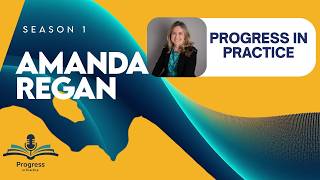
Amanda Regan, a former ESA rocket scientist, coaches mid-career professionals stuck despite strong credentials. She uses a framework of six aligned "engines" modeled on space-mission design: misaligned systems cause a spacecraft to spin, just as misaligned career elements cause stagnation. Her core insight: competence becomes a trap; focus on positioning and visibility instead.
Chapters
Welcome to Progress in Practice, where we explore what it really takes to build and sustain a professional service business. The hard lessons, the smart moves, the uncomfortable truths, because success leaves clues if you're willing to look for them. I'm Charlie Reading. Let's dive in. So Amanda, welcome to the Progress in Practice Podcast, really looking forward to chatting to you about your business and about your background to your business. I think this sounds fascinating. So, uh, let's kick things off for those people that don't know anything about you. Who do you serve? How do you help them? And what makes you different?
Okay. Well, hi, Charlie. It's good to be here. So I help high-performing mid-career professionals, mainly women, but some guys as well, that are, yeah, basically, they're successful on paper. They have a beautiful LinkedIn smile, but maybe inside they're feeling quietly a little bit stuck and a bit empty and maybe a bit flat. So, they're usually incredibly competent people, but the thing is that competence can keep you trapped in a role. And what tends to happen is that the person grows, but the role doesn't. So, there is a mismatch and that can manifest in a number of different ways. But, and the thing is that the people around you are still looking at you as if you are kind of last year's version of your software rather than the 2026 version that you've stepped into. So, yeah, there's a mismatch. So, what I do is I help professionals to reposition their careers deliberately so that they can step into the person that they've become or becoming.
Brilliant. And how do you do that? Is that like, is it one-to-one coaching? Is it group coaching? Is it online courses? What's it look like?
Yes. So, it's really the spine of it is one-on-one coaching. And there is some group coaching and I do have an online platform as well. So, the thing is that people react to things in different ways. So, I never really know what's going to light that person up and how they, how they learn is also really important. So some people really respond to the one-on-one. Some people really like the community atmosphere of the group. And some people like to sit on their own and go through the videos and the homework. And so I've found that a balance of all three is usually a good way forward.
Brilliant. Brilliant. And what makes you different from the other people that do similar sorts of things?
Well, I guess, The fact that I am a rocket scientist by training, so I spent 20 years at the European Space Agency. So, I landed 4 dream jobs of my own. So, not only can I talk the talk, I can say hand on heart that I walk the walk as well. So, everything that I do, and I have a system that I called, it's called Ignite Your Career. It's based on 20 years of working at the European Space Agency, and I also worked at the European Commission as well.
Brilliant. I mean, that's amazing, isn't it? We're going to have to dive into that. I suspect that maybe that'll come out in the next question, which is, what's the story that best explains why you do what you do?
Oof. Well, yeah, I was actually asked to give a TEDx talk about this. So, I'll give you the distilled version, but essentially, I was streamed wrongly at high school or at secondary school. So, the highest grade I could ever possibly get was a grade C, right? I wanted to do advanced level maths and physics, but I was told, no, you can't. You're not A-level material, Amanda. Your grades aren't high enough, right? And that was built. I had this passion because when I was 12, I watched the space shuttle Challenger. As everybody knows, it blew up in 1986. So now you know how old I am. So I was 12 when that happened, and it fundamentally affected me, right? It put me on a different trajectory, a different path. And my— it was funny, it wasn't funny, but when that happened, literally in that same timeframe, I remember looking at the TV and thinking, that's what I want to do. That I want to make sure that doesn't happen again. And my mum who was in the living room at the time, she just looked at me and she looked at the screen and, you know, it was a very emotional time because we'd— I had been watching astronaut preparation for a couple of weeks. I knew the astronaut names. I knew what was going to happen. There was one that was a teacher from space and she was going to teach a class and, you know, I was very invested. And I said, yeah, I'm going to work in space one day. And my mum said, you know, we're in the middle of the UK. People like us don't get jobs like that. How are you going to do that? And I remember thinking, I don't know, because she didn't say I couldn't. She said how, right? Really important. Distinct. And so I said, well, I don't know, but that's what I'm gonna do. But it was easier said than done because as I said, I was streamed wrongly at school. So every single advanced school that I went to turned me down. Rejection followed me everywhere. And so I had to become very good at understanding that when you try and, and go for an opportunity, it's usually because there is a problem. If you can present yourself as the solution to that problem, then typically your trajectory is going to change. So, I became extraordinarily good at resumes, so much so that I was known as the CV whisperer at university. It's how I got extra money to support myself during university. And so, I've never forgotten how to do that. When I finally got to the European Space Agency, I got to Earth observation future missions that That was my, that was the department I was in. Probably before that, I can say that I got to university and I got to do a master's in space systems engineering at the University of Texas. So that was really the changing of the trajectory, if you like. Then to the European Space Agency. And one of the big turning points was 2012. I was asked to be the European Space Agency representative for a NASA emission working group meeting. One of the meetings was at Kennedy Space Centre, exactly where the Challenger had happened all those years before. After a meeting, we got to go and see Endeavour, which is a sister shuttle to Challenger. There was a picture that was taken. I can share it with you. I sent this picture to my mum and said, "Well, I guess people like us do get jobs like this often," which my mum was really, really pleased about. She was, yeah, the proud mama, right? But I would say that the CVs and the, that they never left me. I was always helping people with their applications and with their CVs. And I would say that I realized that I had managed to do all of my things basically because I had a passion for something and I stretched, right? And I didn't take no for an answer. You know, there's a great quote from the author Carine Quinn-Odes Miller, and she says, "If someone tells me no, it doesn't mean I can't do it. It simply means I can't do it with them." And that's kind of been my rule book, if you like. And so, I realised once I was at the European Space Agency, I was just thinking, you know, how many other people are like me? That maybe have a passion for something, maybe they want to stretch, but they may be a little bit stuck or need some help. So, I started doing CV, resume, and career coaching workshops in Amsterdam where I was living. And it started from there, 4 people around the table and then 8 and then 12. And then when I moved to the European Commission, the workshops came with me. And then when I moved to Rome and I led a multimillion euro space program, I was doing the workshops at the weekend. So what I realized was during the week I was helping to design missions for spacecraft and during the weekend I was designing missions for people. So, that's amazing.
It's amazing. And I think in this world of coaching, there's a lot of coaches in this space that haven't actually done what they're coaching people on doing. There's lots of people that say, oh, I can coach you on this thing, like how to sell a business. Well, how many businesses have you sold? I haven't sold any businesses. In fact, I've never run a business. I'm working for this agency that, like, and you're like, well, how can you, like, like, you read stuff in books. But I think that, I think that's brilliant. So I think if you could go back to your younger self and hand them a memo as you were, as, as you started out on that journey, perhaps, you know, as you sort of maybe as you got to the European Space Agency, as opposed to maybe the schooling one, because I'm going to come back to that later. What would that memo say to your younger self and why?
I think the biggest thing that I've learned after 20 years of swimming in this is when you start a career, your competence shouldn't be the goal. You really should focus on positioning and visibility because we're told early in the career, you know, work hard, you're going to You're going to be noticed, you're going to be promoted, and that's how you get up the career ladder. But what I've found doing this kind of work is that competence can make you indispensable in the role that you are, which can keep you there, right? So, you become the fixer, the stabilizer, the rescuer, which is great in the short term, But in the longer term, people can, they don't see you doing anything bigger, anything more fulfilling. And as you grow, the role stays as it is. You're kind of like a beautiful flower trying to bloom, but the pot is staying exactly the same size.
Interesting. And I love the way you framed it earlier on in saying that you worked out how to communicate the pain that the company was experiencing and how you were the solution for that pain. Because ultimately in all business, you know, all life, It's sales. And in all business, it's sales. And that is the best summary of selling ever, isn't it? It's like the old analogy of sell me this pen. Well, the first question is, why do you want a pen? Or what? Yeah. Like you can't sell something that you don't understand. So I think that's brilliant. And if you could pass no money to your next generation, but just some words of wisdom or one piece of advice, What would that advice be and why?
I would say that, yeah, basically, I mean, there's, there's a number of, of things that I, I, I go by, but one of them is clarity doesn't start with knowing what you want. Clarity starts with the courage to admit what you're no longer willing to tolerate.
Wow. Yes. I like that. It's, it's funny actually. I was delivering a workshop last week to the guys that I coach within the Trusted Team, and it was all about the getting rid of almost everything you do inside the business and focusing on the one or two things that you, A, love and you're really good at. So the passion stuff like you just described.
Yeah.
And that's exactly it, isn't it? It's kind of like you've gotta make it important enough so that they get rid of all of those other things so that they can focus on the one or two things that are actually the things that move the needle in the business. So that's, that's really interesting. I love that. I think it's really good.
Yeah. And also, I mean, if I can stack on that as well, something that I used to tell my team at the European Space Agency was just because you can doesn't mean you you should.
Brilliant. I couldn't agree more. Just, yeah. And actually, even if somebody else in your team is not going to do it quite as well as you, it doesn't matter because what it frees you up to do is way more of the more important stuff. So yeah, I think this is really, really brilliant. What's the biggest obstacle that's blocking you from achieving your goals within your coaching business right now?
Yeah, that's an interesting question because I've been doing this full-time for, well, since the pandemic now, so 4 years. And doing the career coaching professionally since 2015, I would say that right now my biggest challenge is scaling sustainably, systematically, right? So, my work is traditionally quite high-touch, one-on-one, really getting to know the person and what lights them up, what makes their atoms sing, right? And being able to really craft how to, how for them to move, how to move them forward and create an evidence-based roadmap of, of kind of a pathway through. I want to be able to help more people. So it's about how do I maintain that quality while making sure that I can, I can indeed help more people. So my focus right now is speaking on more stages, it's building a A sustainable systematic platform. It's, it's really scaling my, my programs and partnerships around the particular framework that I have, or everything is built on. I have a framework that all of my teaching is, is based on.
Brilliant. Brilliant. Well, I mean, so it's just made me think that within my coaching at The Trusted Team, we talk a lot about magnification mastery, which is taking what we do one-to-one and making it One-to-many. Exactly. Because if you can help 1,000 people in the same time as you could previously help one person or even a million people, then that's got to be, you know, it's so, it's, it's, it's actually something that kind of sits really inside what we do at the Trusted Team and it's only normally for members. But as a thank you for coming on the podcast, I'll send you that session because it may, may help you on that journey and I'll also And again, I wouldn't normally do this, but I'm thinking on the hoof, I'll put it in the show notes so that if anyone else wants to pick up on that, they, they, they can do, because it's such an important principle, isn't it? Like in this day and age, we should actually be able to help literally thousands and thousands of people, but in a way that doesn't take us lots of time. Um, and that's really what we're trying to do. I think, you know, that's the way that we can create most value for our business, isn't it? So that's interesting. And I think that this is something that a lot of coaches go through, isn't it? You know, you, You do a lot of work one-to-one and then you run out of time and you're like, well, I don't have any more time that I can sell. Do I need another coach? Well, that's not me. I don't know. Yeah. So it's, it's tough, isn't it?
And it's, it's about kind of just being able to, I'm at the moment just finishing off a kind of operations manual of, of kind of putting my brain on paper about how I would approach certain things, because obviously my guidance is based on 20 years of working at national, international, European level. Which has some very particular nuances, which if you haven't been in that kind of arena, you, it might not be obvious.
Yeah. Yeah. Yeah. So what book or it doesn't have to be a book framework maybe, or like documentary, podcast, whatever. But what book or anything else has helped you most on your journey? And where does it show up in your business today?
So you're, This is probably not what you're expecting, but I have this book here. This is actually a space mission design book.
Oh, wow. Okay. Geez, no, that wasn't what I was expecting. So interesting.
Absolutely not. So, this was my space mission bible when I was doing my grad school in the States and as I was working up the career ladder at the European Space Agency. And I would say that from my coaching, This has really influenced my thinking quite a lot in terms of space mission design. I know this is a little left field, bear with me. Brilliant. But the thing is that working in space, it teaches you something really, for me, it's profound. I'm not sure whether the message will be able to be translated, but the thing is that no mission reaches orbit by accident. All missions are successful by design, right? So what that means is that in order to get a successful mission, in order for the spacecraft to reach the orbit that it's designed for, it means that you have to have multiple systems all aligned, all working together. And I use that in my own framework. I call it Ignite Your Career, and I have 6 different engines 6 different systems that work all together. So, and it's all about aligning the, the different elements together, because if you have elements that— so for example, I have 6 different engines, and with spacecraft, if the engines are not aligned, the spacecraft is going to spin. But if the engines are all aligned, all pointing in the same direction, the, the spacecraft is going to rise into the orbit that it's designed for. And it's the same with your career. So that's, that's my thinking. So yes, it's, it's not conventional, I would say, but it very much makes sense for the people in my orbit.
So. I love it. I think it's absolutely brilliant. Amanda, it's been fascinating chatting to you. Where's the best place for people to find out more about you, to connect with you and follow what you're doing?
So I have a website, amandareganonline.com, and Regan is R-E-G-A-N. Amandareaganonline.com. They can also connect with me on LinkedIn. If you type in Amanda Regan, I'll be there. I have a bright purple banner, you'll see me. And actually, it's funny, while I'm spelling out my name, I remember going to a meeting at the French Space Agency with a colleague of mine from the States who was called Stanley Kennedy and the reception at CNES, the French Space Agency, thought it was absolutely amazing That Reagan and Kennedy were a meeting.
Brilliant. Love it. Absolutely love it.
Even not Reagan, but everybody always mixes it up. So it's fine.
Fantastic. Well, it's that maybe in this context, that's a good way to be confused with somebody else. Yeah, I love that.
I don't, I don't mind being compared. It's okay.
Amanda, it's been really interesting chatting to you. Love the story. Love the way that you've navigated your career. I think there's so many brilliant lessons for people there. And as well as the wisdom that you've picked up along the way. So we'll obviously put those links in the, in the show notes. Note. And yeah, thank you for coming on the, on the Progress in Practice podcast. As a reminder, Progress in Practice podcast is brought to you by The Trusted Team, which helps people build a saleable and scalable business. So yeah, we wish you every success with your, with your coaching business, Amanda. And for everyone listening at home, keep on making progress.
Thanks, Charlie. It's been a pleasure.
If this conversation resonated, you'll find more support, culture and community inside The Trusted Team, where ambitious service-based founders come to build businesses that are scalable, saleable, and sustainable. You can find out more at thetrusted.team. And if you're enjoying Progress in Practice, please make sure you follow the show and leave a rating and review. It really helps more founders find these these conversations and to bring you better and better guests. So until the next time, keep progressing.