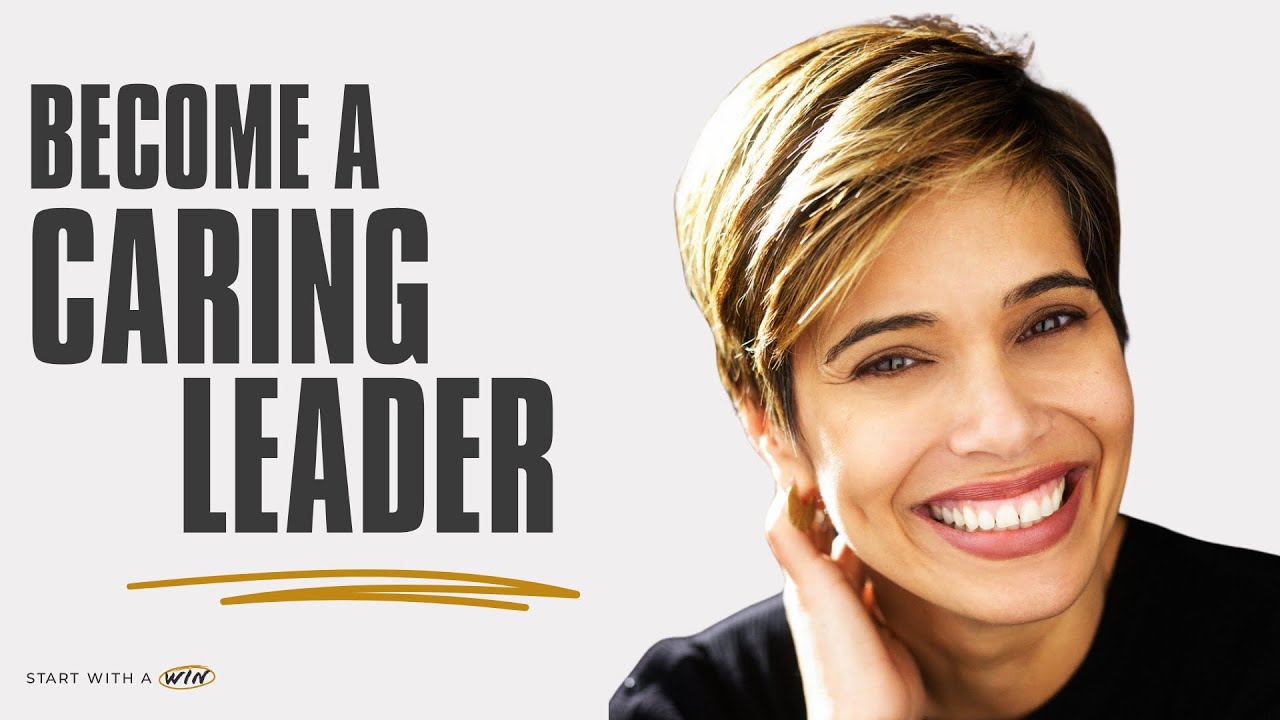
From Burnout to Success: Leadership Lessons with Daisy Auger-Dominguez

In this episode of Women Leaders on the Move, host Natalie Benhamou interviews global leader, author, and DEI advisor Daisy Auger‑Domínguez. Daisy walks through her unconventional career trajectory—from a credit‑risk analyst at Moody’s to senior HR and talent‑acquisition roles at Time Warner, Disney, Google, Viacom, and Vice Media—highlighting how analytical rigor, mentorship, and a willingness to start with a "blank slate" enabled each transition. She explains how she built the first diversity‑and‑inclusion functions at several companies and later founded a people‑and‑culture consultancy. Daisy discusses the systemic roots of burnout, describing the World Health Organization’s three‑dimensional model (exhaustion, cynicism, loss of efficacy) and sharing personal anecdotes about early‑life pressures, immigrant identity, and the cumulative moral injuries that led to her own burnout and a “radical sabbatical.” Drawing from her books Inclusion Revolution and Burnt Out to Lit Up, she offers concrete leadership practices: self‑awareness, simple energy‑level check‑ins (1‑5 scale) at the start of meetings, creating psychological safety, co‑creating solutions with teams, and balancing directive authority with collaborative problem‑solving, especially during crisis periods like the pandemic. The conversation closes with practical resources—her website, LinkedIn, and Instagram—where listeners can access her books and further content.
Chapters
I think the journey of leadership now is not just about transforming how we lead, but also about how do we collaborate? How do we innovate? How do we thrive together? We come to work to do the things that are bigger than us that we can't do by ourselves. And we want to do it with people that we respect. We want to do it with people that we understand. And we want to do it with people that make us feel better.
Welcome to Women Leaders on the Move, a HERS C-Suite Radio podcast. I'm your host, Natalie Benhamou, and every week I Bring you inspirational stories and guests to help you with the arc of your career. I'm also the founder of Her C-Suite, a thriving network community that offers women several pathways to achieve success in unique ways through our mastermind program and our Leaders on the Move, which includes guests from the show as well as rising leaders and senior executives. Visit us at hersysuite.com to learn about how we can help you with the arc of your career. And speaking of careers, my guest today is going to be talking about her new book, Burnt Out to Lit Up: How to Recognize the Joy of Leading People. Daisy Auger-Domínguez is a cross-sector global leader, speaker, author, and advisor on future-readying the workforce, fostering inclusion, and tackling burnout at work. Her books, Inclusion Revolution and Burnt Out to Lit Up, offer actionable strategies for building inclusive workplaces and revitalizing leadership practices. I can't wait for you to hear all the things that we talk about today. She's a dynamic storyteller, and her insights have been featured at TEDx and in publications including the Harvard Business Review and Forbes. Let's get started with this conversation now. Daisy, I'm really excited to welcome you to Women Leaders on the Move. Thanks for being on the show today.
Oh my gosh, Natalie, thank you for having me. I'm thrilled to be here.
And I'm thrilled cuz I'm a super fan. Like, I found you and I stalked you on LinkedIn. But for our, for women who, and our listeners who may not know you, I always ask, tell me a little bit about the arc of your career and what's bringing us to this moment. Cuz I know you've done so many amazing things in your career.
Oh, thank you so much. I appreciate that. I started— my first role was as a credit risk analyst at Moody's Investor Service. I have an undergraduate degree in international relations and women's studies and a master's in public policy. And I joined Moody's Investor Service as a credit risk analyst in the public finance department. And I worked at Moody's— that's the longest tenure I've ever had— for 12 years. I was a credit risk analyst for 6 years. Domestically and internationally, opening up markets in Latin America. They realized they had a native Spanish speaker in me, which was fantastic. And then I managed the company's foundation for 3 years. And from there, I went on to HR to run the company's first diversity and inclusion function. So that's how I made my transition into HR. And I always say that I kind of went in kicking and screaming because I had the same negative perception that a lot of people have of HR back then. But I was just so pleasantly surprised by the caliber of work that is done on that team and the impact that a good HR team has on an organization. And so that set me up for a career in HR. From Moody's, I went to Time Warner in their executive search function. And that's where I learned everything about executive search with a focus on diversity. From Time Warner, I went to Disney, where I ran diversity and inclusion and then talent acquisition. Well, I was hired to run talent acquisition for the Disney ABC Television Group, which at that time— as you know, media entertainment has gone through so many, so many shifts. But at that time, that consisted of the Disney Channels, ABC Family, which is now Freeform, the ABC Channel, the owned and operated television stations. So everything on the ABC network that you know, we called it from cradle to grave, if you will. And a couple of months into the role, our head of talent acquisition left. And so I became both the head of D&I and talent acquisition, which was one of the first blended roles in HR at Disney. And it was also one of my first— professional moments where I started having more expanded remits within HR and touching on other areas within HR. From there, I went on to Google to be their first director of global diversity staffing, which was an amazing, amazing job. And it was at a time when— I mean, people are still excited about tech, of course. But it was the time of the big, big tech growth. And everybody was sort of looking at these companies and seeing all the exciting things that they were doing. And it was a unique time to be there. From Google, I went on to Viacom. And I should say that when I was at Disney and Google, I moved my family. So I moved from New York to LA for Disney and from LA to San Francisco for Google. And then came back home from Google to Viacom, came back to New York. And we've been here now for about 7 years. I live in Brooklyn. Then after Viacom, I took a year off and I spent some time trying to figure out what I wanted to do next and realized that I didn't want to be a D&I chief anymore. I knew that anything I ever did would incorporate D&I work and that that was the core of how I believe we should lead organizations. But I wanted to run HR as a full function because I wanted to experiment with integrating DEI in organizations in a meaningful way that I believe would hopefully be sustainable. And then I launched my consultancy in people and culture. I did that for about a year. And then right at the beginning of the pandemic, I was approached to be Chief People Officer for Vice Media. And so I joined Vice Media in May of 2020, right at the beginning months of the pandemic when we all thought it was just going to be a couple of more months, and 2 weeks before George Floyd was murdered, which, as you know, sparked a global racial reckoning that we are still recovering from. And so I was at Vice for about 3 and a half years, a little longer than that. And I left Vice a year ago. I should say that while I was at Vice, I wrote my first book, Inclusion Revolution. All of my books I call love letters to managers. But it's a love letter to anyone who is keen on integrating diversity, equity, and inclusion in their organization. And it is written from the perspective of a people leader. So it— goes through the life cycle of employees. So from hiring to onboarding to performance management, all of the elements that I have seen work and that I have learned that work in organizations. And then when I left Vice last year, I took what I called a radical sabbatical. I was completely burnt out, and I wrote my second book, Burnt Out to Lit Up: How to Reignite the Joy of Leading People, because I believe that we are all still a bit of a walking wounded, if you will, still healing from the pandemic, but also facing collective exhaustion. I actually did not realize that burnout was going to have the moment that it's having right now when I started writing my book a year ago. But I wanted to write a no-nonsense love letter to people managers and leaders to remind us of the things that we can do to become better leaders. And it starts with us. And that book launched in September of this year. And I have been talking about reigniting leadership ever
So many things are coming to mind, but the transition from doing something risk-focused might sound like it's really not the same, but HR is a risk mitigator, right? Oh, yeah. And when you are doing human capital, you're really looking at risk all the time about the culture. What were some of the things that you learned about in that experience about making that shift? Because listeners sometimes think about, well, I don't know if I can make a shift like that. It may sound big, but if you start to look at it, what are the things that you are passionate about and how that throughput— what were some of the things that you discovered in that process?
What's interesting is there's just so much you don't know when you don't know that things aren't possible, right? I'm not first-gen college graduate in my family, but I'm first-gen in many ways in having the jobs that I've had and the access that I have received through the tremendous, tremendous support and investment in me that my family has had. I never knew that you weren't supposed to make transitions like this. I didn't have someone— helping me navigate corporate career, if you will. I was just trying to figure things out. And many of my transitions, as I just mentioned, happened at the beginning of my career in the same company. There's a comfort level that comes from that because you're carrying your equity with you, right? What we have to realize is that there are skills that have to be attained. And in that early part of our careers in particular, right, when you're an individual contributor, It is about the skill that you're bringing, what you are delivering. But it's also about how you work and how you solve problems. And being a credit risk analyst, it was the best first job I could have had. I would never have considered myself a credit risk analyst. I always used to joke. I was like, I'm impersonating a credit risk analyst, right? It's like all of these heavily analytical minds around me, not terribly the most social people, right? Folks really comfortable crunching numbers and stressing financial models. But it was not— that was not just the only part of the job, right? There was this analytical job. And then there was the part of the job where we would sit in rating committee and discuss the results of our analysis and our recommendations for a credit rating. And that was such tremendous training for me and understanding the dynamics and the factors that went into a fulsome rating from both the financial as well as the leadership components of an organization, right? Like, the financials could look great, but if we didn't trust that leadership team was, A, going to stick around, and B, going to deliver what they were promising that they were delivering, right? These were all elements that went into a fulsome rating. And that level of analytical rigor, not just the analysis, but also the review of all the components of what makes not just a good organization, but an organization that is going to be willing, right? Because when you're rating an organization or a government or a project that's financing, as I would, it's about their ability to repay on their debt, right? So will they be able to do what they're saying they're going to do? And in many ways, that kind of problem-solving and analytical rigor is what I've applied to all the jobs that I have had. But I didn't know that when I went into HR. I will say that that move to the foundation was a different move. But I had a master's in public policy. I had been already starting serve in nonprofit organizations. So I had that know-how. I also had that network in New York. And so I knew a lot of nonprofit organizations. And because I was an analyst also in assessments of funding that we would give, that kind of work was pretty natural. The move to HR was a much bigger shift for me. And I will say that I went in with a little bit of hubris. I went in with like, I know this company, right? I know these things. And I've been on the business side. How hard could this be? And I was quickly knocked down, right? I just— I remember HR business partners not liking me at all. Many organizations, the HR business partner model is a unique model. And folks who run those functions tend to be very controlling of what they do. But I remember them not liking me. And it was our head of benefits at that time, who was a couple of years into pre-retirement, who took a liking to me and kind of just sat me down and said, OK, you don't know anything about HR. Let me explain to you how things work, right? And she explained it to me from her subject matter expertise, which was benefits and compensation, huge component of HR, right? So I like to think that I learned from the very best in that space, but also how all of the other components of learning and development and talent acquisition, right, all of these other centers of excellence, how they operated and connected to create a good and solid employee experience. Those transitions for me were easier because I had been in the organization and I already brought equity with me, right? There was a level of respect. And I had proven myself. I was someone that folks knew was a hard worker and kept on getting promoted, all of those pieces. So that I didn't have to prove myself in those settings. But I had to learn skill sets that I didn't have. The other transitions that I made, also, there's always an element to it, right? My transition to Time Warner, it was a mentor of mine who put my name in the hat for that role. I should say that a friend of my father's put my name in the hat for the job at Moody's too. So almost every job I have had, regardless of how much experience I've had, someone has basically lent me their credibility, put their name on the line for what I was to deliver. And I take that very seriously. And when I moved to Time Warner, my mentor had been trying to hire me for years. And she was like, I don't have a job for you, but here's another role in the company that I think would be a good one for you. I'm going to put in a good word for you. And that's how I made that transition. I had been in finance for 12 years. So that was very much of a transition of what is— how does the world of media and entertainment? But here's the thing that was really great for me is that I didn't have baggage with this transition. And that was super helpful for me. It also was super helpful for me when I went to Disney. 2 media roles, very different organizations, but still in the media and entertainment sector, but a very insular sector, like most sectors. So when I interviewed for the Disney role, my manager, who was the head of HR, looked at me. And he was like, we've been interviewing for months. Where have you been? And I was like, I've been around. You just haven't been looking in the right places. And he looked at me. He's like, I love your background. I'm looking for someone with a business background and also an HR background. I want that kind of combination. And I didn't realize that at that time, right? You don't know what you don't know. It's like I was building this unique skill set that was going to be very valuable for the future of the field of HR. And we just joked because he looked at me. He's like, you know, one of the reasons why I like you is that you're not coming in with baggage. You're not someone that's already worked at this company or in an adjacent capacity. And people are not going to have— they're going to have an opinion of you because they always do. But they're not going to have an opinion of like, oh, I saw her. She worked at Paramount. She worked here. She worked there. Eventually, that happened to me because I've now worked at 4 media companies. But in those early transitions, That was very beneficial for me because it allowed me to come in with a blank slate. It allowed me to also— and I say this to everyone who have ever transitioned because this has been my job now of hiring folks and helping create conditions for them to thrive. I always say this. It's like your first 3 to 6 months are really your months to learn. Like, just learn. Now, that rate of learning has severely been constrained in the last 10-plus years just because of the pace of change in organizations. But still, Still, those moments of getting acculturated into an organization, understanding what what I like to think of as the the logic of an organization. How does this place work? Who really runs this place? Right? Who really makes decisions here? How do decisions get made? All of that because I have made all these transitions. I have learned how to do that a little quicker, a little smarter every time. Right? I learned from every transition of what to do and what not to do, and allowed myself the time and the space to learn. What I needed to learn. Because I think for many of us, especially as you're moving up in your career, you assume that you're an expert in this, right? That that's the endgame, to become an expert. And for me, yes, I'm an expert in a lot of things. That's fantastic. And I'm proud of that. But for me, it's not about building that expertise. It's about keeping that open mind, that growth mindset of there's still so much that I can learn. There's still so much that I can do. I can't approach everything the way that I've approached it before because The world has changed.
Yeah, the world has changed is an understatement. It's changing every hour. It seems like when this is being recorded. So all those things like moving and transitioning. So you had career changes and then you had moving your family and all of that. I'm guessing that that had some impact into the burnout piece and you writing your book. So what were some of those things that were leading up to that moment where you're like, that's it, I'm, I have to take space? What were some of those things leading up to that moment?
Absolutely. And I should say that my first sabbatical was not an intentional sabbatical. I was part of a restructuring that happened in the organization. And I think that for many of us, there's such shame in even speaking about it. I know I did for many years. But it happened. I was also the beneficiary of having one of those old media contracts from when companies were fat, dumb, and happy. And so I was paid for almost a year because of the restructuring. And I was able to take this sabbatical without having the strain of not knowing how I was going to pay my mortgage. But I was burnt out that first one too. I just didn't know it. And that's so many things that I learned writing this book. And for me, writing Burnt Out Till Lit Up was a healing journey. It was discovering the things I had pushed down for so long and also just validating what I had thought for a long time of just the systemic failures that lead to this depletion in many of us. And I should say, burnout was classified by the World Health Organization as a disease in 2019. The first thing I like to remind folks is when people feel kind of ashamed about saying that they're burnt out, although I see that a little less now, it's a disease. It's been classified. This is not you making stuff up. And according to researchers in the space, burnout has 3 dimensions, right? And that's the first one is this sustained exhaustion, this sense of depletion. The second one is cynicism. Everything around you, you're just like, you're like, yeah, whatever, right? Like, I just, I don't believe in it. I've seen this before. I don't care, right? That deep level of cynicism about everything in life. And the third one is a sense of a loss of professional efficacy, that sense that you can't do anything right. Nothing I do works. I just— I don't know anything. I've forgotten everything. I can't do it. And it's those 3 dimensions that lead to severe burnout. And I don't know about you, but I've faced that multiple times. And I say this in the book, burnout is not the result of the current job that you have. You've been carrying it for a long time. And I carried burnout from my childhood. I grew up in the Dominican Republic with my grandparents. My parents were teenagers. And so my father's parents offered to raise me. And I was essentially their last kid. They invested everything in me. I learned English because I went to an international school with kids from all over the world. I had a wonderful childhood full of love, and support, and education all around me. But I also felt this tremendous weight of always being kind of like the good girl and happy and pleasant. And how lucky am I that I get to have this experience because my life could have been totally different. And I didn't realize how much of that weight impacted my behaviors and the things that I allowed to happen, the boundaries that I allowed to not exist around me. And from there, it's just not just in your personal life, but also in your professional life, right? As an immigrant, as the daughter of a working-class family, in these academic institutions that I had the chance to be at Bucknell University and NYU, and then Moody's and Time Warner and all these amazing companies, every time I fed into these narratives that many women and people of color and other non-normative individuals, we fall into these patterns of assuming that we have to overwork to be respected, that we have to over-control To be respected. There were narratives I was hearing that made me feel that I needed to shrink to survive, to be able to be okay in these organizations where I was so different from the norm. And you just do that, right? Because you're just— you're surviving, right? You're just getting through. You tell yourself, this is the price of being in these spaces and earning what I'm earning and living the life that I'm living. For sure, there are moments of hustling and working hard. And there are times that you have to suck it up and do something you don't want to do, right? I'm not saying that those are not real and are not part of the day-to-day experience. But it's the sustained moral injuries that many of us take on in these settings, in these organizations not designed with people like us in mind, and these organizations that do not create the conditions for everybody to thrive, that leads to this condition that we are all facing, I believe many of us are, it's burnout, right? It's that exhaustion. It's that sense of cynicism. It's that sense of, I just can't get anything right. And I just like, why am I even here? That kind of feeling. And so that's a lot of what led me to write the book. Because in the midst of all of this, Natalie, I still believe in leadership. I believe in the outsized impact that any of us have, no matter our titles, quite frankly, in organizations. In particular, the responsibility of those who are entrusted with managing and leading people, the outsized impact that we can have on someone's day, on someone's career, right, on how someone sees themselves, that is very real. And so I've dedicated my career to helping people feel and see and think about their roles in a different way so that they can show up In their best way.
Well, your book is called Burnt Out to Lit Up, which I love that. And so for leaders that are either feeling burnt out themselves, which is very highly probable, or they have people on their team that they see, but they just don't know, how do you reignite? How do you help them get through this time? What would you say to that person that's listening today?
You have to learn to listen to the signals. But before you listen to the signals, you have to learn to listen to your signals. Before you can learn to listen to the signals of others. I talk about self-awareness throughout my book, how deep it is for you to see in yourself what are the elements that are allowing you to show up as your best self no matter what is being handed to you. And so that kind of analysis helps you not just be sort of in a place of calm and clarity to then see what's happening. Tuning into the energy levels of your team. And this is this really simple exercise that I've been using through my talks. Through the book launch. And it's when you start a meeting is ask folks, like, what's your energy level today? And 1 is like you're on the ground, you can barely get up, right? Like, you're just done for the day. And 5 is like you're drinking margaritas with unicorns. It's like your happiest moment. And it's a really simple exercise to start your team meetings with. If you create a sense of psychological safety when people can really tell you where they're at, you can gauge the energy levels of your team and the areas where you need to invest in, right? Like, that number 2 or that number 3 that's usually a 4 or 5, It's like, what's happening there? And then it's about engaging in trust-building, thoughtful conversations about what's going on. And I can tell you, especially as someone who led during the pandemic, during some of the scariest times of our lives, more than half of the time, I had to ask my teams to do extra things that I knew they were already too tired to do. But I had to just change these priorities because all of this is happening, or I need you to pull that report together, or I need you to call those 5 other employees because it's so much. And I remember the weight of that. But I also remember the team members who were still tired who would kind of just look at me and go, OK, Daisy, like, I'll do that. But like, you have to reduce 3 of my— 3 other things on my plate because I can't do all those things. And I remember that being such a gift. And it came from, A, because they were superstars and amazing. But it also came from the relationship that I had built with them that they were able to say that safely. They were able to say, Daisy, I already have 10 things on my plate, and you just gave me 3 more. Which are the ones I need to work on? And that's my job, to help clarify that. So be able to have those conversations with someone, not just know yourself, but gauge the energy levels, and then solve not for them, but with them. Help solve what you can. Be honest about the things that you can and cannot change. Every once in a while, be like, I get you. I know this is ridiculous. But this is coming from the top, and we've got to do these 2 or 3 things. I'm taking the things that I can do, but you're the subject matter expert in this piece. Nobody else can do this. But let's do this together. You're not alone. It's those elements of creating spaces for people to be able to speak. I think as managers and leaders, we have relegated our authority as leaders in the last couple of years because it's just become so gnarly and messy that we don't even know what to ask people. You've created a space of flexibility for them. They're not coming in 5 days a week. So have the conversation with your team and problem solve with your team. And if need be, be directive with your team. This is why you are paid more than them, right? This is why you have the role that you have. We have lost that. And in that sense of leading in these messy times, we kind of lose a sense of that sense of efficacy, that sense of who we are. And so if you're feeling that you're getting really tired or that you're getting cynical about things that you normally weren't cynical about, or that you're feeling that sense of loss, those are signals that your body is sending you to redirect and change. And if you see that in somebody else, those are signals for you as a leader to pause and say, OK, what needs to change? What can I do? What's the conversation that needs to be had? How do we reimagine this? And how do we co-create it? Not give it as a directive, but co-create it with the people who are impacted by it.
I love the conversation we're having. I'm thinking about all these things. And your book is so amazing. If people want to find out more about you and your book And all the things, because you have amazing resources. Where can they go to find you?
Oh my gosh, thank you so much. Well, I have a website, daisyoger-dominguez.com. I publish a lot there. I am constantly on LinkedIn. LinkedIn is my community, Daisy Auger Dominguez. I'm also on Instagram, but LinkedIn is really where I publish most of my work. On my website, you'll find information about my 2 books. Burnt Out to Lit Up is currently available everywhere books are sold. I'm just encouraging and hoping that folks will buy it. And if you buy it, you write a review, let me know what you think, and hopefully it's something that's going to impact you and others, because that's why I wrote the book, so that it could reach as many as possible.
So amazing. We're gonna have all of that in the show notes so people can find you. Thank you so much for being on the show today. It's been a wonderful conversation. Thank you, Daisy.
Thank you, Natalie.
Thank you for spending your time with us today. I appreciate all the ways that you are listening to us, and it would mean the world if you would rate and review this show so other listeners can find us. This show is sponsored by Her C-Suite Leaders on the Move. Visit us at Her C-Suite and find out all the ways that we are helping women meet, engage, and thrive with leaders that are on the show. Keep shining your light bright. The world needs you.
More from Daisy

What Happens When the Workplace Culture Fixer Needs Fixing Too? Daisy Auger-Dominguez Explains

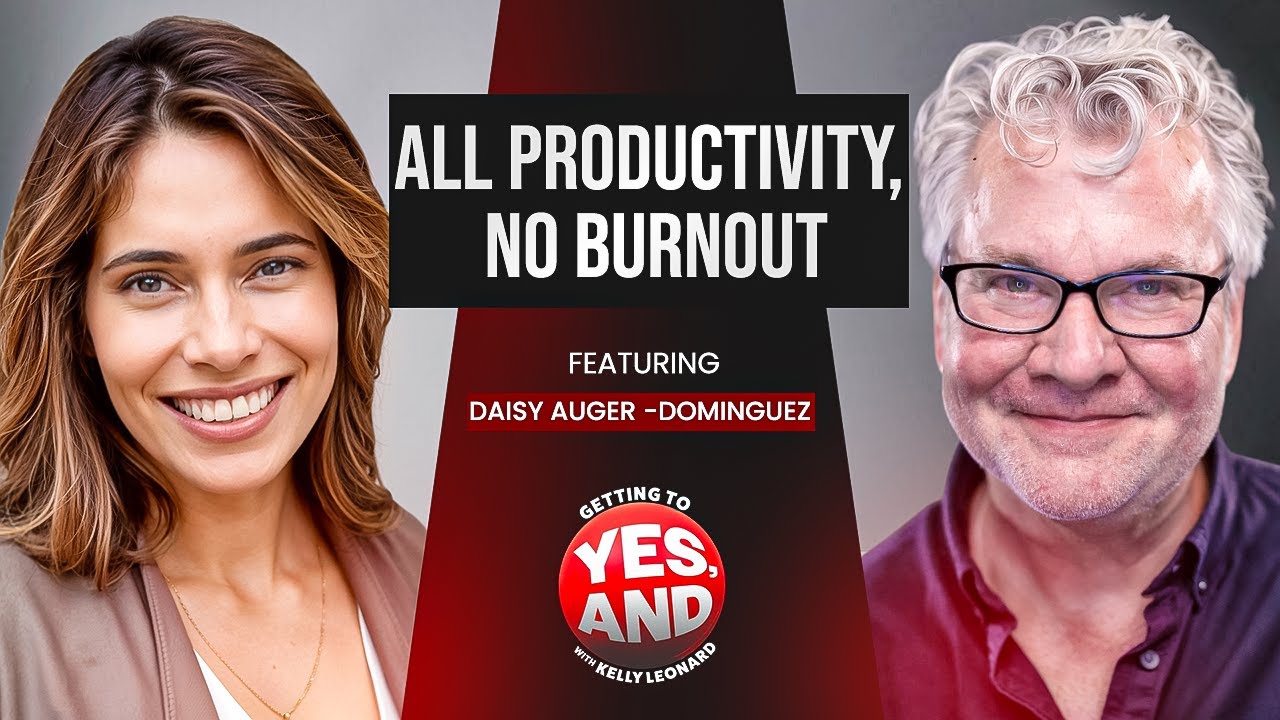
How Stay Productive at Work without Burning Out | Daisy Auger-Dominguez on Burnt Out to Lit Up


DEI expert Daisy Auger-Domínguez on overcoming burnout and navigating a corporate crisis
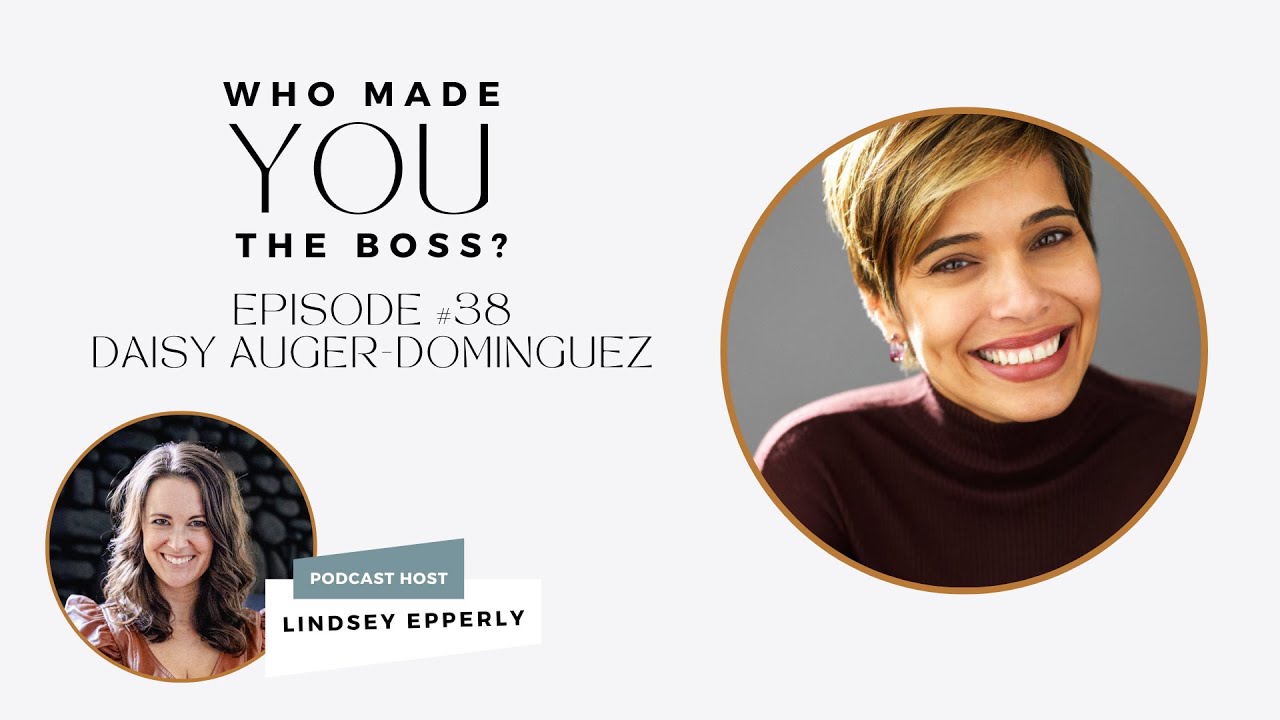
38. Feeling Overwhelmed? The Micro Resets That Can Change Everything with Daisy Auger-Dominguez