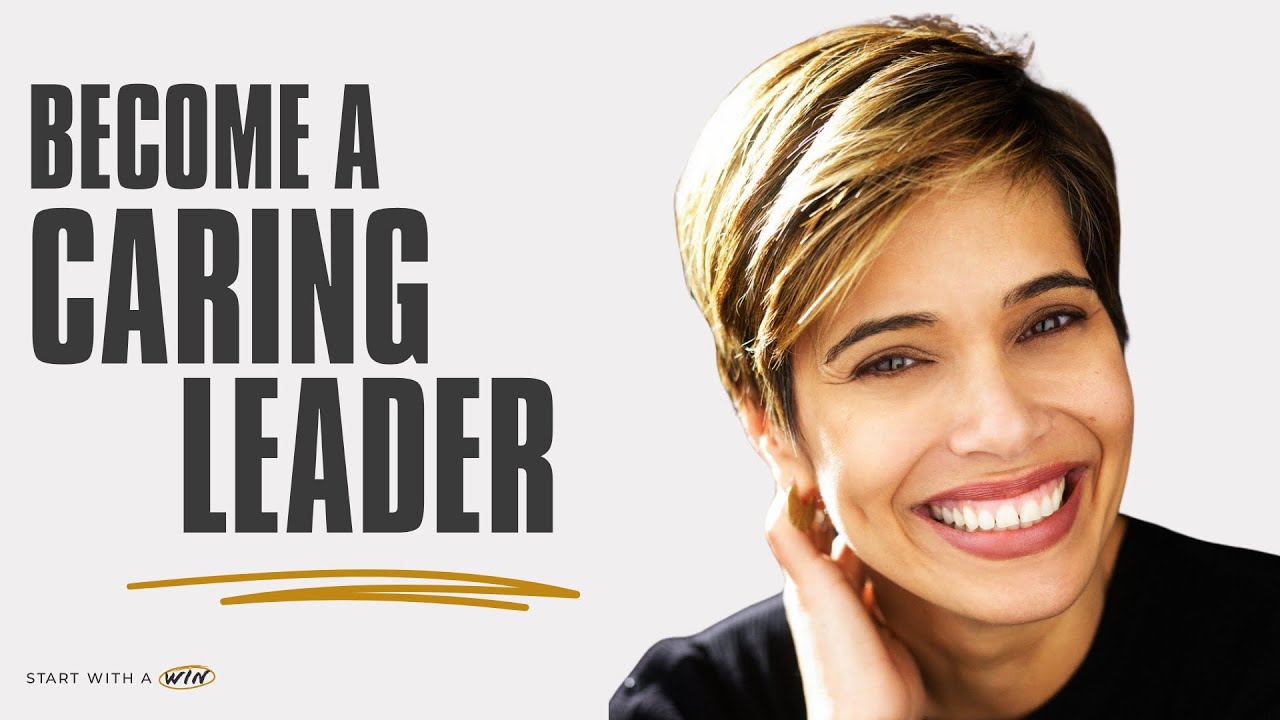
Meet Daisy Auger Domínguez - Speaker, Storyteller, Author.

In this conversational interview, host Ingrid welcomes Daisy Auger‑Domínguez, a Latina senior HR leader, speaker, and author, to discuss the inspiration behind her upcoming book Burnout to Lit Up: How to Reignite the Joy of Leading People. Daisy recounts her personal experience of chronic burnout while serving as Chief People Officer at Vice Media during the COVID‑19 pandemic, the George Floyd protests, and multiple organizational crises. She describes how sustained physiological stress manifested in severe health issues, leading her to seek medical help, adopt a nutrition plan, and ultimately take a "radical sabbatical" to reset. Daisy explains the evolution of her book’s title, the focus on empowering managers to set boundaries, reframe inner narratives, and use scripted conversations to protect their wellbeing and that of their teams. The dialogue also highlights the unique pressures faced by Latinas and women of color in corporate leadership, referencing recent Lean In and Coqual studies that show stagnant representation at senior levels. Daisy outlines the content of her training sessions—self‑awareness, boundary‑setting, narrative reframing, and practical scripts for managers and DEI practitioners. Throughout, she emphasizes agency, the need for integrated DEI, and the importance of community support. The interview closes with a call to pre‑order the book and an invitation for future collaborations.
Chapters
Hola, hola, Daisy. So excited to have you here. I have been a huge fan of your work and so happy that we can finally work with you through NODA and excited for this conversation. Well, I'm happy to
be here. Thank you, Ingrid.
So Daisy, I mean, I'm just going to mention a little bit about you, not that— just so that whoever doesn't know you, which it's rare that my audience will not know you, but if you don't, just so you know how awesome Daisy is. Primero que nada, she's a Latina. So I will say, always just so proud and happy to see other Latinas in the same space, right? There's not a lot of us. So Daisy is speaker, author, workplace strategist, years of experience leading human capital practices for Fortune 500 companies such as Google, Disney, and other private companies, and Vice Media, which was your latest one. Yeah. And then you also work through your own company now as a fractional chief people officer. You wrote a book about Inclusion Revolution and your TEDx, which I loved. And now, which is why we're connecting, you're launching your second book, which focuses on managerial burnout, and it's called Burnout to Lit Up: How to Reignite the Joy of Leading People. Yes. So, okay, tell me what inspired you to write it.
Well, I mean, I think why many of us write and creatively express ourselves is when we experience things in life. And so I experienced burnout. I've experienced burnout more times than I can count, quite frankly, throughout my career. And last year, as I was preparing my transition from being the Chief People Officer at Vice over the the previous 3.5 years, which were all throughout the pandemic, dealing with not just a global health crisis, but an economic crisis, financial and operational crises within the organization, leading a global function. We were in over 20 countries. I had team members who we did not share daylight savings times— daylight times with. Forget daylight savings. We just didn't share daylight times. You know, it just— it was— and we were responsible for not just the talent processes and strategies of an organization at a time that everybody was just— we were just making things up, right? I was one of the first interviews in March of 2020 that were purely virtual. I was one of the first people that were onboarded purely virtually. I then was responsible for building onboarding programs globally, but not just onboarding programs, return-to-office programs, right? What did that look like? Because everyone was calling it return to work at that time. And I remember telling people, I'm like, no, people have been working. Let's just be clear. It's just been very different. We're just bringing them back to the office, figuring out what hybrid work models were. And let's not forget, I joined in May, on May 15th, 2020. 2 weeks later, George Floyd was murdered. which sparked a global racial reckoning, the likes of which we had never experienced before because this was the first time because of the power of social media and whatnot that people were forced to confront things that for many, many was somewhat easy to just ignore or be complacent with. And so you're dealing with social unrest, political unrest, health imbalance, marketing and find all the things. And then on top of that, as a senior HR leader, you're also responsible for emotionally rallying around people. So you're not just dealing with the intellectual and the physically exhausting, but also the emotionally exhausting. So that's enough to burn anybody out. And I think most of us, quite frankly, are still managing a collective burnout. We still haven't fully healed. And as I was thinking about my transition and reflecting on the time that I had experienced, I felt this deep desire to share what I had learned and to learn how to not get there again. It's like, what do we do that? And what's unique about my book, and you already named it, is that it is intended for managers, for people managers and leaders. And I used the term managers loosely because we tend to think of managers as just sort of like mid-level people who are just directing the tasks that the leaders tell them. But that's leading, right? That is fundamentally about leading. And leading right now is the hardest that it's ever been because we are in this messy middle in terms of expectations of work and the fast fast-moving, you know, pace of change, right, the polycrisis that we live in. And so I just wanted to be able to provide some learnings from, you know, the experience of a Latina who had, you know, gone up the executive ranks in a lot of organizations. I'm not an academic, but I love to research. So there is a lot of research-backed insights in my book. And a lot of it is based on experience, on interviews, and just my own experiences messing things up, figuring things out and living through it.
Yeah. Well, I feel like burnout is such a personal thing, but it's, I always see it as like a habit. Like it's deeply ingrained until you notice it and then you can change it. But I'm so curious because I see that with my clients and I see the managerial burnout. That's just so real. And it continues to be, like you said, a trickle-down burden from COVID that it just became 10 times harder for everyone. But with Matt, like, how— what was your aha moment that got you out of burnout? Like, what was that first, like, okay, I need to— like, there's something that needs to change?
You know, it's interesting because I often get that question and I personally, maybe it's just who I am, I don't learn in one moment. I learned through a series, and I think many of us do that particularly. And I learned this when I interviewed Kate Donovan, who is also an expert in this space, and she has her own podcast. It's called Fried: The Burnout Podcast. And when I met with her— and I'll talk about her definition because I think it's really important— but I remember when I met with her, I asked her, How do we avoid burnout? And she looked at me and she said, here's the thing. You're bad. People like you and I, we are so wired to push through all the things. And we're smart, right? We see when something is exhausting us. We feel it, right? We can— we feel the pain points in our bodies. But we just keep on pushing through it because we just need to complete the 20 items on our to-do list, right? And after we do that, we'll take care of ourselves, right? And then there's like a, you know, we know those are never-ending to-do lists, right? So that to-do list keeps on self-generating, um, and by self-generating, I mean like we add to it, right? It's not just people add to it and we add to it and we just keep on going until our bodies tell us, right?
Mm-hmm.
And so for me, the— I wish I could tell you that it was intellectually me seeing the signs and saying, oh, something's happening. For me, it was my body giving up on me. And my body has given up on me several times throughout my life. And I have asthma. You know, I've just— I had childhood bouts with lots of illnesses pre all of, you know, all of the workplace stresses that we're talking about. But— and so for me, it was also harder to see it because I was like, oh, I'm always sick. I was like, I'm just— I've always been sick. And it was in the fall of 2022 for me was a time of tremendous pressures and sort of like it was a pressure cooker personally and professionally. And I decided to hire a nutritionist. And I was just like, you know, it must be. And so I was going through, you know, it's like The changes that a woman goes through when she's turning 50, right? So I was like, maybe I'm going through menopause. What? Maybe, maybe it's an early menopause. Maybe it's that. But I was like, but I'm just bloated all the time. I'm tired all the time. I am— I just can't get healthy. Um, maybe it's what I'm eating. Let me see. And the nutritionist did all sorts of blood tests, and, and she just came back to me and she said, well, uh, yeah, you know, your, your hormones are at the lowest level for someone at your age. I was like, you're like, you know, like, we need to replenish. Oh my God. Right? She just started showing me like this report that she pulled out of my blood, right? Data. Um, she's like, yeah, like we need to replenish you on all of these levels. And, and I remember looking at her going like, well, like, why? I was like, why do you think that happened? And she just gave me like this sweet look and she's like, well, you know, it's sustained stress.
Hmm.
And, and that was the first time that I had heard that. And I remember going, sustained stress? I've heard chronic stress, right? And, and, and that's, that was that was a clicker for me because it wasn't just chronic stress, it was the sustained word that really hit me. It was like, it's the, the, that sustained nonstop stress of and never healing from it. Um, and, you know, and she said, I can give you all of these pills and we can do all of these things, but you're gonna have to stop at some point. It's just, you're like, your, your body is telling you that it just can't, right? I was having, I was having allergic reactions all over my body Nobody could figure out where they were coming from. I went to every doctor possible, allergist, my pulmonologist. I was just going through every doctor and it was just, I was burning from the inside out. I was like, that was my burnout. But it took me, even after that, Ingrid, it took me months. It took me months to build up my plan. That's when I realized something has to change. But I wasn't quite sure what's going to change, right? Like, I, you know, I have to work. I have to put food in my family's bellies, right? I think I was like, I, you know, I can't just not do this. What does that look like? And so I do, you know, I did what we do. And I say this because women and women of color, we, you know, we project manage everybody's lives. Mm-hmm. I project manage my life. And, and I started finding all of the resources that I need. So I have an executive coach. I started working with my executive coach on what does a healthy exit look like for me that allows me to leave with integrity, that allows me to leave knowing that I've completed what I came here to complete and that I am not deserting my team. That was a big thing for me and that sense of guilt. carry so much guilt. I was like, I can't leave my team. How do I, how do I do that? So I spent, I spent months with her framing that out. I started, uh, training physically. So I went to, you know, to a gym and I have a trainer and I've been doing that now for about, goodness, almost a year and a half now. Um, and, you know, and I have like muscles in places I didn't know muscles existed. Um, hey, but started, started taking care of myself physically that way. And life happens, right? So I thought I was going to leave, you know, on this month. And, oh, you know, we're going to file for bankruptcy and we're going to do these things. So I'm like, okay, then I'll push it by this time. But, you know, and starting to build my boundaries, right? All the things that I write about in my book. But starting to figure out, I was like, okay, but I said I was going to do this. So what does the boundary look like? I know it's shifting for me. But where do I say yes? Where do I say no? So I started practicing it through that period until I left Vice in August and started writing about it. So all of this started happening for me even before I wrote the book, right? I started writing it because I was doing a lot of reflection of how much is me, how much is the outside, right? How much am I allowing? So I was doing a lot of that writing, and that's when— The underpinnings for the book came about.
Yeah, like the wisdom and clarity, of course.
I can write. And when I realized I'm not alone, I'm not the only person going through this, I think we need to talk about this.
No, we do. And physical burnout is the last place where burnout shows up.
Oh, yeah. I mean, no, because it's seeping through you. And I always joke, I mean, it's not funny, but I was like, I wasn't burnt out, I was burnt crispy, right? Like, I was just like, I just like, you could just touch me and I was like disappearing. Um, and my disappearing wasn't being super bloated, um, and having like, really, I just, I had allergic— I had, I had an eye reaction for like, I don't know, 6 to 8 weeks that nobody— it looked like my husband was beating me up. I was like, it was like, I, you know, I would, I would like get really far— No warning. Video meetings so people wouldn't see me and And nobody knew what to do. Like, I just— my doctors would send me like to the emergency room. Like, they were like, you should go to the emergency room. I was like, why? It's just my eye that's blown up. And but they're like, we don't know what it is.
No.
You're just worried that it could be something serious. And I was like, well, it obviously is something serious, but like, somebody help me. Um, all these underlying conditions, to your point, they're— it's like it's a breeding ground, right? And it It is here, and it is here. Right? Yeah.
And no. And then I think you build a tolerance, and then you just start building to that, right? To that stress, and it's just like an ever-ending cycle of of burning out. Is is that why you chose the the cómo se llama in in inglés? I can't even think about it in Spanish, but the lighter, like the fire in your book.
Yeah.
Yeah.
That was that took us a really long time. I think the original version that we received was a match, and I was like, that's too literal. I was like, I don't want it to be all about fire, right? I don't want it to be all about fire. What does that look like? And I worked with a good friend of mine and my husband, who's a wonderful creative, and between the 3 of us, we came up with the— what about, you know, what about a, you know, sort of just a, you know, this light that emerges. So it's not about burning out, but it's about what does it look like when it's lighting up in a beautiful way. And then the team at— the creative team at Wiley nailed it. And so I loved it.
I want to ask you, and this is different. So I never— well, I have experienced burnout in different ways, right? Because like you said, you always will experience burnout. Like, it's not something you can avoid, but you can control and notice when it's showing up so you don't go all the way to getting crispy, right? Yeah. But I'm curious, for you, part of my journey was finding other women and being in community with women. That's how I was able to get very clear on what I needed and what was, like you said, within my control and not my control. Because when I became an entrepreneur, and I don't know if this happened to you, you repeat the same patterns
Oh yeah.
Right? And so you're an entrepreneur, but I was doing 15 to 20 projects more than I should.
Yes.
And it was just unsustainable the way that I was managing my time. It just, everything was unsustainable and it didn't have to be. It's just I was driving that unhealthy way of working with my team, et cetera. And so for me, and I'm curious for you, was part of your journey connecting with other people that were also burning out and
You know, it's interesting. I did do that while I was writing the book, not as much as when I was experiencing burnout. And I think this is why I really love Kate Donovan's definition of burnout, because the World Health Organization defines workplace burnout as an occupational phenomenon, right? So this is real, right? Yeah. The World Health Organization has defined it. And, and this, this occupational phenomenon results from chronic workplace stress. So that's their definition, then it's workplace stress that has not been successfully managed. Kate, Kate Donovan defines it as the slow decline of normal functioning in every aspect of life that happens due to chronic stress. And I think it's that slow decline of normal functioning. I remember when she first said that, where it just it just hit me because it's that, because that part of that slow decline is like, it's, we become isolated when we need to be less lonely, right? We know we have a loneliness epidemic in this country. Our Surgeon General has talked about it, right? But I would say that I was, while I was surrounded by people and I was in a care function the entire time, Mm-hmm. And I had a lot of really good people around me that took care. And I write about stories when, you know, I write a story about once when one of my direct reports told me, he's like, listen, we're all worried about you. And I'm here thinking I'm faking the funk, right? I'm here thinking, I'm like, oh, I'm just working and nobody knows it. And she was like, we're worried. Like, are you okay? Mm-hmm. Basically, she was telling me I looked a mess, right? And I was like, but I have been so, so I was functioning, but I was not functioning, right, in aspects of my life that were necessary. And so I would love to say that while I was going through that, I leaned on my girlfriends and my family, but actually I wasn't. I was so— I was hurting so much. I was so tired that I was just powering through. It was It took me leaving, right? And going on what I branded as my radical sabbatical, right? Going on that experience and opening myself up that not only it allowed me to build relationships and rebuild relationships with friends in a really beautiful way, right? Because now we could talk about this. But then I also started experiencing this broader community of people who were reaching out to me. Mm-hmm. were like, wait, what? Like, you're talking about a radical sabbatical? Like, you know, I like— I was like, I need one, right? Like, every, every time someone would— I have, I have 2 experiences that I hear that I get most often from people. Whenever I talked about my radical sabbatical, people would be like salivating, like, I want one, I want one. I was like, that is so amazing. Um, or people would like tell me, it's like, I went on one, but I didn't say it, right? Because there's so much shame around it. doing this. And there's those who were forced into sabbaticals, right, because of all the layoffs that happened in the last year, and who would tell me, you know, that was the best thing that happened to me. I needed, right, I needed to be forced out. And that's, that's the, that's why burnout is such a tricky monster, right? Because they were burnt out. They were just, they were going at it, hitting their head against the wall. And it wasn't until they got laid off that they were like, oh my gosh, like, this is not the wall I want to be hitting myself against, right? Like, this is not the space.
Yeah. And this, and the pace, that I was— yeah, that was unhealthy.
That is unsustainable, right? So I get that. And then the second most common reaction that I'm getting a lot more often now is when I talk about the book. And the minute people hear the title, Burnt Out to Lit Up, they're like, yes, I want that. Yes. And frankly, I wrote it and the title came to me as something that— and I wrote it with my book coach. So my book coach would always remind me about audiences because I would always kind of write and she's like, who's your audience? So she was helping me with all those functional pieces, but I wrote it because it was something that spoke to me. And you hope that it speaks to others, but I have been really pleasantly surprised but also sad by the reaction because what it tells me, it tells all of us, is that we are all deeply, deeply hurting in this cycle of burnout. Right. And only we, right? The system is designed to burn us out, right? All the things around us are. But I didn't write a book about systems because that's not what I'm preoccupied right now. What I'm preoccupied right now is how do we embrace our own agency to find and maintain our own health? Or as my wellness coach that I also had as part of my project management piece, Mm-hmm. would tell me, it's like, how do you build your own pharmacy, right? Your own pharmacy in your body, right? Like, to take care of yourself, the things that you need. And so that's what I hope this book helps others, right? Help build their own pharmacy to avoid, dodge, wink at, whatever you want to do at burnout.
Honestly, I feel like the systems one needs to be a part 2 because I definitely see companies that need— I'm seeing some of my clients implement like organizational strategies to give people more space.
Yeah.
And they're measuring how that's, you know, increasing productivity. And so there is another way. It's just, it's just not like the Industrial Revolution era anymore, you know. We don't need to be 24/7, everything that you need to do is urgent, you know. So yeah, I love that. And I love that it's from a Latina. Like, there's Honestly, like all the speakers that I work with in the space of burnout, you know, not that, you know, but they're not women of color. And there's another layer that happens when you are a woman of color. Like productivity is freaking wired to you since you're born. Like I remember after school, I would take like 4 classes of sports. I mean, I was like busy.
We do all the things. We do all the things.
Yes, especially if you're living in the US and, you know, and like—
If you're an immigrant, if you're an immigrant, the, you know, the added pressure and expectations, right? We have— we come from people, you know, some who have, you know, escaped, you know, abusive regimes and economic distress, right? Like all of these things to make a better life for their families, and who are we not to make better lives for them, right? Like, that's— to me, that's always been a ringing message for me. It's like, so much has been invested in me, who am I to not take advantage of everything that comes my way? But in that process, you know, yeah, but I don't have to do all the things. Yeah, exactly. I can, you know, I can, you know, my family is incredibly proud and they know half of the things that I do because my grandmother who literally is like my biggest, you know, hype woman. You know, all the Dominican Republic knows everything I'm doing because she tells everybody. And, you know, half the time she's like, Mommy, can you tell me again, what is it that you do?
Yes.
Right? And she's still deeply, deeply proud. But I think it's important— listen, we have also grown up reading books written by by others with others' lived experiences that we can appreciate. And for some reason, our stories, for some reason, they didn't seem to deserve a space in that canon. And that's also why— that's why I wrote my first book, Inclusion Revolution, because I voraciously read everything I can about diversity, equity, and inclusion. And it wasn't until very recently that any of those writers were women of color, right? And so you read it and you learn tons and there's a lot of value in it, and yet also from your lived experience, you say— I was like, well, I really can't do that because if I do that, then I have to contend with the image that people have of Latinas, right? So I have to adjust that tip and that learning and I have to add that extra cultural context to what I'm reading. So what if there's a book that actually is giving you that cultural context?
Yeah, I think it's also so timely with a just the report of Lean In. And I think you made a commentary on an article I always love reading and then being like, oh yeah, of course Daisy quoted this. Of course this is Daisy. But just the report on Lean In and Mackenzie is just so heartbreaking on Latinas being the majority in the space of women at work. And so a lot of it is to let's make sure we don't burn out so that we can continue growing in numbers.
Yeah. And the saddest part for me in this study, and there was another study by Coqual this year about the state of Latinos in the workplace. And I was an advisor for both studies. And I was eager to do so. I was proud and happy to be able to share my experience in the corporate space. But as I told the researchers, and they agreed, I was like, it's really disheartening. To see the same data decades later. We haven't moved the needle enough. The number of Latinas in the workplace has increased, educational levels have increased. All of these elements continue to go in an upward trajectory. But when it comes to organizations, you still have the exact same— Especially
at
the top. Limited access. So they tend to be, and this is the data specifically that Lean In highlighted, you get stuck in this upper management role and you just can't get past it. And that it's disheartening, but I am really glad to have the data because now we can point to something versus just, oh, that's just the experience. I'm like, no, no, this is what's happening. And now that you have your data, You can change it. If you truly believe in a meritocracy, if you truly believe in reducing bias to access and opportunity, then here's the data, change
it. Yeah. And it's very clear and very clear in actions too. Okay. We totally got sidetracked. We were going to talk about the sessions that you do. We just onboarded Daisy in our bureau and super happy to work with her. And You have a session specific to the Burnout to Lit Up. So I know that's regarding managerial. And talk to me a little bit about that session.
Yeah. First of all, I speak about a lot of different topics, but I have become— I think it's almost obsessed with being able to speak about just leadership in general without burning out. So I want to say that because I think that It can be applied to absolutely every aspect of leadership with just how do we do this well without exhausting and depleting our reserves so that we can be our best selves? Because we cannot lead well if we are not living well. And my session on From Burnout to Lit Up: Reigniting Leadership was born out of the question, are you worried that you're failing at everything as a manager? Because so many of us are. And everything is changing. The pace of change is relentless. And managers in particular are feeling the heat from all sides. And I wanted to use my learnings from the book to talk about managerial burnout and to share practices and stories that can help us move from feeling overwhelmed to actually feeling balanced. and empowered. And so throughout my talk, I share my burnout story. I talk about what burnout is, what it isn't. There's a burnout cycle that I speak about. And then I share some of the strategies from the book. How do we deepen our self-awareness? How do we continue to spend time—
Beautiful.
Really deeply interrogating ourselves, right? Why am I reacting this way? Why is this my pattern every time I start a new job, every time I start a new practice? What do boundaries mean to me, and how do I set them, and how do I let them go? Is that process of deep interrogation. And then the other strategy, and I share a lot more, but I'll just share these 2. The other one that I talk a lot about is reframing our inner scripts. Right, is these narratives that we tell ourselves over and over again. And they're not just the narratives of, you know, our fears and our anxieties of how people see us, but they're narratives of— they're narratives that get built over time. And if somebody cuts you off one time and felt you diminished, when somebody does it by mistake, perhaps in another setup, your go-to is, this person's awful, I'm, I'm done with you. Like, this is— Right. This traumatic response to actually reframing that inner script and saying, no, that person may have just had a bad day. Let me talk to them and say, hey, when you said that, this is how I felt. Is that what you intended? Versus just assuming that this person's out to get you and they're never— and you're never going to be able to build a good relationship because it's those little tensions that build up over time that lead to our burnout because they lead to our isolation. They lead to our inability to build thoughtful and engaging and meaningfully collaborative relationships at work, which is what's needed because we have to pass the baton from time to time. We can't do it all. And it's also just, I love, what is those memes that people put around just people that don't deserve to be occupying space in your head, right? Right? It's like I mean I had so many monkeys in my head. I was just like, get them out. Like you like you're not you're not wanted. You're not here. But they nobody was putting them in my head, right? I was keeping them warm and fuzzy in there. Right? They were no.
My husband sometimes is so annoying because I want to. O sea quiero chisme and he'll be like, sorry, I didn't have space for that in my brain. Like he just doesn't. He literally does not. Like he will not keep anything. that is not important or doesn't matter. And the other day, I mean, you know, you learn always from your partner. Yeah, no, the other day his vice president called him and he texted the vice president. I was so proud of him. And he said, hey, I'm not available now. Is this urgent? And, you know, and this vice president, like, it wasn't only for him. I know, I know he's like that. But it was like a lesson for the vice president that doesn't have boundaries. And
do you need this at 10 PM or can we handle this tomorrow at 9:30 in the morning?
Yeah. Like, is this really urgent? And then he's like, no, not really. I'll call you tomorrow. So it's just, I love it. This is such a fascinating— I share that.
I share that your husband as a leader and an employee, but I share that also as a manager. One of the ways that we, and as a leader, one of the ways that we can establish our own boundaries is, and I do this in cheeky ways, when I get invited to, like, you get invited to every meeting because they think that you have the title, so you have to be in every meeting. And I would just stop and say, I was like, am I really necessary in that meeting? Or can someone that's actually a subject matter expert be a better person there? Right? Like, just ask the question, right? Instead of going to a meeting and wasting that time. Because half of the time people will be like, actually, no. Or sometimes be like, Daisy, we actually need you to make a decision. I'm like, okay, then I am needed. But if I'm just gonna be there listening and someone on my team is actually gonna be able to answer your questions better and then come to me and get what they need, it's like, why not? Right? And I save myself those 30 minutes or I reapportion them for something else. Oh, I go for a walk and take the much-needed break that I haven't been able to take all day long because I've been in back-to-back meetings. Right. It's how we take ownership of ourselves. And we don't have— it doesn't always Like, we often feel like we're gonna, like, offend people or hurt people. No, it actually— you can do it. And I love being cheeky and funny about it, right? And smiling and being like, hey, did you think about this, right? And it's not about shaming people, it's about creating those spaces of interrogation that we tend to just kind of run through at the end of the day. And then we look at it, we look at our schedule or ourselves, and we're like, why am I so tired? Or the worst question, and I know, you know, I hope you haven't had that, but I know I felt it many times. At the end of the day, you look around and you're like, what did I do today? Like, literally, what did I accomplish? All I did was like go running around doing the things that everybody was asking me to do. But I was like, when did I have any agency or control over my own time and my breathing room? Oh, that's so powerful. Than we believe.
Yeah, I mean, this was a workshop in and of itself. So whoever got to listen, or if you're listening, it's the daily things, it's the small things. You don't need a 40-page list of things you need to do more of. It's actually doing the right thing at the right time and just integrating it into your habits and how you show up.
I actually, at the end of each chapter in Burnt Out, I offer scripts Oh, I love that. And I belabored where I was like, don't want to give people tips because everybody wants tips and all these. I'm going to give people the scripts. As an HR leader, most of what I do is script for people, right? The things that they should say. But what's valuable about that is that it allows you to be intentional. It allows you to actually think about what you're going to say. And it allows you to also emotionally charge yourself for what's happening, right? In many ways, it's about calming the nervous system because sometimes we get so nervous. This is when we mess up, when we say the wrong thing, right? And so we either say the wrong thing or we're too afraid to say anything and we don't say anything at all, right? Yeah. And so a script can help you intentionally think about how do you want to design that moment and that time? And it's scripts that are for managers and scripts that are for employees. I have one chapter that's about diversity, equity, inclusion. Oh, wow. And it is, you know, that those scripts are for DEI practitioners, right? Like, it's— but it is, if you're talking to your employees, here's some things, right? And it's not all the things. And some of them, you may look at them and be like, eh, whatever. Like, that's not— but there may be one or two ideas that you're like, oh, I've never thought about framing it that way. I've never thought about this. Or for an employee to feel that you have the agency to actually— you can actually ask For what you need, you know. You still have to deliver on your job. You still have to do all these things, but you can actually say, like your husband did, "Is this a priority right now, or could this wait till tomorrow?" I used to have a I used to have a manager on my team. She was so brilliant, and she was she was my you know my tech person. And so this is how she thought very methodically all the time. And I would ask her ba ba ba ba ba all these things to do, and she would just pause. She always thought. I mean, I just, I loved watching her. I loved watching her because she would stop and say, okay, so in order to do that, I have 3 other things that you asked. Which one's the priority? And you also have to create a psychological safety for people to feel that.
For sure. Oh, for sure. Yeah. No, not everyone would.
Yeah. I would joke. I'm like, Jesus, I have created a lot of psychological safety because my team was asking me all the tough questions, but they were the right questions, right? Because it would make me stop and go, Oh, you're right. Like, I just gave you 5 things on top of the 7 things you're working on. Let's look at that. Like, okay, you know what? Let's move these 3 for next month and let's move these. And sometimes it would be like, and I'm sorry, I'm gonna need those 2 by tomorrow. Like, that's the deadline, right? But, but we're able to look at it in a way that was about productivity, about performance, but also about maintaining her wellness and her health so she could actually deliver on what needed to be delivered, which I couldn't do. Right. That was only what she could do. So those are part of the habits that I think we can build out. And I share them in the book.
I love that you have a— and we probably need another conversation for this on just the whole space of DIB, because I'm seeing so many people burnt. I mean, completely burnt out, crispy, extra crispy. And it's just getting worse, I think, because of You know, I don't have a full idea.
Yeah, the election cycle, social unrest, the work doesn't disappear. And, you know, everyone seems to be thinking like it's, you know, companies like Microsoft, like, you know, are eradicating their DEI teams. I'm like, yeah, you know what, I have done this. I've been in this space for 2 decades now. I have seen the ebbs and flows. I'm like, this is coming back. It may look very different. Right. And I think that there were a lot of, there are a lot of elements as with every function, because I love, I love how everybody loves to critique DEI as if it's the only department or function that's ever failed.
It should be completely integrated within the whole company. So
I'm like, yeah, you know what? Like, I have seen marketing teams fail. I have seen digital teams fail.
Exactly. Good for you.
Yeah. Yeah. Nobody says let's eradicate them. That's just it. So yeah, certainly some other work that has to be done there. But my point is, yes, there are things that could be done better, right? There are moments to interrogate and see what is really necessary here. But it's not going away because all of these social— they're not going away. Yeah. And we fundamentally work with humans. We may believe that we're going into the AI world and that's it, but I was like, but there will still be humans that have to be dealt with and managed and cared for and embraced. embraced. And that requires a very different level of thinking and engaging.
I agree. And the world is becoming browner and identity is changing. And so you don't really have a choice, you know, but to look at it and address it.
Oh, diversity. Yeah, when people are like, I don't want to talk about diversity. Diversity is a fact. Like, look at us. Like, you can choose to ignore it. You can call it whatever. whatever you want to call it, but it's all around you.
Yeah, yeah, unless you close your eyes and then you say diversity doesn't exist, then okay. But yeah, but you got to open your eyes, so I hate to break it to you. Okay, Daisy, I loved having you. So excited to get to work with you and expand your mission and your message. And like I said, it just— I just don't see this. You're honestly the first Latina book that I've seen written about burnout.
Oh, whoa. Okay. Well, I'm sure that we—
Maybe I haven't done enough research, but, you know, from who I, you know, and so I'm just excited to bring in that perspective too, because I was, I was looking for it. So—
Thank you so much. Thank you for, for your partnership and your, and your support. And I'm excited to— Yeah.
And remember, Daisy's book is coming out soon. I mean, preorders are until Yes, September, no, before September
18th. It's Burnt Out to Lit Up. It's on Amazon, on Barnes& Noble, on Bookshop, your local bookstores. Please, please pre-order before September 18th.
Yeah, and I have a deal on Daisy, but you can only find out if you reach out to me. So, well, it's like coming to an end, so you gotta hurry up. So thank you, Daisy. I loved having this conversation with you, and I look forward to working more with you and seeing your— seeing this new space that you're gonna be in once the book launches.
Appreciate it. Take care.
More from Daisy

What Happens When the Workplace Culture Fixer Needs Fixing Too? Daisy Auger-Dominguez Explains

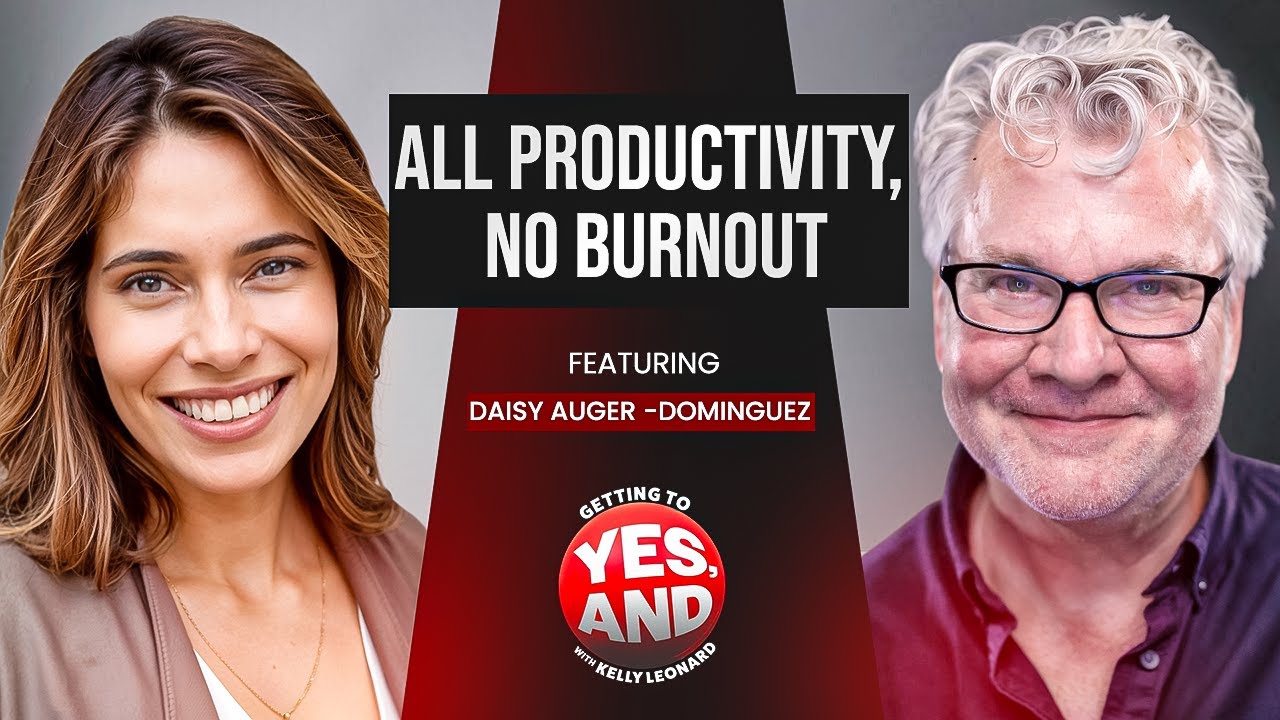
How Stay Productive at Work without Burning Out | Daisy Auger-Dominguez on Burnt Out to Lit Up


DEI expert Daisy Auger-Domínguez on overcoming burnout and navigating a corporate crisis
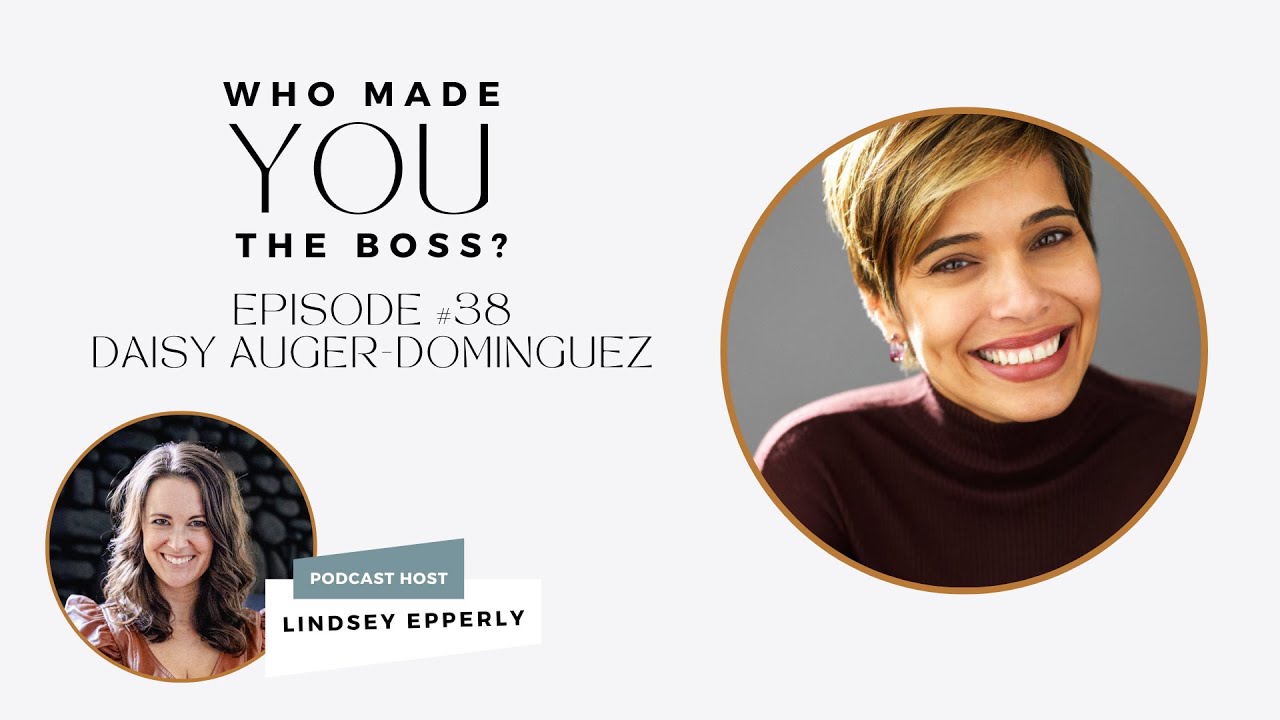
38. Feeling Overwhelmed? The Micro Resets That Can Change Everything with Daisy Auger-Dominguez