What Happens When the Workplace Culture Fixer Needs Fixing Too? Daisy Auger-Dominguez Explains
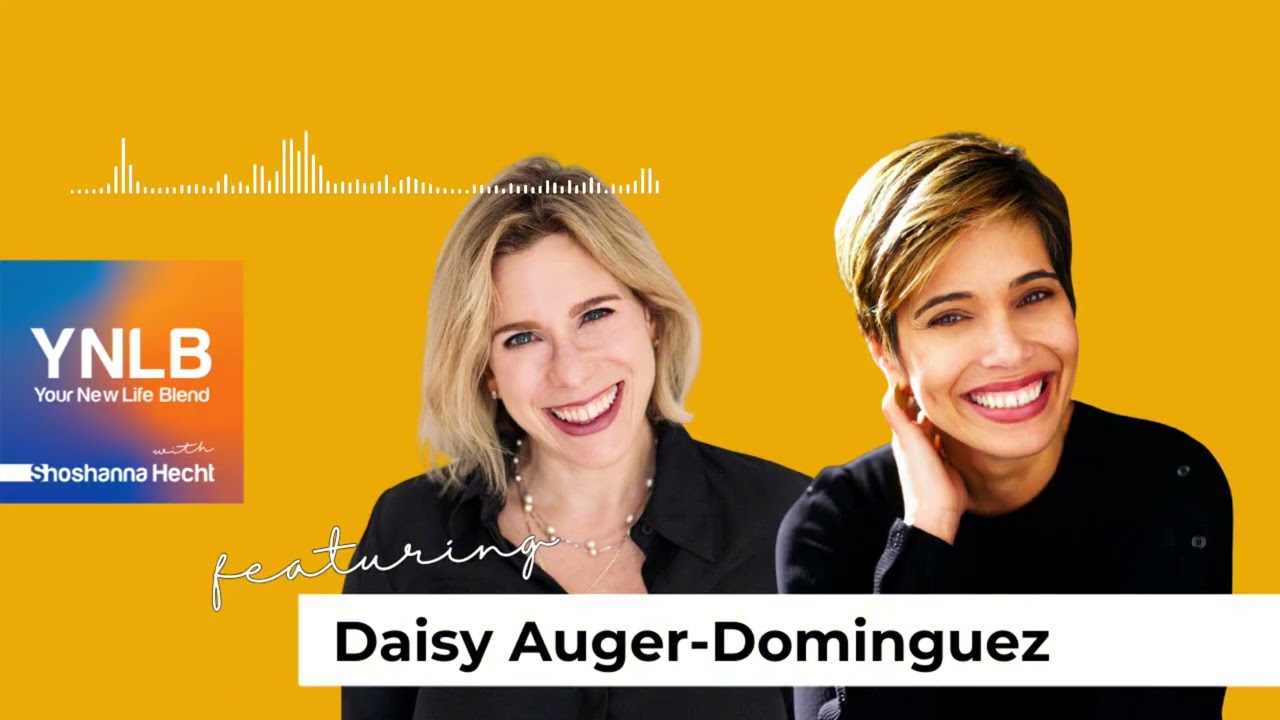
In this episode of Your New Life Blend, host Shoshana Hecht interviews Daisy Auger‑Domínguez, Chief People Officer at Vice Media Group and author of Inclusion Revolution. Daisy shares how her personal history of early‑life trauma and deep empathy shaped her commitment to belonging and inclusion. She describes the tension between a righteous, "either/or" stance and a collaborative, middle‑ground approach, emphasizing the need to move from binary thinking to nuanced problem‑solving. Daisy explains how she embeds inclusion into everyday decision‑making by asking equity‑focused questions (e.g., “Does this create inequity elsewhere?”) and ensuring all voices are heard, even in high‑pressure moments such as layoffs or behavior‑management cases. The conversation explores the shift from proactive culture‑building to constant reactive triage during the pandemic’s volatility, the personal burnout she terms “burnt crispy,” and the collective exhaustion of HR leaders. A major focus is the return‑to‑office debate, which Daisy frames as a flashpoint for hidden inequities—ranging from racial and gender oppression to neurodivergent sensory overload—highlighting the need for flexible space design rather than one‑size‑fits‑all policies. She discusses the importance of vulnerability in leadership, sharing how her team gives her honest feedback about stress and how she models human presence. To navigate the chaos, Daisy introduces the concept of the “Beautiful Basics,” a strategic theme for the coming year that prioritizes getting fundamental HR processes right (hiring, onboarding, development) rather than adding layers. Throughout, she stresses the lasting impact of the pandemic on workplace culture, the necessity of asking hard, uncomfortable questions, and the imperative to re‑imagine the future of work with intentionality and compassion. The episode ends with Daisy directing listeners to her LinkedIn profile for further resources.
Chapters
Hi everyone. Welcome to Your New Life Blend. I'm Shoshana Hecht, your host, and I'm feeling so fortunate to have with us today accomplished executive and dynamic leader, Daisy Auger-Domínguez, currently Chief People Officer at Vice Media Group. Daisy leads a global team responsible for people operations and culture, diversity, equity, inclusion. Daisy brings her wide range of diverse life and work experiences forward into her work and has harnessed all of it into her book, Inclusion Revolution, a handbook filled with practical, tactical strategies for designing racially inclusive management and teams. I'm really excited to talk to Daisy today about her work in elevating the importance of inclusion and compassion in workplaces and how the last few years have impacted her and her work. Daisy, welcome to Your New Life Blend.
Oh, Shoshana, it's awesome to be here with you.
I'm so thrilled to be here with you. It's lovely to see you even through this screen and hear you in my ears. It's delightful. Let's get right into it. The podcast is about building your life with intentionality. It's our North Star. Your North Star is inclusion. Clearly not everyone's North Star. So how are you leading the inclusion revolution to get workplaces to build inclusion into their priorities with intention?
Oh goodness. Well, the first answer that comes to mind, Shoshana, is I do it one step at a time, one mistake at a time.
Like anything.
Yeah. One win at a time, one setback at a time. It's all those things. Over the years, and as you know, I've been doing this work for quite some time, some of the best lessons learned for me, and particularly Particularly this year, it's been to step a little bit away from my righteousness self to my collaborative self. I believe in this work so much. I believe in it because I have experienced feeling othered and diminished and marginalized, because I have seen it in others, because I grew up with this deep sense of empathy. I think that when you face trauma at any point in your life, but particularly in the early stages of your life, and for me, it was not being raised by my mother and being raised by my grandparents and spending my first 15 years seeking answers to questions that most folks couldn't or wouldn't answer, I've spent a lot of time thinking about the impact that it had. And one of the many impacts it's had is that it's created this deep sense of empathy for others that feel othered or less than or missing something. And so when I entered the workplace, when I felt others feeling that, I immediately want to put my arms around them and fix that, right? Because I can connect to that sense of longing, that sense of wanting, that gap. And that to me has translated to a career building that sense of belonging and that sense of connection and that sense of worth for everyone in workplaces. And so that, as worthwhile as it can be, and as good as it can feel, it can also take me to a place of righteousness of this is the right thing to do. And therefore, you're either with me or you're against me. And I see it in my Gen Z colleagues, right? It's just like, you're either with me, Daisy, or you're not. And it's finding that midway point and going, okay, yes, and yes, and the righteousness is good. And then also, how do we collaborate together to get to that place of good for all of us? And so that's a bit of where my head and heart have been this year.
There's so many good things in there, but what really strikes me in there is how easy it is to get pulled into this or that, the binaries. We are programmed to just find those super comfy. And it's that gray, it's all that good stuff in the middle, right? I think is where collaboration, problem solving, inclusion.
It's where we dream. It's where we build. To me, it's in that middle space. And I think your point about the comfort level, it's a really important one. As an HR practitioner, all day long, my job is to both create comfort and discomfort. And it's a balance that's— I don't always get it right. I do not always get it right. But I am in constant conversation, whether it be an employee who has misbehaved and who has a pattern of misbehaving, but is a relatively nice guy, right? So we're like, you know, he's just an idiot, Daisy, right? He just made another mistake. He said yes. But here's a pattern of bad behavior that we allow To happen. And the more that we allow that to happen, the more we're sending a message to others that when they behave well, when they're behaving the way that we ask them to behave, that's not valued. That's not— why try to always go the good route when the bad route gets accepted and privileged and connected, right? And then it was also the other extreme, the real pain and anguish as the entire global workforce is facing reductions and layoffs, the real pain of being the survivors, of being the ones that are still here and feeling the loss, literally like you've lost a limb. Yeah. When a coworker that worked side by side with you for years is let go, the anger and the frustration that comes from that, and the only other person that's in front of you is someone like me or someone on my team. So you're going to throw all that at them. And many times I tell my team, all I can tell you is take it in, because that's the kindest thing that we can do for them right now. And if you can't, I'll put my body in front of yours, and I'll take it in because they're hurting, they're in pain, they're processing a traumatic event, because being laid off is a traumatic event. And right now there's Not much more we can do other than to show care. And showing care sometimes is just sitting there and taking it in.
Okay, I want to go with the HR professional way and how you continue to build inclusive community and also be in constant triage mode, which it sounds like it has been for the last chunk of time, A. B, that's so much for you as an HR head professional person. So there's like 2 directions that I want to connect to. Which way would you like to go first, Daisy? Oh, goodness. Like, how are you really fielding all of that, managing all of that, and still continuing to build think about culture and everyone's role in it, and also you, your role in all of it?
I'll say this, Shoshana, whether it's triaging, whether it's solving for the day's crisis, whether it's building long-term strategies, culture is always top of mind. Culture is what leads every decision that we make. And so for me, that intentionality about thinking about inclusion and belonging and psychological safety is just baked into how I think. What I need to do is make sure that it gets baked into how we communicate and that it gets baked into how we make decisions. What my team will often hear me say is, does doing this result in any inequity anywhere else? Does doing this have a negative impact on XYZ from an inclusion perspective? The standard questions are like, have everyone's voices been heard? Have we brought in all of the ideas? That also has somewhat become baked into what we do, but we still have to remind ourselves, 'cause every once in a while, we'll catch ourselves going, oh, we just did that, but we never asked payroll for what they thought, or we never asked the international offices for what they thought. And all of a sudden, you're like, oh wait, our solution was wasn't as holistic as it could be. That's inclusion in and of itself. Inclusion shows up in the conversations I have with leaders about the decisions that they're making of their team members, decisions regarding promotions, reductions, new assignments, behavior management, all of those pieces. It's often a moment of, when you made this decision for someone else, did you think of the same parameters, right? Were you considering the same pieces? It's some of that, and that work has to be done in a way that is not pushing someone away from listening to you because that can happen very easily. I've seen that happen in my career often. And many times I would say, oh, it's them, not me. And I've had to reflect on, wait, wait, but I pushed them away. I gave them a binary, Shoshana. I gave them an either/or. And in that point, it wasn't an either/or. It was, well, let's think about what is it in your experience that leads you to think that? Well, Daisy, you know, I've never worked in an environment like this. I've never done this. Okay, well, this is the environment we're in now. This is the workforce that we have. How do we find a place for you to not feel threatened or hurt from a personal perspective, but also that you're not causing harm and that you're not causing pain. How do we find that balance? And that doesn't happen in one conversation, Shoshana, right? That's ongoing work.
I think the phrase you use, top of mind, always top of mind, because what occurred to me is proactive and reactive versus reactive, right? So like when we can be in a proactive phase about building culture and building inclusion and baking it in when we have space, but I sort of imagine that since maybe March of 2020, there's been a lot of reactive. And that's really what I was thinking is like, how do you balance that? How do you continue to do this really vital, important, necessary work when you just are bombarded constantly?
Yeah, I don't have the perfect answer for that other than you persist.
There's no such thing as perfect.
Yeah, yeah. Yes. Thank you, Shoshana. You're absolutely right. For me, it's about reminding myself of why I'm doing this. Engage in this work as if change is possible. That's the Post-it in front of my desk that I look at all the time because change is possible and it happens in small increments or it happens in rapid increments. moments the way that we've seen and we've experienced in the last 3 years, right? Part of this triaging and this reactive mode is because we have been living through the most volatile of times. And it's been documented, and it's been researched that this volatility and uncertainty that we're facing, we're used to having it be in larger cycles. What we're seeing now is like these short cycles. It's a short cycle of this volatility. And then you have like maybe a second to breathe. And then there's a new one that comes up. And you're like, wait, I didn't even get to recover from that one. I'm jumping on this one right now. But also, how do I maintain a steady state of what is still important? What is still important versus the crisis of the day? And so, for me, the work that I do with my team is these constant reminders. This is reminding us of why we do what we do, why we do it where we do it, and what it means to us individually and as a collective. I have a team of over 70 employees globally, and every single one of them has a different driver, but at the end of the day, what they know that we lift up for the work that we do, what comes all the way to the top is to ensure that everyone in the organization can thrive and that they can do the best work of their lives in the best conditions possible, and that it truly is everyone. And the way that I know that it works is when my team pushes back on me on, well, Daisy, that's not equitable. Those are the moments they joke with me because sometimes some of them are so thoughtful and respectful. They're like, I'm sorry, Daisy, to say this, but if we do that, something that I may have just suggested, Then that's inequitable for so many other people. I was like, you're absolutely right. And this is why it takes all these voices to be part of it, because I just made a decision with these 3 data points, but you've just added another one that just made me pause. And no one should ever feel that any voice is the voice. And I had something like this happen last week where a team member was pushing back on me. And frankly, I went in with a final decision and said, at the end of the day, here's what we have to do. And I said, it's an imperfect decision. It is what it is at this point. And she kept on pushing and pushing, and I paused and I said, I hear you. I don't disagree with but this is what we have to do. And afterwards, she sent me a text. She said, I'm so sorry. I know I was pushing a lot. And I wrote back to her, I was like, you should never apologize. I wasn't cutting you off. I was welcoming what you were saying. And I also had a responsibility to move us forward. And I was honest by saying, this isn't perfect, but we can't belabor this, and we have to move forward.
Yeah, perfect enemy of the good. Not a real thing, a total myth. And consensus building is really important, like really getting all those voices in the room. And sometimes we also have to make decisions with the best information. that we have at the time, and it's really hard. And like you say, the volatility of it, the pace of it, I have so much empathy for you and what you're doing and the teams you're leading, the good you're trying to do when it's all just like there's a fire hose of change.
Yeah. And to be fair, we're all facing it. And I think it's that collective exhaustion. I've said this to you before. Everyone talks about burnout because burnout is real, and I've certainly felt it, and I've reframed it as burnt crispy. I'm not burnt out, I'm just burnt crispy. I literally, the parts of my body are just going to like fall apart any moment because That's how crispy I am. But it's not just in HR, it's not just in media and entertainment, it's not just in self-care, it's every single one of us has gone through this collective experience. And we're now in a place where— not statistically correct, but half of us are like done. It's like, we just don't want to talk about this anymore. We just want to go forward. And then half of us are still grappling with, wait, what happened? What is life for me now?
Also, I did not look up the numbers right ahead of this call, but the numbers of our workforce that have been affected by actual illness and loss and the toll that has on us individually and collectively as we're trying to navigate like, okay, what does return to work mean and how do we design that and what does that look like? And all the questions about life and work and what's important and what matters and also getting stuff I think there's so much that's in there. It's a big part of why I want to have these conversations. It's just like, how do we make this stuff alive for all of us? Oh
my gosh, one of the biggest triggers for anyone in HR or any profession is return to work, return to office, because we've been working. It's not that we haven't been working.
Oh, that's right. You're right. Quite right. So sorry.
I was like, we've all been working, but this return to office, I call it a novella. It's this drama that emerges every time, and everybody has a different opinion, but it's also really hugely dramatized. I'll share this because every day I have people Things that blow my mind. We heard in an employee meeting that return to office, our policy, which, by the way, I have been really careful about not defining it as a policy because I didn't want sort of organ rejection of anything that feels forced. And so, we've been calling it the ease back. We've been calling it our approach. We've had, as of now, we've had 3 different return to offices. Every time we'd return, there would be another strain. And so, then we'd have to shut down. And so, I jokingly call it like our 3rd return to office, and people are still not coming. But one of the many meetings, someone referred to return to as a white supremacist tool. And I remember going, wait a second. And it's one of those moments where I think it speaks so much to where we are as a culture, where everybody kind of froze because nobody knew what to say. I was just like, well, what do we say to that? And the people to whom this language, they were just like, yes, it's white supremacy. And so one of the leaders who was a leader of color who had some credibility was like, okay, well, we'll move on now, right? It's like, so it wasn't addressed, but then it became this contentious statement because then I had leaders come to me going like, how dare they? And we need to stop using that. And I said, okay, wait a second. I also think using that language is hugely incendiary. And I think that was the intent. I think what they wanted to do was rile us all up. But now going back and saying we can't use that language is also not the culture that we say we are. And so it's that balance of, but wait a second, in that moment, 'cause then they're like, well, what's the solution, Daisy? What's the rule book? Everybody wants to know what the rule book is. I was like, there's no rule book to this. Like, I've never been told this. I've never brought an entire global workforce back to offices that nobody wants to come back to because it's not that they don't want to come back to offices, it's that they don't want to come back to the way work was. That's what it is. That's what they're resisting. And that means a lot of different things for a lot of different people. For some, it's white supremacy. For some, it's gender oppression. For some, it's just, I'm an introvert and I hate being in an open space. So, Daisy, you just laid out, right? Because I'm the one that sends all these notes. You just laid out this awesome, beautiful message about come back to the office and everything's going to be great. And all I read in that was my anxiety Anxiety levels are gonna be up here.
Or I'm neurodivergent and working in an office space or in a— this space. There's so many ways that you could unpack that. What's interesting about that is I actually think the return to office moment, and I think this is what you've said in a variety of ways, and it is an opportunity to look at like old way and structures and how we have bought in to the way that we have done stuff. And this moment is a moment to say, old way, what do we take that worked and how do we bring that forward without trying to shoehorn us back in when so So much has upended. I don't feel like even changed has been a strong enough word.
Oh my gosh, upended is absolutely right. And where we haven't had the breathing room to truly process that, because if we weren't facing the economic headwinds that we're facing right now, and the challenges that could have been slightly different, it's all of this could have, would have, but we haven't had the breathing room to actually pause like this whole way of hybrid work, the language that we use around hybrid work, future, even the language of future of work. We've been in the future of work. We've already been in it, but all—
The future is now, right?
Yes. But all of this, we haven't really had time to process and sit down and figure out what does this mean for us and to process the divergent views because there's a lot, and it's mostly leadership and older folks, I'll say that, I'll call it out, whose image of being a worker, whose identity around work was defined by what we knew before the pandemic. And then we've got workers who never experienced that, and who are like, wait, but I've never been to an office. And by the way, my argument is that those are the people who actually need to be more in offices because they're missing out on being able to experience that mentoring and that socialization. And then you've got an in-between group who has been harmed, has felt traumatized, has been damaged by not the office itself, but the act of being around people that have kept them from achieving to their fullest capacity. And so you've got all of that. those feelings, and then you're telling me, Daisy, you're telling me it's gonna be great when I come to the office? Nah.
Pass. Hard pass.
I totally get that.
It's interesting. We get so comfortable with what is or what was. We have this longing. It's all that, oh, things were simpler back, way back, which is a myth, right? What can you say? There's so many things to unpack about that. But this idea of there is this collective trauma, like a once in a 100-year cataclysm, this pandemic thing. So then of course it makes sense to me that people who had been working a certain way for a long time would have this longing for to just return to normal. But the intersection of your work then, I feel like, is so important, which is, let's question that. How do we interrogate that? Who does that actually affect? What's the roll-on of that? That is why I think your work is so—
Who does it serve?
Edger Buck, so crucial.
Yeah, thank you. To answer your earlier question about how do you continue to be intentional about inclusion, that interrogation has to be deep, and it has to ask these uncomfortable questions of, who does it serve to be in the office? Who does it privilege to be in the office? And you mentioned neurodiversity, like, that was one of the feedback questions that we And that was one of those light bulb aha moments for me of where I had to accept. I said, you know what? I hadn't thought about neurodiversity from the perspective of people not wanting to be in these open spaces because from a sensory overload perspective, it's too much. And so the solution is, okay, this is not just an ADA accommodation. This is a, how do we design spaces that allow for that fluidity of experience to be not just like you get a special room, right? Because you have sensory overload, right? It's how do the people navigate these spaces? And how do we have the space to do that? Because right now all I have budget for is this. So it's that constant back and forth and that constant questioning of who is privileged by this and who is not. And by the way, even asking that question becomes politicized, right? I was like, oh, you're using that language, you're using it. And I was like, well, we need to also just be okay with the fact that because we've never asked those questions is what's led us to be where we are. So let's start somewhere.
Anytime we do anything for the first time, it's hard and it hurts, but that's okay. That's okay. And let's look at that too. Okay. I do want to go back to how you're doing with all of it. I teased that up about 15 minutes ago, but like, if you're putting your body in front of everybody, Chief People Officer, a lot of accountability ownership stops with you. How are you managing it all? I imagine there's a lot coming your way.
There's a lot coming my way. And I want to also acknowledge that I'm no victim here. I'm also tremendously privileged. And as much as I do put myself in front and remind my team of the that, I always tell them, I was like, this is why I do it. I'm your leader. This is my responsibility. If I don't hold myself accountable for this, then I'm not leading. I'm not doing what my job is, which is to support you and to be there for you. I have better days than others. I had an aha moment, and then I later shared it with my team when one of my direct reports came to me and said, I need to give you some feedback. The junior members of the team are noticing that you're really stressed. And I looked at her and I just breathed, and I said, it's been really rough. It's been been rough personally and professionally, and I know I'm supposed to show up, because this is what I tell my managers all the time, I'm supposed to show up confidently. I'm supposed to show up competently, right? This is what we tell our managers all the time, that this is how we show up, but sometimes I just need to be my human self and just let folks know. And she said, I don't want to be mean. I just want to share it. I was like, no, I appreciate this, and to me, this is a testament of the relationship that we've built, that you can share that with me. So, last week, I brought the team together, my global team, to share some tough news, And as I was sitting there, I shared that example. And I said, someone recently said this to me, and I want you all to know, we all have to bring our human to work, right? I was like, we all are human. At the end of the day, I always share, my former boss used to always remind us before we made any action, don't forget the human and human resources. So I always refer to that to my team. And I said, I'm human too, and I'm gonna have bad days, but I want you to know I'm here. I need those days because I need to replenish too, and I need to just be okay. Yeah. And I also don't want to fake it. I don't want to fake it till we make it with you, because that's not my leadership, and that's not what I've committed to you and promised to you. And I think that they got it, and it was in a way of like, oh, I don't want you to all feel bad for me, because, again, I know the privileged place that I sit in, but also, we're all carrying a lot, and sometimes I'm just gonna show up differently.
And you're not a robot. I think it actually says quite a lot, in a positive way, about your leadership and leadership style, that that person could come to you and actually express concern and hold up a bit of a mirror.
Oh, she sure did. Yes. I was like, ouch. But real. Like, I was like, yeah, you're right.
And I think there's something to be said for, like, how do you, in the last 3 years, find a way to balance humanity with performance and productivity? And also that sometimes those things, something has to give. And that stuff you're managing constantly is what I imagine.
Yeah. And by the way, that's every manager, every leader, anyone who runs a company, anyone who's a startup, all of us have to manage all of that. I hate when people say the good thing about COVID because I don't think anything is good about COVID I do think—
People do say that though.
All the time. And I'm always like, no, I will say that one of the changes that we've seen is the realization of our humanity in this moment. But humans have very short-term memories. And so we had at the beginning of the pandemic, all this compassion, all this empathy, all this care, And then we clap for people, we did all the good things. And then now we're struggling. We just have to do XYZ to survive right now. We're in a different survival mode. And it's not that we have lost being caring people, it's that we go back to the old ways. We go back to what we've been taught, which is simplicity, efficiency, get this done. I find myself, not because I work with bad people, but I find myself often having to lift up things like, have you thought of, remember this, don't forget that. And it's a little bit of holding up a mirror to ourselves of like, we've said this, so we have to commit to this, or we are this. And therefore, if we say we are this, then all of our decisions have to mirror, have to match those values and those mission statements. And we also, in the midst of all of this, Shoshana, we've all changed. Everything has changed. We all know we've changed. Our processes and our systems haven't changed yet. The way that we work hasn't really changed that dramatically. We still hold a million meetings. We still expect people to do XYZ, right? We still do all these things. I read it all the time, all these great tips. I share tips. We all share tips. I've gotten to the point where it's like, I don't want to share any more tips. All I want to share now is this happened. I was like, and this is what I learned. Right now, that's all I'm sharing. I was like, someone asked me this, and this is what happened. Someone did this, and this is
I think that's really powerful, actually. One of the things I coach on all the time, be real with what is. You have to name it to do lots of things with it, to tame it, to claim it. It starts with being really real with what is and not trying to bypass or Pollyanna out of the fact that it's been a heck of a 3 years and we are not the same. And if we just try to go back, we just have to ask these harder questions that I really appreciate you doing. So thank you.
Thank you. I appreciate the work you're doing because we talked a lot about self-care and you were one of the people who helped me get through the early stages of the COVID lockdown. And I so deeply appreciate that. But I worry that we'll forget that. And I worry that we will go back to fast-paced run-through. Even the language we use, even language I've used about this work feels to me now aggressive. I feel like, oh my goodness, I can't believe I said do that, do that. I was like, in what state of mind can anybody do that right now? So it's that moment of, gosh, I just need to give myself a little care and others around me and not just name it, but also reframe
You just said, I fear that we are going to, and I would counter and say, we are. We are already going too fast, doing too much again, over-yes-ing, over-committing, burning ourselves crispy. I think we are. And I think that's why we have to, A, slow down, but B, really interrogate every choice and be intentional and really think about, is that a yes? Every yes is a no to something else. else. So make them count. We gotta make them count. And I think that's what I feel really called. And what I hear you saying is like, how do we dial it back? How do we really, really ask hard, maybe painful questions to get out of, we're only successful if we're back to work the way we were, back to the office the way we were. How do we get more curious and really challenge that?
And I think that's the future of work. We framed it under so many other things. That's the future of work. And we're gonna be in this for a while. I'll tell you, I had aspirations at the beginning of the year that we would've figured that out by the end of this year. I'm so off my goals. It's like, did not even come close to that. And I'm okay with it. I can tell you a month or two ago, I would've told you, I feel awful about this. Right now, literally every— we're all in end-of-year self-reviews. So I had to do my own self-review for my boss. I literally just started with, I missed almost every one of my goals this year. I was like, here's all the things I did. Here's all the things I I did, but I was like, but I'm just saying I missed all these goals. Like there was no way to get to them because of XYZ.
What's great about missing the mark is the opportunity to learn and do it differently going forward. Absolutely. And like, that's, and so it's like, how, okay, too ambitious, too challenging. How do we break it down a little slower, a little softer, a little more actionable?
I like to think of, from an intentional perspective of themes for every year. And I've been trying to think of it for my team and I was using like simplification, but we've started using this phrase last year and This is the theme for my team next year is the beautiful basics, and that's what our theme is going to be for next year. And I started the year really so ambitious and so many things we were going to do, and I'm just calling on my team, given the reduced size that we have, where we are, is like, next year is going to be about the beautiful basics. We're just going to look at doing all the good things right, from hiring to onboarding to re-onboarding our teams to development. Just get all the beautiful basics right. We're not going to be Like adding 3 layers to it, making it extra. No, the beautiful basics.
I love that. And honestly, I think that speaks to that question I asked earlier on about like how, when everything is coming at you, do you keep going back to building a culture that works for everybody, that includes everybody? And it is like homing in on the basics, the beautiful basics. I'm gonna carry that forward into my 2023.
And I didn't come up with it. It was a colleague of mine. But we've been using it and we've been using it now as subject matters. Like we, we sent the Beautiful Basics for people to remember to complete all their paperwork. It's like the Beautiful Basics. Here's the things that you need to remember, like just all of these reminders. And that's gonna be, that's our theme for '23, the Beautiful Basics.
It might be my theme for '23. Thank you for that. Taking that, like wrote it down, put a little piece of paper, put it in my shirt pocket. Daisy, it's such a joy to talk to you. Thank you for being here. I'm grateful for you and your work and your friendship. And where can people connect with you and learn more and follow you and do all the things?
Oh goodness. Well, I have a website, but really LinkedIn is my space. That's my community. In the spirit of simplification, I am only using that platform right now to communicate and to share.
I love it. Keeping it simple. I'm all about it. Well, thank you so much for being here.
Thank you, Shoshana.
And thank you all for listening. It's Daisy. This has been Your New Life Blend. I'm Shoshana Hecht, and reminding you as ever, and it feels as appropriate as ever for this conversation, to be gentle with yourself.
More from Daisy

How Stay Productive at Work without Burning Out | Daisy Auger-Dominguez on Burnt Out to Lit Up


DEI expert Daisy Auger-Domínguez on overcoming burnout and navigating a corporate crisis
38. Feeling Overwhelmed? The Micro Resets That Can Change Everything with Daisy Auger-Dominguez