WHY You Need to Become a Caring Leader with Daisy Auger-Dominguez
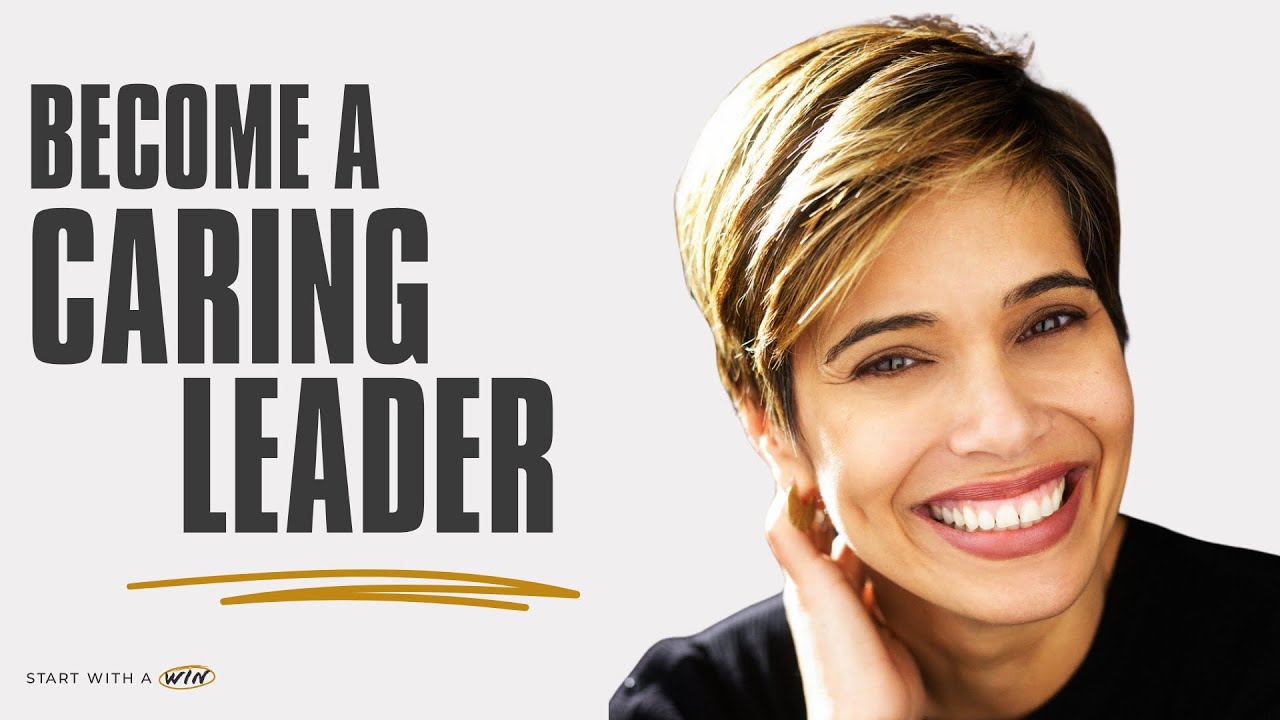
Daisy Auger-Dominguez, former Chief People Officer at Google, Disney, and Time Warner, argues that caring leadership sustains results through empathy and genuine care. She says leaders must listen to employee "whispers, screams, and everything in between" as data, promote rest, and shift from command-and-control to giving people agency.
Chapters
Show evidence of care. You don't have to solve everything. You don't have to fix everything for folks.
Why is that so important for leaders and even, you know, employees and management-level people to understand and practice on a regular basis? Welcome to Start With a Win, where we unpack franchising, leadership, and business growth. Let's go. Ever wondered what it takes to build a workplace where people don't just survive but actually thrive? Hey, how about that for a concept? Today, we're diving into that very question on Start With A Win. Coming to you from Area 15 Ventures and Start With A Win headquarters, it's Adam Contos with Start With A Win. I'm thrilled to be joined by Daisy Auger-Domínguez, a true game changer in workplace strategy and leadership. Daisy's career reads like a who's who of industry giants. Google, Disney, Vice Media, you name it. She spent over 2 decades leading global teams and transforming company cultures from the inside out. Now, through her consultancy and as an author, Daisy is on a mission to help leaders create high-performing environments that stand the test of time. If you're curious about how to future-proof your workforce and keep your team lit up, not burn out, you're in the right place. Daisy, welcome to Start With a Win.
Oh, thank you so much for having me,
Adam. You have a really, really great past of helping so many organizations, you know, really building amazing teams. As Chief People Officer, you've been with some incredible companies. that I said during the intro there. And I mean, how did you get to where you are today? I mean, that's a lot of, you know, a lot of impact and influence that you've gone through in life. Tell us, where did you start your professional career and how'd you end up where you're at today?
Oh my gosh, Adam. Well, it's funny because when you look at it in hindsight, it does look really, you know, it's impressive, it's lovely. I'm really proud of it. But it was, it wasn't linear. And I certainly did not think I would land where I am today. I started my career as a credit risk analyst at Moody's Investor Service right after grad school and a leadership training program, the Coral Fellows Program that I went through here in New York. And I ended up working at Moody's for 12 years. I was a credit risk analyst for 6 years domestically and internationally. When we were expanding in Latin America, they realized they had this Latina who was a native Spanish speaker. And they're like, well, you know, do you want to help us? So I early on in my career was exposed to senior leadership and decision-making very early on because I was put into these, these spots, these opportunities where the CEO sometimes, you know, didn't want to speak English, only wanted to speak in Spanish. And here I was. So those very early experiences allowed me to navigate these corporate spaces that I navigate now. But then from a credit risk analyst, I went on to manage our global foundation. And then I was asked to run the company's first diversity and inclusion function. And this was in 2008. So this was 12 years in the same company, 3 different jobs. And from there, really, that's where my career started expanding and shifting. in the people space. From there, I went to Time Warner and Disney and Google, as you've mentioned. And in every position, some of them were sought after by me. Some of them I was sought after, right? They were just very different opportunities. Again, I wish I could tell you I was incredibly strategic. But I will say that decisioning for me was always, was it a brand that I was interested in? And these were all really lovely, amazing brands. Was it work that was going to be meaningful to me? And was it something that was going to challenge me? And every position was more senior, more integrated, more, you know, more responsibility, higher scale. And, you know, and then I am where I am now.
Wow. It seems like, you know, the more you scale up in the people space, you know, it— I hate to say it, but There's always another challenge around the next corner, or— and I actually heard it put succinctly. I don't know if I should say best, but I heard it put succinctly by somebody is the problem with leadership is people.
I mean,
what does that mean to you? I guess the opportunity with leadership is people.
I like that. I like that twist. Well, I am perhaps infamous for always telling folks who want to get promoted and want to run teams, I'm often the first person to say, watch what you wish for, because it's another job. Now, I love it. I love growing teams, developing teams, creating conditions so that they can thrive and be in their flow. Yeah. But it is a second full-time job. You're dealing with humans. You're dealing with fallible humans. You're dealing with imperfect humans. You are dealing with sometimes unresponsive humans, right? You're dealing with all of the elements of humanity. And it does make this work a lot more challenging. I'll tell you, my husband, during the pandemic, Goodness, we were trying to just keep people safe and productive, healthy and engaged, right? All of the things at once. And I would sometimes leave my office just so frustrated or angry or upset or just emotionally exhausted. And I would look at my husband and say, oh my goodness, I just can't do this anymore. And he would look at me cheekily and say, well, you're the one that wanted to be the chief of people. It's like, this is what it looks like. And so he would just do that sometimes to just get my spirits back up. And, but also to remind me, I was like, you're doing the work you want to do. And you never said it was going to be easy.
Well, and it's— I'll be the first one to say, I mean, it's so fulfilling. Running a company with 150,000 people in it was amazing, even though, you know, you're not impacting everybody, but those that you do is so satisfying. And, and going through the pandemic also, like, like you said, I mean, I remember that, that first day, we were like, okay, we're all Zoom and We spent 12 to 14 hours a day Zooming around the world to talk to people globally because we all had the same challenge. We felt stuck and we didn't feel like we could do what we needed to do in order to move the ball forward for our business. So, we went in—
And we were scared. Like, let's not forget, we were scared. We didn't know what we didn't know. There was no playbook for this. And, you know, and we had to figure out immediately new ways of working and connecting and decision-making with each other. other in a very different setup.
It's interesting. It seems like, and I'm sure you've noticed this, it seems like we reprogrammed how employees think since, or, you know, during the pandemic. And since then, we've had to work around that programming of that mindset. A big part of that is obviously mental health. And you talk about the intersection of leadership and mental health. Give us a little insight as to why that's important for us as leaders to think about.
You know, I think of leadership as not just driving results. It's about driving results sustainably. Right. So you have to create environments where mental well-being and mental health is prioritized. And in order to do that, you have to start with empathy. And you have to start that with true reflection and open dialogue. And what that means is that we have to understand what motivates and also what drains our teams. We have to recognize those signs of burnout early before folks are just so spent that they've got nothing else to give, right? And that means that we have to think about flexibility and job assignments and connection in a very different way. And we have to promote rest as part of the work culture, not what seems to be a reward for overwork, right? Right. When people get exhausted, you say— I'm like, OK, well, let me give you a couple of days extra. It's like, no, this isn't— this isn't the reward for overwork. We have to, we have to look at how do we implement moments of rest throughout so that you can drive true sustainability because performance flourishes when people feel valued and when they feel understood, when they feel supported. I think one of the, my, my favorite productivity hacks is actually to treat people well, right? To understand what gets in their way and to get it out of their way. That's a productivity hack. You get more from your people, right? Right now, we're all struggling with the polycrisis that we're operating in, the tightening markets, the how do we get more with less. And we don't realize that to get more out of folks, you actually have to treat them better because performance and well-being flourishes when people guess what, are informed, right? When decision-making bottlenecks are reduced, right? When they feel heard, even if they have unpopular opinions, and even if their ideas are not selected, right? Just those moments of connection and understanding and clarity are what get you productivity. And to do that, we have to lead people so that they are well, and we have to be well ourselves.
Okay, so you just said a few things that I want to unpack there, which are fantastic because I love this, um, you know, this leadership talk. The reality is, and I was talking to my last guest on the show, uh, about this, we don't teach leadership in business. I mean, it's, it's this huge gap in business. I think everyone would agree. Um, you know, I can't tell you the last time I actually, in 3 decades of, of being associated with either government or private entities, had a class on what is emotional intelligence and how do you deploy it as a leader. So, and you mentioned empathy. So tell me, why is— I mean, empathy and emotional intelligence are essentially the same thing. Why is that so important for leaders and even, you know, employees and management-level people to understand and practice on a regular basis?
We have to understand our people so that we can create the conditions for them to thrive. That's our role as leaders. And when you say that you've never been to any of these leadership programs, you listed all the companies I've worked at. And I was incredibly privileged to be— in most of them, be considered high potential and being put through all these leadership programs and training programs. And none of them taught me this either. Right. They would address emotional intelligence sort of in the last couple of years, but as a strategy, not as an actual embodiment of what it meant to be a leader. And that's how I see it, right? I have to embody this, not just say that I care about you. I have to mean it. And you have to believe it so that you're willing to put in that extra effort, that extra ounce of trust and belief in me as your leader. Because most of the time, Adam, we don't know everything, right? This is what I tell leaders all the time. Like, don't fake the funk that you know all the things. Because you know who the first people are to know that you don't know everything? Your team. Right. They get it. And if you— and if you come at them vulnerably, honestly, and with genuine care for them— Reggie Butler, who's a leadership trainer, refers to it as show evidence of care. You don't have to solve everything. You don't have to fix everything for folks, which was a big struggle for many of us during the pandemic because it was the first time that for many leaders where they were like, oh, I've got no tools in my toolkit for this. How do I fix this? Well, sometimes it wasn't about fixing it. It was simply about showing up for your team and saying, I don't know what I don't know. But my job is to get us to the other side. And I hope that you will stick with me here and help me help you get to the other side.
I love that. I mean, such a great comment there. Make sure you rewind and listen to this, folks, because Daisy's dropping some gold here. I want to— let's kind of fast forward a little bit from the pandemic, and we end up in this period called the Great Resignation. What was your perspective on that as a Chief People Officer, and how did you end up dealing with that?
Oh, goodness. Well, funny enough, I was just reading an article that said that we're going— there's fear that we will be going through Great Resignation version 2 now. So I don't think that there's going to be another version of that. But the Great Resignation was really a wake-up call for all of us. Right. We couldn't— as an HR leader, we could not keep butts in seats. I think we had— at some point, we had 40% to 60% attrition. My teams and the leaders that I worked with were yelling at me because my recruitment team couldn't recruit fast enough for them. And I would have to very honestly and humbly tell them, I don't even have a full recruitment team to recruit for your teams because I've lost people on my team. Right. It was chaotic. But it was also— You know, I think that with, you know, with, with every great crisis, right, there's an opportunity. And I think it became a chance to rebuild trust, right, to reimagine flexibility and to reimagine what the world of work could look like. And, and to do that in a way that allowed us to focus on what really matters to our teams. I think that we were so stuck, and we tend to do that, right, as humans, we, you know, like, we give up on ourselves pretty quickly. And, and we, you know, we tend to go into woe is me. But I tried to, in the midst of that, and I, you know, in full transparency, didn't always do it well. But I tried to figure out how did we use that moment to really listen, right? To address the lingering issues. Because what we were hearing from employees weren't just problems that were just showing up then. These were lingering systemic and operational issues. And they were systemic from a equity perspective, from a treatment of underrepresented employees. But they were also operational. I remember our team struggling with just how hard it was to get things done, right? And that was an opportunity for us to think, well, why don't we make things easier for people? Like, where are those roadblocks that we have just stopped looking into because we just do things as usual? Well, this is a chance to revisit the way that we look at things. We advise— my colleague called it, and we called it for the company, the beautiful basics. We're like, what are the beautiful basics? Let's revisit these, right? Let's think the way that we do things every day. How can we just make it a little easier for you? Maybe reduce the 20 steps that it takes you to get XYZ done. Reduce it to 10 steps. Wouldn't that lighten your load and make work a little bit more enjoyable and more pleasurable? So that's— That's what we ended up using that time for, in addition to just figuring out how to fill in the seats that were empty. But it was, what did we— how do we look at those lingering, sustaining issues that we can reduce so that we can reduce what leads people to exit companies, right? Which is exhaustion, cynicism, lack of trust, right? Sometimes financial, for sure. But I would venture to say that it's usually more of the emotional disconnected moments at work that lead people to, you know, lead people to leave a company. Um, and so that's, that to me was what the Great Resignation was about.
Totally. Yeah. I mean, it, it seems like people recognized that they were getting burned out and they were starting to do something about it themselves instead of, you know, typically in the past we would always have to, as employers, deal with burnout, but I think people were being proactive about it. It, it seemed like.
They discovered their agency. And I'll tell you, as an HR leader and just as a human, I love that, right? I want you to have your agency. It's also hard as a manager, as a leader, right? When my managers and leaders would come to me and say, everyone's yelling at me. I feel like everyone's yelling at me. And one day, it just came to me. I was like, you know, it feels like yelling because you've never heard them before, right? Think about a baby when they're testing out their voice, and it's all sorts of different sounds. It's like they don't know what they're— what their voice sounds like. For workers, this was a time to exercise an agency that they had wanted to, that I don't know about you, Adam, but I had wanted to exercise when I was younger. I just never thought I could. Right. And now we had this workforce, particularly Gen Zers, but, but others who just said, no más, right? I was like, this is it. This is what I deserve. And, and that those demands felt like yelling and felt like, you know, and were just about tension. But they were really about people exercising different muscles and asking for the things that I believe are important and valuable.
Right.
Perhaps we can't give everything to everyone. And I think that's the other element of this. As an HR leader, I'm often in that tough position of having to say, OK, you've just asked for 10 things. I may be able to give you 2. But here's the context of why I can't do the rest, right? Economically, financially, operationally, whatever, you know, whatever your, your restrictions are. And that goes back to your point earlier about leadership training, right? We haven't been taught to engage in these moments of tension and resistance, right, and agency. We're still operating from the models of the old industrial labor, right? Right. We're still operating from the days— I don't know about you, but I, you know, I, I remember it was, I think it was in in the early, in the early 2000s, when people stopped using the 5-year plans, right? Like, remember back then we used to do 5-year plans, then we're like, no, no, no, that's too much. We'll do 3-year plans. Now it's like barely a quarter and the world changes again. And so we're still operating as if we can build plans like that, but we have to constantly be looking around the corner. And, and that requires an agility, a resilience, And again, an empathy and attention to people that, you know, that we just— those are muscles we have to build.
Right. Yeah. I mean, it totally seemed overwhelming to everybody, including leadership, because we, you know, our— my generation, I'm Gen X.
Same here.
Yeah. I mean, we came from command and control and it never worked after our generation. In fact, I think most of our generation really doesn't like it either. So, you know, after the We didn't like it.
We just didn't think we had an option.
Exactly. Yeah, it was keep your mouth shut and just do it.
That's right.
But which caused a lot of burnout. I mean, I burned out 2 or 3 times, but I was, I was able to pick myself up and move forward. But now we're recognizing this. And we're also recognizing that, you know, there's— and I, I hate this term because I don't think there's true balance in life. I think there's only effort in life. But we figured out this workplace balance thing. Or we started calling it something in order to kind of appease people and make them understand that we realize it. But ultimately, it came down to like what you were talking about, communication and clarity. And let's understand that life is not on these long-term things. You know, Google went to their, what, 30 to 90-day business plan, I guess, during that period.
Yes, that's what they're working on.
Right. And everybody thought they're nuts. But the reality was the employees loved it because they had constant communication as to what we're working on.
Mm-hmm.
And instead of this once-a-year CEO memo that I thought was just horrible in companies. So, all right. So trust and relationships are at the core of all of this, obviously. What today are you seeing that we as a business should be working on? As you know, a lot of businesses don't have a Chief People Officer to remind them And, and set some, you know, people strategy and, and, you know, these different campaigns to increase the, the attention and the engagement of our employees. Smaller businesses, what, what can we be working on in order to get people moving forward where they're not constantly turning over?
Well, trust and relationships is actually a core theme of my work and, and of my, my second book, Burnt Out to Lit Up. Because it's fundamentally how we engage with each other and how, you know, how we're able to ask for that extra level of exertion when, you know, people just don't want to give it to you. It's how we get things done. And I think any organization, any size organization, has to think about, as a leader, right, how do you listen deeply to your team? How do you really, truly understand? We do employee surveys. We do one-on-ones. We do meeting— sort of all-hands meetings, all of those. Every one of those experiences, I think of them as data collection moments. This is when you're truly listening because you're listening to— in my first book, Inclusion Revolution, I have a chapter that's called Listen to the Whispers, the Screams, and Everything in Between. Because, because that's, that's, that's our role. And the whispers are, you know, you've been, you know, I've done it, right? It's, it's, you know, those little quiet moments with employees complaining about their boss or about a project. Right. But it doesn't go beyond that. But it does. Right. Because, right, it sort of permeates the organization. The screams are, right, the employees who are quitting, the employees who are now in our day and age, you know, Calling you out on social media, right? Like, those are the screams. And it's the in-between, right? It's those day-to-day interactions. That's the moment where you can collect this data to really think about, where am I? How do I— how do I measure up when it comes to trust, right? Am I someone who is consistent in my actions? Am I someone who people believe what I say is actually going to— it's actually true, and it's consistent with what I've said before? And that requires you to really listen to your team, understand their concerns across all levels, right? Validate feelings because people are in their feelings. And we've just gone through some of the scariest times in our lives. But frankly, we're still living through really scary times. And even when truth is difficult to hear, we have to, as leaders, seek it out. And we also have to— Resist the urge to always rush to solutions. I have— I'm the worst at that, right? My go-to whenever my team comes to me is, how can I help? Right? Like, what do you need from me? And sometimes I have to lean on what I learned from another good friend and executive coach, Xander Grashow. And his standard line is, do you need me to witness? Help or distract you, right? Because it gives—it normalizes giving agency to the person that's talking to you, right? Going back to our exer mentality of like command and control—you just you tell me what to do. This is this shifts it. This normalizes letting that person come to you actually dictate and drive what that conversation is going to look like and what they need. Sometimes it's just witnessing. It's just I need you to—I need you to go to this meeting and take a look at that and—and let me know: Am I the one messing up? Am I not getting? something, right? I just need you to distract me right now. Can we walk around the office? Can we go get a coffee? I'm just, you know, I've got so many things in my head. And, you know, and I could, I could get a, you know, a lightness from you. And sometimes it's just, I need you to fix this for me. Right? And, you know, you, because of your positional power, because of your knowledge, because of your experience, like, you can help me. That, that, that I think is one of the most meaningful ways of engaging with folks differently and building a relationship That leads to trust and that leads to consistency over time, which is how I define trust.
I love that. Such a powerful thing. I mean, I, I just took a, a whole page in notes, Daisy. This is such good stuff. Daisy, where can our listeners find you online if they're interested in your books or your TED Talks or anything like that?
Oh my goodness. Well, you can go to my website, daisyoger-dominguez.com. My community is LinkedIn. You know, work is my jam. So you can find me at Daisy Auger-Domínguez. And I'm also on Instagram for lighter fare, also Daisy Auger-Domínguez.
Awesome. Everybody, make sure you check out Daisy, especially on LinkedIn. You're gonna find some great information there from her. Daisy, I have a question I ask all the great leaders on our show, and that is, how do you start your day with a
You know, it depends on the day. Most days, I start by writing something, anything. It's a habit that I developed while I was working on Burnt Out to Lit Up. And my book coach, Bethany Saltman, her— the assignment that she gave me was to write a minimum of 500 words a day, no matter what. And I found that when I start my day writing, the ideas just flow more quickly for me, right? Because I'm not— I'm not solving for something. I'm not reacting to something I read, right? I'm just— I'm just writing. And that sets me off to just feel like a winner all day. But on the days when I can actually squeeze in my workouts, which is 4 times a week, that's the biggest win. Because if I wait for the rest— till later in the day, it's not going to happen. But once I do it, right, my adrenaline is pumping, I've got energy, and I'm ready to do anything. And those are my 2 win hacks.
Wow. I love both of those. I do both of them also, and I think it's fantastic. And I'm just a fanatic for actual writing in a journal. I think it feels so good.
This is me.
There you go. I even have— I have a fountain pen that I use for that.
Ooh, that's fancy.
I love it so much. I mean, just the feeling of the pen on the paper is satisfying to me. And the ideas that come out of your head when you're in that creative moment. So, and of course, a great workout. You can't beat that. Daisy Auger-Domínguez, you are one heck of a great Chief People Officer. Thank you so much for the impact you've had on so many. And thanks for being on Start With a Win.
Oh my gosh, thank you so much for having me. And thank you for leading these important conversations.
More from Daisy

What Happens When the Workplace Culture Fixer Needs Fixing Too? Daisy Auger-Dominguez Explains

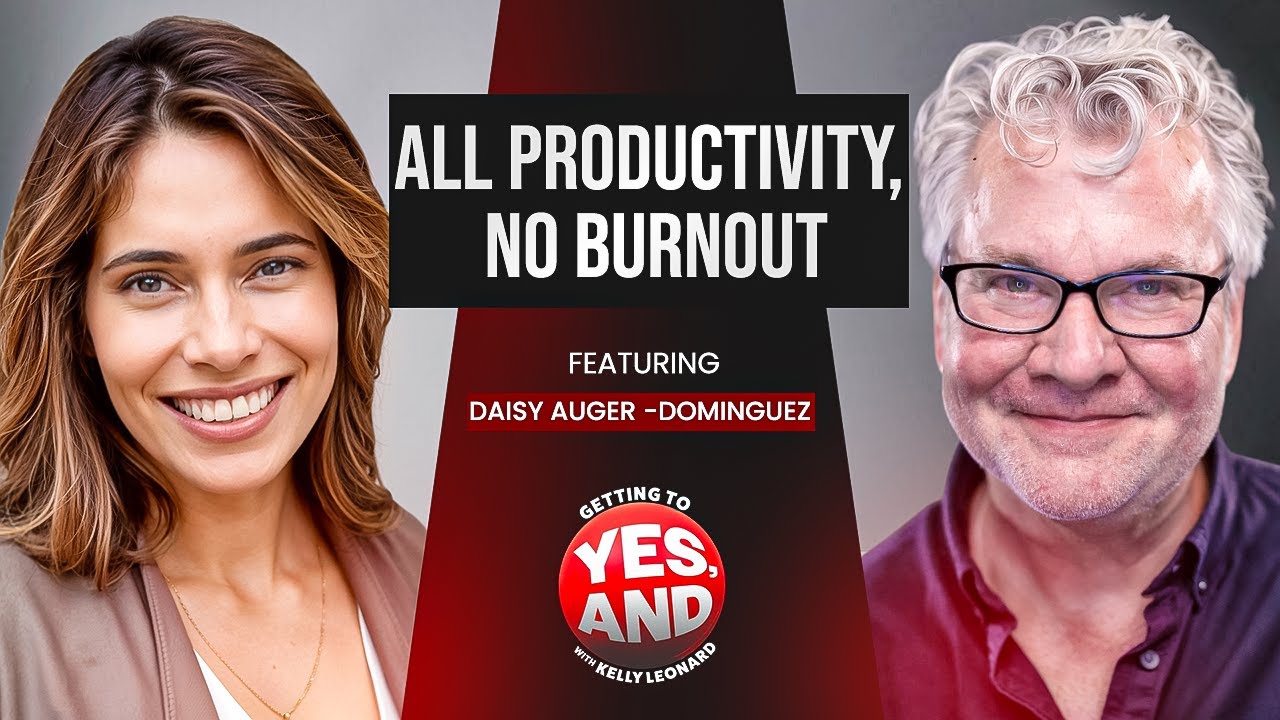
How Stay Productive at Work without Burning Out | Daisy Auger-Dominguez on Burnt Out to Lit Up


DEI expert Daisy Auger-Domínguez on overcoming burnout and navigating a corporate crisis
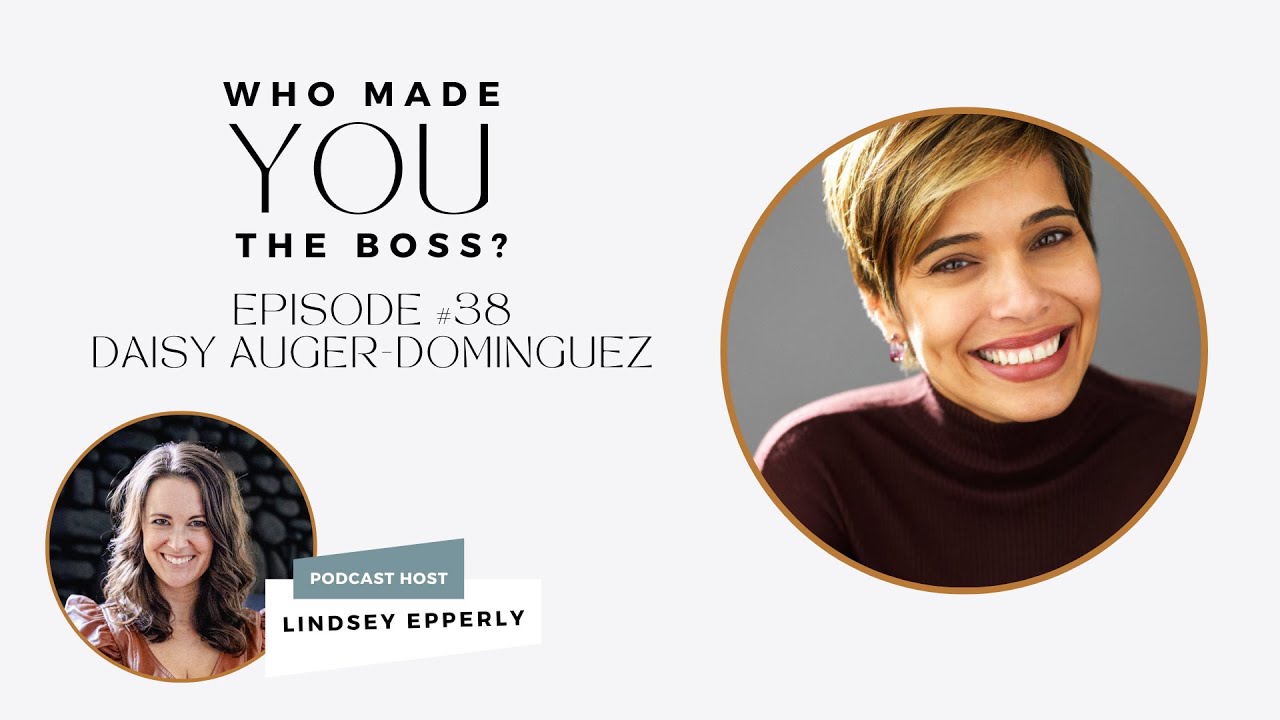
38. Feeling Overwhelmed? The Micro Resets That Can Change Everything with Daisy Auger-Dominguez


