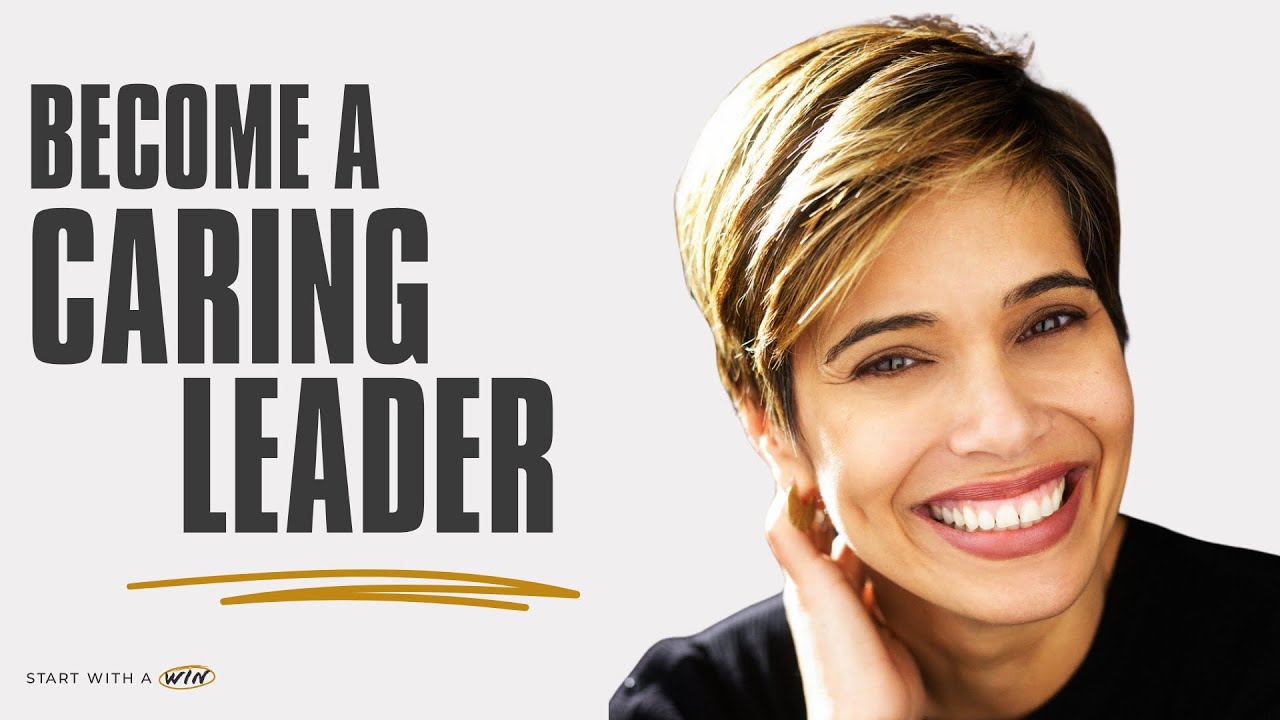
The Hive Interview with Daisy Auger-Dominguez

Daisy Auger-Dominguez, a former finance analyst turned chief people officer at Google and Vice, argues that vulnerability is a superpower for leaders. She introduces the 3 C's framework—Clarity, Connection, Courage—and shares practical techniques for creating psychological safety and handling layoffs with dignity.
Chapters
Welcome, Daisy. It's great to see you. For everybody watching and listening, my name is Ben Van Horn. I'm the co-founder of IconXeon, and it's just a thrill to have you here to have a conversation. So before we jump into our discussion, just tell us a little bit about yourself, Daisy, and where you're from, how you came here, and let people get to know you a little bit better.
Sure. Well, first of all, thank you for having me. Daisy Auger-Domínguez. I always start at the beginning. I was born in New York City and raised in the Dominican Republic. My father is Dominican, my mother's Puerto Rican, and I just learned this term recently. I used to say that I did the opposite migratory pattern, but now I'm saying that I did the opposite diasporic trip. I like it. And I grew up in the Dominican Republic with my grandparents, moved back to the States when I was a junior in high school, and that experience really shaped my sense of who I was, having been part of the we in the Dominican Republic and then becoming part of the other coming to the United States. And as a 16-year-old moving to New Milford, New Jersey, of all places, all of a sudden becoming the immigrant, the person that people did not understand, but also becoming Latina. Yeah. I had been Dominican and Puerto Rican my entire life, and all of a sudden I had to figure out what it meant embody the role of being a Dominican, Puerto Rican, a Latina in the United States. And that shaped a lot of my work, my academics. I did my undergrad at Bucknell University, my graduate work at NYU. I did a fellowship in public affairs, and then I did my master's in public policy. And from there, I went on to start a career in finance, of all places. I started my career as a credit risk analyst at Moody's Investor Service. And very early on in my career, I learned and saw talented, really dedicated people of color, women, people who were just different from the norm being quietly sidelined and marginalized. And I had a tremendous career at Moody's. I was promoted at the beginning of my career nearly every other year. You could say that I was an up-and-coming talent. But it struck me that my experience was somewhat different than others and also not, right? I was still also the only woman, usually the youngest, usually the only Latina in rooms where I knew we needed to have more voices like mine and other diverse voices. And so I've dedicated my career to doing that from Moody's. I actually, at Moody's, I was a credit risk analyst for 6 years. I then ran our corporate foundation for 3 years before we called it CSR. And then I went into HR to run diversity, equity, and inclusion. And that is when my human capital career began. And from there, I've worked at almost every media and entertainment company, Time Warner, Disney. I've worked at Google, at Viacom, most recently as Chief People Officer at Vice Media. And along the way, I have reinvented myself. I have written 2 books, the first, Inclusion Revolution, which I'm pretty sure is banned at this point. And the second, Burnt Out to Lit Up. And then I will say that what I'm proudest of being is a mama to a nearly 17-year-old daughter. I live in the Republic of Brooklyn with my husband and my daughter, and I help leaders and teams do the hard human work of transforming organizations without losing their humanity.
So, I want to touch on that because I think what stood out to me is human capital. Yes. And I love that you expressing that. So, what does that mean in terms of, you know, all the experiences you've had, all these different places that you've been? When you say human capital, what does that look like?
Yeah, it's the people. It's the living heartbeat of organizations. It is nearly impossible to think of an organization and not think about the people and the humans who embody the work, right? We talk a lot about operational excellence. We talk a lot about strategy. We talk a lot about capital allocation. It requires people to do that. Even in the day of AI and technology innovations, it still requires that human intervention, that human connection, that human heartbeat. And to me, I think it is the most important work for anyone to do, and that is why I've dedicated my career to it.
So how does a leader make sure that your You're balancing all of these priorities, right, as a company, especially in corporate America, right? And, but being able to balance that with that human connection with your employees, with your teams, to make sure that everyone feels like they're part of something bigger. Mm-hmm. Even if it is in a structure where you're having to make tough decisions on the bottom line, on revenue and profits, you know, all of those things. How does a, a great leader make sure that they provide that environment, that culture?
You have to meet people where they're at. We all learn about the important skills of listening, which is so critical. And we learn about the important skills of translating and communicating priorities, right? I like to think about it as clarity. I like to think about it as connection and as courage. Like, these are the 3 C's that I speak to a lot of my leaders, the leaders that I work with, about. And in order to lead well, we first have to live well. And we forget about that. And I've learned that, I've learned that the hard way. But in order to live well and to lead well, we have to connect with the people that we work with in a very human way. And I think the leadership model that perhaps you and I, I'm gonna, I don't know your age, but I believe that the human, sorry, the leadership model that many of us inherited is no longer apt for the world of chaos and complexity and uncertainty that we live in. And it was that top-down, messaging. I was like, if I say it, you will do it, and that is it, right? People need context. People also need a little bit of assurance in a world where most folks are often wondering when the next shoe is going to drop. And as a leader, it's our job to create steadiness in unsteady moments. And that doesn't mean toxic positivity. That doesn't mean lying to our colleagues. That means actually telling people, this is what I know, this is what I'm tracking, And this is what, you know, this was what may be changing at this point. And if anything else changes, I will let you know when we're ready, right? Being able to just do that creates a steadiness and a connection to people that I believe leads to loyalty, leads to morale improvements, and leads to productivity. But we have to start with where are our people? What are their needs? How do I show up as my best self? So that they give me their best self.
Yeah, because if there is a gap in information, and I think it's the biggest problem that we have, is that that gap is where people are filling in their own story of what is happening.
And it's— and it's— they are terrible stories.
And it spirals. And if you talk to your entire team, you know, I run a 100-person team in my current role, and everyone has a different story in their head depending on their role, depending on their situation, because it could be personal, it could be professional, whatever. So I think what it takes for a great leader is that ability to have vulnerability, and that vulnerability so that they can transparent with their teams. So what are some things, when you think about vulnerability, what does that mean to you from a leadership perspective?
It's truth-telling, especially in spaces where it feels safer to be quiet, to not say anything. I think I have experienced that. I have worked with many leaders who just get stuck in the, Daisy, I can't tell them the truth because if I do that, then they're not going to show up tomorrow. Then they're not going to do the work that we're asking them to do. But what we don't realize is that what our teams want more from us is our humanity. And vulnerability, I've always said, is my superpower. And, you know, and I remember in the early parts of my career where my vulnerability was seen or was called out as potential weakness, right? Or too tied to my gender, right? Like women and their vulnerability and their expressing all of their feelings. I was like, well, here's the thing. All of us are living in a bottle of feelings all the time, right? And by not sharing with folks. And this is— many of us learned this the hard way during the pandemic, right? And this was a time where I remember sitting down with my team and sitting down with the leaders that I was coaching as Chief People Officer at Vice Media at that time and saying, people just need you to know that you're also struggling, right? They don't need to know all the struggles that you're facing, right? But they need to know that you are human and you're having a hard time with this and that you will see them to the other side and that you can do that as their leader, that that is your role. And there is a difference between saying, I'm having a really hard time, I don't know what to do, and we're not moving, to, you know what, I'm also struggling with this emotionally. I've lost colleagues with this in this pandemic. I just, you know, I have a— I remember during the pandemic telling my team, I was like, I have a teenager that's dealing with anxiety and struggling with what's happening. I am managing all of that, but here's what I know. I know that we can get to the other side of this. I know that if we all pull together and do what we're supposed to do, and our job was to take care of our teams, that the company will continue to move. I know that what we do is important, right? Because people wanna know that what they do matters, right? And I was like, and that our work is still important and that what you do, Ben, what you do, Mary, right? What each of you do is important. And when and if anything changes, I want you to know that I will share that with you. And trust is consistency over time. Right? So part of the vulnerability, part of that sharing who we are is, is about being consistent with your team members so that it's not, you know, one day I show up this way and one day I show up that way. It's that I'm consistently truthful with my team, that I'm consistently steady with my team, that in moments of, of wildness and chaos, that I can sit in front of them and say, this is really hard. Yeah. And, and by the way, and, and I used to say this to my team, One of the hardest jobs that we had as an HR leader and as an HR team was reductions in force, right? Yeah. Laying off someone is the worst thing that we can do, but it is far worse for the person that is taking that in. And I would, I would coach my team every single time that we would do a reduction in force. And they knew this. We would spend about 30 minutes going through how do we maintain the dignity of every single person? What is the impact? What's the structure? How do we, how do we do this? How do you make sure that you don't make this about yourself. And I would always end by saying, and if this is not the hardest day for you this week, then you're doing this wrong, because this should be awful. And it is awful, but we can make it just a little bit lighter for someone.
Yeah, well, it's the responsibility that the leader takes on. So if you are choosing to be a leader, then you're choosing to take on that responsibility to do what's best for your team. And one of the things that I wanted to touch on there, which is, let's acknowledge that leadership is scary.
Yes.
That it is, can be frightening at times. And so that balance between having composure and having a steady calmness with your team, but also telling them and acknowledging that not only do I acknowledge your pain and what you're going through, but I'm feeling it too. And I wish I would have had this information, and I wish I knew where this was going to go, and I wish I knew how our industry was going to, you know, evolve. But what I do know for now is this.
Yes.
Here's our plan and here's our action, because At the end of the day, that's what people want to know is acknowledge that I'm feeling fearful, but also acknowledge that, you know, you've got a plan.
Yeah.
And even if it's a 1 or 2 or 3 or 4-day plan, at least it's something to where they're expecting that consistency. And I think that's a discipline of a leader is to consistently show up by being calm and being steady, but also being vulnerable.
We're, we're containers of that calm and that clarity, right? That, that is, that is our role. And, and you have to think about it, and all of us have had those moments of, Why should I follow you? I joke that what most leaders walk into rooms is this sense of, like, why are you the boss of me? And many times, for many of us, there's this struggle of imposter syndrome of what are the models that I've learned? And fundamentally, it's just about being you. It's about showing up as your best self, the best version of you that your team can expect every single time. that they have contact with you, that they engage with you, and they will follow you. And they will find the steadiness that they need to put one foot in front of the other.
Because they can smell that inauthenticity. They can smell it. And that's the thing I always tell our leaders that work on my team is you influence the energy in the room. They're constantly looking to respond to your energy. If you're coming in, you know, harried and frenzied and all that, guess what they're going to feel?
The rest of their day is that way.
Is going to be that way. But they're also looking for you to, like you said, to be authentic and bring your best self to it, you know? And because that's something that there's going to be important for them because they're going to understand if you're telling them what they want to hear versus actually saying, I may not have all the answers, but I'm going to do the best I can to support you.
There's nothing more disorienting or painful than to sit through an entire meeting when you feel like, I don't believe a word you're saying. Like, that is the worst. And that's what I call those whispers, right? That's when everybody leaves a meeting and then everyone has the second conversation of like, did you believe him? Did you believe what she said? Right? Like, that works. And that's toxic in organization. That's damaging. So much different to your point where a leader who sets the tone and sits down and gives that sense of clarity and gives that— frankly, we don't talk enough about love at work. And I believe that Leadership is an act of love, right? It's an act of service, but it comes from a deep place of love. And to me, that love that I gave to my team every single day, they would give back to me tenfold. And that kind of connection is really what keeps us all coming back to work every day and doing the things that we do.
Yeah. So how do you teach leaders to solicit feedback? Because part of this is self-awareness as a leader is, Do I understand how I sound? Do I understand how I come across? So if that second conversation is happening after the meeting, how do you help coach leaders to get the feedback that they need to understand how they're coming across to the team?
I always call this the ask better questions, right? Most times we sit down in one-on-ones and we go through our list of activities. And sometimes we may go into a reflection mode. It was like, what did you think of that meeting? No one's going to tell you the meeting was awful, right? No, they're not going to sacrifice themselves, especially if there is not a sense of trust with your team. I like to joke that I've built so much psychological safety with my team that they tell me all the things that sometimes I don't want to hear.
You're a therapist, not only a leader. Yeah.
I'm just like, oh, I can't take. But it is important. And so I call that the asking better questions. And some of that does require that sense of vulnerability. And I've posed this question to my teams and I share this with leaders. It's like, you know what? Did what I say come across? I was like, this is what I think I said. Is that what you heard? Like, being able to just have— it's a simple exercise of like, did we hear the same thing? And being able to have someone like— and I've never, I have never asked that question without someone finally going like, oh my gosh, Daisy, that is not what I heard at all. Or I was like, yeah, I heard that, but I don't think the other folks really got it. And then it's about the follow-up questions. I was like, okay, what do you think I could have said differently? What would that look like? Do you think it should come from me? Do you think it should come from someone else, right? It is asking questions about how do you make sure that everyone is aligned, is not just informed, right? Because we can inform saying a whole lot of things, but is actually connected to what you said and knows, is clear on what this means for them, right? Right. What does that look like? I think other elements of, you know, asking for, you know, better feedback and really understanding your teams is also putting yourself in the vulnerable position of being able to say, I don't think that meeting went well, and I probably should have done that differently. Then the next time you lead that meeting is starting with, you know what, everyone, I'm changing the agenda because I got some feedback, or I asked for feedback. And I always say this to my team, I cannot solve for what I do not know. Yeah. And it is my job to try and figure out how to fill in those gaps. And if I'm not asking the right questions, Can you help me figure out what questions you need me to ask? Yeah. It's so empowering. It gives your team members agency, and it allows people to actually freely say the things that, the sore spots that for many of us as leaders, we don't see, right? Because we sit up here in the balcony, right? I was like, but it's in the dance floor, right? It is in the dance floor. It's in that action. That's the data that you need. And if we're not going back and forth between those 2 spaces, but also asking, the right questions and digging deeper and giving people the freedom and the safety to say the things, we can't lead in our most effective ways.
And you've gotta, I think we've gotta remind everybody is that that takes time to build that trust.
Oh, it doesn't happen overnight.
So, it's not just, I asked one time, they didn't gimme what I needed, and then you give up. Like, you've gotta constantly, because people will trust you over time if you consistently ask, what could I have done differently? I think the other thing that I really wanna reinforce is what you say is not always what people hear. And I love that, 'cause it's not only in a meeting setting where you're trying to give tough information to the team or to the company, but even in one-on-one situations, even with the team that you have, is always be mindful of that, is like, what I said may not always be what they heard. And so, it's starting those conversations of like, what are you feeling? What did you hear me say? And then you're able to kind of diagnose back.
And closing, it's the start and the close. And at the end of every meeting, right, it's like, Let me just make sure that we heard the same thing, right? Yeah. I remember when I worked at Google, at the end of team meetings, I had one of my team members would always send a recap and say, these are our action items and here's what I heard. And then he had a line that would say, please let me know if I misrepresented or misstated anything from that meeting. And I thought that was such a smart approach to open up the aperture so that someone could say, actually, I didn't hear that, or there's a KPI that's missing there. It's creating that space. It's giving people that freedom and that space to be able to say the things that we need to hear.
Yeah, absolutely. So I got one more question before I wrap. So with all of this happening right now in terms of our world being very complex, it's very chaotic, it can feel that way a lot. And, you know, we talked about being vulnerable, right? Leaders being scared. So I wanna talk a little bit about your book. If you just tell me a little bit about what your main message is, because when you talk about being burnt out to lit up, like, what does that mean? Because a lot of people are feeling burnt out, but how do we reignite? Kind of passion?
Well, I have to say that I wish I could tell you that I knew this then, but I didn't realize that burnout was going to have the moment that it's having right now. And I am deeply grateful that I did the work and the research. And in writing this book, quite frankly, this book was my pharmacy. It was how I healed from my own burnout. So I wrote this book because I have been through deep burnout, and I have seen burnout steal the light out of my most passionate colleagues. And as a leader, we often don't just deal with our own burnout, we absorb other people's burnout. And so I wrote this book for every leader that's been told, just push through, right? Just get this done. Because I wanted to give folks the tools and also the permission to recognize, if I'm not all right, I cannot lead well, right? And if I want to lead well, I have to live well, and I have to in cases, as I share in the book, reshape old narratives that tell me that perfectionism is the way to go, or reshape the old narrative, which was my narrative, that unless I worked harder than everybody else, I was not gonna be respected, right? That narrative drove me to burnout. And so throughout the book, I offer scripts. As a good HR leader, right, a lot of the work that I do is offer scripts to leaders so they don't get in their own ways. But I wanted to offer folks really practical and tangible ideas, recommendations, and practices that they could apply to their day-to-day so that they can think about, how do I rest? How do I replenish? How do I reset what needs resetting? And how do I show up as my best self? Because when we do that, we light up our own light and we light up everybody else's light. And so that's why I wanted light to be, and joy to be there. You know, for many years, I would get the message that joy was sort of, you know, this lightness thing and this, you know, sort of something that you get after you work too hard, right? And I was like, joy is the fuel that keeps us going. And when we live in our joyful ways, right? And by the way, I don't mean this again from a toxic positivity, like I walk every day with joyful spirit, right? You know, I like to think that I'm joyful, but I have my days like everybody else. But in those days, joy is that fuel that helps me Replenish. It's my strategy. It's, it's how I reinvent what needs to be reinvented. It's how I replenish other people's spirit and sense of self. And it is also how I lead teams to do the best work of their lives.
Yeah. Well, it's like the cliché of, right? Like when you're on the plane, right? Put, put the mask over yourself first before you can put it on your child. So I, I think that that makes sense. I think it's more needed than ever before. Right. So, um, to wrap, thank you so much, Daisy, for being here. Thank you so much. And I hope, The Hive gives you a way to replenish your soul as well.
Oh, I am feeling all sorts of lighter and it's only been a couple of hours. So, I can't believe it. I can't wait for what's to come.
Yeah, absolutely. And so, also, just if you have a chance to check it out, I'm sure you can find it at Amazon and everywhere books are sold.
Where books are sold.
Burnt Out Till It Up. Please make sure you check it out for Daisy.
Burnt Out Till It Up: How to Reignite the Joy of Leading People.
Great. Fantastic. Well, thanks again.
Thank you, Ramit.
More from Daisy
What Happens When the Workplace Culture Fixer Needs Fixing Too? Daisy Auger-Dominguez Explains

How Stay Productive at Work without Burning Out | Daisy Auger-Dominguez on Burnt Out to Lit Up

DEI expert Daisy Auger-Domínguez on overcoming burnout and navigating a corporate crisis
38. Feeling Overwhelmed? The Micro Resets That Can Change Everything with Daisy Auger-Dominguez