How to Communicate Value: Shifting from Features to Benefits in Your Startup

Lance Cottrell, who built Anonymizer into a privacy service for U.S. federal agencies after 9/11, talks about helping founders stop listing features and start selling benefits. He emphasizes understanding what the paying customer actually needs, and shares how he uses AI to automate marketing work from video transcripts to pitch deck copy.
Chapters
Today I have Lance Cottrell, and Lance interviewed me on his podcast, Feel the Boot, several months ago. We had a great conversation about startups and funding and how startups need to understand the problem that they're solving much more than they need to understand their product. Anyway, so just to give you a little background, and Lance will give you more background. Yeah. But Lance was founder of a company called Anonymizer in the early 2000s, and they were the first internet privacy company. And that they made a big pivot, which we'll talk about a little bit about that, to federal privacy functionality. And he'll talk about that. And as a result of that, he exited. And of course, what do you do when you're a founder who's exited a tech company? You become an angel investor. So Lance then has now been involved with lots of companies where he's done angel investing and realizing the need to coach these companies on how to get seed funding. He's created a company called FounderQuest. You can find that at founderquest.com where he helps startups get seed funding. Lance, welcome to Scaling Smarter.
Thanks so much. It's great to see you again.
Yes, you too. So tell me about your Anonymizer, the pivot you made and how you did that and why.
Absolutely. In fact, I didn't start in the early 2000s. I started in the mid-'90s. Oh, mid-'90s. I was working on my PhD in astrophysics in the early '90s, and that put me on the internet, right? Had direct connection to the backbone at the San Diego Supercomputer Center. I could see the privacy issues as I was setting up those early websites and Looking through the logs?
Just because I'm a nerd. And I originally, I studied physics at UCLA and I had fantasies of getting a PhD in astrophysics, which I never pursued because I went into the tech field instead. So—
That pays better.
Yeah, right. Did you actually do astrophysics or did you—
I did. I did 5 years of my PhD. So I had it half written. I was working with the Hubble, which had just been launched, and the Keck telescopes that had just come online. advisor was a grant-writing god, but it turns out I couldn't get the answer to the questions he was setting in front of me. I had 100 hours on one quasar, one spectrum, and I got a signal-to-noise of 1. And so this was just not going anywhere good. And in the meantime, I started building privacy software open source as a hobby, and that exploded. That was getting hundreds of people running my servers, tens of thousands of users, getting interviewed by the New York Times about this stuff, and I decided if I wanted to really make a go of this, I needed to commercialize it because it was not user-friendly. Like most of these open-source projects at that time, the first instruction is go untar this and run the Makefile on your command-line workstation, right? It's not going to be something that most people are needing. So in '95, I put the PhD on hold with the idea of finishing it in my spare time, which is why I don't have one. And launched Anonymizer to create a consumer-facing internet privacy service.
Okay. So now tell me about the pivot.
Yeah. So we hit a wall around the late '90s or 2000, where we peaked out at about a million active users, 100,000 paying subscribers, but we couldn't cross the chasm. A lot of people say they care about privacy, but won't do anything. And then one day after, shortly after 9/11, we were getting subpoenaed again by the San Diego FBI Cybercrime Group, because we were providing anonymity services and some people will use that for bad things.
Mm-hmm.
This time, one of us had the insight to ask them how they dealt with the issue of anonymity, right? They're the FBI. You can't go investigate some child pornographer from an FBI.gov IP address. So what were they doing? And the answers they were giving were extremely disappointing. I would've hoped that they had some really cool stuff. And we said, hey, we should talk. We can help you do this much better than you're doing it. I was able to go in, brief this FBI group, and it was a hostile discussion. I'm sitting up at the whiteboard with the projector talking to them, and literally everyone in the audience is carrying their sidearms with their jackets hooked behind the grips so that they were on display. Once they understood where I was coming from, why I was doing what I was doing, why I was not personally a bad guy— and the world really is good guys, bad guys in their mindsets— The Jackets came forward, they appreciated what I was talking about, and they ended up becoming my first customer in the government. And we suddenly realized the amount of need they had to be able to hide who they are, where they are.
Was that FBI Federal or just FBI San Diego?
So this was just the FBI San Diego group, but that opened up Federal, that opened up then CIA, NSA, DOD, all of the different 3-letter agencies then rapidly in succession once we became a trusted purveyor once they got to know us, once we started specializing our solutions. And that's where we finally found product-market fit. It was a radically different direction, but similar technologies, but it allowed us to go from, say, $70 per seat per year in the consumer space to, by the time we exited in 2008, closer to $250,000 per seat per year.
Oh, that's a nice, that's a nice growth path.
That's a lot. Now, there aren't a million users who need this in the world. So obviously it's a bit more of a niche product, but Yeah, and really exciting because you're working on things where the pain point isn't something abstract that's hard to describe. I remember I talked to one customer and said, why do you need this covert communications tool that, that we're going to customize for you? And he said, we had this group of people that were helping us in this hot, sandy country. One of them turned out to be a rat, told the bad guys, they leaned on the local cyber cafe to install a bug, and the rest of them ended up headless in a ditch. And we don't want that to happen again.
Oh.
That's a pain point.
That's a pain point, right. I always talk about, you have to find what, if you can really tap into what they're afraid is going to happen, then you can, then they'll move on. That's pretty much the essence of fear, what you just described. Yeah.
I've never had someone give me quite that explicit an answer before, but, and it was great because I could then go back to the engineers and it was so motivating because everyone knew they were working on stuff that was really mattering. It was national security. It was life and death stuff.
It was life and death. Okay. So now that brings me to my next question about how you help founders now in some of the conversations you have. And you, we were talking about this before the show, that a lot of founders, especially technical founders, struggle to be able to articulate what the problem they're really solving is and what the product even does sometimes. So tell me a little bit about that.
Yeah, I think often technical founders in particular, although all founders can have this problem sometimes, is they're so in the weeds with building the solution that they're creating. They're focused on which features do I build next, which pieces of code do I implement, that, that becomes the lens through which they view the world and the way they talk about their solution. But it isn't at all the way their customers or investors will look at the solution. And so I'm constantly having to help them reconceptualize every aspect of the business around benefits instead of features. It's not what does this do or how does it do it, but what does it enable for me? How does it change my world? What does it make easier, faster? What barriers does it remove? And particularly this shows up, for example, when someone's showing me a pitch deck in the competition slide, where they'll have a list of these really noodly features and say, see, I do 8 of these things. And the other people only do 2. But as an investor, not being their target customer, I have no idea what they're even talking about. I don't understand why this thing is important, what it does, or how it impacts anyone, or indeed which ones actually matter, because usually customers only care about 1 or 2 things that you're providing that someone else isn't. It's not 8. The decision is made on 1 or 2.
So this is actually an interesting discussion point. If, because you said you got to get them to focus on benefits. And what I find is they're talking about the benefits from their perspective of what the problem is, which may not be something the investor can quantify. And it may not be something the actual potential customer cares about. Because if the customer doesn't, if you can't articulate a problem statement to a customer, potential customer, where they go, I hate when that happens. Please make it stop, both because it costs them financially a lot and they feel personally threatened by it, right? Those are 2 independent factors, and they both have to be there for somebody to then move and decide to do something or to sponsor something or to make something happen in their company.
Absolutely. I'll often, when I'm talking to someone, if they have a customer or someone who's expressed very strong interest, say, go ask them, what is the thing that made you choose to take the solution from an unknown startup that probably won't exist in 18 months with a sort of gritty interface because they haven't had a chance to perfect it. There must be a reason they're willing to take that on. That's the thing. But I find often a lot of founders misunderstand it because they're looking at the wrong scale. So I'll look at, say, a medtech company.
Mm-hmm.
And they say that they're solving the problem of pathogens in public, water systems in the third world. And I'm like, that's your mission, but that isn't your problem.
Right.
Your problem is that this agency that's tasked with this, the solutions that they have available to them are too expensive, or don't work, or require too much maintenance, right? You need to be getting down to what is the problem of the person who pays. And I see this, and I use medtech a lot because People often say, this saves people's lives. And I go, but unfortunately, that's not actually your customer's problem. The question is, does this make more money for the doctor or the hospital or the insurance company? And ideally, it's saving a lot of lives in the process. And I get that's why you built it. But when you're talking about the business, you have to be mercenary and be thinking about who is it who pays for this thing and why do they want to pay for it?
You're not going to save any lives if you don't have somebody that buys it.
That's right. And you need to align it. Sometimes someone will come in with something, say, this is going to do this amazing thing to the doctors. I'm like, you just cut their billing by half. So you really need to think about how they actually make more money by implementing this rather than less.
So now with Founders Quest, you have just a wealth of knowledge regarding how to help founders fund and fund projects. You understand the investor because you are an investor and you Network with lots of other investors, and you've been through the whole startup thing yourself. So you understand so many aspects of this. Have you created— how are you using AI workflow automation now to scale what you're doing? I have some ideas that popped in my head just from this quick conversation. I'm just curious what you've done so far or what you're doing.
So I'm leaning onto it in a lot of different ways. The very first place I started using it was actually taking the videos that I produce and turning them into written content, into blogs. Because I found that hugely frustrating. I spent all this time creating this content. Why am I spending now a couple of hours rewriting it when I can just take the transcript, also generated by AI, and have it spit out a really pretty good first draft? I use it a lot for brainstorming, for helping with the marketing and promotion emails, for outreach, for generating handouts. It's amazing how fast that increases the tempo where you can say, Here's what I want to create. Here's the key points. Here's the thing I want to draw on. But then there's a lot of busywork, 95% busywork around that, that AI can automate to create that content at the end of the day. But it takes the right prompt and the right guidance to get something useful. If you just said, give me a worksheet on, you're going to get very generic answers.
Right. Yeah. So here's a thought, and I think this is good for my audience to hear because It's something that they might be able to use. So I'm a, let's say I'm a technical founder. If I'm a, if I'm not an, if I'm a non-technical founder, I'm probably a lot better at articulating the value proposition. I may still be thinking of it wrong, which is, which most of the time is the case. I've got the black robe on because I believe in what I'm doing, which is a kiss of death for a founder. And you need to rip that black robe off and put the white coat on and say, okay, I don't believe anything that I have some ideas, some hypothesis, but I need to prove it before I'm going to invest a lot of money in that direction. And if you go into the process of proving it, it very often will give you the pivot path because you realize you weren't looking at it. Because now when you test the market, you realize there's actually something else that's the real problem. It may be tangentially related or maybe completely unrelated, but now I know I've got a value proposition and a market to sell it to. That's a white coat concept versus the black robe concept. But if I'm the technical founder and I, and nobody seems to understand what I'm doing, what if I had a GPT or something like that where I could say, this is what I'm doing and this is why I think I'm doing it. And I want to talk to investors. How should I word this in a way that an investor will get what it is I'm doing?
Like, I'd love to experiment with that. I'd be curious to see how it does it, that abstraction, because that is a lot of what I end up doing when I'm working with founders is giving them the, listening to them describe what they're doing in some really detailed way and then handing back to them a distilled version. And yeah, I think I can see GPT potentially being a really good copilot for thinking through that way of working.
And that's assuming that you can even understand what it is, right? Like we were just talking, you got off the phone, off a call with the founder, I think you said yesterday, and you have no idea what they do still after 30 minutes of talking to them.
That's right. Yeah. And they had made it through to our selection committee round for our angel group and were doing their pitch. And at the end of it, it was still, wow, we're still trying to extract from them, like, what exactly is— I can't. And this is something I think that people don't understand enough is that as an investor, I want to be able to picture your customer benefiting from your thing, right? I want to have a mental image of it and how it fits into their world and where it fits into their workflows and get a visceral sense of, yeah, here's why this person would be excited about this, right? I want to believe that they're excited because I'm probably not the customer. I'm not excited about this in most cases, but I want to— it's secondhand.
Right. And how many people are suffering from that thing?
That's right.
That you're now making them feel better about.
By the way, I'm going to totally steal your black robe, white coat analogy, because I love that.
Oh, please do.
And I'm always talking about scientific method and the importance of doing these kinds of tests on everything. Like, how fast and cheap can you take this from, I think this, my navel-gazing gut says this, but your gut's not your smartest organ, to, I know this because... For $100 or a half hour's work or a couple of conversations, you can rapidly get to Enough. We don't need 3 significant figures in your data, really. You need to know, is this desperately needed or it's number 5 on the priority stack?
So let's, let's wrap up. I like to do these kind of short and sweet, and I think we got to the crux of it. Let's wrap this up. So a couple of things. First of all, do you have a couple of book recommendations that you think are really important for founders to read?
So I think time management turns out to be a thing that I see a lot of founders having trouble with. I personally like Getting Things Done. It's pretty old, but it's a useful framework for thinking about how to manage things. And then people have a hard time thinking about moats, right? Often they're building something cool that customers want, but you can look at it and say, in—
Right.
Yeah. In a year when everyone else realizes that this is cool, they're all going to do it. And your lunch will be eaten. And so there's a book called The Five Powers, which I found really interesting, that talks about this in a very strategic way. And it's a little academic and it's a little abstract, but it provides a good framework of thinking about strategic powers that are persistent and enforceable and the different flavors they come in.
Okay, awesome. I'm actually writing that one down because I'm not familiar with The Five Powers. And is there, besides your podcast, which is Feel the Boot, Is there another podcast that you think is important for founders to be following?
I've gotten a lot of good stuff out of the NFX podcast.
Okay.
They, they've got a lot of good information. They focus on mostly SaaS stuff and things with network effects, but in general, I've been impressed with the level at which they think about the problems.
Yeah. And there's a big difference between just covering interesting topics and covering it at a lot, in at a level of intelligence that provides true insights.
Exactly. And these days with the amount of AI-generated content, I think you can really start to tell the difference between someone who said, give me a list of topics, now write me some blogs on those, versus someone who actually has some really original insight into the thing they're talking about and is making a point that you haven't seen 5 other places.
And so besides FounderQuest.com, how else should somebody reach out to you?
So we've got a ton of free content for founders at Feel the Boot. You were one of the 123 long-form videos that I already have up on the channel, as well as 90-some shorts. And there's blog versions of all of those. So that's a great source of information, but I encourage anyone to reach out to me on LinkedIn. I'm very active there and welcome connections and the direct messages.
Well, Lance, I really appreciate you coming on to Scaling Smarter and really excited to actually keep our conversation going because I think There's a lot of stuff that you're doing where there's opportunities like with the GPTs and things like that to help all these founders get a, either figure out that what they're doing, they should just abandon. And so they don't spend 5 years and $1 million of their lives, which I've seen that happen so many times, or find a path to success quickly and cheaply.
I couldn't agree more. Founders should be thinking about this like an investor, because you're investing a big chunk of your life into this. You don't want to have wasted that. And if you can avoid that with some simple experiments, that would be wise.
And founders don't want to hear this, but they should be trying to figure out how to fail fast and cheap. That should be their first job. And if they can't because all the evidence proves that this is going to be successful, now they can move forward with confidence.
That's right. Yeah. But you want to be trying to actively murder your baby.
Exactly. Exactly right. All right. Thanks, Lance.
Thanks so much. It was great talking with you.
Yeah, you too.
More from David

Healthcare costs are accelerating, and the ripple effects are just beginning.

The challenge: medical breakthroughs are advancing fast—but costs are rising even faster.


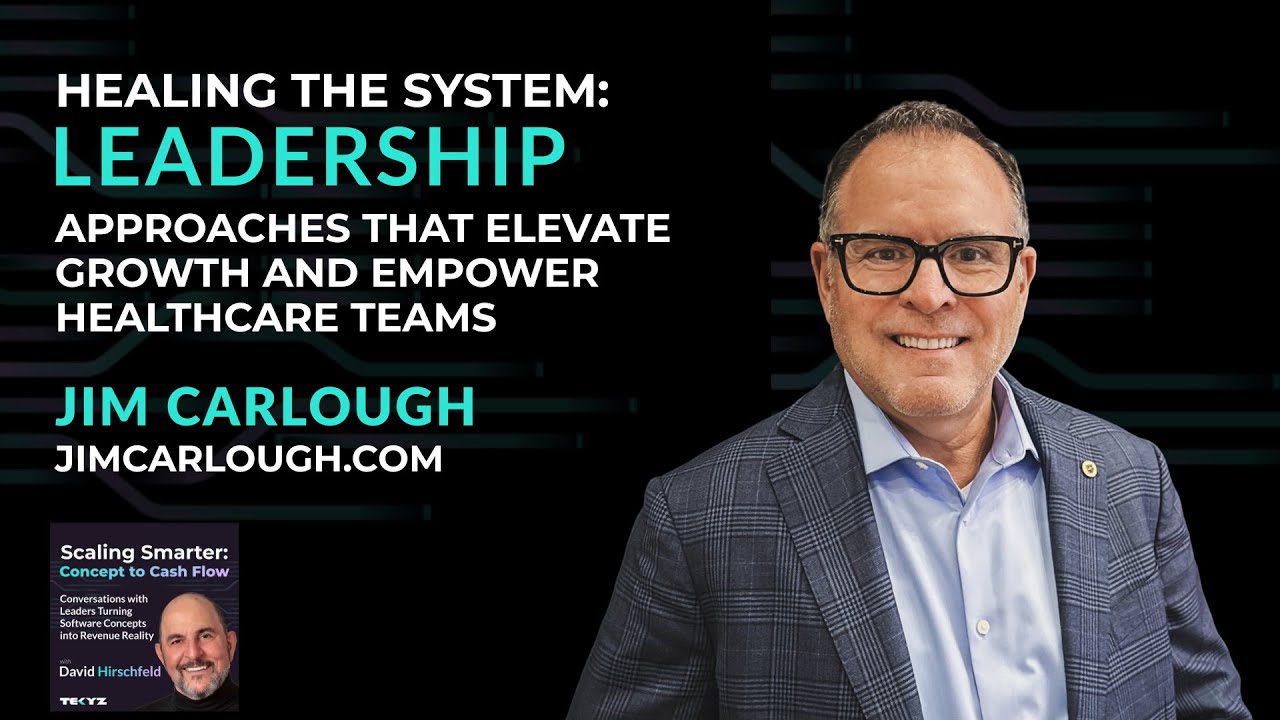
Healing the System: Leadership Approaches That Elevate Growth and Empower Healthcare Teams