Launch 1st Introduction

David Hirschfeld presents Launch First, a system that reverses typical startup sequencing by selling before building code. Instead of spending $120-370k over 18-36 months, founders create a prototype and marketing stack, land paying customers, then fund development from revenue. Three case studies show founders closing sales in months, not years.
Chapters
In this video, I'm going to show you how you can use my Launch First system to take your software startup idea from concept to cash flow in only 6 months or less, and that's all before software development even begins. Let me repeat that. You can begin to generate revenue and build up cash flow even before you start software development. I'll walk you through the process I use to launch software startups that reduces or even eliminates the need to give away your precious equity to investors because you can reach positive cash flow dramatically faster while spending way less money. Here's what others are saying about the Launch First system. Sarah spent over a year developing the first version of her system. When she finally launched it, she spent 8 months and found it difficult to gain traction. After a number of retries, she did finally find the right formula to start getting sales and growing a successful business, but it cost way more and took much longer than she would've liked. Later on, Sarah decided to create a new software product. For this new product, she applied the Launch First methodology and was able to sell 20 contracts before she even started software development. Gabriel is in the early stages of following the Launch First system. We're currently dialing in and validating the product market fit by researching his target market. Here's what Gabriel has to say about his experience so far. If you're wondering who this is for, continue watching if any of the following scenarios sound like you. You want to launch a software company that cash flows really fast without any outside investment. You're afraid it will take too long to develop and launch your product before you generate enough revenue to make it viable. You think you have a great idea, but you're not sure how to price, market, or sell your product. You've heard from experts that you should test and validate your market before committing all the time and expense to develop your product, but you're just not sure how to do this. You have a great idea for a software product, but you're afraid of losing your life savings on a software venture that may not make it, and you wish there was a way to dramatically reduce your risk. You are worried about how to raise money to fund your project. You have a great software idea and want to pursue it, but you're not sure how to validate your market to make sure that when you create the software product, people will want to pay for it. You previously launched a software company, but you are gun-shy because the process was long, expensive, and required several pivots before finding the right formula to generate revenue. If any of those scenarios ring true for you, keep watching. You've probably heard that most software startups fail because they were undercapitalized. That is completely true. However, that statement is way too broad and hides the real reasons for failure. Being undercapitalized causes ventures to fail for many reasons, such as taking too long to develop the product, poor identification of the target market, misguided product pricing models, inefficient marketing techniques, weak sales teams, letting their competitors set the pace for new feature innovation. But the real truth to why most founders fail is that they sequence these activities in the wrong order and they miss critical validation steps along the way. So they end up running out of money long before they gain enough traction to achieve viability. It is possible to build a very successful software company in a predictable manner if you have the right information and you follow the right steps in the right order. Unfortunately, far too many entrepreneurs don't understand the proper steps, and more importantly, they don't understand how to order those steps optimally, resulting in failed ventures because they waste too much time and too much money before achieving positive cash flow. I have dedicated the last several years to solving this problem. My name is David Hirschfeld, and I've been working with software startups for over 30 years. I started at UCLA majoring in physics. Then transitioned out of college to sell IBM mainframe software. That's when IBM mainframe software was still a thing. I was the number one salesperson nationally out of over 400 salespeople. A few years later, I started my first software company in logistics, inventory management, and route distribution, which I built for 8 years and sold it successfully in 2000 to a publicly held company out of Toronto. My incredible wife and I raised 4 boys. All of them launched and are successful. I'd love to take credit for their success, but in truth, I'm just in awe of them and grateful that I didn't mess them up. I used to think I had control over outcomes, but my sons and my experience with so many startups made me realize that there are patterns of life that make people succeed, but those patterns are elusive. Today, when I look back at my first software company's success, I realize I accidentally did many things right without knowing what those things were. My early success gave me unfounded confidence that I knew what I was doing. During the following 19 years, I worked with several dozen software startups before I had an epiphany in late 2019 when I realized the common threads that ran through the companies that I worked with that happened to succeed and what was missing in the companies that I work with that failed. This realization led me to develop an approach for creating software companies that mitigates the majority of risks, reduces the cost and time from startup to revenue, reduces the dependence on raising money from investors, and ensures that your investment in software development will result in a successful company. This is how the Launch First method was born. Launch First is the new way to build and launch a software company the right way. With the Launch First method, you start your software company and begin generating revenue before you begin developing your software app. The old way was to spend a lot of time and money fully developing a piece of software without knowing how the market will react or even if the market is willing to spend money to use your new product. The old way too often results in failure. When you run out of money before or even after you begin selling your product, you can no longer attract investors, you become dead in the water, and your venture ends up in failure. The new way is to launch your company first before you begin software development, which mitigates a majority of the risk associated with launching a software venture. Most people are completely unrealistic and lack the knowledge as regards the money needed, the time it really takes, and the proper execution plan required to successfully launch a software company. Now, some of you may be asking questions like, how can you sell software that doesn't yet exist? That's a great question. The fact is that you absolutely can sell your software licenses or subscriptions even before software is live. We do this by creating a strong enough value proposition while creating the sense that if you don't take advantage of this rare opportunity, you'll miss out on something special. Your customers will buy during this pre-launch sales period if your target customer perceives the value of using your application is high enough, if your target customer feels that they need your solution strongly enough that they will ultimately subscribe once it becomes available, And if the deal that you're offering is exceptional enough that your target customer feels like they will miss out if they don't buy now. If you can accomplish those objectives, your customers will buy in enough numbers that you will break through the viability barrier. My idea isn't completely thought out, you might be asking. Can I still get started? Absolutely you can. We will start with a discovery session where we explore your concept, identify who is your target customer, and explore value propositions for that customer. We have developed sophisticated applications starting with nothing more than a great idea, an entrepreneur's vision, and a bullet list of 8 to 10 features. We are really good at identifying, expanding, and documenting all your requirements, transforming them into an exceptionally well-designed and scalable world-class software application. A parallel activity in the Launch First process is to create the marketing system needed to sell your software before you build it. We call this the parallel marketing stack. With Launch First, we create a comprehensive marketing system that will drive revenue and help you break through that viability barrier. The old way was to spend valuable time and money developing ineffective marketing solutions after developing the product. The old result is that you were unable to adapt to actual market demand. The new way is a sophisticated marketing system that is built on the fundamentals of persuasion. The new result is that you generate a flood of new clients on demand with predictability. When you have a sophisticated marketing system in place, creating a viable software company becomes so much easier. You might be asking, what is a viability barrier? The viability barrier is made up of 3 hurdles: minimum number of sales, minimum revenue, and minimum closing ratio. We name this the viability barrier because if we are unable to achieve all 3 hurdles during the pre-launch sales period, then we'll be unable to project a viable software venture that will achieve positive cash flow within an acceptable range of investment and time. We will work in concert with you to determine the values of all 3 of these hurdles that make up the viability barrier. Those hurdles are minimum number of sales, usually between 4 and 6, but this varies by project. Minimum amount of revenue. This can vary from as little as $15,000 to over $100,000. These numbers are based on how we price your product and your product's potential market size. And minimum closing ratio. This is calculated as the number of sales calls that result from leads generated from the marketing funnel we built. versus the number of sales you close. This hurdle is important because if our closing ratio is too low, the cost of sales becomes too high to achieve a strong positive cash flow and a predictable return on investment. How long does it take to break through the viability barrier? Once the pre-launch sales phase begins, usually between 2 to 4 months after the project begins, it may take as little as 3 to 4 weeks or it may take an additional 2 to 3 months or possibly longer if we were required to pivot multiple times based on market feedback. We try to reduce the need to pivot at the very beginning, even before we start designing the prototype, because we do a lot of initial market validation through interviews and other methods. However, until you ask clients to pay you for your product, you don't have the validation that proves you're creating the product the market is willing to pay for. You should expect to spend roughly $65,000 to $80,000. It varies greatly depending on the methods we choose to reach your target market. But once you've broken through the viability barrier, our goal is for you to continue generating sales and achieve a positive cash flow, including the money needed to fund development. If successful, you might even be in the black by the time your application is ready to launch. How much revenue can I generate once the marketing funnel is up and running? That depends on how your software is priced and how effective we are at reaching your target market. Our goal is to help you achieve $1 million in annualized monthly revenue within 12 months from the start of pre-launch sales. What if I can't close any sales during the pre-launch sales period? We don't give up if sales begin weakly. Sometimes the reason for poor sales is that the product market fit is lacking. So we make adjustments to the prototype, to the messaging, to who the marketing is targeting, or to all 3 if needed. We listen to the— what the market is telling us and pivot when necessary. However, if after several pivots, we are still unable to surpass these hurdles that we established at the beginning, then we suggest you consider whether the software company you envisioned can become successful at this time. Failure at this point is actually a blessing in some ways because you've failed fast and cheap and are ready for your next challenge. Most software startup failures last for years and result in the loss of life savings and often accruing substantial debt. Launch First was designed to prevent these types of failures while helping a higher percentage of software startups succeed in the first place. Can you guys do the sales for me? Or will I need to do the sales myself? If you prefer, you can do all the selling yourself. However, we love to sell, especially for our clients. If you want us to do the sales for you, we do so on a commission basis. We will do whatever it takes to help your new software venture get off the ground successfully. Can I manage the marketing funnel myself after it's up and running? Definitely you can. We will show you the steps to manage your social media, paid ads, direct outreach, email marketing, or whatever components have been designed into your marketing funnel. However, if you don't have the time, aptitude, or inclination to manage marketing or sales, we will be happy to do it for you. It's completely your choice. How will I generate leads? That's a great question. The Parallel Marketing Stack is designed specifically for high-value software products and services to not only generate leads, but also to distill down those leads to only those who are highly highly targeted, qualified, and motivated buyers. This system has been proven with hundreds of case studies that yield the kind of results we talk about in LaunchFirst. This next point is really important because our focus is on you becoming successful, and not every application is a good fit for LaunchFirst. Schedule a 15-minute discovery session with us and find out if your application is the right fit for LaunchFirst. If not, we'll be brutally honest and even make suggestions about alternative paths that are right for you. What platforms do you use to generate leads? We use multiple social platforms and outreach approaches to reach your target market. The specific approach and platforms we select are determined based on specifically who your value proposition is targeting. Earlier, I mentioned parallel activities when I talked about creating the marketing stack. The other parallel activity of the Launch First system is to create a high-fidelity prototype that looks, feels, and behaves like your finished software application. The old way is to create mockups or wireframes before or in parallel with development. The old result is that typical mockups lack the level of detail to simulate the entire user experience, causing a lot of rework during development and even more rework when you find out what the market really wants is a different product altogether. These types of mockups don't have the realism or impact required to be successful during a pre-launch sales effort. The new way is to create a realistic, demable, high-fidelity prototype that simulates the application's functionality in so much detail that demoing to potential customers results not only in realistic feedback, but also in actual sales. The high-fidelity prototype makes it possible to sell your product before you even begin software development. Launching a software startup before getting customer commitments to buy the product is a primary reason why so many software products miss their market. Missing the market reduces the amount you can charge your customers, causes expensive rework, and makes it exponentially more difficult to achieve positive cash flow. Here are some common questions about creating a demable prototype. When will software development begin? We recommend that pre-launch sales achieves all 3 viability barrier hurdles that we have set together with you before kicking off software development. First, we build the high-fidelity prototype at the same time we are building the parallel marketing stack. Both must be completed before pre-launch sales can begin. This usually takes between 3 and 4 months. Once pre-launch sales begin, you may break through the viability barrier in as little as 3 to 4 weeks, or it may take 2 to 3 months or longer if we are required to change the messaging or change the prototype, or both. The market will tell us what we need to do. How long will it take to complete version 1 of my app? That depends on 2 things. One, how tightly we scoped your minimal viable product, or what we call the MVP, and 2, the complexity level of your MVP. In general, you can expect the MVP to take between 4 to 6 months to release. However, some only take 5 to 6 weeks while others take more than a year if the application complexity and minimal viable features are set really high. We use techniques that deliver results much faster than other software development firms, and we will work in partnership with you to produce your MVP as quickly as possible without compromising design, quality, or scalability. How long does it take to finish developing my app? I love this question. Let me first start with this statement: your application will never be finished unless your business fails. Think about every software product that you have ever used. For successful software companies, their products continue to add features, capabilities, improved user experiences, and integrations in a never-ending process of improvement, staying ahead of competition and capitalizing on new opportunities. Because their customer base continues to grow and broaden, they continue to get new requirements and competitive pressures that push their product roadmap to new levels. If you plan your software development budget as a continually growing expense, You should also project your sales as a continually growing stream of revenue that vastly outpaces those software expenses. This is how successful software companies and their products evolve continually without ever completely finishing. You may be wondering what the Launch First system looks like. So as you can see, all you need to do is launch first by creating a demoable, high-fidelity prototype and create the Launch First parallel marketing stack and sales system so that you can achieve positive cash flow in months Not years. Use that money to fund development without raising a dime from investors, even without having a finished product to sell. You must combine the right methodology and the level of experience needed to achieve these types of results. Or you can do it the hard way, which is like trying to open a combination lock by guessing the code. You can do it the hard way by hiring a low-cost firm who tells you it's going to only take 3 months to develop your software. But after 18 months to 2 years of misery, you may never have a working product and you've burned through all your cash without any revenue in sight. The hard way also includes hiring a more professional firm that will give you a realistic estimate but still drains all your capital, leaving you with little marketing budget and without ever explaining the need to budget for ongoing development properly. Or you can launch first and let sales fund the development and build your business right from the start. Launch First is for software founders, VPs, and CEOs who are trying to start a software venture and want to achieve cash flow quickly, but they have no idea how to successfully navigate the launch process. This is also for software founders who may have had some experience launching software startups in the past, but want to get to revenue much faster and want to eliminate the need to raise money from investors. Here's what another client of mine has said about the Launch First system. Andy's first venture failed because he tried to raise money to fund development and was unsuccessful after 6 months of pitching to investors. His next venture, he came to me and we applied the Launch First method, and now he's on his way to break through the viability barrier and launch a successful company. Here's what's going to happen when you work with me. You'll be able to generate revenue dramatically faster, having spent much less money. You can become cash flow positive even while your software is still in development or even before. You can reduce or even eliminate the need to raise money from investors. You can forget about endless delays before starting your business and generating cash flow. You will feel empowered, confident, and in control because you'll have money and a growing customer base before even launching your beta product. Before, if you wanted to start a software company, you would have to spend a lot of time and money fully developing a piece of software without knowing how the market will react Or even if anybody in the market will pay for it. But now you can use my Launch First system to start your software company before developing your software app without risking the failure that comes from running out of money before the product is launched or even after it's launched without adequate sales. Before, when you wanted to develop your software, you would have to create mockups or wireframes before or even during the development of your software. But now you can create a realistic, demoable, high-fidelity prototype that simulates the functionality of the application so that demoing to potential customers results in realistic feedback, market validation, and actual sales. This process eliminates most of the rework typical during initial software development and works in concert with the parallel marketing stack, which refines both the prototype and the marketing message. Before, when you wanted to measure your results and set realistic goals, you would have to build the software system from scratch with the faith that people would buy it in enough quantity so that you could achieve positive cash flow. But now you use my Launch First system and create a cash-flowing business before you even start developing your product. Or your venture fails fast and cheap, saving you all those wasted years, painful outlays of cash, angry investors, and the miserable slogging slow death that epitomizes most failed software ventures. Typically, software entrepreneurs launch their software companies by engaging a software design and development firm and a marketing agency. Usually they wait to engage the marketing agency until the software is almost complete or even waiting until after it's launched. Most software development firms don't coordinate really well with marketing firms, unlike the combined approach taken by Launch First. But putting that all aside, let's take a look at what the typical cost ranges are for creating a software venture. We'll start with design. Expect to spend between $15,000 and $30,000 with a timeframe of 2 to 4 months. Then initial development costs to create your MVP, figure somewhere between $50,000 and $150,000. That's your initial outlay depending on the scope and complexity. And the timeframe can vary anywhere from 4 to 12 months or longer. Often a lot longer. After the MVP is launched and you learn what the market really wants to get to a sellable product, you have more development costs and you can expect to easily spend another $50,000 to $150,000 or more with a duration of roughly another 4 to 12 months. And then marketing, figure $5,000 to $10,000 per month plus ad spend. Timeframe is 2 to 4 months to see initial results plus ongoing spend after that. So your total cash outlays look like roughly $120,000 to $370,000 until you've got your product selling on the market, not an MVP, but a sellable product. That doesn't mean you're selling well. That just means you've got a sellable product. You've got some proof that people will buy it. The duration before this begins is somewhere between 8 months to 24 months and often much longer. So the duration to achieve positive cash flow, if it's ever achieved, is roughly 18 to 36 months or more. All the above costs and durations are required for a typical startup to achieve positive cash flow, assuming they ever achieve positive cash flow. Companies often spend a lot more and pivot multiple times before they either run out of money and fail, typically 2 to 3 years without additional investor funding, Or achieve positive cash flow by achieving the product feature mix and marketing message needed to gain traction and consistently grow that revenue stream and cash flow. This typically takes 3 to 5 years or longer with or without additional investor funding. Let's compare those numbers with Launch First, which is a fraction of the time or cost. First, I want to point out that you can't purchase the individual Launch First components anywhere else because no other company does what we do or knows how to weave together these services to achieve a launch before you build results. Having said that, LaunchFirst gives you the following: We laser target your niche by executing an identification validation process that narrows down the target audience, which increases your product's value and increases the sales volume. This we value at $25,000. We deliver our product framework, which is a detailed requirements identification process, analysis, system architecture design, functional specifications, detailed software development cost and duration estimate with detailed work breakdown structure. This is valued at $10,000. We build a high-fidelity prototype, not wireframes. We create a sophisticated prototype that realistically simulates the look, feel, and behavior of the finished software product. Prototype design and development runs in parallel with the creation of the marketing stack, which results in a prototype optimized for your target market that tells the story your target customer needs to hear. This is valued at $30,000. We build the Parallel Marketing Stack. The LaunchFirst system is designed exclusively for high-value software startups. We build the entire marketing stack from scratch to a complete laser-focused marketing funnel and sales engine that takes your target prospective customers completely through a buying journey that culminates in a high sales closing rate. The Parallel Marketing Stack includes the analytics necessary to continually optimize the customer buying journey. The work done creating the marketing stack helps us validate the correct product mix that speaks directly to your customers. You begin selling your product through prototype demos even before software development begins, generating revenue much faster while recruiting a growing group of highly invested beta customers. This is valued at $50,000. So the total cost would be $115,000 if you purchased these components individually. However, instead of paying $115,000, we are offering all this to you for only $60,000. All you need to do is book a strategy session with me at no cost to you. The strategy session is where we start working together. We will ideate together about your product, your market, and how to use Launch First to make it happen. The strategy session is where we start working together to figure out what you want and how to make it happen in the fastest time possible with predictability. Either we will decide together that your software venture is a good fit for Launch First, and I'll extend an invitation to work with me as one of my clients, or we will determine together that Launch First is not the right approach for your product, and that's totally okay. I won't take you down a path If I don't believe there's a high likelihood that you will be successful using Launch First. That doesn't mean that your venture won't be successful using other approaches. Launch First is a highly engineered system that follows a rigorous process, which is why we only accept projects that are well-suited to succeed using our system. Either way, you will receive an insanely valuable strategy session, and you will walk away with newfound clarity about how best to approach a project, including next steps to continue your journey. It will likely be the most valuable 30 minutes that you invest in your business this year. So go ahead and complete your application now so that we can determine together if Launch First is the right fit for you. I have had many companies apply recently and the number seems to be increasing rapidly. I tell you this because the opportunity is extremely limited because of the intense one-on-one time needed to achieve the kind of results I've been telling you about. I can only accept 2 new clients each month. And right now I have one of those spots taken for this month. I want to fill that last spot as quickly as possible. So don't wait to schedule your discovery session. Do it now. So let me summarize this offer. You get the Launch First system, which includes our laser targeting your niche process, our product framework approach, our high fidelity prototype development, and our parallel marketing stack. Please understand that this window of opportunity won't be available for long, and what I have found is that those who have the ability to make this decision and act quickly are the ones who are most likely to get the kinds of results I've been talking about and most likely to become my clients and crush it together with me for years. Here are some of the commonly asked questions about the Launch First System. People often ask, how do you know if my software idea will sell? That question is the crux of the reason why I developed the Launch First System to begin with, because you can't know if your target market will pay for your application until they actually start handing over the cash. The vast majority of software entrepreneurs are absolutely sure that customers will buy their vision once it becomes available. So they spend between $75,000, $150,000, $300,000, $500,000, or even $1 million or more developing one or multiple versions of their application only to learn that the market won't buy it. Really, really frustrating. Only then do they learn that their basic assumptions were just plain wrong. Not only do entrepreneurs spend their life savings and often accrue massive debt during this process before they even start trying to sell their application, they spend the time and often 1 to 2 years or even more in some cases before learning that they built software that they can't sell enough of to get beyond the viability barrier, resulting in a very painful failed venture. The Launch First system makes entrepreneurs face the truth about their vision very quickly and for comparatively little cost. Because the Launch First system revolves around the high-fidelity prototype, it is inexpensive and quick to pivot as needed until the market responds strongly enough with purchases. Now you can go forward with development of the right application, creating a cash-flowing business before and during the development of your product, before it's even launched. Does the Launch First method work for B2B software? Oh yes, we love B2B. The Launch First method was designed to work best with B2B and SaaS companies, especially high-value software service-based companies. However, not all B2B software applications are a good fit for Launch First. Schedule a 30-minute discovery session to find out if your B2B software application is a good fit for Launch First. Trust me, we will be honest. We'll tell you if it's not. Does the Launch First method work for B2C software? Launch First can work for B2C applications where the value to potential customers is high enough. Schedule a 30-minute discovery session to find out if your B2C is a good fit for Launch First. Does Launch First work well with SaaS companies? The Launch First method was designed to work best with B2B and SaaS software companies, especially high-value SaaS software companies. However, not all SaaS applications are a good fit for Launch First, so schedule your 30-minute discovery session to find out if your SaaS application is a good fit for Launch First. Does Launch First method work with e-commerce software companies? It works with some e-commerce companies, some really well, but the best way to find out is to schedule your 30-minute discovery session so that we can explore the possibilities. And finally, I often get asked, do I need to protect my idea with a patent first? I hold 5 software patents, so I understand why you may feel the need to get a software patent first, but you can apply for a patent while developing your software company. One doesn't preclude the other. Keep in mind that many of the most successful software companies— Facebook, Instagram, Tinder, etc.— launched their companies before ever applying for a patent. Patents are very expensive and time-consuming, so don't let the process of pursuing a patent delay you from starting your software venture. You've made it all the way to the end of this presentation, and I appreciate you spending the time with me today. And hopefully you learned something new about a new way of starting software ventures. The only thing left for you to do now is schedule your discovery session, and let's explore what's possible working together. I'm really looking forward to meeting you.
More from David
Healthcare costs are accelerating, and the ripple effects are just beginning.
The challenge: medical breakthroughs are advancing fast—but costs are rising even faster.


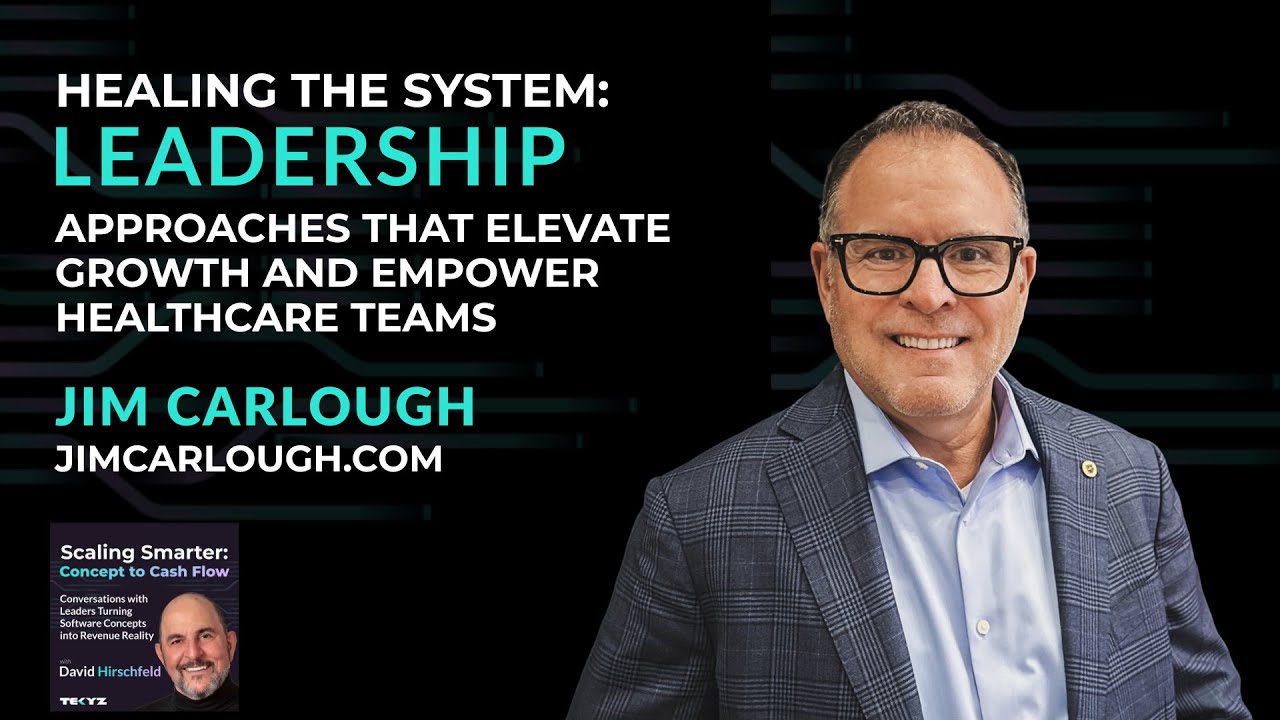
Healing the System: Leadership Approaches That Elevate Growth and Empower Healthcare Teams