Overcoming Bottlenecks: Strategies for Scaling Your Business with Smart Technology Choices

In this Scaling Smarter interview, host David Hirschfeld talks with Stephen Smith, a fractional CTO and former venture‑backed founder, about his unconventional career path, the rise and fall of his biotech startup (described as the “Airbnb for genetic sequencers”), and the hard lessons learned from COVID‑driven pivots and cash‑flow missteps. Stephen reflects on the importance of early revenue (the six‑month rule), deconstructing a legacy tech stack, and discovering that developers often rebuild instead of buying existing SaaS tools. This insight led him to a consulting practice that leverages low‑code/no‑code solutions and AI to accelerate product delivery. He shares a practical framework for CEOs to evaluate and score their technology stack on utility, scalability, and domain knowledge, and emphasizes a bottleneck‑first approach to scaling businesses. The conversation also covers the cultural and emotional stresses of AI adoption across technical, middle‑management, and leadership levels, the need for a human‑in‑the‑loop to contextualize AI outputs, and Stephen’s personal “second brain” vision—a custom GPT‑driven knowledge hub. He concludes with a book recommendation (Chris Voss’s Never Split the Difference) and provides his contact details.
Chapters
Today, Scaling Smarter wants to welcome Stephen Smith. Stephen is a fractional Chief Technology Officer and also a recovering venture-backed founder. He can talk more about what that means to be a recovering venture-backed founder, startup founder. And he has taken what he's learned, a lot of pain in the learning, which any really smart CTO or founder, usually with 1 in a million that don't, have a lot of pain in the lessons that they've learned that make them really high value. And now he takes, he has this concept very similar to Launch First, where the idea is to get to revenue quickly. He does it through low-code and no-code approaches to building something quick, improving your market. Welcome to Scaling Smarter, Stephen.
Hi, David. Thanks for having me.
Yeah. So now your whole focus has always been, has been since you recovered. Why don't you first tell us about your background, a little bit about your background and about this recovery venture-backed founder startup that you did? Sure.
I am a, probably the most important part of me is I'm a son of a military officer. Part of my DNA is the DNA that I picked up from my dad's worldview. I'm— I've also worked across a couple different world focuses. I started out thinking I want to be a geologist, then I spent several years being— trying to be the next Michelangelo doing stone sculpture, and then I ended up back in the startup world with technology. So I've worked across, I don't know, 3 different distinct ways to view the world and bring all of those together because geologists map and figure out ideas and Sculptors have to work toward a long-term goal before they can see it. And then founders, that's all founders do is work toward a goal that they can see, but not really.
So now you, you've taken your— tell us about the startup that you tried to do that you got venture funding for and what happened.
Yeah. So in 2016, I got approached by what a person who would be my, eventually the CEO and the tech co-founder. He was a geneticist. He'd worked in multiple biotech startups and he came to me and said, hey, look, this this problem. There are these genetic sequencers, and we actually know what they are now because COVID made us all like minor novice epidemiologists. But at the time, these are million-dollar devices. And so as soon as he described the problem, I was excited by it because it's, wow, when you can virtualize something that's expensive and hard to get ahold of, there's a huge market there. There's also a social gain. And so we built what we would describe, or I think Wired magazine described us as the Airbnb for genetic sequencers. Which was a perfect description. Like you could, researcher could get on a machine, run a full genome from top to bottom with a certain amount of coverage and get the results back. And we gave them back in 2 weeks, which was unheard of. Usually it's 3 months or 6 months. And then COVID grew us. We went from 4 or 5 people to 50, plus or minus. Our revenue grew. I think at some points we were doing $20-some million a year. And then COVID killed us. We didn't pivot fast enough and some decisions we made turned what was the potentially a very large exit for my investors and for myself into the exact opposite. And that was a cauterizing experience when you think you've done everything right for 6 years, you've built this thing and it turns out to be a reverse of what you thought it was gonna be.
So how did COVID kill you and what pivots did you not make that you should have?
There's probably a couple. Our first business opportunity, we went 3 years before we got first revenue. And I would say that is cardinal for me now, which is if you've been working on something for more than 6 months and you can't get any form of revenue, and obviously there are companies that need to go a couple of years, that's why venture capital exists. But I think that in most B2B SaaS spaces, if you can't find a client and a customer in the first 6 months, you've got a problem. And we went 3 years and that was a little bit systemic of the idea that maybe the initial idea while valid, did not have real-world stakeholders that would actually follow it. And we got to revenue, we got to first, and then COVID made us grow and it killed off all of our labs. Like in the first couple months of COVID all our genetic research labs closed. They were all literally shuttered and done. There was no research going on. So just as we got revenue dried up and we started looking at our software and realizing we work on the research side, which is not really HIPAA compliant because it doesn't need to be, But our software would work to do testing at scale. So we started offering COVID testing. And first we started with 1 test and then 2 and then 5. And then pretty soon we looked a little bit like the Amazon of COVID testing. You could come in and buy, instead of having to pre-buy $1 million worth of tests, you could buy $100,000 a month. So we gave market liquidity and flexibility to a place where technology was moving, universities needed it. And then our software allowed us to follow the HIPAA laws And then keep people in their classrooms or in their schools or in their working environments while being compliant with both the government mandates and the reporting and HIPAA. It was beautiful. And ironically, I think in the early spring or like the winter of 2022, if COVID had done one more bump, literally one more outbreak, we would have cleaned out our inventory because we had to buy our inventory literally before it left the warehouse.
Wow.
And if other decisions hadn't made it happen at the same time, we probably would have left there super flush. And we had already started pivoting towards saying, you go to your doctor's office and your doctor is an agent who sells you, sells you something like you can't get certain tests without the doctor. But COVID changed that law. Well, you could get a digital prescription and then have test results delivered in a diagnostically compliant way. where you couldn't before. And so we said, okay, there's a huge market for these very esoteric tests. Like, I'll give you an example. The Jewish community, they suffer from very specific gene-linked abnormalities, right?
Mm-hmm.
But if you go to a doctor in the Midwest who is not familiar with that, with that situation, he or she may not know where the tests are. And if they're esoteric, they could cost a lot of money or take a long time. And we know that diagnostic health And health in general goes up when you have better test data. So we looked at it and said, oh, we're building up to be the Amazon for something that is almost always sold through a doctor's office. We don't need COVID to tell you going to a doctor's office because you've got a hung nail is maybe not the best thing to do in the middle of a pandemic. But it turns out access to medicine is better when you get more, when you have more availability. And that's what we were going into.
And then, okay, but then you ended up not having the cash flow because you bought too much inventory when there wasn't another bump.
It was a perfect confluence for decisions that made sense by my CEO in the moment. He put off paying some salaries to some bonuses to some employees, and, and it ended up putting us in a position where legally we could not stay in business. And a lot of this was like when cash flow turns around, a lot of things go south quickly. So I woke up in the fall of 2022 realizing I was being named on lawsuits that I didn't even know were a problem. And I had to go to our investors and I'd go to the board of directors and explain, here's what you thought and here's what actually happened. But the more important part was in the month when you call 30 investors and you have to tell them that $100 million or that $80 million exit is actually gone.
Yeah.
Those are probably 30 or 40 of the most educational calls on the face of the planet because you put as much time into building a startup, you have to put the equal amount of time to wind it down. Like, investors have a right to know what worked and didn't. But very often investors are ghosted. The CEO disappears down a rabbit hole, doesn't want his name attached to it anymore, is off to something new. And these investors are like, we believed, like, we are believers.
Yeah.
We're in the church waiting for the sermon, and there's no sermon coming. So I stuck around, and it kept me in a point of introspection. And I ended up in a hotel room at a conference in San Francisco with GitHub and whiteboarding everything I'd built for 6 years, because it was still current. I was still talking about it in the current— so it was a current thing. But at that point, we had laid off our employees. And I started taking this amorphous cloud of everything we'd built for 6 years, and instead of it being a 3-dimensional cloud, I smeared it out in one dimension. It was one line. And at that point, I knew the software well enough to be like, that feature right there, that took 6 man months or woman months of coding time. That one there, that took 3 months. And I started to just apply the brain that comes when you've just been hit hard. The thing you built as beautiful is gone.
Mhmm.
And I started looking for drop-in replacements. And I started being like, that's interesting. If I'd broken a few rules, I could have used Typeform. Instead of building this 6-month form builder.
Yeah.
And then that became an avalanche where I'm like, what other parts of the stack can I replace? Okay. Now I have one-for-one replacement, theoretically, given what I know, could have built it. And then I went and started adding, finding, let's find a replacement for the replacement. And that led to an Airtable. And that led to a realization is that the SaaS community, we've been building software designed to replace custom development work for years. But developers are really good at justifying building it from scratch every time. And so I started having these 3 voices in my head. What were my developers that I just laid off telling me about why we chose technology? What was the business need? And then what was the real sunk cost of the venture-backed dollars that went for one pattern that didn't yield results? And I realized developers will happily write everything bespoke. they will build everything instead of buying it. And so that led to the growth of my consulting practice. And then AI exploded. And AI is like the love child, right, for this idea plus SaaS, because now you have a way to apply patterns at scale. AI is really good at saying, oh, we're gonna go apply these 3 and roll them together. So that became the basis of what we do is how we think about it. It's contrarian.
No.
Many people are like, this is a terrible idea. Developers won't hire me. CTOs never hire me. But it's usually investors, Or founders who are like, what we're doing won't get us there. We need to think about it differently.
Yeah. Yeah. And that whole, what we're thinking about won't get us there is accelerating.
Yes.
Along with AI, because the level, because the fear of competitors eating your lunch is growing and people are afraid that they need to pivot no matter what they're doing. They have this feeling like they should be pivoting. How true do you think that is for most companies? How important is it to really adopt AI and automation in their workflows versus what they've been doing in the past?
I would say that you can apply AI in a lot of different ways. Like the way you apply it to a dev team is going to be very different than how you apply it to like tech leadership or to just general leadership. So there's almost kind of 2 competing voices. There's the bottom of the tree, the developers who are like, I'm using these tools, we want them. But they very often aren't focused on the business need because they can't be in all the calls. And the CEO or the CMO or the CTO or even the chief of staff is getting pressure from their board saying, we need an AI strategy. I'm not a cook, so I can't write a cookbook for you. And I think that's the situation that most CEOs are in. We need a strategy, but we could throw millions of dollars at this and we don't know where to go. So for startup founders, it's really hard. Like, where do I put my time and my dollar? You're working 9 or 10-hour days and you're thinking, I gotta go study something I don't understand, find a business problem that I think I already understand and have ways to solve it. And now I need to level up. I have to teach my entire staff. It's a daunting problem. But I think that you, you do not have a choice in a destructive, highly destructive creative economy like we have. You cannot ignore productivity. If you're the farm who says we're not going to rotate our crops, we'll be good. This is the way we've always done it. Those farms, they don't, they're not around for all that long. So it's this, and the challenge is the technology has moved so brutally fast that I went from writing once a month on a newsletter to writing weekly, and now I'm writing daily because there's absolutely the firehose of crazy has gotten much bigger.
Oh, it's crazy. Yeah, the speed, that's the biggest problem is The speed at which new concepts are being created, right, around AI and automation and, and how things are all getting absorbed and encapsulated in these new concepts and, and how much can be leveraged so quickly. It's daunting. It's hard to know where to drive a stake. Because you're afraid anytime you drive a stake in, then you've just basically nailed yourself down. to a certain approach that's already obsolete by the time you actually implement the thing.
And that's, that speaks a little bit to the dichotomy between the way developers view the world. Like, developers will often be like, that's not scalable, that's not stable, it's not observable, right? There's a lot of reasons to say no to cutting-edge technology. AI is very different in its adoption rate than normal technology. We're used to an industry where 2 years in the software industry is equal to 20 in manufacturing or 20 in finance. But now, 6 months in our industry is equal to 3 or 4 years because literally it's expanded faster. Traditionally, developers want things because they know that's what they need to have the job be done well. But when you're experimenting, scale is the last thing you should care about. But it's sometimes the first thing that developers will talk about. Oh, it's more efficient. It's more productive. None of those things are true. Right. None of those things are true.
And so it's— I'd say that none of those things are true in what respect?
Developers work in a world of determinism, right? We need one piece of code to do the same thing over and over again. We actually have words that describe this.
You need a predictable result.
Yeah.
It doesn't have to be the same result every time, but it has to be predictably— it needs to be predictably accurate.
Yeah. And so we build tools and architectures to allow for predictable consistency, even though humans are predictably inconsistent. Like, we will write bugs. Like, we don't— we have QA teams and testing and CI/CD because we write bugs. Like, humans would like to represent themselves in the AI world as being so much better than AI. We're consistently inconsistent.
Yeah.
And when you look at AI, AI is consistently inconsistent. But it's doing it at a 10th or a 1,000th the cost.
Right.
So if you have one group of people out there who say, we need to go slower, and we have this technology, and we need to prove it and do it right and safe. And they use the term right, which they are right. There are right ways to do it. But when you marry those up to business needs for experimentation, right becomes a relative thing. So when those people confront a world where Microsoft is saying— is laying off developers and making AI-write PRs, the developers are screaming about it because determinism has gone out the window. AI is saying, you guys both write bugs, but they write bugs, the same number of bugs, maybe even more, but they write them a lot cheaper. This is not going to win. So we're watching this pattern.
And dramatically faster.
Yes. Dramatically faster.
Yeah. Not just cheaper, but it's also time to market, right?
Yeah. And as long as we, like, one of the big terms that's coming up in the AI world is keeping a human in the middle, right? So sometimes you want an AI agent or an MCP to do something, but you don't really want it to go trade on that information immediately. You want a human in the middle. And so what we're seeing, I think, is developers who have a little bit more of an EQ, who are interested in why stakeholders think things versus scale or security or stability. Those people then are being plugged into AI workflows in which their value is to upgrade or downgrade an idea, not to be the primary coder. And so we're seeing this all—
Mm-hmm.
I see it myself. I do a lot less primary coding. I do almost all AI coding.
And, and partly also that person needs to be put in to contextualize what AI is producing. Um, and what I mean by that, right, is that, okay, it's producing this, it's coming up with these conclusions. Is that appropriate? Is that appropriate and contextual for where we are and where we want to go? And sometimes you go, no, it really isn't. Maybe because we didn't prompt it right. Or because it's assimilating. It's not assimilating. That's right. That would be the Borg. It's, which is how it feels.
I get the—
it's consolidating so much information and so So it's making some conclusions. They may even be correct conclusions given a certain context, but it's not our context. So we want to direct it a different way, and you need that contextualization today. That will change in a year from now. It's going to look very different. And that's the hardest part of AI to get your arms around, is that you— is trying to understand where you need to be so that in a year from now you're current. Or how you can keep changing quickly enough to stay current with the changes that happen on almost a daily basis.
So I think I see stresses in 3 areas. Hyper-technical people have an underlying stress that if the hype is true, where am I? Where do I fit in this? Am I literally just telling an AI what to do? Then I see middle, I see people who, and those people are saying, I'm working an 8-hour job right now. And I know how to do it. And you're telling me I need to be more efficient. I have to learn something new on technology that I'm not sure can do what I used to think I could do as well. That's a huge stressor. Also, they're working. They're like all of us. We have wives and kids and families and spouses. And the idea of, I got to carve out an hour to invest in something that could make me lose my job, could cause a problem. And then you see tech leaders in the middle, the non-technical people.
Yeah.
And their stress is even higher because they're like, how am I gonna provide leadership for something that I don't understand? And then, and then the, the even worse is if we look at some of the Facebook channels, people who are non-technical and non-business at all, there is a phenomenal amount of fear and kind of latent anger and rage. I can't wait till this thing goes away. And if you read some of the posts, so AI has generated a phenomenal amount of like back of the brain stress, like, Where's my place? It's not asking, is there another computer job? It's, will the next computer job be the same thing I'm doing? And that's—
so if you're—
that's interesting.
So if you're a CEO and you're thinking to yourself, I need an AI strategy, right? And right now we don't have any kind of technology, a real good technical strategy, let alone an AI strategy. How would you approach them? Or how should they, how would you help them approach this in a way that would be consumable and not feel like you have to start your business over from scratch? Because that's, I think, where a lot of people start to think, my business is totally irrelevant. It's going to be totally irrelevant if I don't. Yeah. So how do you help them?
So I would first start by telling, I'm not an expert. I don't know everyone's business. So when I get engaged with a company, I usually say, yeah, you need an AI strategy, but that's the end result of some understandings. But you've been in business for a year or 5 years. You have all the processes built up. Let's start by celebrating what you have, tearing it down, and maybe applying a different lens to it. But it's not me going in and saying, you need to replace that stack component and change that. What I try to do is I work with senior leaders, sometimes technical, but some mostly not. And my goal is helping the CEO or leadership team make better tech decisions. And that's not— Hey, hire the right person and delegate it. It's more like asking them, and I ask them slightly emotional questions. How do you feel about HubSpot? How do you feel about, like, Salesforce? Sometimes the entire leadership team says, oh my God, I'd like to burn that thing down. I'm like, okay, that's, that's actually a smarting point that we can care about. And if we take their technology stack, all the collection of things they have, and then we apply what I call, like, a low-code framework where I score it, we score it together.
Mhmm.
We score how scalable is this? Is this a point solution that you have in your stack? What's the utility? Like HubSpot has a lot of utility. It can be used across 15 different problems. And then what's the domain knowledge? Like, do you actually have to have someone on staff who specializes in X to make this work? And so once we start breaking out these categories in which anyone can rate them, their own team can do them, or I can do them, now they have this ability to build a heat map. Around, do we need to hire more in this area? Have we chosen tech stack— does our current company's tech decisions drive us to hire more people so that automation is harder? And that usually causes the tech team or the leadership team to say, oh, let's not throw the baby out with the bathwater. We know what we have won't get us there, but what can we do? And they can start to make top-line decisions. We would like our technology to be, to not be aiming for a 20-year window or a 5-year window. We want to be, look, it has to have utility for 6 months. We're in a high experimental phase, but we want the level of expertise to come lower. That changes how you buy technology. So then you fold in more point solutions and you start, we can start having conversations around changing the culture around how technology is brought to bear because AI changes the culture completely.
Yeah.
Sometimes the simplest thing happens and you then start surfacing that there were actually a lot of cracks in the old architecture and you make sure those cracks are addressed in the new one. So, that's one of my kind of clients are people who are like, I do $2 million worth of business. I have this, but I'm pretty sure I can't get from here to the next place. They don't have 2 years and $2 million to completely revamp their capital expenditures. On tech. So what you do is you help them be like, you're going to have a couple cranky rotten pieces here, but that's okay because you have margin accounting and she's perfectly happy. She can plug that gap. We don't have to make a huge investment there. I want to move these up so that everyone— head of HR should have some type of understanding of the tech decisions that went into it because they have— they are going to be a user.
Right.
That's my approach.
That's so interesting. It differs a little from my approach, but I think the way I would approach this and the way you would approach it, we should combine our approaches together because I think there's a lot of value there. I always think of it from a perspective of bottlenecks. So if you need to scale someplace in your business, you have one or many bottlenecks, right? But there'll be one, the biggest bottleneck, and you can prioritize them in terms of which is the one that basically you can't scale until you open that channel up. And that channel, it may be restricted because of people, it may be restricted because of technology. There's a lot of reasons why it might be restricted. So what's the cost associated with approaching that particular bottleneck? What's the risk to your business if you don't? What's the— do you have a cultural issue you've gotta overcome to be able to expand that bottleneck to something? Because as soon as you open the bottleneck up, And then the next bottleneck becomes instantly visible to you. And as a CEO, that's where your effort should go is to just keep opening one bottleneck after the other until you're— because you go from $1 million a year to $1 billion a year pretty much in that way. Some of it is knowing in advance where you're going to have bottlenecks if you don't plan it, but others are taking stress off the system where you have bottlenecks today. Because you can't push more into the funnel because the bottleneck exists and it's just going to stop the growth. So doing it, combining that with what you were— with your approach, I think, is a— would be like a great way for a CEO to build a matrix and a plan for how they approach growing their business.
A really good engagement with me is usually about 3 months. I hire to get fired. I'm like, if I do my job properly, I'm not executing for you. What I am doing is facilitating and enabling. So you might send back, I might come in and have a conversation and be like, what has changed in our scoring? Are we thinking about, oh, turns out that we needed stability in this one part, but we didn't apply that uniformly? Because sometimes as a software engineer, I apply Six Sigma. I go all the way to the roof. Let's make this perfect. And the reality—
Right.
There are sometimes where you're like, if a log message is missing, for who comes in the front door, that's probably not warranting the same amount of investment or focus. And so, you can start to get a company to make decisions because all decisions have a revenue impact. And it—
Right.
And actually, one of the things I love is if you go to a conference, a micro-retreat with a company, and you start asking people, what is your emotional attack? How do you feel about this?
Yeah.
We never ask people how they feel about the software using. Go ask people who use Salesforce what they feel. You're going to get a visceral level of unhappiness. CEO wants to make his team happier. You might choose software that generates joy. And joy is sometimes easy. It's sometimes like Asana pioneered this. You completed a task and there was a big explosion of confetti.
Right.
Like, I know how geeky that is. Oh my God, it works. It really works. So, if you factor the human side of conversations, then you can enable parts of your team to have inputs because you've made it safe to not have it be a tech-only decision or a business-only. There's actually a human side of every tech decision.
So I'm going to ask you a question I ask everybody. If you had no budget limitation and you could— and no technical limitation, what problem in the world would you solve?
Oh, that's easy. Second brain. I work— I've been working for a year because I'm realizing I know what my human limitations— like, I wear glasses because I don't have perfect vision, and I take notes because I don't have perfect memory. And I know that I network with a ton of CEOs or CTOs, and I can remember you for the last month. And I remember we met 2 months ago, but I can't remember what our conversation was. And so if I had unlimited budget and time, I would spend all my time working on my second brain. And that's a— right now, the current iteration is a custom GPT on baseline OpenAI. Yeah.
Mm-hmm.
Which I can say, hey, I want you to bring in my LinkedIn, my enriched LinkedIn, because I keep detailed notes. I want you to bring all my transcripts. I want you to bring everything I publish. I want you to take in articles that I read, and I want you to build a collaborative tool that understands how Stephen thinks about it, but promotes creativity in a conversation I have. So like the human in the middle for me is not an AI agent. It's a swarm of agents around me that all know what my goals are. They know what my content pillars are. They know where I get excited about technology because it's very simple. So they actually provide me with motivation and execution, and they give me the ability to exercise my 3 lives. Hey, what would a— what does a sculptor think about this approach? Surprisingly, I love this.
Yeah.
Oh, and then the last thing is I build these mentor models for either people that exist or people that I love. And I'm like, okay, I have a focus. Steven's focus group is one of the things that these AI agents or my, my, my second brain can tap into because they can tell you immediately Steven's really not gonna care about the fact you're deploying a Redis cache faster. He's gonna be— but if you— but if it's done with a single click with an AI prompt, Steven will care. So I wanna extend my own human limitations. So my memory is better, my, my engagement, because I have Zoom calls with CTOs going back 3 years. I can't remember what I talked about, but as soon as I read it, I'm like, oh my God, that was actually a really good question. Yeah. So that's my goal. If I had unlimited money, it would be my second brain. And I'm not the only one.
I love that. Yeah. Yeah. No, I've, I've, that's actually probably one of my big goals. In fact, after that, when we're done with this interview, I want to talk about something I'm working on right now. So hang out for just a few minutes. Sure. Last thing. And the last question I'm going to ask you is what's a book recommendation? that you have?
Oh, God, it's super easy. I'm reading The Innovation Engine by one of the founders of Flybridge, which is an AI company. Super cool. Actually talks about everything I talked about. But I read Chris Voss's Never Split the Difference. It's a book about negotiation. I think of it as if you're religious and you read the Bible, the Torah, the Quran, or Bhagavad Gita, this is the book you read after because it tells you how to apply the things that we think about as morals and values in business without being A bad guy.
So it's not without being preachy. Yeah.
It's not teach— it's teaching you how to communicate so deeply that you unblock problems. I would say it's a form of non-confrontational speech, but like, it's a book that I read every 6 months, cover to cover. Every 6 months it snaps my brain back in, and for the next 2 months I'm good. And then it drops off, and then I'm like, oh, I'm getting transactional again. So that's my book, Never Split the Difference.
That's a great book. Stephen, thank you for coming on the show. And if Somebody wants to get ahold of you, how would they do that? And we'll have all these links in the show notes too.
So my primary website is stevensmith.solutions, but I also have a newsletter called the lowcodecto.com.
Okay, awesome. Thank you so much for being on the show.
No problem.
More from David
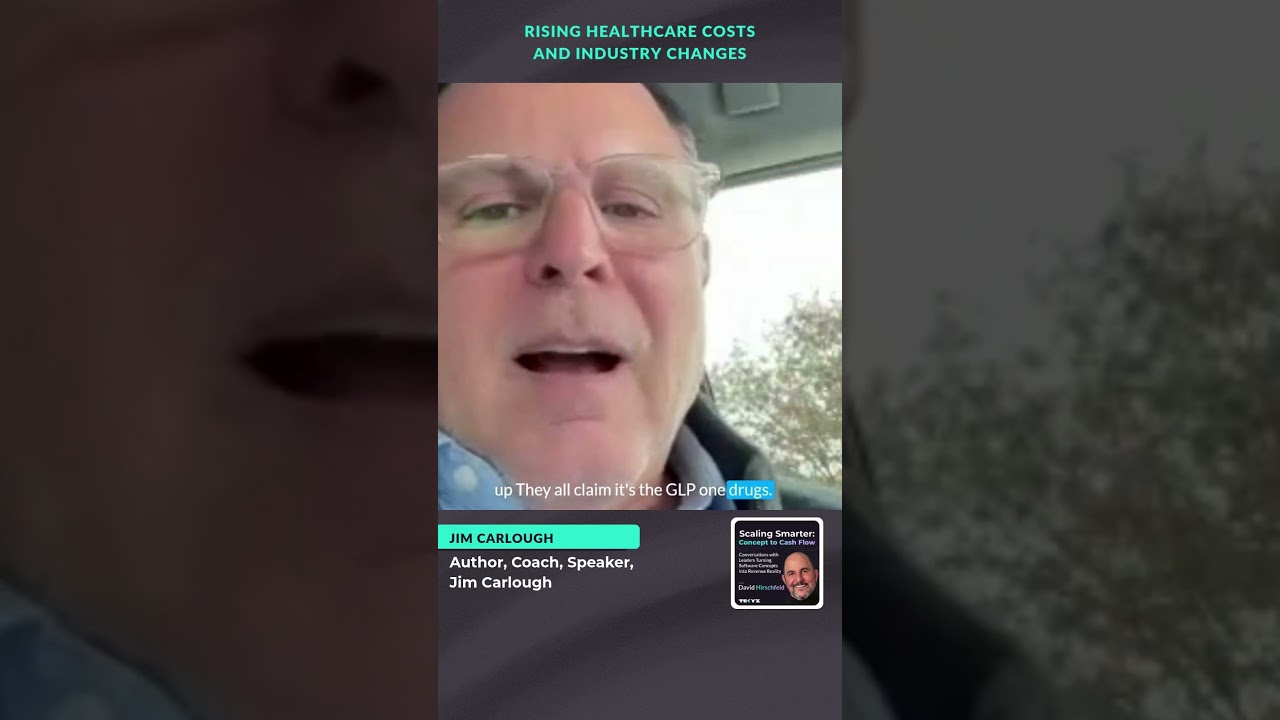
Healthcare costs are accelerating, and the ripple effects are just beginning.
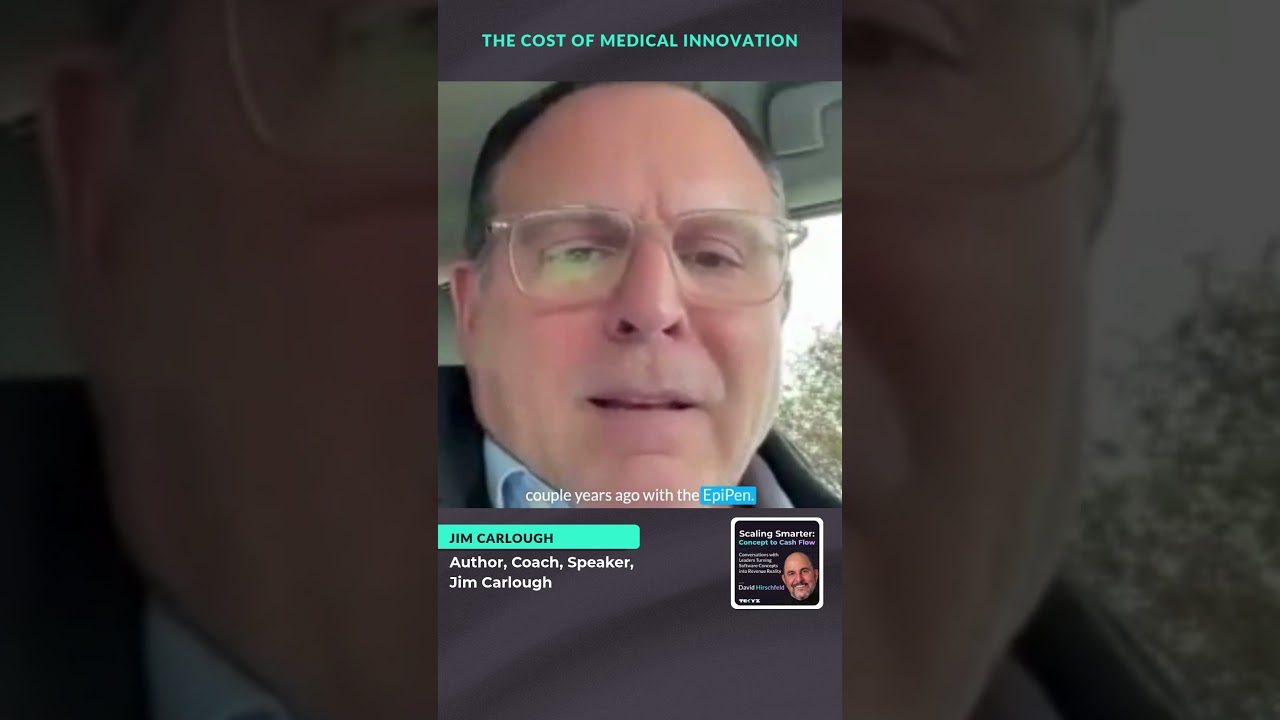
The challenge: medical breakthroughs are advancing fast—but costs are rising even faster.


Healing the System: Leadership Approaches That Elevate Growth and Empower Healthcare Teams