The Future of RFPs: Why AI Matters for Small Business Success

In this episode of the Scaling Smarter podcast, host David Hirschfeld interviews Mark Schreiner, founder and CEO of Breezedocs.ai and host of the Grow Fast podcast. Mark recounts his career from a 2012 consultancy in Tokyo to returning to Seattle and eventually co‑founding Breezedocs, an AI‑driven platform that helps small‑ and medium‑size businesses (SMBs) automate responses to RFPs, RFIs, and security questionnaires. He explains how a collaboration with MemoQ sparked the idea to reuse translation‑memory technology for answer reuse, leading to a product that can cut RFP response times by over 80% and increase the number of RFPs a client can handle from 5 to 25 per year. The conversation moves to market dynamics: enterprise‑grade RFP tools cost $25‑40k annually, which is prohibitive for SMBs, while Breezedocs offers transparent, low‑cost pricing and a zero‑onboarding model. The biggest hurdle is not competition but creating awareness among the ideal customer profile that such a solution exists. Mark differentiates between two RFP types: structured Q&A‑style documents (where the AI can retrieve and rate past answers) and open‑ended proposal requests (where the AI currently delivers 3‑star quality, aiming for 4‑star in weeks and 5‑star later). He outlines a roadmap to evolve Breezedocs into a broader sales‑enablement platform covering live sales‑call assistance, onboarding, website chat bots, RFP aggregation, and partner referral tools. The discussion shifts to go‑to‑market tactics in an AI‑driven world: optimizing for LLM‑based search, the decline of traditional paid search, and the importance of warm introductions versus cold outreach. Mark shares his partnership philosophy, emphasizing concrete partnership plans and staying top‑of‑mind with referral networks. Both hosts discuss personal learning systems—AI‑research chat groups, daily newsletters (the AI Report), podcasts (Grow Fast, All‑In, Neil Patel, Ezra Klein), and books that have shaped their thinking, including Tools of the Titans, The Untethered Soul, How Not to Die, The Mom Test, and Connection Expansion. They also touch on health experiments with a plant‑based diet and its measurable impact on cholesterol. The episode concludes with practical advice on asking honest customer questions (the Mom Test) and contact information for Breezedocs.ai.
Chapters
Today I have Mark Schreiner, who is the founder of breezedocs.ai, and also he is the host of the Grow Fast podcast. And Mark interviewed me actually a couple times several months ago, and so now I'm paying the favor back and I'll be asking all the hard questions. Hi Mark, great to have you on.
Hey David, thank you so much for the opportunity to come on the, the Scaling Smarter podcast.
So tell us, tell my listeners a little bit about your journey before, what got you the genesis of BreezeDocs and, and the, the journey of BreezeDocs so far. Sure.
In 2012, I set up my own business consultancy and I was based in Tokyo and worked with about 15 different companies to help them go to Northeast Asia or expand their footprint there. In 2017, moved back to Seattle, my hometown, and I continued to consult with a variety of different companies, helping them to now expand their business or introduce their business into North America. One of those companies, a company called MemoQ, had an issue related to RFPs and responding to RFPs, and I helped them refine their process, but also said, hey, you've got some really cool software there. It's something called a translation memory. Maybe we can repurpose that to, to collect the information from your previously submitted RFPs and, and then reuse them when similar questions come in the future. And it worked amazingly well. They went from doing a couple RFPs to more than 10. They got super excited about it and they hired an external business consultant to check and see if there's a market for this type of software tool. Well, it turns out there are a couple enterprise solutions out there that were way overpriced for an SMB like MemoQ. And so they decided, hey, you know what, Mark, we want to invest money in and build a platform that specifically helps SMBs respond to RFPs, RFIs, security questionnaires, et cetera. And instead of using our software. Yeah. We want to use generative AI because then with generative AI, the question can be somewhat related as long as the answer should be the same and the AI is able to figure out, hey, when was the company established, created, founded? It's all the same question. So therefore the answer should be the same. So they, in about 2 and a half years ago, put in a significant investment. We built the platform and, oh, I should back up. They asked me to come in as co-founder and CEO. And we built the platform and we launched in our go-to-market early this year. We have a lot of customers in the SMB space and we are continuing to grow. The platform works. It's amazing. Give you a couple examples. Look, you went from doing 5 RFPs originally per year, roughly. Now they're doing over 25. They're winning more RFPs because it's easier for them to respond. Average RFP response times are cut by over 80%. So that's the condensed version of it.
Oh, that's awesome. This is like the dream for a lot of companies, right? Both in terms of you as a founder and how you're growing and you found a niche where you're solving a problem, as well as for your, the clients, because you're solving such a high-value problem. The value proposition is really easy to express. So what's, how have you been dealing with competitors? Because I know that you're not the first to market with this type of product. So how has yours gotten traction from your competitors?
Well, it's interesting. Originally we looked at the competitive landscape and we, again, we said that there are some enterprise-level solutions out there that are $25,000 to $30,000, $40,000 a year plus migration costs and so on and so forth. Typical SMBs, companies that are doing $5 to $15 to $20, $30 million a year, they don't want to spend that kind of money on RFPs. The other thing with RFPs is, is that If you haven't done a lot of 'em, it's, should we do it? Shouldn't we do it? We win some, but we lose most of 'em. We don't know if we're gonna get an ROI on this. So even the activity, investing the resources in the activity itself can be a difficult decision. And then if you start talking about adding on those extra costs for $30,000, $40,000 a year platform, people just say, nah, I'm not interested. For SMBs though, we didn't really have any competitors. Now I gotta be honest with the pace that AI is developing and the Number or the increase in AI-related startups, there are, there have been some companies that have popped up on the landscape. The interesting thing though is our biggest challenge isn't going against competitors. Our biggest challenge is creating awareness amongst our target, our ICP, our ideal customer profile, that there is a solution that can help them, one, reduce the time of RFPs, but what, two, win more RFPs, and three, RFPs become from, they go from being this chore, this really arduous thing to something that they they can whip out very quickly. And the more they do it, the more they win.
And if you don't—
let me just add on there— if you're not responding to RFPs, because if you're trying to do business with your city, county, state, federal governments, or a lot of federal agencies, and you're not participating in RFPs, you're just leaving all those business opportunities on the table. And even a lot of enterprise buyers of services and products, when it gets— when the deal becomes above a certain dollar amount, they're required to issue an RFP. So if you're not in that sphere, if you're not going, you're just leaving so much business It's probably about, there's estimates between 30 to 50% of all business in North America is conducted through the RFI, RFP process. So if you want to get in that game, you want to get in that arena, you've got to figure out the RFP process.
Yeah. Yeah. So you said the biggest challenge you have is getting people to recognize that there's even a product out there to help them?
Yeah, it's creating awareness. When we get meetings, our close ratio tends to be quite high. It's just creating awareness that there are solutions. Where the competition comes in is we've had companies that have demoed some of those enterprise solutions and that has tainted them because they're like, oh, we're not going to spend that kind of money. And we're like, no, we're different. We don't have all the bells and whistles, but we have what you need. We have a super simple, intuitive, easy-to-use platform, zero onboarding costs, zero migration costs, and we can get you up and running like in 30 minutes to respond to RFPs. Those enterprise-level solutions are much more complicated. Now, if you're doing a couple hundred RFPs a year, and depending on the type of RFPs, you might need one of those enterprise-level solutions. But your typical SMBs, they're either not aware or they've demoed these other products. And by the way, the other products, those competitors that we were talking about at the enterprise level, you can't even find out the pricing until you go to like your 3rd or 4th meeting. Our pricing is on our website. It's completely transparent.
So before you even reach out to us, you can see Yeah, I noticed that too on your website, that the pricing is very— is transparent. You know what the opportunities and the options are. And I'm assuming that once somebody starts using it, then they realize how much more productive they can be in terms of creating opportunities. They probably— the upgrade path is probably pretty obvious.
Yeah, 100%. In fact, we have some amazing customer testimonials. Some of them are on our website. Some of them we're waiting. We've been given the okay to share the testimonials, but we're waiting for the permission testimonials with investors, but not publish them publicly yet because every company's got their compliance issues. But we're waiting to publish some more, hopefully in the next 2 to 3 weeks here. It makes you feel good. I know you've built a lot of platforms. It makes you really feel good when you see the engagement and when people come to you and say, this is awesome, we love it, don't take it away. Just, you don't even need to make it better. Just, just keep, make it available for us. And it feels good. You must have had experiences like that.
Oh yeah, I definitely have. Yes. And I've had the opposite experiences with clients as well as my own products. I've had both experiences even with my own products, but especially with clients where software starts to take off on one side. In fact, I have one customer right now that's about to do a $100 million round. They just—
Wow.
They just closed the $15 million round and now they're starting the next round at 6 times the valuation.
So are you still, do they keep you engaged then at that, when you level up like that, or do they start to hire all internally?
One, they, they did a big partnership with Google, which I helped them get that partnership and then went up to San Jose with them for 3 days to meet with Google. But then one of the requirements was, is that they use one of their larger Google partners. And so we lost them there. And then they've now come back to us. To reengage for specific point solutions. They're our biggest, one of our biggest references. They loved us. But if you do a huge multimillion-dollar partnership with Google and they say, we need you to use a Premier Google Partner to take this forward, you do it without question, right?
Oh, absolutely.
That endorsement's worth a fortune in terms of raising money and in terms of credibility and in their market. And it's healthcare was their market. So that's a weird mixed answer to your question, right? We, in that particular case, we lost it, but I was right there behind them. That was the right, that they, that was what they needed to do.
Yeah. And it still feels good. You got them to the, you got them to that level, to that door.
And then it turns out Google was praising us for the quality and the level of documentation and the architecture that they were, the partners were taking over, which they said is very rare. Usually they have a mess and they have to clean it up. And so that just helps to create more credibility for us and growth. Now, I also noticed that you said that one of your big challenges is open-ended RFPs. Can you talk about that?
Sure. So there are 2 types of RFPs that we call them Q&A type. And basically you would get a document with maybe 300, 400, 500 questions, and they could be yes/no questions, they could be multiple choice questions, or they could be questions that just say, please tell us about your company origins, or tell us about your product, tell us about about your security policies, etc. So these are what we'd call a Q&A type document. RFIs are like that. RFPs are like that. If you get it, if you ever had to answer a security questionnaire, security questionnaires are almost always question-answer type format. Breeze and most of the other RFP response platforms on the market tend to perform better in those question-and-answer type documents because using the LLMs, we can look at all the questions and say, Oh, you've answered this question before, or some iteration of that question before, some derivative of that question. So therefore, the answer you used in the past can be used again. And we'll provide maybe 5 or 6 different answers based upon all of the content that is in your quote unquote knowledge hub. And the answers are rated by stars, 5 stars, 4 stars, etc. And if we have a high degree of confidence that it's a perfect match, then we'd say it's a 5 star. Okay. That's what everybody's work is feeling pretty comfortable doing right now. Other types of RFPs, and it's about half the RFPs on the market, will just describe a need, or they'll say, we're looking for this type of solution. And then they will turn it back to the vendor and say, describe your solution, including this and this, like 5 different parts, right? And that's where you need like a proposal writer who will interact with all the different people in your organization or go through all your documentation and Kind of put together a more freeform proposal. All right. That's a much more challenging problem to solve. We are literally, we can solve it. We can do it right now. But our, remember I talked about the 5 stars, 4 stars, et cetera. I would say most of our outputs are probably in the 3-star range right now. We're anticipating in the next 3 to 4 weeks, we'll get to the 4-star level. Once we get to the 4-star level, we're gonna launch with some of our existing customers as, as just a, like a development partner mode. We're not gonna charge for that module. But, and then once we get to where we can get some 5-star outputs, we'll be releasing. And that's kind of the holy grail right now. Nobody that, that we're aware of at this point, things change rapidly, is able to solve that problem. But once somebody can, think about the applications there. Any kind of RFP, proposal, grant writing, any kind of solution where they're saying, hey, this is what we're looking for. What can you do for us? This could be for like an individual, a business consultant, right? They put together these proposals all the time. A lot of that's manual work. AI can suggest stuff, but the degree of accuracy is relatively low, but we're getting closer.
I actually, I'd love to have a more technical conversation with you about that offline.
Absolutely.
Because we've struggled or worked on some of the same sorts of things internally, specifically for development projects.
Okay.
That might be an interesting discussion.
Sure.
So what are your biggest— how do you see AI now changing your— affecting your future? Because it's evolving so darn fast, right?
Yeah.
Where do you see yourself 6 months, a year, 2 years, 3 years? It's so hard. I used to ask 5 years and 10 years out, but that's dumb now because it's just impossible to predict.
Yeah. And I would even say 6 months is probably harder for me to predict than 2 years, but because of the nature of running a startup. But I would say, how does AI affect us and in the evolution of AI? In a couple of different ways. One, it makes what we can do— we can do more things and we can do them faster and easier with a higher degree of accuracy. At the same time, the competition can as well. And the competition isn't always the enterprise-level companies out there or the new businesses that are focused on the SMB space or the lack of awareness. Sometimes the competition is our customers themselves, where they have 1 or 2 people in their office going, hey, I've got this thing called ChatGPT, or I've got Microsoft— what is their Copilot? I think that I can do RFPs. And to some degree, they're right. They can respond to RFPs in a very rudimentary way. But do they have all the collaboration tools? Can they do different types of question-answer matching? Can they do the open-ended? That's very challenging. And to get anywhere near close to the output and the different collaboration support, etc., that Breeze offers, And some of those enterprise, you would have to invest incredible time and resources. But a lot of people, they're kind of geeks and they want to get busy with it. So as AI becomes more democratized, you get these homegrown solutions that you're actually competing with. And so that's where it's at. And, but it's just an amazing time. I, you hear some people talk about the dangers of AI and I'm sure it's there. But I gotta say, the pace of development and the disruption that's being caused right now, this is like nothing else that we've experienced in our lives.
Oh yeah. No, there's nothing even close to it. I think about all the major disruptions in technology over the last 30 years and there's nothing, or 40 years, and there's nothing that even approaches the acceleration of this in terms of its impact and the speed of it and how fast it's evolving.
Yeah. And it's, it's so interesting because I've spent most of my career on the sales and marketing side. And I was having a conversation with somebody a couple days ago about the, how AI is changing even the online search space. in the buying process. And I was like, you remember it used to be if you weren't in the Yellow Pages, if there's a big book with a bunch of ads in it, if you weren't in there, you were nobody and you weren't going to sell anything to anybody. And then it became Google search, and then you had local search, but still that's really weighted toward the, towards the top 3 or 4 organic and your paid results.
Right.
But even Google has taken a hit now. Their paid search business has plummeted, and we went through it with them, man. We, we were using AdWords We were getting just lousy results. So we had to switch up in terms of what our campaigns were. The big holy grail right now on the sales and marketing side is how do you SEO optimize or how do you optimize for the LLMs so that when I go to ChatGPT or Perplexity or whatever my favorite tool is, and I say, what is the best RFP response platform for SMBs? How do I get it that Breeze comes up? And, and there are ways to game it. And the, the, the LLMs will actually tell you what you need to do.
Yeah.
But, but it's all this, it's changing every day. It's a challenge.
Yeah. Yeah. The search is a big challenge. Marketing, where do you put an ad out is a big challenge. Maybe it's on LinkedIn or it depends on who your target is, right? How you mine potential opportunities is a big challenge because what worked 2 years ago does not work now. Like LinkedIn.
It's amazing. I used to get Decent number of positive responses just on outbound emails. That kind of dried up. But if I have a warm introduction via email, that typically works. But then LinkedIn, up until, let's say, about 5 years ago, I was getting 1 to 2 meetings for every 10 messages that I sent. And I closed a couple of very large deals off of just outbound on LinkedIn to a target demographic. Right? I knew who I wanted to reach. These days, it is so challenging, and people just get annoyed because every day you get 10 people saying, In your space, especially, I get so— I get solicited by so many people. Yes. Offering development services. And I'm like, I— how?
So do I. Yeah.
Yeah. You're like, do you know what we do? Yeah.
That's crazy. Okay. So now let's say you had— there was no budget limitation. And the technology, AI technology, has taken off so that you could solve any kind of problem with workflow automation and AI, what problem would you solve?
Or is it—
I would keep a founder like you, it's very hard to get past where they are in their channel in terms of trying to build their business. But if you step out of that for a minute, what problem in the world would you solve? Or in your own life?
Yeah, so I would work with the team to turn Breeze into a— from a product into a complete platform. And the platform would solve all types of sales related problems. For example, the RFPs, RFI security questionnaires, that'd be— that's that one component. Those open-ended RFPs would be the next component, which we're working on right now, as I mentioned. But then you would look at, okay, what about a sales module so that when I'm on a sales call, if anybody asks me any question about Breeze, I can type— I can just use Breeze to answer the question. Maybe I don't have the answer, but then I can take it a step further and say, what about onboarding new salespeople? Onboarding is a big process. It usually takes time. If we can shorten that onboarding process, we can get people in in front of customers, they're much more productive, much more quickly. And then what about an automated version of Breeze that sits on a website? So when somebody comes to your website and they have questions, they get answers from your knowledge hub in the tone that you've directed it. And then it just keeps going down into, to all the different sales-related— there are a lot of different tools out there that do meeting notes, they do prospecting for you. Another one for us would be RFP aggregation. So I would go into Breeze and say, okay, tell me about all the RFPs for software development out there. And then I would, I could get a whole list of them and then I could create responses to them. So that's where my primary focus would be on that sales and marketing side. And of course I've got a list that runs much longer than that, but I don't wanna bore with you, bore you with all the details.
That's all.
Unless you're willing to write a check. If you're willing to write a check, I'll, I'll tell you everything.
That's an interesting conversation all by itself too, Fly. Anyway, so give— do you have a podcast that you really love and would like to recommend? I got—
I have a couple. I listen to the Grow Fast podcast. Excuse me, that's my podcast.
Excuse me.
Listen to the— listen to myself. I love listening to myself. It's getting a little weird here, Mark. No, I, I listen to the, the All In podcast, and those guys are amazing. And what I like about them is they're super smart. They're all super successful. And they come at many of the political and economic and business problems from different perspectives. And watching them with their guests tease through these issues and problems helps me see multiple sides of the problems and actually helps me better process it. Because when you look at the newspaper, for example, you're getting one viewpoint that's getting handed to you. Or if you listen to just a single podcaster or 2 when they're perfectly aligned, You're getting their viewpoint, and it's tough to see around that. But when you get people who are interacting on all these issues, I just love it. And then I recently started for the sales and marketing side listening to Neil Patel's podcast. I— every— it's 20 minutes, and I take down 3 or 4 notes, and I'm like, oh, this is awesome. So those are a couple of my favorites. How about you?
I— if getting away from technology, I really like to listen to Ezra Klein.
Okay.
He's a New York Times opinion writer. Yeah. But he's maybe one of the smartest people on podcasting because he, and he interviews all kinds of interesting guests. He leans more liberal, but he'll often have a really conservative guest on there. And everybody he has on there are these intellectual powerhouses. And Ezra Klein is an intellectual powerhouse. And he can talk at that level of intellectual powerhouse. In plain English with any of the guests he has on. He doesn't—
thank goodness.
Yeah, it's— I always feel stupid when I listen to his show because everybody sounds so damn smart. Yeah.
You know that saying, you're the average of the 5— of your 5 closest friends? And in me, I'm trying, I'm making a purposeful effort to read and to listen to people like Ezra Klein. I have watched or listened to a couple of his podcasts. I need to do more. But people that can help me elevate my game. And so, you know, it used to be in the old world, you'd have to actually make these friends. If you go back to the Renaissance, all the geniuses, all the smart people, they were all writing letters to each other. Letters every day, hundreds of letters a year they would write.
Oh yeah.
And they would exchange ideas and thoughts. That was the way of doing it. So they didn't actually have to meet in person. These days, I think people tend to feel like they got to meet in person. At least I did. Now I'm doing so much, much of it virtually. I talk to somebody like you, I do my podcast, I talk to somebody like you, I learn something. I go down to the local pub, I'm gonna talk about baseball or football or whatever, and I'm— and it's fun, but I don't know if I'm really enriching myself. And so I'm making a purposeful effort these days to do exactly what you're talking about, is listening to people that make me feel dumb.
It's— it— I learned so much by listening to people like that, and I'm always— and I like to be impressed by people.
Yeah.
So listening to those podcasts, I'm always impressed with both Ezra Klein and I and his guests.
But what about on the technology side? You don't wanna be caught out. I wasn't really aware of the Model Context Protocol, MCP, and MCP is getting to be this huge thing.
Oh yeah.
And it, that's gonna be a major game changer. And I, I got caught out blind by that. And then all of a sudden I've done a couple deep dives on it. Now it's, oh my God, how did I miss this? But how do you keep ahead of things like that?
There's a couple ways. First of all, in, on, in my company, we use Google Chat for our main communication instead of Slack, and everything is on Google for us. And then we use, we have a chat group called AI-Research. And so people post new things that they've learned there and new AI tools and things like that. And we're constant, and also new reports coming out about how AI is changing something in a particular respect or what the benchmarks show. And so that helps us keep up. I also get a newsletter. It's an email newsletter. It's one of the few, I have to find it right now here. It's, and it's called the, the AI Report. And it's a daily newsletter and it has usually 8 items in it that talk about the news, AI news of the day, like Google next level AI devices. I'm looking at it right now, how AI reduces energy usage by 70%. Trending AI, and then it has a trending AI tools section and they update it every single day. That's probably one of the better ways that I keep up with what's going on. If I just listen to podcasts, it'll just be, I won't get as broad on the AI front. I won't get as broad understanding. I also watch just a lot of videos because I'm watching how people are actually implementing specific things and there's like. An incredible amount of content like that.
And that's the challenge in and of itself, right? Is there's 24 hours in a day and we do have a job and our family and, but we want to, we, I love to read and I love to learn, but how do you choose how much time to allocate to learning versus doing?
And that's so important for a founder is to focus on what's going to help you execute effectively. Absolutely. As opposed to just trying to absorb everything because then you get distracted and lost. And by the way, so now a book suggestion or a couple, if you have any favorite books.
Please.
Yeah. What do you have?
Oh, I thought you were gonna give me a book suggestion.
I'll give, I will give you one, but do you have any?
I would say the book that most radically affected me in terms of overall product productivity was the Tools of the Titans by Tim Ferriss. And the reason it was so powerful is because he, in this book, he talks to, I don't know, 50 to 60 of the top performers in a variety of domains from Hollywood to music to sports, what, to medicine. And then he just asks these questions about what they're doing in their lives for, in their arenas. And I learned so much. But what happened is like on several of those, I started to do a deep dive into those different subject matters. And I literally, I listened to the book like 2 times. And while I was walking, and I would say, hey Siri, take a note. And I would say this book that the guests were recommending. And so from Tools of the Titans, I got inspired and motivated. And then I did a deep dive on a couple different things. One is more self-reflection. So I read Michael Singer's The Untethered Soul, which is all about letting go. And it's more of a kind of like a Buddhist type text, which really helped me calm me down. And as a founder or as a CEO, it can be, if you're just reacting to everything all the time, it can be really an emotional rollercoaster. But it just helped also help me in my personal life. The other area that I went into was diet and nutrition. And I read a bunch and then that led to a deep dive into cancer research, believe it or not. And I hope, I think we'll never have anything to do with that or have to worry about it. But I was just fascinated because we spend literally hundreds of billions of dollars on it. And in many cases, we haven't really come that much closer to solving it. And then there was all kinds of these, like, research that shows the way we're approaching that is probably not optimal, and there's some other alternatives. But because the politics and the history behind it, you've got all this momentum going in one way, and it's difficult to shift. So that was a long answer. But if I was going to pick one book that could inspire you to read a lot more, It would be that Tools of the Titans by Tim Ferriss. Now your turn. Ping pong back to you.
Since you're asking me, I'll share the ones that have moved me the most. The first and probably most important was a book called How Not to Die by Michael Greger, I think is his name. And I can't remember the author's name. He's a physician and he talks about, and he, it's all deep research-based, all retrospective research.
It goes back.
50 years or 60 years on studies related to health. And he talks about double-blind placebo-based studies, blind studies, right? Or he says this one, this is just anecdotal studies. And he's very clear when there's proof around it and how deep the proof is. And if there's been, and how many different types of studies. And he talks about each of the organs and each of the, and each of the typical health conditions. So So the cardiovascular, lung, pancreas, prostate, he talks weight, diabetes. He breaks it down into sort of condition categories and body categories in terms of the different chapters, and then talks about everything that affects those things and talks about from an eating perspective, how much eating versus drugs help. And the conclusion he comes to, and this came out of a personal experience with watching his father die from from cancer, which is what motivated him to try to figure out how not to die, is plant-based diets.
Yep.
And specific plant-based diets in terms— and so a friend of ours told us about, my wife and I, about it. They were here visiting with us and I thought, oh, that's interesting. I love steak. I love sausage. I love just about everything related to meat. I ate a lot of vegetables, but I just, the idea I'm not gonna barbecue any more steaks, that's okay, whatever. Anyway, so my wife said, I'm curious. So she read it and after reading it, she said, David, I'm going to go on a, start a plant-based diet, but I'll, if I, she loves to cook. And so she does most of the cooking for us. And so she said, but I will augment your food with, with meat, but, but I'm gonna cook for myself. I'm not gonna cook any, eat any meat or dairy or fish or anything. I was like, okay. And after a few days, the dishes she was making, I thought were really good. And I said, you know what? I'll go ahead and try this with you. Why not? I want to see how I feel. She was telling me some of the benefits. And then we went on a trip about a week later. I hadn't eaten any meat. I was feeling pretty good. We went on a trip and a car trip. And for 6 hours, I said, let's listen to the book. And so we listened to it. And by the time we got there, I was done with meat. Yeah. And nobody could have ever convinced me. That I would not, that I would choose not to, to become a vegetarian or vegan, even not quite vegan, but close.
I've read multiple studies. In fact, I've read the book. I just pulled the COVID up on my phone there. And, and I wasn't sure if I had the audio or the physical or the paperback. And I recognized the COVID and I remembered where he would go through all the different diseases, effects on the body. And I remember at one point I was like, I don't like reading this stuff because it's, it's making me like, I don't want to catch this. I get kind of, but I do remember that. There's also a book called The China Study and others that, in fact, if you look at the metadata, meta-analysis of thousands of studies, it's very clear that a plant-based diet is healthier than a typical North American diet. Okay. Typical North American diet, a lot of processed foods, a lot of simple carbohydrates, and way, way too much sugar. Okay. Now, sugar by itself isn't bad, but you got to— everything in moderation.
And In moderation.
Yeah. And even meat in moderation, actually lean steak is one of the healthiest things you can eat in moderation. Thrown on the barbecue is not the best thing because you get burned, it burns it, and then you get these carcinogens. But that's great that you read that and it changed your life. And how do you feel now?
How do you feel after?
Oh my God. Yeah.
Well, to, I feel much better. I didn't feel bad before, but I do feel much better. Yeah. But in particular, I had my blood work done 6 weeks after I started this. 'Cause that was my yearly checkup and my cholesterol, which the year before was 185, which is not terrible.
Yeah.
And, and 6 weeks after starting this and I had my blood work, it was 135, which is—
Wow. That's awesome.
Low was like, yeah. And that was only after 6 weeks of doing this.
Yeah.
So I can't imagine after having done this for a year, all of my markers were better than they were the previous year. And I wasn't eating any particularly bad, but just my normal diet. So that was pretty convincing to me. Then another book is probably my favorite business book, is called The Mom Test.
Oh, I haven't read that one for sure.
Rob Fitzpatrick. Okay, so let's say you're a founder, yeah, or whether you're in concept mode or whether you are even have launched your product and trying to speak to customers about your product, The problem everybody has is they want to talk about the features and benefits of their product. And what do you think about that? And nobody gives you honest answers, right? They say, wow, that's fantastic. I think—
Amazing.
But I'm not— but, and yeah, I probably will buy it at some point because they're going to say what you want to hear because they're nice, right? So the question is, how would you ask your mom about a possible business venture that you want to do? and get actual honest, valuable responses from her about it instead of her going, oh, I think you're amazing. I trust you. I know anything you do is going to be fantastic. That's why it's called the Mom Test. And Rob Fitzpatrick's had several startups that he's exited from successfully. And it's just a really smart approach and methodology for how do you ask questions. And the basic thing is you never talk about your product. when you're asking questions. You focus on the customer and their problems, and you ask them about the cut, about the history of their problems. How have they tried to solve those problems in the past? Have they found any products that have helped them with that? Why? What's the value of that problem? How much does that problem personally affect you? Those are the kinds of questions that then get them answers that give them good direction and value for designing a product or for even doing sales later on. Getting people interested in what they might have to solve the problem.
That's awesome.
You wanna get people to lean forward because they believe you understand their problem. This is the idea. And once they lean forward, now there's an openness that they didn't have before you start to talk about your solution. Anyway, so that's called the mock test.
I'm reading, I was trying to find, I'm reading a book now on communications, communication skills. And, and that's, I know this from doing sales, it's always better to ask questions than to, to not. But the book is just kind of reinforcing how important it is to ask questions. And you can ask closed-ended and open-ended questions. But if you're doing most of the talking, you're probably talking too much. But that's awesome.
Absolutely. Yeah. And one more book that I read just recently called Connection Expansion by a guy named Devin Sizemore, who we've Zoomed a couple times, and he's going to be on my show. Awesome. And Connection Expansion— and Devin has had this history in several large companies where he built these huge partner referral networks and, and accelerated their whole partner referral program dramatically. And he has a methodology around how you do that, how you engage a partner and how you become really valuable to them and stay top of mind with them so that— and you do this and you start to see the number of referrals for opportunities Growing consistently and quick, and after a few months starts to grow pretty quickly.
I think that's hugely important because I've been involved with so many different partnerships, both at BreezeDocs, but more than in previous companies in the cybersecurity space and in other industries. And oftentimes it's really easy to get together and say, hey, we're going to do this partnership. It's the execution on the partnership plan. In fact, actually putting together a concrete partnership plan and then executing on it is really Important but difficult and rarely done to the level it should be done.
Yeah, and that's if they're like really formal partners. But even informal referral relationships, how do you— the person, the people that are these referral partners of yours from just the casual referral relationship, how do— why, how do they think? Will they think about you when somebody's talking about a problem that they're having that you deliver a service or a product solution for? Are they thinking, do you immediately come up in their mind? Because they're gonna make that recommendation right away. And so you have to stay top of mind and you have to somehow have enough value to them that they feel like they wanna make sure that they're reciprocating, right?
Yeah.
So that's the whole approach and he has a methodology around it. So—
I'll get the book. And then after I get the book, I'm gonna ask for an introduction to Devon so I can get him on my podcast, on the GrowFast podcast.
Absolutely. And I'd love to make that introduction. He would, he's a sharp guy and awesome. And a good speaker. And I think he even has his own podcast.
Who doesn't these days? Everybody has their podcast.
Anyway, so thank you so much, Mark, for being on. How would people get ahold of you if they need, if they want to talk to you about investing in you or subscribing?
Because my name's a little bit unusual, LinkedIn is probably the best way. It's Mark Schreiner, M-A-R-K-S-H-R-I-N-E-R on LinkedIn. Or you can go to breezedocs.ai. It's breezedocs.ai. And you can reach out to us there, book a demo, or just fill out the contact form. LinkedIn's probably the best.
Okay, great. Hey, Mark, thanks for being on Scaling Smarter.
David, it's been awesome. Thank you so much for the invite.
More from David
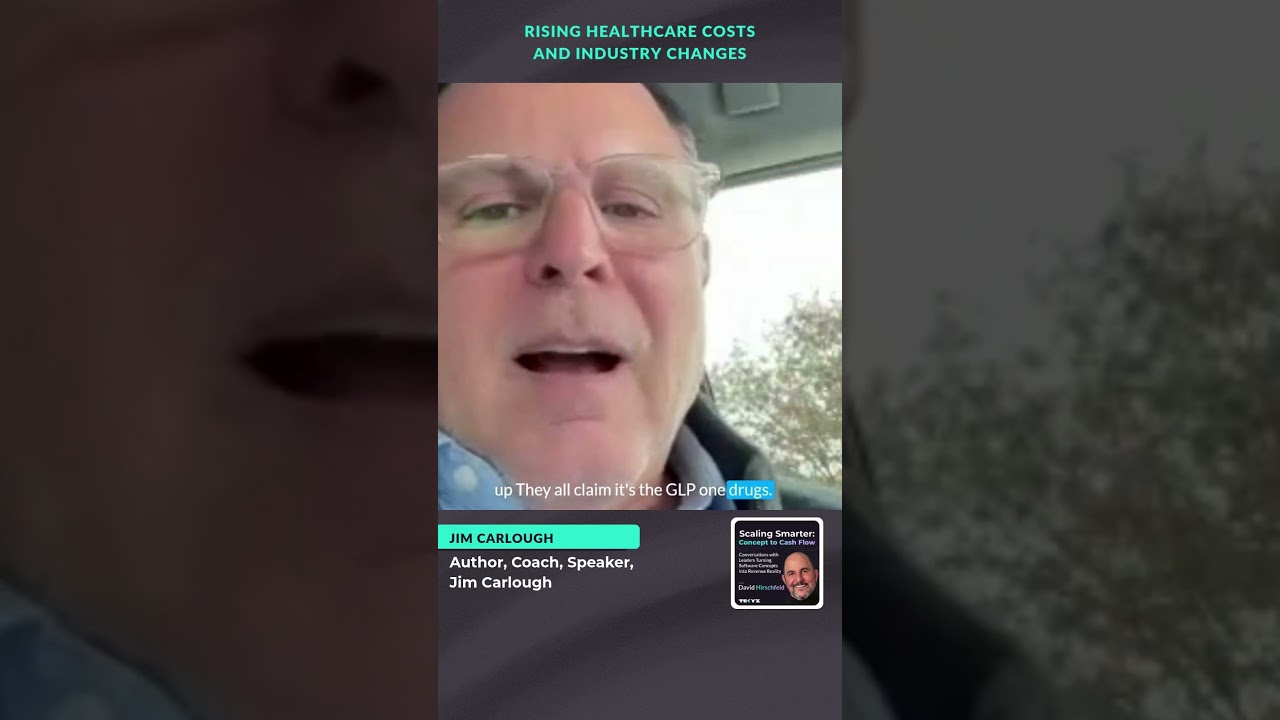
Healthcare costs are accelerating, and the ripple effects are just beginning.
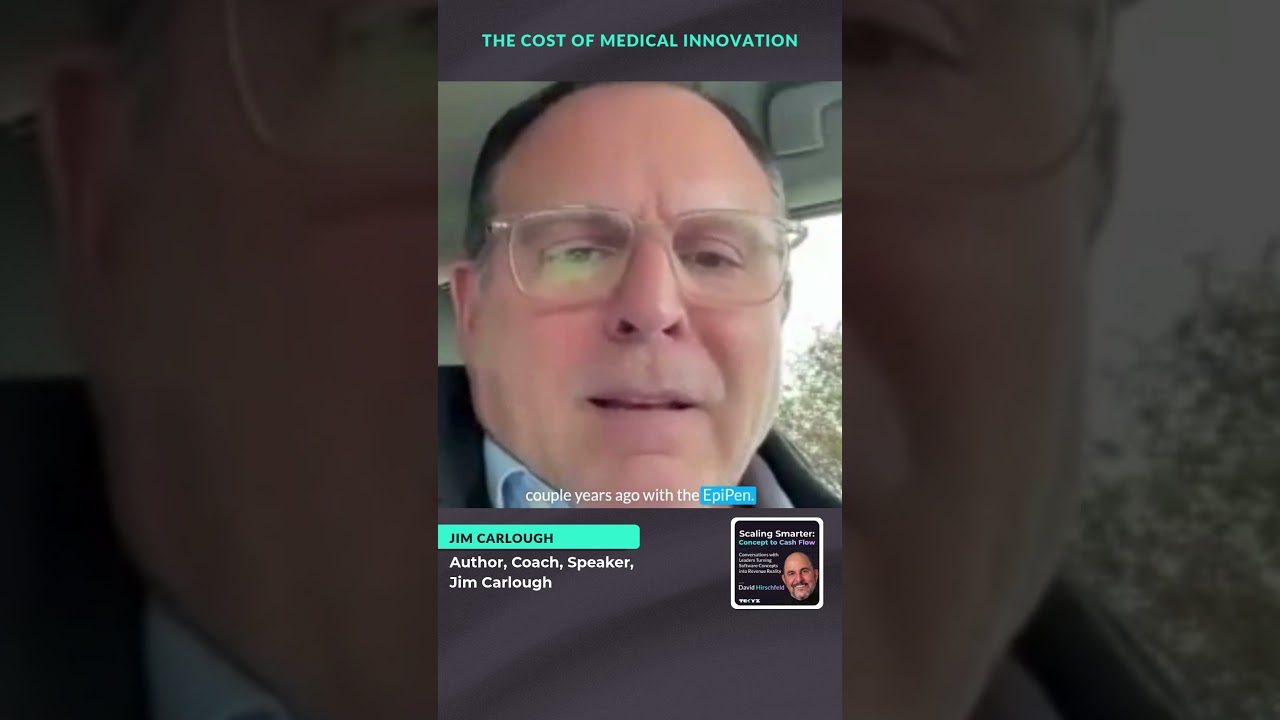
The challenge: medical breakthroughs are advancing fast—but costs are rising even faster.


Healing the System: Leadership Approaches That Elevate Growth and Empower Healthcare Teams