Are You OMOS? | Dr. Aziz - Confidence Coach
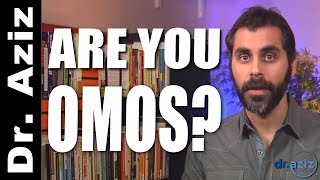
A short, informal YouTube talk by Dr. Aziz introducing the coined term OMOS ("on my own side") as a central stance for confidence, self-love, relationships, and career success. He contrasts being OMOS with common self-attacking habits (explicit self-criticism and many subtler forms like catastrophizing and relentless pressure), explains why self-attack is toxic, recommends resources for deeper work, and urges viewers to decide to be on their own side no matter what.
Questions this video answers
Compassion and Self-Hate by Theodore Rubin.
Chapters
Are you Omos? Maybe you don't know what that means. No one knows what that means because I just made it up. But it is the most important thing for you to be. Not only to have confidence, but to experience love, have better relationships, better career, success. Everything in your life goes better when you are Omos and goes worse when you're not. So what is it? You gotta watch the episode to find out. Welcome to another episode of the Art of extraordinary confidence. I'm Dr. Aziz, and I'm smiling because of that awesome teaser at the beginning. Got you hooked, right? You have to see what is Omos? It's like Gabo from the old Simpsons. Gabo is coming. Who's Gabo? What's Gabo? So I'm excited to share what Omos is. It's also probably my favorite topic of anything that I teach, and it's something I teach a lot. And. And you can't hear this message too much, so get ready. It's gonna serve you for your entire life. And as always, like, if you're enjoying these videos, I would appreciate that. And also subscribe so you can watch them as they come out. As you can see, I'm doing a lot more videos these days, and the more of the stuff that you watch and immerse yourself, the faster you're gonna shift in your life and be able to create the life that you want, which is what my goal is for you. So, Omos, what does that stand for? On my own side. On my own side. So that's my question for you. Are you. Oh. Are you? Are you on your own side? Or could you say to your. Say this truthfully. I am on my own side. Is that true for you? Just scan your experience. What does that mean? Well, it means you don't turn on yourself. You don't turn like. It's almost like. It's funny. You could think about it. It's like, here's you. And all of a sudden we can, like, inside of ourselves, turn against ourselves and be like, you suck. That wasn't good enough. What's wrong with you? We're like, ah, I'm sorry. I know, I know. It's terrible. And all of a sudden, there's, like, two of us in there, and one's attacking the other. In gestalt therapy, they call this Top dog and underdog. It's like, oh, sorry, sorry. And that's crazy that we do that to ourselves. Not only that, but we do it to ourselves so habitually. So a great question is, in this moment, am I omos or not, and am I omos no matter what, is that even possible? To be on my own side no matter what? I mean, because certainly when I fall short or fail or do something that's out of my values or integrity, or procrastinate or eat too much or get scared and run instead of being the confident, bold person or whatever, you know, stay quiet instead of speaking up, certainly in those instances I shouldn't be on my own side because I failed. I fucked up, I did bad, I did wrong, I wasn't good enough, I wasn't smart enough, I wasn't strong enough, I wasn't courageous enough. So I suck. And that, this, that sort of logic that makes it seem so natural to do is something that's extremely toxic, but it's so common that it becomes invisible. It's like everyone around you is like, well that's just what you do in society. But it's not healthy, it's very toxic. And we want to be aware of that, we want to shift it. So how do you turn on yourself? What do you do when you turn on yourself? Now there's obvious ways, there's that self critic, right? That inner part, that top dog, that's just like you suck, you suck, you suck. And sometimes it comes in the form of you suck. And sometimes it comes in the form of I suck. You're so, so fully identified. Like I'm not good, I didn't do that right? But in either case you're just, it's berating, judging, criticizing. Most self consciousness is this, it's like, oh, they I look stupid, I look silly. Sometimes we project into the minds of others. They think I look awkward, they think I'm not doing this right, they think I'm boring. That's still you attacking you. They're not doing anything, they're just looking at you. They're just having a conversation with you. They might even like you in that moment. But you are attacking you and you're not omos. You're the opposite of that. Against myself, attacking myself, it's really self hatred at the end of the day if we just want to call a spade a spade and it's not healthy, it affects our nervous system, our body, our cells, our energy, obviously our mood and our actions and our behaviors and our self esteem and our identity and our relationships and your career. You're not going to speak up in a meeting, you're not going to be bold, you're not going to be assured, you're not going to be able to see Yourself as a leader if you're not on your own side. Well, you didn't do that, right? That wasn't smart, that was dumb. What's wrong with you? Oh, you're never gonna amount to anything anyway. I can go on and on about how it's not helpful and not effective. And the reason I do that is because so many people are so entrenched that we need to be this way. No, you don't. There's a better way to be on your own side no matter what. So how else do you turn on yourself? There's a direct attack, but there's also like a million and one subtle ways that we attack ourselves. And these are ways that you might not even think of as self attack or self not be on your own side, but they are. And you want to know, sort of a simple measure is like, is this? Am I on my own side or not? Just think about it. If you were standing, if whatever that you're doing inside of your own mind was standing next to you and was a friend, whatever they're saying to you, is that like a good friend that would be on your side or is that just some fucked up, weird, abusive relationship? You know? So imagine there's, you know, you look in the mirror and then there's that person that's sort of personifying that voice. And it's like, your friend's looking in the mirror with you and they're like, yeah, you got a lot of wrinkles. You look old. You look, you look tired. Yeah, it's gross. Yeah, he's probably not going to be interested in you after a little while. Maybe you should get plastic surgery. It's just, I mean, maybe you can. I mean, it's not gonna be great because it's still not gonna look good, but you might be able to look a little better. Like, what the fuck? If that was your friend, hopefully you'd have some like, fire inside you that say, shut up, get away from me. You wouldn't just be like, yes, you're right, that's true. But that's how we respond to that voice. So it's the, there's the direct criticism that's just pay attention. What would a friend do? A friend would be on your side. They'd support you, they'd love you. If you're doing something really out of value or out of alignment, they would call you out, but they would be bringing you back to integrity and acting from where you want to act from, not just berating you. They'd be like, hey, this Seems not right. Let's figure out what we can do. But what are some of the subtle ways that you turn on yourself? Because illuminating these can be really helpful. And if you want a book that's going to just blow your mind open, wish I could just grab it right here it is. Compassion and Self Hate by Theodore Rubin. Teddy. Good old Teddy. Unfortunately it's not audible. I think he's dead now. But you can get it. It's worth actually taking time to sit down and read it. He illuminates like dozens, hundreds of subtle ways that we turn on ourselves. And the more aware you are, the better because you could see it and you're like, whoa, whoa, whoa, I don't do this, I don't want to do this anymore. So some basic ones though is one is predicting negative future scenarios and feeling anxious or discouraged. It's not going to work out, I'm going to fail, they're going to reject me. That is a form of self attack. Another one is constant pressure on yourself to get ahead, get to the next level, achieve more. At the end of the day, that wasn't enough. And whether that could be at work, that could be in your fitness life, that could be in your relationship, that could be in just doing stuff for the family or your house. Never enough. I need to do more. Pressure, pressure, pressure, pressure. Pressure is self attack. These are the subtle ones that can be some. They can be so part of your day to day life, they can almost feel like such a part of your personality that you don't even see it anymore. But it is. And there's a new, different way to be which is more on your own side, no matter what that means. I don't criticize myself. I don't personally predict negative, terrible things. I don't pressure myself non stop. I treat myself like a good friend. And sometimes I'll be sharing this with someone and they'll be like, but how, how do I do that? I'm like, if you want to do that, you do it. You find a way. You build a new set of habits and patterns and you talk to yourself differently and you actively catch when you're happening. You say, whoa, whoa, that's a lot of pressure to put on me. I don't want to do that. The main problem with this is not how. The problem is that we keep like, we identify it like, whoa, I'm putting pressure on myself, I don't want to do that. And then there's a part of us that's like, no, you will do that. You Must do that. And it pulls us back in. That's the problem. And what we need to do is we need to learn. I mean, there's a million and one techniques on this. The next book, this one's a ways out. I almost don't even want to mention it because people are like, when's it coming out? It's coming out in a long time. I don't know when. But it's going to be all about this topic on my own side, no matter what. But there's going to be a lot of techniques in there. But in the meantime, you got the confidence code before then. Teaches a ton of techniques. You can check that out on my website or go to YourConfidenceCode.com in the solution to Social Anxiety, there's chapters all about this, there's dozens of books all about this. Self esteem books, a lot of David Byrne's work, cognitive therapy stuff is really good for this. There's an abundance of resources. It's the decision, it's the, I don't want to do this anymore. I want to do something different. So that's the moment. Because then once you made the decision, you'll find the solutions out there. So the key is on my own side, no matter what, am I doing that right now? And what would your life be like if you were 100%, no matter what, always on your own side when you woke up in the morning, no matter what you look like in the mirror, no matter what had happened to you at work, whether you achieved or succeeded or failed or made a mistake. And not only that, just imagine how that would feel, but also what if your life kept on getting better and better. So by being on your own side, you actually over time got into better and better and better shape and did better and better and better at work and had better and better relationships and looked better and felt better. That's actually how it works. Because the energy of being on your own side is love. The energy of giving yourself love inspires you, it energizes you. So to go out and do the things that you wanted to go to a workout and approach those people and start the conversations and take on something challenging at work and grow and become more of a leader or create your own business. That love fuels you. The hate drains the shit out of you and it constricts you and it makes you scared and uncomfortable and less likely to take action. So, so let it go, let it go, let it go and decide right now with me, I'm going to be on my own side no matter what. Awesome. Thanks for being with me. Share your insights below what you're learning, what's coming out for you as you discover how to be on your own side. And until we speak again, may you have the courage to be who you are and to know on a deep level that you're awesome. It.










