Confidence In Business: How To Speak With Authority And Confidence In Business Meetings
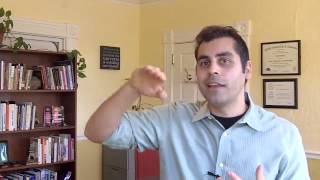
A short presentation (YouTube video transcript) by Dr. Aziz offering practical coaching on building social confidence for business meetings. He outlines three main strategies—prepare (both practical and psychological), speak with authority about what you know, and ask questions directly and boldly—illustrating each with examples and offering coaching services.
Chapters
How do you handle business meetings? How do you show up to a business meeting? Do you feel nervous and anxious and tense and restricted in yourself? Do you feel confident? Do you feel adrenaline and cortisol like you're gearing up for battle? You know, I know in some environments, some companies, a business meeting can feel like a battle. Regardless of what setting you're in. There's one thing that's going to help you succeed in business meetings, and you probably know what I'm going to say. It's social confidence. Because that is going to help you communicate your ideas, get your points across, speak up, do everything that you need to do in a meeting. And if you don't have that confidence and you're feeling stuck and restricted, then you end up not contributing, not sharing, not performing, not offering your ideas. And you fall further behind. Either you don't excel in your company, you don't take on new projects, you aren't recognized, or maybe nothing bad happens, but you just don't feel very good about yourself and you dread the meetings and their terrible experiences that make you feel anxious before, during, and after. So we want to change all that, and I want to give you three tips on how to master your confidence in business meetings. The first thing is to One, Prepare yourself. Prepare yourself for the meeting. You know Les Brown, who's a mentor of mine, an amazing public speaker, and his material is incredible. If you haven't checked him out, just type in Les Brown, les Brown in YouTube and watch some stuff. He'll blow your mind. But Les Brown says there's no substitute confidence like competence. There's no substitute for confidence like competence. The more competent you are, the more confident you naturally feel. So prepare yourself for the meeting. You know, so often we'll go into a meeting, we'll just be like, you busy up until you're doing all kinds of random stuff. And then you show up there and you're like, okay, what's happening? What's going on here? I don't. What's going on? So you need to prepare yourself for the meeting. And when. I mean that. I mean, there's two ways to prepare yourself for the meeting. One is the nuts and bolts. Practical preparation. I mean, what kind of meeting is it? Who's gonna be there? What do you need to show up with? You know, is there something you need to have completed before the meeting? A presentation, something like that, like really getting your stuff together before the meeting. Because the more disorganized you're gonna be, the more anxious you're gonna feel. So you have to prepare for that meeting. But there's. That's the one type of preparations, the outer preparation. But then there's also the inner preparation, the emotional psychological preparation. What you gotta do there is. You gotta ask yourself this question. What is my outcome for this meeting? What is my outcome for this meeting? What do I want to get out of this? What is my purpose here? What am I doing here? Because if you don't have that and you just show up to a meeting without your own purpose, then it's someone else's purpose. Someone else is gonna guide the meeting. Someone else is gonna contribute, direct where it goes. And even if you're not the one calling the meeting, even if you're like a junior member in the meeting, you're an underling or something like that, you still have to have a purpose there. And maybe you don't like, you know, pound on the table and say, this is what we're doing for the meeting, because it's my purpose. But you got to have your own personal purpose. You know, your purpose might be, I'm here to learn everything I can. I'm going to extract information from all these people here. Your purpose might be, I'm here to contribute that one thing that I know that's going to help support the team. My purpose here is to make sure that we, you know, I and everyone else communicates in a way that gets across to each other and there's no miscommunications. My purpose here is to make sure that X happens. My purpose is to make sure that I am this way. Like, what is your purpose? What is your purpose for me? What is your intention? What is your goal? What is your outcome? How do you make that happen? And that internally prepares you to handle the meeting, to approach it in a completely different way. So many meetings I've been in, they just have no purpose. People just share. What are your thoughts on that, Bob? Well, I think that this is a bad thing in our company. And it. And it's bad. And Bob just kind of wants to complain. I guess that's what his outcome is. I want to be heard, I want to complain. And then someone else complains. And then the person who's sort of in charge of the meeting, who's not really taking that much charge, kind of says, well, that was a good discussion. Let's end the meeting. Because it's at the end of the hour and it's like, what? What have we done? What, what actions are going to be taking? So that's what I mean. By prepare for the meeting, even if you're not running it, get clear on what your outcome and your purpose is. The second thing is to speak with authority on what you do know. Speak with authority on what you do know. Now, my phrasing there is very specific on purpose. You're not going to know everything. You got to let go of the idea that you're supposed to know everything. What a trap, what an anxiety bear trap, you know, or tiger trap. You're just going to fall into and get stuck. Maybe it's a. It's a bear trap inside of a tiger trap. So you fall in and it clamps your leg. Whatever it is. It's terrible. That idea that I'm supposed to know everything and if I don't know something, it's really terrible, I'm going to get fired. That is something that you got to work on. There's a lot of distortions in there. There's a lot of things you need to challenge. And if you get any of my programs, you know, it's all about challenging ideas that you have that feel true but aren't and just cause you a lot of suffering. And that's something I teach in coaching a lot as well. It's like, what are the ideas that you're telling yourself that are creating that fear and that suffering in you? So if you're telling yourself, I have to know everything, and you might not even be consciously telling yourself that, but you know, you know that feeling of anxiety you get if you don't know something, and that's a indicator to you that there's some work for you to do about that you have to find a way to accept, like, hey, I'm not going to know everything. And really get comfortable with that fact. You know, I'll have clients or people ask me something and I'll say, I actually don't know that. I'm not sure yet. And I used to not do that. I used to be like, well, here's what it is. And I was like putting on a show, and they felt it and I felt it, and it didn't work. But there's so much more confidence in being able to say, hmm, I'm not sure about that yet. Let me research that. Let me write that down. I'll get back to you. But the things that you do know, that is where you speak with authority so often in meetings, people fail in the meeting because not because they don't know something, but because they don't speak to it. They don't speak up. So there's two obstacles to speaking on what you know. One is you just don't speak up. The moment's going back and forth, the meeting's going so fast, and you're just like, no, that's not quite right. You filter what you're going to say too much. You want to go through it again and again to make sure you don't sound stupid or make sure you sound intelligent or whatever. And then the moment's past. So you're over filtering yourself. You're not speaking up. Or maybe you think what you. If I said that, or is everyone going to agree? Or are people going to think, I don't know what I'm talking about? Or am I going to reveal something that shows that I'm not as good as people think I am? And then what you're stuck with is you're stuck with not speaking up. And the other challenge with speaking up that I've seen is that you speak up, but you do it like this. Well, I mean, I think that perhaps there's something that maybe that I know here which may be of value, but I'm not sure. Have you tried looking at X, Y, and Z? What's going on here? Pay attention to my nonverbals. Pay attention to what? The words I'm saying. I'm scratching the back of my neck. I'm looking down. I'm not making eye contact. My voice is tentative and soft and questioning and hesitant. And it goes up at the end. That's something that you really want to eliminate in meetings. You don't want your voice to go up at the end of every sentence. Have you ever noticed how someone does that when they're nervous? So they're saying something very. They're not saying questions. They're not. They're not asking questions. They're saying it. A statement, but in the form of a question. Almost like the Valley girl. But, you know, I think that there's something that we can do on Project X. Like, are you asking or telling us? So speaking with authority is totally different than what I just did there. You eliminate the qualifier. Qualifiers perhaps, maybe, I don't know. But just practice eliminating them. Practice eliminating them everywhere in your life, especially in business meetings. You say, I think that we need to do X. And notice my voice tone is louder, is clearer, is direct. You want to end your sentence at the same pitch or lower. I think we should do X. I think we should do X. You see what I'm saying there? And notice the gesture I'm using. I'm not even thinking about that. I think we should do X you gesticulate to go along with what you're saying to establish that authority. Well, you can do that if you want, but in my opinion, in my perspective, that's actually take us further away from where we want to be and here's why. Right? So just notice what level of authority I am speaking with now. Again, only on the things that you know. Now if you're in a position, this is a caveat, a side note, but if you're in a position where you think, well, I don't know anything, I shouldn't even be here. I'm not good enough to. I know way less than everyone in this company. Oh my God, I'm, I'm lucky to have this job. And if anyone knew how inept I was, I would be fired. A if that's true, then get your act together, man. But you know, go do some training and be competent in your work. But my guess is that the reality is that if you're telling yourself that it's just an anxiety thing, it's a self doubt thing, it's a self esteem thing, like you are actually qualified, capable and competent. You need to build that up, you know, go to get confidence unleashed to learn how to change your story or check out the solution to social anxiety to learn how to change the way that you see yourself. The third thing that you need to do is you need to ask questions directly and boldly. This is kind of related to the last one where we don't want to admit that we don't know something, but you have to admit that you don't know something that is so important. I mean, what a pitfall it is in a company or an organization where someone is unwilling to admit that they don't know something. I mean, it's absolutely absurd to think that anyone would know everything they need to know unless their job is to, you know, I don't know, I was going to say dig a ditch, but there's probably things that you can learn about digging ditches to do it better. We can always learn. And so the most empowering and confident thing to do, you know, we think confidence is like, I have complete certainty and I know everything. No, real confidence, because that's not real, it's not human. Real confidence is saying, I don't know that. Tell me about what that is. That is there's a boldness and directness. And when I say bold and direct, I mean you don't say, you know, I should know this and I Think I learned this back in, you know, 1994 in the old system. But with this new system, is it like A or is it like B? It's like, what are you talking about? It's so wordy and verbose and you're trying to look like you already kind of know the answer by guiding the question. And no, just say, whoa, whoa. I am not familiar with this new system. I'm way more familiar with the old one. Give me a rundown on how A and B work. I need to know that stuff. Help me out. Right. You're directly stating what you don't know and you're not being apologetic about it. You know, I'm not sure, actually. I don't know that yet. I can look that up for you. Or maybe I should go look that up after the meeting. Let me write that down. I'm not. I don't know that yet. And this goes to admitting things you don't know, but. Or just demonstrating you don't know something by asking a question. So something flies by in the meeting, and everyone's talking about something, and you're like, whoa, whoa, fill me in here real quick. I'm trying to think of a specific example. I was talking with someone and they used the acronym rms. And I wish I could remember what industry you're talking about, but blah, blah, blah, in the rms. And I didn't know what the hell was going on because I didn't know what an RMS stood for. And so I said, whoa, whoa, whoa. But some part of my brain was like, you should know what an RMS is. Everyone else seems to. And I was like, whatever, you know, Excuse me. Well, hold on a second. Fill me in. I'm having a hard time following right now. What does RMS stand for? And then someone told me, and I was like, oh, thanks. And the meeting progressed. So being able to do that, to interrupt, to ask a question boldly without apology, is another way to bring more of yourself to the meeting. Be involved, bring your voice forward, and have an impact. And that's what this is all about, is the more social confidence you have in a meeting or any other setting, the more impact you're going to have. The more impact you have, the more influence you have, and the more influence, the more good you can do in the world. You can grow the company, you can direct things in a positive direction. You can get a bigger salary and create a bigger income and support your family. You can do all these things with a higher level of social confidence. And again, this is one of the things I thrive in. If you're in the business world and you're stuck in meetings, contact me for confidence coaching and we'll find a way to help you break through whatever specific fears and doubts and challenges are stopping you from giving 100%, you know, because if you're stuck and you're holding yourself back, you're kind of, you're operating in like second gear and you're going 30 miles an hour, we can find a way to shift that. So you're in fifth gear and you're going 90 miles an hour and there's nothing stopping you. And you can just keep accelerating in your career, in your confidence and in your life. So if that's for you, reach out to me in the confidence coaching section of this page and we'll talk. And otherwise apply these things in the meeting and let me know how it goes. Send me an email drazizocialconfidencecenter.com I'd love to know how it works for you. So until we speak again, may you have the courage to be who you are.










