How To Let Go Of Resentment From The Past
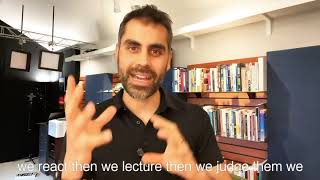
Dr. Aziz teaches practical steps to release resentment from past relationships: first notice the bodily experience of resentment and slow down with presence; validate the hurt rather than repress it; invite softness and alternative perspectives to reframe meaning; and use a Ho'oponopono-style four-phrase practice ("I love you; I'm sorry; please forgive me; thank you"). He closes with an empowered stance — "I am the captain of my ship" — and encourages shifting attention from past grievances to future goals.
Questions this video answers
Dr. Aziz
January 19, 2021
"I love you; I'm sorry; please forgive me; thank you."
Chapters
How do you let go of resentment from the past? Those interactions, those relationships where whenever you think about the person, you feel like it's like disgust or anger or upset. And you might find that you're not even actively engaged with that person anymore. Maybe this is someone from a month ago, a year ago, or 10 years ago, and they just pop into your mind and you're just like. And then you realize, like, wow, I, you know, I could be having a great day and all of a sudden have that feeling come up. And then now I'm in an upset, angry place. So all of a sudden I'm not in control here and I'm just getting at the whim of these memories. So we got to shift this because you know that holding on to that resentment is burning you. You know, resentment is like that hot poker and you think, like, I'm going to stab that other person with the hot poker with my anger and my resentment, but it's burning your own hand. And yet it feels hard to just let go of that thing. At least it can. And I'm going to give some tips in this video on how you can let go of that resentment and free yourself up. And we're going to draw from a wide variety of perspectives here because my motto has been for many years, whatever it takes and whatever works. So let's talk about a few things that are going to work. The first thing is more loving, compassionate presence. I mean, that's always the first thing. Any solution, any problem, always going to involve more love and compassion. Now, especially with ourselves. So what you got to do is you just become more aware. So you're walking along, you think of that person or maybe even take a moment to think about, is there any unfinished business in your life? Is there anyone that you, when you think of them, you feel kind of like disgust or upset or anger. Preferably pick someone that you know you from the past, but maybe it's someone current in your life, right? That's, that's the signal too. It's a little bit different about how you're going to respond to that data from the present, right? Because maybe there's a signal to do something right now. But let's focus on something from the past, a memory that keeps coming up and bothering you. You know, a fight you had with an ex partner or something your parents said to you or something. When you think of it, you feel resentment, you feel angry, you feel upset. You got something. Okay, great. First thing you want to do, slow down and bring a little bit more presence to it just notice. Now, what often happens is we have the memory or the thought, and then we start to. The mind start speeding up. We react to them, we lecture them, we judge them. We tell other people about how bad they are in our heads. Whatever it is that we do and we want to do is actually slow down and start to feel. What does this experience of resentment actually feel like? What is this? What is resentment? Not just as a word or a concept, but an actual experience of it. Do I feel like. Where do I feel tightening or closing? Maybe it's in your chest. For a lot of people, it's around the heart. Maybe it's in your ribs. Your jaw gets tight. Maybe I can feel that up here is where I'll feel anger. Resentment around your eyes gets tight. Just notice what happens. Maybe your stomach tightens up, your belly gets hard, your back hunches over. Who knows what it is for you? You will discover, but you want to bring more presence. And if you're like, yeah, yeah, okay, now what's the real thing that might be the most important real thing? Because otherwise, all you're doing is trying to run away from a pattern. You're trying to change a thought without having to feel anything. I mean, to work with any feeling, resentment or otherwise, we have to build our capacity to feel feelings. There it is. Okay, Resentment. How do I create this? What do I focus on? What does it feel like in my body? That will go a long way to start to be able to loosen some of the reactive patterns that just make it fire off again and again and again. Then what do we do? Well, then we might want to just start to invite more softness into the situation. Resentment is a hardening. Right. We're armoring ourselves. And, you know, basically it's, I'm right and you're wrong. I was good, you were bad. I was the right one, you were the wrong one. I was the victim. You were the perpetrator. I was the helpless person, and you took advantage of me. Something bad and wrong happened, and you did it to me. And that's not okay. Okay, so you slowed down and given ourselves a little bit of presence, you know what we need to do then we need to validate ourselves. You might say, no, I don't want to be a victim, or I got to let it go. Okay. But there's a part of you that does feel like a victim, or else you wouldn't be having the resentment. There's a part of you that doesn't want to let it go. So we got to acknowledge that part first. Otherwise we're just going to spend all day trying to get rid of it. It's not going to go anywhere. So you say to that part, yeah, that's messed up. You know, I was working with a client around this and she had an abusive parent and some of the things her parent did to her, it's like, yeah, that's effed up. That's not okay. That part needs the validation. Like, yeah, that's not okay. It's not okay to be treated that way. It's not okay that they said that to you. That's messed up. Because so much of the time we feel the resentment because that part hasn't been heard. So give yourself that attention, that validation, that support. Yeah, that was messed up. What my ex husband did to me or what that person said to me or that friend that, like, abused me and used me and said those things to other people behind my back, that's fucked up. Let yourself feel disgusted and outraged. Great. Feel it, own it. Like, really, like, hear that part of you and take a full breath in and say, okay, all right. That's one perspective. That's one perspective. And you can stay in that perspective. You can justify staying in that perspective for the rest of your life. But remember the hot poker. How's that feeling burning your hand? I thought so. So let's find a different way to let it go. Okay, so that's one perspective. What's another perspective? Another perspective might be, I don't know, you get to choose. What's another way to look at the situation? Is it possible. Is it possible that there's some benefit from this thing that happened, from this relationship? And if you're, like, indignant and horrified at me even asking that question, then maybe you need to go back and validate that part some more and say, okay, in addition. In addition to that one perspective, is there another perspective where maybe something good came from, that maybe I learned something? What did I learn? Did I learn to speak up for myself? Did I learn that I need to speak up for myself? Did I learn that I'm never going to tolerate that situation again and I'm always going to take care of myself better? What did you learn? How did it shape you? How did it teach you? How did it grow you? How did it guide you? How is life happening for you in some way? How is it the universe, as that sign says? How is it the universe unfolding exactly as it should? What is the gift in this? That's when you start to unlock something extremely powerful. And then I'm a huge fan. I've been using this a lot in the last year or two of Hooponopono. You might have heard this approach, you know, and there's. Maybe I'll do a special video just about that. But it's four phrases you repeat to yourself again and again. I love you, I'm sorry, please forgive me. Thank you. Then you might start with yourself. I love you, I'm sorry. As the person is in your mind, you feel the resentment, just start saying, I love you, I'm sorry. Please forgive me. Thank you. Who are you saying it to? I don't know. Maybe start by saying it to yourself. But maybe, just maybe, you start to include them in your awareness too. And if you feel that resistance, like, I have nothing to apologize for, I was right and they were wrong, remember? Well, maybe more softening is needed and those four phrases might help you with that. So I hope this serves you in letting go of that resentment. The last thing I'll share, which is the most empowered perspective to come from on all this stuff, is I am the captain of my ship. I am the master of my destiny. And so anything that comes my way, it's my responsibility to use. If someone mistreated me in the past, okay, that did happen, that's not okay. And I'm not gonna let myself get that experience again. I'm gonna change, I'm gonna learn. I grew. If they try to speak to me that way, I'm not gonna allow it. And I can see that that actually served me. The way that my parent treated me, the way that that partner broke up with me. It grew me, it shaped me. And here I'm going to come up with those meanings. I'm going to figure out how, because I'm going to steer this ship. And I don't want to be bogged down by this resentment. It's burning me up. It's eating me up inside. And here's another reason we go to resentment. We go to resentment because we're scared to step into the future. And so we go to the past and drop up a sense of certainty. I am right and they were wrong and we don't realize, you know what? Actually, I'm scared of doing something in the future. So I'm going to go focus on the past. And if we catch that little habit and say, you know what? What is it that I want to do in the future that I'm scared of? What is that place that I want more confidence in and start focusing more of my attention on that instead of my attention on what so and so did to me in the past. That's the place that I come to resentment from. So hope that serves you. Let me know in the comments below. Until we speak again. May have the courage to be who you are and to know on a deep level that you're awesome.










