When You Lose Confidence At Work (Do This First)
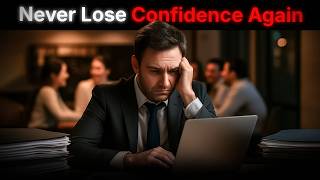
Dr. Aziz explains how your inner critic keeps you small after a work setback. Stand upright, reclaim your posture, and actively defy that voice. Reframe failure as neutral, something that can push you toward learning and growth.
Chapters
What do you do if you've lost confidence in yourself at work? I think this is a common human experience. I think everyone can relate to this. Whether it's some moment, some job, sometime in your life, in your career, you lost your mojo. You don't feel confident yourself, you don't believe in yourself. And what's worse is you still might need to show up to work and perform. Maybe you're in leadership, maybe you got to deal with clients or customers or other team members or you know, give a presentation or whatever it is and you're not feeling it. And so you gotta try to find the resources to at least present yourself as confident. Even if inside you're feeling nervous or riddled with self confidence, out or anxious, and then we're still, you know, when no one's around, you might start to retreat. Maybe you procrastinate more, you avoid tasks, you just hide as much as possible and avoid risk and minimize and downsize. And you know that trajectory isn't going to end well. In fact, that's not what got you to where you are in your career. Like stepping forward, taking action, that's got you to where you are. This is a backslide, this is a problem. The good news is you don't have to stay here. In fact, it's possible for you to regain your confidence and actually come back more confident than ever before. And I'm going to share some tips on how to do that exactly in this video. First things first, can you note, was there a triggering event? There may not be. It may have just been that you've been under stress for a long time and trying to push through or grow into a new role and you just kind of collapsed under the weight of that. But usually there's some triggering event. When I talk to people, maybe it's a failure, maybe you don't get the sale or, you know, I've worked with attorneys, they do something in the courtroom and they lose. Or maybe you had a position and you were taken off a project or you got negative feedback from an employer, from a boss, from a colleague, you got challenged, you made a mistake, you failed, failed at something. Usually there's some triggering event and that sets the spiral in motion. And if you can't figure one out, that's okay too. But it's helpful to notice that because what will happen is right after that, all that follows is not new. All the self doubt, all the anxiety, all the low confidence, all the insecurity, it was always there. It was waiting for you in the bushes. And it was waiting for its moment to pounce, and it was gonna use that event, that failure, that mistake, that public reprimand, that humiliation, whatever you wanna call it, that moment. And it pounces out of the bushes and says, ah. And it tries to beat you back down into the smallest, most limited version of you. This set of voices I call the safety police. The safety police is trying to keep you small and safe and predictably controlled. Not taking risks, not growing, not putting yourself out there, not doing all the things that'll grow you in work and career. And it's going to keep everything small and downsized. Now, you've challenged that to get to where you are in your career. You've faced that. You've grown, haven't you? Haven't you done things and taken risks and put yourself out there and you've made progress. But that safety police doesn't just, you know, walk away into that silently into that good night. It's waiting in the shadows in the bushes. And so then you had that failure, you had that setback at work, and it came out in full force. It saw its opportunity to strike and push you back down. How far does it want to push you? It wants to push you, perhaps even all the way out of a job, or at the very least, into the smallest version of your job where you just kind of stay silent and off the radar and don't speak up and don't draw any attention to yourself. The smallest version of you. And it's important to see this because otherwise you believe all the stories it says, all the stories about your incompetent. And this is what everyone thinks of you, and you don't know this and all that. It goes on a rampage and you are sort of blown away by its momentum until you see it for what it is and say, wait a minute, wait a minute, wait a minute. This is a familiar tune. And I have a choice right now. I have a choice that I can listen to this familiar tune and agree with it, or I can challenge it, I can defy it. And in order to reclaim your confidence at work, you must make the choice. I can't make it for you. You must make the choice when you're ready to defy that voice of doubt. Maybe you've been listening to it for a week, maybe you've been listening to it for months, maybe you listen to it for years, I don't know. But there comes a day. There comes a moment in a day, like perhaps right now as you're watching this video, where you literally Stand up or become more upright in your posture. Your neck come, your shoulder comes back or your chin comes back towards your shoulders, your neck. You have this upright, regal stance. It's like you reclaiming your inner authority and you say, no, enough of it. Doesn't matter if other people are judging me. It doesn't matter if someone else criticizes me. I am the captain of my ship. I'm gonna decide how this thing goes. I get to steer this. Because every experience, whether it's a setback in work or a failure or something that didn't work out or whatever, every experience is neutral. It's not inherently good or bad. You might say, no, it was bad. I got fired. Okay? I mean, and they told me it was cause I wasn't good enough. Is that truly a bad experience? Well, it depends, doesn't it? What if that experience teaches you something and you get so motivated to do more than ever before, to learn and grow? What if you got let go because you were good at your technical side of your job, but you didn't know how to play politics at work and you hated the social side of things? And you say, you know what, I got to learn how to do that. And I got a course for you, by the way, it's called Social Master and how to do that. I also have a course called Career Acceleration. You can find about all of these inside of Confidence University. So you can click down below, go to my website, drizes.com and find out all about Confidence University. But I have ways to train you on this. And maybe one of these pitfalls, one of these negative experiences, you say, you know what? That's it. I'm going to finally learn how to do this. And I've been avoiding it for all these years. And so the very worst thing could actually be what steers you had finally kicked you in the pants to make you take responsibility and make the changes. I've certainly seen that in my life. I talk to clients all the time who are in that boat. You know, if that person hadn't left me, I wouldn't be here right now in a radically better place because I decided to take ownership after that experience. So is the firing, is the shame? Is the setback? Is the negative experience that kicked off all this doubt inherently bad? Well, you get to decide that. And how you decide determines the course of your life. Because you say, oh my gosh, that was a horrible thing and I made a mistake and I can't perform at that level and I'll never be able to. And okay, I'm going to downsize, and I'm just going to stay small for the rest of my life. And I've met people who've done that. And it's three years later, five years later, 10 years later, and they're safe and they're miserable. And they never reclaim their confidence. Not because they couldn't, but because they chose not to face that doubt and challenge it. And you can choose right now and say, I choose to face this. I choose a new meaning. You know, is it the end of the game or is it the first quarter? You get to choose that. I'll see this myself. And people all the time like, something. There's a setback, and they're like, blah. Well, forget it. And I'm like, it's the first quarter of the game. Imagine if you're watching your favorite team and maybe it's half, you know, if your favorite sport doesn't have quarters, it's got, you know, two halves or whatever. But it's the first half. It's the first half of the first half of the game, and they get, you know, the other team scores on them and they're like, ba. Walk off the field. Who cares? We lost. It's over. It sucks. Is that what you want to see from your team? Would you be in the stands, be like, yeah, quit. We're terrible. It's the worst, right? You want to see something else. You want to be inspired. And you. You, my friend, can be that inspiration to you and to others. It requires you to step up, challenge that, and reclaim your authority now. And then. Once you've done that, what do you do? Well, then you come back stronger. You say, I'm going to learn something. I'm going to grow. I'm going to speak up again. I'm going to develop whatever is missing in myself to be able to take on that level of project. I am unstoppable because that. That is the direct counter to the voice of doubt. And when you embody that, you start to experience the extraordinary. Thanks for being with me today. Until we speak again, may have the courage be who you are and to know on a deep level that you're awesome. Talk to you soon.










