From Broke College Kid to Kerrigan Roofing CEO and Tycoon #sales #ai #salestips
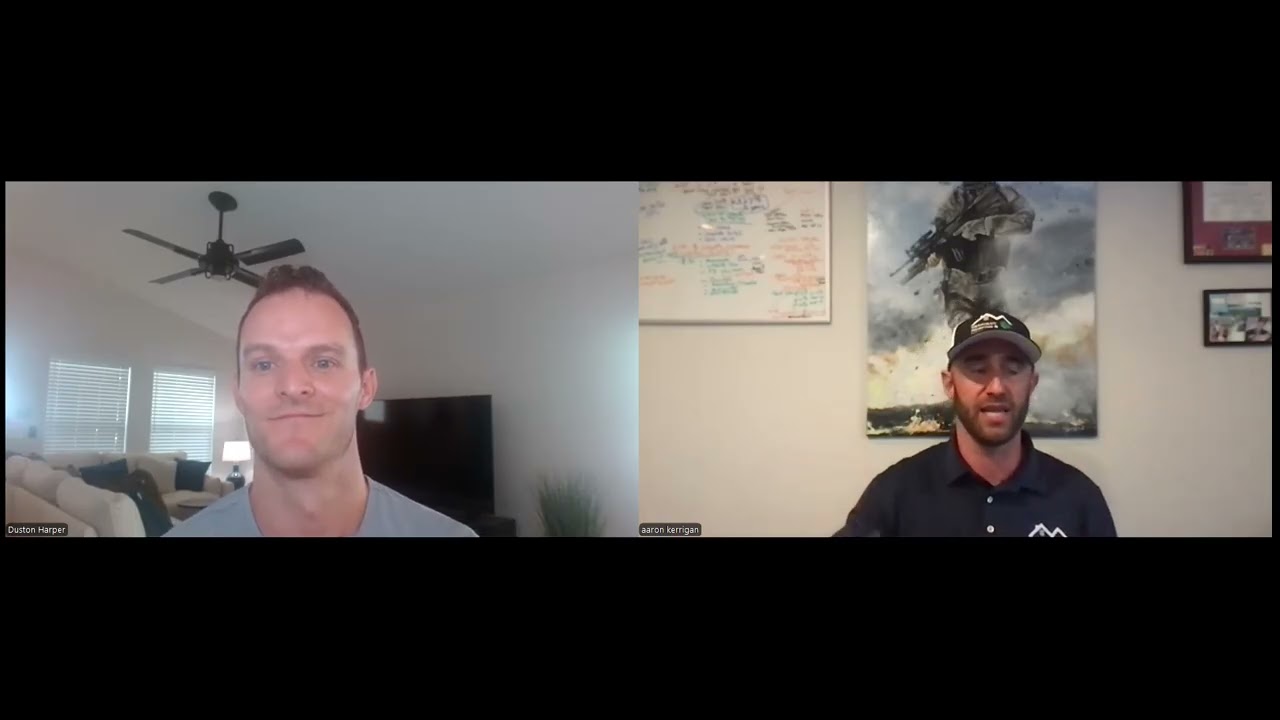
In this interview, Duston Harper talks with Aaron Kerrigan, founder and CEO of Kerrigan Roofing, about his journey from a college student who briefly door‑knocked roofs after a storm to building a multi‑location roofing company. Aaron recounts founding the LLC on St. Patrick’s Day 2011 after his father’s death, the evolution from pure door‑knocking to a dual‑track sales model (retail jobs vs. storm‑damage insurance claims), and the typical timelines (a quick 2‑week retail job versus a 90‑day insurance cycle). He explains how lead generation shifted: today roughly 73% of business comes from in‑house marketing (website, SEO, paid ads, reviews) and about 27% from referrals and door‑knocking, which now accounts for only ~10% of leads. Aaron discusses the effectiveness of door‑knocking when active storm damage creates urgency, and how seasonal droughts reduce its impact. He outlines the traits of top sales reps—organization, reliability, brand advocacy, and a “buy‑in” mindset—and the challenges of managing a growing team, especially enforcing CRM discipline and maintaining 5‑star service. He shares a bottleneck example where mortgage companies delay claim payouts, illustrating why insurance projects can stall. On technology, Aaron admits he’s a “dinosaur” but uses AI tools like ChatGPT for email, job postings, and is exploring AI for marketing and admin tasks. The biggest lesson he shares is the importance of eliminating distractions and focusing on the core business, a shift he made around 2019 that accelerated growth. Looking ahead, he’s excited about personal milestones (a third child) and business expansion: adding windows to the product line, launching a new website, promoting a marketer to lead outreach, and hiring new sales and regional managers. He closes with a hiring pitch emphasizing culture fit and provides his contact email for interested candidates.
Chapters
Aaron, good to see you, buddy. As a way of getting started, just tell us a little bit more about your story and what you're doing now.
Sure. So in college, you know, I was going to school for a business-type degree at Ohio State. A windstorm had hit central Ohio and a company had recruited a few of my roommates to knock doors and sell roofs. I thought they were crazy. You know, we're going to college for a fancy degree, and they were thinking that they were going to sell roofs. Proof of concept, I saw them making a lot of money, you know, coming from a broke college scene to buying new pickup trucks and stuff like that. I asked to join just kind of like for a summer internship. Next thing you know, I was moving around the country, traveling for where, you know, different places that had been hit with hailstorms. And wind. Knocked doors, met with adjusters for a few years, kind of stopped and went back, finished my last one class that I needed to graduate at Ohio State. And at that time, my dad was about to pass away from a terminal cancer, and I just decided, hey, I'd like to start my own thing. You know, I've saved up enough money to support myself kind of starting a business, but I didn't want to chase storms and miss that last time with my father. Kind of quickly and unexpectedly, he died about a week after we decided that I was going to start my company. And then that was March 14th, 2011. I decided to try to incorporate my company, and the LLC Kerrigan Roofing got approved on March 17th, St. Patrick's Day. So that was kind of a neat sign. I knew, you know, kind of as a Kerrigan with an Irish, you know, family background, that the clover was special to the company. And so that's been kind of like part of our logo ever since. My dad and I had joked about what if Bellbrook, you know, where you and I grew up, got hit with a hailstorm. A few months later, fast forward to May 25th, I found myself moving back to Dayton because Bellbrook, Centerville, and Xenia got hit with a tornado and baseball-sized hail. So I found myself—
Yeah.
I found myself Back in Bellbrook, living in Dayton for the next almost 10 years. I wasn't to a point to where I could really move. I didn't feel like my wife and I had talked about moving to Columbus, but we really had to— I had to buy all in. You know, I was spread a little too thin in my younger years. I bought all in and hired the right people, which allowed us to move to Columbus where we live now and expand another location. So that's kind of a quick little recap of, of how we started and, um, and what I've done. So.
It's awesome, man. Powerful story. I didn't know some of those things about the, the logo and how you started it, but that, that makes a ton of sense and probably makes you remember it every day when you see it, which is, which is great. I, I, for people that don't maybe understand it as well, and even for myself, can you explain a little bit about the roofing sales process? Is it something that's really quick where you, you know, you're selling something in a couple days or a week, or is it longer sales cycles, or does it depend on which niche you're in?
It definitely depends on the niche you're in. So the easiest— there's 2 processes for us. We've got the retail process where, let's say, somebody doesn't have storm damage and they've been interviewing roofing companies and seeing who may be a good fit to bid their job. You know, credentials, warranties, that kind of stuff where we put together a packet, you know, sit down with the customer. I kind of like to say if they don't have time for a sit with us, then we'd rather not do an estimate. We don't want to be the lowest dollar. And we just asked for, you know, we're not selling windows in there for 3 hours. We just kind of want to go over what's different with what we offer versus the average roofer. So the retail process could be quick. Let's say that we meet today and you decide tomorrow. We get you on the schedule within about 2 weeks. Most jobs are about a day or 2, and then we would collect final payment. So that's a nice quick process. However, we specialize in storm damage. In Ohio, it's a unique space. With minor storm damage, we're able to get full roofs approved because Ohio has a uniform appearance requirement. So the insurance process, a lot of the times for us, takes quite a bit longer because we meet with the customer. Give them an inspection. We meet with, you know, a ladder inspection guy or an adjuster on site. Typically, you know, we coach the homeowner that just opening coverage for getting a repair paid for is our main goal on a lot of these adjustments. And then we have to go through a long process of pulling a shingle sample, sending it off to this place called ITL Laboratories in Florida, getting a close make and model. Completing a repair on the roof, showing them that it doesn't match. And here, you know, here you are 3 weeks later, finally submitting a full estimate to the insurance company, which probably gets approved another 30 days later. So our sales cycle for the insurance side of things is probably about 90 days. That seems long, and not all of them are that long, but a lot of the jobs that we're dealing with are roof, siding, gutters, garage doors. We have one now that we're working with, getting bids on an asbestos removal. So these jobs take a long time. We use an estimating software called Xactimate, which determines the prices based on the zip code and the supply and demand to kind of make everything apples to apples with the insurance company. But that's a really good business, you know, when there's storms. You know, we've been pretty lucky to have 2 markets. You know, one of them typically gets hit. But I have hired a new sales manager this year who brings a or retail style background that we would like to incorporate and grow as well. So.
Nice, man. Okay. So there's, uh, it can be pretty, pretty quick or a little bit longer depending on the situation and, and both kind of help you with the recurring business. So on that note, you've been doing it for a while now. It's crazy. Almost, I guess, 18, 19 years. So a couple, couple decades, we're getting old. But besides that, what, what's changed in sales specifically? I mean, I know when you first started, you were just knocking doors, maybe a storm came through. Sure. You know, maybe that was the way things got done. Now, can you still do that or is it much different how you actually acquire new customers and get out there?
Yeah, the majority of our business now, roughly 73%, comes from in-house marketing efforts, website, Google reviews, paid ads, SEO, Facebook videos with the kind of a click here now, fill out your information type of thing. Probably about 25 to 30%, roughly 28%, come from a variety of referrals and door knocking. Door knocking is a very— unfortunately, it used to be 100% of the business, and now it's probably roughly 10%, I'd say, which my goal was to keep high performers, and to keep high performers, they want to have good leads. So in 2019, when we stabilized the company, I had hired a guy that worked for my wife at a marketing company. He came on, he was actually doing our marketing for this company in Dayton for Kerrigan Roofing. So I ended up bringing him on. And for the last 7 years now, he's done production and marketing. And this year we've moved him into more of a marketing-only role. And now he's kind of managing another guy that's doing production. So I have a guy that's focused, uh, almost full-time on bringing leads into the company. So that's definitely a change. Yeah.
Yeah, that's awesome. I mean, that, that, that's really good for keeping some of those best salespeople like you were talking about and the retention. And how is the door knocking these days? Because I feel like you hear about it a lot. A lot of people start their sales career in some type of role like that where they're selling, you know, I did Cutco or, you know, there's all these different things people do to go door to door and it's a great way to break in, but it can be It can be hard too, doing that. It's not for everybody. Is that still— if you have the right people, is that still pretty effective, like to go door knocking?
Like, it's very effective at the right— when you're at the right time. So like we had a storm in Columbus last Wednesday, so a little over a week ago, golf ball-sized hail hit Worthington. At that point in time, for the next few days, door knocking is very successful. You know, you go out to the neighborhood and, and you're putting your roof boots on to get on the roof and somebody walks their dog by and we picked up 1, 2, 3, just people walking by. So, it's kind of like trick-or-treating then. But, you know, the last 2 summers, you know, it's like July, August, September, we had a drought, no windstorms, no rain. And so, at that point, marketing gets a little tougher. And your pitch at the door, if you're saying, hey, we've had recent storms, right? Have you had a roofing inspection? Isn't really going to fit very well either because nobody's had any storms. So, yeah. So it's— yeah, can be good at the right time. That's for sure.
So it needs to be more active pain. If it's latent pain, like something I could get to it later, it's hard to have the urgency. That makes sense. On the reps, like some of the best salespeople you've been around? I know you've hired a lot of people. You've, I think, recently hiring even more. What separates the best in your industry? Is there a few traits that stand out of people that have done really, really well that you've seen in the industry?
Yeah, I'd say that organization is few and far between with sales reps, but the more successful guys are organized with their files, their follow-up, and with that they get a lot more positive reviews online and then referrals from their customers that really trust the process because they did what they said that they were going to do. So, so being reliable is not always a salesman's trait for all the hires, but my top guys are going to be reliable, do what they say that they're going to do, have a positive attitude, and really buy all in. When I have reps that kind of do this and kind of do that, and they've got a hobby on the side for this kind of money-making opportunity and soccer and all these other things, right, the buy-in's not there and they just don't get over the, you You know, when somebody starts in this industry, their family, their friends, they don't have any past customers. There is no pipeline. So you've really kind of got to buy all in, like from wearing company branded logos or driving a company branded truck to putting it on your social media to flyering homes around appointments that you've got. You know, you never know. In 2019, we were, you know, flyering around a lot of our appointments. And a lot of people had us do inspections, but they didn't have damage. But then if you remember, we got hit with 17 tornadoes, and those same people all came back to one of my newer sales reps. And next thing you know, he sold like $1.4 million that year in sales. So, so it can come back and, you know, it still can be a success inspecting people's property and letting them know that, hey, you're good. And if you know anyone that needs us, We're honest, you know, go ahead and refer us. And we have a kind of like a referral program as well to kind of pay people back and customers.
That's great. So building up that know, like, and trust, sometimes maybe you don't get it right then, but doing the right things, being consistent over a long period of time usually pays off when something does happen. So that's great. That's great. And then On those longer sales cycles, you mentioned it could be like 90 days and there's like insurance and all this different stuff involved. Where do things usually go off the rails or get stuck? Does that ever happen or is that usually a smooth process?
It's not always smooth. It's typically pretty smooth. But right now we have one that has a metal roof, shingles, siding, gutters, and I think some interior. The claim was originally written up by the insurance for $50,000. And after we went through the whole estimating process and discussing why we would need certain amounts, the claim's approved for $122,500. That took a while. Next, a mortgage company, you know, has an invested interest in the home. And right now, the insurance company sent, let's say, a first draw payment of, let's just call it like 40% of the claim. Well, the mortgage company is holding on to the check. They deposit it, they earn interest in an escrow account. And so then they slowly want to trickle that payment out. So we just worked through setting up mortgage inspections. It's a big project. Not all of them are $120,000, but the mortgage companies definitely halt that a little bit. So we have a process that the office, we get a little bit of information from the homeowner that lets us talk with the mortgage company and kind of discuss things like inspections and completions. So that's definitely part of the holdup right there.
Got it. So some things that are maybe a little bit out of your control and can just drag, drag things on at times. Okay. Shifting a little bit. I know you've done this as a business owner and you were a sales rep and then you, you manage some of these people. And I think you've hired like a sales manager recently as well that you were telling me. But what, what's like the hardest part of that job, like managing these salespeople? Because there's a lot of different variables in there. A lot of the people probably used to do it themselves, so they want to get out there and help.
Yeah.
You need to empower them. But like, what, what's the hardest part of managing the sales reps from, from your point of view?
Yeah, I'd say managing a lot of the new reps with what to do next on jobs. We have a lot of business right now and there's so much business that basically we've decided in the last week to take training out of our weekly sales meetings a little bit and focus on just jobs review. Um, you know, we have a CRM that we put notes, photos, follow-ups, emails, and some of these guys don't have the organization skills. So I'd say that's the toughest part is managing. Um, you know, most of my guys right now are handling probably in between 50 and 70 claims.
Wow.
Um, and, and yeah, it's a lot. Uh, and we strive for 5-star Google reviews from every customer. And so the service that we have to give them has to be in line with what we're asking them for. That's definitely the toughest part. A lot of companies don't strive for that service, and that's, you know, hopefully where we separate ourselves from some of these other companies because, you know, we've had a whole bunch of storms this year and all of a sudden there's a whole bunch of new roofing companies. It's crazy.
Yeah, I bet. Yeah, I'm sure that that pops up when that stuff happens, but you guys are doing things the right way and over time that should build out. People want to trust who they're going with, not just some place that just popped up a couple weeks ago, but You know, there's a lot of stuff out there. So, all right. So it goes back to some of the organization doing what you say you're going to do, following up, but you got to have the right information. You have to document it. You have to do all that. And the more systems you have or CRM that helps, but typically salespeople, that's not their strength and they hate doing that type of stuff. And that, that can be tough.
Okay.
All right. Well, on that note, another thing we talked about a little bit and it might be Maybe not as deep into your industry, but I'm sure every day all you hear about, or all we hear about as people or sales reps, is AI. AI this, AI that. It's a little overwhelming. It's confusing at times, chaotic. But the reality is there's a lot of things that can probably help businesses as well as salespeople. What have you seen so far? Have you guys dabbled in any of that, or is it still maybe not as present in your industry compared to others?
Yeah, I'd say that I'm, I'm a little bit of a dinosaur when it comes to the AI stuff, you know, ChatGPT and that stuff's awesome. And I use it for anything from job postings to professionalizing responses on emails and stuff like that. I actually have like kind of an action matrix where I give people, you know, action items to complete by a certain date. And one of them on the board right now is AI in marketing and office tasks. And we're trying to figure out how we can, you know, basically implement that in our office. So it's in motion, but I would say that we have a little bit of room to improve there.
Makes sense. And I agree. I think most business leaders and founders and sales leaders, they want to use it to the full capacity. They know it's going to help. And over the next 10 years, I'm sure it's going to change things. Dramatic way, but it's almost like where do you start? And it can be confusing and it's, you know, how do you prioritize it? And I think what you said there is key implementation. It's one thing to talk about it, but then how do you actually implement it? Because salespeople are really stubborn and they hate change like most people. And if you don't have the buy-in, if you don't have that foundation you're talking about, then you're just going to add AI to something that doesn't work now. So it just makes it worse, not better. So you got to be a little careful with that stuff. But I think in general sales, this is my opinion that if it can save you time doing the admin stuff, the, you know, everyday things, the meeting prep or follow-up, the, some of the CRM entry, calendar jousting with people on different stuff, that can take up a lot of people's weeks. Like if you, it's actually shocking if you do a time audit that can take up 30, 40% of salespeople's weeks and it's really not revenue generating. So if you can automate that stuff to give salespeople more time in front of the client or prospect, I think that's what a lot of people want. So that's where I think it's—
For, for somebody, uh, like me that, hey, if you wanted to get more involved with that, go down XYZ channel.
I do, I do. I got a few. I mean, one real shout out on here is, uh, this company called Quinn. It's a digital, uh, executive assistant that basically does all that stuff I mentioned. And it's, you can use it from your phone so you can literally text message stuff and it will update your CRM. That one's really cool. And it's, and it's intuitive, it's easy to use. So I think it's gotta be intuitive, easy to use. Don't throw too much at people with AI out of the gates, especially salespeople. They're gonna go back to what they were doing a couple days later and not use it. So you gotta be careful. But yeah, happy to share more with you on that one, man. But let's keep it, keep it more about you. Closing out here, couple things like what, what's one of the biggest lessons you've learned? It could be a sales lesson, it could be a founder lesson, but these past 15+ years you've, done a lot of good things. I'm sure you've had some stumbles along the way, but like, what's the biggest lesson?
Well, I'll tell you what really helped to change my whole life around is, you know, you're young, you start making money, and you start spending it on distractions, right? I've always been really good about saving money, and I, I don't feel like I was wasting money. However, when we were living in Dayton and when I got married, um, we had 3 horses, 4 dogs, um, in Dayton, and then we had a lake house rental and a boat in Tennessee. And then at that point, we had a child and I thought, oh my gosh, I feel like I'm married to my wife, work, the horses, and managing this lake house rental. And at one point, I just thought, you know what, I need to buy all in and focus in one area. And it took a couple of years to really get that back on track, but I minimized all the outside distractions. And I went all in on just growing my business with the right people. I wish I would have done that about 3 or 4 years earlier. However, things still went well, but they're going extremely a multiplier better since about 2019 when we really flipped things around and hired the right people and started to expand and grow. So, I tell my younger self, you know, Buy all in, get rid of distractions, and really set goals and strive to achieve them.
So I love that. I totally agree. It's easy, especially in today's society with social media and our iPhone. It's just everything's so easy to get distracted with small stuff, but also big stuff too. And it's something to be said when you get rid of those distractions, when you really know what your values and your goals are, your family, your business, and you just go way deeper with less. How much you can accomplish. But it's very uncomfortable for a little bit. You gotta say no to the certain things. Maybe you have to not associate with certain people as much depending on, you know, what you're trying to do. But yeah, you wanna be around people that are lifting you up, that are leveling you up, making you better and all that. So that's great, man. I love that advice. A couple more things and we'll close it out. What's something that you're really excited about this, the rest of this year? It could be personally, it could be professionally with the business, but what, what's something you're really excited about?
Well, I am excited that we have a 3rd child. That's on the personal level. And I'm excited that my guy Tyler has moved into the marketing role to really help expand the Kerrigan Roofing outreach on the marketing side of things. And to be honest with you, you know, the new sales manager, Theo, he's just bringing a really good dynamic, you know, retail side of things. So we're excited to be adding windows to our Rolodex. We're having a new website created, and we'll be offering kind of a mid and a higher grade window. And so, you know, with that retail stuff we were discussing earlier, we're excited to bring windows on slowly throughout this year. So that's a neat business expansion, and we've got a really good core group of managers in the office. It's the best team that I've ever had, so I feel very supported, and I'm enjoying my day-to-day, which goes a long way when you own a business.
Yeah, it's usually fire drills and all kind of stuff. So it sounds like you really hired the right people that are, you know, maybe smarter than you in some areas, which makes your life even better and easier. So that's—
Oh yeah, absolutely.
Yeah, that's exciting. Uh, on that note, as we close out, uh, I think you guys might have a couple sales roles open. Anything else you want to share just about The company, the vision, maybe some people that might be interested in breaking into roofing or working for you. And then what's the best way to get a hold of you?
Yeah, I'd say that, you know, I judge the book by the COVID This can be a very lucrative industry and you can really enjoy it working outside, working with homeowners. We're looking for people that are, you know, true, honest people that want to grow. We'd like to expand, new location to be determined within the next year or 2. And with that, we'd like to plug in, you know, some local sales managers and regional managers to really kind of help us structure that. So it wouldn't just be coming into a sales role. There could be potential to stick with sales or move into management and help us open some new locations. And we're just, you know, every day is a battle to try to find that perfect person because we don't want to bring the wrong people on here and really disrupt our culture. So. We've got core values that we try to operate by, and if the people can operate by those, they can stay. And if they don't, then they can't.
Love it, man. All right, good stuff. And then if they want to get a hold of you, what's the best way to, to reach out?
Yeah, I'd say shoot me an email at aaron@kerriganroofing.com. That'd be fantastic.
Good stuff, buddy. Well, appreciate you joining, and we'll catch up again soon. Thanks, buddy.
Thanks, Dustin. See you, man.
More from Duston
Bobbie Rachford on Building Better Biostats | Fractional, AI in Clinical Research & Founder Truth

CRO Brett Godwin on Ownership, Pipeline Habits & Wealth #sales #salestips #salestraining #ai
68% of Sales Reps Think Client Drinks Are Essential. They're Wrong. #sales #salestips #alcohol

The Hardest Sales Interview I Ever Had — The Stryker Gallup #sales #salestips #stryker
My First Sale Was a $1,000 Cutco Knives Set - To My Own Dad #sales #salestips #salestraining #cutco

Why Hiring - not Coaching - Is a Sales Leader's #1 Job | Shaun Priest, Promptly #sales #salestips
"Make it about them, not you" — Dan Fabrizi on Selling in Healthcare #sales #health #seniorliving
How Zain Hasan Scaled a Company to $14M ARR, Walked Away with Nothing, and is Happy #ceo #ai #sales

Hannah Pencek on Sales Process, Leadership & the Real Role of AI in Sales #sales #ai #podcast

Solve Problems, Don't Just Sell with VP Ryan Messer of Meridian Insurance #sales #ai #insurance