Unlock Sales Success: Automate Admin, Focus on Clients #sales #salestips #salestraining #habits #ai
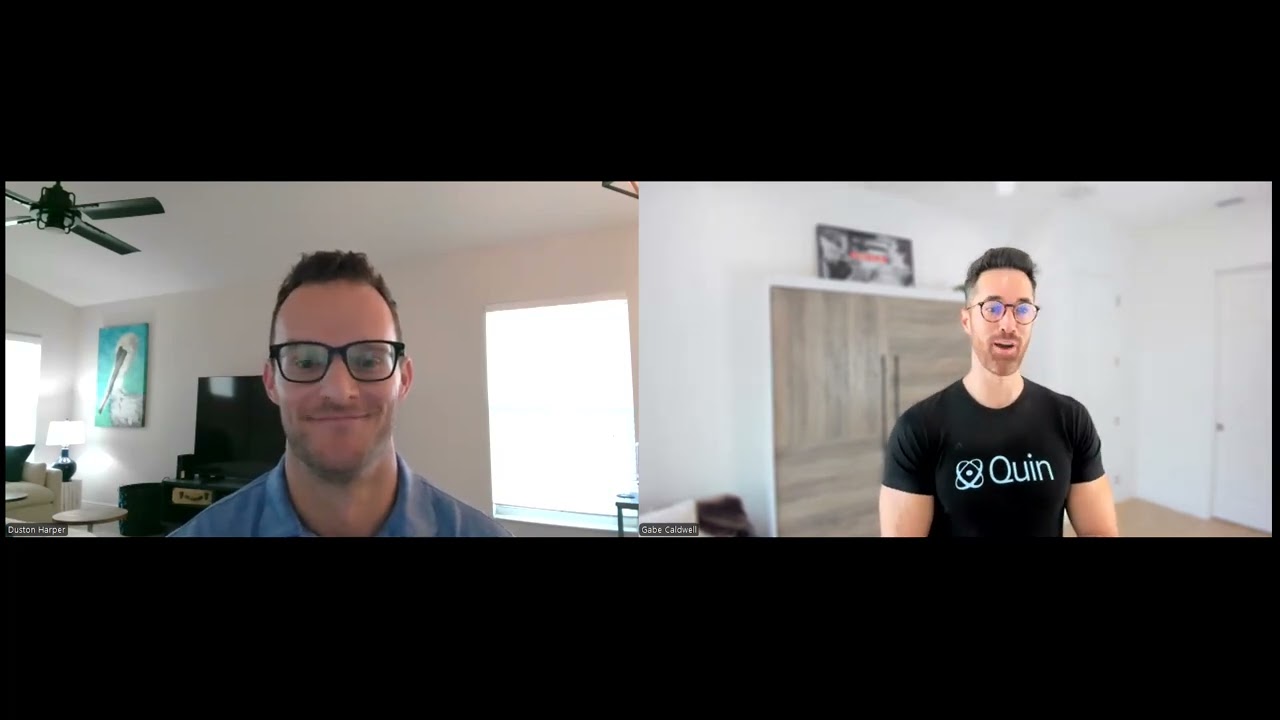
In this interview, Duston Harper talks with entrepreneur Gabe Caldwell about his journey from a family waste‑recycling business in Indiana to building and exiting software companies (WebMerge, Formstack) and founding the venture studio Plain Sight Ventures. Caldwell introduces Quinn, a digital‑human AI assistant that automates sales‑related admin work—note‑taking, CRM data entry, email follow‑ups, calendar management, and proactive outreach. He explains how Quinn frees salespeople to spend more time in revenue‑generating activities, citing typical time savings of 5‑10+ hours per week. The conversation then shifts to practical AI adoption advice: start with a clear “job‑to‑be‑done,” pick 2‑3 high‑impact workflows, and work with experienced consultants to avoid overwhelm and false promises. Caldwell stresses the importance of change‑management, incremental rollout, and behavior‑change coaching for sales teams, noting that many AI pilots fail due to poor adoption. He shares a core lesson from his early family‑business experience—technology that isn’t leveraged is a missed margin opportunity—and urges leaders to systematize and automate wherever possible. The interview closes with contact details (heyquin.io, LinkedIn) for listeners who want to learn more about Quinn.
Chapters
Gabe, appreciate you joining today. As a way to get started, tell me a little bit more about your story and how you got here.
Yeah, good to be here, Dustin. So originally grew up in the big state of Indiana here. It's gotten famous with the Hoosier football team here. They're on the undefeated season, but grew up small farm town, very competitive sports Midwest family. So kind of got that competitive juices going. Uh, grew up in a very small family business that was in waste recycling and transportation. Um, really small growing up in that. And then, um, went to college, played basketball and tennis, came back to the family business, and my brother and I kind of helped build that business up to an exit in 2016. We sold that business to, uh, Waste Management and, uh, had a lot of fun building businesses with, with my family. Built that up to about probably 200 employees. Served about 40,000 different businesses there around kind of the Midwest and learned some interesting things when we sold the business. One thing was we didn't really use software a lot within our business to systematize and streamline processes. And one thing Waste Management told us was we're going to implement our tech package here that they— was proprietary to them, and we're going to increase margins by about 10 to 12%. So, as business owners, you learn lessons, and that's one thing that I took away. I was like, I need to do a better job on this. I wasn't quite that technical at the time. And so wanted to get into technology for many different reasons. I partnered with my still now business partner, Jeremy, and he had a small software company called WebMerge. It was a utility product that automated the creation of documents. For businesses around the world, really kind of a plugin to your CRM. So you could click a button, merge data into a document template, and then automate that workflow out, saving 10 or 15 minutes. And we partnered together and scaled that business up for a couple of years through distribution channels and sold that business in 2018 and then rolled up with a private equity group into a company called Formstack. That's a suite of products that digitize processes for businesses around the world. Mainly healthcare, financial services, higher education, but small and big businesses in those verticals. And it was a compilation of about 5 different companies that we purchased that synergistically worked well together, everything from collecting data through online forms and surveys, the document assembly tool that we built, e-signature platform, and then it kind of bolted on to your choice of CRM or project management tool. I think there was about 400 different integrations there. COVID hit and all of a sudden digitizing processes was no longer a nice to have. It was a must have to stay in business.
And we—
there's always a little luck in the founder story. We were in the right place at the right time, had the tools, had the subject matter experts, had all the compliances for those different industries, HIPAA, SOC. PCI compliance, and our company really exploded because of that. And we're able to serve just over 3.5 million users and just about 40,000 businesses around the world with that company that's still out there doing great work. We had a recapitalization event in 2021 where we stepped away, and we found that we really enjoyed building products. And so we set up our own venture studio here to continue to work on interesting projects where we could find problems for industries or professionals where there wasn't a software solution. They were doing things manually, talking about how much they hated doing this, and we would explore designing software to solve those problems. And that venture studio is called Plain Sight Ventures, kind of play on words there. What is that problem that's in plain sight? that we all complain about, that it could be the pebble in the shoe that we could build a solution for, you know, maybe not big enough for the Googles and the Salesforces in the world to tackle, but a good, good enough problem that people are complaining about it and they'd love to have a solution to automate things. So we built several different companies and products underneath the venture studio there. We support entrepreneurs and founders around the world with resources and inspiration and Creativity. We do a bit of investing in early-stage ideas, but mainly focused on our projects here internally. And our focus right now is completely on our company Quinn, which is a digital human assistant for relationship professionals, business owners, sales professionals in any industry, financial advisors. That really automates their admin work. Quinn integrates into CRM, email, calendar, all of that keystroking, data entry, retrieval that takes a lot of time for all of us. Quinn can automate those things. So that's a long story, Dustin, but that's kind of my journey from, you know, starting in Indiana to the different businesses we built. There is— those are some— that's a highlight reel there, but there's definitely a lot of projects that didn't ultimately pan out for us that we learned along the way, um, to, to lead us into the different things that did work for us.
It's awesome. Appreciate that, Gabe. And a lot, a lot of good nuggets there. The family business, I'm definitely curious on some of the dynamics there, but we'll save that for another time. And a lot of success too, and, and a lot of, you know, timing and different things that you built up. So getting into a little bit of the Quin, because I'm actually a user of Quin and I like it a lot with, with some of the stuff been doing, but where does it help the most? You mentioned a few things like CRM, you mentioned admin tasks. I think at the end of the day in sales, if you can have more time in front of the customer, more time customer-facing, I think that's, that's the future, right? If that's been the past too, if you want to hire people that can close deals, that can make things happen in front of the customer, but a lot of times we get bogged down and half of our time is doing stuff that isn't really revenue generating. So where does Quin help? Can you help explain it for, I guess, different industries that might be watching this?
Yeah, for sure. So, you know, the sales process there is, there's a lot going on in that process. There's collecting of data and the discovery process there that's critically important to remember that information. We think we're gonna remember it all in our head. That's impossible. We just have limitations of our human brains. So we need to place that information someplace that we can easily recall, which is typically a CRM. And, you know, a lot of us salespeople don't like to type, take notes. Definitely none of us like to do data entry. And so that's kind of the tip of the spear of where Quin can help considering that admin work, taking down that critical information so that you don't have to do 3 things at once in that meeting because you're trying to run a meeting and an agenda, you're trying to establish rapport and trust, and you're also trying to not miss critical details. And your brain's using several different parts to, to be able to do all of it. It's like a juggling act. So knowing that you have someone that can take notes, not miss details, frame things for you, and do the data entry just on that one part of the sales cycle there so that you can use it later as you follow up and close deals Is a complete— is a very big weight off your shoulders. And then down the pipeline there, when you're following up there via email, doing that in a highly personalized way, pulling in the details that might sit in different systems contextually to be able to deliver value, whether it's that first follow-up email or that's second, third, or fifth follow-up email down the road, is going to be highly Highly critical to do all those things, and Quin can do all of that stuff for you. So that's kind of just a framework on the front side of that— the meeting, the admin work, the entry. But that data is going to be gold for you as you're trying to put together your strategy to multi-thread deals, to close things, and ultimately serve your customer, because Quin will be able to access that information for you in real time. When you're trying to prep for that next meeting or determine when you need to reach out based off data that you have collected on all of these different meetings there. So let's help with getting data into your systems, sending emails, retrieving that information, and even setting up proactive outreach in a personalized way that you don't have to even prompt Quin to do. It's looking for these things on a weekly, daily, or even monthly basis in all of your different deals. So that's a quick broad stroke of some of the admin work there, but it's just gonna take away, you know, 5 to 10 hours, maybe more per week of, you know, any of the admin keystroke type things that a typical salesperson needs to do to be successful. Appreciate that.
I like the way you word it as a digital human assistant. I've dabbled in executive assistants or virtual assistants over the years, and this Seems to really replace a lot of that and, and get things done that you talked about. And I actually know salespeople that paid for people to do their CRM entry and, and that type of thing, especially in some different industries. But on that note, AI can be a little confusing, especially to certain industries, like, let's say, industrial manufacturing, med device, financial services. There's just so much going on, and every day there's something new going out there. So I think Tools like Quin can be very helpful because they, they give you time back and it's very simple and intuitive to use. But, you know, for teams or individual salespeople that are, they want to use AI, they want to get started, but it's just so confusing out there and there's so much noise. How do you recommend navigating that? You know, where, where should you start? Obviously, Quin's a great solution, but is there other things that you would recommend for people out there that are just trying to like dip their toes in and just do something with AI?
Yeah, I definitely empathize. Right now, it's overwhelming, the amount of tools that are out there. So I'd say first off, if you feel overwhelmed, that's okay, because it is overwhelming. We're living in a very big change transformation here of all industries. But I'd also say get excited, because what's being delivered out there is going to change the game, and the early adopters are going to be definitely rewarded in that. I would say the caution here is that there, there are first-time founders and some smoke and mirrors and some overpromising out there. So you definitely want to navigate those waters and not waste your time. I'd say the first thing for anyone who's looking to get into and utilize AI is really to say, what, what is my job to be done? What is, what am I doing today that takes time? That if I could find a solution that could automate that for me would be great. So I think a lot of people look for a solution to teach them what the problem is that they have versus taking stock of their current processes and say, I spend 2 hours a week doing this. If I could find something that could solve this for me, that would be a game changer. Or I spend 3 or 5 or 6 hours doing this per week. So find the problem, then look for the solution for that problem as opposed to the other way around. And then also kind of finding some founders that have done this before. We have a very experienced team, as I shared with our testimony here. We're building a product to serve a particular persona and have clear use cases of how to use the product as opposed to just throwing them out to the wind and having our customers tell us How to use it there. And I'd say the third thing is, you know, finding someone that is going to be a fiduciary, a steward, a consultant that has done the work for you. So you can go out there and get the bumps and bruises of trying different products that truly don't work, or you can work with a consultant that's an industry expert that has already done that work for you. You're going to pay for their time. But it's going to save you a ton of time because they've already vetted products that do actually deliver value and can help you kind of speed getting those up, get those up to speed, can educate you and can train you how to use those. So what we found from a customer perspective is paying someone who's done the bumps and bruises work up front to utilize the right technology in the right way will save you a lot of headaches and get you up to speed quicker.
A lot of great points there. And on the last couple, I wanted to touch on that briefly because there's all these stats out there. You look at the MIT study, 95% of AI pilots fail to show ROI. There's all these overwhelm that we talked about. So I think for companies, let's focus more on like the small, medium-sized companies. They Sometimes the change management and the behavior change is the hardest part. And salespeople specifically, that's what we're talking about, tend to be the hardest people to change. They get stuck in their ways. They haven't— they become a know-it-all because they've been doing it for 20 years. And it's like the classic New Year's resolution, right? Everyone wants to go to the gym January 1st, but maybe I wasn't doing anything before, and then I try to go 5 days a week. After a week, I maybe do it, and then it drops off the rails and I end up doing nothing. So The behavior change and the habits and just the varying skill level of people with AI on sales teams, I think, is hard, and people underestimate that. So when, when you're implementing a solution, I guess you mentioned, you know, maybe having a partner to help you with that. Any other tips for companies or sales leaders? You know, how do, how do they implement it and actually get people to use it? Because I think a lot of times people are implementing all this great stuff, and it's probably not the tool's fault. But nobody's using it. So do you have any suggestions of like, what should you do on the front end before you bring in Quinn or something like that?
Yeah, a couple thoughts there. Number one's definitely start small. I like your gym analogy, right? Like if you go from sitting on the couch to working out 7 days a week, that's a little bit too hard. You'll, you'll burn out over time. Maybe let's just start going to the gym 1 day a week and then we'll go up from there. And from a technology perspective, that's the same thing. Um, you know, we just went to a conference there a couple weeks ago, and there's a lot of different options there from technology. It was geared toward financial advisors. And, uh, I talked to a few of the advisors a couple weeks out, and it's like, what did you implement? And they're like, I was overwhelmed. I wanted to do 50 things. I tried to do 50 things, and then I got nothing done. And then there's the other ones that are like, I picked my top 2. And then I went deep into those 2 and we implemented and we found success. And now we can go on to maybe something else from there. And that's the, the best way to think about these type of things is don't try to do too much at first. Even with a single technology like Quin that we have here, there's about 70 different workflows that you'll have to choose from that are prebuilt. You can execute. But what we tell our customers is let's just do 2 or 3. Let's get those really dialed in first so that you see that return on investment and that value that's truly saving you time. And then let's grow from there. And I think a really good coach, whether it's technology or it's a trainer at the gym or someone trying to teach you pickleball or tennis, let's do the basics. Let's find success there and let's build upon that. And I think those Industry leaders that are doing that and saying, this is a journey, I'm committing to this, but let's do bite-sized things and build upon success from there, will have the best success. They'll see a clear ROI. And if they don't, they can cancel that before getting too far, too far along, and they'll build upon successes from there.
I like that. Start small and The highest and best use case. You mentioned those top 2 or 3 workflows from Quinn. I mean, that, that makes a ton of sense. And I think people get excited, right? They— their, their CEO's giving them pressure to bring in an AI tool, be more efficient, grow revenue. So they just go big too fast. And we're definitely seeing some of that aftermath right now with the AI market. However, it's not going away. I think you and I talked about the Gary Vee quote, technology is undefeated. You can't Fight it. You have to figure out a way to. How does it make you better? How does it make you more productive? On that note, couple more questions for you, and we'll let you go. With salespeople and sales leaders, it can be a threat, right? Everyone's talking about AI replacing salespeople, but that human approach in person is never going to go away, and that's the hardest part to get a deal closed. But how can sales leaders or individuals use this to their benefit? Quinn's a great example, but I think a lot of people are scared right now. They don't. They're trying to fight the technology, but it's, it's coming fast whether they like it or not. But how do you embrace that more from an individual standpoint?
Yeah, I mean, at the end of the day, people buy from people they like. So people buy from people they like and they trust and not necessarily the, the person who does the admin work the best over here. So yeah, I think technology is going to be able to take a lot off the plate here for the working professional. whether that's a salesperson, business owner, et cetera, so that they can focus on the human component, the strategy to ultimately kind of serve the customer and keep rapport and keep trust along the way. So I think leveraging those tools, saving yourself 5, 10+ hours really allows you to scale your time, work with more customers, work with more referrals, and scale your practice over time. And, you know, it's not going to necessarily take your job. It— but someone who can leverage the technology effectively will outcompete you. So you need to be able to find those tools that will allow you to work smarter, more efficiently, automate things that can be automated so that you can focus on the human strategic components there. And that's how you'll find your next job. You'll make your business successful. You allow yourself to be able to serve more customers in a way that they want to be served. And at the end of the day, the customer doesn't necessarily care if you're using technology as long as you're able to meet their needs and what they're looking for. So things like Quinn, we can help you reply to emails in your inbox. We don't send them automatically, but Quinn can contextually pull data from your system, write things in your tone, and then place it for your review so you can effectively Respond to 20 emails as editor-in-chief very quickly in 3 to 5 minutes, which would have taken you a lot more time to do that. So the person that's not using a technology like Quin may take 30 minutes to respond to those emails. Someone using Quin, 3 to 5 minutes max.
That's a great point. I think there's a mirage of feeling busy for salespeople. Doing that, some of that admin work, it feels good, right? Because you're checking off a box or you're sending that email and it may be good, but you spending 3 hours a day doing that is not revenue generating and it sucks the energy out of you. I know for me, if I do admin stuff for a few hours, it just sucks the energy out of me and I'm not at my A-level for my next meeting with Gabe or whoever it is. So you have to be ruthless with your, your time and your calendar and something like Quinn makes that so much better. And if you're not auditing all that, As a salesperson, especially if you're commission-focused, you're, you're gonna get left behind or you're not gonna do very well and you probably shouldn't be in sales. So if you're thinking in that entrepreneur mindset, the, the salespreneur mindset, something like Quin is a no-brainer and just giving you time back, right? I, I, I'm real big on my, my energy and revenue-generating stuff, and that's what I want 80% plus of my week to be if possible. Things that I enjoy doing and things that help close deals. But As we close out here, a couple more questions for you to leave. Just overall, this could be sales, could be business, could be personal. What's like one big lesson that you've learned? Maybe it was from a failure, maybe it was from a setback, but what's one big lesson that stands out to you from your life or business that you want to share with the audience?
Yeah, I kind of shared it there a little bit earlier, but I think in our family business growing up, we learned that lesson of not using technology to scale and automate processes. And then has had a larger company come in and see that as a very big opportunity where they could increase margins by 10 to 12%. So that, that's something that I've carried through my, my entire career. Currently, you know, what we do behind the scenes in our businesses, also what we try to give to others, is systematize, automate as much as you can here within your business that doesn't take away from serving your customer. The more you can leverage technology to scale yourself, the higher margins you're gonna have, the more time you'll have back in your day so you can focus on those more needle-moving things within your business. And it's gonna even effectively just give you more time in your life to spend with your loved ones and doing things that, that do charge you up. So leverage technology. We're definitely Living in a, in a, in a space now with AI and different tools where it can be an absolute game changer in your life. So don't be afraid, use it. You'll regret it if you don't, because you'll be working a lot harder than you should and leaving some margin on the table there within your business.
Appreciate that, Gabe. And just as a way of closing out, what's the best way for people to get a hold of you or find out more about Yourself or Quin?
Yeah, yeah, you can check out our website. It's, uh, heyquin.io, H-E-Y-Q-U-I-N dot I-O. Uh, I'm active on LinkedIn, just, uh, Gabe Caldwell. So feel free to shoot me a DM. We're doing lots of content we're sharing out to different business owners and sales professionals that we can serve. So don't hesitate to reach out to us there.
Awesome. Great stuff. Well, looking forward to catching up again soon. And thank you so much.
Thanks, Dustin.
More from Duston
Bobbie Rachford on Building Better Biostats | Fractional, AI in Clinical Research & Founder Truth

CRO Brett Godwin on Ownership, Pipeline Habits & Wealth #sales #salestips #salestraining #ai
68% of Sales Reps Think Client Drinks Are Essential. They're Wrong. #sales #salestips #alcohol

The Hardest Sales Interview I Ever Had — The Stryker Gallup #sales #salestips #stryker
My First Sale Was a $1,000 Cutco Knives Set - To My Own Dad #sales #salestips #salestraining #cutco

Why Hiring - not Coaching - Is a Sales Leader's #1 Job | Shaun Priest, Promptly #sales #salestips
"Make it about them, not you" — Dan Fabrizi on Selling in Healthcare #sales #health #seniorliving
How Zain Hasan Scaled a Company to $14M ARR, Walked Away with Nothing, and is Happy #ceo #ai #sales

Hannah Pencek on Sales Process, Leadership & the Real Role of AI in Sales #sales #ai #podcast

Solve Problems, Don't Just Sell with VP Ryan Messer of Meridian Insurance #sales #ai #insurance