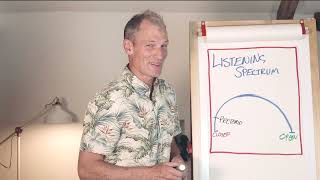
Edward Nelson identifies three needs for feeling included: being recognized and acknowledged, having your perspective understood, and seeing your ideas make a difference. He offers a listening spectrum tool to help with the second need and argues that meeting all three transforms how people experience meetings.
Chapters
Hi, I'm Edward Nelson and I want to share three things that make people feel included and welcome. Both in the workplace but also in other areas of life. All areas of life they come down to three basic human needs. Okay, so the first of these human needs is to be recognized. Okay, what do I mean by that? To be recognized, to be seen, to be, to, you know, to be acknowledged is another way of putting it. So if I come into a meeting and someone says hello straight away, I've been acknowledged, I've been recognized, I've been. In some ways it's the first level of inclusion, right? If I come into a meeting and no one says hello to me, then I'm not being acknowledged, I'm not being recognized, then I'm already going to be sitting askance. So the basic, first basic principle of making people feel included and welcome is to acknowledge them. Is to, to welcome them. That's it, simple thing. And if it isn't done, it can have knock on effects for the rest of the meeting. So that's level one, the most basic form of inclusion, to recognize and acknowledge someone. Number two. Right. Number two is to show understanding. So now that we're there and we're in the meeting, we want to be understood. So then I might share something and to have my perspective understood, not necessarily agreed with, mind you, just understood, then that meets a second need. So I've been recognized. Great, that's level one. Two. I've been understood. There's nothing worse. People get frustrated, they leave a meeting and they go, oh, they didn't understand where I was coming from. I'm frustrated because I didn't feel understood. Now what's great about that is that you can show understanding without agreement. And if you want to learn more about how to do that, go visit my listening spectrum tool. But there are ways that you can make people feel understood without necessarily agreeing with what they say. Okay, so understanding is number two. The third and final one I want to talk about today. Just very simply is the need to be valued or have an impact. So great, I've been recognized, I've been acknowledged, I've been understood. Now has my idea been valued? Has it had an impact? Have people taken it on? Has it made a difference? So we're talking about making a difference in the world. We want to be making an impact and having value. That is the harder thing to meet. Sometimes we'll offer things that aren't valued, aren't having the impact that we would like. We're not always available to doing that One but when that one is met we can feel really good like we've had a contribution and that will really make our day. It's probably too much to expect that everybody is always going to have a valuable contribution but even without that we can usually always do the first two which is to recognize and acknowledge someone and and understand where they're coming from and sometimes those points of view can be valued and have an impact and change the course of the meeting or the decision making and sometimes they won't. If you do the first two it's less important that the third one gets done. So there are the three core needs to make people feel included, to be recognized or acknowledged to be understood and to be valued and make a difference. Good luck. Make sure you do the first one if not the first two at your meetings and you will create a more hospitable and welcome team. I'm Edward Nelson check out my YouTube link. Thanks for listening.