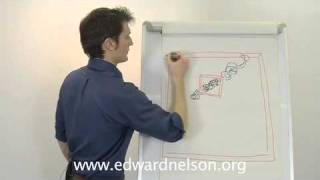
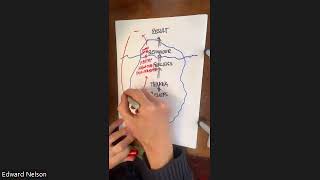
Edward explains reframing as a conflict resolution technique: instead of fixating on one negative detail, you expand your mental frame to see the whole picture. A narrow focus on a chimney's black smoke misses the house, river, and forest around it. Widening your perspective reveals positive or neutral elements you'd overlooked, shifting how you understand the conflict.
Chapters
Right. I'm Edward and this is a pictorial representation of what I mean by reframing. Okay. Reframing is taking a frame that someone has around a particular subject or a situation, the frame through which they're looking at it. Think of it like a window frame. And often when they're in conflict, they're looking through a particular frame and all they're getting is in this case, a bunch of black smoke, alright, Lots of dark. They're caught up in what's bad. Okay. And actually if you look at it, that bit is bad. Okay? Now what we want to do when we reframe is to take that frame and change its position. We want to make it often we can just make it bigger. Okay. So we take the frame that the person is using to look at the world and enlarge it so that they can change their perspective. This is a really important part of conflict resolution, is helping people get a new perspective on their situation. Now this might seem a little bit far fetched for them at the time, but let's just take the case here that this is a chimney and this is actually a house and there's a window here and there's another window here and actually there's a river out here. Now you don't have to necessarily look just at the smoke or the house. You might want to choose to focus and look at the forest that's over here as well. But people will forget the overall picture. They'll forget the good things, they'll forget the nice bits. They'll focus on what's bad. And what we want to do when we're reframing is change that view, whether it's over here or larger. That's reframing.