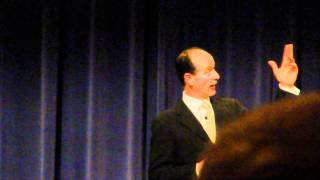
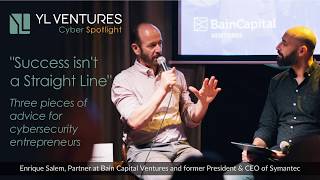
In this talk, former Symantec CEO Enrique Salem shares his personal journey from his upbringing in Barranquilla, Colombia, to becoming a technology leader in the United States. He highlights the influence of his parents—his father's dedication as a mechanic at Avianca and his mother's emphasis on positive attitude and hard work—while emphasizing the importance of education. Salem recounts his early career working for Peter Norton, where he learned to challenge the status quo, and his entrepreneurial experience founding and scaling Brightmail before selling it back to Symantec. Throughout, he delivers leadership insights, urging listeners to leave ego and titles at the door, focus on facts and listening, and adopt a Colin Powell‑inspired philosophy of stretching teams to achieve more than they think possible. The speech blends personal narrative with practical advice, aiming to inspire the Latin American community and broader audiences about the potential of skilled, passionate professionals.
Chapters
—big city. This is my hometown. I'm very proud to be from Colombia. I'm very proud to be from Barranquilla because from my home country there are a lot of very successful people. And I mentioned a few of them, but we also have Nobel Prize winners and successful doctors and people like my dad who had a real commitment to not just what you would expect, but to his family and to really making a difference. And so I'll show you a couple more things. You might not recognize these folks. That's me, with the big afro and the two socks. In the middle is my sister Jenny and my brother Tony. He's wearing the vest. Some people sometimes say he's Al Pacino sitting next to him on the other side. This is Mom and Dad. Great, great people. Great, great people. My dad started his career as an assistant mechanic in the airline industry. He worked 47 years at Avianca. It's a Colombian airline. [FOREIGN LANGUAGE] And never went to college, right? High school education. Really wanted one thing for us and for my brother and sister, and that was that we would get an education. And my mom had two things she cared about. She cared about having a positive attitude, and she cared about us continuing to work hard. And my dad was a role model for that. He had two jobs. When I was growing up, and he gave everything for us. I came to the US, I'm actually an alien, and then I worked at all these places. I worked at Smantec in 1990, I actually started working for a guy by the name of Peter Norton. I was Peter's 8th software developer, and I had an opportunity to learn a lot from him. He was an out-of-the-box thinker, and he challenged all all his employees to never accept the status quo. That's a pretty valuable lesson. Ask Jeeves, Brightmail, a company I had a chance to run, and then came back to Symantec when we sold Brightmail to the company. You know, it really is a pleasure and privilege for me, and one of the best things about being up here today is I got to listen to a number of people clearly exemplify, exemplify real courage, real pride, real skill, real expertise, real passion. And that's what we need to share among everybody, whether you're from Latin America or anywhere in the world. We are a community that has tremendous skill and potential. And I don't think everybody has a full appreciation of what this group is capable of. But when you listen to the folks who were on this stage before me, It's impressive. It really is. And I think we should never lose sight of that. And so it's great to be here and having a chance to share a couple of comments. Well, first thing that I always talk to people about, though, is check your ego and your title at the door. I think you— if you think about an organization, a lot of times people look at the org chart and they think because where I am on the org chart, that gives me some level of authority to make changes. And I tell them, "You know, that's not true." You have to know what you're talking about. You have to have the facts. And what's most important is learn from the people around you. Listen and make decisions. It's not about the org chart. It's not about how it makes you feel. It's about making decisions and making decisions effective. Next one, which I care a little bit about, This is, uh, Colin Powell. Uh, leadership is the art of accomplishing more than science and management says is possible. I absolutely believe that. Right? It's how you stretch people. How do you make it possible for people to do things they don't believe they can accomplish? When I ran my little company Brightmail, it was only 20 people when we started, and we said we were going to be in every email system in the world. People looked at me and