A New Way to Think for a New World: Francis Cholle | TEC Canada's The Leadership Standard Podcast

Transcript of a Leadership Standard podcast interview (host Gair Maxwell) with Francis Cholle introducing his 'Squircle' decision-making framework — a synthesis of linear (square) reasoning and non-linear intuition (circle). The conversation explains Squircle's purpose (to unlock intuition within organizations), origins (insight in Malibu; work with L'Oréal), business relevance (avoiding rigid, linear traps like Kodak), leadership implications (vulnerability, imagination, courage, values), case anecdotes (luxury brand executive transition), practical access (text 'easysquircle' to 393939 and visit online resources), and a rapid-fire personal segment.
Questions this video answers
Text the word 'easysquircle' to 393939.
Mentioned sites: 'squirrelacademy.com' and 'franceschurl.com' (as transcribed).
Chapters
In a business world dominated by boxes and big data, squares and spreadsheets, is it time to be thinking about a new decision making framework all together? Is it time to start seeing the world differently through the lens of a squircle? Is this how logic becomes better acquainted with, with intuition? Together we're going to explore the fascinating world of the squircle with author and thought leader Francis Scholl on this edition of the Leadership Standard. So, Francis, thank you so much for joining us, all the way from California and we're on pins and needles waiting to hear about. First of all, how would you define a squircle? For anyone watching or listening on this podcast, I think that's the first thing is, well, how does a square and a circle kind of intertwine and why does it matter?
Well, good morning, Garen. Thank you very, very much for having me on your fantastic show. I'm very excited, very happy to meet your audience and share a little bit of what I do. So squircle, maybe before I even explain how it works, I've noticed in the companies I work for that starting from the way the problems are phrased, the approach is very linear, is how do I get to the results in a quickest way, with the least effort, energy, means. And that all makes sense, but it limits enormously the ability of executives to actually come to a deeper level of understanding of the situation, which as we know today, is more and more complex. And in a complex world, you don't go to things in a straight line. If you do, at best, you'll get incremental solutions. At worst, not much will be innovative and creative. And we know that today the new game is really reinventing everything. So SquirrelQL is here to help us to get to that deeper thinking that we all have in us naturally. And it's not adding anything, it's unlearning the way we've learned to think in a way to add this layer of depth that gets us through complexity. So how does it work? It's understanding that 2/2/4 is what we've been trained at school from a very young age to do and to learn to analyze texts, to demonstrate through ideas. And that's again, that's fine, that's very powerful, give science, but that's within a very constrained set of rules. And we're more than science, we're more than what we can understand. You know, we have emotions, we have sensations, we fall in love, we're passionate, we have inspiration, we do things without understanding. Really, why? Ask entrepreneurs. Steve Jobs and the like, you know, they were all stressing the importance of intuition. So to get to that deeper place in us that perceives things without necessary understanding them, where actually the creative solutions live, we need to be open, beyond the square. And that's where circle comes in. Intuition, instinct, gut feeling, sensations. And it's in us, but it lives in the square. So Squircle is the liberated circle that can be and at the same time house the square. And everything has to offer. But do not let square dominate the house, does not let square rule the game fully.
So in a business context, what I'm hearing, and I hung onto your word, your description of linear, it's expanding beyond linear thinking. And when I don't know, I don't know about you, Francis, but when I think of linear thinking in business, I think of Sears, Kodak, Blockbuster. That's kind of, if you follow the pattern. Is that really what we're talking about? How business leaders anywhere can use Squircle as a way to avoid the calamity of those rigid linear based thinking organizations and systems?
Correct, correct. Linear thinking, linear behaving. Because what I always say about Kodak is that the solution was on the desk of the CEO. So as you can see, it's not so much the ideation, the idea was served to him. And in an open source world that we live in, there's so much information. But how do you get to the gold nuggets? How do you identify this as something so you have to really feel, allow yourself? Because you don't have all the data. Nobody has all the data.
And I'm thinking, and I'm thinking, Francis, sorry to cut in, but I'm just thinking now is the time for Squircle more than ever, given how unpredictable the world becomes since March 2020 in a global pandemic.
And that's why I designed Squirtle. You know, I worked on this for 20 years and I've really practiced it in business with CEOs for 15 years. And now Squirtle is here to scale through organizations so that thinking that was really in the C suite can be throughout the organization. Because what I've noticed is that the people I work with are powerful thinkers, highly strategic minds and intuitive personalities most of the time. But they won't necessarily be able to conceptualize how they use intuition and reason, because that's not where their mind is. Their mind is about their business. So once you leave the C suite and you enter the executive room where executives working the direct reports work, and even worse, at different lower levels in the organization, then it becomes square on square on square, you know, so that intuition that most leaders have doesn't percolate, doesn't trickle down through the organization. That's the role of squirrel call.
And I know you've got some actual tools that we're going to get into later that anyone listening can just access in the online world and help better understand the decision making process. I just kind of want to stay for a moment, Frances, and hear your thoughts on something.
Historical. Then if you go Back to like 1914, I uncovered this. Henry Ford was facing falling demand for his cars and had high worker turnover and other industry barons thought he was completely off his rocker. You talk about. Here's to the crazy ones. Henry Ford doubled his employers wages and within a year turnover dropped substantially. Productivity nearly doubled because Ford workers could now actually buy the cars they were making. Is this historically, whether it's jobs, Henry Ford, Uber, Airbnb, Is this the timeless thinking that supports your ideas on Squirkle?
Yeah, absolutely. Listen, there's nothing to learn. It's already here. You only have to unlearn. Why has it got worse? In spite of the absolute need to go back to intuition, to deal with complexity, is because organization, you know, those mega, enormous organizations you have to scale, have to simplify the messages, have to put processes in place. And all of these things are part of the square and they're very needed. You know, you need to balance your checkbook, you need to know what's in the fridge for tomorrow to. You need to have some organization, of course, in your personal life and even more so in those gigantic organizations. However, there's a cost to processes and there's a cost to scalability. And unfortunately, the scalability aspect is done at lower ranks in organizations where there's less of a feeling of autonomy, of risk taking, and it's much more about optimizing and securing results, optimizing resources and securing results. And with that mindset, unfortunately, we lock ourselves more and more and more into the square. The square is such that when you let it run the game, it will deprive us from intuition all the way to depriving us from our survival skills, adaptation, creativity, resilience and sustainability.
And that's why, and again, I'm just listening to you and hearing how it translates into the business world. I think Jeff Bezos and Amazon would be great shining examples of using this type of thinking intuitively to always stay ahead. What was it Bezos said? He's more interested in the things that won't change, as opposed to the technology that will. And certain patterns of human behavior, like customers always wanting fast service at low prices. That's never going to change. So take us back, Francis, on your own journey with Squirkle. I think people would be fascinated, I know I would. To hear your Eureka moment. The moment, Francis, when you actually realize this is what happened. I don't know where you were, how it happened, what the circumstances were, but what was your moment when you actually take us to the discovery of Squirkle?
I was on the beach.
North of Malibu, looking at expensive landscapes and just, you know, kind of meditating, reflecting, you know, lost in my thoughts. And then I heard a plane.
And unfortunately, Los Angeles, the Malibu area is gorgeous coast, but there's a heavy pollution and smog. And so as I. My ear caught me to look at that plane. You know, I just saw that plane. I saw the sky, I saw the pollution. And I'm like, wow, how is it possible.
That the human mind that's so smart to get us to fly or get us to the moon, very sophisticated mind, very great intellect, is at the same time so reckless with nature?
Because I don't know anyone that would put out a cigarette or a candle in their bed burning their mattress. And that's what we do collectively. So where is the split? You know, we're very smart and at the same time reckless. And we're irresponsibly reckless because nature is our cradle. That's why I take the image of the bed, you know, so where is the split? And that really was something that was obsessing me late 20th century.
Because it was like, but we're running wild. It's not going to go well. You know, we're going to hit a wall and.
We'Re missing something. We're missing a form of wisdom in the way we're creating prosperity. And then when I work for l', Oreal for the CEO, the former CEO, Sir Lindsay Owen Jones, really turned l' Oreal into this global company that it is an international organization. That it is. Today he asked me to reflect on the management of creative teams. And I realized that the manager, he or she has to stabilize life, which is chaos, to make things happen. So uses analytical skill sets to move projects within deadlines, budgets and goals. And then on the other end, creative profiles thrive in the chaos of life and oriented themselves through instinct. And instinct get them through the chaos and in chaos they meet newness, new ideas. And that's what they thrive on. They love finding new things and I realized that when you interview those creative people, they say, well, we live under the helm of budgets and squares.
So I said, okay, first of all, we need to reconcile those things. This is what l' Oreal needs, you know, intuitive intelligence, the synergy between reason and instinct made possible through intuition, the bridge between the two.
And then I say, well, here is my answer. I understand now why we're not sustainable. Because instinct, the intelligence of nature in us.
Lives under the helm of reason and the square. And I thought, wow, this is unbelievable. So I need to really take this to the world. I know the business world, show that it can help organizations innovate, adapt and succeed and be profitable. And once I've proven that, then I can take it to the world. Squircle make that model. I invented Intuitive Compass, Intuitive intelligence for the C suite, available to everybody, every employee and bigger.
So it started on the beach in Malibu.
Yes.
And then it goes to the stratosphere of a global company like l'. Oreal.
Correct.
Not quite a square, not quite a circle.
No.
But it's a decision making framework.
Correct.
And is there a way without benefit of visual aids? And I'm thinking, especially for people who are listening to us and not watching, and I'm trying to wrap my head around that I'm a CEO or a leader of a 10 or 20 million dollar company, 100 million dollar company. I'm thinking, well, I'm a small to medium sized owner of a business. You know, how does Squirkle work and why does it matter to my organization?
Okay, so let me tell you a very simple story just to. It's not visual, it's a story. Okay? So I think it's easier for your listeners about what is square and circle. So imagine.
A young girl walking in the backyard of her home and suddenly she sits by a tree and she sees a parrot close to its nest. She loves the parrot, she wants to talk to the parrot. She moves the bird goes away. You know, parrot free to fly, goes wherever it wants. And the little girl is like, oh, very sad to see the parrot go, because she wanted to befriend the parrot, etc. So she thinks, well, you know, maybe, maybe what I could do is try and see it again tomorrow. So she comes back the next day, but the parrot is not there. She comes back the third day, the parrot is not there. Fourth day, parrot is not there. So, you know, she forgets about the parrot. And one day, two weeks later, she's in the garden again and comes the parrot. She goes to the Tree. She loves the parrot. She looks at the parrot and said, well, what could I do to protect this parrot because he's in the wild? And then she thinks, there's a cage in the attic of the house. I'm going to replace the nest with a cage so the cage will protect the parrot. I put water, I put food, and maybe I'll be able to close the door whenever I want to keep the parrot in. So without feeding, she does this. Without feeding, the parrot goes into the cage and she closes the door. So now you no longer have a wild animal that can adapt, survive, feed itself and live in the wild. In the Vuca world, volatile and certain, complex and ambiguous, you have an object of decoration that's dependent on others to be fed and has lost its capacity of autonomy, creativity and agility. So that's what we've done with reason, logic, we've turned it into a cage. As opposed to being a tool that serves our natural abilities in the world we live in, when nobody knows where we headed. You need those natural abilities for adaptation, creativity. That's in us. Nothing to learn. Just free them, let them be free and use your tools to support this and not to erase this.
Francis, that is a segue into what I think will be a fascinating answer to this question. On the leadership standard, we, we really love to explore just the very idea of leadership. So just curious, in the context of everything we've been talking about, how do you, Francis Scholl, define leadership?
Okay, that's a great one. So for me.
For me, the main thing is vulnerability.
Associated with imagination.
And courage.
And then comes values. Why vulnerability?
Because when you're able to be vulnerable, that means that you have enough self confidence.
To weather the unexpected.
And that's what you need to impart on others. Emma was not able to be vulnerable. She was a little girl. The feeling that she had, she turned into an imprisonment. You want leaders to do the exact opposite.
Imagination. Because once you allow the parrot free, you know you will be able to explore new territories. That's what every CEO has to do. Every leader needs to be always on the next page with certainty. Or not. No, but exploring always ahead, always challenging the status quo, always because other people are doing it.
And thirdly, courage, because it will take courage. Nothing will come as in a straight line. Nothing will be according to plan. And you will need to adapt and you will need to face the unexpected. And at some point you probably will be the only one on the deck of your ship. You know, to.
To be able to move through fear. So that's where courage comes in, and then values, because those are the principles that support.
The whole experience.
From your perspective, Francis, what do you think some of the common myths are surrounding leadership today? Would love to hear that.
The jargon or the cliche that needs to be, shall we say, dispelled.
Well, you know, it all depends what you want to build.
Since summer 2019, the.
Business Roundtable.
Has said that business is no longer about serving in the United States, no longer about serving only the shareholders, which was really the legal obligation of a CEO to make sure that the financial investment was first protected and made profitable. But today that's been revised. It's not only this, it's also all the other stakeholders. And as we know, we're all interconnected. Look at what the virus has done to us. So I think for a company to retain customers, consumers, employees and talents, attract them and retain them, you will absolutely need now to make sure that your value chain creation is.
Value creation chain, sorry.
Will be encompassing all the stakeholders. And that's complex. So the former way of thinking to get to results, which is kind of a form of survival in a very competitive dog eat dog world called business Marketplace, I think that is necessary, of course, but not enough. And when you include the not enough, then you have to rethink the dog eat dog.
So I don't know if I was clear in answering your question, but let's say the dominant version of leadership, whether it's dominating your consumers through advertising or whether it's dominating your employees through a hierarchical organization, I think has to be reconsidered deeply.
Francis, I think there isn't a leader on the planet who can't relate to this. They say there's no better teacher than failure.
Agreed.
What's the one thing you think you failed at along the way? And how did it help you learn?
Okay, so listen, I have my, you know, it's a strength and maybe it's a delusion, but I don't look at things as failure. Honestly, I don't. And I've had according to many standards. You know, people tell me, Francis, you advise CEOs, how could you not see that coming into your life? Okay. And I'm like, but it came into my life because you had to come into my life. That's the way I look at it. I look at things as initiations and not as failures. Personally. That's my personality. I can weather obstacles, I can weather oppositions. That's who I am. That's, that's, that's the part of who I am. But so anyway, so I like to look at it this way because that allows much more resilience in me and much more creativity as opposed to, oh my God, I failed again. Which has a lot of self deprecation and I don't think it's empowering. Okay, this being said.
I think the hardest thing is to hire people.
But there must have been a moment where you look back and you go, I blew that one. It was my welcome to the business world moment. I think people are always fascinated to hear those stories in the spirit of vulnerability, Francis.
Where something went wrong and.
Then you figured it out. Listen, somebody came to my.
Okay, so you know, what I bring to the world really is a recognition of the feminine and the masculine, that the feminine energy has a lot to teach us. And the feminine energy cannot be bossed, cannot be. You know, it's a different logic. It's something that you compose with. It's like, you know, like sports, you just, okay, great, you know, the technique. But then to get to really the performance, it's not going to be a straight line. You're going to have to deal with emotions, a body that's fit one day, that's not fit the second day, and so on and so forth. So it's a much more felt based, you know, adventure than in the mind, you know, command control. So there's a vulnerability for me in this because I come to a world that's very much command control. And for many years I always felt like, oh my God, somebody's going to come and see my genius idea and help me scale it and bring it to the world. So one consultant came and reached out to me and she called me and said, oh, wow, I read what you do. I love what you do. It's very interesting. She was very smart, so she had read quite a bit. And she came actually recommended by business network in Los Angeles, somebody I trust and respect. So I listened after this first phone call, I said, but this woman speaks too much on the phone. What is this? I did tell myself this. So I had a first sign and I didn't listen to it. Then she came, we had lunch. Very smart, I like ideas. We talked about economics, we talked about so many things. And she worked for French government at very high level. So it's like very interesting stories. So I got seduced.
When I took her on as an advisor.
She told me that she had psychological challenges, schizophrenia.
And she also had a genius IQ of 165. And I didn't do my homework, which is you know, checking references.
And.
Because, you know, she had seduced me or I got my. I let myself seduce, I should say, and then. And I took her on board. And I'm an empathetic personality. So I thought, well, you know, this person coming to the United States, et cetera, et cetera. You know, maybe I can really benefit what she could contribute to my company and at the same time, help her bad deal. And that didn't go well at all.
Everyone on their leadership journey, Frances, and I'm sure you'll agree, has influences and mentors who helped them in some way along the way. Tell us about your influences, your mentors, your heroes.
You know, I've asked this question I've asked myself.
I haven't had mentors in my life.
Okay? Not in the business world. That's who I am. I come into a room, and I want to say, you know, I've had many, many insecurities when I grew up and everything. It's not like, you know, it was. But there's an inner knowing in me that erases any form of hierarchy when I'm with other people.
And then I've done a lot of theater and everything. You know, when you're on stage, you're butt naked, you know, so the whole social dynamic and everything, that's erased out of the window. So that's also helped a lot to enforce or, you know, reinforce what I fit inside, which is, you know, I'm in the room. There's an inner knowing I have that I don't see mirrored usually. And then there are two people really influenced me on a personal level. That's my analyst, a Jungian analyst. I work with him in New York. Dr. In Psychology, Columbia University and Columbia Hospital and private practice. But it took me years to look at him as a mentor. I was looking at him as a doctor. Somebody would heal a part of me. And then I realized, oh, wow, this guy has a lot of wisdom. Took me many years to get to that place. And then there's a woman in Paris.
Extremely evolved, that I was introduced to by a consultant, said, oh, that's interesting, the way you talk. You should really meet Dominique. And this woman has enormous, tremendous integrity and embodies wisdom in action, in the moment. And I learned so much from her. And she's a friend. We became friends and fast friends, deep friends. Somebody I really owe so much. In every of my book, I acknowledge her and thank her, and I do the same with my. With my analyst, the doctor in psychology, New York and otherwise. I've Got people, of course, who help me, but not from a. I listen, but that's not my. I listen within. That's where my inner. That's my mentor.
You work with organizations, you work with leaders. You basically help organizations and individuals understand the thought process behind Squircle. Tell us the story, Francis, about the client that touched your heart. Something happened, and it really meant something to you personally.
Okay, so the one that comes to mind, I don't think I can name the company and the person.
Woman, late 40s.
She works for a big luxury company. She leads one of the Maisons, one of the brand fashion brand. And one day I'm in Paris and I receive a phone call from her. And she's worked like her ass off, like, traveling the world, renegotiating leases, contracts with distributors around the world. Asked the founder of the company to actually leave the company. She had a minor role, but she was still very present, and she was the name of the brand. So, you know, she went through hell to rebuild this company. And she's on the way. And I'm being advising her as her strategic advisor. We work closely together. I'm traveling in Paris, she's in New York. She calls me up in tears, and she said, they sold the company.
Without telling me, without a phone call. I can't believe this. And she's in tears.
And.
So then she was kept on board for the process of, you know, due diligence and the sales and everything. And then she.
Was about to embark on her next journey. She had great, great credentials, so it was difficult for her to find a job, but she decided to dig deeper into her value system. And.
I said, okay, I'm going to help this woman. For two years, we were in conversation, and she was always coming back for exchanges, conversations to support her in getting closer to her deeper values. Because when I started working with her, I use drawings, psychographics, that one of my consultants has designed. And it was very clear in her drawing that she had strong values, which is actually not so often that you see that in drawings of CEOs. And I told her, and I said, you know, you have values. It's strong here in your personality and everything. And that also really inspired me because I knew that about her, to take her into her next journey and help her in that transition, to get to a deeper place. And she's done an amazing transition. She now works with private equity that's all about circular economy and circular fashion. She is part of mit. She teaches there, and she's really now investing in companies that Make a difference in the fashion world.
Francis, I feel like you and I could just talk for hours on end, but I know you've got to go for another appointment before we wrap up. We want to get up close and personal. It's kind of become tradition here on the leadership standard. Francis Scholl, what are you curious about right now?
I'm curious on the roller coaster that we're on.
There are many people suffering from it. So my curiosity has empathy, of course.
And I try to help the way I can through a foundation helping women entrepreneur who have it harder as we know, although they are, they display amazing talents. So what I'm curious about is how Covid is going to help our civilization reposition itself in the big realm of things. Not at the center of the universe, but in much more interconnected way of thinking as we're part of a network. In a network, there's no above and under center or out of center. And that way of thinking that you encounter now in today in business could be more prevalent so that organization can be more innovative, more adaptive. And overall, people are much happier because they're functioning on an energy circuit that's easier than the command control forcing your way all the way to burnout.
Francis, on a scale of 1 to 10, which is a great box and a square scale of 1 to 10, how weird are you?
Well, I'm returning the question to you. How weird am I in your eyes? You know, I am who I am. I'm used to. I am. I'm used to myself.
If you could choose the lead actor, who would play you, who would play the role of Frances Scholl in your biopic?
Yeah. Okay. What's his name? He won. Oh, my God. I can only see him. He won an Oscar for the piano. What's his name? American. American actor. He must be in his 40s. I really like what he did.
You know the piano? Yes.
Right away I go to Richard Dreyfuss in Mr. Holland's opus, but I don't think that's it.
No? No. 40 year old today. I'll find him. So you can give it to your, to your listeners.
Francis, what room in your house resonates with you the most?
My bed, where I write my books. Usually in bed.
You write books in bed?
Yes.
Okay, people got to hear this story. Tell us about it.
Well, you know, because it's a place where I'm comfortable, I'm horizontal, you know, so I'm less in my head. I know that writing is about conceptualizing things, but it's also a lot about, you know, channeling things that you have inside out, you know, So I feel like. I feel like it's a. It's a place of my second book, I definitely, you know, spent a whole month of December and a whole Christmas holiday in my bed writing and typing.
So when people pick up a book like this now, they can put a picture to it that this book was basically written in bed. Is that, is that what we're to understand?
This one was written more at my desk, but.
Well, what they can picture is somebody getting up early in the morning and going to bed at night very late. I don't write in a linear manner.
I write as I discover. Of course, I've got a general idea where I want to go, but it's really a very. There's a lot of. It's an intuitive process as much as it is a thought out process. A very Squirtle process, I guess. Yes, that's what he is.
It's a very. Of course, the author of Squirkle would write in a Squirkle process. Are you familiar at all, Frances, with the classic Lipton Pivot survey?
No.
The Lipton Pivot survey. It was introduced to American audiences by James Lipton on a program called Inside the Actor Studio and it's an extension of the French journalist Bernard Pivot.
Yeah, this is.
This is a quick, rapid fire response. Here we go. Francis Scholl, what is your favorite word?
Love.
What is your least favorite word?
Hate.
What turns you on?
Play.
What turns you off?
Laziness.
What sound or noise do you love?
Bird singing.
What sound or noise do you hate?
I like silence. So any sound that's intrusive when I. And I need peace of mind, I guess. Yes.
What is your favorite curse word?
My favorite curse word? Damn.
What profession other than your own, would you like to attempt?
Which I didn't attempt because, you know, singing opera is one of the things I attempted and did part of, you know, even to a professional level. But I want to pursue that. Otherwise, you know, I wanted to be a surgeon or a pilot. So those two things would be cool.
To do under no circumstances. Francis, what profession would you never do?
Anything that takes away my dignity.
If heaven does exist, what do you want to hear God say when you arrive at those pearly gates?
Well, I would, you know, first of all, heaven is here. Okay, so I guess.
Happy to meet you. That's what I like to. Yes, I guess. Yes. Let's have a conversation.
I can't help but ask, Francis, you Work with so many high level people in different organizations all over the world and you give advice and guidance, but what's the best advice anyone's ever given you?
That there is no duality in life.
That freed my mind forever.
There's no such thing as life and death, hell and heavens, poor and rich, smart and not smart. None of this exists really. So I know that our culture created differently, but I don't think that's the essence of life.
You have a personal creed or motto like the four or five words that you just live by.
It's a Buddhist mantra. So it's not exactly understandable. And you know, I repeat it so much. I beg for gratitude and pray to be always intelligent enough to remember.
We are so grateful that you took time to join us on the leadership standard. I know your work is really having an impact. In fact, our mutual friend Leo Batari told me that you've actually helped him with his golf swing, that he now pauses at the top before the downswing. Thanks to your gift of Squircle. I know there's people at the Tech Canada office that have been going online with Squirkle to try and figure out things about themselves.
That they wouldn't otherwise learn. So it's. And in this conversation, Francis, how do people discover and learn more about Squircle? Where can they go and what should they be doing and pay attention to?
Thank you, Gare. So the first thing, the very first thing, is to text the word easy, as in Eric Z for zebra, Easy squircle in one word and text it to 39. 39, 39. So text the word easysquircle to number 393939 and then you receive immediately on your iPhone or your handheld.
A link to a questionnaire. It's a very short question. It's QUQL test and it will give you a reflection on how you approach thinking. And it's not about putting you in a box, but it's really about starting inner reflections so that you can get into the heart of Squirrel. And then you can go to the squirrel academy. So squirrelacademy.com and you'll get lots of resources there, how the framework works, etc. And there's also my personal website, franceschurl.com where you can find some information. And then of course, tempted to tell you go and buy the book. It's on Amazon and it's a short read, 90 minutes packed with stories, cases and tips and tools that you can apply as you read the book chapter per chapter.
Yeah, well, Francis, again with gratitude. Thank you so much for joining us. It's been a real pleasure and an honor.
And likewise, thank you so very much Gare. And to all your team as well. Thank you Gary.
We so appreciate having Francis Scholl, the founder and creator of Squircle, joining us today. And if you do want to know more about Tech Canada and its world class programs, always check out the website www.tec-canada.com so what was it that Francis spoke of that made you stop and think about the deeper, deeper implications of Squircle? I know for me it was very, very glaring, the difference between linear and non linear thinking. That not everything fits into a box of big data marked with KPIs and ROIs. Not when the world is so predictable. There is no duality. Francis talked about that. But what was it that made you stop and think for a moment and ponder and reflect and say, wait a second, maybe there's something I'm missing on the journey forward. So always feel free to share your thoughts. My email address direct is Gair g a I r@gairmaxwell.com and if you enjoyed the Leadership Standard, of course feel free to share with others in your network and all the appropriate social platforms. If you haven't already done so, please like subscribe and share so that someone else out there can grab hold of the clutch, kick it up a gear and go full throttle in this new frontier. So on behalf of everyone at the Tech Canada office in Calgary, Steve and Alexander Cat, who are part of the production team and everyone out in the organization throughout this great country of ours, thanks for joining us for the Leadership Standard.
Sa.
More from Francis'
Squircle: Where Science and Nature Come TogetherEpisode 095 with Francis Cholle of Squircle Academy
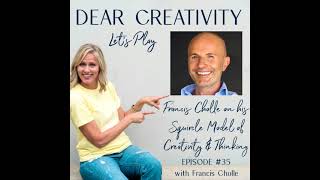
Dear Creativity...Let's Play Podcast, hosted by Amy Isaman featuring Francis Cholle
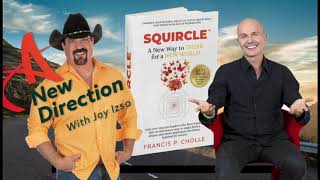
A New Direction -- Thinking Outside the Box to Solve Todays Challenges – Squircle – Francis Cholle
Dear Creativity...Let's Play Podcast, hosted by Amy Isaman featuring Francis Cholle
A New Direction -- Thinking Outside the Box to Solve Todays Challenges – Squircle – Francis Cholle