Francis Cholle On Squircle (PEERNOVATION PODCAST Season1 Episode 5)
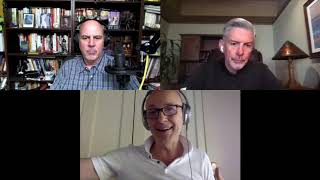
Francis Cholle explains the Squircle model, which blends analytical and instinctual thinking for better decisions. He developed it working with creative teams at L'Oréal and shares how leaders can balance rational and non-rational modes, plus a free self-assessment tool at squircleacademy.com.
Chapters
Welcome to Peer Innovation, the podcast with Leo Batari and me, Randy Cantrell. Building on our previous shows, the Year of the Pier and what anyone can do, we turn our attention to helping business leaders build high performing teams. We'll talk with a diverse group of thought leaders who will share stories and insights that will help you and your teams achieve new heights. If you believe there is strength in numbers and that meeting the challenges of the future can only be achieved if we do it together, then join us for the convers.
Today's guest is Francis Scholl. Francis is an international business consultant, best selling author and engaging speaker. He's also the CEO and founder of the Human Company, where he helps companies rethink business in ways that conventional strategic management cannot. Francis also formed Squircle Academy, which is the topic of today's conversation. We welcome Francis to the show. Thanks for clicking Play. We appreciate our audience at peernovation.co. this is the podcast special guest today. He's coming to us from Los Angeles. Frances Schull. Welcome to the show, Francis.
Hello. Hello everyone. Hello, Randy. Hello, Leo. Thanks for having me.
Thank you.
You were all kind enough to get us a copy of your manuscript for a book that, as you know, obviously, as you told us this morning, is now available in pre order@squircleacademy.com but it is squircle. It's a new way to think for a new world. And you know, if there's anything we love talking about more is innovation and creativity and people working together and how to see a very changing world a bit differently and how we can coexist and collaborate more effectively. So with that, I'd love for you to just talk to us a little bit about your work and then I want to dive into the book. Randy and I have read it. We've taken your test, We've enjoyed it thoroughly, but would love for you to kind of set the stage for our audience if you could.
Sure. Thank you. Thank you very much. Thank you both. So I'm going to try to keep it brief. Twenty years ago, I was worried about the lack of sustainability of our models. And we're like, okay, we're going straight into the wall. A few years later, I worked for l' Oreal on the management of credit people as a, as a consultant for them. I realized that life is chaotic and improbable. Managers have to push projects within chaos or through chaos. So they rationalize things to meet their timelines, budgets, et cetera. They rationalize. They use the rational brain, creative people to come up with ideas, they roll with chaos. And they navigate that through instinct.
When I was asked by the CEO of l' Oreal at the time to develop programs to manage creative people because they need their scientists, their perfumers, their photographers, all the creative juice that makes all the creative stuff that makes those products great and different. They want those creative people to give the best they have, but they also realize it's hard to manage them. So when I work on that, I realize, okay, manager, reason, logic, creatives, instinct, flow. We need to have to both of them work together. And I invented intuitive intelligence, the synergy between reason and instinct. In business.
The problem is budgets come first, money.
All that jazz is really.
The rule of the land. And creative people suffer from this. And I got my answer to the lack of sustainability of our models. And that is since we three year old, we learn language, we study language, we learn calculus. Those tools become really the way we live life.
As opposed to we live life with tools. Those tools impose on us how we live life. So in business, instinct is under the helm of reason and management and budget. And that's why every organization suffers from not being creative enough. So I said, okay, well let's create a mindset where we can, we can make sure that instinct is respected for what it has to offer. Creativity, agility and reason, irrespective of what it has to offer. And let's remember, instinct is life is nature, reason is an invention, there's no straight line in the world. So we cannot confuse man made invented concepts with life.
Like Faust, you know.
It'S a wrong bet. And that's why we're not sustainable, because we have sterilized our capacity to innovate, to create, to adapt. Because we've developed a culture that dominates that instinctual capacity in us. And I can give you zillions of examples. So that's why I invented intuitive intelligence. I put it to test in the global biggest organizations in the world with the biggest challenges. I can also explain those to prove that what I had envisioned, bringing back instincts in the way we think and make decisions, is our best bet to succeed and to succeed in a way that's sustainable. And now that it's done 15 years of practice, I bring in squirrel goal for the largest number in a very simple model, which I will explain later that everybody can understand, even a five year old. So we can bring back the church at the center of the village, meaning nature, where it belongs, at the heart of our existence.
One of the metaphors that you created for that though, in the manuscript we looked at, of course, was the marathon runner who called his coach. Cause he missed a few weeks of training. And tell us a little bit about that conversation and kind of how that played out, much to the runner's surprise, by the way.
Yeah, yeah, yeah. So absolutely. True story. Not somebody I paid. Okay. Somebody who was in my. In one of my seminars, and he said, oh, my God, Francis. That really reminds me this incredible story, that thing that happened to me. So. All right, Philip. Very experienced marathon runner.
Has set out to run again. New York marathon that year. So, you know, it's three years, three months of training, rigorous training over three months. He trained for the. For the first two months very well. But then the months of the last month of training, October gets really heavy with work, so he doesn't train as much. And especially the last week, to the point that he feels like he's kind of losing touch with his physical shape. And he calls his coach, Jennifer, and he says, hey, Jennifer, should I run or not? Because I don't feel like I'm at my best. And she tells him a few things. So one is, Philippe, you've been running so many marathons. You really fit. You've trained. You know, you've done a lot of training the past three months. Probably maybe not as much as you wanted. But don't worry, you won't hurt yourself. Now, do you want to run or you don't want to run this one, this race, you're called. But if I were you, I would try something new. She knows the guy. He's an executive at Unilever. He's a power guy, talented, driven. And she wants him to experience something new. And she says, do two things for me if you want to go and run this tie.
Never look at your watch throughout the race.
And pay attention to your breathing. Stay connected to your breath. So he's like, what? He hangs up. He's like, what? Very different from Jennifer, who usually is like, have you eaten well? Have you slept well? How many times have you run? What was your. The whole bit, the whole metric. So he wakes up in the morning and he says, you know what? There's something interesting in this. I've trained enough anyway, I love running, so let me go and do it, and I'm going to try what she says. So of course he's a bit nervous because he's so used to look at his watch, you know? But then he says, well, okay. She also told me to really pay attention to my breathing. So whenever he was focusing to his breathing, he was in the moment he was kind of forgetting about the watch. And he liked that. So he said, you know, I'm going to really stick to breathing. And that really helped him. And he said, you know what, I didn't train very well. I'm going to probably suck at my score, but who cares? I'm in Manhattan having a good time. I love running and he's in his breath and everything. And you know, result. He certainly didn't hurt himself. He really had a good time because he was much more present to everything that was going on around him. And Magic had it that he had his best score ever.
Nice.
You know, and one of the interesting things about that, when you think about trusting your instincts and all of this kind of circle versus square, you pointed to it as. We don't look at that as non rational. We see it as irrational and which becomes one of the big problems there. Tell us a little bit about the difference between non rational and irrational in that regard.
Yeah, so you know, what's rational is 2 +2 =4 is, you know, the more people on the, in the elevator, the more wait for the elevator. So there's a limit to the number of people who can get on the elevator. So, you know, those are rational things that we know. Deduction induction, you know, two plus two equal four, that's rational. Then there is what's irrational. You know, we all have two short days that would be so great to be able to work all day long doing what we love doing and everything. But we know that if we don't sleep, eventually we're going to end up in the er, you know, and maybe at the emergency room. And maybe, you know, it's going to be really very bad for us, you know, diseases or it can be lethal even, you know, heart attack or whatever. So we have to sleep. It's not an option. Or, you know, I love seeing birds, but if I, you know, throw myself from a building, you know, trying to imitate the birds, it's not going to end up very well. So that would be irrational. And then between rational and irrational, there is life, falling in love, deciding one career over another, moving to Texas versus California.
Inspiration to pick up a hobby which doesn't make any sense, but actually will lead you to meet new people and maybe a new career opportunity, you know, the way life unfolds. So sensations, inspirations, emotions, intuitions, all the things are neither rational nor irrational. They're just non rational. Okay. They're very instructive. They're very fine in terms of what they provide us in terms of information, they're subtle, you know, they make us unique. And there's research that shows that if you're able to tap into your emotional cues.
Your decision making process will be richer. It's like moving from looking at life from black and white, reason, rational and non rational, to a whole world of nuances. You'll be better able to anticipate, you'll be able to better take into account the complexity of the situation, which is the new normal. So it's really very informative. But emotions and sensation won't tell you it's right or wrong. They will give you nuances, but you will have the big responsibility to make out, to decide what really is important, not important, what is really to be noticed, what is not to be noticed. So that part is embarrassing. We don't like it. So we want to simplify right or wrong. And in doing right or wrong, rational, irrational, we live the best in us. What makes us human, what makes us great marketers at picking up the gold nugget in the big data sheet that you receive. And in today's world, in today's complex world, this is where you're defining competitive advantage will happen if you're able to tap that into within you and allow that in your teams.
Frances Our audience are predominantly leaders or emerging leaders. So as we think about our leadership and as we think about the teams that we assemble, the groups that we assemble and try to facilitate.
And I'm supposing that there is not an ideal mixture of square versus circle or those that are in between, it could easily depend on the industry, I would suspect. I mean, I'm thinking of high tech companies, a lot of computer programming that's going to look very different than say Leo's previous industry in the, in the ad agency or strategic communications kind of a field, which is, you know, far more creative, for lack of a better word. But so in this square versus circle, what are some of the vulnerabilities of one versus the other that the opposing one can really contribute to?
Sure.
And have a positive impact on?
Yeah, there are many things to say here. So, you know, a square approach to life, you know, people who are more objective in the way they look at situations, you know, who analyze, rationalize, they're super useful with time management, they're super useful with data gathering, they're super useful with details, making sure that you don't leave out the one thing that's the fine print in the contract or the one data that actually will make a difference.
And they also allow you to step back, look at things objectively, not emotionally.
So that's all great, and they will work and help you on cognitive biases. We tend to like what we like, for instance, and so on and so forth. So those are the great, great values, but or end in a world that's more and more disruptive.
The rational thinking tends to build strategies based on fact, finding, goal setting, and trying to define the right strategy with the right roadmap and the right action plan. The problem is disruption is everywhere. Every moment, things forget disruption, things move very fast. So environments change. So I think more and more people are shifting from strategy to strategic scenario planning. We still need to have some benchmark and ideas where we're going. But more than ever, we need to be very flexible in terms of the strategy and the roadmap that we set up. So that brings on a certain level of ambiguity, uncertainty, and some people will tolerate that better than others. And your typical square personality will become more uncomfortable in the face of that uncertainty than your circle personality, which can flow with it. And she will be comfortable in the fact that everything changed around the ceiling looks like the floor, and the floor looks like the ceiling, and that's okay. So you won't have people like this on your team because they won't be phased out. They'll be able to adapt. They will be less stressed.
And they will be. Actually, there's research that was conducted by NIH, National Institutes of Health, where.
Medical practitioners, doctors, M.D. are better practitioners when they have a higher tolerance for confusion than those who have less and they experience less stress, which is good for teams, which is good for patients, which is good for themselves. And the opposite is people who have less tolerance for confusion, who tend to be more square, have more stress and even impact their practice.
So if someone is just a square, if you will, and how can they.
Try to access more? I'd like to think there's some circle in all of us in this. Right. So how can they access? How do they become comfortable with ambiguity and comfortable with.
So, you know, that's the title of your podcast, you know, peer to peer learning. I think, you know, I think it's an important aspect. So, you know, there are two aspects to it. There is.
Accepting square within and accepting sorry. Accepting circle within and accepting circle outside of you. So the easier part is to already.
Understand what circle is, which is life. Life is a creative process. It's unpredictable. It's forever expanding. It's forever surprising. It's filled with opportunities, filled with dangers, filled with stress. Okay, because of A lot of unknown. So once you've accepted that the one thing that will never change is change, okay? So that rather than fighting it, just accepting it intellectually, very logical deduction, okay? Nothing, miracle, nothing, yoga, nothing like factual, okay? Nothing is constant. Therefore, everything changes. Now, what is my emotional response to this? That's one thing. But then if you have people around you who are comfortable with this, then please, please make sure that you recognize them, you let them do their course and contribute what will be harder for you to contribute. That's really an enormous enrichment to your company. Don't try to be not what you're not. Necessarily stay where you're best, but really accept this diversity on a fundamental fact that your posture is really in tension with the new business environment. Okay? So that's the first thing. And then the second thing, when it comes to you, that there are very simple things to do. You know, it's like we all have routines because routines are efficient. Like, Obama used to wake up every morning wearing the same shirt, the same tie, the same suit. So you have to think about it, okay? There's no political argument here. It's just bringing up someone, okay, who had a big leadership position and was trying to streamline his process. So we all do this. So that's fine. But that's fine when it comes to something as mundane as the way you're going to look, if the look is appropriate for your function. But then we do this in areas where we should be allowing ourselves a bit more slack and so that we can discover new things. So change your itinerary to go to work. You know, don't always use the same road. Change the radio program. Go for podcasts like the one you have, okay, new podcast, so you familiar with new voice.
So you're familiar with new voices, new way of thinking.
Confront yourself with people who think differently. You know, yesterday I was hearing Heineken had an experiment with people who have very different political views, looking at, you know, videos that were speaking to one voice, videos were speaking to the other political voice and having people react and say, so. Now, would a beer would be. Would a beer be enough for you to sit together and have a conversation at the bar, you know, after you've seen those very different perspectives. And of course, the whole point was saying, like, well, beer is the commonality. We'll be able to talk even if you have very divergent opinions. But I can tell you those are as much as they are either frightening or tensing, they're very useful because they get you to be Limber, to get out of your comfort zone and realize that you're still here.
It may be uncomfortable by the end of the hour. You still can go on with your life. So there are ways. There are ways. And I can tell you other ways, more specific if you want.
Francis, as we hit the record, we are still, we hope, we are emerging from this pandemic of 2020. I'm curious, are there things in the last three or four months, because you're talking about a global disruption the likes that none of us have ever seen. My father, who is still alive and in good health, knock on Wood, is 96, and he's never seen, obviously, anything like this. So what lessons in the last three or four months, I'm curious, as it relates to your work, has this global disruption taught you?
Yeah, okay. So thank you for asking this question. So I could talk about my process as a business owner and what I've done, and I could talk about my relationship with global leaders. I advise and the interaction with them and what they should. So briefly, what I did not ask you the dates, but when on a Sunday night, they chose to put on the table $950 million. $950 billion. Right after that, there was like a sequence of, like, so much money, and they were talking about another trillion dollar up to $3 trillion. So I did the math in my head, okay, well, you know, America's economy is $22 trillion.
With 70% in debt. So a country that's 100% in debt doesn't really look like on paper, you know, and then 70% of the economy is consumer consumption, household consumption, something like, wow. So if everybody is home and not consuming, that's pretty much, if we do the math, 70, it's like 1.5 trillion a month or 1 trillion a month. So how many months could we go without consuming without this economy faltering? So that was my first worry. And then how much in debt can we go? So I called, I didn't sleep well that night, so I called a friend who owns a bank in New York.
To ask him. And I asked his son, two different generations, and he told me, listen, we raised interest rates in the past few years since the last recession. So our paper, our bond is much better than the strongest other economy, which would be that's traded publicly on the international market, which is probably Germany. And Germany has zero or negative interest on bonds. So US Bonds are still better. Two, the people who are going to buy that bond to finance that whole thing, they have all interest to buy it because if they don't buy it, they will fall down with the States. Okay? So we all need together, okay? So I said, okay, I can rest. Okay, so the floor is still here. But that was not enough because, you know, the human mind is very stubborn, and the emotions are the emotions. So I am in my kitchen, maybe the same day or the day after, you know, that, like, vampire that comes back and, you know, gets in your head. And I said to myself, okay, listen, the big lesson, me, who's been really working on sustainability and trying to help reframe the way we make decisions to honor nature. I said, obviously, the rug is pulled under our feet to show us that we don't have the power, that the square will not rule the world, and that nature is what rules the world, and we're just part of this world, and we need to really reintegrate nature and how we make decisions, how we see the world. So I said, okay, what can I do now? Now? Now. What can I do now to really get closer to nature? And I said, well, you know, Francis, be in the moment. Breathe deeply. You're entering your own physical reality. That's nature in you. Immediately. It brought a few things. So I felt I was doing my homework in terms of getting closer to nature, which felt good as a global citizen of nature. Two, I felt immediately calm.
And I felt anytime your mind races, everything it produces is as real as it is false, because nobody knows what tomorrow is going to be at that level of disruption. So please, Francis, come back to what you know does good to you. And it is the real bank account nature, okay? That's a real savings account where you need to input money. And from that moment on, I swear to God, no more worry.
And I always come back to it. And that's what I give to my clients.
And then there is how they react. And they are very tough because, you know, my little small business is much malleable, even if I was under stress, because I was investing online and doing different things, publishing a book. There are lots of costs, so I have heavier on my overhead than usually. But for them who have billions of dollars of budgets and need to find, okay, so they have to slash into, cut into this, et cetera. And then they constantly asked for Wall street for quarterly reports to present books that look good, that look reassuring, and nothing is reassuring, nobody knows if we're going to have a second wave or whatever. So more than ever, they open.
More than ever. They're willing to pivot more than ever. Scenario planning has taken precedence over strategy.
More than ever, there's solidarity among people in the team because it's too happy to just still have a job. And I encourage this a lot. I said, well, you know, this company that has supported you for X years in your life, making your life better, interesting and everything, this is the time to give back, you know, and not from a place of, you know.
A company is alive, you know, it's a group of people. So this is, you know, it's not an abstraction. It only lives because people are in it. So, you know, be solid. You know, the same way as you're very happy that this entity provides you with a paycheck every month, this is your time to show that you can also step up for this entity. And we discuss it in an open way. So it becomes a communal experience and it becomes a way of making everybody responsible.
We're hearing from a lot of CEOs who we speak with, which largely running small to mid sized companies, that their teams are actually working more effectively remotely, much to their surprise in many respects than they ever imagined. And part of it, rather than having people go to a central work place where it's work and they're all there doing their thing, now all of a sudden we're inviting people into our homes essentially through these kinds of calls and our, you know, I see in terms of your words, where our nature kind of begins to take over, where our kind of shared humanity, our common challenges that we're facing, and how we help one another through that seems to be where squares and circles are getting to talk to one another a bit. Yeah.
Yeah.
So I've seen interesting things. So first of all, less Persona, you know, like the Persona is the public face that you bring to public spaces. Yeah, okay, so there's a public space, you know, there's a virtual public space which looks like a collage of homes of different backgrounds. So that takes away a form of.
Formality, you know, and creativity is not about formality, you know. You know, I trained as a professional actor, singer and all that stuff. So when you're on stage, you know, you're very bare, you know, like, you know, there's no, there's no facade, you know, I did the opposite. You know, as an actor, you know, you really need to show your true colors. That's what will move the audience so and that's what creativity lives, that authenticity, you know, that response to the moment. So I think that allows some fake veils to drop and allows for more direct conversation. And of course, in moments of emergency, this notion of Solidarity makes people more real, more willing to really help, more essential. The second thing, which I think is very interesting, we have a whole methodology to help people share leadership in meetings, as opposed to having the bus, he or she at the top, and people responding to a hierarchical way of leading the meeting. We completely turned that around. And zoom, there's no angular table with somebody sitting at the end of the table which immediately indicates that she's the boss or he's the boss. So, zoom, the one who took last is the one at the center on the Pops up for one. And then it constantly reconfigurates the mosaic of.
Vignettes of people. And everybody has the same size. So that's very interesting, unless you're talking. So that has actually helped the methodology that we've used and imparted on certain teams. And it actually was more conducive to equality and shared leadership and mutual responsibility.
We'd hate to not have you talk a little bit about, in this podcast about the Squircle game and the Squircle test and the Squircle game in particular with that group in Japan that was the only group to ever go through it and do it the first time. But if you could just briefly kind of share what that game is about, share the test, because that's something that everyone can really have access to and participate in and really discover the material.
Okay, sure. So, yes, there is a test online, you know, so you go to squircleacademy.com and you can do it now. So you need just to text the word Squircle S Q U, I R C L E to 48. 48, 48. And you'll get the test coming up on your, on your cell phone immediately. Okay. And then you can take it 3 minutes, 12 questions, and then you receive.
A 20 page document that will give you your profile in the sense of do you approach life as a square or do you approach life more as a circle? Structure and analysis of fluidity and improvisation. Or somewhere in between.
The world being much more populated by square people than by circle people from years of doing assessments. And then there is this game.
The Squirrel Game, which is helping people realize that to solve a complex problem as a team with people that you may like or not like, people you may get along with or not get along with, people that you don't necessarily share the same values at times and certainly not the same opinions. So as a team, diverse team, different levels of owning, ownership of the problem, having to solve a very measurable problem in the limited amount of time. We put them in a situation where the mind alone logical deduction, induction, like the chess player, the algorithm will not be enough.
You have to open up to another potential in us to feel the room, feel oneself, feel the interaction with others. So that you can pure, intuitively, from a purely intuitive place, maneuver individually and collectively to solve the complex problem and reach the end goal, which is measurable. Simple game from theater, very real, completely mirrors real life, business situations. And to the amazement of everybody, you don't have to give up rationality and logic, but you need to make sure that logic and rationality doesn't dominate the experience. So you can still be feeling and allowing cues that don't make sense, but are just there. And those cues are exactly what takes you on the other side of complexity. If it were not complex, then logic works. But if it's complex, it means that logic doesn't work. So you need to rely on something else. So it's very eloquent, very clear. There's a before and after. It's truly an initiation into the non linear, non rational, the mysterious part of who we are that can only be appreciated through feeling and not through intellect and logic. That's why the famous Dimasio guy the Descartes error book. You know, Antonio d', Amagio, professional professor at usc, says we're not thinking beings, we're living beings, we're feeling beings who have an amazing tool called mind.
But the tool should never rule the craftswoman or the craftsman. It's in the service of the craftsman. And that's where artistry and genius come in the use of the tool.
Well, Francis, we, we want to be respectful of your time. We greatly appreciated it and we look forward to the publication of the book and appreciate you giving us kind of.
The.
Preview of the book. Highly, highly recommend it. Leo and I were talking before we hit record today. It's a book that really resonates with both of us.
Thank you.
And of course when we took it, we're, we're kind of some of this and some of that. So I don't know if that's a good thing or a bad thing.
We're slightly circle though. Yeah, we circle oriented.
We viewed it as a very positive thing. But that may be our lack of self awareness. But we really appreciate having you on the show.
Thank you.
The website is squircleacademy.com we'll put links in the show, notes to all of this and how you can take the.
Test, pre order the book, get a.
Copy of the book when it publishes, we appreciate.
And then. Yeah, yeah, sure, yeah, I'll let you.
Know the last word. Leo.
Ah, just. Just loved having you on the show, you know. And again, yes, the show notes will reflect how to pre order it, how to order it, how to go about taking the test, which I think is something that everyone should do.
Both my daughters were squares, as it turns out, so we'll try to see what we can do to move them along, but it was great. I think the big message.
If I can be presumptuous to say, is that I think squares and circles need each other and I think on a team when it comes to that, is to recognize our gifts, our strengths, and recognize those of others as well. And by doing so, we can collaborate more effectively and just create some great things in this world.
Francis, thank you again for joining us.
Thank you both. We appreciate it. Really appreciate the opportunity. Always a pleasure. Thank you. Bye, Randy. Bye, Leo.
Thank you for joining us. To subscribe to the podcast and learn more about how you can engage peernovation for your organization, contact us on the website at peernovation.co. till next week.
Week.
Remember, the power of we begins with you.
Sam.
More from Francis'
Squircle: Where Science and Nature Come TogetherEpisode 095 with Francis Cholle of Squircle Academy

A New Way to Think for a New World: Francis Cholle | TEC Canada's The Leadership Standard Podcast
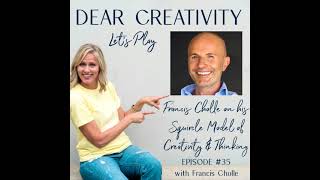
Dear Creativity...Let's Play Podcast, hosted by Amy Isaman featuring Francis Cholle
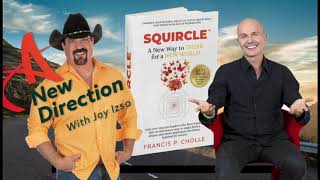
A New Direction -- Thinking Outside the Box to Solve Todays Challenges – Squircle – Francis Cholle
Dear Creativity...Let's Play Podcast, hosted by Amy Isaman featuring Francis Cholle
A New Direction -- Thinking Outside the Box to Solve Todays Challenges – Squircle – Francis Cholle