Business Bookshelf with Francis Cholle
Interview (Business Bookshelf podcast) with Francis Cholle about his book Squircle and his broader work. Cholle describes his background (France → New York → Los Angeles; business school; opera training), consulting career (founding The Human Company; work with L'Oreal and CEOs), and introduces core concepts: intuitive intelligence (synergy of reason and instinct), the intuitive compass, and the Squircle model (square = logic/structure; circle = intuition/creativity). He illustrates the model with examples (marathon runner, corporate turnarounds) and describes services: The Human Company consulting and Squircle Academy (online test "Test your thinking now", e-learning, workshops). Content is conversational, practitioner-oriented, and rooted in applied cognitive science.
Questions this video answers
Francis Cholle
Squircle
February 5, 2021
Chapters
Today our guest is Francis Scholl. Francis is an international business consultant, best selling author, engaging speaker, as well as CEO and founder of the Human Company. I talked to him about his book A New Way to Think for a New World. Enjoy the interview.
Welcome to the Business Bookshelf podcast. I'm your host, Lana. Like you, I'm a lifetime learner and find books, one of the best ways to do this. The purpose of this podcast then is to interview authors of new business books, get insight into their thinking lives and businesses, all in a light friendly manner. As I said in the introduction, today I'm speaking to Francis Scholl. Here's a little bit more about Francis. He seeks to help companies rethink business in ways that conventional strategic management can't. His clients are major mid sized emerging firms, including global powerhouses across a wide variety of industries such as beauty, luxury, pharmaceuticals, communication, media and information technology. Francis is the author of A New Way to Think for a New World. Discover sqircle the science based model designed to enhance the way we think In a world that's growing more complex. We need to rely on new abilities to move through life with confidence. So welcome to the podcast, Francis.
Thank you Lance. Thank you for having me. Really happy to be with you and your audience.
Thank you for taking the time. It's fantastic having you. So Francis, where am I speaking to you from today?
I am right now in Hollywood in the Hollywood hills below the H of the Hollywood sign. Wow.
And so this is an easy question for you. It's a get to know question I asking my guests at every podcast. Now if I were to get into a plane and go through to Hollywood, what would you take me to see if I had an afternoon with you, would you take me to a restaurant or would you take me to Disneyland or where would you take me for half a day if I was in Hollywood?
You know the one thing I would do because everything else you can find in travel guides. But I think the interesting part of Los Angeles, at least to me as somebody who was born in Paris and lived in New York for many years, is that LA is unlike any other American city, any other western city actually, or European city for sure. It's an urban jungle. So I would ask you to be patient. It's going to be an acquired taste and move through the city and. And not expecting to find a center, not expecting to find an order. A bit like Tokyo in a way. A collection of villages, humongous. We can be driving for two hours and that exhaust the city.
And open your mind to the 21st century.
And know that you're close to the Pacific Ocean and where the world is headed.
Yeah, so I was married to an American who came from Los Angeles or Orange county to be exact. And so I've been there quite a few times and I think my favorite place is probably the planetarium where the Van Gogh, you know, art is. And you're right, there's so many things in Los Angeles and those areas to see and do.
Absolutely, yeah, yeah.
So Francis, you briefly mentioned that you've had a varied and very successful career. So Paris, New York and now, you know, Los Angele Angeles. Could you give us a brief overview of your background and the forming of the human company?
Yeah, so my background is.
Okay, maybe I should tell you the beginning of the story. So when I was five year old, I was living in the suburbs of Paris and in a scientific family and I had dreams, I had repetitive dreams. And the dream was telling me there was a voice in the dream telling me that my dream world was the real world and that I would wake up to a world of illusions. And of course, as a five year old, I didn't really know what to make of it, of course, and couldn't really convey this to anyone.
Not even my parents, because their framework, their mindset was very different from what the dream world was telling me. And I didn't have no concept of what dreams were in respect to life and the human psyche. So fast forward. I then went to a business school in France that trains leaders, the number one in Europe, and was very fortunate to be hired in a publishing house to revamp the company, a very creative business, and went very successfully. And then in my mid late 20s, I felt like I really had a big question in me that had to be answer that was to know myself. So I took some time off, left for New York and started to do theater as a sabbatical year. But then sabbatical turned into ten years of sabbatical. Why? Because I, as I was doing theater just for myself, everybody wanted to become Robert De Niro and I just wanted to become myself. You know, it was a very different journey. But there were song classes, singing classes, and had always been singing in choir, I mean always in business school. I went to, you know, I joined the choir of the school and I loved it, truly loved it. So I thought to myself, listen, you've been reasonably successful and working really hard at all those very traditional thresholds. Completing high school, completing grad school, being successful as a leader at a young age and I felt like it was time to really live life from a different place. More from passion, more from emotion and deeper inspiration. So I embarked on a journey of becoming an opera singer. Training, wow. Yeah. Two great genius teachers, one in voice and one in music. He was actually a professor, a teacher at Juilliard School in musical interpretation. And his whole approach to music was physical. And I'm saying this because it will be relevant for a subject later.
For your audience. So you learn music through movement, your relationship to gravity and your relationship to your own body. And you would experience notes on black, on white paper, you know, as a. As a physical experience. And I loved it. And he was a genius and he was able to really open up ourselves to artistry. To the point that I was able to sit at the Metropolitan Opera listening to conductors and thinking, wow, I'm not sure that's the. Really the interpretation that matches the intention of the composer. And then I would go to the conductor's score and then I would see that actually what I was feeling as I was listening, that amazing world renowned conductor was probably not so close to the intention of the composer. Was it a choice? Was it not a choice? You know, sometimes it was not a choice, actually. Sometimes it was, you know. Anyway, no comment. So, you know, I was very fortunate to have like, great, great, incredible teachers. And the vocal teacher was all finding your voice through your body and letting it emerge. So that was also deeply interesting. Very, very difficult. I miserably failed at it. And.
I sang, I went on tour and everything, but I was really not at all at the level of success I had in business in my mid-20s. So it was hard. So I decided to do something else with it. And because I was really stepping out of the original path that I was offered, you know, to be a leader in the world of business organizations, I looked at the world with a very different lens. And one of the big question I had on my mind is, why is it that we're capable of going to the moon? So, meaning humans having such a very sophisticated mind, and at the same time, why is it that we're not capable of living in harmony with nature to the point that we're creating, you know, disastrous imbalances and that. You're talking about this about 20 years ago, more than 20 years ago, and I was really not seeing a solution in the way we were consuming, in the way prosperity was actually being orchestrated, depending really on consumption and more and more consumption. So I felt like, wow, I don't know where we're headed. And then a Few years later, I was very fortunate to work for the CEO, the former CEO of l', Oreal, sir, Lindsay Owen Jones.
How did you get that? Right? Did you have a relationship with them before or how did you manage to organize that?
No, that's good. Through friends, at dinner, right after 11. No money in my pockets. No future really immediate, neither. From, you know, I had done some work with radio as an artist, but, you know, didn't fit me much. I had lots of savings, for God's sake, at the beginning from. From publishing, but, you know, it wears out. New York is very expensive city. So I was like, wow, I need to really find my next assignment after September 11th. And we had dinner and said, well, there is this man at l' Oreal who's in charge of human development, professional development. It's called a management development center, and maybe I could put you in contact. And we happened to be from the same business school. So I went to see him. And long story short, he calls me a year later and says, I think I have something for you. And kind of combining my French and American, French heritage and American adoption and business and the arts and psychology, because I studied also clinical psychology and human development. So they were interested in this. Why? Because Sirlin, say, Owen Jones, O.J. that's how they would call him at L' Oreal, was interested, yes, was interested in.
Improving the management of creative teams. So I worked on this subject with some people from HR in the US and in Europe, and I came up with this concept of intuitive intelligence, which is the synergy between our rational mind and our instinct. Why? Because the managers really.
In life, in the chaos of life, have to rationalize things. So they use logic to make sure that they can keep projects unfolding within margins, deadlines, goals, metrics. And on the other end of the spectrum, you have creative people who, in the chaos of life, thrive in the chaos and navigate through instinct and oriented themselves through instinct. So I thought, that's interesting, this combination of two. We need to reconcile those two. And that's why I created this concept of intuitive intelligence, the synergy, the coming together of two aspects of our intelligence which, when they come together, resonate with one another, create more than the sum of reason and instinct, intuitive intelligence. And that got me the answer to my big question of why? Where is the split in the human mind that cannot reconcile that incredible technological intelligence with that reckless attitude towards nature? And when I interviewed creative people at l', Oreal, even greatest great scientists, chemists.
And architects, they would tell me, we live under the Helm and the pressure of budgets, of management.
And they were very often not so happy about it because they felt they were not understood in their approach to life. And I thought, that's interesting because it's a reversal in value, because without a creative idea, there's no business.
So anything creative people should be sitting on the throne and not the managers. So.
I said, okay, well, okay, we don't want a hierarchy, but we do want a mutual understanding. We want a conversation and a collaboration that can make those two approaches really work together. But what was striking to me is that instinct, the instinct of the creative, the instinct of the entrepreneur, the instinct of the one who comes up with ideas, the inventor, she or he was clearly dominated by the logical mind, the logic of results, the logic of metrics, of the manager. And to me, that was again, as I said, a reversal in the value system. And that explained to me why we were not sustainable in our prosperity model. Because instinct, that deep natural intelligence in us, is actually not understood and dominated and sometimes annihilated.
By a tool that we have developed called logic.
Science, which is an amazing tool, but should never be dominating our natural abilities. We are human before we are scientists. Okay? So, you know, and we are, you know, business people before we are accountants. You know, accounting is a tool for business to succeed.
So when did you leave l' Oreal to set up the human company with.
So. So I never. I never entered l'. Oreal. I was a consultant to them.
Ah, okay.
I worked on that assignment from the CEO as a consultant with other teams of the company. And then I thought, okay, I'm not really making much or enough progress in. I should not judge it, but not enough progress to my liking in the field of opera. And I feel like I was raised to be a leader. I was trained in the number one business school in Europe to really be a leader, meaning creating value for the world. And that big question had found its answer. So I thought, if ever I'm able to prove in the world of business, the world of efficiency, the world of pragmatism, where I had a legitimacy because of my education in business, because of my success in publishing, because of creating, training for l' Oreal globally on a key subject, creativity management, I thought, I've got a beginning of a story, and this is a place I know business. And I will show that intuitive intelligence can help companies innovate and succeed in a way that's sustainable. And if I prove this in the business arena, then it will be validated. Because in our world, what makes Money has value.
So did you start doing it in l' Oreal then? And testing out your theories and your concepts around creativity and then take it outside of l'. Oreal. L' Oreal over time to transition to the human company.
Exactly, exactly. No, I did. I decided to create a human company and then just do it, you know, So I went with my. I went with my tools, my toolbox, and I tested my toolbox in different cases, different companies, and I've found great clients and I've worked with them over 10 years, sometimes 12 years.
Wow.
I work with some of them and we've seen amazing results. And I got hired and rehired, and I brought other coaches and consultants.
And then I realized, okay, well, there's definitely something. So I wrote a first book, Intuitive Intelligence, Another Path to Success, that was French market. It became a bestseller. That was encouraging. And then people told me, oh, you need to translate it into English. But French people like ideas, American people like solutions. So I developed a model.
Yes, the intuitive compass, which is really, how do you bring intuitive intelligence in a very operational manner in managing teams, in approaching strategy, in being entrepreneurial, in sales, in administration. So. And I've used that model. So I've assessed companies, individuals, teams, or the entire organization and looked at how they make decisions and how the way they make decisions impacts directly their capacity to deliver on.
Strategy and reach their goals. So that was a visual way, a very analytical way, a very practical and operational way to get my philosophy across. And we reinvented business models in failing industries, in failing economies, in companies that were in dire straits, billion dollar companies in multiple countries, different revenue streams, divisions, and it worked. In less than a year, we were able to turn around the business and we got rehired by the same CEOs. And I can tell you why it works. It's very, very, very simple. Everybody can understand it.
Because business is first and foremost ruled by numbers. Wall street. You have to respond to quarterly results and quarterly statements, and you're constantly evaluated. And it's a very important game because that's how you get access to cash, to the blood that will make your company work. So it's a real conversation, but this conversation becomes dominating, domineering of everything else. And now, instead of being receptive to your environment, you become focused, like an arrow reaching its target. And that's fabulous because it's extremely efficient, but it's very limiting. It can be dehydrating. It can be sucking the creative blood out of an organization. So what I do is I help the Arrow get to the target faster and more reliably, but by allowing the arrow to get lost on the way to the target. So it sounds very paradoxical, but listen, you have two ways. Either you can go against the flow. Imagine like a waterfall, okay? And you can try walking your way up, back, you know, back and up the waterfall. Or you can let yourself go down with the stream of the water down the river or down the waterfall. I mean, you see, the waterfall has enormous power. So suddenly it's carrying you, it's pushing you. You don't work for. It is just there.
This. This really sounds like it's moving towards the actual topic of our interview. And I've really appreciated hearing all this about your backstory, Francis. It's been really interesting because you start off, and I mean, actually interviewing you about your fantastic new book, Squircle, which is an interesting title in itself, but you start off that book by talking about that. That concept of going with the flow, don't you? And then, like runners and all, different people can actually find themselves in a different level of performance if they focus on. On different aspects. Could. Could you. So maybe a couple of questions really, to get this conversation going around. Squircle is can you give us an overview of that? And then maybe just. And just give us a brief overview of those stories, particularly about the runner, and then we can get into the Squirtle concept itself.
Sure. Okay. Oh, I thought. I thought you wanted to explain the model. Do you want me to explain the model quickly or.
Please, if you want to, whatever format you would like to go through it, it's fine.
I'll tell you. I'll tell you. So why did I come up with SQL? So I developed Intuitive Intelligence, the Intuitive compass, and all of this was done for the C suite. And then, of course, it needs to go B. I mean, it needs to start at the C suite. Because organizations are hierarchical. You know, the shareholders have put a leader in place and she or he has to make decisions. So the decision maker is like the cork of the champagne bottle. You know, if you don't open the champagne bottle, nothing's going to happen. So that's how I see it. So I work with CEOs, presidents and CMOs and everything, the people who are really the.
Owner of the challenge that we're looking at. Okay, so what you do at night, we look at the complex problem and then start the conversation. And where does this conversation start? Complexity is not complication.
And therefore, you cannot use expertise.
That makes you good at piercing through complication. To deal with complexity, I'm going to give you a very simple example.
The engine of an aircraft.
Is a complicated system. In other words, if you pull out a piece out of it and you bring it to an engineer, the engineer at some point will tell you, I know where that piece fits and I know how to bring it back there. Okay? Everything is mapped out, everything's understood, everything is clear complexity. And I take this example from Frederic Laloux, reinventing organization, Belgium author, amazing book, love it and simple image. So complicated is the aircraft's engine. You can map it out and at any given moment you can rebuild it, demount it, change parts. You know, you know it, you name it. It's, it's clear. Complexity is the plate of noodles, the spaghetti bolognese, you know, like the tomato sauce and the pasta. If you pull one noodle out of it, okay, no one can tell the impact on everything else in the plate. No computer will ever tell you this. It's intertwined. There is no overarching rule and principle that can explain everything that happens. Because at a local level, there are things happening on their own accord.
So it's non hierarchical. You cannot map it out. You can't put in place a way to understand everything that's happening. The level of interaction is such at local levels that there's no overarching view that will extend the whole.
Right?
So that's big leap in thinking because the people who are at the head of those big companies have gone through a lot of different positions in organization, have mastered the competencies all along the path. Because as a manager, most of the time you deal with tasks beginning and end, you resolve the problem.
It'S mostly manageable. But then when you reach the higher level, when you need to make big decisions about these big plate of spaghetti, you know, you're dealing with something that's complex and then you need to engage it with a very, very different mindset. That's what Squircle does. And then Squircle is bringing from the C suite, the C suite conversations into the rest of the organization. So it's a model that everybody can understand. It's a simple model, a simple set of two symbols that everybody can understand. Even a five year old doesn't require any competence. It's pure.
It's obvious. It's obvious once you see it. So I would explain.
Okay.
So carry on, Francis. That's fine. Sorry, carry on.
No, no, no, no, no. I was sensibly going to explain. So, you know, in the Boeing aircraft engine, either the piece is in the right place or it's not in the right place. So it's binary. That's why you can, at any given moment, you can exhaust all the possibilities. Right or wrong. That's computer 1 0, traditional computers 1 0, right, wrong, taller, shorter, more money, less money. Profitable, non profitable.
Profit or loss. So it's binary. It's amazing. Tools, very discriminating. You can organize, you can systematize, you can really develop lots of knowledge. That's science.
And that way of looking at the world is an amazing tool. And it's actually become, not only a tool, it's become actually our way of looking at the world. It's become our immediate unconscious way of looking at the world. So I say we're running around, all of us, with black and white glasses, looking at the world of is it right, is it wrong, is it taller, is it shorter, is it profitable, is it creating glasses? And those glasses are amazingly powerful. They got us to the moon. But they're not suited really to fully embrace the totality of the world. Obviously not, because the world is in colors, infinite colors, infinite combinations of colors and nuances. And if you keep those glasses, you are an expert at dealing with complications, but you cannot engage complexity. And it's always been true, but it's never been truer than today because of the chaos we're going through, because of the Internet, the digital revolution, and the AI revolution, because, by the way, quantum computer have got 10 and a third term. So we're being challenged as human being to actually reintegrate, remember parts of ourselves that we've left behind by being so used to those black and white glasses that we think that they are our sight, but they're not our sight. There's many more nuances to us and to the world we live in. And then when we open to those, when you have this complexity, mindset, that squirt call, attitude, then you can really enter.
New perspectives, new solutions that you won't get to through deduction. You'll get to them through a process of emergence that you've allowed within yourself and around you. So there's nothing to be learned. There's only something to be unlearned. Give up those glasses whenever they're not suited. And that's what Squircle does, and it shows it very simply.
I'm going to explain the story. The square and the Circle. So those glasses are.
Because that's what the book is about, the square and the circle.
Absolutely. Squircle, square and circle. Absolutely. So we live in this world where the Square dominates the circle. Okay? So the square is logic. Okay? Everything is square. And circle is life, is nature. It's. Everything is continuum, everything is circular, everything is infinite, forever evolving, flowing, emerging. So in us, it's inspiration, emotions, feelings, sensations, intuitions, instinct, gut feelings. And then square is two. Two equal four is right or wrong is logic, language, everything that we've developed for our culture to make sense of our existence in a world that's not.
So clear, which is good in itself.
Yes, absolutely. But we had to make sense of it, you know, but the modern world has made so much sense of it that we thought that the sense we've made of it is actually what it is. No, it's not. It's just a comment about the world. It's not the world, it's a commentary.
So let me tell you what it does to us to keep those black glasses, black and white glasses on. Imagine a parrot, a parrot in its nest. So the parrot flies, adapts to the jungle, to the rainforest, the dangers, feeds itself and survives in spite of constant chaos and threats. Then. So that's the circle. It's part of nature, forever evolving. And then it comes to its nest for repose, for protection, a place of stability. That's the square, that's the structure. And the nest has definitely a function for the parrot, re energizing.
Resting, nesting and so on and so forth. Now you change the nest, the structure, with a cage, so you keep the parrot close to you, you feed the parrot, the parrot is always there. It's never going to escape you. It's less in danger, it's protected from predators. But once you put the parrot.
Inside the cage, the parrot is no longer a parrot. It's no longer, bit by bit, able to adapt, to feed itself. It's no longer a living, adaptable, creative creature. It becomes an object of decoration. So when the structure, the nest, becomes dominant, the circle dries out to the point that it actually disappears. It gets denatured. So that's the image of a lot of organizations, a lot of people who live in environments where the rationality has become so overpowering that their creativity, their agility has gone out of the door.
And that's what I've done for l'. Oreal. And that's why I invented squirrel, to make people aware that that creativity and agility that everybody's craving in this complex world is already in us. You don't have to do anything for it. You just need to let it be. And to let it be means to let go of the dominance of.
The numbers of the strategy of the logical thinking, the deductive thinking, which are great tools, but should never become domineering to the point that you suffocate the creativity and agility of your employees.
I might be giving away a little bit more of your book than you want to, so stop me if I am, but your whole concept, the whole concept of the book, which I enjoyed, was that if you put the circle inside the square, and that circle is your creative thinking and your square is your logic, then the circle will only expand to the edges of someone's logic. And then you say that we need to step out of the logic and put the circle around the square in a way, so we're thinking outside of the box in inverted commas.
Absolutely.
What I didn't really understand was that then you said that as we think and we creatively think, then people will come up with logic to make the new ideas a reality, right?
Yep.
So is that like, that's a constant thing where people are coming up with new creative ideas and then forming the reality around these new ideas and then coming up with even greater ideas and then the logic will form around these new ideas again?
Correct, Correct. And not the other way around. So let me talk about the marathon runner, because you wanted me to bring him up, and that's very simple. So I am in New York in a seminar with a variety of executives, or executives coming from a variety of different companies, different industries, and Philip interrupts me and says, oh my God, Francis, when I'm hearing you talking, it reminds me so much of something that happened to me. It's like, okay, please share with us. Because I could feel it was like a real emotional charge to the story and the moment that this executive from Unilever was going through. And Philipp shares this following story, which I will summarize quickly. So he's a marathon runner, very experienced marathon runner. As you probably know, to train for a marathon is a three month period where you have a very strict regimen. You run, if not every day, five times a week. And then the closer you get to the race, the more you obviously train and sleep and eat well. He saw Philippe, experienced marathon runner, trained very well the first two months. And the last 10 months, he slips away. Why? Because of too much trouble. And the last few days are really heavy on him to the point that he's thinking, well, should I really run this race? And he says, I'm going to call my coach. So he calls his coach, Jennifer, and he tells her exactly what I told you. And Jennifer, listens carefully to him and says, listen, Philip, if you're asking my advice, let me tell you one thing. If you're afraid of hurting yourself, it's not going to happen. You're a very experienced marathon runner. You still train over three months. Maybe not as much as you wanted to, but you won't hurt yourself. So this established, you have two options. Either you bail out, Fine, no problem. Or you go into the race. And because you've not trained fully, let me give you an advice. True story, Two pieces of advice. I would say go to the race. And since you're not at the top of your shape, experiment with two things. One, never look at your watch.
Two, focus on your breathing solely. Okay. Philippe hangs up. You know, he's a strategic thinker. He's used to, you know, command control. He's like, this is very unlike Jennifer. Usually it's all about metrics. How many hours I slept, what I ate, how many miles I ran. And this time feels so touchy. He's kind of taken aback a little bit, he tells us, but he goes to bed. He said, well, I'll decide tomorrow. The next morning at breakfast, he thinks, you know what? I might as well try what she's telling me. It sounds a bit silly, but okay, I'll do it. I love running, so if anything, I have a good time. She told me I would not hurt myself. And she's right, I probably won't. So he goes, doesn't look at his watch.
Focuses on his breathing. A little bit unsettling, of course, but he manages to do that.
Because it's new, it's different. And what happens? Philippe gets the best record ever.
He ran his best race, although he was fully prepared. So here it is. She deconstructed the square. His square thinking was, I've not trained enough, I'm not prepared. I won't have a good result. I should not run.
She said, look, it's room for experimentation. He has nothing to lose. He's not really super well prepared. So you know what, we might as well try something new. And she knew the guy said, you know, he would probably never accept this under normal circumstances, but the circumstances are different. So she tested him, and she helped him test something new. And then he had this experience. And what did Philip do? He deconstructed the square, opened up to a real process, new process, stayed within the process, didn't care about the outcome, let go of control of the outcome. An experiment, just like a scientist. I'm going to do two things and see how it impacts My theory. And he discovered a new thing. Does it mean that he would succeed every time? No. Jennifer destructured the square box he was in, which was setting up for failure or even not even trying. Missing out on an opportunity if anything. And then what happens? He gets this experience. What do you think the guy is doing? He's a great thinker. He's going to think. So this expansion of his worldview or his view of running has been expanded. What is he going to do? He's going to think about it. He's going to create theories, he's going to test more. There's no one on this planet who lives in a 12 room house for 10 years, who only live in 10 rooms. Of course he would like to go into the other two rooms. Okay. There's no such thing as not occupying the space, you know, that's opened up for you. So what I'm trying to say, people think that when you destructure, you deconstruct, you know, you're going to limit, you know, your intelligence or you're going to limit your experience of life. That's the exact opposite. You expand your experience of life. Of course you experiment. So you expand and you do it. You know, it's not like recklessly you do it with thought, but a complexity mindset. I don't know exactly how I'm going to orientate myself in this, but that's the joy of it, that's the adventure and that's a discovery process. And once you've made a discovery, you start thinking again and you're going to build new theories. This is the process of generating knowledge that science is all about. But we don't respect science for what it is. We misconstrue science. Science is an adventure that builds and creates knowledge. And that's exactly the mindset that people should have. But they use science for certainty when science is there for knowledge creation, very different. And that knowledge is then questioned by the next theory which will be built on the new discovery and on and on. It's a forever going process. And the interesting part is that every scientific researcher has a very similar life to any creative person or any artist. You know, they are in this process unknown, discovering new things, you know, and. But that's not colors as the artist. It's theories, it's theorems, it's hard facts. But it's the same. It's exactly the same. So what I'm trying to say, the image, when you keep, as you were saying, the circle within the square, you limit your creativity to what? You know, when you let the circle free, like the parrots free from coming and going from the nest. Okay. Then you can forever expand. And the more you expand, the more your inquisitive mind, your thinking mind will want to understand that new space and that will create more knowledge. So it's a forever. One is a forever expanding process when the other one is a forever shrinking process. Because the more you limit yourself, the more you repeat yourself, the more you limit your existence and your experiments to what you already know. And that's one of the biggest biases. You know, it's called.
What is it called? Sorry, let me find it. The name is very simple. It's the confirmation bias. We favor fact and opinion.
You know, and then you start living in a box, you know, in the box shrinks and shrinks and shrinks because, you know, it becomes paranoid. You, you really want life to mirror your opinions?
Yeah, yeah, absolutely, absolutely. So Francis, I could talk to you for hours and hours about the book and all the different details about it, but unfortunately we coming to the end of our time. But I would just, I would love to just spend a couple of minutes.
Maybe you could just tell us about the human company and about the, about the Squircle Academy and maybe just let the listeners know. I'll have the links to them in the show notes. But what do they entail if they come and visit the websites of yours?
Yeah, yeah. And yeah. So the human company is this consulting firm, management consulting firm, dedicated to help C Suite. The C Suite C Suite executives.
Really deepen some of their perceptions and toolbox to really engage with today's complexity. So we use deep thinking and the latest in cognitive science to help leaders solve complex problems and thrive in disruption. This is really what we do and we do it through assessments of individuals, teams and entire organizations. And we help them transform the organization based on their strategy, their business goals and the taking into account of the fast changing environment.
Okay. So that's one thing we do, Square call Academy is to take this thinking and scale it through organizations so that those C suite executives can impart on others.
That attitude and mindset for complexity.
What I experience, and it's in the book, is that most of the leaders, top leaders of billion dollar companies I work with, have a great intuitive sense. But it's kind of a friend that they like because it's so smart, but they're not sure whether they can always invite him to dinner because they don't know that that friend's going to behave well. So they don't really impart on their teams that thinking because it's kind of the. The outlier. It's like it's. You see what I mean? It's not so intuitive intuition. Intuitive intelligence is very often in the boardroom in the C suite, but it's very hard to make it a system or a way of being throughout the organization. That's what Squirrel Call Academy is meant for, that we don't think it's a disease, but it's actually a competitive advantage.
And it's squirrelcallacademy.com and it's got e learning and workshops and certifications, etc. It's got a test your thinking now orange box on the top right hand side. What does that do?
Yeah, so it's actually, thank you for mentioning this and I wanted to mention it actually to your listeners. So, yes, go to squircleacademy.com and at the top right of the homepage, test your thinking now and you'll see whether you lean towards approaching life through the square through logic, structure, analysis, facts, or if you approach life more through the circle, meaning improvising, flowing, feeling your way through, not one superior to the other. We need both to have an amazing, adventurous vacation. You need to be on time for the plane. Okay, if you're not on time for the plane.
So you get my point. So you need both. But what you need to understand is that, yes, scheduling is important, but we first and foremost, complex being. And you can't rule out your life. You can't make your life fit in rules. It's good to have rules. It's good to have practices, good to have tools, but they are there to serve you. What's really essential in a complex world as today, in our capacity to adapt, be agile and creative, is to let your deeper nature breathe. So whether it's uncomfortable for you or you're able to stretch toward the circle, make sure that you're surrounded by people who are different from you and that you really are open to their way of being so they can enrich your way of being doing.
And that's where you call us because we know that organizations are very much, you know, leaning towards the way of doing and not thinking that the way of being is actually, is actually the solution of their problems of today and tomorrow.
Yeah. So this is one of the formats of my podcast that possibly isn't the greatest for. For interviewing you, Francis. I think the Tim Ferriss type of approach, where you have two hours to discuss things, is possibly the better approach with you because We've just really scraped the surface of everything that we could talk about. And I've really enjoyed our conversation.
Because it's true, it's a very deep subject. It's a natural subject, it's an immediate subject. There's nothing to learn. But it's a deep subject because it's deeply buried in our culture, unfortunately, and when it should be so front stage today.
So I just want to encourage everyone to go onto Amazon or wherever Squircle is found, Goodreads, et cetera, and buy Squircle. So that's your book and thank you so much for it. I really enjoyed reading it. And then I'll have the links to, to the Squirtcall Academy and to the Human Company as well. People can go and read your blog that's there, that's updated almost on a weekly basis it looks like to me they can get your thinking, see the success stories, publications, all these lovely things that you have on your website.
From there, let me add two things, Lance. So first of all, they'll say that everything we say, everything's written, is heavily researched, science based because that's our common language. So I really make sure that I'm staying. I keep up with the latest in cognitive science and.
Science in general. The second thing I'd like to say, everything we do is digitalized. So I can work from my office in LA or New York or Paris with people in Singapore, people in Johannesburg, all over the world. Everything has been digitalized and have coaches around the planet as well. But it can be done remotely. 100% sure.
Fantastic.
Thirdly, I also created a non profit organization to support women's success because I believe that the future of tomorrow is women, that we have a lot to learn from women and unfortunately their voice, just like intuition in us, is not heard enough, not taken seriously enough and not promoted enough. That's a huge opportunity for organization. There's a performance booster right there and there's a rebalancing our society right there so we can do well and do good by empowering women for the world, for every one of us and for them to start with.
Well, yeah, you actually say, you say in the book that you wrote, Squircle, with women in mind.
Which is quite interesting. So thank you, Francis. I've really enjoyed this conversation and yeah, I hope that I read your next book when it comes out and thank you so much for joining us today. So I hope you, the listener, found this as interesting and useful as I did. So reminder, Francis, book is called Squircle if you'd like to speak to him about it, I have all the details for him. I'll have his LinkedIn connection and everything on the show notes you can see. And if you'd like to contact me, then please do. My email is lanceidastorm co za and my website is www.ideastorm.ca.za. so until next time, goodbye. Thank you, Francis.
Lance, thank you so very much. It was a pleasure to be on your show and I really appreciate the time you gave me and the question you asked me. So thank you and thank your listeners as well, very much.
So thank you. Francis.
More from Francis'
Squircle: Where Science and Nature Come TogetherEpisode 095 with Francis Cholle of Squircle Academy

A New Way to Think for a New World: Francis Cholle | TEC Canada's The Leadership Standard Podcast
Dear Creativity...Let's Play Podcast, hosted by Amy Isaman featuring Francis Cholle
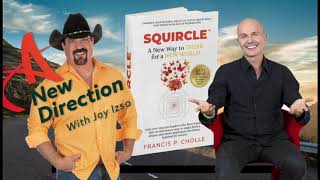
A New Direction -- Thinking Outside the Box to Solve Todays Challenges – Squircle – Francis Cholle
Dear Creativity...Let's Play Podcast, hosted by Amy Isaman featuring Francis Cholle
A New Direction -- Thinking Outside the Box to Solve Todays Challenges – Squircle – Francis Cholle