BONUS: Interview with Francis Cholle
Francis Cholle explains Squircle, a mindset that blends rational and intuitive thinking to help people adapt and innovate. He shares a meditation practice focused on diaphragm breathing and sensory awareness, plus research showing doctors with higher tolerance for uncertainty make better decisions.
Questions this video answers
Text 'SQUIRCLE' to 484848 to receive a link to the 12-question Squircle test.
A New Way to Think for a New World.
squircleacademy.com (single-word site).
thehumancompany.com.
Over 250,000 Fortune 500 executives (as stated in the interview).
Chapters
Hello, everyone, and welcome to Positive Forward Motion. This is your host, Denise Scattergood. I am so excited you're listening in to today's bonus episode. Today I am honored to be having a conversation with Frances Scholl. And, man, are you in for a treat. Francis has helped over 250,000 Fortune 500 executives around the world. And you know what? You don't have to be a Fortune 500 executive to benefit Francis. Revolutionary mindset is one that we can all apply to our everyday lives, both personally and professionally. And you know me, I believe in how we do anything is how we do everything. Francis has a unique model that helps us to embrace our natural ability, live in uncertainty, and thrive in an age of possibilities. So sit back, try to relax, and. And get ready to be squircled. Frances, welcome to the Positive Forward Motion podcast. As you know, you and I discussed last week because we had some technical difficulties, but here we are again, which is wonderful. So thank you for being so gracious with your time. I know you're a very busy man, and our listeners today are in for a wonderful treat. As you know, each week Positive Forward Motion launches a podcast that is eight minutes or less. And they're topics to help empower, motivate, and inspire. And once a month, I like to interview someone who embodies positive forward motion. And I'm not going to go on and on, but I do want to say I now know that I have been squirkling my whole life, so this is terrific. So without further ado, everyone, please welcome Frances Scholl. Say hello and please introduce yourself to the listeners that are all around the world.
Wonderful. Thank you, Denise. I'm very happy to be here with you all. My name is Francis Scholl. I was born in France. I moved to the states 25 years ago. My first 10 years were in New York, and the past 15, I've been in Los Angeles. I've had a very diverse professional journey, and for the past now, almost 15 years, I've been advising leaders in global organizations and sometimes smaller ones. I was a business owner in France, owning a co. Owning an art book publishing house that was decades old, more than 60 years old at the time, and came to the States to start a new life. And again, for the past 15 years, I've been advising leaders on making decisions from a unique place that would be adapted to the need for innovation and adaptation. And now I'm bringing the same model to everyone through a platform, an e learning platform called squircleacademy.com s q u I r c l e squircleacademy.Com and a book coming up in about two weeks called A New Way to Think for a New World. So here I am, ready to answer your question, Denise.
Perfect. I love it. And I got an early release, so I was honored. I love doing this in interviews. I'm like, oh, please, please, can I get a copy? And I gobbled it up. I could not put it down. And I know you're being very humble, but I do want the listeners to know that you have helped over 250,000 Fortune 500 executives, as well as students at the best universities such as Wharton and Columbia with your Squircle mindset. So I know people out there must be going, denise, what are you talking about? You squircle. What is this squirkling? So let's just start with what does squircle stand for?
All right. Okay. I will tell you this in one second, but there's one thing that all listeners can do very simply is text the word squircle, S, Q, U, I, R, C L, e to the number 484848, and you'll receive immediately a link to what's called a Squircle test. And in three minutes, as you listen to us, you can actually answer 12 simple questions, and the results will be sent to you. You'll be able to look at what your answers illustrate as your preference to making decisions or approaching situations in life. And squircle is a very simple concept that everybody can understand. Squircle is the coming together of square, rational thinking, logical mind with circle, intuition, fluidity, creativity. And the whole purpose of the book is for us to realize that we live in a society, in a culture where our creativity, our intuition are squared in by the mere fact of our education from a young age, the way that if we evaluate decisions that we make in our life, always bigger, smaller, taller, shorter, more or less, always evaluating and trying to find the rational answer to the situation, the logical answer, trying to control the outcome. Whereas we have all had the experience in life, then sometimes not knowing is actually a better place to be than living with certainties, especially in a world that's changing so fast.
Oh, I agree. And it is about letting go. And I love what you mentioned, and even in the book, when you mentioned about not being addicted to the outcome, and that really resonated with me because sometimes, you know, we start on a path and we want this very specific outcome, and we're so addicted to that outcome, and we have such a focus on that goal. And it may sound counterintuitive to some people because it's like, well, focus is important. I want that goal. But if all we're doing is focusing very rigid on that goal, we may miss all the other opportunities that are gathering around us and miss the ability to use our intuition. I have been very fortunate in my life to be raised by a mom who was very good with her intuition, and I believe she instilled that within us. To trust your gut and to use it. And as I was reading your book, I thought, for the listeners who may yet be out there thinking, I'm very logical. I don't trust my gut. I don't have a good gut. It steered me wrong. I just don't believe that I'm good at that. What advice would you give to them? Because I know we can get better at trusting our gut. But if somebody is out there skeptical, going, mm, I've tried that, and, gosh, I've been. I've let myself down so many times, I'm afraid to open up and trust my gut, what would you say?
The thing is, we don't use the right language because we don't have the right representation. Okay, so listen, you're happy, you're not happy. There's a. There's a whole gamut of nuances between being unhappy and being happy.
It's not like black and white. It's lots of shades of colors between being happy and unhappy. And that's true with every sensation, and that's true with gut feelings. So to me, intuition, it's not so much as whether I should trust or not trust my intuition, my gut feelings. As much as intuition is our personal search engine that goes much further and much deeper than where the rational mind can go. The rational mind will stop where it doesn't make sense. But intuition doesn't stop at what's ideological. It just goes beyond and it goes fishing in that pond where reason can go and brings back very interesting information that is rich, that is different. And that information needs to be handled differently than, is it right or wrong? It's what does it make me? How does it make me feel? What do I sense when I look at this information? Does it make me feel uncomfortable? Is it a good uncomfortable? Is it a bad uncomfortable? Is it something I should leave behind? Is it something I should keep working with, you know, and trying to see what it evokes in me? You know? So intuition doesn't speak to you the way a phone book speaks to you with numbers you see? Is it the right. Is it a nine or an eight? You know, I can't read well. So, okay, you take your glasses and then, you know, it's an eight rather than nine. That's black and white. That's solid. You know what it is? Logic goes. You measure, you weigh, you know, so it's square. Intuition doesn't come back with black and white information. It comes back with shades of information. And that what brings nuances to our appreciation of the situation. And through that nuance, based on our common sense, based on our experience of the past, we can start to evaluate whether this hue of color, this gut feeling, has something to tell me that I should really take heed or not. So you cannot use the tool of logic to evaluate what intuition brings you.
Mm, I see. I already. I'm learning already. This is so great, because here I was saying, how do we trust our gut? How do we get the trust or gut? So I'm saying, trust or not trust. I'm right back into that logic side.
Correct. Exactly.
You just opened it so beautifully to say, but there's so much. And there's so much color and movement and change, and I need to unlearn some things rather than learn something new. So share a little bit about that, because I love that you said that in the book.
It's.
It's not something that we all have to now sit down and go, oh, my gosh, do I need to learn something new all over again?
No, you're right, Denise. You're absolutely right. So you see, we had to learn calculus, we had to learn algebra, we had to learn geometry, we had to learn language, spelling. All of those things are things that we had to acquire through education. But as a child, before education, you feel cold or hot. You feel. You know, they've done research that shows that a six month old presented to two different situations. One is with an adult displaying empathy, and the other one is with an adult not displaying empathy. Where do you think the child goes? Empathy. Exactly. To the empathetic person. So that's in us. That's born in us. That's inborn. That's who we are. That's part of our fabric. That's not something that you need to learn. That's something to learn how to take heed of notice. But that's not something you have to learn. And because we live in the square, and because that information, empathy received from another person is not like. It's not. You don't have a seal. It's not a passport, it's not a visa. To empathy land. You see, it's an invitation that you need to then evaluate, but from a place of feeling, not from a place of right or wrong. The same way as music is not right or wrong. What does music evoke in you? And what does music evoke in you, Denise? And what evokes in me? What does a fragrance tells me or makes me feel like? And you know what? It will bring me back to my grandmother's home or bedroom or, you know, or kitchen. And for you, it will be different. It will be the first time you went overseas, you know, and you were in a bakery, and then you smelled for the first time a certain type of cake or flowers in a garden. So it's completely subjective, which is embarrassing because it's not objective. So you're gonna have to make choices. You're gonna have to really become familiar. But in that becoming familiar, that's where we become finer and more capable of dealing with the complexity of today.
Well said. So what we're saying is this intuition and this. It's natural. It's part of nature. It's part of our fabric. It is who we are. And perhaps as life hits us in circumstances, whether it be good or bad, we start judging more than allowing maybe the judgment to fall to the wayside and being able to add more circle to our square and squircling.
Yeah.
Oh, this is so great. So I have. I know it's not work to do, but I have a little bit of work to do to really remove some of the. I took the assessment, and I am a slight circle.
Good.
Yeah. So that means I have this. I like to improvise, and I. I enjoy all that. But I have a feeling if I start to get a little stressed or a little worried or a little anxious, I probably have to be careful not to move further into my circle. That's probably my.
Little bit of a lesson moving forward. And as I was reading and I was thinking about this, I was thinking about people in my life. For example, my daughter, who's a mom, her husband, who's a firefighter. Myself, I'm an entrepreneur. Maybe my employees, because I know that squirkle from what I've read, and. And as I was unfolding, I'm like, this is for everyone. This isn't a secret.
Everyone can be more successful in raising children and maybe being a team.
At a firehouse and then going out on calls and being an entrepreneur. So, I mean, I know it's hard to share in a nutshell, but maybe your thoughts on that to how different people could benefit from learning the squircle mindset.
Oh, sure. So whether you're squirrel square or circle, Denise, and you put it very well, you know, circle is what we're born with. That's our birthright. We adapt. You know, since we're born, we adapt, we adapt, moving from the womb into the world, into the light, into the cold, into, into something completely different with natural born adapters. And then we've developed a culture that wants to stabilize chaos. So we, we natural born adapters because we're born to a forever changing world called nature. But we've created a modern life that has stabilized nature. So we don't live in wilderness, we live in cities. In cities you see birds, but you don't see eagles. In cities you see cats, but you don't see tigers. Okay, so we've civilized the place where we live, where there can be a certain type of nature, but not a nature that's threatening to us. So because it's not threatening to us, we can let go of being always on guard so we can live more easily. But in that easiness, we lose our capacity to actually run away from the tiger because we never have to practice this. So we go more and more by things that are predictable, that are pre digested for us, preconceived for us, prepared for us. And that's great, that's comfortable, that makes it easy. But in that ease, we lose track of. We could adapt. We could adapt if we had to. You know, we would climb a tree if a big lion was running after. Usually we would find ways. So I'm going to give you a very simple image so you understand square and circle. And then what you can do if you're more of a square, if you're more of a circle, imagine a bird, a parrot and its nest. So the bird is free to fly in nature and adapt and picks food and you know, and seek shelters when it's raining and so on and so forth. So that's the circle, that's nature in motion. That's us humans, we adapt. And then the nest is the square, it's the structure, it's where the parrot can come and rest. The parrot can come and observe from a place that the parrot has chosen. Now imagine that you turn the nest into a cage which protects the parrot. Better for sure than the nest, less open. So now the parrot is in the cage, you close the door, the parrot is protected, you feed the parrot, the parrot has an easy life, but the parrot loses its ability to adapt. It's no longer a parrot able to live in the wilderness. It becomes an object of decoration. So that's what we've done with our modern way of thinking, our modern, logical way of thinking. We made it so easy for ourselves that we have imprisoned and diminished and reduced our capacity to be adaptable, to be creative, to be agile. And in today's world as we know it, things are upside down. And it can always come from the left field without, you know, any warning sign. New business come in, disrupt taxi drivers with Uber and. And on and on. Hotels are being disrupted by Airbnb. Oil price has been disrupted by the slowdown of the economy. Like, you know, I mean, there's no way to really predict that much. Today, we need more than ever to regain our ability to live from the circle. So if you're square, you need to understand that great square are fantastic. They're optimizer, they're organizer, they're dependable, they arrive on time, they're planned in the way they live. So all great qualities. And then to remember there's another part of them that is waiting for them to be called in and to be freed. If it's very hard for them to free that, like, you know, to become a parrot, free, willing and flying and everything, okay, get it. Because it's too much. They need to have people around them who are comfortable with flying in the wilderness, because these people are the ones who will be adaptable, either in their family or. Or in the company, to make sure that the company or the family stays limb and adaptable and capable of change, of pivoting and showing the path to them. Because if you're square and you tend to not come from the circle and do that also in the way you work with your collaborators, then who's going to be able to adapt and improvise? No one. So you need to recognize that fundamental quality in us, you know, as we're born natural adapters and as a fundamental quality needed in today's environment. Once you've known that you're 50% ahead of the curve, you're 50% ahead of the crowd in the market, the competition.
That is wonderful.
And you're 50% ahead of your happiness.
Yeah. Yes. Well, and I love how you shared, of course. Right. Because who would see Uber coming to take over taxis and Airbnb? Because change is inevitable and things are going to happen. And if I can share a very personal story when. Well, it's not. It's not like, personal. I can't share it because obviously I'm going to share it. But my. I have two daughters. I raised two daughters. And my youngest daughter, I recognize. I didn't know it at the time what it was, but this is what I recognize. But now I know it was the square. She was very much a square. She would, you know, at five years old, wake up, mommy, what are we doing today? And she would go down her list. We're going to go to school, and then after school you're going to pick me up. And then it's snack, and then it's homework, and then it's my violin lesson. And she had this regiment, boom, boom, boom, boom, boom. And little things would set her off. And I remember even my mom would laugh and go, oh, thank God she's your daughter. Because everybody thought she was a difficult child, right? And I remember purposely, and now I'm so proud of myself for this purposely. When I would pick her up from school, after we discussed that morning what her day was going to be like, I would change her violin lesson to a different time, or I would shift things up and pick her up from school and we'd go somewhere else. And I wouldn't say anything. I would just walk her through it. And she'd be a little frustrated, but I'd say, everything is going to be okay. But when I would tuck her into bed, I would say, leah, do you notice how everything changed today? Yes, Mommy. Why did all that happen? Like, it made me so upset. And I said, but did anything bad happen? She said, no. And I said, I want to tell you a secret. She's like, What? I said, Mr. Frank didn't change your violin lesson time. Mommy did. Why would you do that? I said, because, honey, life isn't always going to go perfectly as you planned. From the moment you wake up and you have it charted out, things are going to change. And you have to learn to adapt and not freak out. Now, at the time, it was my survival, right? It's turned out to be really great for my daughter. But, you know, a mom who's ever had a child like that, it's like, oh, my gosh, like one little thing can just set them completely off. And you, you could think, what's wrong with my child? What's wrong with me? And I'm very grateful that I paid attention to that. And I will say, as a young adult, you know, she has a great career, she works for the NFL, and she went off on her own to college. And she's really learned to handle and adapt. And when she gets very overwhelmed and very Stressed and doesn't know where to turn and maybe that box is closing in. She'll call me and say, okay, talk this out with me. So she's learned, you know how to do that. And I know her husband, she's newly married and her husband does that with her now. But I could see maybe how life can make us become more. It's nurture and it's nature and it's what's happening in our environment. And maybe even sometimes fear can put us like that bird in the cage, thinking, it's much safer in there. I want to be in there. But then that fear caves in and then fear can hold us back from.
Yeah, opportunities.
Circle.
And for circle, it's good to know who's square because as you said it, you know, you can expect some behaviors and ways, certain frustrations, certain contributions that you would not necessarily expect from yourself. But then you have to learn that other people are different from you and complementing of you. So there's a real true synergy in the coming together of the square in the circle. For that synergy to work, you need to understand that it's absolutely great to have a structure like the nest of the parrot, but that structure should not take over in the synergy in the interaction. That structure should always humbly say, I'm an amazing tool, but I am a tool and the user of the tool is more than the tool done. Once you've established this fabulous energy because then the circle can be free, the square can bring the structure and the bird can have a protected life when it needs a protected life, a restful moment, a careless moment. And then otherwise can be free flowing, adapting, creating and seizing all the opportunities around without looking at everything through a frame that limits the. The vision field, the field of vision.
Your timing for this book is impeccable, of course. And I'm thinking and you can share with me whether you agree or disagree, because you are the, you're the professor, you know, you know it inside and out. I would think with our global crisis and Covid and how many were, you know, if someone was very much a square and all this disruption happened, what do I do? Where do I go? Hard to find joy and peace in such a catastrophic time. Whereas maybe someone who has some more circle was like, well, I've always wanted to plant my garden. Okay, now's the time, you know, I've always wanted to this or now's the time to write my book or plant my garden or do these things. So for the listeners listening and thinking, hmm, could I list five people on my hand and think, wow, they have more square and more circle. I think just by seeing how they adapted and reacted to this global crisis. Would that be fair?
No, absolutely. You can pick up on vocabulary in the book. I say a typical number of phrases that you would hear. So what's the plan? What are we doing tomorrow? Let's get the report and find the facts. Could we plan the weekend? What's for dinner tonight? In the morning? You know, what's the schedule for the next two days? You know, so those, you know, some people ask those questions and the other ones are, oh my God, I love this. It's so complex. The other sentence is wow, it's filled with possibilities. Oh, what if we were? And on and on. So, you know, those are really two different postures. And the one thing that's important for everybody to know, there is research behind this from the National Institutes of Health, Washington. They've researched medical practitioners, MDs, and those who display a higher level of tolerance for uncertainty benefit from two things. One is they will experience less stress at work and in life in general. And it will benefit their practice. They will be better performer as practitioners of medicine. And on the other end of the spectrum, people who have lower level of tolerance for uncertainty are more prone to stress. So how do I become more comfortable with uncertainty? Well, there's one fundamental statement that you need to look at and it's nothing about emotion, nothing about intuition. It's pure deduction. The one thing that we know about the future is that it's uncertain. And the second thing we know is that it's not going to get any better in this lifetime, in the next 10, 20, 30 years. It's not going to get any better because of technology. So we're up against a number of disruptions in every research. We know that. Okay? So the one thing that's certain in that we will have to deal with uncertainty and probably more uncertainty than we ever know. So once that's established, it's not something to resist, it's something to embrace. The second thing to remember is that we're natural born adapters. So you have it in you. You don't need me for anything. It's already there. So something you have to buy, something you have to learn, it's something that's in you. Now, if you tell me, well, I've got fears, I've got resistance, I've never done it, I've never been good at that. Okay? Those are beliefs that are very much circumstantial, like they're limited beliefs compared to the fact that there's a non negotiable belief, a non debatable belief is that it's in you, you have it, you're born like this, this is part of being human. So whatever has shaped you, you know, can be reshaped. And the way to do this is to observe people who have a high level of tolerance for uncertainty. So look at how they behave, look at what they do and everything. The second thing is, even if people have different level of anxiety or fears about the uncertain situation, nobody reads the situation the same way. So always ask people, what do you see here? You know, in the face of the COVID some people were seeing a Wall street collapse, some people were seeing a threat for their health, some people were seeing a threat for their kids, some people were seeing a threat for their profession as a business model. So, you know, everybody has a fragment of reality, but not everybody has the same anxiety about the same thing. So it's good to hear that some of the people see it completely differently than you and would not worry about the peace that you worry and worry maybe about something else. So this way it gives you perspective and you just realize that your part of the perception of the situation is only a part of the reality and that you can shift and choose because at the end of the day it's a belief mostly. So that's the second thing. And the third thing you do is, you know, when you are somewhere and it's fog, like thick fog to the point that you can't really see what's, what's above, what's under. Like, you know, everything feels like completely like that happens in the mountain. Often you can't say what's behind, what's in front. You hear sound, but you don't really can't locate it. You still need to move. You can't just stay there. You have to, you have, you will have to take a first step. And of course you make it. You make it a very cautious step because you don't know what's ahead of you because you can't see. But you have to move. You have to take action. You have to take a small step to prove yourself that you can move and that it's okay and there's no other way through fear and anxiety, but moving through it by taking action one.
Positive forward motion at a time.
Exactly.
But no matter how small, just that little step, I had to put that in there.
Because life moves. Because life moves, life moves, nothing is stable. So you have to stay in the movement of life, you know, you have to be in motion because if you start standing still, that's when you become, you know, the bird in the mental cage. Exactly. And you lose. The less you move. The less you move. The less you move. The less you move. The less you move, and the less you're likely to take a risk.
I wonder if that's why. And maybe for the listeners, what comes to mind for me, and I'm wondering if they're thinking that as well, is, you know, sometimes in our work culture, it's very logical, it's very square, very, you know, so I can see how this is so healthy and helpful for organizations to learn. But then, you know, people can't wait to go on vacation. And then when they decide to go on vacation, you know, maybe that's when they throw caution to the wind and they just feel so good and they come back and so many times they'll come to the office and they have this idea and that idea. And I've done this and I've done that. And part of what you're saying is we don't have to wait to go on vacation. No, it's already in US. It's there.
Absolutely. And, you know, small actions don't go for big reform. Just make small changes. Like, you know, I always say to people, you know, change itinerary. You pick to go to work and see how you react, see how it makes you feel. There's no right or wrong. It's an experiment. Like a scientist. You change circumstances and you evaluate how that makes you feel. And if it makes you feel totally uncomfortable, maybe stay with it for a little while and try the second time, because the second time will probably be less or different. So, you know, retest, you know, trial and error and learn for yourself. But the only way to be comfortable with uncertainty is to walk through uncertainty. There's no other way. That's not something that you can master in your mind sitting on your chair. It's something that you need to put yourself to test through the test of life. And that works. That works because we're natural adapters. So nature will regain exactly the same way as we've seen birds in the streets of big cities and we've seen blue skies again, and so on and so forth. So, of course, in Chernobyl, I don't know if you remember that big nuclear problem that was in Russia, you know, today. Yeah. Today you have animals living in Chernobyl, and you have plants that have adapted and mutated, and humans are still not capable of going in there. They have to be protected.
Nature will take over.
Yeah.
Oh, my goodness. I love that. I do remember last week when we were speaking, and I think you had two things that perhaps you wanted to share. One was, I think, for the listeners to get out a pen and paper. Oh, yeah, right. And then maybe even a small. I was really happy to know that meditation is an important part of this process. About a year ago, I don't have New Year's resolutions, but about a year ago, I thought, I want to be more mindful and more mindful of meditating and giving myself that time because I. I felt uncomfortable that I moved away. And it's over a year now, and my goodness, just five minutes in my backyard does wonders. And I know that that's important.
So we can do it right now if you want. Yeah.
Yeah. What are we gonna do? Go ahead.
Okay. It's a very simple exercise, so, you know. Denise, are you sitting on a chair?
I am.
So let yourself be comfortable in that chair. Sit back. Feel the ground below your feet.
Sustaining you. Close your eyes.
Relax your shoulders.
Relax your belly.
Relax your hips.
Relax your neck.
Relax your jaw muscles. The jaw muscles. Sorry.
And now just pay attention to your breathing.
And you notice movement in your abdomen between your rib cage and your hips.
You'll feel a big muscle, a membrane, moving up and down as you breathe in and out.
When the diaphragm, that big muscle membrane, goes down in the abdomen.
It creates space for the lungs to expand, and in turn, the lungs suck air in. That's inhale.
And when the diaphragm goes up the abdomen, it limits the space for the lungs, which then shrink, and that pushes air out of the lungs that's exhaled.
So just notice.
The movement.
Of the diaphragm.
Going up and down as you exhale and inhale.
Observe.
Be present.
And enjoy it.
And whenever you're ready, just open up your eyes, come back in the room. Notice the shapes, colors.
Table, your pen, paper. And.
I'm going to ask you this. What was the big learning here? What was the exceptional, incredible thing that happened?
I have two exceptionals for me. First is, I didn't have to go get ready somewhere to meditate.
Right. Because I think that's probably been my blocker before. Like, oh, let me just do this. Let me do this, let me do this. Then I'll do it. Then I'll do it. Then I'll do it. And then I never get to it. I go to bed to meditate, and I'm out Cold from my day. The second thing was, even as a practicer myself, of meditation, paying attention to my diaphragm, going up and down the focus there. As I'm thinking about it now, I wasn't worried about what was I thinking about, what was I not thinking about? I was just focusing on that. And then when I open my eyes.
I have in front of me, I have a grease board with a side of it is a cork board with lots of different notes and cool colors and pictures and fun things for my future. And they just popped right out at me.
Cool. So there's also a third thing. Fabulous. You know, that's very personal, very unique. That's why I was talking about perceptions. You know, it's very specific to you, and it's just things that just pop up in your brain. And for me, it was something completely different. And for our listeners, every listener is probably also something different. So the one thing, though, that I would like everybody to consider that is that breathing is essential to our existence. You know, we start with a breath, we end with a breath. So it's always there. It's always there. And for that to happen, it's a very complex process that. That involves like, billions, if not trillions of cells. And it takes care of itself. Whether you're tired, whether you're present, whether you're angry, whether you're overeating, whether you've drunk too much, whether dehydrated. It happens. There is something in us, an intelligence capacity, a natural ability that would adapt to all the ill treatments of our own body, or the good treatment of our own body, for that matter. That will make sure that a very complex process that involves so many cells in us will happen no matter what, Whether you want it or you want or don't want it, whether you pay attention to it or whether you don't pay attention to it. You have to spend any conscious effort for that amazing, complex machine to work. So believe it or not, that's the first exercise that I start with anyone when I work in big global corporations, helping them to regain this agility, creativity, capacity to change behaviors, to innovate and implement new solutions. So that's a fact. That's awesome. That's in us. We have to work for it. It's there. But that's our responsibility to let it be and to observe and learn from it. Not learn from it from a scientific standpoint. Learn from it from an experiential standpoint. The same way as you learn as you observe your child, to get to know its Personality better, so that you can better interact with it and have a better relationship with it. So that's the same. That's what squirrel code is about. You need to pay attention to your sensations, to your emotions, to your aspirations, to your inspirations, to your intuitions, to your gut feelings, so that you develop a finer and finer understanding of your machine, your body, so that you can have always a better relationship to it. And why? Because he has so much information to offer, so much capacity to offer that we overlook, that we override, and often turn to overdrive. So that's the first thing. The second thing you can do very simply in your office to come back to that same state, which is even less work instead of focusing on your breathing, eyes closed, is you're sitting on your chair, and you know we have five senses. Seeing, listening, tasting, smelling, and touching. And I call that sensory focusing. So you have your hands on your table, and you just feel the surface, whether it's a sheet of paper, whether it's a pen, whether it's the desk itself. Be present to your sense of touch and really let it inform you of how it makes you feel to touch this surface rather than this surface. What is it to have your hand on a piece of paper, or having your hand on your skin or on your shirt? What does it do to you? And then you move on to the sense of seeing sight. So don't look at the room. Let the room send you cues. Like let the wall in front of you offer its color to you as opposed to seeing it, receive it.
And see how this color impacts you, how the red wall is different from the dark floor, how the light of the sun is different from the shadow of the corner to your right. What does it do to you as you receive it? The same way as if you receive your grandmother is different than if you receive your aunt or your name or your neighbor. So the same energy that you get in the house, it's have the same feeling that you have. So same with the colors and lights around you in this room and the shapes. And then you do it with sound. The same way you pay attention to all the sounds, the sounds of your own body, the sound in the room, the sound on the street, the sound of your colleagues in the back or your kids in the garden. And receive that sound. Be receptive to it. Don't try to understand it, just let it come to you I as if it were wind caressing your face. And in that sensory availability, in that sensory focusing, you become present to the moment, and you do that With a sense of touch, eyes, listening, taste. What's the taste in your mouth and what you smell in the room. And you let yourself be impacted, affected by those five senses. And I'm telling you, you're like a rock. You're present, you're in the moment, your body is aware, is awake, you're not in your head. And that's a place of tranquility, that's a place of equanimity, that's a place of stillness, that's a place of well being, that's a place of stress free. And from that place you can look at your problems differently, you can engage in the next phone call differently, the very tough decision that you have to make because you're much more present to yourself and you have this wealth of creativity and adaptability that can come to the fore here in your head. What am I going to do tonight for the kids, for dinner? Oh my God, I need to stop at the gas station before I go home. So I'm going to be late. I should leave now, but I'm still on the phone. I got two phone calls to return. You know, all that shatter, that takes you away from being in the moment and that takes away your ability to deal with the moment. So the second very simple exercise that everybody can do, whether you're commuting, I mean, unless you're driving, but you know, if you're a bus or subway or you know, in the back of an Uber, you know, you can do that sensory focusing or you do it before you go drive. If you commute with your own car from work to home and home to work. And that's even less invasive than closing your eyes and breathing and everything. Okay, that's like, you know, you can even do it during a meeting when people are talking. You just say, okay, what do I feel? What do I feel below my hands? What do my fingers touch and how does it make me feel? So that brings you away from overreacting for emotions, that brings you back in the center, that brings you back into a place of balance. And then from that place you can certainly engage much more with the one thing that you don't like that's just being said during the meeting.
Oh my goodness. Yeah, I see how it ties in and oh, excuse me for interrupting here for a second, but how it ties in with you helping all of these executives and you know, with an ever changing world and to. I love I wrote this down three times rather than see it, receive it. So you're in this meeting, you're getting Worked up. You're, you know, sometimes we're thinking so much about what we want to say to get our point across that we're missing everything else that's happening even before it's our turn. That's where people can come across as just rigid and not listening. And you weren't listening. And then they go, whoa, you weren't listening to me. And you know, my idea is not getting heard. And so much of it is our delivery. And then you shared, you know, when it's time to make that phone call, you know, to be present, you're gonna have a. You have to make the phone call anyway. So have a much more effective phone call and conversation because you're present rather than all this other chatter and everything happening. And I put a little note next to when, when you shared that, because in my office, I've always had almost a full length mirror and I've always used it when I've had to pick up the phone to call my most difficult customer or maybe to solve a problem, because I would look in the mirror and talk to myself. I would smile and say, you know what? He's going to be reasonable. It's going to be okay. It's not that big of a deal. Hey, if you didn't own a company, you wouldn't have these problems anyway. So it's part of owning it. Like, I would talk myself off the ledge. So that way when I had a phone call, I could be more present. And that's probably why I learned to be a good, effective communicator. I did it in a little different way, but I'm so going to adapt this. I love this. And we do get that frenzied feeling, and before we know it, it spills over into our personal life, our professional life, and how we do anything is how we do everything. And okay, I'll go, no, no.
And then the knee is. It goes even further. Nobody to your point. It goes even further. You know, we impact each other in conversation, but not only do we impact each other, but subconsciously. How? Brain merge. There's research, scientific research. The brain tries to go into one same wavelength. They try to seek a rhythm that syncs them together so it's easier to communicate. So, you know, if you're in your head and you want to dominate the conversation, you're really steeling yourself from the ability from a physiological standpoint, to reach harmony, regardless of whether you agree or not. In silence. We want to merge. We want to be in harmony. It's not something to be Built. That's something that's built in. So if you're able to establish this, then we can be together in our differences. We're already in a same environment where we are in sync at some physiological level. And that helps tremendously.
I can see how that can help in every relationship, business, personal, children, you know, meeting strangers. Oh, this is so wonderful.
So you see, this is where squircle comes in, because squircle honors that physiological disposition to be in sync with others. That's when you engage a meeting through circle. You give space for nature to do its work. Nature makes sure that. I mean, doesn't make sure. Nature allows, you know, the sun and the tree to create oxygen. We'll have to work with it and they don't have to work for it. It just is. You see what I mean? They don't stretch, they don't do anything. They're just there, you know, so it's the same. You know, this is the recipe for good meaning. You don't have to dominate the experience. You'll have to have the answer. You don't have to agree with other people. There's already a commonality, like the six months old that goes towards a person who displays empathy. That's the same. We have antennas. It's proven by science. It's a Francis, you know.
Yeah, there's already commonality.
Yeah, and convergence. And convergence. So in business, when people talk about team building and team alignment, there's no straight line in nature. So team alignment is an old concept. Let us have teams converge naturally and let's accept diversity of points of views, differences and diverging opinions, because that diversity is a known fact for a known positive factor for innovation, creativity. So it's really. As soon as you align everybody, then, okay, well, I mean, I can't, you know, I'm aligned. I'm in a line, you know, I'm limited. When I converge, I converge on my own accord. It happens naturally. I don't have to stretch. I don't have to align. I don't have to do anything. I just need to allow it. So team alignment is a no, no word in 2020, post Covid era.
No more team alignment.
No, no more team building. You don't need that. You don't need this. You let it be. And from the tension is born newness. If I'm not in tension, I'm not in motion.
You know? So you don't want everybody to be still. No, you want people to be dynamic. Like, it moves, life moves, the environment moves, the market moves. You Know, my child moves, everything moves. You know, we all evolve constantly. So but in that, in that movement there is a built in an inborn stillness, convergence, harmony. And the sparkle attitude allows you to be open to that natural inborn harmony and have different tools and have different conversations. But it comes from a ground that supports you as opposed to feeling I need to fill my ideas. And you've broken the ground that everybody was standing on and now you're working twice harder to build something that you have destroyed when it was already there before you even entered the room.
Oh, and it says so much, the convergence and harmony, you know, in a team, in a family, in a community, in our world. As you said, we need to accept the diversity and embrace that because it is what makes us wonderful.
Yeah.
And look out at nature. It is what makes it so wonderful.
Yeah, exactly.
So wonderful. Oh my goodness. You've been so gracious with your time so if you could share with the listeners as well. I know we have the assessment test. Your book is coming out soon. I didn't ask you this pre ask you, so I'm going to put you on the spot. Once your book does launch, we like to give away two signed copies. We usually run a little contest. So would you be so gracious to do that for us?
Of course, of course. I'd be more than happy to do this. Remind me, send me an email and then we'll take care of this.
You know, I have all your info now. I have your phone, I got your email. You just might have to run.
No, but you see the list. We're all chasing energy, you know, in this fast paced world. But you know, we are constantly negating the energy that's being offered to us. So. Yeah, and that's why people are in burnout, you know, because they feel like they're in charge, in control and everything goes faster, it's becoming more and more complex, faster and faster, more and more overwhelming when actually, you know, you can really reverse the situation and say, well, in the midst of chaos there is a place of stillness where we all converge. And the paradox is within this stillness all the differences can happen. And actually all these differences are the richness of the moment and which will produce the solution that we cannot get to otherwise. This is very, you know, it's actually quite simple. Within complexity, it responds to principles. And once you have the right principle, then all rules can come in. It's like everything can go, there's no attachment to anything, everything can get in and everything can interact. If you are getting into it with the right attitude and I call it the squirrel attitude. This is what it is. A new way of being for a new way of doing.
A new way of being for a new way of doing. Well, I am a Squircle fan and at this point I'm sure the listeners as well. And if there's one, I mean there's so much but. Well, let me back up. I always like to end if there's one positive forward motion thought for the listeners to take with them. Yeah, right now what would that be?
It's all in you. There's nothing to be invented. There's a new awareness to be fathomed, to open, to circle will provide forever energy. And if it's too much energy, remember you have the square to bring its structure. But never start with structure. Never start with structure. Even if you think that structure is a solution, always put it within the bigger picture of energy and circle. Simple.
Wonderful. I could talk with you for hours. Thank you. And also maybe again remind the listeners how they can text the taste, the assessment, how they can find you, find your programs, learn more about you.
Sure, sure, sure, sure, sure. So thank you. I will so text Squircle. The word squircle S Q U I R C L E Squircle to the number 48. 48, 48. Or go to squircleacademy.com squirrelacademy.com all in one word. You'll land on the website. You can click in the menu on take our test or take the test. And you also can click on courses and you'll find courses on Squircle time. How to recover your authority, your sense of owning, of your day and your hours. You can go to Squirtle Adaptation, which is actually a bonus that comes with the book. You can click on book in the menu and you will be able to pre order Squircle Book A new way to think for a new world. Embrace your natural ability to live in uncertainty and thrive in an age of possibilities. And the book will deliver very concrete tips and tools just to guide you through this process of unlearning and recovering your birthright, which is your creativity, your agility and your capacity to adapt at any given moment. And it's really based on stories, a lot of storytelling, real life case studies, real testimonials of people who done our ateliers with us, you know, for a year as we were developing the whole concept and model. And then there are lots of visuals to make it very simple because images speak to our brain differently than words and stories. So you'll see it's a short book. It's an hour and a half, two hour, ready, written in a very simple, straightforward manner. Some people have been gracious enough to tell us it was a page turner. So I hope you enjoy it. And my deepest wish is that it will transform your life. It will help you have a better life and will help us, all of us, live more in harmony with nature, with our own bodies and with nature outside of us.
Thank you. And thank you so much. And you're spreading so much positivity and goodness and teaching us all to be in harmony and to let the energies come to us. Let's receive it. Receive it. Rather than see it, let's receive it. And that. That is such a takeaway for me. So thank you so, so much. And I know you'll continue to have great success because it's coming from your heart, I can tell. And helping others is. It's helped it. It fills your soul. If I could. If I could put those words in your mouth. But I can feel it. Like, I can feel it.
Thank you. Thank you, Denise. You're so very welcome.
Thank you for listening in today. I encourage you to go to Amazon and get your copy of Squircle. A new way to think for a new world. And don't forget to text Squircle S Q U I R c l e to 484848 to get a link to take your free assessment. I did it. It's easy and it's fun. And to learn more about Francis and his company, go to thehumancompany.com and as you know, we will be holding a giveaway of two signed copies of Francis's book Squircle. And for a chance to win, you can visit my website, Denise Scattergood.com youm can also follow me on Facebook and Instagram at Denise Scattergood. And there you'll get updates on the giveaway.
Yes.
Know how to enter as well as stay in the loop for all things positive forward motion. And if you would like extra doses of positivity sent straight to your phone, you can also text positive positive to 313131. As always, I am wishing you success and happiness, both personally and professionally. And remember, no matter how small your step, as long as you take it in the right direction, that's what I call positive forward motion.
More from Francis'

Squircle: Where Science and Nature Come TogetherEpisode 095 with Francis Cholle of Squircle Academy

A New Way to Think for a New World: Francis Cholle | TEC Canada's The Leadership Standard Podcast
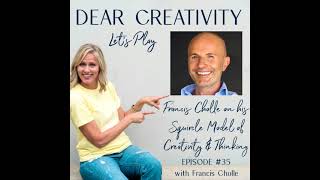
Dear Creativity...Let's Play Podcast, hosted by Amy Isaman featuring Francis Cholle
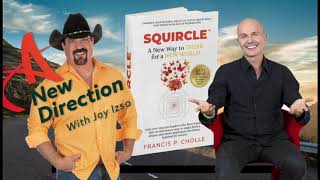
A New Direction -- Thinking Outside the Box to Solve Todays Challenges – Squircle – Francis Cholle
Dear Creativity...Let's Play Podcast, hosted by Amy Isaman featuring Francis Cholle
A New Direction -- Thinking Outside the Box to Solve Todays Challenges – Squircle – Francis Cholle