Dear Creativity...Let's Play Podcast, hosted by Amy Isaman featuring Francis Cholle
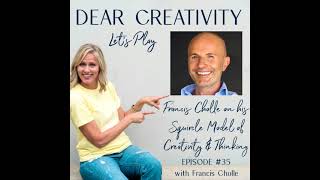
Francis Cholle describes how a French luxury brand's APAC team used intuitive intelligence practices to hit 20% growth in eight months, doubling their CEO's target. A breathing exercise and group games shifted how leaders thought and worked together, with the team meeting regularly to sustain the changes.
Questions this video answers
Three-day workshop in London.
Eight months (April to December, per transcript).
20% growth (the global CEO had asked for 10%).
Digitalization of the marketing function and reimagining/boosting one key product category.
They met monthly (starting meetings with the i2Q game) and flew to Hong Kong every two months for two-day sessions.
Chapters
Welcome everyone to our i2Q seminar. Why great Leaders Use Their Intuitive Intelligence for Resounding Success.
First of all, thank you for choosing to listen to this presentation. My name is Francis Schell. I am the founder of the Human Company, a global public management consulting firm that works with Fortune 500 companies. So the title of this talk again is I to Q. How Great Leaders Tap Their Intuitive Intelligence for Resounding Business Success.
The objective is to explain what intuitive intelligence can do for you in business in today's volatile, uncertain, complex and ambiguous so called VUCA world and how to access and develop your own intuitive intelligence.
What's in it for you? Well, first I will share with you a case study that we worked on at the Human Company and it illustrates for you how intuitive intelligence helped senior executives at the world leading luxury group solve complex business challenges.
Second, I will share for you again a straightforward yet profound model that you will be able to easily apply to make better decisions in your professional and personal life using intuitive intelligence.
So let's move to this case study. Here is the situation. A few years ago one of the Maisons of the world leading French luxury group saw so much opportunity for growth in the Asia Pacific market APAC that decided to open a regional headquarter in Hong Kong to the point that the general manager of the zone had to move with his family from Paris to live in Asia and as well, all heads of countries Japan, Korea, China, Singapore, Indonesia, travel retail and head of Merchandising were now reporting locally rather than to the Paris corporate office and would have to meet in Hong Kong at their headquarters on a regular basis.
So as an immediate consequence for these people, they now had indirect access to resources, especially product supplies which is or was at the time a key success factor in a high demand market like China for instance, not mentioning as a pitfall as well for them less relationships with key executives including the global President, the head of international markets and of course the head of HR to get the resources they needed.
So the challenge of the assignment was for country leaders to see this change as an opportunity both for the business and their careers, although for them it was one more corporate layer and more time spent away from their market, dealing with shared responsibilities about APAC region and some administrative stuff.
Besides, they never had to really interact with their regional colleagues except at the annual Maison meeting in Europe, and now they would have to interact with them at least on a monthly basis.
A few years prior, the leader of one of the key markets had had a negative experience with the same type of change inside another Maison of the group. So she came with some negative anticipation about this new change at the new Maison that she was at.
Because the business objective was about a mindset shift, it was clear that we couldn't force anything or anyone into adopting the new organization that the headquarters and the CEO had decided for the brand in apac, coercion might have worked shorter, but never enabled the powerful APAC leadership teams. So we had to offer an experience for participants to realize that there was another way to engage this process of change than force and control or resistance and inertia.
And that also they would gain a lot more this way than the conventional way of doing business. Build on goal setting, putting together a strategy and a roadmap.
So here is the mapping of the individual and team transformation that we.
Carried out for this Maison in Hong Kong.
Obviously, the president and the global head of HR were clear about the vision of where they wished to get to. A team dynamic of co ownership of APAC business along with a mindset of shared leadership. Our global management consulting firm company had been retained to help facilitate this shift in leadership mindset and team dynamics. Yep.
Sure.
No problem.
Going back to the paragraph previous, our boutique global management consulting firm, the Human Company, was retained to help facilitate this shift in leadership mindset and team dynamics and offer new techniques and tools. What? What happened?
No, no problem. Yeah, yeah, yeah. No, no problem at all. No, no.
No.
Our boutique global management consulting firm, the Human Company, was retained to help facilitate this shift in leadership mindset and team dynamics and offer new techniques and tools for team collaboration. We were given the opportunity to work with the team of country managers over three days in London where they would travel for their annual Maison business meeting. Our recommendation then was to leave relatively open the process of how to get to this vision and offer a process of emergence to give birth to this new dynamic.
We offered the president and the global head of HR a path that would first take the participants away from the logical mind prone to seek control due to negative anticipations. Two, lead them to embrace empathy for themselves as they were going through a process of change, coming with its own challenges. And thirdly, invite them to open to their innate I2Q intuitive intelligence in order to navigate the complexity of this transition and open up to new and unknown possibilities.
Let's start with a simple experiment before I go into the process of taking the team.
Through the three days and further down the road. So let's start with a simple experiment. I would like you to just sit back in your chair. Yeah.
We give them a simple. What.
Hold on a second, let me try. Let me see where we were. I recognize the devotion in the process of flow.
Oh, we invite them to open. To open to their init i2q in order to navigate. Or we offered. Or you want me to repeat that? We offer the president and the global head of HR a pass that would.
By the way, since we're talking, I skipped a slide. I went to the case study and let's do an experiment. I didn't do it, but that's okay to do it a bit later, you know, in the middle of the case study.
Okay. And then. So let me tell you now, so you know, you can make a note. We don't have to interrupt. Again, let me tell you. So the slide number 210 would have to go in after current.
Between. From a group of APAC country managers to leadership team to the word play.
Yeah. So currently 13 and 14. Yeah. Okay. Before play. That's exactly before play. That's simple. Yeah. So let's do an experiment. Come before play. Okay. All right. Cool. All right. Okay. And then I'm going to repeat those three things and then we'll be good. All right, no problem. All good. Thank you.
We offered the president and the global head of HR a path that would take the participants away from their logical mind prone to seek control due to negative anticipation. Secondly, we would lead them to embrace empathy for themselves as they were going through a process of change coming with its own challenges. And. And that actually worked very well. And thirdly, we invited them to open to their innate I2Q intuitive intelligence in order to navigate the complexity of this transition and open up to new and unknown possibilities. And that also was something that they really appreciated. But before I describe the process of the work we did in London and the month after, I would like to go through a very simple exercise, a small experiment with you listeners right now. So I'm going to invite you to just sit back in your chair.
Relax and close your eyes. It's going to be short.
And very simple.
Just relax your shoulders.
Feel the ground below your feet.
Feel yourself being supported by the chair.
Feel your legs behind your back.
Relax your neck.
Relax your jaw muscles.
Relax your hip.
And relax your belly.
Now, I'm going to ask you to just pay attention to your breathing.
Notice that in your belly, in your abdomen, there is a big muscle, a membrane that moves up and down.
That membrane is called a diaphragm.
It moves down when you inhale because it makes space for the lungs, which then expand and suck air in. That's inhale.
And that same big muscle goes up your abdomen, limiting the space for your lungs, which then shrink and push air out of the lungs, that is exhale.
Just pay attention to the movement of this big muscle.
Responsible for inhale and exhale.
Observe it.
Simply be present to it.
And enjoy it.
Whenever you're ready, you may simply open your eyes, reconnect with the room around you, the objects, the desk screen.
And usually when we do this exercise, this very simple exercise in seminars with our Fortune 500 clients, I ask what was so unique about this experiment And I hear often.
While I felt calmer, hard to achieve at work, I had less thoughts racing through my head, or I had many thoughts racing through my head, I had a hard time to focus, or on the contrary, I was more comfortable focusing just simply on my breath. I've been able to empty my mind. I felt calm, I felt present. But then there's one thing that is pivotal and that I very rarely hear, which is at the core of what I'm going to share with you today.
And that is that is very essential function. Breathing is made possible by the collaboration of millions of neuron cells. It's a very complex process. It's an essential process for our existence, which never ceases throughout our life, from birth to the last day. And that happens regardless of our volition, regardless of whether we are good student of it or careless of it, whether we're tired, whether we're in good shape, whether we've eaten too much or not. It happens, it's reliable. And there's an innate intelligence in us that takes care of this very complex process that is essential to our lives. So this is the intelligence that we can decide to give space for, to solve complex challenges. And you'll see how we do this. So remember it, because that's something that you just experienced, that's something that I've been teaching you. I've just guided you to observe something that's already in you and that we collectively culturally tend to completely take for granted. And not only this, but not understand its presence and genius and capacity to help us in solving the most complex problems. And you'll see this now. So the process started in London with a three day workshop as the regional leaders from the APAC region, the country leaders from the APAC region all came for the annual meeting at the particular maison that they work for in London. So we asked them to answer an online assessment prior to their coming to London to identify their strengths and opportunities as individuals, but more importantly as a team and to Help them build on their strengths and be more aware of their areas of opportunities, potential pitfalls, so that they could work together during these three days. With this new awareness. We also had interviewed all participants individually, one by one, to get to know them, to introduce ourselves and the human company and ask them about their expectations in terms of objectives and deliverables for these three days.
This two tier process of the assessment, which provides some objectivity to the conversation and the interviews, which provides closeness with the participants, helps us bring focus on the specific objectives prior to coming in the room. So we've already done some work and people appreciate that we all gather together with a focused intention, some clarity, and certain proximity between the moderators and the participants. So when we work with that kind of complex challenge, we start with a game called I took you Serious Game. And it's based on the theater exercise that's designed to enable actors to tap into their intuitive intelligence. And it consists simply in reciting the English Alphabet in the alphabetical order. One letter at a time, one participant at a time. If two people speak at the same time, then the group has to start all over again.
So each participant can speak as many letters as they want during the game, as long as they speak only one letter at a time. So Jane will start and send A.
When John will follow and say B, and Michael will say C. Everybody is distributed in the room randomly. Nobody knows where everybody else because everybody has their eyes closed. So in silence, eyes closed, randomly positioned in the room, they will have to recite the English Alphabet from A to Z, following the alphabetical order. And each participant will only be able to talk and say one letter at a time, but can talk as many times as they want during the game. The complexity is obvious that you don't know when another person is going to talk. And if two people talk at the same time, or if somebody doesn't follow the alphabetical order, then we have to start all over again.
So for every letter, there's a real, true moment of unknown and ambiguity, which is, of course, the complexity that we're seeking to get them to face so that they can learn in a complex situation how to behave and make it through the complex challenge and find a solution. So it really mirrors life in the sense that in business we have to come together.
Work together, and solve complex challenges with a high level of unknown. We don't always agree on how to get there, and yet we will have to do it. And we are interdependent in our ability to solve the complex problem.
And we have to Deliver a result just like here, get to Z, and usually in a set amount of time, just like in this game, it cannot go on forever. So why do we choose a game?
Because when people play, they shift. They shift from approaching a situation using their logical mind, deduction, induction, to feeling their way through a situation and starting using gut feelings and intuition.
By play, we understand an activity in which we immerse ourselves with no particular end goal in mind, but simply having a good time. So people kind of let go of the outcome for the sheer joy of the moment, the pleasure of the moment. In this particular game I2Q series game participants need to solve a complex problem as a group and reach a tangible, measurable goal. So it's set up in such a way that with minimum guidance from the moderator, participants quickly realize the.
To overcome the complexity of the situation. Logical strategies, like in a chess game, are not enough.
Whenever somebody start to move into strategic thinking, trying to control the process to secure an outcome, focusing on the goal, the end goal, the group fails. So that, you know, I've done it on five continents around the world, probably with 50 to 60 different nationalities.
It always fails when people try to mentally figure out a way through the game. Two, when they stick to command control, it's not only not working, it's counterproductive. It's disarming them from the very skill set they need to deal with a complex situation.
Thirdly, they're invited to practice deep listening.
To their own sensations and connect with the rest of the group through perceptions and intuition. And that is the only way that will ever deliver results and get the group to get to Z.
And then there are two more takeaways. One is to get better at it, you need to practice.
And then the good news is that to practice is a sure way to get better. So I've never seen a human group doing this, practicing it, and not being able to solve the complex problem of getting to Z. It always works eventually. But for this, you need to make space for the same intelligence that supports your breathing. And that in the small little experiment that we did before, when I was telling you this diaphragm is moving without you having to think about it or willing it, you know that is there for you. And that intelligence can be accessed. The only one thing you have to do is make space for it. And to make space for it means simply to give up mental control. It doesn't mean that you give up rationality, it means that you don't let rationality take control over the experience. So let me Explain. Because it is about reciting the Alphabet. It's about language. Language is part of our cortex, it's part of our rational mind. It's part of logical mind. We know that after A comes B, after B comes C, there's an order to it. So you stay engaged in your logical mind. But you don't let your logical mind rule the game. Because if you do this, if you start to find strategies that are reliable and that will make sure that you move from A to B in a way that's kind of manufactured through a strategy, the group fails. Because no strategy is adequate enough in an environment where pretty much.
Nothing can be planned. You never know who's going to talk when it's a moving target continuously. So there's no strategy because there's no stable environment.
So you keep your rational mind engaged because you need to follow the alphabetical order. But at the same time, you don't seek mental control over the experience. And when you have the discipline to do this, then this other intelligence that's always there for us, taking care of our breath is, it's taking care of many other aspects of our lives comes to the fore and with its depth and sensitivity will cue you into getting, as a group of multiple people who don't even see each other and don't know when one will talk and the other one will stay quiet, you'll be able to make your way through to Z. I've seen it over and over again work. And the only one thing that I know that works is to bring people to become aware of their breathing so that they allow space for that intelligence to be noticed. And when it's noticed, it delivers information. Yes.
Okay. Okay. No, no.
And the way to do this is paying attention to your breathing. Because when you pay attention to your breathing, suddenly.
You pay attention to the richness of this intelligence. The cues that it gives you continuously to guide you through this fast moving environment, unpredictable environment that you find yourself in. And those solid cues don't necessarily make logical sense, but they do. Or they make enough sense for you to rely on them to find a way to progress with your colleagues. So, two intelligence.
The logical mind for the Alphabet and a deeper intelligence that allows you to move through fog and through very unstable grounds and unpredictable environment that doesn't deliver.
Logical information, but, but delivers subtle information that you will learn to deal with, listen to, and transform into information reliable enough to move through the complex situation that you find yourself with your colleagues. So this exercise shows participants, without fail, a clear path on how a group can solve complex problems when tapping their intuitive intelligence.
And this is always very reassuring to a group of leaders because.
When we work with clients who have to solve a complex problem, the challenge is that it is complex and they don't know how to move to this complex problem. And now they've experienced nothing has been taught to them. They've experienced on their own accord.
Through direct experience that there is a path through complexity and that they already have everything in themselves to solve the complex problem. So it's very empowering. There's a before and an after.
In addition, participants also realize that they don't need a leader to show them the way, nor do they need to share the same opinions or values or the same understanding of the situation to succeed together. So the notion of team alignment sharing the same values, having a clear vision of the future, or a clear understanding of the roadmap.
Become really secondary. And those are pivotal realizations in shifting a team dynamic from Yep.
Yes, I did. Yes, yes, yes, yes, yes.
Yes. Yeah, yeah, yeah, yeah, yeah.
In addition, participants also realize that they don't need a leader to show them the way, nor do they need to share the same opinions, values or understanding of the situation to succeed. And all the notions of team alignment sharing the same values, having a clear roadmap really become secondary. And those are pivotal realizations. Extremely freeing and empowering. There is truly a before and an after in terms of managerial behaviors and leadership mindset. And these realizations are described at length in my latest book, Squirk A New Way to Think for a New World that's available on Amazon. I will share in the second part of this presentation. The simple science based models quarrel that we use to ensure that shift in mindset sustains.
And there's a simple story that will explain how this model brings a level of creativity and agility needed to adapt in our VUCA world that I will also share later in the later part.
So let's pause for a minute on play.
Note for the editor, it's slide 19 and I'm going to go through a few slides here now.
So let's take a minute to.
Explore the notion of play. There is a doctor called Stuart Brown, who's the founder of the National Institute for Play in the United States, who says he's researched play extensively. He's brought play to.
Our modern culture as something that's as essential to us as breathing, according to him.
So why are games so powerful?
Because another researcher, Dr. Jane McGonigall, who is a member of the Institute for the Future in San Francisco, California says that it brings self confidence. When you play, you just are in a certain groove. You are there, you're in it for pleasure, and that gives you self confidence. Because there's nothing more appealing than seeking pleasure and experiencing pleasure. That gives you self confidence. The second thing is, because it's a game and the stakes are lower, people are more likely to take risks, calculated risks, but risks. They're more willing to experiment.
There's a level of efficiency. There's research that shows that when you play, you are actually going to be more focused during your workday. If you play out of your work, when you bring your mind and your body to work. Yeah, Yep.
Okay, okay, I'll repeat. So there was self confidence, risk taking, and I'm going to repeat the whole thing for efficiency.
Okay.
Thirdly, it helps you become more efficient. There is also research that shows that surgeons who have been playing on a regular basis on their PlayStation.
Video games on a regular basis are less prone to make mistakes and will experience more dexterity in their process of surgery.
And on the contrary, those who don't play will unfortunately likely show more errors at work. There was something published in the American mind in 2010, and then it heightens your ability to solve problems. It makes you more creative.
So to overcome the complexity of a situation, I repeat, logical strategies like chess are not enough. To stick to common control is counterproductive to practice. Deep listening to oneself allows you to be more in tune with others through perceptions and intuition. And that is the only way that will deliver result for you to move through the complex situation that you're dealing with in this particular game, but in life in general, and then to practice is a sure way to get better. So it's very hopeful, very positive and very real and actionable. To play as a group or as an individual when you're faced with a complex situation. And that gives direct access to yourself, to this deeper intelligence that I call intuitive intelligence, the synergy between your rational mind and your intuition, intelligence, instinct.
So let's come back to London after we had played the game with the group and what happened? Well, every time we play this game, the energy of the group has shifted because there's a sense of empowerment, a sense of we can make the impossible possible. And that's always a great feeling for anyone. And there's also.
A deeper level of trust in the team because they had a practical, collective experience that showed them that they could make it happen together. So that's already a first breakthrough from being.
Doubtful about the efficiency of this New team decided by the headquarters in Paris to oh wow, we did something great together already. So that shifts the mindset, that shifts the dynamic and that shifts the energy. So then what we do, we got participants to work on their shared vision of a path forward for the business. And then of course as a team as well, supporting their business. And they did this in subgroups. We used images and symbols that we gave them that they could pick to express their vision of the future. And they created a collective visual narrative about the future beyond words. And the magic of symbols is that it allows space for expressing emotions and feelings and allowing ambiguity and lots of sorts of possibilities of interpretation. And that process helps the group move from a sense of possibility that had gotten covered in the i2Q series game to envisioning the possibility of a positive path forward to a high functioning APAC leadership team. And once we reach that place, which we clearly intentionally.
Manufactured for them from moving them from their logical mind which breaks down the problem, would like to have a solution and a roadmap and a strategy to make the team the best team, although they don't believe it's possible to their instinct through play that took them to make the impossible possible in a way that they cannot necessarily explain, but that was very tangible and real. And they experienced in their own bodies without any teaching to now going into their emotions, their living brain through discussing the future and doing together. So we've really moved them from stuck in their mind to empowered by their instinct and now comfortable in their living brain emotionally. And now we can really have a more intellectual, factual conversation on okay, well, the vision looks great, the team has fabulous potential, but how do we get there? What are the practical steps? But we get to that stage of discussing the practical steps now they've opened up to their intuitive intelligence and can move from rational to non rational. Feel comfortable that you will deliver something for them. There's no skepticism neither about the end goal nor about the process. The creative process of uncovering a path that we could not imagine the day before. And then to ensure the sustainability of their progress, then we teach them a very specific meeting methodology, collaborative methodology, so that.
So that when they get together and have their leadership team meetings, everyone participates as the co owner of the business and the co owner of any business. Challenges.
Of every business challenge, excuse me, that gets discussed and where the boss actually participates, just like every other participant. No hierarchy, everybody together, everybody. Co owners, co leaders. And that mirrors the process of the i2Q game. And it is as powerful. The power is nowhere and the power is on every chair. Since there is no hierarchy of power, it structurally brings deep listening into teamwork and decision making. And they're back into that mode of trusting their feelings. Trusting what? Those cues or some cues to enrich their rational thinking as individuals and as a team. And we get to much deeper level of thinking and therefore much better problem solving skills and decision making skills.
That assignment lasted eight months. We worked with this APAC team over eight months because we moved from creating a team to then solving.
Key business challenges.
Every time they would meet every month, they would start with the i2Q game and they would do it virtually over the phone.
And then they would use our shared leadership methodology.
To lead their meetings. And every two months we would all fly to meet in Hong Kong and work over two days and strengthen the team dynamic and really engage on building the region with a real marketing strategy and HR strategy. And there were two key business subjects that they had to focus on, which was the digitalization of the marketing function and boosting one key product category that was lagging in their Maison under their brand compared to competition and the opportunity of the market.
Those two key business challenges were global challenges. The digitalization of the marketing function and the boosting of this key product category became key on the global agenda because of their contribution. And they actually took the lead on these two subjects for the global business, which is remarkable because when you think of digitalization of marketing, that's typically something that's better done usually in the United States. And you don't expect AAPAC at least five years ago to be the leaders on that subject. So the outcome is we work with them from April to December, eight months, and the following year the global CEO asked for 10% top line growth. The managing director of APAC tried to push back because it felt to him it was a bit high after a series of fast growth years. And he felt that to deliver that much growth after so many years of growth would be too difficult. But what turned out is that 12 months later, they had delivered 20% growth.
Along with substantial improvement in profitability against an 8.5% APAC market growth for the industry and 0% growth for the Maison globally. In other words, the APAC leadership team delivered growth twice higher than budget, more than twice as high as the market growth for the industry. Yep.
Yep, yep, yep, yep, yep.
In other words, the APAC leadership team delivered growth twice higher than the budget, more than twice as high as market industry, and pulled the global top line and bottom line of the meson on a global Scale and in parallel, as I said before, it took the lead on those two global key.
Strategic challenges, which was reimagining the strategy for one product category and digitalizing the marketing function.
So this particular case that, you know, we've seen repeats, you know, we've seen this methodology of allowing people to access the intuitive intelligence individually and collectively to solve complex challenges work over and over again. We've been hired by CEOs and rehired by those same CEOs when they move to different divisions or different companies.
And we've been hired in times when the Big 5 in strategic management consulting industry had made brilliant recommendations but had not been able to catalyze actual transformation and apply or implement a strategy.
My takeaway for you future leaders of those big companies. In my advisory work.
With CEOs I meet very strong, driven leaders with rare analytical skills and strategic capacities and often also unusual intuitive abilities. But the problem is in the organization.
Slide 27.
The problem is though in the organization is that complex problems and team collaboration.
Are approached in an analytical, linear and logical way more often than not. Look at this image.
That's a company that meets according to a very hierarchical staging. It's a rectangular linear table where clearly you see who's leading and who's not. And that prevents from a more instinctual engagement for a more intuitive, flowing, creative way of relating with oneself and with others. It doesn't allow what happens in the i2Q series game. It's actually not only not allowing, it's destroying the capacity to tap into that deeper intelligence.
And this is where the opportunity lies as a leader is to understand that what you feel as a leader and what you rely on, your intuitive intelligence is something that you can stage, encourage and actually.
Systematically tap into and allow people in your team to tap into as individuals and as teams. And you can create a culture of intuitive intelligence. And that's what we need today in a big data fast changing world. And that's why I created the model that I will now present to you. Squircle, square and circle coming together, bringing together reason.
And intuition to work together. Let me start with a simple story.
Let me start with a simple story.
Which is slide 34.
Imagine a little girl, Emma, and a parrot. Emma is walking in her backyard and she notices a beautiful parrot. The parrot is close to its nest and then suddenly the parrot goes away, flies off. And she's very sad because she loved the beautiful colors, she loved being next to it, she loved admiring it simply. And the parrot doesn't come back. She waits but the parrot doesn't come back, so she can't see the parrot again. So the next day she comes back to the tree and hoping that she will see the parrot, but the parrot is not there, only the nest.
So the parrot represents circle, square and circle, squircle, circle, circle, meaning nature, freedom, can come and go. And the nest represents the square, the structure.
What protects the parrot, what allows the parrot to come and rest. It supports the free life of the parrot.
Emma comes back the next day, doesn't see the parrot, comes back the day after, cannot see the parrot, the parrot's not there. She keeps coming back a few days, but never sees the parrot. So she's very disappointed. And then, you know, she's a little girl, other things come into her life and she forgets about it. One day she's in the garden and she hears the parrot. She rushes to the tree and here is the parrot again, next to its nest. And she thinks, oh, so beautiful to see the parrot again. What if I could not only keep it next to me, but also protect the parrot from being in a jungle and at risk, you know, in the open, in the wilderness. And she thinks that in the attic of the house there is a birdcage, an old birdcage that nobody uses. And she thinks, I'm going to take the birdcage, bring it to the tree, remove the nest, put the bird cage there, pack it with water and good food so that the parrot goes in there and can be safe. And when I want to keep the parrot next to me, I would just simply close the door. So without fail, she does all of this. She puts the food into the cage, the parrot goes in, and then gets used to getting its food and its water. And then Emma, what she does is she closes the door at night so that the parrot doesn't go away and she can find the parrot the next day. But what happens? The parrot now doesn't live with its nest in the open, it lives in a cage. It's being fed, and it loses its ability to be agile, its ability to be creative, its freedom, its capacity for adaptation. It's no longer a bird, it's an object of decoration. And that's what we've done. All of us in our modern culture, our natural instinctual abilities to adapt, to create, to be agile have been shrunk by our desire to control our existence. And we've turned science, which is a discipline to bring knowledge into scientism.
To give us certainty about life rather than tools to deal with life and enhance our freedom. And that's what Squirrelquil is trying to show. And I'm going to keep illustrating this with Future slides. What SquirrelQual shows is that we've put ourselves in a cage. Let's represent the parrot as a circle.
Slide 37. Let's represent the parrot as a circle. The parrot is resilient, it's self sustaining, it's creative, it's adaptable, it's agile, it lives in the moment, it's free, and it's interdependent with everything in its ecosystem.
Next slide. Let's represent the nest as a square. The nest is there to bring order to the life of the parrot. It's safe, it's dependable, it's always there, it's stable and it's set. Great.
But once you replace the nest.
With a cage, you've put the circle in the square. And that's the next slide, the next illustration. And that's where we live in our modern world. We live in a square culture where the circle is only tolerated if it's under control.
Our square culture prevents us from accessing the power of nature in us. It doesn't give us everything that instinct can do for us.
So the image is a circle within a square, a circle that's boxed in. And a circle that's boxed in is no longer creative, is no longer free. It's boxed in. It's no longer the parrot, it's an object of decoration. And that's what we've done with our natural ability to adapt, natural ability to be creative, to be agile, our natural ability to tap into our intelligence. But what if the circle were let free out of the square? And that's the image on the next slide.
Squircle. The dominance of the square is a cultural choice. You can free the circle from the square. You can use science as this amazing tool that it is without losing your autonomy of choice, your own discernment, your own subtlety, your own intuition. And to do this, to free the circle from the dominance of the square, the only tool that you have is your intuition, your ability to constantly, vigilantly evaluate what you feel about any given situation. And when you do this, that's when you use your intuition. And your intuition will take you beyond where reason stops. Reason will tell you what's right, what's wrong. But life is more than being binary. There are feelings, there are emotions, there are sensations. And that's where your intuition will take you. It will lead you to your senses, it will lead you to your body, and it will lead you to nature. In you and nature is more than we can ever imagine and provides more than we can even conceive.
And that's where you get your deeper intelligence. That's exactly what participants in London did when they were practicing that game. They were through their intuition, accessing sensations, senses, cues that got them through the complexity of the problem.
So Squircle was imagined.
To bring together reason and intuition and not oppose them. And you can learn this mindset that has helped 250,000 leaders around the world and taught them how to innovate, adapt and succeed in a vuca world. The book is available. There are training online that you can take and it will reveal to you how you can very simply, with this visual, remember that at any given moment you have the choice to step out of the square and regain that natural ability in you to adapt, to be agile, to be creative, and to innovate. The dominance of the square in the way we look at life and its challenges. Yep. No, no, no problem.
Okay, sorry, sorry, sorry. Yeah, yeah, yeah, yeah. Okay, sorry. So I think it was my elbow on the, on the thing. So I think. I think I'm going to go Back to slide 42. Okay, okay, okay, go ahead.
What Sqraql does and will do for you, as it's done for all the people we worked with, it will free you from the least discussed cognitive bias. And that cognitive bias is the dominance of the square in the way we look at life and its challenges. And that dominance is what deprives us from a natural ability for adaptation and problem solving.
But that's a cultural choice. Nothing is square in life. There is no straight line in nature. Nothing is binary. Everything is fluid, evolving, and in the gray zone. So we have this amazing tool square, and its best language is science that provides knowledge continuously to us, but that should never dominate the deeper part of ourselves. That's still elusive to science, and that complements science in the best of ways. And that's where intuitive intelligence comes to its best, bringing together.
Reason, logic with intuition and instinct.
Next slide. Simply to tell you that with this simple visual, when you remember that when you free, the circle is a constant expansion, because nature is expanding, making space for the square to expand as well. Because the square always wants to know more. That's the nature of science. You want to know more. You want to make. Make logic and sense of what's around you both can expand. Whereas the opposite, the circle inside the square, is really like a bird with clipped wings. It cannot fly anymore. So if you keep this image, it will continuously remind you that there is more than what you can see. It will open you up to a world of possibilities. Remember, science, language and education are our nest. They are tools, they are square, they are necessary and they are useful. But they should never become a cage to your natural abilities.
And I will move on to slide the next slide which is remember you can regain your full potential. And that very full potential is what you need today in this fast changing environment, this Vuca world where strategies are are less and less operative because things change so fast. So then my question for you is what is your squirtle preference? Are you more leaning towards a square or towards a circle? And if you are and once you know, what can you do about it? So that you can continuously use squirtle to your best advantage, regardless of your orientation to life. So go simply online to take a short digital questionnaire. It's 12 simple questions which will produce for you a 20 page report that will give you customized information about your preference for square or circle and gives you lots of information about people around you. Go to squircleacademy.com s q u I r c l e academy.com in one word and you'll see in the menu take the test. It will take you three minutes and you'll gain so many insights about yourselves and your teams and people around you in your life in general. So now on this note, thank you very much, do go take the test. It will be really eye opening. That's what we hear over and over again from people who answer the questionnaire. That's why I share it with you in great confidence. And there will be a before and after and I wish you best of luck with Quark all. Thank you again for your attention.
More from Francis'
Squircle: Where Science and Nature Come TogetherEpisode 095 with Francis Cholle of Squircle Academy

A New Way to Think for a New World: Francis Cholle | TEC Canada's The Leadership Standard Podcast


A New Direction -- Thinking Outside the Box to Solve Todays Challenges – Squircle – Francis Cholle
Dear Creativity...Let's Play Podcast, hosted by Amy Isaman featuring Francis Cholle
A New Direction -- Thinking Outside the Box to Solve Todays Challenges – Squircle – Francis Cholle