#167 (English) Frédéric Mazzella: BlaBlaCar, piano players in the desert and Einstein

In this English‑language Kaizen podcast episode, host Jaime Rodríguez de Santiago interviews French entrepreneur Frédéric Mazzella, co‑founder of BlaBlaCar. The conversation begins with the motivation behind Mazzella’s book Mission BlaBlaCar, which he wrote to answer the flood of entrepreneur questions he received, to codify his 15‑year experience, and to help the next generation avoid his mistakes. Mazzella explains how the core puzzle of BlaBlaCar was not the technology but building trust between strangers, and how the marketplace required simultaneous development of demand and supply. He reflects on his hybrid background in music, physics, chemistry and computer science, describing how music taught him creativity, rigor and comfort with public exposure. The interview explores his decision to step down as CEO in 2016, his current focus on impact investing through the Captain Cause platform that lets companies allocate a budget to environmental, social and health projects together with their communities, and his view of Silicon Valley versus Europe. Mazzella shares a decision‑making framework for knowing when to persist or quit, based on customer love and a viable business model. He also offers personal recommendations – books such as The Hard Thing About Hard Things, Built to Last, Start with Why and No Rules Rules; classic literature (Jules Verne, Zola); and music (Chopin, Ravel, Daft Punk, Brad Mehldau). The episode ends with mutual well‑wishes and a call to action for listeners to join the Kaizen community.
Chapters
TranscriptAuto-generated · 53 min
Estás viendo la versión en inglés de este vídeo. Si quieres ver la versión en español, haz clic en el enlace que tienes en pantalla. You're watching the English version of this video. If you want to watch the Spanish one, just click on the link you have on screen. Fred, welcome to Kaizen. How are you? It's been a while.
I'm very good. Thank you, Jaime, for having me. I mean, it's an honor with the incredible success of your podcast in Spain.
No, the honor is mine. Thanks for joining me on the podcast today. This episode is a bit of an experiment. It is the first one that it's not recorded in Spanish. However, we will be providing subtitles to make it accessible to all. So that's fine. And I am thrilled to have just my first non-Spanish guest because you may not know this, but almost four years ago at the beginning of the project, I actually drafted a list of possible interviews, and you were on that list. So I am really excited to finally get the chance to chat with you here.
Hablo español un poquito, pero Es mejor en inglés.
I didn't know you spoke Spanish. That's one thing I learned from you. That's good. That's good. But let's do it in English. I think you'll be more comfortable. I believe the last time we had a proper chat was back in 2018, late '18 or maybe early '19 at Nico's place, where you somehow brought along a professional tennis player. I don't know. It was a very fun night.
Yeah, Rafael Fuggero. Yeah, exactly. American guy. Yeah,
exactly, exactly. That was a fun night. A lot has happened since then. And among all the things we have, actually both of us have published books. Mine is still only available in Spanish, but yours is already translated into Spanish. It's called Mission Blablacar. I have it here so that, you know, I actually have it here. And I think it provides a wonderful overview of your amazing entrepreneurial story. One thing I particularly liked is that it goes beyond BlaBlaCar. So you link the ideas discussed in each chapter with other companies and how it resonates with other companies. And also, there's this final chapter on different methods for thinking, creating, growing, and lasting that I found really, really interesting. But one thing I've learned from writing my book is that this is not something you do to make money.
So yeah, for sure.
For sure, right? So what was your motivation for writing this book and what did you hope to achieve with it?
Actually, it responds to first some kind of demand from entrepreneurs. You know, I receive maybe between, I don't know, 50 and 100 requests per month from entrepreneurs who just want to meet me and have a coffee and discuss about their business and anything. Sometimes, of course, asking for money as well, if I want to do some business engineering and everything. And also advice. And so I did that for some time. I had drunk like maybe 100 coffees like this. It doesn't scale. And so after a while, I did some meetings where I had 15 or 20 entrepreneurs together, and I was gathering all the typical questions I would get. And so there would be questions and answers before the meeting, and I would tell the entrepreneurs, okay, here are the questions and answers. And so if you have additional questions, then come to the session and we'll discuss about it. And then I did a video masterclass, you know, to try to scale as well all those topics that were asked by entrepreneurs. And then I said, okay, I have to put that in a book because it would be— I mean, it's been invented like, you know, 500 years ago and we haven't done anything better than this. to share knowledge. So, and also, that's an answer to entrepreneurs' demand, but also for me, I realized when doing it, it really helps in classifying everything I've lived for like 15 years being an entrepreneur. Yes. It classifies, you know, concepts and it makes everything clearer. It's actually just like a dump of memory, you know. Yeah. You put all the mess you had about everything you lived through, and you figure out why you did it that way, why it worked. And so what is to be remembered that can be used by other businesses, other entrepreneurs, and how you transfer that. for the next generation of entrepreneurs so that they win time. It goes faster for them because they don't reproduce my errors and they get to know what works and what doesn't.
Yeah, definitely. It's been part of my experience as well that when you write things, it's just a better way of thinking. You have all that mess in your head and then it's a better way of thinking about it and clarifying it.
And then you can remove everything that helped you reaching that level. And so you win space, actually. You win memory.
I like to think so, at least. Today, actually, we will be discussing quite a few things that are covered in the book, but there's obviously a lot more in it. So to anyone that has ever used BlaBlaCar or has been interested in the company, or as you said, to entrepreneurs that want to learn, I definitely recommend reading the book. I will put the link in the show notes, but Before we dive into the conversation, I always like to start these interviews with maybe some less typical questions. And you probably don't know this, but I always say that BlaBlaCar changed my life. It definitely changed my career, and I met so many good friends while in the company. I even met my now wife while I was working there. She wasn't working at BlaBlaCar, but she worked for BlaBlaCar externally. So I have very good— Wow. Yes, it's amazing.
I can understand it changed your life.
For the better, I have to say. So I have very good memories from my time at the company and I truly enjoyed every minute there. And the fact is I only spent 5 and a half years there, so I cannot imagine what it has meant for you. And I was wondering, what do you think you would have done if it hadn't worked out? Because I guess BlaBlaCar, it's now part of yourself. So what would you have done? if it hadn't worked
out? So first of all, since I was convinced it should work, because all of the— it's like you have all the pieces of a puzzle on the table, you're like, I'm sure if I assemble the pieces correctly, it will make some nice puzzle. And then if it hadn't worked, I would have to possibly have revised my vision of logic because to me, everything was here, you know, the empty cars, the willingness of people to travel, the technology to make the online payments, online reservations, calling each other, making sure the appointments work. The main obstacle we had to go through, which was not already an existing brick, of the whole puzzle, BlaBlaCar, was to create trust online, to create trust between people who have never met. And this was a big challenge, as you know. We've built that, and each time in each region of the world, it's been the same challenge, like how you build trust between millions of people who've never met. And so we did that through a platform and through all the processes we put in place to make sure that before going on a ride, you know just about everything that there is to know about the person with whom you'll be riding. So the driver and the passenger. And so all the other bricks like the payment, the technology, the search engines, the connectivity, the databases, everything you need to make it work, even like the geographical coordinates of all the rides and everything, the routes, everything was available on the shelf. It was really the pieces of the puzzle. that you take and then you create BlaBlaCar. And then you have to make it known, which is why we communicated a lot. And also, as you know, creating a marketplace is like creating 2 companies at the same time. You've got to create the company for the demand and the company for the offer. So because you've got both sides of the marketplace, so that's been a challenge, but you know that.
Yeah, definitely, definitely. We'll get back to that because actually I know you were super convinced that it would work. So would We'll get back to that.
Yes, so I did not answer your question. What would I—
Yes, but don't worry, I will get back to it. I'll leave you some time to think about it. But anyway, also, actually, I want to get back to that later because I want to discuss with you how you know when to continue and when to stop, because that's a question entrepreneurs ask me a lot. But before that, let's go back for a second to almost the beginning of your journey. I'm not going to ask you for the story of your life. I know you've been asked that set of questions too many times. You must be bored about it. But there's one thing I would like to explore. I know you grew up studying music, and and I read that you even chose your high school based on how close it was to the conservatory. And I've also read that you have a very fond memory of one of your teachers, your Latin teacher, if I'm not mistaken. My French is horrible, but I think his name was Jean-Jacques Lisouli.
Jean-Jacques Lisouli. Hi.
Why did he impress you so much? What did you learn from him?
Ah, because he was he seemed like. He was coming from another sundry with the wisdom of other civilizations. You know, he was like carrying with him the the the the yeah the wisdom of ages. I don't know somehow. But it's also because of what we were studying, like the texts and the you know kind of philosophical texts because like we were translating them, but it was basically. philosophic texts. So it's both the fact that it was kind of a language nobody speaks.
Do you remember anything about it? Do you remember any Latin?
You know, I remember the logic of it, you know, like how you conjugate everything. It's actually very, very good. But German is the same. I mean, and some other languages have like, you know, the declinations. And it really helps you organize your sentences and better understand how to formulate your thinking. So for this, it helps, but I don't remember much from the vocabulary except for rossard, rossarder.
One thing I've spoken a lot about in this podcast is the notion of hybrid engineers or hybrid profiles, individuals with maybe a technical background, but who have somehow mixed it with other skills or disciplines that traditionally were associated with the humanities. You too have a unique combination of skills. You ended up majoring in maths, physics, and chemistry, if I'm not mistaken.
Yeah.
And you did a master's program in computer science, all while being a classically trained musician. So I guess my question would be, which specific skills or concepts that you learned throughout your musical education have been the most useful to you in other areas of your life?
Well, um, it's, it's, um, really, um, based around mostly 3 main things that music brought to me. Um, creativity, so the fact that you can innovate, you can create whatever you want when you're in front of a piano or whatever instrument you can create. and what will— what you will produce is something brand new. Uh, there's also the, uh, the sense of rigor, um, because if you don't play well, uh, people will notice.
I have, I have a guitar there, and I can tell you that people notice that I have no idea how to play it.
And it's very demanding, and the feedback loop is incredibly rapid, you know, it's a quick feedback loop. So if you're not like concentrated enough, it doesn't work. And so that's how you learn. You can even record yourself and hear what's wrong, what doesn't work, and everything. So it's really— it helps you improve yourself alone. And also, when you perform, you have the possibility to train in exposing what you've produced and kind of fight your anxiety about playing, speaking, or exposing ideas in public. So those 3 things like creativity, rigor, and and dealing with the fear of exposing your performance and your idea are things which I really learned from music. Then I found them again in research when I studied a lot, you know, the research, especially in physics. Mm-hmm. I'm mostly— I've been mostly focused on physics because I really liked it. It was how you, you put the concepts of mathematics into the real world and how you are able with equations to explain why the sky is blue, or, you know, why in order to absorb a maximum of energy plants need to be green— this kind of stuff, you know, which you can actually compute and you can explain. And so it's incredibly satisfying to— and also you calculate the speed and everything. So, but the thing— the speed of light, or— Yeah. And well, the more I progressed into physics, the more I was impressed by Einstein, of course.
Yeah.
Um, actually, uh, in my classes of physics, which were in Normale Sup, which is the, the highest research school for, for in many fields, but including physics, um, we had one class out of 2 almost which was speaking about the results from Einstein. which he had published in 1905. You know, this, this guy just made a total revolution for, uh, mass, light, matter, um, energy, uh, and like just about everything. I mean, he didn't leave any space for other— for other researchers. And I was like, oh my God, he changed everything with his theory. And, um, and I felt like totally useless, actually.
It's
been, it's been 100 years and we're still studying what this guy said in 3 papers he published in 1905. How on earth will I be able to, to bring something to that field? And I was like, uh, okay, maybe I need to, to find something else, because the best solution for physics to go ahead is to wait for the next Einstein. But not like train 5,000 people like me to become a researcher, which will bring like 1/10 of a percent of what this guy has created. It's crazy.
Yeah, it is crazy. I think about Einstein sometimes, but I think mostly about Newton. Newton really impresses me because thinking that that guy in that time with basically no equipment could defined the laws that explained how almost everything moves around, it is mind-boggling. And how he even experienced with his own eyes to understand optics and how light changed when it hit a refraction surface, et cetera.
Do you think the apple story is storytelling or is it true?
I've heard it's not true. I have heard it's not true, but I don't know. It's good storytelling anyway, right?
Yeah, it's very good storytelling for sure.
You need to have a good story to tell. No, but you said one thing about music that really resonates with me, not because of music, but I've explained in this podcast that I was a bit of a geek growing up. And I grew up getting into hackers' forums and stuff like that. And there was this hacker culture in the '80s and '90s that was very similar to what you just said. There was this belief that you can build anything. There was this belief that you need to put the time to get the skills. And there was this belief that you get better by building in public, by showcasing your work to others. So I think those are 3 skills that are extremely, extremely useful for life. Going back to your story for a second, as I've mentioned, you pursued a master's program in computer science from Stanford, which is very close to Silicon Valley. I believe this was around the early noughties, maybe 2001 or 2002, something like that.
Yeah, between '99 and 2002. Yeah.
So you got to live— I guess you got to live the, obviously, the dot-com bubble burst. But in general, you got to live a very different Silicon Valley. And I was wondering, how different was Silicon Valley from Europe back then, and how different do you think they are today?
Oh,
have we narrowed the gap in any way?
Ah, no,
no,
they're still ahead. No, no, they're still ahead big time. No, but I think what hasn't changed is that you feel you're in the place where everybody's thinking about the future. So like, just like Victor Hugo said, you know, said, I'm interested in the future because that's where I want to spend my next few years.
That's a good, that's a good quote.
And so you can feel they're interested in building the future for sure. What has changed maybe is that there's been so much money poured into this region that it's created maybe some behaviors which are sometimes less loyal, especially from all the community and people who are attracted by money rather than just being attracted by building the future. So it may have changed— it has changed behaviors. But you can still build wonderful things, except it costs a lot more money now to build something in Silicon Valley, which is why a lot of people are migrating Well, it's one of the reasons. It's not the only one. Maybe the other one is wildfires and everything, but there's also a reason why people are moving. They're moving to Houston, Texas, or places like this to do tech for a lower price, even though it's getting higher as well in Texas now. Right. But so, and the universities and the knowledge that is there is It's just incredible. I mean, Stanford is an incredible place to learn both skills and the spirit of what it is to think ahead and to build the future.
Yeah, yeah, immensely. I told you we would come back to what would you do if BlaBlaCar didn't work. But I remember we once shared a table at dinner at a company retreat in the Alps. And you told us some stories about the beginning of BlaBlaCar, how it was tough at times, but also how, how resolved you were to make it work so that you didn't mind eating pizza, pasta every day if needed. I remember you were saying that because you have an Italian heritage. And you might not remember this, but I had my, my own project before joining BlaBlaCar. We failed and it was emotionally and financially exhausting.
I knew you were an entrepreneur. Yeah, I don't know everything about the project, but I knew, and it was actually kind of a parameter for us to recruit people who would have the entrepreneurial spirit, and that's why.
Yeah, I think it's a very good criteria. But those were 3 years of, for me, those were 3 years of trying without succeeding, of running out of my own money, and of taking, of even taking a told in my personal life. So every once in a while, I'm invited to talk to entrepreneurs, and I'm usually the guy bringing the bad news. I tell them about my experience and how determination and hard work are important, but how knowing when to give up is also important, something that took me far too long to realize. I think that's one of the most difficult things, actually knowing when to continue and when to give up. Do you have a framework or a way for thinking about this? What do you need to see to continue chasing a project or a dream? And what are the clear signs that it isn't going anywhere? And it's a difficult question, I think.
So I'll answer with 2 things. First thing, I had the luck of seeing 6 business models with BlaBlaCar.
Yeah, I remember.
And I have seen 3 who didn't work at all, which didn't work, 1 which worked, which is the one on which the company now sits, and 2 which were working a bit. And to me, the most dangerous ones are the ones who are working A bit.
Yes,
because you've got to push them. I mean, something that doesn't work, okay, you see it, it's easy, it doesn't work, uh, you run out of money, and, and okay, the story is done. Something which works, uh, actually that's what I realized afterwards as well.
You also notice, you also notice, right?
You also notice when it works, you, I mean, you don't wonder if it works or not. It just works. So it's obvious. And so the ones where you have questions are the ones in the middle. So I would say, so this really helped me in identifying something that works or that doesn't work because it helps when you've seen it. So when it works a bit, the most important things, the 2 things you have to be very careful about to know if you want, if you need to pursue or not, Is do you have satisfied customers? Even if you don't have a lot, do you have some customers who really love what you're doing
and
they're using it again and again and everything? Which means actually, are you able to have clients and have attraction? The second thing is, do you have a way to change your business model so that these customer satisfaction turns into a viable business, turns into something that allows you to deliver the service and equilibrate your accounts by having a revenue which compensates for your costs. Because if— so if you have satisfied customers, but you don't have a business model that is sufficient to maintain your activity, then there is hope. I mean, because you can change your business model and you can go find other solutions to make sure you extract the value you're bringing to your customers. But if you don't have anyone who uses your product, then it means, I mean, the world doesn't want it. So if you're the only one to want it, it doesn't make a business.
I agree. I agree. I don't think people outside of France realize how significant BlaBlaCar is in France. Even in Spain, where almost everyone knows about it, BlaBlaCar is considered a very nice service, a wonderful community, a very powerful brand, but that's it. Whereas in France, my experience is that BlaBlaCar is much more than that. It is some sort of national pride. And your journey going from struggling a little bit in the beginning, because I remember it took a while until it worked, to becoming this national champion is not only a great entrepreneurial story, but also I think a fascinating personal journey. Just to illustrate this, you know this, but just to illustrate this so that people understand what I mean, I remember that at one point President Hollande invited you and a handful of other entrepreneurs to travel with him to the US to meet Barack Obama, if I'm not mistaken.
That's true.
And around that time, maybe slightly later, I think, I have this very vivid memory of the day we announced a funding round. I believe it was the €200 million one, that a bunch of us went to the rooftop of the office at night to drink champagne and celebrate. And I remember I was looking at you, Nico and Francis, the founders, and on that amazing rooftop in Blanche with Paris at your feet. And I was thinking, you guys must have been over the moon. Obviously not to your level, but I have experienced some success in my life with my job and this podcast, for instance. And I've learned that one of the hardest things when you experience success is managing your ego. I've talked about it a couple of times in the podcast, and for me, it has been this constant dance between feeling invincible and feeling an imposter and finding the balance between both extremes. I think it's difficult sometimes. So my question to you is, have you ever felt any of these two sides? And And how have you managed to regain balance? Or maybe your experience has been different.
I think through education, I've been taught that 2 things. One thing is that success comes after hard work.
Yep.
And, and that success is often a very temporary thing. And that you need to be very, very, very careful in maintaining it. And, and that it requires a lot of energy to to keep something running and successful. So the danger is always around the corner. So I'm possibly— I'm kind of very worried all the time about the fact that it may end the following day, and that keeps me busy. So I don't think about, um, just, uh, maybe I shouldn't enjoy more. I don't know. That's the thing, because, um, it's, uh, so I, I, and I rarely look into the, um, the mirror. I, I'd rather look into what's next.
Okay.
And so if I look into what's next, since I don't know what's coming, I I need to keep being creative and being ready for whatever comes next. You know, one of the only moments I did look back in the past 15 years was when I wrote the book.
Yeah.
Because I had to look back and I was like, whoa, that's—
That's not bad.
But other than that, I don't look back. So
You reminded me of a couple of things. You reminded me on the one hand about the title of a book that you probably know from Andrew Grove, which is Only the Paranoid Survive.
Oh
yeah. Because it's basically what you said. Yeah, because you're always worried about what's coming. So that's good. And the other thing that you reminded me of is— I don't know Latin, so I will not even attempt to say it in Latin, but I remember that the Romans, whenever they had a very successful general, they paraded in the streets and they had a slave going with him saying, remember that you are only human. The slave was always reminding him that he was only human. Speaking of success, when I joined BlaBlaCar, we were not the only players in Europe. There was carpooling, which was probably our biggest rival at the time, and as well as some smaller local players like Amovens in Spain, for instance. Looking back, what do you think, because you've looked back thanks to the book, what do you think was the key to our success in that competition? Was it a specific strategy or approach, something about the product, a combination of factors, obviously beyond the fact that I joined the company, of course?
Yeah, that was the best move we made, we ever made. That was, I think that was—
I have this recorded, just so you know.
No, for sure. Well, I think we did a few things right. First, we realized that building trust was a key pillar in being able to grow further. So we built trust in the community. We also communicated very well using the modern marketing techniques. So even though we were on the concept, which you can say is you know an old one, because you know when in the early days when I was exposing the concept, people would tell me, "Well, okay. So you're building a website for beatniks who want to to hitchhike for hitchhikers."
Yeah.
So to hitchhike, and you're like, "Well, it's." Not exactly. Not exactly.
But
then people would say it's an old concept and we had to make it attractive and modern. And this was through building a new stone in the equation, which was trust, and making it attractive through modern marketing tactics. And so I think that was kind of our success, communication and trust. Apart from building a robust product, of course, with all the technical implications. So I think that's what made the difference. And also the fact we were building a very, very strong team. You were talking about ego right before, and I think what prevented us from drinking our own Kool-Aid, as the Americans say, you know, so—
Yeah.
Thinking
we were believing too much in ourselves.
Yes, it's this sharing culture because we, we've always been learning together. We were, I would say, amazed at what we were learning and building together, but there was no real feeling that it was a single person who could have ever achieved that. It was a team a team success. So yes, we were proud, but all together. So, and it was, I think, clear for everyone that that's what brought us there. So, and then integrity and hard work prevented us from being like self-confident. And also we know that self-confidence is the best recipe for for failing, because you never know what comes next.
And what you said is very true. Some of the most impressive individuals I've met in my life, I met them at BlaBlaCar. Like, there was a great team of really, really talented and smart people with fascinating backgrounds, a lot of them. I was thinking as you were saying that about the hitchhikers, etc., that my grandfather spent his last days, or his last years actually, bringing me music newspaper cuts. He was cutting from the newspaper whenever he saw that certain bank was looking for engineers or whatever. He was saying like, don't you want a real job? He never got what we did anyway. Anyway, in 2016—
You know, it was when I was beginning, I remember when I was exposing the concept and everything, people would tell me, okay, okay, so you're building this website for hitchhikers, great. What's your real job? That's what I'm doing. I'm an entrepreneur. I'm working day in, day out on this concept, like from Monday through Sunday, and that's my 100% job.
And it took a while, right? It took a while because every once in a while I talk about BlaBlaCar and I have this slide where I show how it took basically, I think it's from 2018 to 2013, something like that, to get to the first million users. And then the next 5 years it got like $40-something million more. So there was that tipping point at some point, but there was this also this journey through the desert where, if I recall correctly, at the beginning the company was you in your, you're at home basically. And then you got Nico and Francis to join. And then eventually Laure, I believe, was the first non-founder employee. Yeah. So it took a while. And that's, I think that's one thing that it's not, that's not usually well explained about success stories, that is that there are sometimes this journey through the desert.
Well, yeah, it's— I mean, I remember one time I heard someone saying, oh, BlaBlaCar has been an overnight success. I was like, well, it was a long night.
It was a long night.
Yeah, because it took us actually 7 years to reach 1 million members. And now we do 1 million members in like 2 or 3 weeks, more members. So it's, yeah, it's a crazy acceleration. But for me, it's not going through the desert because I had, first of all, it was a lot of fun. And we had people who were not only early adopters, but early lovers of the solution. Yeah. They would like use it all the time and love it.
So you had your small wins that kept you waiting and going.
Yeah, you just look at people using your service and you're pumped for the next 2 years. So that really, really helps. And you know, okay, we'll find a solution to make it work for everybody, but for now at least some people are super happy with this. And so it keeps me motivated for a long time.
That's good. In 2016, you took what I think was maybe a difficult decision, or maybe not, I don't know. But you stepped aside from the CEO role, became president of the company while Nico took over as the new CEO. Since then, you've shifted your focus to supporting other entrepreneurs, I believe, especially those working to improve the environment. You've also been quite involved with the media. We were discussing before the recording And I remember the last time we spoke, you were about to participate in the French version of Shark Tank or something like that. What excites you these days? What's the project or the idea or technology that you find fascinating? I've heard something about Captain Cause. So if you want to explain it.
Ah yeah, you've heard well. So yeah, the thing is, I want to make sure we use technology to serve humans. And not the opposite.
We can talk about artificial intelligence if you want later. Yeah,
that's worrying. So I thought, what's— well, first of all, what do I— what am I able to do? You know, at some point you really don't know what you're able to do. You know, I've been playing the piano for— I mean, I used to play a lot. And so I remember since because of building the company, I didn't play for like so many years. From time to time, maybe every 2 years, when I would see a piano, I would just try to know if I still know how to play the piano, you know, because I don't remember if I play the piano because If you don't have a piano, you don't know if you know how to play the piano. I mean, if you're in the desert alone and you've been playing the piano, but then you have no piano to be sure that you still know, you know. So it's the same with, you know, with entrepreneurship. If you don't have a company, you don't know if you're able to do entrepreneurship. Well, okay, I'm an entrepreneur, but what does that mean? It's just like being a piano player in the desert. It's like so, and and I thought, okay, what would I? What would motivate me really now? And what would make me you know wake up in the morning to to just not think about why I'm why I'm working, meaning I'm so convinced that I'm working for something good that I don't need to think about the hours I will spend on it and the energy I will spend on it, and just I, I do it. And so that's why this concept Captain Cause came in, thinking about what motivates me and, and what will motivate me to— because I know it's hard. I know building a company is super hard. Yeah. And if you're not totally convinced that you're doing it for reasons that motivate you, you will stop in the middle because it's too hard. So for me, I know that what motivates me the most is to feel useful. To feel that I'm building something that helps other people around me, that basically helps the world. And so that's why when you see the problems we have, like climate change and the societal problems we're facing now, you're like, okay, can technology help? And if yes, can I be useful somehow to bring some, some pieces of solutions? And so Captain Cause is a bridge between companies and impact projects in the domains of environment, social and health, to allow companies to not only bring their financial support to those impact projects, but also empower their communities to do so. So basically, we change the whole paradigm for how you build— you bring money into impact projects.
Okay.
When companies do some charity projects or what, They will fund some companies, some NGOs or associations or charities, and they will say to their communities, oh, look what we've done, we've brought, we've helped this and this project and this and this. What we do with Captain Cause is like the company says, okay, we've got a budget this year because we've done a good business, so we've got, I don't know, $10,000, $20,000, $50,000, $100,000 euros that we can spend on good causes. And now let's decide all together how we will distribute that money.
Okay.
So you, you propose to your community, whether it's your colleagues, the collaborators, or the customers,
okay,
to actually distribute this money over some projects in environment, social, or health. And it change the whole relationship we all have as individuals with companies, and the whole purpose for colleagues, collaborators to work, because you know that whatever like benefit or extra money that will— that you'll have at the end of the year for the company will actually go into projects that are close to your heart that you want to support. And that, that you will bring as a part of a solution to the problems you see every day on the news.
And it is— I was looking at the website, I believe it's only available in France for the moment.
For now it's only available in France. Yeah, we're starting, you know what it is. I mean, we launched 6 months ago.
We
already have like more than 100 companies who finance projects and we have more than 100 associations as well, or partners.
That's amazing. Now, I was just asking that because since a lot of Spanish people will hear or listen to this interview, it's not yet available in Spain, but I'm sure it will be in some time.
And maybe we will need entrepreneurs to help us build Captain Cozy in Spain. So if someone is listening and wants a mission, he's an entrepreneur,
Now that you say that—
Are you looking for something, Jaime?
No, no, I actually— I didn't tell you this, but I became a father 2 months ago, so I'm more than entertained at the moment. I'm quite busy at the moment.
You're busy enough.
Thanks so much. No, but actually, you said something quite important when you were talking about being an entrepreneur and doing something that is close to your heart. I told you sometimes I speak with entrepreneurs and I use, I actually use Super Mario as an example. And I tell them that Super Mario is, he was a plumber and he became famous worldwide because he was doing it for the princess. And I think you need to do it for the princess. You need to find why you're doing things for, because otherwise, as I said, you will probably struggle at some points and And finding a salary outside of a project is really appealing unless you have a higher motivation to do it. Anyway, we are approaching the end of this interview, and I want to be respectful with your time, but there is one question that is almost compulsory in this podcast. My goal with this project is actually to help myself and help others understand the world a little bit better every day. So I always ask my guests It's the same question: which 3 books or movies or documentaries or video games or any other piece of content have helped you understand better the world?
You mean besides Einstein's Theory of Relativity?
Yeah, that's probably not for everyone. That's my experience. That's my own experience with it. It's probably not for everyone.
It helped me a lot. It's a bit tough to read. Especially around the middle. Well, no, it's— I mean, some incredible books like, you know, The Hard Thing About Hard Things.
Yeah, I like that one.
By Ben Horowitz.
Yes, great
book. Which really teaches you that actually you've got to make some hard decisions and you've got to be honest with yourself. when you create a new project. And you have to not be afraid of doing differently and finding your own path. Build to Last
as
well from Jim Collins. Yeah. Because it makes you understand that you don't— build something that lasts if you don't think about building something that lasts. And if you go too fast and the pillars underneath are not strong enough, and the principles behind the reasons why you do things are not with a long-term vision, then your company will not last and your project will just fade. Then I would say, so yeah, Start with Why from Simon Sinek. I mean, very, very, very like self-explanatory as well with the title itself. Also maybe No Rules Rules, you know, from Reed Hastings.
Yes.
Netflix, where you learn how to actually build an efficient team and know that good is good, but great is better.
Yes, definitely. Any recommendation beyond entrepreneurship? Maybe it's music, but anything that has helped you understand the world better?
Michel Strogoff. How has it been translated? You know Michel Strogoff? Jules Verne. Do you know it? Yeah, Jules Verne.
Yes,
yeah, Jules Verne. Yes, but Michel
Strogoff, you know, in Spain, how it's
been translated in, uh,
I would need to double-check, but I'll, I'll, I'll put it in the show notes. Don't worry, I'll check it later.
I'll find— yeah, find the translation for Michel Strogoff. Um, maybe what else? Uh, L'Enfant from Jules Vallès, but it's again, it's a French That's
good, that's good. I don't know that one, but I'll check it.
What else? Madame Bovary, I don't know. And all the Zola, Émile Zola.
That's great. I like how it's clear how French people you are educated in really, really reading about French literature.
Yeah, but so that's— I gave you some business examples which were actually international hits, but then in terms of if I look more broadly, a lot of them are French.
Yeah, that's good. That's great. That's great. Which musician would you recommend to start with classical music?
Chopin is the best.
Chopin.
Frederic Chopin is— I mean, to me, it's the best. The Barcarolle Opus 60 is just incredible. Um, so Chopin. So in terms of classical music, so I would say Chopin, Ravel, Rachmaninoff, Liszt. Um, yeah, that's, that's a good, a good starting point.
Um, yeah, not bad, not bad.
Yeah, then after a bit of Beethoven.
Yeah.
Some sonnets are very good as well. So, but in terms of other music, I would go for, I don't know, of course U2. YouTube. In more recently, there's things that, well, Daft Punk, which I like a lot. I actually like a lot, and it's kind of, um, some, some, you know, some guilty pleasure. I like, uh, Selena Gomez, what she does. I think she's got, she's got very, very good songs. And Billie Eilish as well recently.
Um,
I don't know, for jazz I would go for, uh, Brad Mehldau.
Okay.
Um, Keith Jarrett of course, but Brad Mehldau as well, um, more recently, which is possibly easier to, to listen because he's been Doing a lot of jazz related to well-known songs as well.
Yeah, I think I think we've given people enough homework with this. That's enough. I think that's more than enough. Thanks a lot, Fred. That's that's useful. There's some homework for me as well.
Ah, in terms of world music, Kashkale. It's Indian techno music. I don't know if you've heard.
Nope. No idea.
It's called Kashkale Go. It's like Indian techno. Okay, it's incredible.
I didn't see that coming. I didn't see that coming at all.
No,
that's, that, that's good. That's good. That's good. Uh, Fred, it's been a pleasure chatting with you again. Um, I don't want to, to take too much of your time. I wish you the best of luck with, with the book and with Captain Chaos, of course. Um, I'll put the link to both things on the show notes, um, so that everyone can find them. Um, thank you so much for the conversation. I'm really looking forward to visiting you all in the office the next time I'm, I'm
Yes, do that. Please let us know when you're in Paris.
That'd be awesome. Thanks a lot.
And I'll let you know when I'm in Madrid.
Please do, of course.
Okay, thanks a lot, Jaime.
Bye. And that's the end of the interview with Fred and this little experiment as well. I hope you liked it. I'm really looking forward to reading your comments. Kaizen will be back next week with a different topic and in Spanish, as always. But until then, I encourage you to subscribe if you haven't already and to recommend it on your favorite podcast platform, on YouTube, on social media, or even better, to your friends. That way, you help me in making Kaizen even bigger. Also, if you've enjoyed the podcast, you can join the Kaizen and community, a way to support it financially, which I greatly appreciate, and also to access a forum where you will find other curious minds, recommendations for hundreds of books and movies, exclusive content. You will get ad-free episodes, mentoring sessions with me, and you will be able to attend the digital meetups that we have started organizing this season. To do so, you just have to visit my website, jaimerodriguezdesantiago.com/join. And click on the red banner. Obviously, everything is in Spanish, so enter at your own risk if you don't speak the language. And from that very same website or through Twitter, where you can find me as Jaime_RDES, you can send me your comments, suggestions, whatever you want. I always answer, although sometimes it may take a bit. And that's all for today. As always. Thank you very much for being there, and see you next time. Bye!
More from Frederic
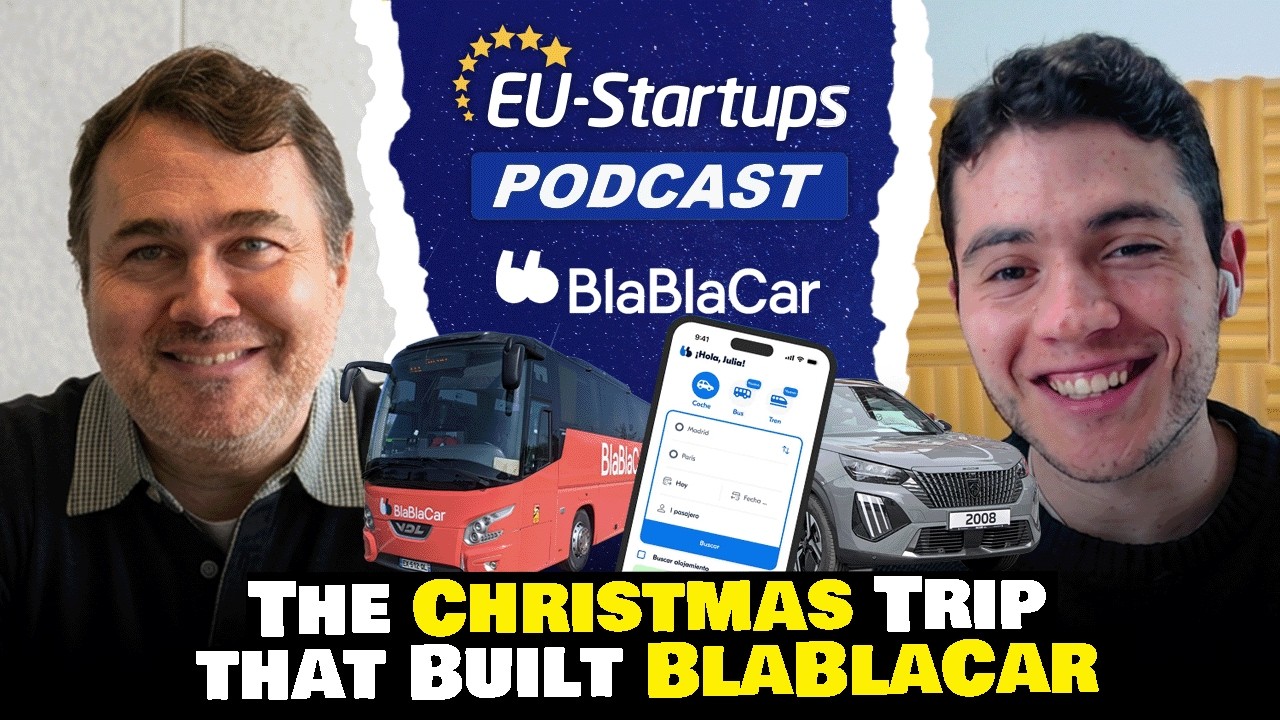
The Christmas Trip that Built BlaBlaCar - Interview with Frédéric Mazzella, founder of BlaBlaCar


"Where to next with Blablacar ?" w/ Peter Zemsky, Nicolas Brusson & Frédéric Mazzella

Frédéric Mazzella: The importance of giving back | Founder & Chairman @Blablacar


South Summit 2016 - Frédéric Mazzella - Empowering communities to build a unicorn business


