ECO14 London: Frederic Mazzella BlaBlaCar

In this EcoSummit interview, BlaBlaCar co‑founder Frédéric Mazzella explains the company’s ridesharing model, rapid scaling, and strategic choices. He clarifies that BlaBlaCar facilitates long‑distance (≈300 km) car‑seat sharing, where drivers offset fuel and toll costs. From its 2004 inception, the platform grew to 10 million members and 2 million monthly travelers by 2015, surpassing Eurostar’s passenger volume and claiming to cut hundreds of thousands of tonnes of CO₂ annually. Mazzella outlines a three‑pronged global expansion playbook—acquihires, internal spin‑offs, and local hiring—supported by rigorous market‑data analysis (fuel prices, internet penetration, demographics, etc.). He describes the branding story behind the name BlaBlaCar and the deliberate maintenance of a unified global brand. The company’s culture is driven by ten self‑defined values (innovation, data‑focused metrics, “done > perfect”, trust, etc.) that replace formal processes and empower autonomy. Trust is engineered through extensive verification and rating systems, achieving trust levels comparable to friends and family. He differentiates BlaBlaCar from competitors: Mitfahrgelegenheit in Germany and Uber (short‑haul, professional drivers) are distinct in distance and community focus. The business model charges a 10‑12 % fee per seat, is fundamentally profitable, but growth is prioritized over short‑term profit, backed by a $100 M Series B round from Index Ventures and Accel. The interview concludes with reflections on profit versus growth and a preview of a later panel on co‑investing.
Chapters
TranscriptAuto-generated · 26 min
Your company has been at EcoSummit in 2012.
Yes.
Winning a silver or bronze medal.
Yeah.
At the award. And since then you exploded.
Yeah.
And now you tell us what happened to you. Welcome to EcoSummit.
Thank you. Hello everybody. So I'll be telling a bit about the story behind BlaBlaCar and the way we expand today, because we had started by having a model which we can replicate, and now we're actually replicating it. So just as a reminder, because sometimes there is a confusion between ridesharing and car sharing and some other kind of mobility, what we do is ridesharing, which means Our drivers, they have empty seats in their cars, and they can share them with passengers who are going the same way and who will be sharing the cost. So they will be sharing the cost of gas and tolls, and it's usually on distances of around 300 kilometers. So it's for long distances. So it's like in the UK would be for distances from London to Manchester or this type of trip. So, and as you can see, when you're alone in your car, it costs a lot of money, and it's all gray around you and you're sad. And when you ride Cher, it costs a lot less money and you smile and everything is in color. This is simple marketing, but it works. So this is the story behind the past few years. So I actually started the project in 2004. So that's a long time ago. I spared you like, you know, the first 5 years, which were actually about the sickness of the line. But so it's only from 2009 to 2014, and we just reached 10 million members in the community in September, and it's been growing exponentially, as you can see, which means that today we have expanded in many countries. So this year only, we have opened in Russia, Ukraine, and more recently in Turkey. 10 days ago. And over the past years, we had opened in many other countries, including Germany a year and a half ago and Poland a bit before. So today it's 2 million travelers per month. So if you had to compare that to other volumes you may be more familiar with, it would be the Eurostar. So we're actually today transporting twice more people than the Eurostar as a whole network. So it's beginning to be like a big phenomenon of a lot of people doing that all over Europe and beyond. And also, of course, the benefit is that it reduces the emission of CO2. So there is always controversy on how you could calculate exactly the amount of CO2 that can be saved by this. by ridesharing, but mainly the order of magnitude is several hundred thousand tons of CO2. It's almost a million tons of CO2, and the car occupancy raises from 1.7 without BlaBlaCar to 2.8 in our network. So how do we do that? We have a startup model, which means once we have proven that our model is viable, we go global before we look for profit. If you look at traditional businesses, they usually go for profit before going global, because when you go for profit, it's easier to actually raise debt or raise other kinds of money. And, but then if you do that in the startup space, it can be very bad for you because you move too slow. Actually, you have to move very, very fast when you have a model which can be spread out that easily. So we decided to go global before looking for any profit, which means it explains the reason why we raised $100 million over the summer from Index Ventures and Accel Partners, who are also— they've been following us for a few years. And so the way we expand then when we look for new markets is by analyzing the market, on all the data that is relevant to our activity. So this data for us, of course, is the price of fuel, it's the cost of local transportation, it's the age of the population, it's also the roads infrastructure, the percentage of people who are connected to the internet, and also many other factors. Once we're convinced that a country is a good target for ridesharing, then what we do is we have 3 ways to expand. I'll just go over these 3 options. So either we do what we call an acquihire— well, we don't call it, it's called like this. It's simply the fact that you find a team on the ground in the country with whom you fit well, and they want to develop ridesharing, and most of the time they have started developing ridesharing. And then we go and see them and we're like, okay, do you want to be part of BlaBlaCar and be like the national ridesharing platform in your country? And we can, by the way, fund, of course, your growth. And we also bring a product which works on millions of members. We also bring customer support. We bring positioning, branding, and we bring everything. So we bring much more than a VC would bring to your startup, and then we make a partnership. And this is how we grew in Italy, for example, in Poland, and also in Russia. So we've done that very successfully over the past years, and it's actually the fastest way to expand. Then we can also do a spin-off, which is we have people in the company who actually are the good people to go in the country, and to expand the service. This is another good solution. So we have, like, for example, that's the way we expanded in Germany, actually. We had 5 people in our team who were Germans and who had all the skills to expand the service in Germany. And that's how we expanded in Germany, with people from our inner team. And then what we do also, the third option, is to hire local. So we will go and hunt for country manager, and then a team. And this team will be made of people who do marketing and communications, but I'll just go back to that right after. So that's how we do, for example, for Turkey lately, 10 days ago. So the way we expand is really by having like all the skill sets inside the company, from product to marketing, with customer support, design, data, administration, communications, and tech, of course. And then what we do is we build another— some other departments which are named Growth and Synchronization. And those departments are in charge of making sure that we are using the best practices of all the other countries we're expanding in. And so we make sure that all our methods are optimized. And in each country, then what we do is we localize communication and marketing because we think it's very valuable to have real local marketing and local communication. And so we synchronize all this, and then we, we try to make sure we don't do the same mistakes twice, and we, we get the best experience from each country to make sure we replicate that when it's a success. Another thing we've done, because we truly believe in it, and also it's easier to maintain, is to have a global brand. It took us quite a lot of time, and many people ask us why it's named BlaBlaCar and why such a name. Actually, the name BlaBlaCar comes from the fact that when you register on the website or on the mobile app, you will actually choose in your profile how much you talk, And how much you talk in the car. So you have the choice of being blah, blah blah, or blah blah blah. And this says how much you will be talking. And so this is the reason why we're named BlaBlaCar. And then the thing is, we remarked that when we talk about this name, the second people hear it, they remember it. So it's very easy for us to expand after that. So it's a love-hate thing, but everybody remembers it and it helps us grow further. So we've done this branding like all over the countries, and it works everywhere because also the BlaBlaCar saying is something that you find in all countries for people to talk. So in all countries also, we have people believing that the brand is local when it's actually local and global. So why do we go so fast, and why do we want to go as fast as that? It's because, of course, in this space, in the startup space, you always have competitive pressure because many companies can replicate what you're doing. And since we are dealing with marketplaces, we all know that the bigger your marketplace, the better position you will have in the future. So we have to reach economies of scale and liquidity fast to make sure that we actually have a real activity in the countries, and we shouldn't be the second marketplace in those countries. So what we do is we expand fast to build liquidity and awareness, because liquidity is something that is fundamental for a marketplace. If you don't get to that point, you don't get transactions between your buyers and your suppliers. And we need to get awareness fast also, and that's why we are making big launches in new countries each time. Because it's easier for us to get press, PR, communications, and marketing all together to create this liquidity. So we go fast when we enter a new country. And also, of course, it's the goal of all startups, it's to reach the economies of scale. If you don't go very fast, then you don't reach the large scale, and if you don't reach a large scale, you don't have the economies of scale that your business requires. So that's an entire part of what we've been doing to grow. But there's also something else which is part of the whole strategy we've put in place, is we've developed values internally to make sure we're all motivated and we know what we— where our motivation comes from. And we also always want to build more and faster. So a year and a half ago, we went through a session, a brainstorming session, asking ourselves, what do we want to say to the next people who'll be joining our company? And so we came up with 10 values which are now hung on the wall, and we also have them on stickers and everything, and we distribute them. And I'll go quickly over those 10 values. So this is the team. So we are 175 people now, 29 years old in average, and this is our team in front of advertising we had in the subway in Paris. So the values actually, they can replace processes when you don't have processes, because when you grow a startup, you actually don't have processes. You don't have lists that tell you point 1, 2, 3, 4, 5, and then you do this or this or this. You have to explore and to innovate all the time. And so you don't have time to create processes before you actually see the reality of what you have to decide upon. And so what we do is with the value, then it makes people more autonomous and more responsible about all the decisions they make because they are actually making the decision and comparing this with the values. So this is where our brainstorming session happened because like every year we go to the Alps for 3 days and we We ski for three days, and then we make a brainstorming for an hour and a half. Yeah, it's a it's a good compromise. So our challenges are to innovate, grow, and synchronize. And the ten values I'll be presenting each relates to one of those three phases. It's one of the three concepts that we have to cope with when we when we expand. So the first one is to innovate. So we have a value which says we are innovate. We we we Sorry, we are passionate, we innovate. And so it's very easy, but it just says that we have passion and that's how we produce everything, our work every day. This is a picture of Edison who's like, he had like 1,300 patents, I think, something like that in his life. So we don't even have one patent today, but we are innovating still. This is MacGyver to illustrate the next value, which is Think it, build it, use it. This guy does it all the time. He thinks, he builds, and then he uses it. And then sometimes it's dangerous for his life. So the reason why we do that is because we use our platform. We are all ridesharers in the company. And some of us are actually very— at the very top of the ridesharers of the community. And we believe it's fundamental for us to improve the product and to feel exactly what it is. To make sure we always have the best service. Then how do you do to grow? So the first lesson you have to— we felt we wanted to express was fail, learn, succeed. It's pretty easy, but it's good to write it on the wall. And to write the word fail on the wall makes it so that you don't feel as bad when you fail. You're just like, okay, I failed, I learned, and then I'll succeed. And so, um, this is just a picture of, like, all of us have been in this situation where you fall and then actually, you know, that you have to learn if you want to actually ride a bike. Um, so then the next value is about data. Um, it's about the fact that if you want to improve and grow, you have to look at the right indicator. Uh, so this is, um, the cockpit of the, of Space Shuttle Endeavour. As you can see, if you don't know where to push a button, there is a good chance that you will not— that you will finish in a bad shape, I think. So you have to look at the right indicator. And so I had a teacher at the MBA I did at INSEAD like a few years ago who was saying that market share is vanity and revenues are sanity and cash flows are reality. And so we adapted it because it's a kind of a metric that you can use for businesses. But for us, what we say is that signups are vanity because, like, only people coming and registering but they don't do any action. Postings are sanity because they actually do something on the website. At least they publish a trip. For example, a driver will say, I have 3 seats available from Hamburg to Munich. And then matching the reality, because what really matters is when people are in the same car and they travel together. And this is really the metric we have to look at. So with this value, we know that each time we think about the metric, we try to find out if it's a vanity metric, sanity metric, or reality metric. And it helps us a lot in not focusing too much on the vanity metrics. Done is better than perfect. It's a very common value, actually. They have it at Facebook as well, but not only them. Many startups have it. It's actually a value that expresses the fact that the only way, for example, for you to know if a boat is floating is to put the boat in the water. Just don't go around for 6 months around the boat trying to find out if there is a hole. If you put it in the water, you'll know there is a hole. So that's a value that helps us ship things, and then we improve them on the way. But if you want to improve too much before shipping, you never ship. The next value is never assume, always check. It's kind of maybe more for the administration department. You always have to check everything. And actually, the most difficult part is never assume, always check. Is not to validate your assumptions. It's sometimes to simply know that you are making an assumption. Because the assumptions which are the most dangerous are the ones you don't know. And you make decisions based on things which you haven't checked. And you don't even realize you're making an assumption. Then you have to synchronize. So the way we synchronize— well, I'm sorry, this is like the Trust Man The Trust Man superhero, but then it doesn't show up really well. Well, it's kind of fun like this because he seems like all transparent, but usually he has an outfit. But it's just the PDF format which didn't go through well. So we say, in trust we trust, because trust is fundamental for the connections we make between drivers and passengers. It's also fundamental that all the passengers and drivers, all the members trust us and trust the BlaBlaCar service. And so we created a superhero named Trustman, and his superpower is actually all the ratings, the good ratings he gets on BlaBlaCar. They allow him to travel very easily in the community because everybody's trusting him. And then we've made studies about how trust transforms the way people interact on the platform, and the fact that actually Today, with the tools we have and the ratings and all the information we have, all the check-ins we can make on the website, we are able to generate a level of trust between people who've never met which is higher than the level of trust between neighbors or colleagues, and it's almost as high as the level of trust you would get between friends and family members. It's amazing, just by displaying lots of information, the fact that the guy is related to Facebook, that you have checked his full phone number, you have checked his bank account, you have the ratings of, let's say, 16 people who've traveled with him, then you higher the level of trust of this person up to a very, very high level. This is kind of new, and it's something which is well known on all marketplaces, but we really witness that phenomenon on Blablacar. Share more, learn more. It's a value for us to make sure we always share what we know and we innovate together. And we learn along the way. And then, of course, the member is the boss. So all these values are hung on the wall in all departments. The member is the boss is actually the value which we hang above what we call the member relations services. They're actually the customer service, but we don't call our customers customers. We call them members because actually they are not all customers like the drivers and the passengers. They are all members and they help each other. And we don't consider them or us because we are RightShareers, our customers. And finally, maybe the mother of all values we have in the company is fun and serious. So we took like the way it's written for Fast and Furious, but we made it more fun with fun and serious. And the reason why those 2 values go together, it's like the yin and the yang of how you make sure or people are motivated to work every day. You have to be serious in order to get collective fun, because if you are not serious in your job, then you create professional tensions. And if you create professional tensions, it's not possible to have fun together, because you will always have resentment with your colleagues who delivered something which wasn't like perfect last week. So we truly believe that seriousness is the basics It's the basis for fun together, and those guys in the A-Team are like both fun and serious, and that's why we chose this picture. Thank you very much.
Great, Frederic.
Thank you.
The values are really key for growing, right? Yes. And you developed— you used a lot of time to develop them, and they have grown, the values. In order to be complete.
Yes, yes, yes. I know there are a lot of values. Sometimes we feel there are not enough because one or two could define us really well as well. Then maybe growing further, we'll be able to narrow that down to maybe 3 or 4 or 5 values only. I don't know. But for now, we have expressed the way we work together, the way we grow together, and this is how it came out with those 10 values. It's really helpful and it really makes people more autonomous actually, because if you take— if you make a decision according to those values, you can't make a mistake. It's like if you have a decision to make, you're like, how BlaBlaCar would answer that question and make that decision? And then the person makes a decision and then you grow further and you have like the 175 people in the company who are actually Engines for the company. They are not like cars.
Engines of growth.
Yes.
And talking about competition, who is actually the biggest global competitor that you are going against?
The biggest
global competitor?
Global. It's it's actually a German competitor. They are named in in Germany. They are named Mitfahrgelegenheit.
Carpooling.com.
Yes. And so they are they are very big in Germany. In other countries, we we really are bigger than them now.
And what do you think about Uber in China?
Ah, that's something else. Well, actually, Uber is on very short distances, and they have professional drivers, and we have a community. So it's a bit different because we are long distances. The average distance on BlaBlaCar is 330 kilometers. So like 98% of our trips happen in between 100 kilometers and 600 kilometers.
And you want to stay
Yes, well, for now, that's where it works, and that's the product we have developed and the way it can expand in all the countries. So we're not on the same distance, we don't have the same community. We are addressing, like, normal people like you and me. We're not addressing professional drivers on one side and people who have a lot of money to pay for the taxi on the other side, because for the price of Paris to Lyon, you would only go from one side of the city to the next with Uber, whereas with us you go, you travel half a country.
And then many of your members are members because they want to save money, right? Or they want to really to go from A to B and they don't have an unlimited budget. They really have to save money when they travel.
Yes, but it's changing. What we're witnessing is that, so in France, which is our most Major market. You may have remarked I have a French accent. And so our most major market, we see that now it's really everyone who does rideshare. At the very beginning,
it has become fashionable and socially accepted.
Yes,
not a sign of a totally empty portemonnaie.
Yes, and also when people started ridesharing, they did it for money. But then soon they realized that it was a good way to actually meet new friends and to have a ride, to have a trip which is less annoying because you get to discuss with a lot of very interesting people. So it's actually a very social way of traveling. And then it's more that angle now that people are feeling more than just the price. Because of course now the price, everybody knows that it's very affordable.
And what is your current business model? Do you take a cut? Of the transaction, a transaction fee?
Yes.
How much percent do you take?
So we take in between 10 and 12% per seat we sell on the website. So like if a driver is asking for— he's proposing 3 seats, let's say, for €20, we will charge €22 or €23 and we take the cut and then we transfer the money, the €20, to the driver after the trip when everything went well.
And how many members do you need globally to make this profitable? Because at the moment you make it grow.
Well, the thing is, we could be stopping our growth and be profitable. It's not the choice we've made, like the reason why we raised money. So it is— the business model itself is profitable, but now we are in a growth phase, so we're spending a lot.
So we will—
yes, we postpone profit just to make sure that we get global before we think about profit. But it's It's very common to do that for global startups because if you don't, then you slow yourself because it means you want profit before being global and then you go slower.
Okay, I think this is really a great role model. I hope for many of you startups in the audience to think about the difference between profit and growth. All right, thank you very much.
Thank you.
And in the evening, we see you on the panel.
Yes, it's at 6 something.
Yeah, 6:30 about co-investing. More about your secret of investments and how you found them and how you manage them.
Okay, thank you.
More from Frederic
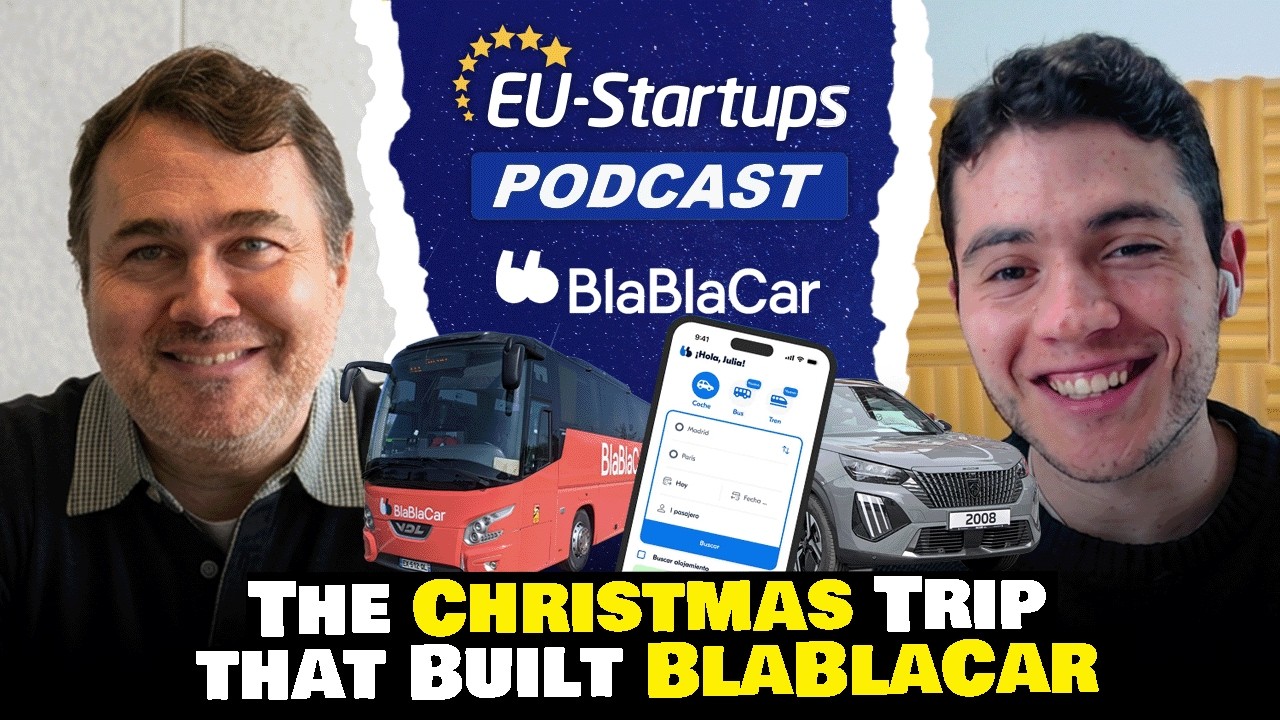
The Christmas Trip that Built BlaBlaCar - Interview with Frédéric Mazzella, founder of BlaBlaCar


#167 (English) Frédéric Mazzella: BlaBlaCar, piano players in the desert and Einstein

"Where to next with Blablacar ?" w/ Peter Zemsky, Nicolas Brusson & Frédéric Mazzella

Frédéric Mazzella: The importance of giving back | Founder & Chairman @Blablacar


South Summit 2016 - Frédéric Mazzella - Empowering communities to build a unicorn business


