Interview with Frédéric Mazzella CEO @Blablacar

In this interview, Frédéric Mazzella, co‑founder and CEO of BlaBlaCar, explains the company’s core proposition—a long‑distance ridesharing marketplace connecting drivers with empty seats to passengers—highlighting its scale (22 countries, 25 million members, 430 employees). He describes the early challenges of launching a two‑sided marketplace, emphasizing the need to display activity, keep search filters simple, and drive traffic through related services. Mazzella outlines the key early KPIs he tracked (daily requests, registrations, ads, visitor‑to‑posting ratio) and the importance of never disappointing users. He recounts the six business‑model experiments the startup went through—from B2B SaaS platforms for companies, premium features, paid phone bridges, advertising, event‑specific platforms—to the eventual transactional commission model that now powers growth. The funding journey is detailed (first million raised after six years, subsequent rounds in 2009, 2010, 2012, etc.). A major focus is the trust ecosystem: the DREAMS framework (Declared, Rated, Engaged, Active, Moderated, Social) and the “Trust Man” persona that embody the company’s commitment to safety and reliability. Mazzella explains how BlaBlaCar’s culture and values were crowdsourced in off‑site workshops, visualized on stickers, and used as a recruitment magnet. He discusses the high‑volume hiring process, the implementation of an applicant‑tracking system, and the importance of a demanding yet transparent candidate experience. Finally, he shares leadership insights—building complementary teams, continuous benchmarking, and advice for entrepreneurs, notably the “member is the boss” principle and a learning‑first mindset.
Chapters
TranscriptAuto-generated · 24 min
Can you give me the 10-second pitch of BlaBlaCar?
BlaBlaCar connects drivers with empty seats to passengers going the same way on long-distance rides, which are on average 300 kilometers. Today we are in 22 countries. We've got a community of more than 25 million people, and it's a company of 430 employees in 14 offices worldwide, from Russia to Brazil and India, Mexico, most European cities, Turkey, and Yeah, and growing.
Okay, can you talk a little bit about the beginning of building a marketplace?
Well, at first you need to make sure people realize that it is the place to be. When they arrive on the service, they need to see that there is some action here. It's not an empty marketplace because there's nothing worse than an empty marketplace. It makes you flee from it. So you have to show some data that proves that there is some traffic. So either it's the number of people who've come to the service yesterday or for the past year, but at least some number that looks like there is some activity. You can publish for us the number of rides published or the number of people who requested a ride. Well, you have to show some activity. The second thing I would say is make a search engine which is large and don't try to make extreme filters.
The perfect match doesn't exist. At
the beginning, if you match people who are doing about the same ride, for us, you're happy. Don't try to match people who go exactly from a very precise street in Paris to a very precise street in Lyon. I mean, it doesn't work. At the beginning, if you find someone who is like 100 kilometers away and 100 kilometers away at arrival as well, it's already not that bad. At least people see some results. So don't put too much filter. And then finally, in order to get some more traffic, you have to know your peers, I would say, like all the other services, websites, apps which have traffic on something which is somehow relevant to your activity. It can be people. For us, it was people in the good deals on hotels or on how to travel. FAR, or like home exchange services, or things like that which were related to our activity, so that they could bring 10 by 10 some people to our service with lots of small rivers which make the big, big river of traffic.
Do you remember the KPIs you were following at that time?
I was following the number of requests per day, the number of, of course, the number of profiles created, number of people who were registered, the number of ads, also postings that were published on the service. Well, this kind of metric, and then the number of visitors and the ratio between the number of visitors and the number of requests or postings. If it's— if the ratio of the number of postings to the number of visitors is low, then you should try to increase it at maximum because anyone who comes on the service should find something somehow a way to either publish a posting or search for another ad so that you—
Never disappoint the people.
Yeah, well, a disappointed user is a lost user.
Totally. And it's been long before having the volume to be able to make money, your own money, to survive. How did you pay these years?
So we had 6 business models. So the business model we're on right now is the 6th one. The first business model was really selling B2B platforms, even though it was not the business model I wanted to do initially. We had so many companies and people from several organizations calling us and saying, hey, I want the same service but for my community, my employees, my people in my region and everything. So the first phone calls you get like this, you're like, okay, we don't do that. Sorry, we are an open marketplace, C2C, between people. And then when you have no business model, no money, you don't pay yourself, you eat pasta. After the 10th phone call, you're like, okay, how much? And then you begin a new business model. So we began to sell platforms for communities and companies so that they would match employees, for example, who live at the same place and go to work every day together. Yeah. Which is different from what we do today, because today we do long-distance ridesharing, so we match people who do the same ride but just maybe a few times a year. The types of platforms we had developed for the companies were platforms for home-to-work ridesharing, so like carpooling, commuting. It was a bit different, but at least it was a business model. So we began with a B2B business model selling SaaS platforms, and then we did also some premium model, so for the members on the open service to have some more options, They could pay for, like receive text alerts and things like that. We did a phone bridge business model where in order to call the counterpart, you needed to call a pay toll number because the other party didn't want to show their mobile phone number. So we had to hide it but put it behind a bridge. And so that was a small business model as well. We had some advertising, but it was really not efficient and really not pretty on the service, so we removed it. We had also platforms we made for concerts, festivals, and we were selling this possibility for the concerts and festivals to communicate to our community that they were making like a big festival somewhere. So we had many, many business models before we arrived to the business model we have today, which is a transactional business model where for every seat that gets transacted between passengers and drivers, we take a small commission, and that, that feeds the entire growth.
But you knew from the beginning this was the business model you wanted to go for, but you said What would you say to the entrepreneurs? Be opportunistic.
Oh yeah, in terms of trying and pivoting on business models, any way you can find to finance yourself in a sustainable way, because a business model is a sustainable way, is good. Because even though we started with B2B, and B2B was more than 95% of our revenues at some point, we were able to raise money based on the next business model we wanted to develop, which was the C2C business model we have today. So, but it made us stronger. We were already a team of almost 10 people when we were able to raise a million, and we were sustainable because we didn't lose money because we had this B2B activity. So it's very important.
Yeah. How long did it take for you to raise your first million?
6 years.
6 years. For 6 years you've been on your own.
Yeah, we made— so I began in 2004, then really Full-time 2007-8. Then we raised 600K in 2009, 1 million in 2010, and then 7 million in 2012, and then more after that.
Okay, can you talk a little bit, Frederic, about the most important thing for me when I look at Blablacar is the way you talk to your customers, to your users, the Personages that you've built, like Trust Man, the values that you promote, it's not bullshit, it's something you do believe in. And can you explain the rise of this storytelling and the importance of it at BlaBlaCar?
So it's all about trust and the fact that I realized that over the years, by listening to our members, they were telling us to add some features like They want to see the pictures of the members. They want to have ratings after a ridesharing experience. They want to have the preferences, the bios. They want us to check the phone number. They want us to be able to link the profiles on BlaBlaCar with Facebook and LinkedIn and everything. And so after that, we built so many, many tools like this, and we realized we were actually building a platform of trust because people need to trust each other before they would do ridesharing together. And so Then we analyzed what was really making this trust real, and that's when we came up with the model DREAMS, which is the 6 pillars of trust. So I decomposed like everything and information that people were asking for into some categories. So DREAMS is an acronym for declared, rated, engaged, active, moderated, and social. Those are the six pillars of trust that you build when you want to achieve trust in communities of tens of millions. Because if you want to share a ride with someone, you want to know at least their first name, have a picture, their preferences. That's a declared information. You want to know how did go the latest ride sharing with the last ten people. Those are the ratings that were left by the other people. Then you want to engage because you will be traveling tomorrow. You want to be sure. that this will happen. So how do you formalize the engagement? Just a phone call sometimes is not enough because people can call each other but not come to the appointment. So that's when we made the online booking system, allowing passengers to show their commitment to the driver and the driver answering, so yes, I understood that you've paid and tomorrow at 6:30 we will go together to Rennes. And that's engagement. The activity, so the A is for active. You want to know if the person was logged like 2 hours ago, answers to 98% of the messages, has published 189 rides, or if it's someone who logged like only 3 months ago, who's answering to 3% of the messages and is totally new on the platform. So the activity is something really important for you to build your trust. And then moderation is the role of the platform. It's what we do every day. We have a team of 95 people who moderate all the content. Either text or visual. We also perform checks, so we check the phone numbers, the bank accounts, the email addresses, and everything. And then the S is for social, and the social angle is the possibility for people to plug their profile, to link them to their Facebook profile or their LinkedIn profile, and it creates their social identity. So all this is summarized by the DREAMS model, which is what we build upon to make trust a reality in the community that we're building. And then internally, of course, we have values about trust which were crowdsourced. I can talk for hours about how we crowdsourced our values internally, but it's a very interesting process to build motivation in the team and to keep— The culture. Very, very efficient, keep the culture. So we have a value which says, in trust we trust. It's like a play on words, but it really says that trust is front and central in everything we build. And then also, when I came up with the idea of doing this Trust Man superhero, it was really because I needed to get it out. This concept of we are building trust on the networks is super universal, and I wanted to get it out. And TED was a good occasion to really— To share it. get the superhero out in the field.
That's super interesting because basically you build a canvas of trust. All your people at BlaBlaCar, they know about it. Can you explain basically the week of— your week? When do you find the moment to give this culture, to share this culture? Do you brainstorm with other people? Do you have a BlaBlaCar moment every Monday? where people stand up? How does it work? How do you manage this culture on a day-to-day basis?
So obviously this kind of ideas don't happen like every week. It's major milestones, I would say. Just like, so Trust Man and the Dreams model was 2012-2013, and then the year after we began thinking about the values In 2013, 2014, we created all the values for everybody. So it was crowdsourced. We gathered everybody in a room. So for example, how we crowdsourced the values, it was made on purpose to bring those values out of the team. We were 60 at the time. So we went into a theater. You know, we create occasions for that. Like once a year, we go 3 days offsite. So this year we were going to the mountains in the Alps for 3 days to ski. Mm-hmm. and then have some non-professional time together. So we created this occasion. We were 60, we gathered in a theater room in the ski resort, and then we were like for an hour and a half making groups and saying, okay, what is Blablacar? Why is it special? What is the core of our motivation? Why are we so motivated and efficient at what we do and so happy to work together? We want to write that. And so each group had to write the few words that were the symbol for them of what Blablacar was at the time. So you get values out like sharing, knowledge, learning, trust, passion, innovation. All these values came out of what we were at the time, and then we make some wordings and some prosody to build all those values into real short sentences with 3 or 4 words. And so that was the birth of our values, which were representative of our exact spirit at the time. So they were crowdsourced. They were not like— it's not top-down. It's really something that we created together. And then how do you make them live? So we printed them on many stickers. We even put them on the wall. So maybe you'll be going around the office and you'll be filming them, but they are everywhere basically. You find them in stickers on the mobile phones of people or on their computers, but you find them on the walls, you find them in postcards, and then we talk about it. And so part of this was also because we were growing and we needed to recruit the right people. We needed to get some more candidates who wanted to apply and work for a company like BlaBlaCar. And so we said, okay, we will take our culture, formalize it in a way that we can communicate on. And so we take the internal culture, we put it out, and we talk about it in conferences and everything. And so hopefully the people who like this culture will apply, they will come, and this will bring new candidates in, in our application process. Which was super crucial because for a time in the interviews we had to explain why Blablacar was so great. So you spend like in an hour interview, you spend half of the interview trying to motivate the candidate. This is tiring. You're like, you're explaining that your project is wonderful and you're like, how come I have someone who's applying in the company and does not feel that what we're doing is exceptional? I don't want to be repeating myself every day, half of the time in all the interviews. I want people who arrive in the interviews and who are already motivated by Blablacar, by what we're building, by our values, and who want to give their motivation and energy to this project. And so that was our way to externalize culture and make sure that the people would have heard about our culture, and when they come now and they apply, they know that, and we know that we're attracting the people who are really motivated by what we're building.
How many people apply to BlaBlaCar today?
Between 4,000 and 6,000 people apply every month.
Okay, and how do you treat every applicant?
We have— so again, yeah, then you have to build the process because when you have thousands of people applying, which is super good because it allows you to be very, very demanding towards candidates because you're like, okay, you love the company, We love the company too. And so what will you bring to the team, to the project? What are your ambitions? Why are you joining? So you can be very demanding to the candidates. It's super good. But then you build a process with what is called an ATS first, and then a team around it. An ATS is an applicant tracking system, just to make sure that you will answer to all the candidates. Because when you have thousands of candidates applying every month, not answering candidates is actually hurting your reputation. as an employer, but also as a provider of a service. So you really have to be sure that you answer to all the candidates who apply. This is a process. And then if you don't have a tool and if you're just doing it by email, it's impossible. It's impossible to make sure that all the candidates who applied were really treated appropriately. But if you have a tool and you make sure that each time someone applies, then they are in a process to make sure that we give them an answer, whether yes or no. Mmhmm. but at least we give them an answer and we explain what happened. Then you get a fair process, you get a good process. So you have to have an applicant tracking system, that's for sure, at some point. I think we placed our applicant tracking system in place maybe when we were 100 or something like that. Okay. A few years ago.
Okay. So you raised $200 million, and 5 years ago you raised $1 million. Going from this point to this point, it's all about scaling. Who are your role models? Who teaches you? Where do you find your inspiration?
Well, it's different questions, but first of all, when you build a company like this, you've got to make sure that you are with the right people. So you have to recruit the best people you find around you to make sure that you build a team which is both complementary and very efficient, very motivated. So that's what happened when I met Francis, who is the CTO. CEO and co-founder now of Blablacar, who runs the entire technical architecture. When I met also Nicolas, who's my co-founder also, who runs the operations from geographic expansion to finance to marketing choices, things like that. It's very important. I myself, I'm focusing on the product, the quality and excellence of the product, the member relations, so like how we interact with the community. and communications, and also some HR, of course. We don't say HR, blah blah blah, we say people team because it's a— I don't like the R in HR, but it's a detail. So like all the people taking care of the team itself. Yeah. So it's very important actually to have a scope for each person in the team and make sure that it's a scope that allows people to be really responsible and to be owning actually the mission that they have to perform. And so we are very complementary for this, Francis, Nicolas, and I. So it's a great—
So thanks to the team, you feel like you're on the right path when you grow that fast?
And then when you go fast, you have to consult and discuss with many, many people, many experts you recruit along the way, and then you make your own judgment based on all the benchmarking. I'm benchmarking all the time. So I'm benchmarking in other companies, with other entrepreneurs, with investors, with journalists, with everyone I meet. Each time I meet someone, I'm like, okay, this person is gonna teach me something. I'm sure that— I mean, anytime we meet someone, there is something to learn. So this is the way I've been progressing so far.
Frederic, if you had some advice to give to the young entrepreneurs, what would you tell them?
So based on what I've lived through and what we have learned over the years, I would say some of the advice that we could give are gathered in our values. We have 10 values. I'll just pick a few of them. So I would think the first one is this one, it's the member is the The
member is the boss.
For us, the member is the customer and the client, but we call them members because it's a community. Never forget that they are the boss and they decide how they will use your product. And even if you want them to do something, they may decide to use your product somewhere, somehow differently. It's just like a child, you know, when, when you offer a gift to a child, sometimes he plays with the box. It means what he really wanted was the box. Then you have to switch and say, okay, so I have to— I thought my gift was this, but actually it's a
box.
So you have to adapt. The second thing is fail, learn, succeed. Never forget that failure is part of success. The only thing which is not good is fail, fail, fail. But if you are doing that, you have to ask yourself why. But normally when you fail, you learn, and when you learn, you're better next time and you can succeed. But the worst thing is not to try, so not to fail, so doing nothing. Uh, so, but if you do something and it fails, it's part of the process of learning. I mean, nobody ever could ride a bicycle without falling when you try for the first time. Beautiful, and that's the way you learn. Share more and more. We are innovating all the time, and if we don't share what we are learning, we are not learning together and we are not learning fast. We need to learn fast, and the only way to learn fast is to communicate and share what we learn. And we will get— it's a 2-way communication. We will get the feedback from everyone and we will learn together. Mm-hmm. And the last one, and I don't know if it's the most important one because they are all very, very important, but the last one I would say is use your own product. Be your most demanding customer because it will help you to be in the shoes of your real customers and to assess your product, being very tough with it. Mm-hmm. Saying, okay, it doesn't work. If you believe it works and you never use your product, you will continue to believe it works and you will not understand why the customer Are not doing what you want them to do. If you use your product, you will understand that this is not optimal. This button is not at the right place. You would like to do this action at this moment, but it's not available, and you will understand. And then you can call the members. I've got like probably two thousand mobile phone numbers of members in my cell phone, and I call the members and ask them. what should we modify on the service. And then they call me when they see an issue, and it really helped in the early days. There were so many things to fix that it really helped me grow the service.
More from Frederic
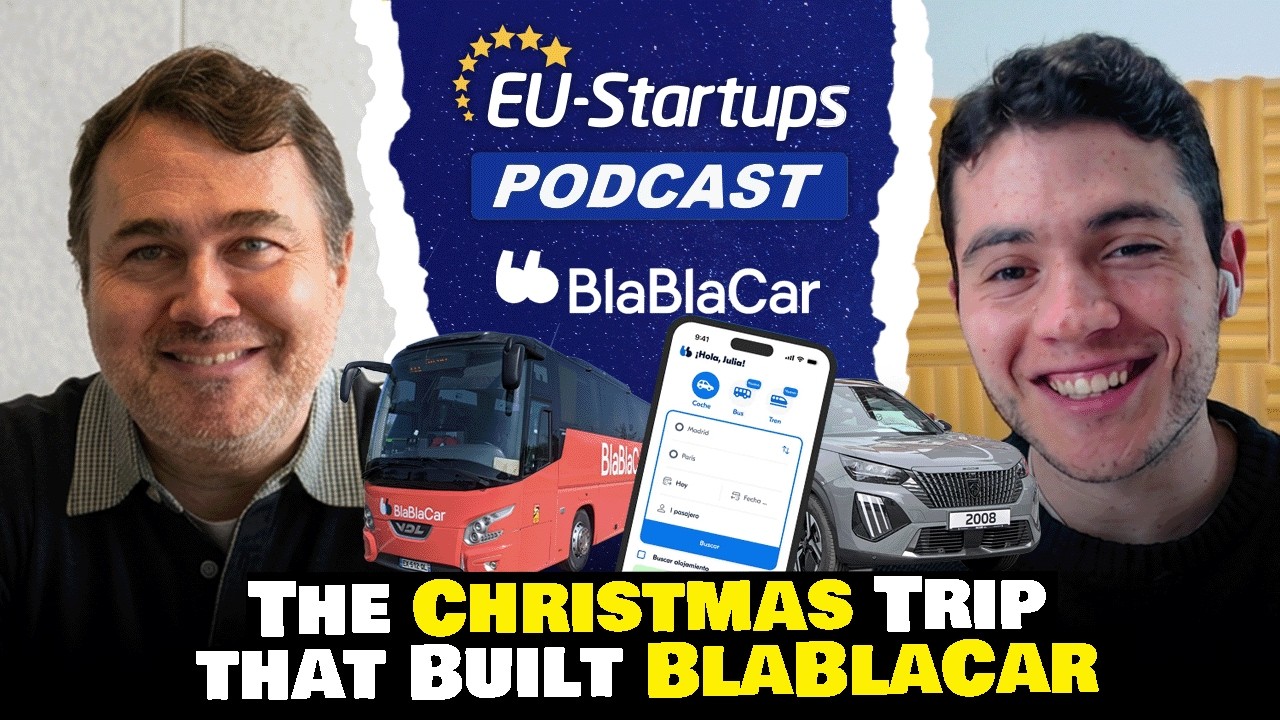
The Christmas Trip that Built BlaBlaCar - Interview with Frédéric Mazzella, founder of BlaBlaCar


#167 (English) Frédéric Mazzella: BlaBlaCar, piano players in the desert and Einstein

"Where to next with Blablacar ?" w/ Peter Zemsky, Nicolas Brusson & Frédéric Mazzella

Frédéric Mazzella: The importance of giving back | Founder & Chairman @Blablacar


South Summit 2016 - Frédéric Mazzella - Empowering communities to build a unicorn business


