South Summit 2016 - Frédéric Mazzella - Empowering communities to build a unicorn business

In this South Summit 2016 keynote, Frédéric Mazzella, founder of BlaBlaCar, explains how the company transformed long‑distance ridesharing into a massive, people‑powered travel platform and a trusted online community. He outlines the core business model—matching drivers with passengers to save money and make journeys social—then shows the scale achieved: over 35 million members across 22 countries and three continents. Mazzella describes the three pillars that members expect from BlaBlaCar: matching, trust building, and communication. The centerpiece of the trust strategy is the DREAMS framework (Declared, Rated, Engaged, Active, Moderated, Social), which supplies the six digital signals that enable strangers to trust each other. He details how the company cultivates community through shared values, the BlaBlaStars program, events such as BlaBlaTour/Times, a dedicated blog (BlaBlaLife), and on‑the‑ground meet‑ups. A joint survey with NYU Stern (led by Prof. Arun Sundararajan) of 18 000 respondents in 11 countries shows that full‑profile BlaBlaCar members achieve an 88 % high‑trust rating—higher than neighbors or colleagues and comparable to friends and family. Mazzella links these results to the company culture, emphasizing the “member is the boss” ethos, the ambassador program, and tools like BlaBlaHelp that let experienced members assist newcomers. The talk closes with a personal testimonial from a Spanish user, underscoring the platform’s impact on everyday life.
Chapters
TranscriptAuto-generated · 23 min
Final disruptor before lunchtime. This next company have completely changed the game, and how lovely was it that Robin was able to introduce this concept and also mention BlaBlaCar earlier on, setting the tone. So this is a company that is completely changing the game in terms of what they're doing, and BlaBlaCar is the most incredible experience. Raise your hands who've been in a BlaBlaCar. Oh my God, more, more! All of you with the hands down, get on it! It is so much fun. How boring is it on a 6-hour drive, alone, in the car, on a train, on your own? You get into a BlaBlaCar and you meet people like you. I went to Tarifa, I met Alberto, I got 3 bar recommendations, 4 restaurant recommendations, an invitation to a live concert. He made my holiday, he didn't just get me there. absolutely awesome. The same Alberto had 2 different girlfriends through a BlaBlaCar journey. My intern, who's French, got— found her co-founder and a new job through a person she met in BlaBlaCar going from Rennes to Paris. So it is way more than transportation. It's incredible what might actually happen in a BlaBlaCar. And without further ado, I am thrilled to invite to the stage Frederic Mazzella, founder of BlaBlaCar. Thanks so much. Thank you.
Thank you, Liz, for the introduction. As a final disruptor before lunch, I don't know if it's more challenging to be a disruptor or to be before lunch. You tell me. What I would like to share with you today is how we build an online trusted community, a massive online trusted community. We have a core value at BlaBlaCar which says share more, learn more, and it's really the spirit in which I'm coming today to share what we've learned, the concepts, some basic concepts that we we have experienced over the years and which have made the community we have today. So before we jump into the topic, I will just go back to what we do exactly, just to make sure we're all on the same page. So what we do is long-distance ridesharing. So we offer a possibility for drivers who have empty seats to share them with passengers going the same way. This allows the drivers to save money. It allows the passengers to have a solution for going to where they're going for an unbeatable price. And it's a very social experience also. As you can see, it's a bit of marketing, but still, you can see that when you're alone in your car, it costs you a lot of money and you get bored. And also it's in grayscale, in black and white. And when you are sharing your ride with people, it's all colorful, joyful, and then you have a pleasant experience with some people just like Liz. Thank you. Explained, the people you meet, it's the most valuable thing in ridesharing. So we mix actually 2 very big tendencies. The first tendency is travel search engines, and the second tendency is social networks. And for us, it's a trusted community, and that's the topic we will cover today. We will go into what it means to build and to have a trusted community, to fuel it, to construct it year after year, and so that we can build a transport solution today which is people-powered travel. This is a graph of our growth over the past few years. As you can see, we've found a solution to grow, but we've found also a product that can scale. And most of that scaling has happened not only because we've had very clever methods to grow our community, but also because we had the right product. For the community, and we've been able to build trust inside that community so that it could scale internationally. Because today it's a community of more than 35 million members in 22 countries over 3 continents. So another way to understand what we do, and it's true for any company, is to ask our members, our customers. So this is a basic question, and for those of you who are running a business, I think it's a very important question you could ask to your community anytime. Just ask them what they want you to do. You just say— so for us, we ask a question. We said, what is the role of BlaBlaCar? What do you think is the role of BlaBlaCar? And of course, not surprisingly, they had 3 choices they could choose from. Not surprisingly, they say, well, your first role is to find someone with whom I can rideshare. So it's matching. 74% of the people we surveyed said that your role is to match me with someone who's doing the same ride. Pretty basic, but still it's reassuring. The second thing though, they say at 63%, is that you are supposed to also help build trust in the community. You are supposed to not only connect me, but connect me with someone whom I can trust, whom I know, and whom I have enough information about. And the third thing, because our members have understood that this is a marketplace, so it's a community, the third thing they say is that you guys have to communicate because we've understood that the more people you have in Blablacar, the better it will be for us because since it's a marketplace, we'll have more matching opportunities. So the communication angle is also very important, and I'll just go through what we've done on all those 3 things to help growth, the growth of the entire community. On the matching side, it's, we use all the necessary technologies that allow us to make sure we match the right drivers with the right passengers. At least we propose lots of drivers to passengers, and then we help them matching. So we use, of course, all the technologies on the databases and search engines and connectivity. We have our product available from all platforms, mobile and web, and everything is synchronized. This is basic, but it's actually our job. And so we also have lots of matching algorithms to help people find the right rideshare for their, for their need. On the trust side, that's where we've worked a lot actually. We've understood over the years how you can build step by step information that are useful for people to build their trust towards people they've never met. So we've came up with this model which we call DREAMS. So each letter in this framework is actually the initial of a concept. So we've found out that For people to get trust in someone they've never met, they need to have access to several types of information. Those are the 6 pillars of trust. You want to have access to information which is declared, rated, engaged, active, moderated, and social. Declared is pretty basic. It's like your first name, your picture, your preferences, whether or not you accept animals in the car, what you've done in the past. Are you like a jazz player? Are you a math teacher? And also the preferences, maybe you don't know, so I'll just go around this. But the reason why we're named BlaBlaCar is because you choose if you talk a lot in the car or not. So you choose if you are blah, blah blah, or blah blah blah. I still don't know if I'm blah blah or blah blah blah. My profile says blah blah, but people say then after that I'm blah blah blah. So I don't know. Anyway, this is the reason why we're named that way, and this is part Part of the declarative information, you declare that you are— you declare your preferences. We've had people suggesting that actually this should be a rating as well, whether or not this person is blah, blah, blah, or blah, blah, blah. They should not choose themselves. But this is another discussion. The rated information, the ratings. It's very important for you to build your trust because you want to know the people you'd be travelling with. So you want to have ratings about what happened in the previous rideshares. So if you find the profile of José, then you will— he has 54 positive ratings, then it builds your trust. The engaged part is when you commit as a passenger to come. So committing as a passenger is booking online. And as a driver, it's accepting a request. But at least it's some form of commitment that the ride will happen. It brings more trust. It projects you in the future. Then the A is for active. So active is like all the information you have on your profile, which deals with the percentage of response you give to any request—98% or 2%. Of course, 98% is better than 2. How many rides you have published on the platform—is it 161 or is it your first one? All this kind of information. Where were you logged? Were you logged like 15 minutes ago or 3 months ago? This builds trust as well. It's the activity parameter, and it's things we can. Have, and it's digital information we can display in order for people to build their trust on. Then you have the moderated part, which is the moderation we do. So we do lots of moderation on the service. We also do perform a lot of checks. It can be checks on the telephone numbers and the bank accounts, also ID checks for some countries. And then you have the social angle, so you are able to link the profile to Facebook, for example, so that you'll know that this person has 322 friends on Facebook, and this will bring more trust as well to you because when the profiles are linked socially, then it brings more value to you. This is the Dreams framework. It's been a lot of work, and of course we weren't born with the Dreams framework. We really developed it over the years by listening to our members and understanding what they wanted. That's how we were able to build this framework in the end. Then the last thing is communication. So we've done a lot of things on communication. We are communicating a lot. with our members. Of course, on social media, we have millions of fans with whom we communicate. This is very important because it's a link between our members every day. We do some PR as well, of course, because we explain what we do. Actually, when we launch in a new country, it is very important for us to go see the journalists and explain what we do because it's not always obvious. Sometimes people think we're renting cars. Sometimes people think we're doing something else. So we have to explain we are long-distance ridesharing, and the press for this is very useful. They help us explaining what we do. We also have an online blog which we call the BlaBlaLife, which is the life of our members, where we publish lots of articles about anything which is ridesharing or not, with travel, with things which are very relevant to our community. And we also go on the ground for festivals, for example. We go on lots of festivals. We also have some other events which we call the BlaBlaTimes, where we meet the community. Maybe some of you have met some of the people in our team. So we go on the field very often. It's very important for us to feel the community as well. We do rideshare ourselves as well. I'll come back on that point. It's also very important for us to be connected with the community. So creating a community, if we go back to— if we step back and we understand what it is, what is a community, what defines a community, a large community I mean, where people don't know each other. There are actually 4 pillars in a community. Those 4 pillars are a common set of values. There also are people, people and people who are more famous than others in the community, so people that everybody knows in the community, for example. There are events which are created, and there are stories. This is true for all the communities you can think about. It can be true for any sports community like tennis fans or rugby fans or football fans. It's also true for a community of like this event, like a community of entrepreneurs and investors. It's also true, of course, for religions. It's true for jobs. It's true for many things. It's even true for countries. Any community has those 4 pillars in it. So if we take an event like today or a community like we are, the values will be motivation, innovation, success. The people will be the people who are successful, and then they make big things. The events will be events like this one, and the stories will be what happens to this company over time. So it went up, it went down, it went up again, and it's been bought, and all this. This is part of the stories for our community. What it means is that we have values as well. So we have a set of ten values that we actually crowdsourced internally from our team when we were sixty. We sat in a room, old room, a bit like this. It was a bit emptier because we were only sixty. But we sat and we said, "Okay, so what do we want to say to the next people who will be joining?" joining BlaBlaCar, to work at BlaBlaCar. And what do we share in common? What makes it so exciting for us to come to work every day and to work together and to build this great service and this great community? We came up with 10 values, the most famous of them being fun and serious. Why? Because, you know, when you're very serious, you can be proud, and when you're proud, you can have a lot of fun. If you don't do serious things, then you can never be proud, and the fun is not the same because you're you feel that you're stealing your fun because you don't deserve it. So at least when you've been very serious in your job, you can have a lot of fun because you've been deserving it. There are some other values. You see Share More and More I mentioned at the beginning, and lots of them are helping us. They are very action-oriented and they help us in shaping the culture of the company and making sure that today, even though we are 550 people, we still have the same culture, the same strength, the same unity in our team. And the good thing is those values are universal and we can spread them in our community. So our members also know— they don't know all the 10 of them, but they know that one of our main core values is fun and serious. The next thing is people. We do have a program which we call BlaBlaStars, where actually all those people are people from our community. They are writers, the people like you and me, and who have done something which is a bit exceptional, so we talk about them. So we display them to the community, and it makes everybody feel that they— like, we're all normal, but we're all exceptional. And it's also this thing which makes you feel part of the community. So it's very important. It happens in all countries, and this creates the people for the community, a common ground for talking as well. When they meet in the cars, they have those topics they can discuss. And it's very important for everyone to know the same people. On the events, so I said we have festivals where we go on those events, but festivals are not festivals we organize. There are music festivals which are organized and then we go there. But we do organize ourselves some events as well. We have what we call the Blabla Tour. You may have remarked by this point that we are very blabla. There's Blabla Tour, Blabla Stars, Blabla everything. The Blabla Tour is a series of Blabla Times. And the times are meetups we do with our members. We go meet them. So last summer we had 100 meetups in 90 cities in 17 countries. That's where we meet the members by groups of 40 to 80 roughly. And it's happening everywhere. And we're also, of course, displaying that on social media because it makes a very compelling story. We also have stories about the new features we launch, about the team, the founding team. Here's a picture of me with my co-founders Francis and Nico. And also the story about where we expand next and the stories about our fundraising. This makes the story of the company, and it makes the story of the community as well. People know our story, and they are linked to our company through the stories we tell them. So now that we see how we can create a community, how to create a trusted community, and so we've seen that with the DREAMS model, we are able to articulate how you build trust massively with digital tools. But then we wanted to know, of course, how well we perform. So we've conducted a survey. We've conducted a survey with 18,000 respondents in 11 countries. And we asked some basic questions. This survey has been conducted with NYU Stern, with Professor Arun Sundararajan, who is the most well-known person studying trust in the world. And so we've done this study together to make sure we could understand what we were seeing. So we wanted to know how much trust there is in these, in the BlaBlaCar community, and we asked a basic question. The question we asked is we asked people to rank from 0 to 5 the level of trust they have in several social contacts they have. Social contacts being social media contacts, of course, but also neighbors, colleagues, friends, families. And we asked them, so How much trust do you have on a level of 0 to 5 towards this social context that you have in your daily life? And then we considered that a high level of trust would be 4 or 5 out of 5 on this scale, which allowed us to make some percentages to know what is the percentage of people who would give 4 or 5 out of 5 on a level of 0 to 5 to this type of categories. So here are the results. As you can see, 16% of the people give a high level of trust to their social media contact. 42% give a high level of trust to their neighbors. 58% to their colleagues. And of course, at the top, you find friends and family at 92% and 94% of high level of trust. And then of course, you'll tell me something is missing here. Where are the BlaBlaCar members? That was our main question. So we were like, how do we rank in this context? So we asked the same question for BlaBlaCar members with full profiles, and then the answer is absolutely stunning. It's something that is brand new. It has never happened in the history of mankind, I would say, because we are now able to create a level of trust between people who've never met, which is a lot more than people who have met, like neighbors and colleagues, and almost as much as the level of trust you have in friends and family. This is the first time it happens. This will be an energy for the next generation in the coming years. It will be very common for people to know that they can trust people online thanks to their online profile in the coming years, but today we're really living through that. So if there is one number you should remember from this presentation, it's 88%, because I think we will hear that number again in the future, and we will also do everything we can to hire it. So some few words about the company culture to make sure that we are actually the community as well. What's beautiful with all the transparency that we are developing in our new world with all the connectivity technologies and the social networks and everything is that everything is becoming transparent. So the best way to be in sync with your community is actually to have a company culture which is compatible with your service, with your community. We do rideshare a lot as well, and so I'll go through a few values we have in the company that are very relevant to the community itself and that are spreading and that are resonating in the community. So we have a value which says the member is the boss. The member being the member of the community. So everybody loves that one actually because it means we're all the boss. So it's very, it's very rewarding. But it's true actually, we listen to what the members have to tell us to make sure we make the product evolve according to the needs. The second value is think it, build it, use it. We are all ridesharers in the company. The picture you see here is the wall of ambassadors in our office in the HQ in Paris. Actually, when you begin ridesharing— so I don't know how many of you have rideshared already, but when you begin, you are a beginner, of course, and then after you become experimented, and then you become an expert, and then you become an ambassador. Ambassador is kind of the highest status you can get. And those ambassadors— so there are like 400,000 ambassadors in the community, so it's about 1% of the 35 million members we have globally. But those ambassadors are us, actually. It's the employees at BlaBlaCar who are ambassadors. So the ratio at BlaBlaCar is a lot, lot, lot higher than 1%. We do rideshare all the time, and we know the service, and that's how we make it evolve as well. So that's one of our values which really goes from the company to the community and to the service. Another value is passion. Of course, you can't build this without passion. So we are passionate, we innovate is one of our core values as well. We create new tools for the community, and one example I wanted to highlight Here is what we've created, which we call the BlaBlaHelp. Another BlaBlaSomething. The BlaBlaHelp is a tool that allows experimented members to share their experience with the new members. This is really a community feeling. So what you get is that thanks to the BlaBlaHelp, you can ask questions directly to other experimented members, and you get 95% of the answers in less than 10 seconds. And the rating is super high, 4.7 out of 5. and the discussion time is 6 minutes. It's really a community tool that scales with us, where the experimented members are able to give advice to the new ones. And to finish with, because I'm sure some of you in the room still haven't done a rideshare, I wanted to make sure that you do at least one in your life, and so we'll do a rideshare with Mariam through this wonderful video.
Me llamo Mariem y estoy estudiando un máster en Sevilla. Hace 2 años ya que empecé una relación a distancia con mi novio, que vive en Málaga. Entre Málaga y Sevilla hay 200 kilómetros de por medio, que no es prácticamente nada, y nos dijimos, no puede ser que no nos veamos todos los fines de semana. Pero claro, teníamos que encontrar una opción que nos permitiera hacerlo sin arruinarnos. Y fue así como conocí BlaBlaCar. Me lo dijeron unos amigos, me metí y me hice el perfil. Gracias a BlaBlaCar hemos podido cumplir nuestra promesa, nos hemos visto todos los fines de semana. Nos ha aportado, por supuesto, independencia. ¡Soy yo! En todos los sentidos, para poder organizar nuestro tiempo, para poder organizar nuestra relación e incluso para no organizarla y que salga algo espontáneo.
More from Frederic
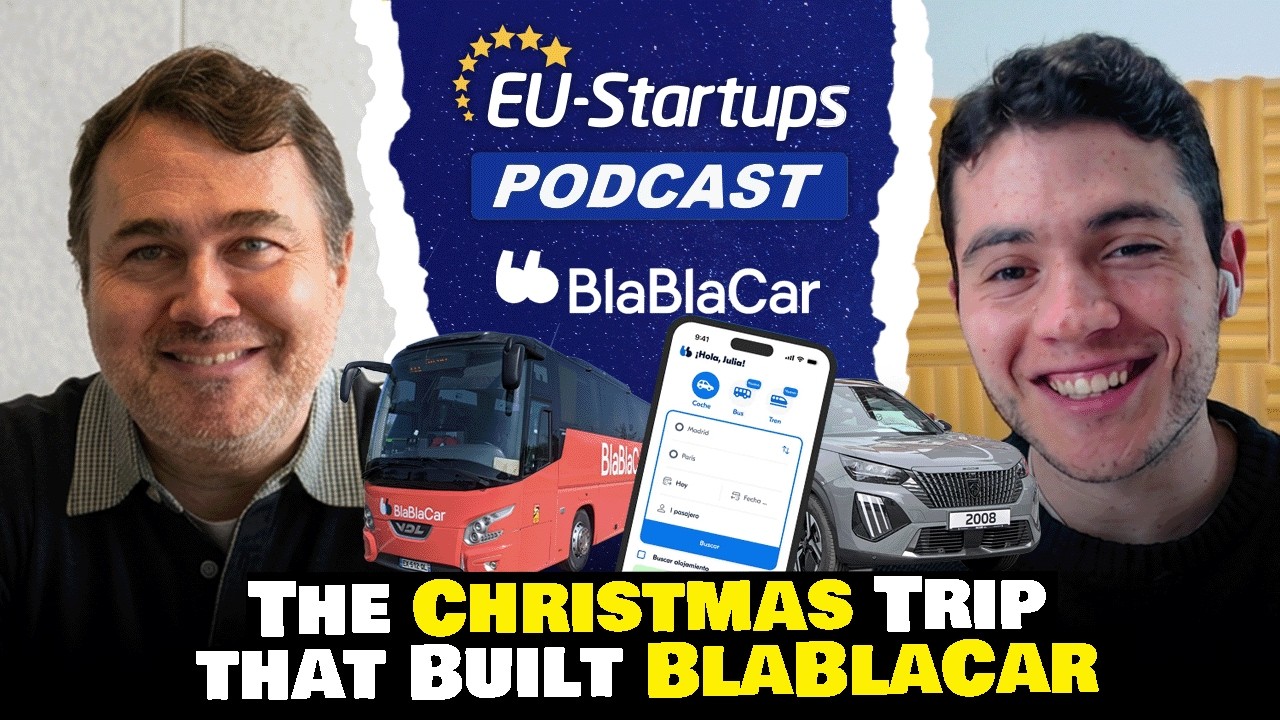
The Christmas Trip that Built BlaBlaCar - Interview with Frédéric Mazzella, founder of BlaBlaCar


#167 (English) Frédéric Mazzella: BlaBlaCar, piano players in the desert and Einstein

"Where to next with Blablacar ?" w/ Peter Zemsky, Nicolas Brusson & Frédéric Mazzella

Frédéric Mazzella: The importance of giving back | Founder & Chairman @Blablacar


