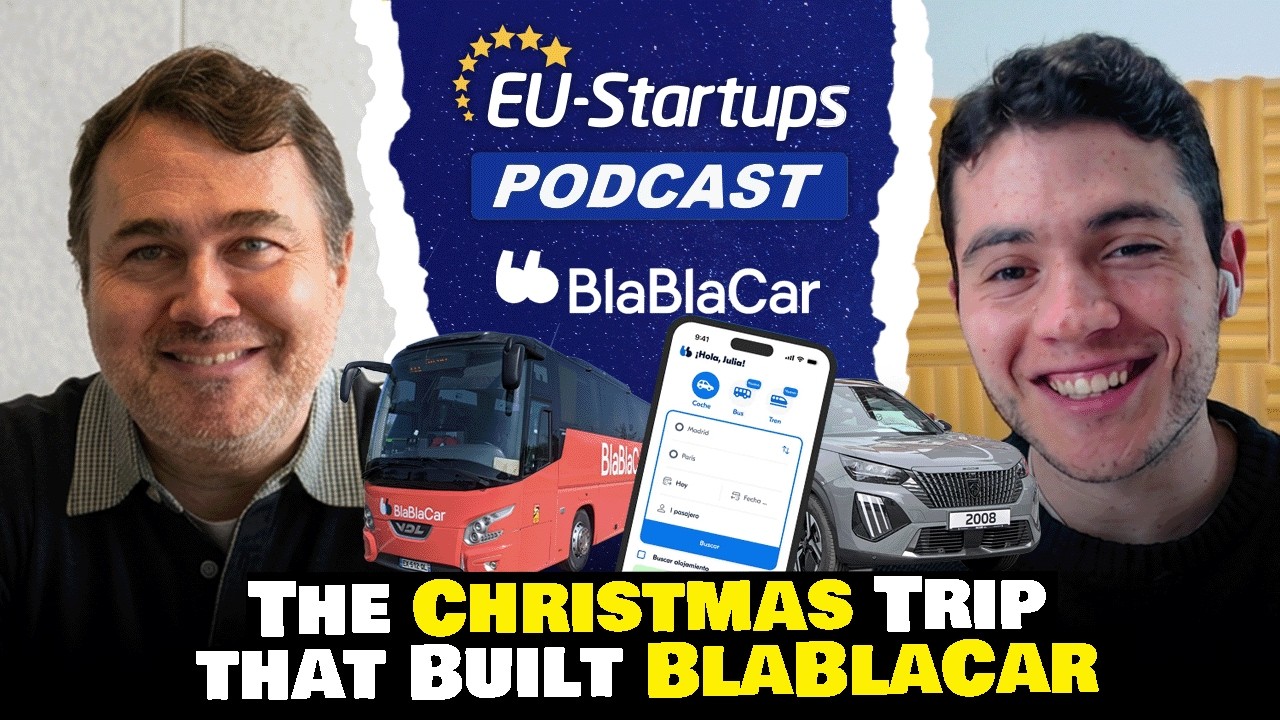
In this Startup Grind Europe interview, Frederic Mazzella, founder of BlaBlaCar, explains how his long‑distance ridesharing platform differs fundamentally from on‑demand services like Uber, emphasizing a community‑driven cost‑sharing model where drivers and passengers share personal travel purposes. He recounts early skepticism, the impact of Uber’s launch on investor perception, and the importance of the broader sharing‑economy narrative. Mazzella reflects on pivotal missteps, notably the initial use of the French term “covoiturage” and a B2B‑first strategy that failed to generate marketplace liquidity, leading to a later focus on a pure B2C model. He shares growth milestones—reaching 1 million users in seven years, then accelerating to millions within months—and highlights market penetration in France (over 40 % of 18‑35‑year‑olds) and the goal of 60‑70 % penetration. Marketing tactics relied heavily on PR, especially leveraging train strikes to showcase the service’s reliability. Looking ahead, he argues the platform is future‑proof, capable of integrating autonomous vehicles, and stresses the need to stay alert to unknown risks by constantly networking, attending conferences, and monitoring emerging trends. The interview concludes with his mantra of watching for the “things I don’t know” as the primary concern for the next two years.
Chapters
TranscriptAuto-generated · 13 min
Thank you, everybody. That's really very kind. And thank you, Frederic, for being here. You just came into town last night, right? Yes, I did. Fantastic. Did you drive, take a BlaBlaCar?
Actually, I came this morning, actually.
Oh, you came this morning? And using your own service, or no?
No, I did not. You know, the London to Paris link is not the best one for ridesharing. Because there's some water in it for some reason, and so it takes longer.
Right. Okay. So I tend to ask questions that I think, or I'd like to think, are sort of off the beaten path in that I recall sitting in lots of audiences and thinking, you know, it's interesting to hear about people's journeys, you know, what they found, you know, useful or lessons learned and all of that, but you can also get a lot of that from blog posts, great communications, from the company and from other talks that, you know, great people like Frederic have given before. So I kind of like to, probably a little annoyingly, tease out different things and different sort of stories. So with Frederic's permission, I'll go into some of these, but I also then haven't briefed Frederic. So if he starts to blush or get red and I sort of change tack, you'll know why. But the first question I want to ask is, you know, you started the company quite some time ago, and it's one of these, you You know, everyone talks about how an overnight success takes so many years to do. I'm curious to know what your, what your reaction was when Uber launched.
Well, so the, the models are very different. We are a community of people sharing the cost together. So it's long-distance ridesharing. It's people like you and me who have available seats in their cars. They're driving, let's say you're driving from London to Manchester, you have 3 seats available, you offer them and you share the cost. So the model is different because it's a community. We don't have professionals. Nobody makes a profit. It's just about cost sharing. And well, if you stop— the best way to see it is that if you stop a car, an Uber car, and you ask where people are going and why they're going there, you'll see that one of the person in the Uber is actually driving the other to some place. For when— if you stop a BlaBlaCar, you'll see that everybody has something to do at destination. They're visiting their families. They're going on a weekend. They're going for anything that is personal, and they have a real reason to go there. So the models are different. We are a community today. It's 30 million people in 22 countries, and it's people sharing their travel together.
And I appreciate that, and I think that's phenomenal. You've got a much stronger, I think, like you say, community and network that you're using, and it's not simply just a marketplace of sort of professionals and riders, but In terms of the investor community, when you're launching in new markets, wasn't there sort of a reaction that people had which might have been dismissive to what you've been doing when a big behemoth comes into the market?
Well, actually, it's always positive, you know, when in somehow your space or close to your space there is some action and there is some new investments, because it brings credibility to your own activity as well. So it allows you to also raise money because then the investor community realizes that there is a lot of potential in this kind of new service. Because, you know, when I started, like, nobody thought it would work, it would ever work. And so it's hard to imagine today because there's been like all those— there's a sharing economy movement, and now it's so obvious that we have so many assets which are unused and that we can make better usage of. But at the beginning it was not. And so When you have massive investments in the space, whether it's Airbnb, whether it's Uber, even if Uber is more on-demand than I would say sharing economy, but it's, it's a bid in the space. It helps the entire ecosystem.
So did you ever have an oh shit moment? Okay, that's my signal to change tack. Okay, how about this? Put this way, what if you could go back? What's one thing you could change or do differently?
I would start directly with the brand BlaBlaCar. And, uh, because we started with, uh, like testing the, uh, concept with a name which is a bit French, it's, uh, covoiturage. I'm not even sure you can pronounce it. Covoiturage.
Covoiturage.
Almost.
Yeah, say fast.
Fast. Covoiturage. Uh, and so then we had to change the name along the way, and it's, uh, it's a pain because, uh, you have to rebrand everything. And then when you're expanding, you have to find a word that kind of works everywhere. And so, yeah, it's been painful. I would— and the other thing I would do differently, though, is we started with a B2B model because we thought that the companies could help us really scale the model. And actually, it did not because we developed more than 200 platforms for companies, more for home-to-work ridesharing, which is more like commuting. But those platforms didn't bring a lot of traffic. We thought we could build the marketplace that way, but it did not really happen that way. Because when you create a marketplace, even like a community like ours, you still have drivers and passengers, so they have different behaviors on the service. And it's like building 2 companies at the same time. You have to build a company for the buyers, company for the sellers, and it's that's why it makes it so difficult because you need liquidity and you're building the 2 sides of.
And you said when you started, so many people told you they didn't think it would work.
Yeah,
so I assume— I'm now guessing, you know, for the first few years you're wanting to prove them wrong. What do you want to prove in the next 2 years?
That it can work everywhere. So we're still expanding the service. Well, everywhere where it makes sense, because there's a lot of cars which are empty everywhere. You know, the ratio on How much we use the cars and how much it costs us is incredible. Uh, so it costs in between 7 and 10% of the GDP to actually run the entire fleet of cars everywhere. And we use them really to go from point A to point B in between 2.5 and 3.5% only. And when we drive them, because all the rest of the time they're parked, you know, or they're in traffic jams or they're looking for a place to park. But so we only use them like roughly 3% of the time, and when we use them, they're all empty, like they're 3/4 empty. So like the way we use the fleet of cars is really unbelievably, unbelievably not optimized at all. So I want to make sure we continue to optimize that.
But as you say, it doesn't apply to all geographies or all regions, right? When you started it, even though you might have— you obviously had this sense and you were willing to defy people who didn't believe you that this was going to work in France, where you started. Did you imagine that you would be as successful as you are today with 30 million users, for example, in all the different countries that you operate now?
Well, the way I thought about it was it does not exist because if it existed, I would know about it. I'm traveling so much that if there was a way to travel which is like BlaBlaCar today, if it had existed at that time, I would have known about it because I would have used it. And so the simple fact that I said I would have used it and I'm a normal guy made me think that this is simply massive. If you look at France today, we have more than 40% of the people in the age range 18 to 35 who are using BlaBlaCar. More than 40%. And it's still growing. So I like to count that way. It's still growing 4 times faster than the birth rate in France. I'm just talking about France, which is our oldest market. So we're still growing a lot with a high penetration rate. And well, I'm— I think we can maybe go to 60-70% penetration rate. I mean, it's all the people who are traveling on distances.
So you want to completely monopolize your main markets and also increase penetration existing markets and expand into new markets? Yeah,
well, it's, you know, a marketplace in a village. You have only one marketplace. And there's a reason for that, because if you put 2, then you don't have liquidity. So the fact that we're a marketplace where everybody meets is because it's for convenience. If you publish a ride on the platform that nobody's looking at, then you'll get no match. And if you look for rides on the platform where nobody is publishing, then you get no match either. So that's why everybody gathers to the same platform.
And so when you're doing this 2-sided marketplace, where do you focus most of your marketing then, or your customer acquisition? Which side, on the supply or the demand?
You know, the startup life before you raise funds is that you don't have any marketing to spend. So the good thing is that you can use PR, you can use— you can communicate. So you discuss a lot with journalists and you make sure they write about your activity. And there are some magical events sometimes. For us, it's when, you know, and it happens a lot in France, when you have train strikes. When you have train strikes, Then you just say that your service is available, you're not on strike, and then you get everywhere in the news, on TV, and everywhere. And then people know about your service because they realize it's very useful.
So every cloud, silver lining. Okay. So we didn't want to talk about your oh shit moment. What is your most celebratory moment? It might be something really small that you just knew was something you were proud of achieving, or it's something that other people in the whole company celebrated with you. What is the one moment you remember as part of this journey that, you know, when you're kind of writing your book, this is the one that you're going to put on the back cover?
Well, of course, there's the founding moment, I would say, where I realized, you know, I needed to go back to my home place in Vendée, which is about 300 miles from Paris. And I was finally— I was looking for a train ticket, and then everything was sold out. Finally, my little sister picked me up, and then she brought me back to Vendée with her car. And then on the road, I could see the trains which were full and the cars which were empty. And then at that moment, I was like, oh my God, like, all the trains are full. I couldn't get a train ticket because from the highway you see the trains, and, and all the cars are empty. And the cars, it's a continuous flow, and the trains, it's only one every hour. And so I was like, we need to index all those available seats and make sure we can look for them. So that's, that's certainly a super good moment, which has then helped me going through all this first, the early years, which were super hard to prove that it would work because it was a lot of belief and lots of people didn't believe it would work. And also I was using it, you know, at some point I remember even my, my mother telling me, well, I don't know if it will work, but at least I see you more often, so I see you're coming and visit me more often, so somehow it's useful. But so, and then the other moment would be, I don't know, when we reached 1 million members, because that was already some kind of proof point that we were able to reach millions of people.
How long did it take you to get the first million, and then—
7 years.
And then the second million?
1 year and a half.
Very nice.
And then the third million, 6 months, and then now it's Exponential trajectory.
And do you worry about, you know, everyone talks about autonomous vehicles, self-driving cars, and the whole like, or do you think that's so far out that you still have this opportunity to get to, you know, 60-80% penetration in markets?
Well, if we look at the way we structure the service, we are, we're matching people who are going, doing the same travels at the same time. So today we are matching drivers who have empty seats with passengers going the same way. Tomorrow, if we have to meet to make passengers match and there is no driver, it would still work. Actually, that's, that's the magical point about it, because we could put place like driverless cars in the system and still have 3, 4 people going the same way in the car.
So it's future-proof. So then what is the one thing you're most worried about for the next 2 years?
The things I don't know about.
And then how do you prepare as an entrepreneur for trying to find out early about what you don't know?
I go to conferences. No, I talk to a lot of people. I talk to investors. I travel a lot. I try to keep my eyes open. I always look at the new things because I know that anything which is new new is an opportunity, and it's also a risk for any existing actor. So like, I keep, I keep my eyes open all the time.
Brilliant. Thank you very much. Please join me in welcoming and thanking Frederic.