A Simple Plan B - Part 1
Coach G outlines a beginner's path to financial independence through buying and holding single-family homes with low down payments. He ranks what matters most: character, patience, and asset quality. The strategy avoids cheap properties and relies on long-term holding rather than flipping.
Questions this video answers
March 22, 2025
Gordon Moss (Coach G) from San Diego, California
realestateandnoteinvesting.com
A VA foreclosure — a three-bedroom, two-bath single-family house in Las Vegas
Less than $5,000
Chapters
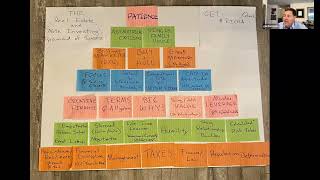
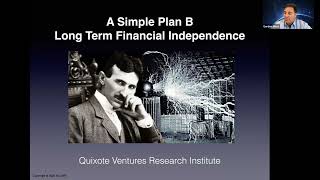
Good morning America. Let me get started here. I'm going to give a little introduction and then I'm going to share my screen and let me just get this going here. Okay, okay, okay, okay. I'm going to share my screen right now and I'm going to share it. Okay. Good Morning America. This is Gordon Moss from San Diego, California. I am the top guy at Quixote Ventures Research Institute. And today I'm going to do a presentation which I call A Simple Plan B. A simple Plan B. Long term financial independence. Of all the stuff that I've worked on and done through the years, I said what's the most relevant thing that is time insensitive. Basically it was good 20 years ago, it's good now and it'll be good in 20 years. It's immortal in my opinion. This presentation of A Simple Plan B is that I'm here in San Diego, California. Actually, you can see behind me. I've. Today is March 22, 2025, and I'm on the space station up here. Elon Musk just delivered two of the astronauts back to the, back to the earth. And he's I think the most accomplished individual on the planet, one of my heroes. And Tesla, you see him right there on the picture. Elon named his car after Tesla, who invented the electric motor, DC power, X ray, the list goes on. But two geniuses, but yeah. So here I am in San Diego, California doing a presentation called A Simple Plan B. Let me give some opening comments on it. I, I want to put a word of caution out here. This presentation is not designed to impress the pros. It is for the novice investor looking for a safe and sure way to build a small fortune and retire early. That was me. And after 40 years of diligent dedicated study, many long weekends on tiny cheap conference room chairs, many terrible cruise ships, cheap hotel conference rooms all over the world in pursuit of the secrets of the master real estate and note investors for personal financial independence led me to this presentation. In this presentation I've got all the ideas, the concepts, the philosophies, the character traits, the motivations, the inspirations, great stories and humor. The culmination of which I have entitled A Simple Plan B. That's the name. So let me break that down. Simple means simple. And this once again is not designed for the professionals or the pros out there. It's designed for everybody. It's designed for the regular guy that I was 30, 40 years ago who had a job, who didn't like it and wanted a way out. I Searched hard because I had to find a way out. And eventually I did. But so I didn't. I had a job for a long time and I did different things. I was a broker, I had a corporate job. But the reason I call this Plan B is. Plan B is about investments. Investments, long term investments. Plan A, in my opinion, is your business. It's your income. You can be a doctor, lawyer, builder, Indian chief. I'm not about this. This is not what this presentation is about. Your plan A, go do a plan A. But while you're doing it, have a plan B. And I'm going to lay this out to you as clearly as I can, as simply as I can. A simple Plan B for your retirement. Few understand the difference between a business and an investment. Okay. People get confused about that. Plan A and Plan B. It's important that you understand this. Robert Kiyosaki wrote a great book called Cash Flow Quadrant that explains this difference very well. Once again, our focus is Plan B, your long term investments. And I've worked hard to explain it and bring it to life as simply as possible. I ask people, I say, do you save for retirement? Pause. Do you save for retirement? The answer is no, you do not save for retirement. You make small down payments on the safest, high quality assets, nice single family houses and hold them forever. Let's make it simple and guaranteed. How long does it take to pay off a 30 year fixed rate, fully amortizing loan that you might have on one of these houses? 30 years. Might it all happen much sooner? Yep. But you must get started now. You must get started now. Everybody wants to wait. So that's kind of a general overview of what we're talking about here. Let me talk about the format that I'm going to do this in. I have created from one of my heroes. He had what's called the Pyramid of Success for his basketball teams. I created the real estate and note investing Pyramid of Success and I'm going to show it to you. And, and it's a bunch of blocks in a pyramid that make up the foundation of this pyramid. Things that you should focus on, things that you should learn, things that you should study. I'm going to break this presentation down with that. Once I get through the main part of it. I've also got some resources, what I call Big G. Big G is an artificial intelligence generative clone that I've developed. And I said, you know what? Why would I want to do that? I said, well, I want to be relevant these days and AI is, is happening in the world right now. How can I use it? I said, well, why don't I feed every presentation and every thought and everything I've written over the decades into my, into my clone. And once again, he's generative. He basically learns 24, 7 and gets smarter than I am. So you'll see it on the website. My website is real estate and note investing.com realestate and note investing.com. when you go there, it'll be up again shortly, but you'll see Big G, the AI generative clone. And you can ask him questions. He's basically, he's kind of a front office for me. So most of your questions you can get through him. And guess what? He gets smarter. So he's out there searching the market, searching the Internet, looking, you know, out in the world and saying, okay, what, what, what, what, what? That's the AI thing, and one day he'll take over. But I also thought about him. I said, you know, he, I look at guys like Jack Miller, who I was a fan of, a student of, and I wish he was around. He's been dead for about 15 years now and I'd love to be able to say, hey Jack, you know, I'm thinking of this next crazy idea. What do you think? What would you do? Am I on the wrong track? Help me out. So I said, you know what? I can create this clone and when I'm not here, maybe in 20 or 30 years or whoever knows, he'll still be there. So I'll become immortal through Big G, my AI clone. So more about that later. But, so that's what we're going to do today. We're going to talk about the pyramid of real estate and note investing and illustrate a simple Plan B through it. So let me get started. This is a picture of Jimmy Napier. Jimmy Napier passed away about 10 years ago. He's there at Caesar's Palace. In the picture he's got that quote at the bottom. He says, if you think education is expensive, try ignorance. Jimmy Napier, he's one of the four, what I call the Four Horsemen that were my mentors for 30, 30 years. I went to an event in 2001 in Las Vegas and it was called the millionaire makers. In 2001, Pete Fortunato was there. I'm going to talk about him. John Schaub was there, Jack Miller was there and Jimmy Napier was there, two of which are still around. So if this stuff interests you, two of them are still teaching and they're great teachers. A simple 10 year plan I'm trying to get people to think long term here. We're not talking about your income once again, we're not talking about your business. We're talking about a 10 year plan. People overestimate what they can do in one year and underestimate what they can do in 10. Here's a poster that actually, it's a shirt that Pete Fortunato often wears. It says, enjoy Capitalism. Enjoy capitalism. So few Americans do. We live in the freest, greatest society in the history of the world. And so few people take advantage of it and capitalize on capitalism. They, they don't like it. So don't be one of them. I developed this poster 10 years ago because once again, I think in 10 year increments, act today, prosper tomorrow. The 2020 vision act today, prosper tomorrow. I'm going to say this many times during this presentation, but I hear these people and they say, well, yeah, I'm going to do that next year. I'm going to start this later, start now. There is no excuse to not start now. You live somewhere and if you're renting, you should own it. And if you own it, you should go buy another one and keep that one as a rental. That is a simple Plan B more to come. Why did I write a simple Plan B blueprint to financial freedom? Because it seemed a much more noble and satisfying endeavor than to build up my pile of assets beyond what I could consume. I found the rewards far more satisfying from the feedback I get from people that I have influenced in a positive way and set on the right path towards reaching their financial goals. But my brother is in Mexico right now fishing full time and he's retired at a relatively young age. And I can say, you know, I had a part of it. I gave him the direction. He did it. He did the hard work part of it and suffered through it and dealt with it for a long time, 10, 20 years. But now he's retired at a relatively young age. My friend tells the story of his business associate who had thousands attend his funeral. He had always said, find your gift and give it away. Find your gift and give it away. He lived this mantra through his own life. And the people that he had influenced paid him this greatest respect when he left this world. So people say, why are you doing this? I say, this is the best thing I can think of to give back to all these people that taught me. And once again, my goal has never been to impress the pros with my double backflip, with a twist. My goal is to Speak to the regular people. So if you have a. A son or a daughter or a nephew or a relative or a friend that you know is struggling and looking for a way, that was me and this is the way that I found. And it's simple and anybody can do it. So my goal in writing this is to give my gift away and provide a simple plan for the average guy. A plan I wished I had and understood 40 years ago. A plan so simple it will surprise you, it will shock you. Can anybody do this? Anybody with no financial education, no large chucks of investment capital dollars, no connections or rich or influential uncles in their bloodline, anybody with 10 years or more of an investment horizon, a regular job or business income, and a willingness to try a little harder than the average Joe who ends up broke after a long career of hard work. 10 years. I want to emphasize this most. Overestimate what they can do in one and underestimate what they can do in 10. If this upsets you, please run away now and chase the next squirrel or shiny object. Let's not waste either of our most valuable asset, which is time. Like most, it took me the decades of my youth to realize the false promise of get good grades, get a good job, that it didn't work in building the wealth I'd need to create financial independence. After many failed attempts at getting ahead, it was not until my 37th year that my study under the Master's of real estate and noted investing led me to purchase my first VA foreclosure. Veterans Administration foreclosure. I'm going to talk about those. It was a well located three bedroom, two bath single family house in Las Vegas, Nevada. My family was there, my parents were there, my brother and sister were there. So I picked Las Vegas. My small and I call it an asymmetrical option down payment amounted to less than $5,000 and the fixed low interest 30 year assumable financing that allowed the house to pay for itself. There was no negative cash flow. Incoming rents from my tenant covered the expenses, the principal, interest, taxes and insurance and attracted quality, low maintenance, long term tenants. Which makes it very easy to own and keep for the long haul. I still own this home today and the value and rents have increased significantly. That was it. That was my first deal. Is that the whole thing? Is that it? Buy a quality single family house with a low down payment and great financing terms and. And hold it forever, Rinse, repeat, that's it. Sounds simple, simple Plan B it is. But let's dig a little deeper. Do you live In a nice safe neighborhood with good schools, churches, transportation and community amenities. Maybe in a nice small, three bedroom, two bathroom, single family house. Do you like it there? Guess what? So does everybody else. What if you owner occupied and purchased this house with a low down payment, fixed, low interest rate FHA loan on one of these gems in an area with good growth prospects. You want to be in a good area for the future and bought another in a year or two while keeping the first one as a rental. What if you did this 10 more times? Might that be enough to set you free? Where could you go from there? Could you dig in and study and master property management skills, acquisition skills, creative owner, financing skills, wholesaling deals. You become an expert at creating. You can take this as deep as you want to or not. You can keep it simple. This is a simple plan. Let me show you the secret to this business. Pete Fortunato, if you know him, is a genius. He really is. And he lives this business. People say that he reads mortgages on the weekends for fun. That's just what he does 24 7. His whole life he's been an investor and he's a good teacher. But he has his son who has come up his. His family. I think his son Luca is about 35 years old now. And Pete has been pounding him in, in his head since the beginning to enjoy capitalism, to not get a corporate job, to go out there and do this. And so he's. I was speaking at an event and Pete was speaking before me and he made this comment about this nice, nice Lucas Story is what it was, what he calls it. And I said, you know what? Would you write that down? So Pete Fortunato, those are his hands right there. Pete Fortunato wrote this down for me. This is the secret to building wealth. It is Pete Fortunato's business plan and it's Pete's son's understanding, simple understanding of what Pete does, what the family business is, what they do. Here it comes. This is Lucas Story. This is Pete's son, who he's been talking to once again forever. Here's what we do. Here's a simple plan. We acquire nice houses in nice neighborhoods which we rent to nice people who take care of our nice houses and who pay for them for us. I'm going to say that again. We acquire nice houses and nice neighborhoods which we rent to nice people who take care of our nice houses and who pay for them for us. You want the secret to building wealth? Then stop right there. That is, you can see, is the Las Vegas, Bad carpet. Pete Fortunato's handwritten story of what his son Luca understands the business is. And that's as simple as I can make it. That was from 2019, and I just explained that to you. But that's from the master of the masters, Pete Fortunato. And it's really that simple. That's exactly what he does. Pete is smart enough to do anything and he sticks with single family houses, nice houses that other people pay for for him. All right. Trading your precious few hours of energy on this planet for after tax dollars as a wage slave will only lead you down the path to poverty in your old age. Once again, you do not save for retirement. You instead you acquire high quality, nice, low maintenance assets, single family houses with low down payments and long term, low interest options and let the tenants pay for them for you. Buy and hold forever. That's what I am. Single family house is what we buy with an option payment, is what I call it a small down payment. Because if I made a mistake and paid too much or whatever I did, I only lose the down payment. That's all I'm into it for. So it's a small risk, small down payment. And then I never sell them. Buy and hold. Okay, let's get more specific. What a single family house. John Schaub was one another one of my mentors, and he talked about, once again, the nice house. You need to be careful when you get started because you're going to get seduced by the ghetto properties which seem to cash flow better. But when they have bars on the windows and graffiti in the neighborhood and it's just not a good place, the people that are going to rent there are going to drive you out of your mind and you will quit. So once again, you need to find a nice house. But it took 10 years for John Schaub to convince me that a nicer, that a higher end nice house was a far superior and much more easily managed asset for the long term to build wealth. I was seduced, like most people, by the cash flow of the lower end challenged neighborhoods and had to learn my lesson the hard way. Read John Shabb's book, Building Wealth One House at a Time and learn the easy way. Pete Fortunato, aside from all the benefits, once again, that that real estate provides appreciation, depreciation, amortization, etc. Pete made it clear that a house is unique. It's the use of a single family house that was the key differentiator in determining the fact that other types of investments paled in comparison, people live in a house. It's a different unique investment. And I'm going to talk about it. Jack Miller wrote an article about, he called them horizontal apartments. He got asked once, he said, you know, Jack, why don't you just step up and buy an apartment building? So you'd have one, you know, large tall building and all your tenants would be there, your hundred tenants, instead of running around town with 100 different little houses everywhere. He said, nope. He says, it's a different world and I'm going to talk about it more. But you, you know, all this other stuff, I didn't say commercial, I didn't say land, I didn't say condo, I didn't say apartment building, I didn't say mobile home, I didn't say any of that. I said nice single family house. That's what they focused on. And once again this game changing article entitled horizontal apartments. He outlined the benefits of a single family house and why it was far superior to a horizontal apartment building. So if you get seduced to go big time and go start buying commercial or land or apartment buildings, these guys didn't and they're very successful. And I've taken their example. A duplex is not twice as good. And exit strategies. Think about that for a minute. When you're trying to sell your apartment building, who are you going to sell it to? Probably another investor, a small market. And they might have to get a large down payment or ask you for financing. Things like that. With a house, there's a lot of entrances for the new buyer. The financing is set up for them. It makes your job, if you ever do sell the house much easier than selling some commercial or other type of property. Wall street commoditized the single family house about 2009 when the crash happened. So they used to be into the apartment buildings and office buildings and those type of things, land. But when the market crashed the way it did in 09, Wall street also got in to the single family house game. And people like Blackrock and everything. This is John Shaub's book, Building Wealth One House at a Time. I highly recommend you get this book. John Shaub once again is a single family house, a nice single family house investor. And you'll learn a lot from this book. Okay? People often say to me, they say, well, you know Gordon, I don't have any money, I can't play. And I say, well okay, I didn't have any money either. So how do you do it? How do you buy your first house? And I put it this Way I said buy it with an option. An asymmetrical option. And what exactly does that mean? I call it the right but not the obligation for a small amount of consideration to close on a deal. Once again, an option. The right but not the obligation. You don't have to close for a small amount of consideration. Small to close on a deal. It's the lowest risk way to get in. Yes, you'll need a little bit of money. You have to save a little bit of money living below your means for these down payments. But once again, if you make a mistake and you buy, pay too much or whatever you do, you can live to fight another day. Small amounts leverage large amounts to maximize upside and minimize risk. Do we. Does anybody know the future? Nobody does. And the ones that tell you they do run away from them. But so can you see around corners? Nope. Me neither. This is the lowest risk and most profitable and overlooked strategy in today's investment marketplace. An option. It was so interesting to me that I created a poster. I call it the asymmetrical option. And you look at that stick right there. On the left hand side is a penny, a small amount of money. On the right hand side are two big bags of money. The goal. And this option changes the fulcrum. It changes. If you look at that and say wait a minute here, those two big bags should fall down and the penny should go up. Not with the option. What you're doing is leveraging yourself into a deal with a little bit of money, that penny to go after the large amount of money. An option key. If you don't have any money getting started a really good book on on options and the whole game is by Zeckendorf. He was a New York developer in the 50s. He was part of the United nations building. It was an old slaughterhouse, smelled bad on in Manhattan and they tore it down and build a the UN building there. And. And he knew about that and basically optioned all the buildings around it for a fixed amount, for a long term, for a little bit of money. And basically when the UN building was built made a fortune through options. But Zeckendorf, that book is hard to find and worth reading. All right, how long? Once again we're looking long term and if we're looking long term, 10 years to forever. You want easy to manage high quality assets. I'm going to say that again and again. Get nice ones. Don't get junk. Don't do it. You won't last. And that's the key you need to last. Get rich slow. Which is a guaranteed plan for long term success if you do it correctly. So buy and hold, never sell. That's it. Find an asset that's so good and it's going to be good in the future too. A blue chip, you know, beachfront, whatever you want to call it, quality asset that everybody else wants, that's in demand, that'll continue to be in demand and hold it forever. Here's the best advice I ever took. One time, John, John Shop said to me, he said, he said, he said, get your payments up to $20,000 a month. Get your payments up to $20,000aMonth. And I said, what are we talking about here? Why would I want to do that? He goes, well, here's what I recommend. He goes, go out and buy 20, say $100,000 houses and where the rents equal the cash flow coming in and the expenses equally, the positive money coming in. So basically you're trading money. You're going to trade $20,000 a month, you're going to have $20,000 of rent coming in and $20,000 of expenses going out. So the bottom line is you'll become a good manager. You'll have to. And if you have good assets, it'll be easier to do. If you have bad assets, it's going to be tough to manage. So, but he says, over the long term, here's what's going to happen. Those houses will probably go up, the rents will probably go up. The payments on the loans that you have, if they're fully amortizing, 30 year loans will go down. I mean, eventually will pay off. So the, the amount of equity will grow. So a lot of these people I meet that go to real estate seminars, they say, oh yeah, I'm a flipper or I'm a this or I'm a that. I'm a wholesaler, I'm a, I'm a hard money lender. I look at them and say, you know, those are businesses, those aren't investments. And it's, it seems like most of these investors that I meet at these real estate meetings and these real estate clubs, they don't own anything. They've never had payments of $20,000 a month or anything. All they can tell you about is the deal they did 10 years ago and they made 100 grand. But guess what, 100 grand's gone. They pay taxes on it and it's gone. So don't miss this part. A lot of real estate investors that I know that go to these club meetings never did this and they don't they don't own anything and they're still out there hustling. You don't want to be hustling your whole life. Do this simple Plan B and buy some assets, quality ones. Hold them for the long term, learn how to manage them and be free, have options. But that's the best advice I ever took. I got a lot of advice. I took this and it was the best one I ever did. I'm going to say this again. Buy the right houses, don't buy junk. Junk's going to look good to you at a discount, whatever. But you're going to find some landlord that doesn't want to be a landlord anywhere anymore, and you're going to find out why. And you're going to. He's going to let you in on his property at a discount. Maybe he'll finance it for you. But buy the good stuff. Buy the stuff that you want to live in. Buy the stuff that your wife can go to the store at midnight and buy some milk and not be at risk. Good churches, good schools, good neighbors, everything. So buy the right house, don't buy junk. I like everybody. When John first told me that, he said, go buy, you know, 20 houses. I did, and I bought the wrong ones. But junk piles don't work for the long term. Wealth builder. Avoid the ghetto hoods. Here's a great book by David Schumacher. He was an appraiser in Los Angeles for 50 years. Great guy. He owned property in Hermosa Beach, Costa Mesa, I think Redondo beach, right on the water. The expensive stuff, the good stuff, and held it for the long term. But as an appraiser, he knew the growth trends. He knew where things were building. He knew the fact that along the coast of California, you couldn't build in the ocean. And if you went a little bit east, there was mountains and the government was so restrictive, you couldn't build anyway. He said, so my assets, my. The houses, and he had apartments too, that he bought would increase in value. And they did. So the Buy and Hold Real Estate Strategy by Date by David Schumacher. Where I would do it close to home. I would say, you know, I live here for a reason, wherever you are in the country, and I know the good areas, I know the bad areas, I know what's coming, I know where the jobs are, I know where the growth is, I know everything. But a desirable growing city in the USA is a safe play real quick on geopolitics. The USA will continue to lead. We have the best geography and the least worst political system. So you look at that piece of real estate and you say, well, we got two moats around us. We have two large oceans so our enemies don't attack us. The Mexico and Canada still think, I think we're okay. It's a great place with the laws that we have to invest. I would not invest out of the country. Okay, let's go to the pyramid of success. Okay. Okay. What you see now is a way that I'm going to explain this whole process to you and what I've got here in front of you now is John Wooden. John Wooden was the UCLA basketball coach in the 50s, 60s and 70s, and he was the most winning coach of all time. He won 10 national championships, a feat that's never been done before or after John Wooden. I got to meet him later in my life, but amazing guy. And what he did was he built this pyramid of success for his basketball team. And on the left hand side up there, he says, success is peace of mind, which is a direct result of self satisfaction in knowing you did your best to become the best that you were capable of becoming. Best wishes John Wooden and his, his basketball players would look at him and say, you know, Coach, it's been 20 years now since I played for you and I realized that you were not only trying to teach us to be great basketball players, but great men, great people. And he goes, yep. He goes, that's what this pyramid of success was about. If you look at the blocks of his pyramid here, none of them say anything about dribbling or defense or shooting or other basketball skills. They're all about character and attitude, things like that. So in his pyramid of success, let me read these to you. At the bottom, he's got industriousness, friendship, loyalty, cooperation, enthusiasm, self control, alertness, initiative, intentness, condition, skill, team spirit, poise, confidence, competitive greatness. So when I saw this, I said, you know what I'm going to do? I'm going to take the same kind of theme that he had and talk about it in a simple plan B and basically say, you know what, here's the foundation. Here are the blocks that you need to focus on if you're weak in some of these areas. We work on that and identify them and kind of relate them to, to what we're doing today. So this is John Wooden's pyramid of success. It inspired me to build the pyramid of real estate and note investing success, which I'm going to show you now. All right, this definitely looks homemade, because it is. And those are the blocks that I put Together to say how, how can I best explain and go through all that I've learned over the years and illustrate this the best I can? So on the left hand side up there you see it says the real estate and note investing pyramid of success. Okay. And on the right it says, it says, if you read it, it says, get smart quick, rich will follow. It looks like get rich quick which are highlighted, but in fact it says, get smart quick, rich will follow. I stole that from Jimmy Napier. It's one of my favorite little lines there because so many people are focused on the get rich quick schemes which will, you know, burn you up. Once again is get rich slow but and get smart quick. My goal here was to say, okay, how can I best illustrate all the different blocks that I think are important in becoming a successful long term? Simple. Plan B, real estate investor. All right, let me start at the top. The blocks of the pyramid. Believe it or not, the top block of the pyramid is patience. Patience, which most people don't have. They want it now and they panic. Let me define it for you. It's the ability to wait calmly in the face of frustration or adversity. The ability to wait calmly in the face of frustration or adversity. Markets transfer money from the impatient to the patient. Don't chase the market. Let it come to you. Sloth is okay. One thing about investors is we feel like we need to be doing something all the time. And I'm going to tell stories now about people like Warren Buffett who frankly don't do much most of the time. He and Charlie Munger played bridge for many, many years. Most of the time. And then when the market, which they'd studied intently, when the market would shift and there was an opportunity, they would pounce on it. But it was very rare when they did it. So people look right now and say, you know, what's the market? You know, no one's selling right now. There's no deals right now. It's too expensive. Interest rates are too high. Whatever it might be. Patience. This is a long term buy and hold plan. It's simple, but it's a long term. It's. You need to be patient, okay? Warren Buffett and Charlie Munger would say this. They would say, pick a deep vertical niche, own it, master it, and then once again pounce when the opportunities present themselves. A couple examples over history here in 2006, the mortgage meltdown, all these yo yo lenders made all these loans. You know, bottom line is the, the people in charge at that time wanted every unqualified tenant to have a fraudulent loan. And they did. In 05, 06, 07, they crashed the market. So in 08 and 09, with the mortgage meltdown, that was an opportunity. Many of us investors stepped right up and said, okay, how can we capitalize on this? I look at right now and say, okay, what opportunities are right now. I mentioned Elon earlier. You look at what's happening, what I call the Tesla derangement syndrome. They've got going right now where all these people are burning up Teslas and burning up dealerships and burning up charging stations just to protest Elon's department of Government Efficiency and cutting things back and the government working waste and everything like that. But you look at Tesla's stock, Tesla is a good company. Tesla's got good growth prospects because I follow it, because in that niche, I know the market as it's plummeted, the Stock is down 150 points in the last month or two. Because what's happening long term, I think that's a great play. So once again, using the example of being patient, sitting back watching the market, I sat back and watched the 2006 mortgage meltdown. I'm watching the 2025 Tesla meltdown right now. And I think long term, it's a great play to buy right now cheap, because once again, I know the market. So. But I'm patient. I sit back and I watch a tennis example. You know, someone talked about a great tennis player who would charge the net 10% of the time, 90% of the time, they're standing back, they're just returning the ball, returning the ball, returning the ball, playing. But all of a sudden, something happens. The other guy trips, the other guy makes a mistake. They charge the net, but only 10% of the time. But you got to be patient. You got to be. Gotta be patient. You gotta be able to wait. You gotta be able to wait calmly in the face of frustration and adversity. All right, let's talk about another block here. The asymmetrical option. Once again, this is what I call the right, but not the obligation to close on a deal for a small amount of consideration, control the deal with limited risk. Let me tell you one of my favorite Jack Miller stories. He calls it the blue tarp story. It's an option story. So Jack was in Florida, and he would drive around and look for houses with blue tarps on them. And he would go knock on the door and say, hey, I noticed when I was driving by that you have a blue tarp on your roof. And the owner would say yes. And he would say well why is that? What are you doing? And he goes well there was a hole in the roof and we don't like to be rained on inside. And Jack would say well why don't you fix it? And he'd say well that'd be nice but we don't have any money. And Jack would say this. Jack would say well how about this? I'd be willing to pay the whatever $7,000 to fix your roof for an option for the future of your property. You say well what does that mean? Well your house is worth 100,000 right now. I'm willing to put up $7,000 to fix your roof. We'll put a lien on your property. And in the future if your house goes to 150 or 200, I get half. But guess what? If it goes down I get nothing. So I'm willing to create an option to fix your blue tarp. It.