Enjoy Capitalism - Paper Source Event, Las Vegas NV
Gordon Moss explains how to build wealth through buy-and-hold real estate, seller financing, and note investing. He covers single-family houses, mobile homes on land, and probate deals, plus warnings about using other people's money and the risks in non-performing junior liens.
Chapters
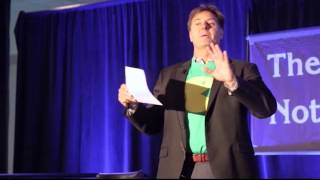
To introduce Gordon Moss, who will. The title of his talk is Enjoying Capitalism through Creative Note and Real Estate Investing. Thank you, Bill. Thank you. Okay. Okay. May 2nd. What's today? What's the biggest event that's happening today on the planet in the history of. Yes, the other event. The other event. The less, more expensive one. How about that? So I'm wearing this shirt. People said, what are you wearing here? And I said, well, guess who that is. Pac Man. And guess who that is. Mayweather. Money Mayweather. So you got Pac man and Money Mayweather. I just heard from Allison that a seat ringside, $300,000. I heard a Mayweather quote. He said, and he's a kind of a. He doesn't sit with me very well. I just. He's hard to like. And I think he plans it that way, but he says, I'm gonna make nine figures in 45 minutes. This has never happened before. Wow. And I took a poll last night at dinner. I said, okay, who's gonna win? Who's gonna win? Who's gonna win? My brother says to me, he says, you know, it's gonna be a tie. They want to do it again. Nine figures, a lot of money. But I have this thing about it being all about the money. All about the money. All about the money. So I'm going to talk about that. So I wrote a book and Bill talked about that. And it's called Performance Anxiety, how to Create a Fortune in Non Performing Notes. And I've talked about it here several times and on my website I talk about it. Anybody have this book? Yeah. And is it the bible of non performing notes? Nope. It's kind of an introductory book, a starter book. But it's back in the back if you're interested in it. But I asked Bill and Allison, I said, hey, there's a lot of guys in this room that frankly have moved past me in this little niche. I said, do you mind if I talk about what my real passion is now? Once again, the Junior Liens are a great niche and they're still here. And it's hot. And you've heard a lot about it. And in the four parts of my presentation today, I'm going to spend the last part talking about this. But I would say read the book. You got the seven questions everybody asks and the nine questions you should be asking in the book. It's on Amazon, it's on Kindle, but I'm not going to talk about it today. You've heard two days of people talking about that. I bought the Note for this, the house is worth this, blah, blah, blah. And I think Gerald Lemoyne is going to follow me. He's going to talk about his 2014 deals that he did. I'm not going to talk about that. So I asked Bill and Allison, I said, hey, can I talk about, you know, my business? They said, okay. So the theme of my speech is called enjoying capitalism through creative note and real estate investing. So is there notes in there? Absolutely. You want to become a pro, learn the note game, no question. But use it to buy and hold real estate. That's the way Gordon thinks. Okay, so with that, there's going to be four parts to what I'm talking about today. One is what I think is the most sale, the safest, surest, long term way to build wealth. Building wealth slowly getting rich slowly. I've done it. Other people I know have done it. It's not a theory, it's not something I've read in a book. We've done it. The Jack Millers, the John Schaubs, the Pete Fortunatos, I always talk about them. A lot of them are still around, taught me this. So with your permission, I'd like to kind of say, okay, here's a great story because I'm a storyteller about creating wealth the way I've done it with single family houses and notes and a buy and hold strategy. So I want to talk about that. Is that okay? I also went on a cruise with some people in the room and it's called the IRA Fund Cruise. IRA Individual Retirement Account Fund cruise. There was these guys on the ship, eight of them, 70, 80 years old, very accomplished, very successful guys. The rest of the cruise was filled with newer people. They asked these guys, they said, if you were me, how would you get started? What would you do? They said the same story. I said, wait a minute. They all said the same thing. I'm going to tell you what they said and it's a twist on my first part of my presentation. Would that be okay? Okay. I also want to weigh in on what I call opium, opm, a rampant drug that I see out there in the marketplace. Other people's money. I want to talk about what I heard yesterday on the panel and kind of give you my opinion and how I would do it and talk about what I call a much less risky, a much safer way to get all the money you'll ever need. How's that sound? And then finally I'm going to weigh in on the non performing Junior Lien 2.0. 2015. The way I see the market has changed. Do I think junior liens are a great avenue? Absolutely. That's been the coolest niche that I've ever found. I love it. I'm still doing it, but it's changed. They're asking us to take a greater leap of faith, in my opinion. And you already took a great leap of faith in the old days, buying the better notes. I'm going to talk about that. That sound interesting? Those are the four things. That's what I'm going to talk about today. All right. Since today has a boxing theme to it, the biggest boxing match ever, more money than ever has been made in a boxing match is happening down the street. I think that's amazing, but I'm going to give a book away to somebody who can tell me who said this line. You ready? I just want to say one thing. I just want to say one thing. Who said that? He's a movie star. I just want to say one thing. Rocky. Thank you. All right, I'll tell you what. I'll give it to you. Come on up and get that. Rocky said that. Here's my favorite. Sylvester Stallone had some great lines. And I wanted to keep it. Thank you. I wanted to keep it in line with this boxing theme today. Here's what he said. He said life. He says, life's not all sunshine and rainbows. He goes, it ain't about how hard you can hit. It ain't about how hard you can hit. It's about how hard you can get hit and keep getting up. It's about how hard you can get hit and keep getting up and keep moving forward. I'm like, man, that's a good one. Life is about how hard you can get hit and keep moving forward. I always talk about how tough this note business is. I always make this point. This is not easy. You saw some guys up here earlier, they're tough guys, they're focused. But I love that whole theme. And then coming back to this Mayweather theme, once again, he's really not me. I'm just. I don't even. I think Mayweather is probably the better candidate to win today. But Pacquiao's got a big heart. He's got the big heart. He's the real deal. They're both from the hood, they're both from. One's from Michigan. Mayweather is. Bad area, pulled himself up. I admire that. Pacquiao's from the Philippines. I've been to the Philippines. I've been to Manila. That was the scariest city I've ever been in. I walked out of my hotel and someone said, you need a bodyguard? And I said, for what? And he goes to walk down the street. And I said, no. He goes, yes, you do. And I realized I did. People with a cardboard box that was like a single family house. They would lay there in the gutter when the rain came under the piece of cardboard. It was a nasty place. So here's a guy with a big heart who's in his government now. He's like the national hero. That guy's tougher than nails. I'm a big Pacquiao fan, as you can see from my shirt. The Mayweather thing, is it all about the money? I watch these guys like Steve Jobs from Apple. Steve Jobs made a lot of money early in his life. Did he have to go out and do it again? Nope. He could have sat around and had concerts. He had concerts. He had The California Jam 1 and 2. Spent all kinds of money doing that. He went out and did it again. Not for the money, just to change the world. Elon Musk, anybody heard about him? That guy's doing it right now. He invented PayPal, made a ton of money. Did he need to do anything? Nope. He went out and created Tesla, this electric car. It's amazing. SolarCity, he created that. He's doing this rocket ship program where they're retrieving the old rocket ships in the ocean that they used to just throw away. He's doing all this stuff. It's not about the money. My point is, I look at Mayweather and I say, is it all about the money? Is it all about the money? I don't think so. I think it's about more than that. But am I saying it's not a worthy cause to go out there and become financially free? That's what I'm all about. But it's not about the money. I don't think it's about the money. And guys like Steve Jobs and Elon Musk prove that to me. And it's not about the money. It's about doing something in life. It's about helping people. That's my opinion. So enough about that. Enough about the whole philosophy stuff. I get negative feedback sometimes, like, cut the philosophy and tell us what to do. Okay? So once again, Bill and Allison gave me permission to talk about what I love to talk about, which is real estate and note investing. Let me tell you one more story about my enjoying capitalism theme, okay? I have a good friend, his name is Terrell Sheen from San Angelo Texas. And Terrell tells a great story. He calls it a Thousand Saturdays. Thousand Saturdays. And let me tell you how it goes. So Terrell is 60 years old, and he says, you know, the way I calculate it, if I'm lucky, I'll probably go to 80. That's 20 years. And he says, you know, I look at my life and think, what's my life about? What do I really enjoy? He said, I enjoy Saturday. Saturday is a great day for me. Why is that? I get to do what I want to do. I go out on my ranch, I take my sons with me. We go hunting, we go fishing, we have a barbecue. We spend the day together as a family. Heaven for me. He says, to me, life is a Saturday. So he said, I did the math, and there's 50 Saturdays in a year. I got 20 years left. If I'm lucky, I'm thinking, that's a thousand Saturdays. I have a thousand Saturdays left. That's what I live for. So he's thinking, hmm, how can I influence that? If time is your most precious asset and the way you spend it is your choice, how can you affect that? How can you influence that? Here's what he said. He said, well, what if I didn't design my life to where I have a job or I do something that I didn't want to do or had to do, or even a business that took all my time? What if I didn't have to do that? What if I was free? And what if my sons were free? What if I guided them and showed them, hey, don't go be a doctor. I was a veterinarian until I was 35. I was in vet school. The one did become a doctor. And so he says, don't do that, because you won't have your time. David Phelps talked about the time, the freedom, the freedom founders for the doctors that he consults with to help them out. It sounds good when you're a kid, go be a doctor. The reality is, it's a lot of work. It's 15 years of school and then 70 hours a week after that forever. And then they reach the end of the rainbow when they're 60 and they're broke. He says, don't do that. So he himself became financially free through real estate, through investing, through. Through notes. He got his sons light up, who are in their 30s now to do the same. So he says, here's the deal. There's six other days in the week besides Saturday. I can take control of that time. I can get six days back for me. And my family to spend the way that I want to. I can hunt, I can fish, I can have them together. We can have a big barbecue. That's heaven for me. So he says of these thousand Saturdays, I could multiply the happiness in my life, what I live for by six times by becoming financially independent and teaching my sons to do it. Is that a cool story? I love that story. So a thousand Saturdays. So how do you do it? I'll tell you how I do it. Which is really all I can do, is tell you how I do it. Those of you that know me, anybody heard me speak before? Yeah, I say the same thing over and over again, but I'll continue to say it. I have a hands on approach. I read some book and I'm not sure who wrote it, but you know, I've always loved this business. Always. When I was 12 years old, I picked out our house. I just saw a flyer and I said we should live there. And we did. We moved in, we bought that house. I was just. I just. It was. I liked it. So it talked about the fact that. This book talked about the fact that if you put 10,000 hours, 10 years into almost anything, you'll become an expert. People think that this violin player is just this mega talented person. Maybe not. They've just done it for 10 years. I've done this for 30 years. So I've got 30,000 hours into this. So it's easy for me. I love it. So my point is this. Find something you like to do and master that. Spend 10 years or 10,000 hours on it and become an expert. I'm not smarter than anybody else. That violin player might not be any more talented than I am, but he's done it for 10,000 hours. So if I lived, for example, like in Texas, okay, I might know a lot about oil. Okay? I don't live in Texas. I don't know anything about oil. Would I invest in oil? Nope. Or gold or stocks or anything else. My point is this. It's a hands on approach. Pick something you like, take one of these flavors that you've heard here and focus on it. And I know 10 years sounds like a long time. It's not a shiny object. It's not a get rich quick scheme. But this ain't a get rich quick scheme. So find something you like. Take a hands on approach to it. I hear so many people say, I gave my money to that guy. What does he do? I vaguely know. Really? You vaguely know what that guy does? And you gave everything to him? Seemed Like a good guy. They all do. Know what you're doing. Have a hands on approach. Yeah. So barely see that thing. Knowledge plus action is power. What's my commodity of choice? You guys all know that. A single family house. What's the best piece of collateral on the earth? What happened in Las Vegas when the market went to heck, the land went down about 90%. The retail centers, the commercial centers. Empty. Couldn't rent them, their value went down. My sister's a big banker here in town. She handled a portfolio of these commercial properties. Couldn't sell them. Their value went to nothing. My houses here still had value. Now they dropped in value too. But I could still rent them. I could rent them to a little family. There are still little families here. A single family house, that took me years, years to get that one where I could say, okay, a single family house. That's the commodity of choice. Okay, an option or leverage. Mitigate the risk with leverage. David Phelps talked about it yesterday. To me, the junior lien was an option. I could put a little bit of money down and mitigate my risk. $100,000. Property or note. I didn't pay 100,000 for it. I paid 5,000 and I could have screwed up. I do it all the time. Or the market could change. I only lost 5,000. They have these things like 30 year loans. You know the 30 year loan. It's kind of a North American phenomenon. Try going to Germany and getting a 30 year loan. They would laugh at you. I'd say, why would a bank do that? Five years max, the market will change. Why would we lock you in for 30 years? What happened? 30 year loans, what happens after 30 years? They pay off. You own the property free and clear. They only do that on single family houses. You know that commercial property. No, this buy and hold strategy. How do you buy and hold stuff? It's got to pay for itself. I don't like negative cash flow. Picture of an alligator coming around eating you from behind. Oh, it's a great property. But it's $400 a month negative. But it's a great property. $400 a month gets pretty old real fast. My properties pay for themselves with creative financing. I'm going to talk about some strategies around that. Creative financing. That's how you buy and hold things for a long time. When you hold things for a long time, you can be really stupid and still look smart. Okay, so here's my story. I'm a storyteller. I'm going to tell you a story. This is a real Story. There's some players in this story that I actually, I know these people. One was my girlfriend's father, Mr. Hefner. One was another friend's mother who was a real estate agent in Simi Valley, California. And she was also a single family house investor. I watched her. I didn't understand when I was growing up, but I later I was like, wait a minute, she was doing this. Another player in this story I'm going to tell you is called the Larwin Company. The Larwin Company was a builder developer. I thought builder developers were pretty sexy, cool business. Not this buy and hold and long term real estate houses. That didn't sound too cool to me. But being a developer, that sounds like a pretty good word until I learned the legal definition of a builder. The legal definition of a builder is go as bankrupt every seven years. So here's what happened. Let me talk about Simi Valley, California. Simi Valley, California, where Bill and Allison and I went to the Reagan Library, became famous for that. But it wasn't famous before. I moved there when I was 12 years old and stayed there until I was 20. So here's what happened. Simi Valley is about 15 miles by about 10 miles. And it's a true valley. And there's two movie theaters in it. And that's about it. And on Friday night we go to the one movie theater and Saturday night we go to the other movie theater. It's kind of like a small town just north of la, kind of a blue collar place. A lot of policemen live there. It was inexpensive, good, solid, no crime, regular place. A good place to have a family, which is where I was brought up. And the industry over the hill in the San Fernando Valley in Los Angeles was some high tech, some aerospace. You had the Hollywood finance. A lot of people like my father went over the hill to go to work and would come home to the bedroom community of Simi Valley where I was brought up. So in 1968, the Larwin company bought 100 acres in Simi Valley. One of the partners in Larwin Co. Had in college taken a course on Greek mythology. So he was going to name this place all kind of Greek names. Give me some Greek famous figures like Aristotle and Plato. Every street was named that. Aristotle, Plato, all the different guys. It was called the Greek tract. And they built 100 houses there. They built 100 single family houses with that hundred acres. After the streets were put in, after everything the park was put in, there was 100 acres, 100 houses left, three bedroom or four bedroom, two bath regular houses. That's what they built. They bought it in 1968. Took them two years to build it out. 1970, it was built out. They were lucky. The market was good, the cycle was good. They sold all those houses for $30,000 apiece, and they made $5,000 per house. Let me do the math real quick. $5,000 times 100 houses is what. Okay, how did they do? You think they did pretty well? I think they did. They did pretty well. But let me ask you some more questions about them. Did they create long term eternal passive income? Nope. They created highly taxable income that they used to pay their employees and their staff and everything else. And then once again, because they're a builder, when the next cycle came along, what happened? They went bankrupt, like most builders. Okay, another player. In 1970, Mr. Hefner showed up. Mr. Heffner had a job over the hill, and he bought one of those houses for $30,000. And he was a vet. So how much did he put down? Who paid the closing costs? Seller. Somebody else did. Yeah, his neighbor bought one, too, who wasn't a vet with a 3% FHA loan. Understood. So for $30,000, Mr. Hefner bought one of those homes. So he's another player in this game. All right, let me tell you what happened between 1970 and 2000. From 1970 to 2000, we had six presidents of all parties. Inflation, deflation, recession, boom periods, wars. The prices went from 30,000 to 300,000. They went up 10 times. The rents on those houses went from $500 to $2,500. Five times. A 30 year fixed, low interest rate loan paid off. So what happened to Mr. Hefner? Mr. Hefner raised his family in that house. What's that value? I'd say priceless. Now he's retired. He went to work every day, put his suit on, went to work every day, paid his mortgage for 30 years. He has a $300,000 free and clear asset. Now, Robert Kiyosaki would debate about if that's an asset or a liability. Let's call it an asset. Now he can move to Florida in a one bedroom condo. Okay. And basically have some extra money, buy the condo cheaper. He could do a reverse mortgage and live on the money. Okay. Did Mr. Heffner do pretty well? Did he create eternal passive income? Maybe a little bit. I don't know, but not a lot. Let me tell you about my hero. My hero is Mrs. Hill, my friend's mother, who realized from going to events like this that the key was to have 10 or 20 free and clear. Single family A houses in the Greek tract. That was her goal. Now she made money. She was a broker there. She would sell houses and buy houses. Here's how she bought them. Let me just put it this way. She farmed the farm. She had a 20 year plan and her goal was to get 10 of these houses free and clear. Understood. She wanted to buy and hold single family houses. That was her goal. She did. Let me tell you how she did it. She had a dog and she would walk that neighborhood every weekend and people would say, oh, what kind of dog is that? Oh, that's a bull mastiff. Okay, okay. How you doing? How you doing? By the way, do you know anybody that's selling their house? You know, I know you're not, but would you know anybody that is? Oh, yeah, you know, Mr. Smith might be. Mr. Jones might be. Da, da, da, da, da. Okay, okay. So she also had some children and grandchildren. She actually trained one of her children that every time she pinched her, she was supposed to blow a kiss. So she'd walk up to somebody's door and say, hey, you know, I'm here. Just look in the neighborhood and is anybody selling some houses? And the little kid would go like this and break everybody's heart. She had this plan. She was going to buy these houses. She did. Let me tell you some of her tactics. Dead people was one of her tactics. Anybody know about probate? Yeah. Why is probate the perfect storm? Here's what happens. You get a couple in the house, who goes first, the man or the woman? The man. The woman is there for the next 15, 20 years and she's got no money. Okay. And the house goes into disrepair. Okay. And you have her three greedy heirs sitting on a wire, watching, and eventually she passes on. Now they have a free and clear asset that's in bad repair. Can they sell it to a regular buyer to get financing with? It's in terrible shape. Do they have any money to fix it? No. So an investor can come in and through cash or terms, take over that house. It's a great opportunity. She came to events like this and learned that it's how she got 10, 20 free and clear assets, it's how she did it. Probate was one of the strategies. FHA and VA foreclosures. A lot of you know me as the VA foreclosure guy. I bought VA foreclosures. You could buy all you wanted. I think it might come back again. All those VA homes that I own, the loan is assumable. Do you know that it's assumable the FHA loans used to be she also used seller financing. She used seller financing on these homes that she acquired. She would go to the homeowner and say, I understand you own this home. Yep. And you need to sell it. Yep. What do you need? What does the seller say? Cash. Oh, you need cash. I get that. Cash. Okay. How much do you need? $100,000. What would you do with the cash? What If I stacked $100,000 here on your kitchen table, what would you do with it? I'd scoop it all up, put it in a wheelbarrow, take it down to the bank. Okay. What would they do for you? Well, they'd pay me. What would they pay you? Interest. How much? Less than 1%. Hmm. I'll tell you what. What if I paid you four times that amount and gave you a down payment and your security was this home. If I ever misbehaved or didn't pay you, you get the house back and my down payment, and I'm going to pay you four times what the bank would pay you. Seller financing. Seller financing is amazing. It's a topic that we don't talk about, but it's a way that Mrs. Hill used to acquire these properties. Seller financing. How about this? Anybody heard of this is a note term, substitution of collateral. Substitution of collateral. She would try and do that scheme, and most people in this A neighborhood would say, no, no, no, I got three other buyers lined up behind you. I don't need any of this creative seller financing stuff. I want my cash. Nice story, but I'll take my cash. Okay. She farmed another neighborhood which wasn't so nice. It was a C and D property. She would go to them and say, hey, I don't have any cash. I would like to finance these. Have you finance them for me and pay you a stronger rate, fully secured. They would do it on these C and D properties. They said, okay, you get me out of this deal, I got a problem. I have this tenant that just threatened my life. I'm out of here. Quickly. Out of here. So if you. No problem, I'll do the financing for you. Here's what she would do. She said, well, great. And oh, by the way, there's a clause in that contract that says, in the future, would you mind if I upgraded your collateral to an A property one day? Hmm. No, I wouldn't mind that. Okay, so she had all these C loans that she moved to the A houses. Does that make sense? She substituted the collateral because her Goal was to pay off those free and clear houses. Because she was taking over these loans or creating new loans. 30 year loans that take 30 years to pay off. She didn't want to wait 30 years. She wanted to do it sooner. That's one of the ways she did it. She also moved into the neighborhood. She moved in. She would own or occupy a house. Two years later, do it again and keep the old one. That's how she got 10 or 20 houses. That's how she did it. Let's talk about my favorite financing tool on the seller finance game. Zero interest loan. Let me role play it for you. Here it comes. Mr. Smith, how much do you want for your house? $100,000. Great. I know it's only worth 80. You kind of do too. I'll pay you 100. You will? I will. I'll pay you $1,000 a month for 100 months. Let me do the math. 100 times thousand months, that's 100,000, right? He goes, well, yeah, right, but what about the interest? What am I, a bank? I'm not a bank. I'm here to solve your problem. I'm going to pay you $100,000 for your $80,000 house. We already agreed that it's overpriced. That's called a zero interest loan. Does that happen? Yeah. Guess how many years it takes to pay off a zero interest loan like that? Eight, not 30. So if you get good at the conversation of this seller finance deal like Mrs. Hill did, you end up with free and clear houses. You end up with 10 of them that pay you $2,000 a month. That's $20,000 a month. She was done. Does that make sense? We'll talk about it later then. But those are good topics. And it's okay. You know, I didn't understand that stuff when I first heard it. I was like. But the whole theme is, once again, I'm trying to tell you a story about somebody who did it and how simple it was. Mrs. Hill at one time was tempted by a commercial deal. Some 25 year old guy in a Brooks Brothers suit came by and said, hey, I have this shiny four color glossy brochure. Guess what it's about. This retail center's down the street. It's for sale. For sale? Really? Retail? That sounds cool. You know, I'm tired of talking about houses. Retail sounds so much better. He said, well, by the way, they're all triple net leases, which means you do no maintenance and the cash flow is double what you get on your houses. But she'd gone to seminars and she'd been convinced that her 20 year plan, her precious 20 year plan, she had a focus. She had a plan. So when she heard this, she was tempted but not seduced. They didn't mention to her that there was 20 acres right down the street that was being sold. They didn't know about that. To Walmart. Hmm. So this retail center had three tenants in it. A 10,000 foot retail center. A million bucks. Five year financing. Not 35 year financing. Higher interest rates, five year financing, not 30. A million dollars for. This thing had three tenants in it. Had a liquor store for guys like me that wait till the last minute and pay too much. Okay. It had an eyeglass store, boutique eyeglass store. Okay. What else does it have in there? It had a pet store. Do people spend a lot of money on their pets? Yeah. So good cash flow, good rents. Okay, guess what happened when Walmart opened up. She had three new tenants after about. She didn't buy it, but this center did. After three years of being empty with zero cash flow and vandalism, three new tenants moved in a tattoo parlor because Walmart doesn't do that. Had a Goodwill store and a dollar store. Guess how much rent they paid? Not much. She was tempted, but not seduced by a commercial deal because she had a plan. That makes sense. All right, so I'm going to wrap this one up here. But this is, this is the key to my foundation of everything that I do. What I just told you this story about the Greek tract. So did Mrs. Hill do pretty well? Did she create long term eternal passive income for her and her heirs and her family forever and ever and ever? She's my hero. That's why I told you that story. Okay, so I get on the ship on the IRA fund cruise. Okay. I think Quincy was back there with me. This reminds me of Quincy. Quincy is my. Quincy is my good friend and my IRA custodian. By the way, on the IRAs. I love the IRAs. All the tax issues that John talked about yesterday, John Groom, who's an amazing guy, you can avoid most of those if you do it in your ira. All these tax implications of these notes. Do it in your Iraq, problem solved. But know what you're doing in your IRA or Pac man will eat you up every month. Every month he gets paid. So know what you're doing. Have a good return. Do it tax free or tax deferred, but watch out for Pacman. I'm going to give this to Quincy, who I call Pac man, who's a great guy. Think about that. Okay, So I go on this IRA fund cruise and we had fun. We did. Guess what eight of the senior guys in the room said to the newer people who said, hey, I'm just getting started. What should I do? What would you do if you were me? Every one of them. To a man, here's what he said. Mobile homes and land. Mobile homes and land. Did I say mobile home park now, mobile home and land. It's a noke deal. Here's how it goes. Let me just tell you a story. Let me tell you a story about this. So I'm going to give you a case study right here in Las Vegas. I'm talking to my brother. My brother works on my properties here for me in Las Vegas. I said, john, I said, walk outside. Where are you right now? He goes, I'm at the Cassada house. I said, okay, what is that house? This is 1964 bedroom, two bath, beater house here in Las Vegas. Rate the neighborhood. B minus, C plus tenant neighborhood. Okay. How big is that place? 1800 square feet. Four bedroom, two bath, 1960, kind of beat up. I said, walk out front. So we did. And I said, look right and look left. Do you see any bars on the windows? He goes, yep. You see any trash anywhere? I said, yep. I said, do you see any graffiti down in the corner? Yep. I said, okay. I said, now, how much is the house worth? $140,000. $140,000. And how much rent do we get from that? When they decide to pay US$800 a month, which I net about maybe 600 of. I said, okay. Do you remember, John, a few weeks back we heard the stuff on the IRA fund cruise? We went up north to another area of Las Vegas by the Air Force base, and we found this. Call it the Ronda House. It's a mobile home, which I've always been against until I heard these guys on the crew say this. So they were so, you know, convinced it was the way to go. So I said, remember that neighborhood? It was a mobile home neighborhood. Mobile home. Not single family houses like we have. I said, do you recall seeing any graffiti anywhere? He said, nope. I said, did you see any trash anywhere? Nope. I said, were there any bars on the windows? He says, nope. Why is that? Why is that? Why is there no. Why is there pride of ownership and love in a mobile home neighborhood and none in my tenant neighborhood? Let me ask you a question. What was that mobile home worth? $30,000. And how much income do we get? Off of it. Or could we? 800 bucks a month. Wait a minute here. So you get 800 bucks a month on the tenant house. 800 bucks a month on this mobile house. And the mobile house costs 30. Wait a minute here. What's wrong with this picture? And the $30,000 house has a better neighborhood. There's no graffiti, there's no trash, there's no bars on the windows. Why is that? Here's why. The mobile home is owned by the occupant now. We're going to own the land underneath. We're going to yank the land. He's going to pay US$300 a month for the land. We're going to sell him the mobile home. He's going to pay US$500 a month. On a note on the mobile home. And when the toilet breaks, who's he going to call? Me. It's his toilet. He owns the toilet. He's got pride of ownership. Guess how much he's going to put down? A lot. Where does this kind of guy get that kind of money? They got it. He's going to put down 7, 8, 9, $10,000 for a down payment, which I get to keep if he doesn't perform. I was like, wait a minute here. So for $30,000, I can get $800 a month or I have to go buy $140,000 tenant house and get $800 a month. If I was trying to create financial future, financial independence, which is what these old guys were telling these younger people. Mobile homes and land. If I had $800 a month times five, that's $4,000 a month, I could live on that. I could be done. I could do what I wanted to do. Then mobile homes and land. I was like, hmm, does that make sense? All right, all right. I'm not sure how my time is. Let me see how my time is right here. All right, I'm getting a little bit behind here. I want to do two more things. I want to talk about this drug, opium. And I also want to give you an update on the non performing junior lean business. How's that sound? Okay. All right. Other people's money, it has tempting highs, devastating lows and liabilities. And there's three flavors of it that I'm going to talk about. The first one is investing your money in a fund or partnership, taking your money and putting it with a fund. The other one is raising money, investments for yourself if you decide to become the guy. And the last one is an avenue, which I consider the best way to go. And I kind of talked about it already, where you could borrow all the money you need to. People come up to me, they say, gordon, minor detail here, I don't have any money. I said, I've been there, I know what it's like. And you're kind of saying opium like it's a bad word. Other people's money. How do I deal with it? I wanted to talk about that. I wanted to bring that up and give you my perspective on it. I have a friend from Jackson, Mississippi, one of my best friends, Walter Wofford. And he says never use a four letter word when a two letter. Never use a four syllable word when a two syllable word will work half as good. And I said, okay, fiduciary is a five syllable word. Fiduciary. And in my opinion, no one understands it and no one gets it and no one does it. Here's what it means. Real simply black and white. Your interests before mine. Your interests before mine. That's it. When you sign a brokerage agreement with somebody for a real estate deal, there's a fiduciary responsibility for them to protect your interest, to put your interest before theirs. Black and white. And if you get the wrong people in the game, they don't understand that word. They don't understand that word. So my point is, be extremely careful when you're doing that. Who has your interest in mind? You do. Other, Other people out there. How confident can you be that they have your interest in mind? It's once again this whole theme I have about knowing your market, knowing your business, Beware of that. I would be very, very, very, very, very careful about giving my money to something I didn't understand or the people that I wasn't totally convinced had my interest in mind. A due diligence checklist. I would ask, I would say, have they ever made money and kept it? Do they have any money right now? Do they have an insatiable money appetite? Can they run a business? And then character issues. I've seen a lot of these guys in great industries. I know a couple guys that were in the mobile home game, which is a great game, mobile home parks, very profitable, but. And they made money, but they couldn't run a business. They had a staff, a huge staff that ate all the profits up. So I mean, it's more than just about being in a great market at a great time and is it sustainable, like even this junior lean deal. It worries me because if your model is based on it going like this, I'm not sure it's always going to be like that. What do you do when it's not like that? When you fold the tent, what happens? Character issues. I would be just very wary of that. And I've got a solution. There were some great examples yesterday in this room of the way that I would do it. There's two things I want to talk about. If I was going to. If I needed money, if I needed money to do this, to buy notes, to buy property, whatever it was, would I take a stranger's money? No, you don't just take anybody's money. You don't take a stranger's money. Look at the people in this room. Shondor Lau was up here. Okay, Shawn, door. Younger guy, let's call him. A 30 something is with Bill, who's, I think a 60 something. Sorry, Bill, I don't know if you're. Whatever you are, but Bill's got more experience. He might have some seasoning. He's played the game. He might have some money. Shondor's got the enthusiasm. His heart's on fire as he says. He's got the energy. He's a go getter. Did you see Matt Kelly up here? Think Matt Kelly has any knowledge, any enthusiasm and any. Matt is a hard worker and knows this game in and out. He teamed up with Rand Johnson. Rand Johnson was a 60 something guy. Okay, who's got the money? One guy, Shondor teamed up with Bill. Matt teamed up with Rand Johnson. I have my friend back there, David Finolio. He has a younger guy, Paul O'Dwyer. He's a 60 something. Paul's a 30 something. I'd find one guy. I'd find one guy. Have a relationship. You're kind of getting married, so you better date a lot. You better have a lot of dates ahead of time. One guy taking a stranger's money. I haven't done that much of it, but I would be wary of that. Really wary. Okay, let me tell you my real solution to this problem. I got no money. Okay? I see the market. There's junior liens out there. There's first liens out there. There's properties Gordon's talking about. How do I get them? I don't have any money. Here's how you do it. Are you ready? Solve a problem. Walt Poser is in the room somewhere. Walt was one of the biggest business brokers anywhere. David Phelps talked about selling his practice on terms. He had a problem practice. People pay cash for it. I guess one did, but not very often. They sold it on terms. When I've got a beat up old house or a beat up old property or a piece of land or a mobile home park that's all beat up. Do I get cash for it? Nope. It gets sold on terms. On terms? This note business that we're in, if you can solve a problem, if you're the problem solver, you're a mobile home turnaround guy. You get their terms, you show up and say, I want to buy your million dollar park. And they go, great, we'll take your million dollars. Well, I don't have a million dollars. What do you have? A lot of enthusiasm and I'm real good at this. Really? You have experience fixing parks? Yep. What do you need from us? Well, I've got a partner who can put 100 grand down. I need you to finance $900,000. And guess what? If I don't perform, if I fail, you get it back. That's the collateral. It's on terms so you can get all the money you want to out there. What percentage of houses in America right now are free and clear? A lot people don't realize that. A lot of them in a probate deal, she's lived in the house for 50 years. There's no loan. It's free and clear. The house is in a bad repair. Can it be sold to a FHA VA buyer? No, it's in disrepair. They have to carry terms a lot of time. And if you ask the question, if you learn the seller finance game, if you know how to structure a zero interest loan that we talked about, how to propose that that's the way to get all the money you need to without taking a stranger's money or giving your money to a stranger. What do you think of that? This is the best stuff I got, by the way. I just want to let you know all. Let me give you my perspective because I'm almost, I think I'm out of time almost out of time here. The and once again I tried to say it up front. I was not talking about non performing junior liens today. I said, what's my best stuff? Here it is. How did I get there? I told you, you might take it for granted. You might go, well, what's he talking about here? Everything. Real estate and all this stuff. He's talking about, this is it. This is a distilled 30 years you're looking at right here. It's the best I got, okay? The non performing junior lien 2.0 in this marketplace. 2015, the new marketplace. Here's the way I Put it in the past. They asked you to take a big leap. I'm talking about the hedge funds. Buy our notes. Your notes, your non performing junior liens. Non performing junior lien. That sounds scary as heck. It is scary as heck. And they were asking to take a big leap of faith, weren't they? Well, guess what? That faith just got bigger. They're asking to take a bigger leap of faith now. There's a term out there called a blended pool. A blended pool. You know what that is? Yeah, it's. Whereas in the past you could say, well, I just want to. I want the good notes, I want the ones where there's full equity. Let's define for some people what a weak note is versus a strong note. I'm talking junior liens because that's what I've done historically in a junior lien, a strong one, for example, has full equity. Okay, the house is worth 100. Okay? You've got a first on it for 50. Okay, you got a second for 20. There's full equity there. There's a pretty clear strategy there. You can foreclose on the guy, push him to the wall. It's kind of hard to mess that one up. I messed it up. But it's harder to, okay, so the first is performing. You got full equity. That's a strong note in a strong area with good collateral on it. Not on a ghetto house, but a nice house. You could get those before pretty regularly. People in this room have, okay, they're tougher and tougher and tougher to get. And now they're selling you a blended pool. So we'll sell you 10 notes and maybe three or four of those will be the ones I'm talking about just now. The other four or five might be weaker notes. Okay, a non performing first, right? No equity, bankrupt, whatever it's going to be. So to a newer person, you're like, whoa. Well, hopefully at least you know what the weak part is. If you don't know what you don't know, that's on you. But this blended pool, in my opinion, is the new state of the market. You know, a lot of these sellers are saying if you don't get it and if you aren't sophisticated enough to realize that, we won't sell you all of our cream notes, even at a premium, because we can sell a lot more pools in a blended fashion to a lot more people. It's in our interest to blend the pool. And if you got it, if you understood it and you believed us, you would realize that we actually make good money on these bad notes. That one's hard to believe. It's a big leap of faith. So I. I've said before, and I'll say it again, that I get a little worried sometimes about the newer people coming in to this 2.0 market, the 2015 market. I'm a little worried about it, that I don't think they know what they don't know what they don't know. And it worries me. So, you know, am I saying that the junior Lean business is gone? Not at all. There's a ton of notes out there. A lot more people know about it, but. But it's a bigger leap of faith now to take a pool of bad notes. But as I've said before, let me just kind of put it to you this way, of that pool of bad notes historically. And a couple guys in the room here have just done this where if you push these guys real hard, say you've got 10 really, really good notes performing first equity, the whole deal, and you push them, you threaten foreclosure on them, a good part of them are going to file bankruptcy or they're going to go crazy on you. And now you have a junk pile. So you're like, well, wait a minute here. I just paid 40 cents for this really nice pile, which is now a junk pile because I pushed them. I could have bought a junk pile for 20 cents. And so those are some of the things that, just to keep in mind, Gerald is coming up next. Gerald Lemoine. And I liked his comment. Here's what he said. And correct me if I'm wrong, Gerald, you'll be up here in a minute. But he said, I don't think he's bought a note in the last year. Gerald's a big player. You're going to hear it in a minute. Hasn't bought a note in the last year. He said, I was offered a pool where I was paying twice as much as I would have paid 18 months earlier for half the quality. I was paying double for half the quality. Wow. So is the market gone? No way. There's a lot of money in this business. I do the junior lien business. I'm active in it right now. You know, I wrote the book on it a while back. But I just wanted to kind of give you my perspective on this business. I think it's a great business. But this extra leap of faith, it's something you need to think about. It's something you need to be aware of. And I'm just, I Wanted to give you my perspective. And I'm back there to talk about it. I'm back there to answer any questions that you've got at our booth back there. And once again, we've got our book back there. So let me finish with this. A couple comments that I like from my friend Walter Wofford. He talks about. He says, the blessing of desperation. I was like, the blessing of desperation. What a cool way to put that. I look at Manny Pacquiao, who came from nothing. I look at Floyd Mayweather, who came from nothing. I don't think they would be where they are right now if they were spoiled rich kids. They wouldn't have done it. They're tough. So by being desperate and having no other avenue, look what they did. I see this business. I see the people that succeed come from challenged backgrounds. They were desperate, but it's a blessing. The blessing of desperation. I like that one. How about this one? Walter Wofford, once again, he says, ignorance and arrogance are a deadly combination. Ignorance and arrogance are a deadly combination. Why are the people who should be the most humble the least humble? I never got that. You know, I met John Wooden a couple times, the basketball coach at UCLA. Most humble guy on the planet. This guy's won 10 national championships, has nothing to be humble about. You know, he's the man. But they are the most humble. I was like, wow, that just. That's so amazing to me. And I see these other guys who really have a lot to be humble about, and they're the most arrogant guys on the planet. So whenever I see arrogance coming my way, I immediately go like this. I mean, Floyd Mayweather just. I think maybe it's just a play he's got. Maybe it's just a shtick that he's doing. And he really got me. I mean, I don't like that guy just right up front, but maybe it's just a marketing plan that he's got. But ignorance and arrogance are a deadly combination. You don't need to be ignorant. You can come to things like these. You can be like Mrs. Hill and learn the game. You can spend 10,000 hours learning something, becoming an expert. Then go play in it. Don't go put your money in something you don't know about. Learn something, something you like. Because if you like it, you won't quit after 2000 hours. You'll do the other eight and become an expert. That's what I've done in this little niche. I don't invest in oil. I don't invest in gold. I don't invest in stocks. I do boring little single family houses, and it's done really well for me. That's all I got.