A Simple Plan B - Part 2
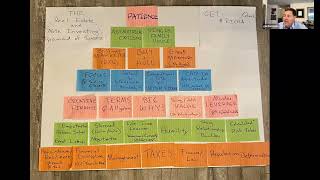
Coach G explains how to build wealth with single-family rentals using asymmetrical options: put down a small amount to limit what you can lose while capturing big upside. He walks through the strategy layer by layer, from finding deals with targeted marketing to financing tricks like non-performing junior liens, then holding for tax breaks like depreciation and 1031 exchanges.
Chapters
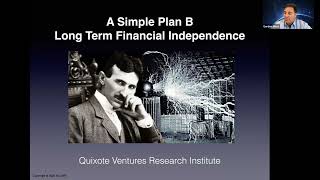
Okay, as you can see, the dragon capsule showed up and got us out of space. Now we're back at my house, you can see behind me, and we're going to continue our presentation on the asymmetrical option. Let's get this going. All right, once again, you can see my screen again. Now I have just put up a simple plan B. Long term financial independence. Qvri that's who we are. And let's get back to the pyramid where we were when we left and talk about the asymmetrical option here. Okay. Okay, Here we come. Okay. All right. Okay, once again, the asymmetrical option that we talked about last time. There are a lot of different ways to create options, and asymmetrical ones are specifically what we focused on. I told the blue tarp story and what Jack Miller did when he went to that house and asked the owner of the house about the blue tarp on his roof. And he said, why do you have that there? And he said, well, you know, we don't like it when it rains inside. Jack said, why don't you fix it? And he said, well, I don't have any money. Jack said, how about if I fix it, I'll pay $7,000, I'll fix your roof, and all I want is an option on your house. I'll become a lien on your house. I'll be a title flaw on your house. No management, no worrying about tenants or anything like that. He's just, he's an option on the deal for $7,000. And the owner would say, well, wait a minute here. What's in it for you? He says, well, I want half of your future. So if your house is worth $100,000 right now, it might be worth 200 in the future. And if it is, I get half, and if it doesn't, if it goes down, whatever it might happen, I get nothing. So I'm taking a chance. I'm playing an option. I'm fixing his problem. I found a problem and I solved it. But Miller told that story pretty well. You know, the thrill of management is something that we all would rather avoid if we could. And it's why we picked the nicer houses as opposed to the, the crummier houses. So, yeah, but Jack Miller had an advanced options class and options. I went through that several times. I got the books, I studied them, and I actually picked up non performing junior liens from Jack Miller. He basically said, you know, there's liens on a property, there's a first lien There's a second lien. You can buy those second liens at a discount. If they're not being paid like a second home loan for somebody's pool loan. They get in trouble, they can't pay the loan. Those can be bought cheap, kind of like his blue tarp. It's an advanced option play. So those are some things that. Examples of asymmetrical options. But I'm also thinking about writing a new course called the Ultimate Real Estate and Note Investing Option Course. It's going to talk about things I'm going to talk about in a minute, and then all of a sudden it's advanced stuff. So don't get. Don't let me blow this thing up right here. I'm not trying to get too complicated, but I just want to show you that an option to me is something that, once again, you pay a little bit of money, you have limited your risk, and you have massively expanded your potential upside by using a risky strategy. An option on a single family house, which is the least risky piece of collateral investment on the earth. So, yeah, that's the options. Okay, what's next? A single family house. Let me define, once again, a single family house. Here's what the AI people say about it. They say a single family house is a standalone residential structure designed to accommodate one, one family. Separate entrances, private outdoor spaces, lack of shared walls. I once heard a story from somebody. He said, I don't want a piece of drywall splitting up my two sources of income. Because if the one bangs on the wall or plays the drums or cooks bad food or parks his truck on the. On the grass in the front, whatever it is, it's better to have a single family house. It's the best collateral on the earth. And once again, not an apartment, not a condo, not mobile, not commercial. People like houses. They're the number one piece of collateral on the earth. People don't get tired of living inside. Is a good John Schaub quote. People don't get tired of living inside. I, out of college, started in the commercial real estate business. I sold and leased industrial buildings and land in Orange county and the Inland Empire. So this took me a long time for these guys to talk me into the house game. I always said, you know, houses are for housewives. And I'm not. I'm not. I'm not that. I don't want to talk about the curtains and the color of the bathroom tile and that type of thing. I want to talk about, you know, business things and the land and the power and that type of stuff, you know, commercial stuff. But they convinced me that a house was the best investment to make. So. And once again, nice houses. Jack Fullerton was one of my mentors and he was actually a disciple of John Wooden. Also. He was a coach at Orange Coast College. He was a water polo coach, champion water polo coach. He made about $30,000 a year as a coach, but on part time went out in Costa Mesa where he lived and bought 20 nice homes. He had the 20 nice home strategy and he is one of the most successful students that those guys ever had. He became my mentor, talked me into buying houses. Okay, buy and hold is the next block of the pyramid that I'm going to talk about. We've heard that Pink Floyd song, Comfortably Numb. I, I, that's the way I consider my career with houses is yes, things would happen, things would break, tenants would go. And as I got better tenants, it was less worse. But it was still, it was, it's a challenge. But I had to be numb about it and just say, okay, you know what? This tenant didn't treat the property the way I hoped he would have and ruined it. And now I got to fix it all up. It kind of hurts my feelings. But if I let that get me down, I would quit. And once again, this is a long term, 10, 20 year strategy. I say set it and forget it. Don't time the market and buy a nice single family house. That will keep you in for the long term. But Comfortably Numb is one of my favorite songs. I made a poster years ago called Flippers. No happy endings. And it was a picture of that 1960s TV show, Flipper who was up in the air and he had a Tied to his fin was a ball and chain. And the theme was that all these flippers, these guys that buy and sell and buy and sell and wholesale and they call themselves investors, that there's no happy endings to a flipper. There's a great story. One of my friends, Mike Cantu, up in Los Angeles, who's probably the best wholesaler on the planet, and he, he basically, he pulls up with one of his friends in a car to one of his houses and he says, hey, pull over here. He says, see that house right there? He goes, yep. He says, I bought that house 15 years ago. And the guy says, oh, great. He says, well, it's kind of a sad story he's got. Guy says, yeah, why are you, why are you crying, Mike? And Mike says, well, I bought that house for a discount. I bought it, say, for 150,000 and I made 50,000 on the flip. He goes, but guess what, he goes, It's 15 years later now that house is worth $700,000. So he cries at his flipped house result and just says man, if I learned how to hold that house like he did other ones, he wouldn't have to be crying now at it. So flippers, no happy endings. Be a long term buy and hold investor. Okay. Fixed rate fully amortizing long term loans unique to single family houses. You don't get those on commercial property, you don't get those in other countries frankly are the magic in this positive long term result. A 30 year fixed fully amortizing loan with a low down payment is something you'll only find on a single family house. You won't find it on a commercial building, you won't find it out of state, you won't find it anywhere. And think of the inflation hedge that it might be. Say if 10 years goes by and your fixed payments were a thousand dollars but everything has gone up by 50%. Well your fixed payment is still $1000 but now the rents are double that or triple that, whatever they might be. And the property once again has gone up 50% but your payments have stayed the same. I think it's one of the best inflation hedges that, that, that, that exists. So once again, the long term aspect of buy and hold, there's a, an acronym called ideal. The long term advantages they called ideal and it's, it's, the first letter is income, the income you get from the property. D is depreciation, you get to write the property off your taxes, it's a benefit the government gives you. Equity buildup is E and that's basically where your loan is paying down every month. So after you know, 10 years, 20 years, it's a fraction of what it was when you started. A is appreciation and that's the property going up over time and the L is the leverage. You got to master leverage, you know. And once again it's a high risk risk thing. Sometimes you go, you go to the Chicago Board of Trade and look at options and that's risky, but you have to do it on a single family house because is you've got huge potential profits leveraged against the most, what I consider the most safe investment on the planet. So, all right, buy and hold. How about this one? Brilliant marketer, brilliant, I call it Rifle marketer Mike Cantu, once again I mentioned him, has a small handwritten letter that he sends to people that he has somebody drive around the Neighborhood, looking for overgrown weeds, vacant problems, whatever it might be, on a house. And they'll write the address down and he'll, he'll write them a small handwritten letter, sometimes misprinted, you know, with pencil maybe just to kind of say, hey, you know, I'm a local builder. I need to buy one house within the next, you know, 30 days. Can you help me? You know, I don't want to pay taxes, but it's. Once again, it's a small rifle approach. I see so many of these guru types that talk about doing a mass mailing, doing a 10,000 postcards, which is expensive. And I believe that bigger is not always better. I say stay small, keep it all. And that way, that way you can basically, you know, when I get a letter, I get them all the time. Maybe you do too, because I own a lot of property. But I see these, these marketing things and it's basically saying, you know, I want to buy your house. But it's. You could just see it was printed off a big machine and they don't know who I am, anything like that. If I got a little handwritten letter, a real handwritten letter from somebody that said, you know, earnestly, you know, I'm a local guy, I'm here to do your deal. I'm not here to mess around. I can pay you cash quick. I would look at that letter. So marketing is something that when you're looking to buy in these properties in the future, that I'm asking you to do a rifle marketing approach is, is the way to do it, I think. I spent seven years in the commercial real estate business doing a mailing to tenants and owners of industrial buildings in Orange County, California. And these people would call me and say, dude, you've been mailing this to me every month for, you know, five years, please stop. You know, I'm not going to buy anything. And I'd say, okay. And then I'd forget to take them off the list. And then in six months they call me back and they'd say, guess what? You know, we are going to sell. We all want to list, you know, and you're the guy because you've shown us that you are a rightful marketer, that you're really focused on us. You're not just a jack of all trades anywhere. So, yeah, stay small, keep it all. Is. Is my marketing advice to you is that you don't need to be this huge, massive marketing entity. Be a small one. My neighbor is a realtor and he comes by every Thanksgiving and he Gives me a apple pie as he does all his other people in this small neighborhood that he works. We know him. We know, you know, because of his marketing, his, his rifled marketing. I don't get, you know, a, a pie from, you know, every other realtor and national realtor. I get it from the local guy, and I know him. So rifle marketing is something that I think is key to acquiring these properties and, and it's a good skill. All right, let's talk about the next one there to the right. I call it great mentors with no angle. There's more money to be made talking about this business than there is doing it. Beware of the dream merchants. They've learned that success is brutally difficult and prey on the searchers. I'm a searcher who are uninformed and one step behind them and vulnerable to their promises of quick success and get rich quick that they have been promised by their gurus. Selling the dream is much more profitable for the soulless dream merchants than actually succeeding in a given niche. I'm not sure how they live with themselves, but that's not a good thing. But avoid those guys. Avoid those guys and ask yourself, when you're evaluating a teacher or a mentor or a new program, say, what's their angle? What's their motivation for their program? Some are looking to sell you expensive training programs. Some are looking for syndication money for their projects. Seek out the real teachers that give to get back, not get from their students. Jack Fullerton, the gentleman I mentioned earlier was named coach. He was a water polo coach and he was a giver. He was there to help people. He was unique. He didn't have anything to sell. He just wanted your success. So people would look at me sometime when in my presentations and say, you know, why are you doing this? What's your angle? And I say, I don't have one. I said, I'm just here to give back. And they said, oh, yeah, sure. And I'd say, no, it's true. And so, so be real careful when you try to learn this business from the mentors. There's a lot of bad ones and a few good ones. All right, let's talk about focus there on the left. No shiny objects. Don't get distracted by shiny objects. Find a solid, time tested plan. Study it, believe in it, and stick with it for the long term. They say winners are hard to talk into something and even harder to talk out of it. Find the best plan now. Execute and stay the course. At any given time, the winners out there will find the best market, what's happening now and they'll dominate it. They'll dominate a market and you won't be able to talk them out of it. Elon Musk is a good example of somebody that, you know, scours the market and says, okay, you know, what's, what's going to change the world? What's the most important thing? He thought solar was, he thought electric cars was, he thought flying to Mars was all things he had a passion about and he struggled for a long time. But he's focused, he's a focused disruptor and he will not be distracted. Be like him. And then in keeping your focus. I would play Robert Kiyosaki's Rat Race board game. You can get it in Amazon or somewhere. Robert Kiyosaki's Rat Race board game with your friends and fellow investors. It's a good way to stay focused and zeroed in on your, on your, on your target. You know, make this simple plan B part of your lifestyle. There are many great ways to enjoy the journey with like minded individuals and who knows, you might inspire somebody else. All right, retail to wholesale. Mind shift. I call it. Don't pay or play retail. Be frugal. Learn that skill. Know you go to Vegas and, and they pay. They charge you to park, they charge you $30 for a drink, they charge you outrageous fees and you know, for their resort, whatever it is, it's just, it's total retail. It's, it's designed for the corporations or something that have too much money and don't really care, aren't paying attention. But you need to stop thinking retail and think wholesale. Jack Miller had a seminar in Las Vegas on negotiating and it was an eye opener when we got there. Our job was to spend four hours at the local Las Vegas swap meet haggling with what he thought were the greatest negotiators on the planet. Swap meet vendors. He told a story of offering a price for a very old and worn out lamp but had to discount his offering price severely due to the missing owner's manual. And he was kind of, that was the gut punch to the seller was saying, oh yeah, you know, I really love that lamp. But you know, where's the owner's manual? I mean there's not going to be an owner's manual, but that was kind of his way of working the price down. Jack Miller admired Jack Benny. He's a 1950s 60s comedian with an ultra frugal style and emphasized that you can live a big amazing life wholesale without much money. If you Just were frugal. And investing requires a small amount of capital for down payments, options. So you're going to need some kind of money. You're going to need to make more than you spend and keep some money. You can't spend everything that and more that you, that you make. So a wholesale mindset shift takes you out of the retail world where you over overpay for everything. Cars, clothes. Jack Miller got his suits from the mortuary. Believe it or not, he found the best deals there. Stupid money pays the sticker price. A great wholesale negotiator saves a fortune. Think Costco buying in bulk and secondhand. Used everything. There's a theme called the sacrifice years. Do what others won't for five years and then do what do for the rest of your life what others can't. You're going to need to sacrifice to save those down payment monies. And it really doesn't matter how much money you make. It's how much money you save. So when you're thinking, you know, if I double my income, think about this. What if you cut your expenses in half? When you make that income, you've got to pay taxes on it. And around here it's about half. So you make $100,000. You get to keep 50. Okay, you're thinking, okay, well my expenses are 50. Why don't you cut those in half to 25. See, when you make that money, you got to pay taxes on it. And then you make your expenses after that. If you just cut your expenses, it's much more effective. So more income or less expenses? Both, frankly. But less expenses is important. Jack Fullerton had a story. He, he just passed away here, frankly, a couple years ago. And he used to go to Newport Beach, a place called Charlie's Chili, because they had a breakfast mega discounted special meal that allowed him to save up for his option monies. Once again, he only made $30,000 as a water polo coach and needed to save all his pennies. So he would eat one meal a day at Charlie's Chili, their breakfast special. But I go up there from time to time and sit up there and have a cup of coffee and a chili omelet thinking of him. But think used bulk discount thrift shop, swap meet. And then, you know, here's a good theme. I have some buddies in Texas and they talk about their friends that are twisted old goats, they call them. It's these guys that have struggled their whole life that have saved, that have scrimped and they've been frugal, but they can't turn the switch off. You know, now they've got millions of dollars and they're tight wads, very unattractive. So when you've got the money, you know, don't end up a twisted old goat. You can fix that. You can, you can spend your money. What do they say? Don't let your friends fly first class. Well, excuse me, your children fly first class while you're flying coach to save money. Because it's just who you are, because you're a twisted old goat. All right, how about this one? I call it a. A bottom feeder mindset. Not conventional. Kind of the same thing. A conventional path versus bottom feeder path. A bottom feeder is a fish that scours the bottom after others have had their fill. Let me give you an example of a conventional loan versus a creative, more bottom feeder kind of thing. When I first got started, they asked me, they said, well, how you doing, Gordon? And I said, Well, I got 10 houses, 10 loans. They go, oh, where'd you get the loans? And I say, I went to the bank. And they go, that's the conventional path. They're like, beware of those loan documents that you didn't read that the bottom line is if something goes bad with any of those properties, they can take all your properties and all your net worth. Ask a lot of them how they knew because they'd had bad experiences in the past. But seller financing is a much more lucrative and safer long term plan. It's, it's more difficult. It takes, it takes study, it takes a creative mind, but it's a good example of, you know, a bottom feeder mindset, not conventional versus an established retail thought process. So for example, let me just give you a quick one here. You could go to somebody's house and walk in their house and say, yeah, I'd like to buy your house. And they'd say, great, I'll sell it to you. I say, well, what do you want? They say, $100,000 cash. And I go, hmm. I say, cash. Well, I know you own this property free and clear. What would you do if I pulled in here with a wheelbarrow of money? Cash, $100,000. And they said, well, I put it in the bank. And I'd say, oh, the bank. I said, okay, that's, that's the place to put it. How about this? Why don't you be the bank? Why don't. Instead of you getting interest from the bank, I'll get interest from you. Why don't you carry the money back? Why don't you do a seller financing thing for me. So it's a different way of thinking. It's a bottom feeder thinking. And one friend said to me that, they said, you know, what's good is bad and bad is good. You need to be thinking when things are going to heck, you know what, there's an opportunity out there somewhere. What's bad is good, and what's good could be bad. So those are just a couple examples of changing your mindset to a non conventional bottom feeder mentality. How about this one? A can do attitude. Jim Rohn, who's a great philosopher and mentor guy, had a great line. He says, you are what you think. I remember my partner told me this when I was coming up in the real estate business. He said, he said, you know, consider life this way. He says, consider life is like a drive in movie. It's like you're sitting there looking at the big movie screen, but the projector is actually in your head. It's behind your eyes, and your eyes are beaming up onto the movie screen. The point being that you're making the movie. And guess what? If you don't like the movie, you can change it at any time. Can you change circumstances? Can you change reality? Can you change a lot of things? No. But guess what? You can change. You, you can decide how you feel about it, not what happens to you. So you could say, you know, I just got passed over. I didn't get promoted. I should have got promoted. I got screwed. Okay, I can be really unhappy about that. I can be miserable, I can be a bad employee. I can do a lot of things. Or I can decide to make the best of it, because I get to decide. So you are what you think? That one helped me because I was struggling in the real estate business early, and I said, you know, this is not working for me. So I said, what can I change? This market sucks. The people suck. Everybody sucks. I said, nope, guess, guess what? I get to change me. I can change me. So you need a can do attitude. Also, you know, this business is not easy. And I have friends that I, I say, you know, what's special about that guy? Why does he succeed? And I got a couple friends, I'll say, one of them, he says, he will not be denied. He, I, you know, one time, I remember he was at the dentist and he showed up and the dentist kept him in his seat for 30 minutes in the waiting room. And when Dennis finally said, okay, you're in, he goes, no. He said, do you know what my time is? Worth. He said, my time is worth 10 times what your time is worth. And you just spent 30 minutes of my time. You think that's okay? It's not okay. He said, I, I will not stand for this. I will not be denied. I, I basically, I make things happen. And you need to respect my time. And you're not. Also, I've heard, you know people, you say to Jack Miller, they would say, jack, you have all these creative ideas and my title company won't do it, My lawyer won't do it. And he'd say, you know what, get another one. He says, don't let people kill your dream. So, yeah, you have to have a can do attitude and surround yourself with people the same way. Creative finance. Let's talk about that for a minute. I've heard a great line. People would say price or terms. You name the price, I name the terms. You think, what are you talking about here? I say, well, here's the story. I want to buy your property over there and I'll pay you, I'll tell you what, a million dollars. And you're like, wow, that sounds pretty good. So, so your price is a million dollars? Yep. Price, a million dollars. Well, here's the deal. I'm going to pay you a million dollars. But we know your property is worth, say one tenth of that. Your property is not worth a million dollars. But I just offered to pay you a million dollars. But guess, here's the terms, I'm going to pay you a penny a year for a million years. How about that? So you got your price. Million dollars. But my terms. So get, get good at creative Finance. Start thinking that way. I have a friend up in Northern California and he would buy these old houses, turn of the century kind of places, and he would put paper on them. Well, I won't get into that, but I call it the Soggy paper story. It's a great creative finance strategy where he would basically create this paper that was unsalable to anybody else. So he would go back and buy it later at a discount. But another, another creative finance idea I think is amazing is substitution of collateral, walking the mortgage, which I'll talk about later. It's kind of a complicated one and I'm trying to make this simple. But you can move mortgages. You know, the big problem with selling a property with a good loan on it is you kill the loan. What if you move the property somewhere else? My friend Mike Cantu up in Los Angeles works a C and D area, you know, not so nice. But he creates Loans and then moves them to his good properties. So the good property has a good loan on it so you can substitute collateral. So creative finance is something that you need to focus on. And I'll talk about more. Okay, terms. I say no alligators. An alligator is something that turns around and eats you alive. What is the job of a house? It is to pay for itself. A house has to pay for itself. The rents have to cover your expenses. You know, be careful. Here I am telling you to buy nice houses. I get that. Which is tough to do. And it's tough to do because the rents don't cover the payments for the mortgage. Okay, well, you need to get more creative about that and, and find deals out there with sellers and let them know that, you know, you, you can help them sell their house, but they need to give you terms. They need to give you monthly payments that don't create negative cash flow. Terms. No, alligators don't turn around and have 10 houses that cost you $5,000 a month and you can't last. That way your houses have to pay for themselves. So you want no alligators in your portfolio. All right, how about right there in the middle? It says big why? Big why? This is what you need. Well, what was my big why? Here it was. I hated with a capital H, A T E my job. Jack Miller had a line. He hated his job, too. And he would say, I hate I'd rather eat bark off trees than say yes sir to someone I didn't respect ever again. I'd rather eat bark off trees, which I guess became edible. He tried it. Than say yes sir to someone I didn't respect ever again. You need a big why. Mine was, once again, I hated my job. I didn't want to say yes sir to anybody else ever again because bottom line is this is tough. This is a tough business. It's a tough long haul and you need to have a why to inspire you and keep you going. There's a. A good story about Ernest Shackleton who was an explorer of the South Pole and he put an ad in the 1900 London Times and it said, men wanted for hazardous journey, Small wages, bitter cold, long months of complete darkness, safe return, doubtful honor and recognition in case of success. That's this business. It's tough. So you better have a big why. If you like what you're doing, if you're comfortable with your job, maybe you should just keep doing that and not even try this. One of my Jack Miller favorite stories is the easy story. One time he was up on stage. And a young guy came up to him and said, hey, Jack, you know, you're 75, I'm 25. What would you do? How would you get started? What would you do if you were me? How would you get started in this game? And Jack looked at him and said. He said, you know, let me just be honest with you. He goes, I wouldn't. And he says, what? He said, I wouldn't do it. And the young guy says, what do you mean you wouldn't do it? You know, help me out here. I'm trying to get some advice. He goes, well, let me tell you. He said, here's what I would do if I were you. I would get a trailer down by the river and a fishing pole and a good bottle of bourbon and some good music and just, Just relax. I'd find a good government program and just. Just chill. Because bottom line is, this is too hard. If you don't have a big why, if you don't have a big reason to stay the course this long road, you won't. So, yeah, all right, that's the big why story. How about this one? Bring add value to relationships. Be a giver, volunteer. My mentors became my friends. A good example is John Schaub. He. He has a ski seminar in Aspen every year that I've been going to for 25 years and 20 other guys do. But I saw John shop, and I said, okay, I like this guy. I like what he stands for. I like his philosophy. Nice single family houses. I'm going to become an asset to him. I'm going to become his friend. We went. We've gone fishing together, skiing together. We've been everywhere together, traveling together. But I see a lot of people, a lot of these student types, who, frankly, are annoying, and they're all about themselves. What can you give me? So a few of them, on the other hand, turn around and say, you know, what can I give you? And I try to be that guy. So I, you know, these are once again their character traits that I think a successful investor is going to need to develop or already have to make it in this business. You need to have your mentors appreciate, respect and like you. And the way to do that is to bring and add value to relationships. Okay, the next block, right there on the right. The last pink one there. Master leverage. No money, no problem. Use options. Options are the safest, surest on the safest, surest asset class. Single family houses. Let me give you some examples of, once again, what I consider options. The VA foreclosure was a foreclosure program, the Veterans Administration, for foreclosed homes for vets that were guaranteed by the government. The reason that I considered them an option was because I could get in for 5% down and they would actually pay me a 3% brokerage fee too because I was a real estate broker. So I'm getting in for 2% down. So did I pay overpay? Sometimes I did because I wanted to get in and I wanted the good financing and I wanted the option price. But it was a way for me to pay an option to get in for not much. An FHA loan, 3%, same thing. I've got three or four properties that I started with 3% loans on that have done extremely well over time. But once again I, I didn't know the market, I didn't know what was going to happen next. I hoped it would go up and it did, but it didn't have to. And if it didn't, I only lost the 3% down for an FHA loan. Think about that, Think about that. There's programs out there. You can buy a lot of different things now with these FHA loans with a low down payment and option price. The non performing junior lien was kind of the same thing. I became the subject matter guy on that because bottom line was I was trying to buy these bad loans, but they were expensive. These first loans were 80, 90 cents on the dollar. I said that's not an option price. So I would buy a second a junior lien non performing for 5 cents, 20 cents on the dollar, 10 cents, 20 cents on the dollar. That was an option price because a lot of times I messed them up and when I did it didn't matter because I'd only paid 5 cents on the dollar. But you need to master leverage. They call it the eighth wonder of the world. When you don't have any money, you're going to need to play an option game somewhere, get in with little bits of money to leverage. And I think the best thing to leverage once again is a single family house. Let's go down to the green down there to the left. I say empathetic problem solver, a great listener. I went to the Reagan Library in Simi Valley and there's a, there's an exhibit with, from Reagan and that he says the reason he was successful in acting and politics and everything else he says was one word. He says empathy. Empathy. He said I could speak to a crowd or even on the screen, speak to a camera and pretty much know who my Audience was. I was empathetic to who they were. I wasn't talking down to them. I wasn't talking around them. I was talking to them. And he was a master at that. If you've heard some of his speeches, he was empathetic. So I've always aspired to do that and say, okay. You know, when I'm speaking in front of a crowd and there's new people and old people and pros and rookies, it's like, okay, how am I going to reach everybody? And it's tough. But also, being a great listener is the way to get empathetic. And how many great listeners do you know? I aspire to be one. And I know I have a lot of work to do on challenge, but it's a great challenge. But how about these words? You know, a lot of people are talking to somebody, and they're waiting for the person to be quiet so they can talk. They want to talk about their thing, not listen. So these responses are. Are good. You know, you say somebody. Somebody makes a statement or a. A sentence, whatever they say. And you say, and that's it. And then you don't say a word, or you say, interesting and you pause. Interesting, meaning you're interested in what they're saying and you want to hear more or tell me more. Interesting. Tell me more. Become a great listener. Yeah. One that talks the least wins. The one that talks the least wins. I used to go to these sales meetings when I worked in the corporate world, and we'd walk out of the meeting, and the person next to me would say, you know, you said four words in that whole meeting? And I said, yep. And they go, that guy did all the talking. I mean, you were there to have a presentation, to do, a meeting, weren't you? And I said, yeah. And they said, well, you didn't do much talking. And I said, exactly. I get. I said, guess what? I said I'm there to serve that customer. And they wanted to talk to me, they wanted to tell me. So I shut up, and I recommend you do the same. All right, so a shrewd win win negotiator. Shrewd win win negotiator. You know, there's manuals and books and courses written on negotiation. So I'm not going to go into it completely, but you do need to become a good negotiator. Zig Ziglar had a great line. He says, you can get everything you want out of life if you just help enough other people get what they want. You can get everything you want out of life if you just help enough other people get what they want. The art of the deal, the Donald Trump approach. You know, people get offended by him. They, they say, oh, you're the greatest negotiator. He's pretty good. You know, he's looking and saying, okay, what's in it for you? I'm here for me. We both know that. But what's in it for you? If I can move to your side of the table and say, let's talk about what, what motivates you, how you're going to win at the end of this deal. Because that's what everybody's about. So become a shrewd win, win negotiator. It doesn't have to be a win, lose deal where, you know, you're crushing people and taking advantage of them. Now, the best deals, the best negotiators are win, win, learn to become a great negotiator. It'll help you in acquiring these properties and yeah, become a lifelong learner, lifetime learner. Have voracious curiosity. Be a searcher. That's the word that we use, a searcher. I'm a searcher. I'm, you know, constantly looking for the next thing or looking to expand what I know about this or finding a new way to say it or a cool joke about it. That's what I'm trying to do here. But, you know, the commencement seri. Ceremony at my college graduation, I said to myself, I said, commencement? I said, what does that mean? I said, that doesn't mean, you know, I did it. I basically, I did all the studying. I took the test and I passed the thing and I got the grades. Okay. I just graduated. So what's this commencement? That means beginning. That means starting. And I was like, huh? I figured by that time I knew it all, you know, heck, I was 23 years old and knew everything by then. But I was actually completely wrong. I didn't know anything. And it was just the beginning. So fall in love with learning. Ignite your curiosity. I'm reading books by one of my favorite people, Winston Churchill, who I think was one of the most significant figures in the 20th century. And he was a poor student. He didn't, you know, he couldn't do his Greek and he couldn't do his Latin and he couldn't. He just didn't like school. But at 22, he lights up and becomes the one of the most prolific leaders, writers of all time. He just decided that, you know what, he loved to learn, and he learned his whole life and he wrote and he studied and it, it became, he became one of the most important figures. But at 22, he wasn't that guy. He didn't, he didn't study. He wasn't a lifelong learner, but he became that way. I'm that way about this business. I've studied and hunted down Investment Masters for 30 years and got exponentially better. I get exponentially better all the time. And I said, you know what, why don't I go, I go track down the guys that have already done this, the John Shs, the Jack Millers, the Jimmy Napiers, the Pete Fortunatos, because they've been doing it for 40 years themselves before me. And they tracked down all the best guys and said things the best way and studied the best things and everything like that. So I had a, I rode on the crew team at UC Irvine when I was in college. And the coach would say this, he would say, redouble your efforts. Redouble your efforts. And I was like, huh? I said, so doubling my efforts means that I can become twice as good as I was yesterday. And then if I do that again tomorrow, guess what? I'm four times better than I was three days earlier. Redouble your efforts. So that's how this learning thing goes. A lot of people that I really don't want much to do with are very comfortable knowing what they know and want to know nothing else. I'm the opposite. I'm a searcher. I'm always looking for the next thing. I'm looking for the way, you know what's happening now in the market and how I can capitalize on it. But redouble your effort, Just think about that. If you do that every day or every week, if you, you know, you're trying to play golf and you, if you double if you got twice as good next week, okay, and then did it again, and then did it again. Bottom line is you're eight times as good as you were three weeks ago. Redouble your efforts. And then the more you know, the more you realize you don't know. You know, we all know that 18 year old person who knows everything. I went to the Apple store last month and it's amazing how they sold me a new phone and they said, okay, you need to learn the AI functions. And I said, no, I don't want to learn. I just, I'm comfortable with my old phone, with the old software, I don't want the upgrade. I don't want to know about AI. I don't want to. And they're like, and you don't have a choice. You got to learn the new stuff. You have to. The old stuff doesn't work anymore. So this stuff, you know, things are changing at an exponential rate. And they're saying things with, like, artificial intelligence. It's going to continue to grow at an exponential rate. It. It doubles, it redoubles. So it's not slowing down. So my best advice to everybody is to fall in love with learning. Be a lifetime learner. All right? Humility. Humility. I know a lot of people that have a lot of reasons to be humble and aren't. There's a great line they say, ignorance and arrogance are a deadly combination. Ignorance and arrogance are a deadly combination. When I was. I played football for a while up at Cal Lutheran College, and the Dallas Cowboys practiced there, and I got to work with them. And I was stunned because at that time, there was people there like Roger Staubach. And John Wooden was a basketball coach, but he was there, too, having a summer training camp. And the coaches there, these guys were, like, on the top of the world. They just won the Super Bowl. They were the most successful NFL football team on the planet. And this. I used to drive around, the rookies. I used to take them to the airport and back. And they were some of the most arrogant people, these rookies, who weren't going to make the team anyway. They were obnoxious. They thought they were great. You couldn't tell them anything. But the coaches that I'm talking about and say, Roger Staubach, the quarterback who was the MVP of the super bowl, most valuable guy, he was the most humble guy on the planet. It shocked me. He was nice. He was a listener. He was humble versus the rookie. So you find that a lot. And you find these new guys who are very defensive, because I think they realize they don't know anything or they're not accomplished or they're not where they want to be. They're not happy, and they're not open to learning anything. So don't be that guy. You know, ignorance and arrogance are a deadly combination. Don't be ignorant or arrogant. And, you know, I mentioned John Wooden. Let me throw in a couple of John Wooden isms. He was the UCLA basketball coach in the 40s, 50s, 60s, and 70s. John Wooden said this. He said, happiness begins when selfishness ends. I love that, that statement, you know, so be humble, be selfless. Those will help you in this business. People will see that. They'll recognize that in you. And other humble people will be drawn to you and vice versa. Arrogance won't get you anywhere. All right. A strong relationship builder. I've always been a wannabe in the thank you card division. I've always got these stacks of cards. And I said, you know what, every once in a while somebody will send me a handwritten little card and say, gordon, thank you. You know, we had lunch that day, remember we had the, you know, the spaghetti with this and this, you know, very personal. And you said this and this. And it really helped me and I really appreciate you taking the time, you know, signed, you know, whoever. And I was like, man, that really builds a relationship. Thank you cards. I've never done it. I've always, I got a stack on my desk and maybe I'll still do that. I'd like to. But be that guy, be that special guy. Because I'll tell you what, the person that writes me those cards that I've had before, I talking about them right now and they made a big impression on me. Do the thing that makes the big impression, the over the top thing, and keep consistently doing it. How about this one someone? I asked somebody, I said, you know, what's the key that makes you the number one broker in town? And, and, and nobody else is. He goes, he says, here it is. It's real simple. He goes, follow through. He says, everything I say I do. And I said, that's it. I said, everybody does that. He says, really? And I said, well, maybe not everybody. And he says, exactly. He says, hardly anybody does it when you say something. Do it when you follow through. I'm going to call you tomorrow at 4:00'. Clock. 3:59. There I am. Boom. I'm not late. I do what I say. That little simple thing will help you build strong relationships. Calculated risk taker. You're going to have to take some risks. There are great people out there who just can't do it sometimes. They've studied it and they studied it. I've seen people that go to real estate meetings for 30 years and they never do anything because they just can't get themselves to do it. You're going to have to face the fear at one time or another and take action. And I'll tell you, practice reduces fear. The more you learn about this, the fear goes away on that first deal. Yep. Is your hand going to be shaken? Yep. Are you going to be convinced that you are doing the wrong thing and you're making this complete stupid mistake? Yep. You have to do it anyway. Yep. But let me say once again, use an option. Use an option. So you're putting a little bit of money down, you know, and say you lose and you will lose from time to time, but you live to fight another day. You know, I see these people down at the auction, the trustee sale, and they, they pay a hundred thousand dollars cash right now for a hundred thousand dollar house. If they made a mistake, and they do frequently, they lost a hundred thousand dollars. If you put 3% down, $3,000 on a house and you messed it up and you will, you're going to lose your $3,000. You can recover from that. So you're going to have to take some risks, learn how to take risks, be a calculated risk taker and do it with an option. All right, I've got a, you know, a thing here I call it persistence, resilience, determination. Three or four of those blocks down there, if you don't quit, you can't lose. There's a great song, you know. I get knocked down But I get up again Ain't never going to keep me down I, I get knocked down but I get up again Ain't never gonna keep me down. Good song. Because that's what it's about. And when you do get knocked down, get up and recover quickly, don't languish. I think I have that problem is that I, I take too long worrying about it or are being depressed about it. Whatever it is, get over it. The people that I've seen, the most successful people, knock it right off and say, you know what? It happened. Okay, didn't work out. Okay, let's move on, start again, try again, move on. Okay. Okay. Rocky Balboa. Sylvester Stallone had what I think a great line in that movie Rocky Balboa. He says, he says, life ain't all sunshine and rainbows. It will knock you down to your knees and keep you there if you let. Ain't about how hard you can hit, but how hard you can get hit and keep moving forward. How hard you can get hit and keep moving forward. Life will knock you to your knees and keep you there if you let it. So several times in my life where I've been knocked down, I have a story I talk about. I call it, you know, my first brokerage game. I was trying to break into the commercial real estate business, 100% commission business. And after about a year, the manager called me in his office and said, you know, what are we doing here? He says, you know, you're not making any money. He says, you know, why do you exist? What are you doing here? And I said, oh well, I exist to, you know, broker deals. And he goes, have you broken any deals? And I said yeah. He goes, did you get paid? And I said no. And he goes, okay. He says, and you know, the bottom line is you exist to get paid. And I eventually did, but I almost quit. I didn't quit. I did it for seven years. At the end, I did succeed. But the bottom line is there's seven cycles in an investor's career. As the seasons go, you know, you have seven years of good followed by seven years of bad. That's a quote from the Bible. And if you quit, you're going to miss your time. You're going to miss your time when the market takes care of you. Don't time the market. The bottom line is you don't know. I don't know. Nobody knows what, when the market's going to go up, when it's going to go down. You can think certain ways or have certain, you know, do your best to study the trends and everything like that, but you're not going to know. But if you think long term, 10 years, you buy quality assets, single family houses and you can be there when the market turns in your favor. Wealth building happens slowly, slowly. It ain't get rich quick. So yeah, persistence, resilience, determination. All right, let's talk about reputation and character. That's one of those last things there on the bottom of the pyramid. Just because you are a character doesn't mean you have any character. Keep that in mind. You know, a lot of people that are very exciting people that don't have the other side of it too. But let me say this too. You know, people will say to me, there's bad guys out there. And I said, yeah, everybody knows there's bad guys out there. Well, you know, once in a while you're going to have to work with them. Had I not worked with some interesting characters, I'll give you one example. There was a gentleman out in Las Vegas who controlled all of the VA properties for about two years, the VA foreclosures. He wasn't a good guy. He eventually got run out of town by I think the mafia or something because he was just a crook. But he had all the VA properties. So did I work with him? I did. Did I know who he was and keep a distance from him? I did. Did I let him get close to me? I did not. But the bottom line is, you know, dancing with the devil. A lot of these non performing loan sellers weren't the best characters. But part of this business is. You're going to have to work around those people. But once again, work on your reputation. It's a small world. Word gets around. Be a good guy. Have a good reputation. Be a solid character. It'll, it'll go a long way because the good people will find you and want to be with you. And then when you see the bad ones, you'll know it. All right, how about this one? Financial discipline. Ten is yours to keep. That came from the book the Richest man in Babylon. And he says, a part of all you earn is yours to keep. A part of all you earn is yours to keep. And that's one of those book books, the Richest man in Babylon that I know many, many investors that have been doing this for a long time and they read that book every year. Every year. So maybe add that one to your, to your book list. But don't spend all your money is the point. Don't live below your means. I talked about, you know, the sacrifice period, and the money you're going to need for option payments to actually be an investor. Little bits, but you're going to need some money. But a part of all you earn is yours to keep. Live below your means. Don't spend more than you make. All right. You know, on the discipline thing, too, Robert Kiyosaki, in that rat race board game I talked about, which you should get, you learn that you don't need high income to create high net worth, but you need to have discipline. Yeah, financial discipline. I don't know anybody that's a great investor that doesn't have financial discipline. All these people that are in credit card debt over their ears and spend all their money and more, they never get anywhere. They get old and they're still broke. Okay, here's what I'm going to say about management. Management's there on the bottom, and we're almost coming to an end right here. But management, they call it the thrill of management. It's the thing that nobody wants. You know, when you're looking at investments at the end of your, at your, at the end of your, your rainbow, you can say, you know, I don't want a bunch of houses. I don't want to manage houses. I don't want people calling me on Super Bowl Sunday and saying, my toilet's broken. Can you come and fix it? You know, that whole game, you don't have to, is the bottom line. But let me put it this way. The thrill of management can be done by others. I have property managers and I manage them. Could I do a better job, maybe. Yes. But would I have to, you know, kind of sell myself out to do it? I would. So I don't. But think about this for a minute. We're talking about houses again. Pete Fortunato had a great story about apartment tenants versus house tenants. Here's what he says. He said, apartment tenants want services. They want services. He says, house tenants want privacy. Privacy. They don't want to be disturbed by you. They don't want to talk to you. They don't want to see you. Apartment tenants are the complete opposite. So once again, on this management theme, keep that in mind that if you're trying to avoid the thrill of management, avoid apartments. Learn why nice single family houses. Those tenants want privacy. Those are the ones you're going to want to manage. Here's a story about my friend John Schaub and what I think is his genius. Because when he was young and coming up, he would basically, he didn't have any money and he became a manager. But he learned that buying car washes and buying apartment buildings and buying other exciting investments that were hard to manage were not the things that he wanted to deal with long term. So what he do is he would go to a partner, say, his dentist, and say, hey, here's the deal. I've got a deal. I can find a house, a nice house. Here's, here's the deal. You put up the money, I'll do the management long term, and after 30 years or whatever, we'll split it. How's that sound? He'd say, okay, fine. But guess what? John knew. He knew that there was almost no management when he acquired nice single family houses. I was like, wow, that's a good one. So think about that. If you say, you know what? Well, I don't have any money. Well, neither did most of us as we got started and we learned the management skills, we learned how to find houses, we learned how to find deals. But when he acquired these nice houses, he almost had no job. It wasn't like he was, you know, managing some high intense apartment building or something like that. So keep that in mind. That as far as management goes, I'm not going to go into the, you know, how you collect the rent or, you know, how to deal with, you know, repairs. You know, I don't do it. But think about that for a minute. That's my spin on management. How about taxes right there in the middle of the bottom? Let me tell you my corporate job sales story. I used to make a hundred thousand dollars as a Sales guy working for a big telecommunications company. And I had four or five other guys around me doing the same thing. And one day they said, gordon, you know, where do you go on the weekends? You always seem like you're going somewhere. And I said, well, I go to these real estate seminars, I go to these training programs. They're like, oh, okay, well, what have you learned? And I say, well, I've learned to buy single family houses. And they go, okay. And I said, let me ask you a question. I said, we're all making 100 grand here. I said, how much did you pay in taxes last year? And they'd say, well, I made a hundred. So I paid about 40. So I bring home about 60. And I said, okay. I said, guess how much I paid? And he said, I don't know. I said, I paid $10,000 in taxes. And he'd say, well, you know, what, are you cheating? And I said, nope. I said, here's the deal. I'm out there buying these properties that have all of these tax advantages. So I'm saving the $30,000 that you're paying out, not owning any property because of the taxes. The tax code was written. It's designed to create landlords for rental housing with tax advantages. You can write off your expenses, your interest, depreciation, etc. So the bottom line is I was looking and saying, okay, we're all making 100 grand. I'm taking home 90, you're taking home 60. I'm taking home $30,000 more than you are. And guess what I'm doing with that extra $30,000? I'm buying more houses. I'm going to blow right by you. And I did. So keep that in mind that all the guys that I know that do well in real estate, they know taxes well, they focus on it, they study it, they're doing it on purpose. They realize that taxes are a key reason that real estate, and specifically houses are the best investment on the planet. Yeah. So other things, I, I, section 121, there's all these different sections, you know, 1031 exchanges, everything else. I'm not going to get into it, but you should study the tax code. But section 121 basically says you can have a sale tax free, up to $250,000 as a single person, 500 as a married person after two years of owner occupying a house. So what if you bought a fixer place at a discount, kept it, live there for two years, turned around and sold it, and had a gain from the work that you've done, etc of 250. That's tax free. Tax free. So I know people that do that full time that basically they said, you know what, I could have a corporate job and make a hundred grand and pay taxes on it, or I could do this section 121 and basically, you know, live tax free and do it again and do it again. So study the tax code. It's important. All right, I'm coming to the closing here. Now, I've basically covered the pyramid of real estate and note investing success. I tried to say, okay, what are the blocks that I think are, you know, specific things, but also character traits that can help you along this route. And let me close by saying this. Ask the average American retiree what his greatest long term investment was and guess what? It's going to be his house. His house. We all know people like that. You know, our parents, our grandparents, whatever. At the end of the rainbow, what was their biggest investment for the average American? What if he had acquired and kept 2, 3, 4 or more of them? How might things be different? And in closing, I want to emphasize the simple. This is simple. We all live in a house. Don't rent it, own it. Once you own it, keep it, move out, rent it, and do it again and again and again. That's it. That's a simple plan. We all live somewhere, we get that part. Buying a house is not that complicated. And then moving out and doing it again and renting it is not that complicated. It's simple. So once again, I want to refer to Luca's story. I talked about that earlier. That's Jack. Jack. Excuse me, Pete Fortunato, Son. And it's this. We acquire nice houses in nice areas, which are nice tenants pay for. For us. For us. So a simple plan B, which is what we're talking about here, is not complicated or all consuming. You can do it. Aside from your plan A, your income. And it's the best plan that I've come across for long term wealth building. Let me end this by saying I want to wish you the best of luck. But remember these truths. The harder you work, the luckier you get. The harder you work, the luckier you get. And luck is where preparedness meets opportunity. Don't wish it was easier, wish you were better. Don't wish it was easier, wish you were better. You can control that part. Okay. This is Gordon Moss, Quixote Ventures Research Institute. I appreciate you listening in. I'd love to get your feedback. And we'll be making some more of these in the future. Thank you.