The Hunting Club Podcast - With Gordon Moss

Podcast episode (hosts Rick Harmon & Ellis San Jose) interviews investor Gordon Moss about his evolution from commercial real estate into single-family investing and buying non-performing junior liens. Moss describes a recurring investing framework: treat small cash outlays as an "option" to control a single-family asset, use buy-and-hold, manage risk, and cultivate relationships with hedge funds/brokers to acquire pools of distressed notes. He discusses using VA-foreclosure opportunities (low down, assumable 30-year fixed loans) earlier in his career and later buying non-performing junior liens at ~5–10¢ on the dollar, reworking them with borrowers (example: bought $50k junior lien for ~$5k, collected $300/mo then full payoff ~ $54k). He emphasizes relationship-building, patience, and learning the business via conferences and mentors; points listeners to his book "Performance Anxiety/How to Create a Fortune in Non-Performing Notes" and website realestateandnoteinvesting.com. The episode mixes practical tactics, illustrative stories, and caveats about market/program changes.
Questions this video answers
August 12, 2015
Around 4–6% (earlier eras were 7–8%)
About 5% down (example: $5,000 on a $100,000 house)
About 5–10 cents on the dollar
Paid about $5,000 (total cost ~ $8,000 after fees); collected ~$300/month for three years; final payoff around $54,000
Chapters
Welcome to the Hunting Club where the talk is about big game in real estate. Join your host, Rick Harmon and Ellis San Jose, along with their guest hunters as they swap stories about how deals are tracked and trailed, chased and won. If you make your living in real estate as a full time pro, you learn to love the game. Come on into the lodge, grab a cold one, a big leather chair, put your feet up and listen in. Today's episode is brought to you by Rick the probate guy, Dot com. So, Ellis, how was the. The drive out to the ranch?
Not too bad. Of course, you know, it's Los Angeles, so that could be relative. But, yeah, I'm glad to be here, Rick.
Cool. Okay, well. Oh, and there goes a. A knock at the door.
Oh, who could that be?
Okay, well, hey, why don't. Why don't you go and grab the door, Ellis?
All right, we'll do.
Thanks. Okay. Hey. Oh, I see a big shadow through the doorway. It looks like it is Gordon Moss.
Hello, Rick. Hello, Ellis.
Hey, how you doing, Gordon?
Amazing. Amazing.
So this is not your first time to the lodge, is it?
No, no, but I always think about it and look forward to coming back. Glad to be here.
That's cool. How did we first meet? How did you first meet Ellison? How did you first meet me?
I first met you at a Jack Fullerton event, a Commonwealth real estate club in Orange County. Wow. How long ago was that? That was in the 80s. I hate to date us.
Wow.
But, yeah, I saw you speak about probate, I think, and I said, that guy is a smart dude.
So for the listeners that don't know who Jack Fullerton is, can you tell us a little bit about who Jack is and why the company, kind of the investors that we know, how he's known.
Ellis, that is a great point. I'm glad you brought that up. I was a hotshot commercial real estate broker. I thought I was a hotshot. And I went to one of these investment club meetings. I got some pink postcard in the mail that Jack Fullerton put together, and he had a group called the Commonwealth Group in Santa Ana, California. I think he started it in the 80s. I went there, and I recall being very unimpressed with the crowd. They looked old and beat up and broke. And I was like, you know what? I don't belong here. But I soon realized these guys had all the money and all the hot shots like myself didn't. It took me about two years to figure that one out. But Jack Fullerton was a king, and he introduced me to guys like his mentors like John Schaub, Pete Fortunato, Jimmy Napier, and the late Jack Miller.
That kind of reminds me of, you know, those books, the Millionaire Next Door.
Yeah.
How. You know, the kind of the prototypical millionaire that people think are the guys driving the fast cars, et cetera. But when you really look down to it, the people with the. The net worth and the real wealth are kind of the guys like Jack Fullerton. People you probably saw in the crowd.
Right, Regular guys that wear bad old T shirts. And you would think they don't have any money, but they drive the old truck, they drink Diet Pepsi, not champagne.
Kind of like the Sam Walton of Walmart, right?
Yeah, yeah. And it says a lot, you know, these flashy guys. Watch out, is my opinion. You know, the guy with the Rolex watch and the silk shirt and the. And the Mercedes, whatever. Watch out for that guy.
Hey. Well, when did. When did you probably figure that you could actually take some of the things you learned or heard at some of these events and start applying it?
I watched the guys in the commercial game try to buy properties, commercial properties, and they were expensive, you know, millions of dollars.
And.
And they'd get multiple guys together, and it usually imploded. Their deals imploded because somebody changed. Somebody got divorced, somebody went out of their mind, changed their mind, whatever. I said, you know what? They introduced me to this concept, Jack Fullerton did of a single family house, which I always thought was for housewives. I said, I don't belong in the single family house market. But I said, you know what? I could buy that myself. Just me. And it took years for the Jack Fullertons and the John Schaubs and all those guys to brainwash me into the single family house. But it took me probably three or four years, Rick, to say, okay, I'm gonna go the single family house route. Because these guys talked me into it and started investing that way. Three or four years down the road, I bought my first investment property.
That's interesting, Gordon, about the whole ego that surrounds kind of the commercial game, where unless you're dealing with the multi billion dollar assets or these huge syndicated type of projects that you can't make money. So what you're telling me is that that kind of turned around for you, but it took a while. That's pretty common, isn't it?
It did. You know, I had a real high regard for myself, much more than I should have had. I didn't have as much humility as I should have had, you know, single family houses. I Just didn't see that I didn't want to be called with somebody's toilet problems on Super Bowl Saturday or something like Super Bowl Sunday. So. But, you know, the risk reward on a single family house, and I experienced it when the market tanked, like in Las Vegas. The market tanked about five, six, seven, eight years ago. Had I not had single family houses, I would have got cooked because the commercial Property lost about 90% of its value and nobody rented it. Now my house has dropped in value, but they still rented because people don't get tired of living inside even, you know, in a tough economy.
Right, right.
Yeah.
Shelter has not gone out of style.
No words to live by.
So. So really what we're here, we're talking about is the hunting club is intended really have a whole bunch of people get a chance to listen in on a few hunters, people who are active real estate investors. And we're talking sales and marketing, and that's really the point of this. And so what we're going to do is we're going to talk a little bit about the kind of the trail, the kind of deals you like working on, at least you have in the past, the kind of things you like working on now. And then we do this little section called, you know, the Chase. And then we all like talking about what the benefits of it later, and we call that the feast. So, you know, can you tell us about some of the deals, like early deals, whether they actually went through or not? Can you talk about, you know, some of the ones that are more memorable to you?
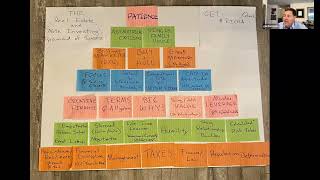
Okay. Okay. Let's first talk about the framing that I got from those guys. Once again, single family house, don't put much money down. I call it an option. So if I screw it up, which I normally do, I don't lose everything when I buy.
That's on risk management there.
Managing the risks. Exactly. I mean, we don't avoid risk. We manage it. So Instead of putting $100,000 down and $100,000 house, I put a small down payment down, I put an option down $5,000 or as little as I can, I create an option on a single family house. And then I'm a buy and hold guy. I'm not that bright. So when you buy and hold over 10, 20 years, you look smart because things take care of themselves. Property appreciates, loans pay down, rents might go up. So the framing of it, Rick, was from those guys, from the Jack Millers and the John Schaus and the Pete Fortunatos, who basically said, stick with the Single family house game. Is it dull? Yep. Is it boring? Yep. But can you get rich? Yep. And I said, you know what, I'm going to stick with their theory. So I started hunting for a way for an investor to buy a single family house. The first avenue I found was frankly from one of these late night TV guys. I think it was Carlton Sheets. I got his whole package, late night deal. And I read through the whole thing and none of it made sense to me. There was one page that talked about VA foreclosures, Veterans Administration's foreclosures. I looked it up and a non vet, I'm not a vet, could buy as many as he wanted to with a small down payment. And I said, wait a minute here, that's my framing, that's what I'm looking for. So I hunted one down, I went on the website, the VA website, you know, frankly, I failed. I failed. I failed. I lost the bids. I didn't get the bids. I got the wrong website, as it always goes. But I don't quit. I'm not a quitter. When I see the path and I've got a plan, I'll focus on it. And I did. So I bought my first VA foreclosure once again. Three or four years after I first got the ideas. I put 5% down, $5,000 on $100,000 house. I got a low interest rate, fixed 30 year loan. Did I make a ton of money out of the chute? Nope. But I did it again and again. Guess how many VA foreclosures an average investor can buy. Rick, guess what? The rules.
I have no idea.
As many as you want to. Wow, that was a big, you know, mostly if you buy the FHA stuff, it's four. Or the banks come back and say, you know what, now you're over committed, you're over leveraged, we're going to cut you off. VA didn't do that.
This may sound like we're promoting, you know, VA foreclosures and I don't think that's really the intent of the hunting club, but this is one of the things that you've done, at least in your early years, is you bought properties. Now were these actually, were these prior to going to foreclosure sale or were they. They were already properties that have been foreclosed on that you acquired through their financing programs. I don't understand.
Okay, so a veteran can buy a house for zero down. He even doesn't pay the closing costs. The seller pays the closing costs. He gets in and his life will change. Sometimes he gets transferred or loses his job. The va, the Veterans Administration guaranteed that loan. So they'll take it back, put it to an auction site and auction it off to anybody, to an investor like myself who went after that site. So I'm not going in the foreclosure process myself. It's already been foreclosed on. It's an empty house. I'm not, you know, taking advantage of anybody. Just a program that's set up for investors to buy these kind of properties. So.
So, Gordon, is the, the emphasis here really on. You mentioned the word framework was that the emphasis here is you were looking for the framework and the VA foreclosure just happened to fit that.
Exactly.
Okay.
And the point is that you started off in commercial real estate.
Yes.
As your daytime job.
Yes.
But you found that that didn't really suit your own investing purposes. So you went into single family houses.
Yes.
And because of the influence of the Jack Millers and his cronies. Speaking of John Shaub. You mentioned John Shaub. I got an email from him a couple days ago that he was in Turkey of all places.
Really?
So I don't know if he was in a Turkish prison. I doubt it. But anyway, let's hope not. He didn't ask for help and he didn't say, you know, send any kind of.
No need to wire funds, Rick.
Yeah, wire funds. Or, you know, send a couple cartons of cigarettes.
Send lawyers guns and.
That's right. American cigarettes. Anyway, so. Okay, so really what you're saying is that when you bought these properties, they were already been foreclosed on by the va, and then did the VA actually make the loans or did the VA offer you insured loans? Is that how you.
So the VA guaranteed their old loan. I didn't assume their old loan. A new loan was created, once again guaranteed by the va. It was assumable. Check that out. So I've got a low fixed rate 30 year loan that's assumable. I could sell it to somebody else and have them assume the loan. How often is. Do you see that?
So when you say low, Gordon, give me an idea of what rates you were getting at the time.
I did it again, Ellis, in the. Whatever. Six, seven years ago, the rates were from 4 to 5 to 6%.
Wow.
Fixed for 30 years.
Fixed for 30 years. The first go around, I mean, how does an investor get that kind of interest rate? They don't.
Yeah. That's flabbergasting.
The first go around were 7, 8%. That was in the first time you did it. Yeah. 80s and 90s. Yeah. And I'm not here to promote the VA program once again. I'm just telling you the framework of what I was looking for. Because what I'll tell you about next, if we talk about it, is other things that I've done, but they're the same framework. This framework, I have a plan. It's like I am brainwashed to go down this one path of a single family house with an option price and buy and hold. Those three together have done very well for me. But certain things come along. The va, frankly, since Obama came in, the person that he hired for the first six years x the program, now he's got somebody new in there who's actually a sane person. I think he's going to bring it back. I keep waiting for it, but right now it doesn't exist. You can't get these loans like that from the va. I think you'll be able to get them again. I've watched this plan for 20 years come and go, so. So, yeah, I'm not. Once again, VA was just one of my.
You got. You got it while the, While the Gittin was. Well, the Gittin was there. You can't get it right now.
Can't get it right now.
So in case anybody's all excited and salivating on it, the program is in the, you know, not in the Oscar November mode, but in the off mode. So. Okay, but. But you learn a lot from that because you're able to leverage your money pretty well, right?
Yeah. I mean, putting once again, an option price down. You know, if I came to you right now, Rick, and said, hey, I'd like to buy your house, but I've only got $5,000 for a, you know, a down payment, I need 90 days to close your house, you might say, okay, now I've taken your house off the market. I've got an option on your house. I could sell it to somebody else if I could get a higher price than I offered you. All I have is an option in the deal. Worst case, if I don't close, I lose $5,000. That's an option. I'm always looking for that angle. Always looking for that angle. I'm not smart enough to know when the market's going up or down. I'm wrong most of the time. But if I put an option money out, that's my only risk in the deal.
So basically now you took that concept and you've now applied it to what you have Also done with the non performing junior mortgage market, right?
Yeah. Should I talk about that?
Well, sure.
Okay. So what was it in 06 or so when the banks did all this funny stuff and created this fiasco that they created? I said okay, how can I.
You'll notice that that Gordon takes no personal responsibility or having benefited at all from the mortgage mess that acquired, that was created by the banks. Right, right.
The too big to fail.
Yeah, that's exactly, exactly. I like that. I like that Gordon.
I've helped them fix it. That's my job here on the planet is to help these people out.
Okay, got it.
So the bottom line is I said how can this small guy benefit from this fiasco that they've created? So I hunted down non performing notes in 0708 09. I went to every distressed debt meeting, mortgage servicer meeting, anywhere I could find people that are in that business. And I found a way to buy these non performing notes. Now there was two flavors of these notes. There was non performing first liens which in my opinion were too much money. These were on single family houses. That was good. There was non performing junior liens which you could buy for about 5 to 10 cents on the dollar. Does that sound like an option?
Kind of to me. I mean because you're, you're, you're not, you're not paying the entire ticket. But the beauty is. Well, maybe you may explain it to anybody who is listening in how that works.
Yeah. It is an option on a single family house where I can buy and hold these things. Yeah. And the bottom line is I look at it, if I can buy $100,000 note, a non performing note, if I can buy that for $5,000 or $10,000, I've effectively created an option on a single family house. And if I screw it up, and I do on a regular basis, I'm out 5 or $10,000, not 100,000 for the whole note. So I buy these notes, these non performing junior liens and I wrote a book about it. It's called Performance Anxiety, how to create a Fortune in non performing notes. It's on my website and everything. But the bottom line is it's an option on a single family house that I buy for not too much. And I buy and hold them, I get them reworking, I'll call the borrower and say, hey, let's work this out. If you were paying a lot before, you can pay a little bit to me and we're all good, so move forward. These frankly have been the best piece of this model that I created recently. You know, I'm not doing the VAs right now. I'm doing non performing junior liens. When we talk in five years, and I'm sure we will, I'll be doing something else. But I'll bet it fits this same model of an option on a single family house and buy and hold.
So Gordon, if I could maybe rewind a little bit and kind of establishing. So a non performing lien. You know, of course the insiders who understand what that is. So a non performing note is. Is basically someone that took out a loan on their house and then they're unable to pay and they haven't been paying for a long time.
Yeah, right.
So now you're buying these notes, your liens, from an institution like a bank, and it's for pennies on the dollar compared to the loan balance.
Yes.
So if I can understand when you say option, it's really about. It's fitting your. The model that you like, where you're using a little bit of money to control a large asset. Is that correct?
That's exactly.
I get it.
And thank you for saying that, Ellis. Let me tell a story, if I could about just to make this real clear.
We're all about stories. So please.
And I'm trying to be too, if you ask me. What my goal is in the future is to be a great communicator and tell stories. So let me try to do it right here. Somebody buys a house.
Many of them truthful.
Yes, they are. So someone buys a house. Okay, let's say it's a $200,000 house. A regular house, maybe a new house. When you get a new house, what's in the backyard? Do you get beautiful grass back there or is it just kind of dirt? Sometimes. Usually dirt, yeah. Sometimes it's dirt. So the wife went to the husband and said, hey, I'm tired of staring at the dirt and I'd like to have a pool in the backyard. So the husband went down to a contractor and said, what would it take to make my wife happy and put that $50,000, whatever pool in the backyard.
Put a pool in there and leave.
Yeah, he's gone and she gets the pool. No, that's not okay. So he goes to the bank and he says, here's the deal. I've got a contractor who's given me a bid for a pool in my backyard, $50,000. The bank says, fine, we'll put a junior lien a second on your home behind your $200,000 first secured by your home. How does that sound? Fine. So everything's fine. She's got the pool three or four or five years, whatever goes by. And things change. Someone loses their job, maybe he does go away, I don't know. But they can't make the payments anymore on the junior lien. Maybe the first lien too. The first lien, if it's not paid, if it's a non performing note, a non performing first lien, they take that pretty seriously. They will start a foreclosure. The junior lien in most cases will send them one nasty letter and say, Mr. Smith, you need to pay us. And that's about it sometimes.
And this was happening in droves in the last decade. Right.
There was a glut in 0506-0708. You can't get one now. Frankly, it's hard to get a junior lien for that pool. It's really hard. New standard of qualifying for that. But yeah, it was difficult to get. It's difficult to get now.
And as a matter of. So that we're clarifying. You're talking about for a swimming pool. Not a pool of notes.
Not a pool of notes.
Yeah. Okay.
Yeah. A pool of notes is frankly a bunch of notes or say, you know, 10 notes that you buy from a bank, they call it a pool of notes. We're talking about the pool in the backyard. So what they would do is send once again a nasty letter to them and then put it in a drawer or put it in some file and. And then a major bank like a Wells Fargo or a Citibank, a Bank of America will sell those notes, usually to a hedge fund in big chunks. They'll sell a pool of 1,000 notes. I'll buy from the hedge fund maybe 10 notes or 20 notes at maybe double what they paid. I'll pay 5 or 10 cents on the dollar. So let's take that $50,000 note. I bought that $50,000 pool loan note from Mr. Smith for 10 cents on the dollar. 5,000. I'll call Mr. Smith and I'll say, hey, guy, what happened? What do you mean? Well, I see you're not paying your note. Yeah, things changed. What changed? Well, my wife lost her job. Okay, well, what were you paying before? $600 a month. What could you pay now? $100 a month sounds good. I can do that with you. Because frankly, we're in this for less.
Hmm.
It's a win win kind of deal. So now they're paying me $100 a month instead of the $600, it's affordable for them. And that's kind of a general overview. It's a complicated subject and I'm trying to make it with a story, kind of make it a little bit more clear about this non performing junior lien.
So talk to us about, you know, a real example. You don't necessarily name names and addresses and all that, but give us a story about one of these ones. So you got whiff of one. How did you get whiff of a particular, like one of the first files or one of the more interesting files? So talk about how you, how you learn about it and then how you pursued it.
One of the beautiful things, Rick, about this little niche that I'm in right now, right now is I don't have to really hunt like that. I go hunt with the hedge funds and there's only six or seven of them nationally that sell these kind of things. So that part of the hunting is more me developing a relationship. But let's talk about one. We'll call it Eddie G. Okay. Eddie G. Is a used car salesman up in the middle part of California. And in 07 08, he was selling fewer cars. The market kind of tanked. Whatever you could do. I bought his $50,000 junior lien for about $5,000. And I called Ed and said, hey, Ed, we need to work this out. And he goes, well, what's the deal? He says, could I pay you $300 a month? Now, once again, Eddie is a used car salesman, right? And I said, well, I always defer to higher authority. I said, let me check with the big boss. And I said, well, Eddie, I think we can do that. And he says, you know, he says, he says, that was a bunch of crap. And I said, what do you mean? He goes, you made the decision. I can tell. And I said, how can you tell that? He goes, he says, I'm a used car salesman. I do this every day. He says, I said, I hate getting out negotiated by my borrowers, but I did there. But. So he's paying $300 a month. Okay.
And was this when your other personality came out, you discover that you were not just Gordon, but you're now you're Big G Moss. He saw and the other. And the other personality came out. And you, you know, said you sent a couple guys over there with bats.
And we don't do that. We don't need to. But, you know, I basically, I tell people we've got our legal department and we do, and I report to our, you know, our CEO who's a good guy and a bad guy sometimes, but your dog. My dog or the lizard in the backyard? Larry the Lizard. I talk to him once in a while, but that's kind of an illustration of a note. He was paying $300 a month for three years on time. Just sold the house a few months back, and now I got the full payoff.
What was the full payoff on that one?
Well, there was some arrearages and everything else. It was about $54,000.
Okay, so you made an investment of about5.5000 on it, and then.
So 5000, plus some legal fees, plus blah, blah, blah. Probably about $8,000. I'm into it.
Okay.
He paid me $300 a month for three years, and then on top of that, 54 grand at the end.
So you got the payments, plus you got the big lump sum.
Wow, that's a good one. I mean, do they always work out that way? No. Is that a fairy tale one? No, that one happened. So it's just an example of this business.
Now, was. Was he. Was he happy or was he screaming and hollering or.
No, he was. You know, when you normally. When you call these guys, they say, who the blank are you? You know, my loan was with Wells Fargo, you know, so they're a little bit off. You know, this loan is a bad memory for them. They haven't heard anything for six years. For all they know, it's gone. And if you look at the credit report, it'll say charged off. And they'll say, this has been charged off. And I say, well, that's just a bank accounting term. They sold it to me. They took the money for it. You owe us the money. We're on title. So once they get over that, they say, you know what, we need to call my attorney. I say, please do. It always works better that way. It's not emotional. This is just a legal type of thing.
Do you just try to explain it in simple terms so they would understand, like it's a bank accounting entry and you're still screwed.
I wouldn't exactly use that term bank financial institution.
Okay. But the deal is that from an investor standpoint, you found this, but you didn't have to really pedal really hard to get on the trail of it. But to get on the trail of this thing, you did have to learn how these things work. And you also used your earlier skills, both in what you did, starting out in commercial and then evolving. A lot of people work it the other way around, but evolving into your Understanding of single family houses. And then you understood the collateral, if you will.
Yes.
And then you understand something about title, obviously, and enough about lending and you decided that, well, this is an area that, where you could tolerate the risk.
Yes.
Okay, so you got wind of these things, but because you knew that you were not Wells Fargo and all that and they probably weren't going to sell directly to you or bank of America or whatever, that you bought these instead of having to chase them yourselves, then that you actually bought these notes either through the hedge funds or brokers, right?
Yes.
Yeah, I'm glad you picked up on that, Rick, because that stood out to me as well. Instead of going after the individual game, he went to look for a herd and he targeted a whole herd. So he could. Basically he's like shooting fish in a barrel in a sense.
Right?
Yeah. And let me just say, I mean the Wells Fargos and Bank of Americas and the big guys, they sell a lot of notes, hundreds, billions of dollars every day. I'm not a player who can buy that kind of stuff. But the smaller banks, you can go to your community banks and say, hey, do you ever make pool loans, Mr. Smith, vice president of whatever? Yeah, we do. Oh, well, do they all work out? What do you mean? Oh, do they all pay all the time? Well, most of them do. Well, how about the ones that don't? We don't talk about those.
That's great because I mean, it's like it could be very intimidating to kind of the, you know, the, the everyday investor. But what you did is you, you basically found this huge opportunity and you were in a big operation at the time.
No, I'm still not.
Right. And you found this huge opportunity by, by basically taking over these problems that the bigger guys had, like the Wells Fargo's and the chases of the world.
Yes. That's awesome.
Because it's not realistic that if you're a Wells Fargo V of A or Chase or whoever, you're not going to be able to solve all those problems and get so granular at the level with the, you know, tens upon tens of thousands of the paper out there, both the paper that they own and loans they might even be servicing as well too.
It's like an old trash. And Treasure was trash to bank of America, but it was treasure to, to investors like you.
So, so the point of this really is to getting on the trail of these things wasn't so much that you sniff these things out. I'll tell you a little story that happened to me when I first thought about doing this. My friend Mike Cantu. Our friend Mike Cantu, who would have also been here today too.
Shout out to Mike. Hey, Mike.
Hey, Mike. Yeah, we, we. We know why you're not here. So the, the point that we had decided back in around 2008 is that we were going to pick a house, that we were going to pick all these criteria with a particular property that was in foreclosure and try to buy the note and cherry pick the notes. Doesn't work that way. You can't really do. There might have been a time to do that, actually. My own residents actually bought it that way with a note, but that was many years ago. But they won't sell notes on onesie twosies, the lenders, typically the big lenders anyway, they won't. The big national lenders. So getting on the trail for you really meant understanding how these things work, studying how to do that and working through others had done this. Who kind of funneled these things down, in your case? Hedge funds and I presume, real estate brokers. I've heard plenty of stories about people getting burned by real estate or note brokers, I should say too.
We call them the joker brokers.
Yeah, Ellis and I had an event here a few years ago called Note Camp.
Oh, right, yeah, that was a great event.
Yeah, we had a lot of fun. We had a couple dozen people come out from all parts of the country out to the ranch and met. You were actually there, Gordon.
I was there, yeah.
We had a good time. Well, so, okay, so you've done. Now how many of these notes have you probably done to date yourself that you've kept?
That I've kept, yeah. You know, if you buy 50 notes, let's put it that way, I'd say half of them will settle in some form, either a short sale or they'll pay it off, whatever it is. My real goal is to. I don't actually work for my ira, because that wouldn't be correct, but to build up Gordon's Iraq with these notes. So pay a little bit for the notes. Have them reaffirm the debt. For example, the $5,000 pay for a note, $50,000 reaffirmation of a debt when he's paying me $300 a month. And then one day, like with his Eddie G. Pay me off in my ira. So that's, you know, as far as the number of notes, I mean, it's less than 200, frankly, that I have. So I'm not like some. I'm really a small fish. I'm not a monster hedge fund. I'm not a big player. I just. I have a theory. I say stay small, keep it all. Meaning that I don't want a staff. I don't want employees. I've had an employee. Employees. I've been an employee. I wasn't good at either. So I just want to be Gordon. And.
So it looks like you found this kind of recurring framework that you're looking for. You found it in the note niche. And then even though you're not a big corporation where you have tons of employees, you're able to make a pretty good living. Right. I can tell from the Tesla outside that you're doing okay. And that even though you kept your operation very small, you were able to make huge inroads in getting these great returns. And you gave us that illustration of that one from Eddie G. But you're able to kind of rinse and repeat. Right. And then a lot of these, you say settle, and then you're able to hold on to a few hundred. But that's plenty for you to live the way you want. Is that correct?
Exactly. That's really cool.
But the other side of it, too, from a risk reward ratio and also from your tolerance of risk, you know, going in, that this may not be the number, but let's say half of them are gonna be home runs for you. Cause you know how to pick them, and half of them are gonna, you know, be worthless. And so where you develop a skill is knowing how to pick them and knowing how to slice and dice and decide which ones are more likely, you know, to pay off. This is a decision that I made, you know, some years ago because I've got experience and notes pretty extensive, but I don't really. I don't have the way to pick them that you do. You talk about in your book Using Emotional Equity, I guess.
Yeah.
People who are attached to that property and once.
Go ahead.
Well, so what I want to know. Okay, so now that you've done this, you know, quite a few times and have the benefit of it, so what's the. You know, so what do you get to do? I know that ever. Seems like about half the time that I talk to you or try to reach. You're traveling now.
Yeah, and I've been traveling actually too much. But, you know, we talked about. Talked about the notes and how I get them. It's relationships that I build and foster and keep, and any relationship starts with, you know, what can I do for you? So when I go to these hedge funds, they got A million guys saying, yeah, I want your best notes, I want them cheap, blah, blah, blah. You know, how far is that going to get you? It's what you can do for them. So I was just in New York last week, frankly, with my buddies in New Jersey and everything in Philadelphia that sell these notes. And I try to create value for them and help them and find a way to get in to get the better notes. They're hard to get, and they're getting harder and harder to get. Some people are promoting this business, I pointed to myself, and it's getting a little bit more traction. So the notes are harder to get. So the way I get the notes, it's relationships. And that's really key. I can't say that enough. People always say, where do you get the notes? And I say, I build relationships. And they go, yeah, yeah, but where do you get the notes? And I say, well, I build relationships. And we go through that about 18 times.
So everybody wants the magical website where they point and click and get the opportunity, right?
And the rainbow, like anything. There's no fairy dust, no magic pill. And so I do travel a lot.
Rick, wait. Now there is a magic pill.
There is.
Is that one of our sponsors?
Rick, this episode is brought to you by. Well, I gotta tell you that the thing I love about your side of the market, how you operate this, is that it's perfect for your lifestyle. You're able to be, you know, free to do the things you want to do. You're not encumbered. You know, you. You wake up in the morning, you go and do, you know, your gym classes, you go surfing on some days. You live down in San Diego County, north county at the beach community, and you got a pretty, pretty good thing going. So now what would you suggest, somebody who wants to get started in this, what would you suggest they do? Because you've already told me, told Ellis and I and the other listeners of the other hunting club that it's about relationships. Well, if you don't know anybody, how do people start? I mean, they don't know anything about notes or they do know something about notes, but I mean, what do you do to start?
What I did, frankly, I mean, I've got a real estate background, and I ask people getting started, I say, do you have the time for this? You know, do you have the expendable money? It can't be your lunch money. Do you have the patience for this? Do you have some real estate background? Real estate, title? And if you don't, you get it? I Mean, if I got nothing, you go figure it out. You go take real estate courses, you go learn the business a little bit. And then you do what I did. You get on the road. These conferences are out there. There's a conference in Las Vegas or in the east coast or somewhere here in California almost every month on this business. The real estate clubs. I know, Ellis. You have a club. People that are. I talked at a club two weeks ago, and I'm an open giver, like the people that mentored me. The Jack Millers, John Shops, Pete Fortunatos, Jimmy Napiers. I don't hold anything back. So you gotta get in the game. You can't just say, well, I wanna, you know, do this part time, or I wanna just, da, da, da. It doesn't work that way. Like anything, anything worth getting is usually hard to get. This ain't easy. It's not for rookies. I steer people away from it. Ten people call me within two months, I'll turn nine of them away. Just saying, this ain't for you. It sounds like a great thing. It is a great thing. And if you're determined enough, like myself, I mean, you couldn't turn me away. It wouldn't happen. I would have gone after this because it was that good. So I would just say you need some experience. It's not for rookies, but it's a great opportunity and it fit my model. I had a plan. You need a plan. Those guys that I mentioned, those teachers, three out of the four of them are still alive and still teaching. I went to every event they had, every quarter for 15 years. I think it's where I met you, actually. Rick Fullerton's meeting. And then in the back of a Jack Miller seminar, if I recall correctly.
Not behind in the back of the seminar, in the cheap seats.
I think, Gordon, that's where we met. We met at maybe a note. Specific event, if I recall right.
Yes.
Yeah, I think it was in. Maybe in Colorado or Denver or something like that.
Yes.
Yes. Yeah.
What?
Dean Engel had had an event there. Yeah, that was. You're right, that was in Colorado.
Well, want to tell, you know, tell you thanks for. Thanks for coming out and, you know, visit us up here at the. At the ranch and.
Do I have to leave now?
Spend time in the lodge. So if somebody wanted to. To. To learn more about this or, or to reach you, you have any. Any contact information or what. What can you give out to anybody?
So I've got a website and I named it realestate and noteinvesting.com just like it sounds like. Realestate a n d noteinvesting.com and on that, I've got everything. I've got every blog I've ever done, every video I've ever done. My book's on there. If you want to know 90% of this business and more than 90% of what the hedge funds know, if you spent 20 hours on my site, you would. So that's a good place to start. You can find me through there. Realestateandnoteinvesting.com Gordon, mention your book again because.
I know it's on Amazon. Right?
Yes. Yeah. So I've got a book. It's called Performance how to Create a Fortune in Non Performing Notes. It's on Amazon and Kindle. If you Google it or Google me or Amazon, you'll find it.
Great. Okay. Well, it's been a lot of fun. Sure appreciate you doing that. I get your tractor wiring up and so it sounds to me like we've got to get out of here.
Yeah. Thanks, Gordon.
Thank you guys.
Thanks again for coming out here and enjoying us. And we'll look forward to seeing you in the next episode of the Hunting Club.
Okay.