Gordon Moss Interview with Jerry Ryan
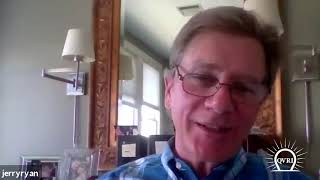
Coach G interviews investor Jerry Ryan on managing money during the 2020 COVID lockdown. Ryan covers real estate, non-performing notes, and dividend stocks, emphasizing checklists, cash reserves, and keeping tenants paying. He recommends books by Howard Marks, Nassim Taleb, and Charlie Munger.
Chapters
This is Gordon Moss of Quixote Ventures. I wanted to introduce you to a great friend of mine, a seasoned, successful, long term investor. It's funny, we were on the, on the phone the other day and I said, you know, what value can I bring to the world these days in this challenging time? And I said, you know, these conversations that I have with my friends are, to me, just, my friends are the best part of what I do, frankly. I have met people all over the country, all over the world in my investing career and the best things I get is advice from my friends. So Jerry Ryan is a long time seasoned, successful investor and he's on the call with us today. Say hello, Jerry.
How you doing, Gordon?
Thank you for having me and thank you for signing up for this. I will say too, technically, I'm on Zoom for the first time. I was not a member three hours ago. So if we screw this up, bear with us here. If we do this again, it'll get better the next time. So forgive me, Gordon.
I think, you know, both of us are ZOOM neophytes. We have to thank Ava for getting us this far. Hopefully we can get through the next hour.
Well, let's have fun doing it, whatever happens.
Absolutely. Let's have some laughs in this crazy time.
Yes, yes. And just let's talk about this time for a second and why we're doing this. So once again, we have an unprecedented COVID 19 virus that has taken over the world in a way that nobody could have imagined two or three weeks ago. I mean, it's unprecedented. It's unbelievable, as we all know. So once again, I said, what kind of value can I bring? Well, maybe some experience of the history of, of past problems that we've had in the world, recessions, things that we've gone through, and people like Jerry who also have gone through things like this. Let's talk about our experiences. Let's talk about what we're thinking about and what our plans are to attack and defend ourselves in this new environment. So let me just kind of throw it out here and say that, you know, we're all in this together and we will get through this. I'm doing a lot of things that I never made time for before, frankly. Cooking. I've always wanted to cook. I've got some real nice pots I got in France one time. Never used them, but I have in the last week. I'm not sure how the food is. You'll have to ask Eva. But we're trying, you know, my golf game, I'm working in the front yard, trying to figure that out. Music, the guitar, playing the piano a little bit. I'm going to read all the things I've always meant to read that are on the bookshelf. And I'm actually going to brew some home brew beer. I ordered a kit and we'll see how that goes. But all the things that I never had time for, I'm here, locked down, socially isolated, and I'm using this time. But I would just say do what the government recommends and take this seriously. Take care of your people, obviously, stay healthy, eat well, get your sleep, drink your water. I think it's the best defense against any of this is to stay healthy, especially in the early months of this thing, because that's what they're telling us to do. And then also practice gratitude. In these tough times, you think, what have I got to be grateful for? Well, you've got a lot to be grateful for. We all have. We're in the best country that ever existed. And, you know, there's the guy that had no shoes and he felt pretty bad about it until he saw the guy that had no feet. Then he reassessed things and said, you know what? Things aren't so bad. So practice gratitude. And then what I'm hearing out there is within the next three months, 18 months, who knows? This will all just be a bad memory. So these are unprecedented times. That's my quick speech to start this thing off. And let me introduce Jerry. Jerry Ryan is a friend of mine who I met years ago at some real estate meetings. And I've always admired him because he can articulate the investment business better than anyone I know. And we had breakfast with a friend of ours about six months ago. And he mentioned, Jerry mentioned he was writing a book or doing a course or something to kind of lay it out to the people coming up saying, you know, here are the fundamentals of investing from his perspective and his history. And I'm going to turn it over to Jerry in a minute. But, Jerry, could you start by giving us your background and your history in the investment world?
Yes, I can. And first of all. Well, once again, Gordon, thank you for having me. A little bit about my background is I spent 30 plus years in the broadcast business. I was never on the air. So this is a first today. Thank you. You finally put me in front of a camera and I was on the business end in various forms. I was a senior officer in a major company. We ran many, many radio and TV stations. I also was on the ownership end of radio stations. For many years. And I've worked in some big companies. Now that's what I call my corporate W2 background. I have another background too, which was I really lived this other life. And my other life was I've got a great chair in the corporate world. I make a lot of money in the corporate world. But how do I become not reliant on that corporate chair? So I invested in real estate, real estate notes and dividend paying stocks. That enabled me to get out of that chair and do what I do today, which I am. I'm a private lender up in the village of Carlsbad. I invest in real estate, I own properties, I invest in notes, I create notes and I buy stocks. So I am an investor. You know, I really focus on three of the five asset classes, which is real estate stocks in cash. I really use real estate notes as bonds, which is another asset class. And commodities, I really don't buy physical commodities. But if I do invest in the asset class of commodities, it will be through publicly traded stocks like oil companies. So that's a little bit about what I do. And I just want to touch on one thing that you also mentioned, Gordon. You know, Gordon and I meet for coffee a few times a year where we both sit and talk for about an hour and a half. I'm usually a little bit late, but I say we do talk about wealth quite a bit. And the one thing I think that you said, a very important word in your opening remarks, gratitude. And I think if you are healthy right now, you just. That is something to be very thankful for and do everything you can to be healthy during this period. Because all this wealth is meaningless if you don't have physical health.
You know, Eva, my partner here, she is so adamant that people are doing the right thing right now. And frankly, some people aren't. They're not taking this seriously, that they're getting having fever and they're out getting their hair done or their nails done or going to the store just to look. This is not the time to be getting sick right now from her point of view, and she's been right through this whole thing, I'll tell you that. She's been saying that if you're going to get this virus, wait a month, wait two months. When they're ready for you, when they get a respirator will be ready for you. They're not now. I mean, it's going to get exciting in the next two weeks. So defend yourself, take your vitamins, get your sleep, but take it seriously. I see A lot of people not taking it seriously or they just don't understand what's going on. And once again, I'm not a doctor or here to preach to anybody, but. And this is more of an investment how to handle what we're going to talk about, you know, past problems we've had in the markets, you know, through the decades, but also what to do now, what we're doing now, what we're thinking about. And I think that could be a real value. But back to you, Jerry. I didn't mean to cut you off.
No, you know, the other thing you said was you're focusing on a few things that you're doing for you. And it sounds like you're focusing on some things that you can do with Eva. And that's cooking. You know, it's reading. If you're reading and you want to be a better investor, this is a great time to read some great books to, you know, grab a little bit more wisdom and be able to look at the world a little bit more rationally and logically because it can definitely help you during this time. So I think it's great. With your suggestions in the front end of, we'll call this the zoom meeting.
It'll build the one word that you talked about earlier. Confidence. If you have confidence, you can act rationally. You can think about this. If you're in a panic state, you will not. You will do the wrong things, you will make irrational decisions. So it's building confidence by like you're saying, reading great books and everything and positive books, you know, self help things. But let me start by asking you, because I love the way you characterize this, what it takes to be an investor. And you studied all of them, you know, the Warren Buffetts and all the different people. And you've got to, I want you at the end to lay out your great books too, because I haven't read them yet. Hopefully I'll get to it. But what it takes to be an investor from Jerry Ryan's perspective.
You know, I thought about that for you. And first of all, this has been all put together through what, two very short emails in less than 24 hours. So, you know, this is two guys really just putting, you know, putting this together very quickly. Let me just give you, and maybe I should go back to that morning that you and I and Craig, you know, met at the Encinitas Cafe over a cup of coffee and I'll kind of give you a 35,000 foot view. And maybe this is, you know, the 30 second trailer to this PowerPoint I'm going to put together, and I do put together a monthly market update for or the San Diego real estate market. But this would be a much bigger, comprehensive PowerPoint on how to attain through your investment life. I mean, what do you want to attain? And what do I think most people want to get to? And what they want is financial freedom. And if I were to sum that up in one word, it's autonomy. It's what Gordon Moss does every day. Gordon Moss decided to put together the Zoom video Yesterday and within 24 hours, he and I can do it. We are not stuck in these W2 wage slave jobs where we can do these things and we can invest and we can live the life that we want to live based upon what we did over a lifetime. And I think, number one, you got to know who you are. Because if you don't know who you are, markets are very expensive places to find out. What is your emotional makeup? Are you good at fixing things? If you are okay, flip a house. If you're not, don't attempt it. Put your money in notes. I think a critical thing that people really need to ask themselves before they even enter into the investing aspect of their life. How do you learn? You learn through reading. Charlie Munger can read and really learn things and connect dots. I read where Winston Churchill learned through writing when, when he could distill his thoughts to paper. That's how he really got a deep understanding of what he was trying to accomplish. But I think where most people really learn is through doing. They're taking action from knowledge that they have been able to attain and created intelligence. And intelligence is what makes you a living and it makes you a good investor. Now, as you, as you get to this point, as a good investor, there is something you've got to be. Well, in my presentation, I call it the power of two. I'm not going to go into this entirely, but you have to be able to balance competitive thoughts in your head. Just can't simply look at reward and say, if I put my money here, I'm going to make all this money without acknowledging the competitive thought of risk. But too many people see the reward and then they start convincing themselves through confirmation bias that they're right. No, you've got to be able to look at risk and reward equally to find that intelligent decision. And that intelligent decision, there's really three Rs there, there's risk balancing it with reward. Risk always comes first. That will lead you to the rational decision. So what's the other thing that can really help you make intelligent decisions balancing risk and reward during these situations. I'm a huge believer in checklists. And if you don't think Warren Buffett doesn't have a checklist, you're kidding yourself, because I tell you, I have read his checklist. Everyone who's a shareholder of Berkshire Hathaway has his checklist that he goes through before he makes an investment. And, you know, he's talking that over with Charlie Munger. And I'm going to just touch on one other thing here. Intelligence. Knowledge is cold. And when we talked about action, if you can't take action, you are never going to develop a high level of confidence. We all know these people with all this knowledge, and they're not able to create anything from it. And I think it's partially because they live their life in fear. They're so worried about the risk, they can't see the reward. Now, in this situation, and I'm a little bit like you, Gordon. I'm kind of all over the place at times. This is. If you've ever wondered what a Black Swan event is, we're in the midst of it right now. No one predicted this four months ago.
What's a Black Swan event? You send that. I know people have written about that. Define that. What is a Black Swan event?
Well, first of all, the guy who really made. Who made it famous by coining the word is a writer. His name is Nassim Nicholas Taleb, and he's a teacher at Columbia. He's also made quite a bit of money on Wall street, and he's an interesting guy. I think two of his better books, and actually, I think he's written three pretty good books. The first really good book he wrote was Fooled by Randomness. In other words, there's so many random events out there in the world. Don't let people lead you to believe that they're so much smarter than everyone else. Use common sense. And there are random events that create situations like we're seeing right now. Now, he also wrote the book the Black Swan. I think he wrote it in 2006, 2007, and it became a huge book on Wall street because it hit right before that financial crisis. And a lot of people called that a Black Swan event. The other, you know, David Hume, who was a Scottish philosopher, sometimes people use him for being the person who has created the word Black Swan because everyone thought swans were white until the English started to explore Australia. When they started exploring Australia, they found black swans. And they were like, what is this thing and Hume's theory was the only true knowledge that we know is what we can accurately prove is false. Not all swans are white. There is a such thing as a black swan. This is a black swan event. And no one could have predicted this four to five weeks ago. And believe me, you turn on cnbc, which I have on here in my office, or you listen to some people, there's as many forecasts of what's going to happen with this as there are forecasters. My feeling is, I can tell you this, nobody knows how this is going to completely play layout. Nobody. I mean, so. But to get back quickly to our, this meeting with you and I and Craig, you know, and this is going to be very quick here because I'm probably talking too much already. You got four quarters in your life and you know from the time you're born to your 20, it's pretty hard to get blown out of a game, just like it's pretty hard to get blown out of a football or basketball game in the first quarter. Now your coaching staff can take you out of the game, that would be your parents, or you can take yourself out of the game by doing something stupid like getting involved with the wrong kids or drugs, et cetera. But then you, you really, people have to look at this time period between 20 and 40 and 40 and 60. This is the part of the game you got to put up a lot of points. If you want to live in the fourth quarter and you want to live in an autonomous life, you've got to be able to score in that second and third in that second and third quarter in life. And you know, in your 20s it's okay to speculate and to build some capital, but then starting in your 30s, you got to start investing in long term investable assets that are going to pay you for the rest of your life, whether in the two best asset classes for that are dividend paying stocks and real estate. Now they both have their pros and cons. I'm not going to get into that now. But by the time you're between 40 and 60, if you're a, if you're a wage slave person and you're making money, you have to have, getting back to the power of two, you have to have, you got to be living two business lives. One is this day job, this other is this job which is going to pay you for the rest of your life, which is wealth, that wealth creation form of your life. And then there's five asset classes. If you want to get out of that corporate chair, you've got to master at least one of the five, and that's cash, stocks, real estate, bonds and commodities. I typically tell people, if you're not actively working at the Nymex or the Chicago Mercantile Exchange, stay away from commodities. It's purely speculative. It can't pay you. You can have all Gordon, you can put all the gold you want. If you have a swimming pool, you can stack it up in your swimming pool, but it can't pay you, pay you any money every month. You're paying the insurance and to protect it, you pay for it. It does not pay you. But real estate and stocks can pay you over the course of a lifetime. I'm going to just say this. You know, the bond market at this point with where interest rates are, I don't know how productive bonds are going to be in the future, but I will. I think I have to throw this in cash, which normally does not pay you much. But I'm going to tell you over the period of the next 12 months, based on what's just happened, cash becomes the most important alternative asset you can get your hands on because that liquidity is going to. You will be able to utilize it as leverage to buy some very good investable assets in the future. 6. In your adult lifetime, you're probably going to have six recessions. Well, guess what? We haven't had a recession in a decade, but one just happened. So as tragic as this is, there's going to be some pretty good investments that are going to come out of this.
Jerry, take a step back. And I mean, one of the reasons we might bring some value here is that we are. We have some gray hair. We've seen 30 years of these movies before. For example, in a 91, 2001, 2008, we've seen recessions and we're probably going to be in one now.
We are in one.
We are in one. See. Can you kind of give us your quick story on what happened to you in the past in the past ones, how you took advantage of it or how you didn't. And it's kind of a reference point to say, hey, these guys have already been there, done that. This is unprecedented. I get that. But can you give us some history as far as how you either took advantage of or were able to capitalize or didn't in some past problems like this?
Well, I do think. Well, first of all, let me just say this, that veterans of recessions do have advantages over rookies at this point. And I think the message that the Veteran can give to the rookie is they've been there before. You know, look it, you and I have lived through, you know, the oil crisis in the early 70s, the oil embargo of 73, 74. We were really too young to take advantage of it. I was in college at that time. You know, we did go through a recession early on during Reagan's administration. I was in my mid-20s at that point. I was buying real estate in Chicago. I was buying condos and renting them out to my friends. All of a sudden we have another market dislocation in 1987, Black Monday. I'll never forget. I got some advice from a guy who's a legitimate billionaire. I'll never forget what he told me in 1987 after Black Monday. I saw him that week. I think I saw him on a Thursday night. Black Monday happened on that Monday. He looked at me, he said, kid, how old are you? I was 37 at that time. He said, buy every asset you can. Buy every quality asset you can buy, buy it. Everything's on sale. You know, after the Persian Gulf war, we also experienced a pullback in 91, 92. We've had the dot com blow up. We've had the financial crisis of 07 08. You know, people say, well, how do you know when to buy? Well, I'm going to tell you this. They ring the bell in the beginning of the opening of the stock market and they ring the bell at the close of it. They don't ring a bell when it's time to buy. But I'll tell you this. If you feel that the economy is in a very uncomfortable situation and you take a look at that consumer sentiment chart, and that consumer sentiment chart comes out twice a month, at the end of the month and in the middle of the month and you see that consumer sentiment chart dropping very quickly, well, you can start buying. Are you going to know the absolute bottom? No, no one does. And if anyone tells you that they know the absolute bottom, the perfect moment to buy through their trends or through this, they are lying. Nobody knows the bottom. Nobody knows the bottom to this. But here, as I always say, economists have predicted 13 of the last three recessions. But. But with the market feeling this uncomfortable, I think if you're buying stocks, probably be a good time to dollar cost average to buy a little bit at a time. Over the long run, you'll probably be in pretty good shape. The other thing you gotta be able to look at, and this is very important at this point in time. If you're going to buy stocks, buy stocks with a lot of cash on that balance sheet. Why? They'll either be able to sustain that dividend or B they'll be able to buy the weaker competitors who have some financial distress going forward. Okay, so do we have an advantage? Yes. Was I able to buy in 08? Yes. Have I been buying now? Yes. I've been nibbling on stocks. Have I bought some things maybe a little bit too early? I probably bought one oil stock a little bit early. But I've been also dollar cost averaging. I'll probably be okay. But I also know that oil company's got plenty of cash to get through this thing. Some of these tech companies have huge cash. Microsoft, Apple, Google. I have to tell you, in 2009, in March of 09, you could buy Microsoft for $17 a share. Today it's 150. That thing's a cash machine. Not that I'm telling people to buy Microsoft, don't get me wrong, but that's just an example of what you can do. I'll tell you another great buy during the back in 0809 or not early part of 08, but in 2009, the bank stocks you could buy bank of America, $3 a share by JP Morgan Chase. It was 20 some dollars a share. And the government backstopped those businesses. They told you we're not letting them go out of business. So there are moves you can make in the stock market. The real estate market I think is going to be much more interesting.
I'd like to hear, as you know.
Close to 12 months from now.
Okay, yeah, I'm more of a real estate and note guy. I've got a website, real estate and note investing. I've played in the stock market a little bit, owned some mutual funds. I'm really not the guy, but I know you are. And I like the way that you make a comparison between beachfront dividend paying high quality stocks and beachfront high quality low maintenance properties. Blue chips on both sides. There's two asset categories that you talk about, real estate and stocks. And they're the blue chippers that pay you a dividend. Not like gold where you pay to own it. They pay you consistently. And in this case you're saying the cash positions are huge. But in the real estate world, Jerry, how would you characterize. You mentioned 12 months, but talk about that a little bit.
First of all, let me just say this. This is different than the financial crisis in 08 and 09. And sometimes as investors we look to invest and we fight the last war. And it's going to be very interesting to see how this war plays itself out. It's already interesting to see to me how within a couple of weeks of a lockdown or a week of the lockdown, they're already talking about don't worry about your rent, don't worry about paying your mortgage. You know, I think that, you know, bank of America said no, you're getting a 30 day moratorium. I think Wells and some one of the other bank cities said no, you got 90 days. Whatever. Hey, look it, let's not fool ourselves. This is an election year. They're going to do everything they can to keep people in their houses and happy through the first Tuesday of November. After that, we're going to see how this plays out. Now, real estate is not even though there are people like Zillow and some other companies that are trying to move it to a more of an I platform. Real estate typically is not bought and sold on a central platform like the stock market and the commodity markets. So it doesn't typically have. And it does not. Well, not typically. It doesn't have the same volatility in price. It's that central platform that creates the quick volatility in stocks and commodities. Let me just give you a number. I wrote this down in my last market update in 2009 and really the housing crisis started to hit 0607 and then we had the meltdown in 08. In 2009 in San Diego county there were 49,125 foreclosure filings in 2009. Last year, 2019, 10 years later we had 2,744. It was in essence 40 over 46,000 more filings for foreclosure filing for foreclosure filings in 2009. That tells you there's a lag time in real estate where that distress starts to set in because there's a process of foreclosure. It's not a centrally traded platform. The bank has to foreclose. There's three to four months to try to remedy your mortgage. And then there's this whole process. Now how politics is going to play this time around and delaying some of that has to, you know, we have to wait to see how all this plays out. But I think where you're going to see the distress pricing in real estate, it's probably going to start to show up probably in about anywhere from six to 18 months. But there will be pain in these real estate markets because let's face it, there are people out there that live paycheck to paycheck and that are virtually. Well, not virtually, but they're illiquid.
Yep, yep. You know, let me tell you my story very quickly. The Las Vegas market is something I've looked at for probably four decades. My sister moved out there, she married a college professor, moved to Las Vegas in the 70s. And I watched it through ups and downs and everything. And it always, even in bad times, people would still go out there and escape and drink and gamble and get entertained and Vegas just kind of plugged along even in the bad times. So imagine the kind of shock that I was in when they turned off the lights on the place. And as you're saying, about a month to month kind of person. Imagine you're an employee at a hotel and you've just spent $2,000 stocking up on food because that's what the TV told you to do and you know, to self isolate and go home and would you pay the rent that month? Especially when the government, like yours said, is trying to get reelected and saying there's no evictions, you don't need to pay the rent. So, you know, shocking. And then if you were the owner of that rental property and once again, there's no foreclosures and forbearance and everything else. And let me just say I'm getting some good information on that stuff too. And I can, can, you know, if somebody needs it later, I can put it on the website, whatever, or make it available. I've got a pretty good, you know, insight into that whole thing as far as what the latest things they're doing. And it's changing by the minute. But the bottom line is between the evictions and the foreclosures, the whole game has changed. I mean, I've never seen, never seen this. So it's funny.
And you know what, Gordon? This is the fastest we've, the stock market has ever gone from a high to a bear market. It took I think somewhere between 15 to 19 days. And it could be 19 days, could be 50. I think it might be 19 days. We went from an all time high to a bear market. Never before has it happened that quickly. It was a 20% drop within three weeks. So I do think that you are going to see some definite distress in the real estate market. Here's one thing. So far things have kind of moved along orderly in this lockdown. But if we're in this lockdown for a sustained amount of time, you got to realize that markets are the combination of economics and emotions. And I tell you what, fear drives a lot of economic decisions. If you're not confident, we can talk about that in a moment. But I got to tell you, if this goes on over a prolonged period of time, longer than people were expecting, you're going to see a lot more emotion start taking hold in this market.
Yeah, yeah, yep, I hear you, I hear you. And you know, some general advice too. This whole thing about, you know, just some, you know, basics of things that you auto pay or things that you just assume that, you know, here's the assumption, the social contract says, you know, I can make an income and I'll pay my bills, whatever it is, but I think you need to, as you said, you're looking at companies with huge cash reserves. On a small level too, you need to guard your cash because who knows, as you said, that's the thing. 3 months, 6 months, 18 months, who knows? And yeah, the fear thing, what you were talking about earlier too, does not read confidence, does it? And that's the one word you mentioned earlier that a rational investor needs to do.
Well, you know, Gordon and I and a few other people get together in my backyard, but once a summer or we, I haven't put it together this year, but I will say this, I don't know if it was last summer or the summer before. I think it was summer before. Jeremy Gang threw a great question out there who was a mutual friend of ours. He said, look, should I sell some of these great cash flowing properties I have in Riverside, San Bernardino and upgrade them to, you know, coastal properties? And I think the answer the group came up with is wherever you can get the better cash flow, that's the better property. Because in a situation like we're in today, cash becomes the best alternative asset you can own. Because cash is, is what you have to use in buying some forms of real estate. Obviously you perfected other ways to do it, but you still have to buy those non performing seconds. You need cash that you have to leverage to improve your asset base. And if you have that cash, then you've got the capability to do that. In talking about confidence, I think the key to confidence in a situation like this is you've got to take a look at the assets that you own, whether they be real estate or stocks or mortgage notes and you got to say to yourself, I know what I own and I know why I own it. If you don't know what and why you own, own it. And is this going to continue to give Me, a steady stream of cash. Nothing can erode your confidence by not knowing the answer to those three questions. And once confidence is eroded, that's when the fear factor sets in. And that's what really can set off that chain of events, which starts creating asset prices at distressed values. Because when you think about residential real estate, it's a business of relational values. Your home is worth what all your neighbors willing to sell their home for. So it's a fragile situation.
It's one of the reasons, Jerry, that I shifted gears early in my life. I was a commercial real estate broker out of college, and I sold, you know, investment properties, industrial buildings, office buildings. And it was a good business, tough business. But these guys talked me into the single family house business, which was repulsive at the beginning. I said, you know, that's really not my game. I'm much cooler than that. But the bottom line is John Schaub, one of my mentors, he says people don't get tired of living inside. And to make it even more specific, they talked about the house. And in this environment, frankly, you've got space around you. I think as you talk about the horizontal versus vertical, a horizontal laying down long ways with space around you helps you in a virus. But then just in general, I think people prefer it. And then In World War II, they had the Victory Gardens, which is where you took your backyard and ate the food back there, which I think some of these guys were paying the rent with potatoes and tomatoes to their landlord just to get by in the tough times. So that's the one asset class, you know, quickest history on me. You know, in 08, when that whole market crashed, I bought a whole inventory of VA foreclosures for a lot of reasons, but single family houses that I still own. But I don't know, I've kind of lost my train of thought right there. But.
Well, I think you were very smart in buying those single family homes, you know, and the more. And I've read John Schaub's book, Building Wealth One House at a Time, and I've heard you speak several times. And I know how you bought them, and I know how and why you own them. And, you know, believe me, you and I have sat through those meetings and we've heard the guy who's got all these doors and all these apartments and all the rest of that, and he doesn't know what he owns, but he does know that the vacancy rate on that apartment unit or that apartment complexity bought is going south. And all of a sudden he Finds out he's got drug dealers and he's got huge vacancy rates. So, you know, knowing why you own it and what you have and what type of cash flow it generates, extremely important during this particular period.
Yeah. And relating this back to the other episodes of just overwhelming uncertainty and fear that we've had. For example, I remember in 01 when the twin Towers got bombed and terrorism became the word, and look at any kind of office building thinking, where's the next plane that's going to smash into that and blow that one up too? It just seemed like the world was going to end. They closed the airports down. I remember I used to track the VA foreclosure website weekly for decades. And I could never buy the good properties. I'd always get outbid or it just wasn't available. I bought three or four of my best ones in that timeframe. Nobody else, everybody else put their hands in their pockets and walked away. And I was able to, you know, get some really good properties that I still have, frankly. So the fear, the fear. If you can, as you said, have the confidence and know what, know what your asset class is and why you own it. I love the way you say that. It's key.
Nothing is feared. That's understood. Let me ask you a question, Gordon. You have deep vertical knowledge of the real estate business. You've done your whole life, you've been successful in it throughout your life, and it's created an autonomous lifestyle for you as an investor. What are you looking at right now in the real estate market?
I would say, well, let me give you a quick history. In 09, the maniacs on whatever Wall street created that subprime game and it crashed the market. It was terrible. And I looked at it and said, okay, how can the little guy, the small investor, which is what I was, get involved and capitalize on it? And I kind of worked at that, Worked at that. Bang through it for a couple years. Did the wrong things. I bought non performing, different flavors, commercial first, whatever it was. But I figured out the non performing junior liens were a way for the small investor to play for an option price and to be able to leverage a big potential opportunity. Not all the time, but sometimes it worked. I wrote a book about it. Frankly, I've read it.
Performance anxiety.
That's the one. That's the one. But I guess what I'm seeing now, I'm looking around going, hmm. And as you said, nobody can predict this. No one knows what's going to happen next. Nobody really has any idea. But the non performing note business has been kind of dry in the last three or four years. It pretty much got cleaned up and prices got higher and the notes were harder to get. I think. Well, first of all, I think as far as acquiring real estate in the future and anytime it's the only way I do it now is through a note, non performing note. And I blogged about it, I've talked about it for years, I wrote a book about it, I wrote a course on it, I just did the whole thing. But I think in the future here, I mean, look at the commercial, look at some guy who owns a strip mall, okay? And the four restaurants in there are out of business. And then nobody else can pick up their dry cleaning or whatever they do. There, he's done, they're not going to pay him. And once again, what do they say? A rising tide lifts all boats and a receding tide shows you who's been swimming naked. And I think that people with low cash at all levels are going to be. There's going to be once again, who knows when. But that's what I see. I see the non performing note business coming back in a big way. And while I'm talking about that, let me just throw a couple things out. I mean, I've had some of my borrowers call me or leave messages and say, hey, you know, the world just changed, you know, we got a problem here. And I think the skill, the non performing notes skill that I've been doing for the last seven, eight, nine years now is going to come in handy here because here's how the conversation will go. I'm going to say, okay, Bob, you know, we've gone through this before where you weren't paying or couldn't pay. And I always said, you know, I'm a human being, not a bank. It's better to have a human being that understands things and will work with you, own your loan. Because guess what we're going to do. What kind of small payment could you afford to make? $25, $100, just something to pay me every month to keep them in a rhythm. That's what I'm going to propose to these people that are calling me and saying, hey, we got a problem here, we don't know what's going on. COVID 19. I'm going to say, okay, fine, been there before, I get it. What can you comfortably afford to pay, but pay me every month and don't hide, you know, don't. I would just say communicate with your landlord if you're a Tenant communicate with your, you know, the bank, if you're a borrower, start a conversation and you know, these things can be worked out. We have taken more non paying notes and said, hey, why don't we just tack it on the end. Just say, okay, you haven't paid for three months and you're going to be in the hospital for three months. I get that. So why don't we just pay $20 a month and then we'll just push this to the end of the loan. Easily done. And frankly if you look at the long term return, the yield on that, it's better for the lender so nobody really gets hurt. You know, in the short term the cash isn't missing, but it's not there. You can't get, you know, blood out of a stone. There's no nothing there.
Right.
So yeah, so I mean I think the non performing note business in managing bad existing debt or debt that's going to get bad very quickly or then in the future acquiring new bad debt and working it out, that's what I see. I think your question was, you know, what do I see is coming up here and what am I dealing with right now and what skill set can, can help everybody? The non performing note game is something that the banks, and I'll tell you what, these big banks, you would think these, you know, glass towers with these fancy names on the top that they know what they're doing as far as they pretty much understand making a loan, although I would debate that, but they have no idea what to do once a note doesn't pay. Let me say that again, they have no idea what to do when a note doesn't pay. They sell those bad notes off. So there you would think they know this game. They do not. They do not know the non performing note game. They usually sell them off or they have no division set up to work them out. So those are just some things that I'm thinking about in this new world.
Well, I'm going to give you a commercial right now, okay. And that is if people, obviously they have time right now, they may want to try to either buy your book, buy your course and start building some vertical knowledge of how they can buy non performing notes as well. Now the key to that is what you did in 2009, 2010, 2011, took action. You did something bold. You didn't sit there building strength to suffer. You, you built strength to do something bold. You, you bought the notes today, you own the assets and this is a time maybe especially if you are A real estate investor. Take some time to learn an area of real estate you want to specialize in because general knowledge doesn't pay you anything unless you're on Jeopardy. But a deep vertical knowledge of one subject that you can take action on, you can make money from.
Yeah, I appreciate you saying that. I appreciate you saying that. That's very true. Yeah, yeah, I learned that. I mean, you know, I built a website thinking, okay, I'm gonna be real estate guy. And as they said, no, no, they said that's you'll never get anywhere doing that. They said, be a specific thing, be a specific knowledge and that will make you rise up in the rankings and get you noticed. And, and it's the same thing with investing or anything else. It's the specified knowledge, that's where the rewards are. Everybody wants to be a generalist and know a little bit about everything. No, it doesn't get you anywhere. You need to pick something that you fit in, that you're comfortable with and focus on it and own it.
So you gotta pick your lane and make money out of it.
Yeah, you gotta be the best at something, you know.
What advice would you give people on keeping people in a rhythm of paying? That's the one thing I heard you say and believe me, I have notes, you know, and I want to keep everyone within that rhythm too.
Yeah, yeah. So, you know, as much as you would like to get your full payment on time and in a great world, that's the way it works. And I'm sure you pre qualified your buyers and you know, have enough equity in it to cover things, you know, but the fact is things change sometimes for the person in the market. So when it does change, you got two options. You can stick to your hard line because it's written on paper, you signed it, here's the contract. Guess what, they can't pay it. You know, take me to court, you know, take whatever, you know, I can't pay it. And it's really in your interest to work with them. And that's, you know, I'm hoping and I think they are. As you said, the politicians are going to make them through November, but the banks are. Tell you what, they're not good at this. But here's the deal, keeping them in a rhythm. So just pay me something. I want you just like you have the last three years, every month, get your checkbook out or go online and $20 to Gordon Moss or Jerry Ryan, just $20, just something to keep it in a rhythm because otherwise they'll forget about You. And then it gets, it's not good. So I would just, you know, I tell you the best line is this. I tell people, I say, today's a good day for you. I say, a human being owns your loan. And they're like, what does that mean? And I say, well, I guess you haven't had much experience with banks, but they have these rules and these guidelines or they're just not too bright, frankly. And they, they don't. There's no creativity whatsoever. You owe us this much money, it's due on the 1st, that's it. We'll say, well, I can't do that, then you're done. That's a bad relationship on both sides. It doesn't help either of them. It seems like it does, but it does not. So keep them in a rhythm, I think is one of the better ways to handle this. And once again, if you're on the other side of it too, if you owe the money, be talking to your lender and offer them say, hey, I'll show you. My financials just changed, I don't have a job anymore, I have no income. So I can afford to pay you $35 a month. I know it's not 350, but I can pay you something and I'm showing my goodwill. I'm here in front of you, I'm talking to you. So those are just some thoughts about the non performing note business.
I have another question and I don't know if anyone has the answer. We probably don't have the answer to this yet, but I think it's almost an interesting way to think too is what are the other consequences that come from the coronavirus? Here's a thought on this. You already have states that are completely in the United States, like Illinois, New Jersey, that these pension funds are completely underfunded. Does that, where does this start, that whole effect of dominoes where all of a sudden obviously the stock market's taking a huge hit. Some of those pension funds had money in the markets. Look at the costs involved here with hospital and health care buying masks. And every time I hear the president say, well, these governors are in charge of getting the masks and the ventilators and all the rest of this stuff. You have states that are broke. What is that going to do to their state income tax levels, property tax levels? How much does this change the game on so many different levels? And what's out there that we haven't even thought about yet? You know, no one knew what a credit default swap was before the big but heck of a lot of money on it. He was able to connect dots and think on a secondary level. You were able to think on a secondary level where you said, how does a little guy make money on this? Takes a lot of humility to say that. And humility is very important in making money. But how are you able to look at it on a secondary level and say, geez, if I can own these non performing seconds, so what's out there.
That.
And maybe it is the non performing second. Maybe it's something I don't know. But I think there's so many different consequences that this is. These dominoes are going to fall that we don't even know about this stuff yet.
Yeah, I mean the unknown is just. I've never any of us couldn't imagine we'd be here right now having this conversation. Unimaginable three weeks ago, my whole life.
If you'd have told me on January 1st we'd be having this conversation. I gotta tell you, you're seeing oil at $20 a barrel. It was at $55 a barrel on February 10th. Now there's a lot of small oil companies that probably weren't all that well capitalized that you're going to see the big guys just gobbling up. And it doesn't look like the Russians or the Saudis are going to stop. Maybe Russia has finally acknowledged the coronavirus, so maybe that might change things. I doubt it because I think they need to pump oil to keep that entire economy rolling. So, you know, there's going to be so many different consequences from this, it's almost unimaginable.
Jerry, I know you committed to an hour with me and I very much appreciate it. And we're kind of coming to the end of it.
Well, thank you, Gordon.
Let me just ask you a couple questions, if I could. Recommended reading. You got some of the best books that you talk about. These authors. I think it's the one thing. Can you lay out a couple of the books that you really. We all have the time to read it now. So what would you recommend, people?
I'll tell you what, if we ever do this again, I'll have this pointed where the whole bookcase is behind me. Just pull them off the bookcase. You know, I do a lot of reading. The Most Important Thing by Howard Marks, I think is a fantastic book. He's a fantastic writer. He also writes newsletters. I know Jeremy Gang is a huge fan of his as well. And one of the things he always preaches is with his company, he's the chairman of Oaktree Capital is buying distressed debt. Essentially that's what you did with the non performing seconds. You bought distressed debt at, you know, at a financially distressed price. I tell you just to learn how to think rationally and connect dots. I don't, you know, Charlie Munger, that's Warren's partner, you know, I mean these two guys wrote this book, Poor Charlie's Almanac, where it's got a lot of his thinking. It's more of a coffee table book, but it's great reading. Fooled by Randomness. Nassim, Nicholas Taleb, the Black Swan. Nassim Nicholas Taleb. You know these John, I love John Schaub's book just because of the simplicity.
You know, building wealth one house at a time. That was John Schaub's book.
You know, he didn't try to do it in one recession. He, he did it over a course of a lifetime and he became wealthy over the course of a lifetime. And that's, you know, if you can take advantage of these recessions over the course of your lifetime, you're going to make some money out of it. You know, there's some other books, you know, I've got a whole bookshelf of them. They're the ones. I'll tell you another. It's, it's a great book and Howard Marks has mentioned this in one of his newsletters. I think the woman, she's a professional gambler. I think her name is Annie Dukes and I forget the name of it, but I think it's thinking in bets or whatever and you have a professional card player and it's a great book. I remember reading about it and I saw it in one of his newsletters. And as she's in these gambling tournaments and she's trying to figure out how to make these bets, she's thinking in terms of probabilities and maybe that's the way to look at this whole situation. Do I have a 60% chance of making money if I buy this asset? Do I have a 20% chance of making money? So when she's looking at her cards, she's thinking about her probabilities based on her knowledge. If I got a 20% chance of winning, maybe I just fold the cards, I don't know. So Thinking in Bets I thought was a pretty good book. But I can come up with a whole list of these.
Sometimes those are some great ones and frankly, I mean a couple you recommended just there, you told me about a year ago and I haven't read them, but Guess what? I'm gonna. I got some time now.
Randomness is a good one to start with.
Okay, let me just. Let me just close with these. With these. With these words. You know, I want to be keenly sensitive to people. I realize we're in a tough time right now.
Absolutely.
People are dying, you know, so this is no time to be, you know, flippant about this or, you know, talking about how we're going to capitalize on this. That wasn't the purpose of this meeting, but I just wanted to, you know, say, you know, obviously, take care of yourself, take care of your family. This is a tough time. It will pass. And I wanted to just say, okay, what can I offer? What can I and Jerry offer? And it's maybe some wisdom on thinking about these things and getting through this thing. And frankly, I was on a zoom call this morning, a zoom conference call, where it kind of just nice to hear some humans talking other than the people, you know, that you're living with now full time, all the time. So let me just end by saying that. That, you know, we hope everybody gets through this thing, you know. Well, and we appreciate you listening and thank you for your time.
Gordon, you're so right. I'm going to turn it over to you. I just want to add one more thought on that. At the end of the day, it's people who make you. And if you're working with people who are good people, look for ways to continue to work with them, because in the end, that's the most. That's probably the most important thing. So back to you. Kindness is crucial in this period.
All right. Okay. Well, this is Gordon Moss of Quixote Ventures and Jerry Ryan, and we appreciate your time signing off.