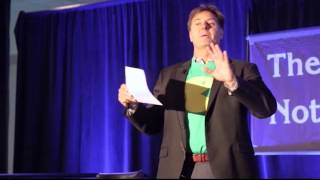
Mastery of Real Estate and Note Investing Presentation - November 2019
A spoken seminar by Gordon "Coach G" Moss presenting practical real-estate and note-investing strategies aimed at long-term wealth building. Core message: acquire nice single-family houses (20 preferred), use small-money asymmetric options or favorable financing (e.g., VA assumable loans), hold long-term so tenants and amortization pay off loans; supplement with selective note investing (non-performing junior liens) for additional cash flow. The talk mixes personal stories, mentor-derived rules (Jack Miller, John Schaub, Pete Fortunato, Mike Cantu), and tactical examples (how to bid on VA foreclosures).
Chapters
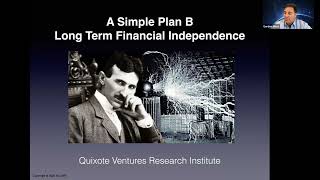
I was here in this hotel one month ago teaching a class for the first time. 2 day class, 13 hours of me going like this. And I was like, never done that before. Who was there? Anybody in the room? Yeah, first time doing that. And let me tell you that story real fast, because I'm not a teacher. I'm not a professional educator person. I admire these guys very much. They taught me for 20, 25 years. So I figured my best way to pay them back was to do it myself. I was at a Paper Source event in April, and Allison Mancaro came to me and said, hey, do you want to teach a class? And I said, no. And she said, well, if you did, I'd do all the work. She'd get the people, she'd do the marketing, she would get the coffee deal with the badges and the books and everything. And I said, nah. I said, I want to do it. So I thought about it and I said, you know, in life now, I'm trying to say, be open to things. Be open to what comes to you and say yes, frankly. So I said, yes. I said, what does the average seminar thing cost? She goes, 400 bucks. I said, let's double the price. And she says, well, nobody will come. And I said, yes, exactly. And she said, well, the date we set up is the same time that Pete and John are teaching in Costa Mesa. Nobody's going to come. And I said, yes, that's a good thing. And so 63 people came. 63 people. I was shocked. So I spent four months compiling all of my thoughts. I mean, all of you have businesses. Imagine if I said, get on stage for 13 hours and tell everybody what you do and be entertaining. You don't want to get booed or whatever. So that's how this all came together. And that's why I'm standing here. I've done this for a long time. I sat where you are for 25 years. I'll tell you the whole story. So I said, you know what? If I'm going to do this, do it right, do it well. Honor the people that taught me, do it well. So I developed the qvri. Qvri. There's a huge glass building somewhere with a big thing on top. I'm not sure exactly where it is yet, but it's out there. It's a little virtual, but the Quixote Ventures Research Institute, the founder is me. And I consulted with several of the vice presidents and I got all of their feedback. But when they came to me and they said, what do you Want to call your speech? And I said, I don't know. How about Mastery of Real Estate and Note Investing? Not very humble. And they said, fine. They said, who are you going to put on the COVID And I'm thinking, okay, I say yes to this seminar. Now I got to make all these decisions. Now. What's the name? What's the COVID They said, why don't you put, like, Yoda or something? Or David Carradine from whatever. I said, you know who I really like is Tesla. This guy came to America to enjoy capitalism, as Pete Fortunato says. He's the guy that basically developed ac, alternating current, radio, X ray, the list goes on. That guy was a genius. He came from Croatia to America. I, about 1900, went to work for Edison, who had D.C. going on, much smarter than anybody on the planet. But I said, you know what? So I said, look at that picture. I said, I'm going to name this Quixote Ventures Research Institute. I'll be the founder. There's my man, Tesla. I've got one. I got a Tesla. The car. I love that car. Elon Musk named it after him. This guy, because this guy was a rock star, had kind of a tragic ending, but. So how about that slide? Master of Real Estate and Note Investing, There's Tesla, Quixote Ventures Research Institute. That all did not exist six weeks ago. None of this. Yeah, thank you. I'm getting applause already. This is good. All right, all right, so let me kind of summarize. I've got an hour or less now to talk to you, and once Again, I spent 13 hours doing this last month. So I want to get as much as I can. I want to say it the right way. I want to say it simply. Okay? I sat over there yesterday with a gentleman. He said, you know, I'm relatively new. I said, yep, been there, done that. And he said, I'm confused. He said, trusts and taxes and da, da, da, da, da, da, da. I'm like, exactly. I said, I've been doing this for a long time. I've done it. I said, guess how much I know about that stuff. Very little. Guess how much interest I have in it. Very little. I said, pete nailed it yesterday. Pete nails a lot of things. Pete Fortunato is amazing at just getting the essence of something. He said, this is simple, okay? Make it simple. So for all of you getting started here, this is simple, okay? Here it is. I call it nice. To the third power, okay? Okay. Get nice houses, okay? 20 of them. Find nice people to go with Them and they do. And then get some nice rents maybe free and clear in the future because those nice people will. Low maintenancely. That's a good word. Pay those off for you over 20 years. There's people in this room that I know that been going to these things forever and they're a master in trusts or tax or double backflips. But they forgot about the. Here's a simple thing. It's a single family house, a nice one, 20 of them, free and clear. I've got. That took me a long time, but I did it. I focused on it. I'm going to tell you my whole background, but that what I got from yesterday was nice to the third power. That's it. That is the one sentence that nails it right there. If you just do that. Okay. Is a mobile home in general a nice property? No. Some of them are. You can argue. I'm not getting in fights here. Some of them are. What does a nice tenant look like? Does he have a job, maybe a family? So what kind of house would he go into? Maybe a three bedroom, two bath, nice job. Does he pay his rent on time? Yep. Early. Does he bother you? Nope. Nope. What does a nice loan look like that goes on that property? Low interest rate, you know, there's no term. 30 years. Nice. So I'll tell you what, that's the message right there. I'm done. No, nice to the third power. Pete said it yesterday. Pete nails it so many times I think he nailed it there. So if you get nothing else from this thing, just know that you don't need to be an expert in all this fancy stuff. These guys have been doing this so long, they get bored. They go down these rabbit holes and they confuse everybody. They confuse me. But I just sit back and go, you know what? What I heard from this thing. Single family house, a nice one. Buy it with an option and then never sell it. Pete dies with his properties, never sell it. Do you save for retirement? You do not. You buy assets, nice ones that somebody else pays off for you and you live on that and you're done. Ask me how I know. I heard John Schaub up here. He's talking about the kind of houses that he has. I call it John Schaub house. It's a nice house. He has quarter million dollar houses, half million dollar houses and million dollar houses. I've got a variety of all those. I'm not here to brag, but I got 20 of them. But it took me a long time, but I got it from this Room. But don't get confused. Is that fair? That's my opening message. All right, let's get going here. My brother, My brother. I'm gonna tell you his story. My brother is six foot eleven and a half. I am the runt of our family. He pats me on the head very patronizingly sometimes. My brother's not here today. Or is he? No, he's not. Do you know why he's not here? My brother's a sheet metal worker and he's building the Vegas Raiders stadium right now. I think he gets Sunday off, frankly. But he works 10 hour days because they're going to kick off the football in June, July of next year, 2020, the Raiders are moving here. He's a sheet metal guy, okay? My brother is 53 years old, had a heart attack and. And when it's 112 degrees here, he's up there doing sheet metal, okay? Why do I tell you all this? There's one millionaire on the site building the Vegas Raiders Stadium. 1. There's probably 330 guys doing all the sheet metal and air conditioning, whatever else they do. Guess who that millionaire is? My brother. My brother's a millionaire. Now, I know it doesn't mean what it meant 20 years ago, but he's got a million bucks. Nobody else in his town does. His buddies don't. You know how he did it? He bought single family houses, nice ones. Moved into them with great financing. Did he sell them? Kept them. Did it once, did it twice, three times, four times. So now the last house, five bedroom house, big house, four bathrooms, pool, multi levels, McMansion, right? And we got that house for a reason. He came to me and said, here's the deal. I got these kids coming up, my nephews. I need a good high school for them to go to. I said, yeah, we got him a big house next to the best high school, okay? He says, well, guess what? They're not in high school anymore. Now it's just the wife and me and the dog and we're looking at the walls going, hmm, we got to sweep the whole thing. And maintenance. He goes, I should sell this thing. And I said, what? He goes, I should sell? Oh, yeah, we don't sell these things, do we? No, we don't. So he calls me and he says, hey, took your advice. There's a little three bedroom, two bath house. He says, tell me that story. Tell me that story. What story? He goes, you know when we start drinking and we sit over there and you tell me that story? I said, what story are you talking about? He says, well, so the lady owns this house, okay? And let me say one more thing. This house is across the street from my parents house here in Las Vegas. My parents live here in Las Vegas. My parents are 86 and 81. I drive to Vegas once a month because I know a lot of people who don't have parents. And I might be in that category one day. And while I'm here on Earth or they're here, I'm going to go out and see them. He's looking at buying a house across the street from my parents, he and his wife. He has a great wife who cooks dinner for my parents every Sunday night. My parents are falling apart. They go to the doctor all the time, they need help all the time and they want to stay in their home. What better than to have my brother and his wife across the street in a little three bedroom house? Pete talks about the benefits of a house. I tell my brother, I said, that is the best real estate deal the Moss family has ever done. So he says, I called the lady, she's not reasonable. Not reasonable. Tell me the story. He goes, well, the house is worth three and she wants three. I said, oh, okay. Well have you done your homework? He goes, yeah, I've done my homework. He goes, guess what? I said, what? He goes, she owns it free and clear. I was like, really? She goes, so tell me the story, tell me the story. I said, okay, here's the story again. And you got to say it right? I said, so you ask her, you say, I'd like to buy your home. Okay, what are you asking? 300. That's fine. Pay you 310. Whatever it takes. Really. Pay me 310. Yeah, yeah, but, well, let me ask you this. You know, I went to the bank and looked at a loan for this house and they're going to give me an FHA loan, 5% down, 4% for 30 years. I've been pre approved for that loan. How about this? We'll pay you 310, but why don't we use the same terms with you? She says, what do you mean? Well, let me ask you this. If I paid you 300, 310, what would you do with the money? If I walked in here with a wheelbarrow of money and dumped it on your table, what would you do with it? Oh, I take it to the bank. Ah, banks, nice. What would they do for you? Well, they'll pay me 2%. Hmm. Okay. And how secure are they? Yeah, not that secure. Whatever. So here's our offer to you. We'll pay you double that. We'll give you a down payment. We'll pay you double what the bank's going to pay you. And guess what happens if I don't do what I say. You get to keep my down payment and get the house back. What's wrong with that? What's wrong with making double with better security than some idiot bank? I said, so that's the story. He says, gordon, okay, I'm going to try that. Try that. Okay, okay. I heard this 50 times. That's all we ever talk about. It's true. He knew the story. He just couldn't say it. So he said, is it going to work? And I said, nope. I said, it works about 10, 20% of the time. But has it worked? For me it has, because I've said it a lot. This is one time. So short story long, I need to get going here. I get on these stories and I'll just talk all day. But the bottom line is this. He did buy the house with the financing. He's got the house across the street from my parents. A three bedroom, two bath house. My dad gets access to his dogs now every Sunday night his wife cooks dinner for my parents. It's amazing. That is the best real estate deal the Moss family has ever done. My brother's a millionaire because he buys and keeps the houses. Okay, how simple is that? Do all of you live in a house or would you like to? A nice house? Guess what? So would everybody else. So get one. Get the great financing. It's about getting the financing. I'm going to explain that in a minute. It's about getting the financing. Get great long term fixed financing. So your tenant, what is a house's job? A house's job is to pay for itself. I'm going to ask that question again. So one more time. What is a house's job? Will today's financing let a house do its job? It will, it will. So my brother's house, I think he's paying $1,300 a month. He had to pay 5% down. It'll rent for 15. That house will pay for itself. So he'll be a million and a half in there pretty quick. Alright. That's the story of my brother. My nephew called me. He was 20, he's amazing. He says he owns a house now. And he says, can you help me? And I said, that's what I'm here for. I said, by the way, I said, you know, I'm not one of these guys that believes in people inheriting things. So what I've created for you is something much better. I said, I created a website. It's called realestate and node investing.com. and every speech like this I've done for the last 15 years is on there. And I did a course on junior liens and other things. The VA deal, I just did one. Another course here. So I said, I did it for you. This is why I did it. Jack Miller did it for me. My dad was not a finance guy. Jack Miller was. I adopted Jack as my financial father. That's why I'm here. People come up and say, I did this and this. And I'm like, that's why I do this. So let me tell you about my website real fast. Realestatenotainvestiny.com. i built a website. Actually, I was thinking about it, and I found this guy in San Diego, Craig Jacobson. Genius. And I said, dude, I said, I want to build a website. He goes, here's what you do. He says, the web is full of crappy content. He says, create good content. I said, what does good content look like? He says, stories. Why do you like a Hollywood movie? It's a great story. It makes you cry. It makes you happy, it makes you whatever. An emotional thing. He says, make your stories like that. I told you about my brother. It's kind of personal. It's a personal story. So that's what I've tried to do, is make these personal stories, put them on my website. I would recommend you go there. Realestate and notinvesting.com, if this interests you at all. Is that good? All right. Okay. I'm getting way behind here. I got to get going here. My investment history. Barely read that. All right. In 1977, I read Robert Allen's book. I was in the liquor store where I worked. Nothing down. Big ad. It said, take me in a plane anywhere, naked. He says, drop me out of the plane in any city. I'll own 10 properties within two days. I was like, holy crap. How do you do that? Guess how Robert Allen figured out how to do that. He went to the John Schaub Jack Miller seminar three times in a row. Basically took their stuff and wrote a book. Nothing down. Bestseller. I didn't realize that at the time. I didn't know Jack and John yet. That's when I first got exposed to this. I was like, I never thought you could own property without money or without this or without that, without clothes. I was like, huh? Okay. Later in my life, I went to UC Irvine in Orange County. My landlord. I didn't know what to do. Political science was my major. I didn't realize there was no jobs for that thing except bad ones. My landlord was a commercial real estate broker. I said, mike, what do you do? He goes, I sell commercial real estate. I said, can I do that? He says, no. And I said, okay. So I went somewhere else. I got a job as a runner. Okay, a runner meant you paid $800 a month for 18 months to cold call all day. Are you going to move? Are you going to move? Are you going to move? And any kind of deal that I got, I gave to them. They made a fortune. I made no money. I made $800 a month for 18 months. Then it got better because I got off the program and I made no money. Zero. I talked about the brokerage business. The longer I was a broker, the broker I got. But I didn't quit. That's one of my problems, is I don't quit when I see something is there. There were guys in my office in their twenties making a lot of money. And I said, these guys aren't smarter than I am. They're definitely not nicer than I am. They weren't nice at all, but they were making lots of money. So I was like, wow. I didn't quit. By 1989, I got a piece of land from the railroad, sold it to a developer. I walk in this developer's office, I say, southern Pacific is selling this piece of land. 5 acres. Why are you telling me this? You should buy it. Why? Because you should build these industrial buildings. Why? Because I can sell them for you. You're going to build seven buildings. 14 foot height, 2 to 1. Parked this much office space, 400amps. I knew the whole deal. And he could tell I did. So he bought it. Did the deal. Sold all buildings. 28 years old. Made a lot of money. My ego was up here too. I was like, I'm the man. 28 years old. I just. I did it. My big goal. Six years of struggle. Did I quit? Nope. Did I make it? Yep. Guess what happened then? The market crashed. 1991. They had a saying in the office. They said, Survive till 95. I did the math. That was four years. I lost everything. I got divorced. I lost all my stuff. About this time, I roamed into the Commonwealth Club, Jack Fullerton's meeting in Orange County, California. I was very unimpressed. Bunch of old, worn out guys, badly dressed. I said, this cannot be My place. This cannot be a good place. I had the suit on, the whole deal. I thought I was everything. Just ask me, I thought that was the man. I soon realized they had all the money and all my cohorts did not. It took me a while. Took me a while, all right? That was my first exposure to this business, okay? So when I took. Tucked my tail between my legs, licked my wounds, and had to get a corporate job at the freaking phone company, I went from. I used to call it, I said, I went from a boy doing a man's job to a man doing a boy's job. My job was to suck up to my boss and tell him how good he looked every day. I didn't do well at that. I hated it. I said, I gotta find a way out. I found the way out in Jack Fullerton's group because. Because I met Jack Miller, John Schaub, Pete Fortunato, Jimmy Napier, all these people. I met them all because of Jack. I went to these meetings. Every quarter. People would say, where are you going? Are you going to the real estate meeting again? Aren't you? I said, yep. Same one, yeah. Why don't you take notes this time? Because you don't seem to learn anything. You just seem to go. And I said, well, it's not like that. You get to know people. It's a social thing. These people know, like and trust you after a while. But my job, my 20 year plan was no job, no boss. $10,000 a month. Jack Miller had a lot of great lines, but one of them was, I'd rather eat bark off trees than say yes, sir to someone I didn't respect ever again. And I think he tried a couple flavors of bark that you actually could digest. And I considered it, frankly. So my goal from listening to people like in this room was to create 20 assets at $500 a month, 10 grand. And I gotta tell you, so I was married at the time, and I would bring this idea to my wife, this great idea, and I'd say, guess what, honey, we're gonna buy an investment property. And her teeth would shatter. She just. That wasn't her deal. So I guess my point is I paid a terrible price to get here. My plan is still here. I've got a 20 year plan. I'll show it to you. It's kind of worn out and everything like that. I hold it like this because people have attacked my plan. People have. They were threatened by it or whatever, they were jealous, whatever they were. But you pay a terrible price sometimes. I Did. My plan is still here. She is not. All right, so in 01, the wild people bombed the Twin Towers. And two months later, there was an event planned here at the Sahara Hotel. The Millionaire Makers. Who was there? Look at that. Look around here. Who was at that event? Okay, the Millionaire Makers. John Schaub, Jack Miller, Pete Fortunato, Jimmy Napier, some others were there. I think there were 700 people there. I was there. Okay. I want to kind of. I got to get speed up here a little bit. I'm not doing my time real well, but okay. What did I learn from Jack Miller? And I tried to synthesize it and say, let's just. There's so much but trusts, attitude and options. I've got Jack's options books, and I've heard those a hundred times. Jack was a fricking genius and a great guy. When I first met Jack, I was like, who is this old, worn out guy that spits on you in the first row? I was like, this guy's not me. It took me a while to warm up to Jack. Okay. But I realized these people love Jack. And I was like, okay. I hung in there and I realized why Jack was a saint. Jack was a great guy. Unbelievable. He had this class here in Vegas on negotiations. We used to go to the swap meet. He'd say, here's the deal. You're going to go negotiate with the real people, the real guys that are real good at it. So he'd go up there and say, here's the deal. First you gotta gut punch him, he says, and then, you know, calm down a little bit and then make a deal. He would go and say, that's a beautiful lamp there. How old is it? 73 years. Oh, okay. I see the cord's kind of frayed. I'd love to have it. Do you have the owner's manual for that? And they're like, no, no owner's manual. Okay, well, I'll come back then. It's kind of depressing now that I don't have the owner's manual, but. But just we'd go negotiate with people. Jack was amazing. And I'll talk more about him. John Schaub, who's here. John's one of my mentors. Let me kind of distill it down. The nice house. I call it a John Schaub house. A quality single family house. I did like most people, I bought the cash flow to start with. I bought the crummy houses because they're better cash flow. Right? Right. Yeah. My hair is not all gray. There's a reason I bought better houses, okay? But I bought the bad ones at first. So that's another message today. I said, nice to the third power. Nice houses, not crummy ones. Well, wait a minute here. John had to beat that in my head. I didn't listen to him. I said, no, no, no. This one cash flows. This one makes more money. He goes, no, it doesn't. Let me explain it to you again, Gordon. About 10 years, I finally got it. I bought all the crummy houses. I sold them all. Now I have good ones. Finally start. Save yourself the time. Do not buy the crummy houses, Okay? I learned that from him. He also said, get your payments up to $20,000 a month. I said, why would I want to do that? Why would my payments. $20,000 a month. He says, here's the deal. You buy 20 houses, the payments are 1,000, the rent's 1,000. You become a good manager. You take Dave Tilney's class, learn how to manage things. That's the way you get wealthy, because the rents sometimes go up, the properties sometimes go up, and the loans sometimes amortize all the time. That's what I learned from John. Pete Fortunato. Jack had the best line for Pete. He said, pete is a comet, and we try to hang on to his tail. That was Jack Miller saying that. First time I saw Pete was at a Jack Miller seminar a long time ago. There's this guy in the front row with an old T shirt with a coffee stain on it, and he's in there scribbling feverishly. And I said, well, that must be some new guy. And it was Pete feverishly taking notes from Jack Miller, who he'd known for 20 years. I mean, Pete's amazing. I love Pete. And I'm going to show some things that Pete inspired me about. But the millionaire makers, Jimmy Napier. I hope Jimmy's okay today. I know he had surgery yesterday. Is he okay? Okay. Dave Tilney. The property management thing. The property management thing. The property management thing. When you're not a flipper and you buy and hold things, what do you have to do? Manage it is that easy. With the right houses, it's a little less. Worse. Okay. Yeah, but Tilney. So Jack used to say. He said, dave Tilney took everything I did. Knocked it out his. He's the guy and he's in the frickin. He's in the room. If you don't have Dave Tilney stuff, you are lost. Let me tell you the easy story by Jack Miller. I'm going to speed this up. So Gary talked about the newbie conversation. Newbie walks up and says, what would you do if you were me? How would you get started? I overheard Jack once. Guy walks up to him and says, jack. He says, you're 75 years old. Yep. He said, I'm 25. How would you get started? What would you do? What would you do if you were me? How would you get started in this business? And Jack said, I wouldn't. He says, what? He says, no, Jack, you didn't hear me. He says, how would you get started? What would you do? Would you buy this? He goes, no, no, I wouldn't do it. And he says, you wouldn't do it? Why not? He goes, it's too hard. He says, if you like a drain spout with rocks banging on your head every day, sign up. He says, but here's what I would do if I were you. I'd get a trailer. He says, I go down by the river. I get a bottle of whiskey, I get some nice music, sample cigars. I just enjoy myself. He said, life's too short. He says, find a good government program. He says, it's too hard. So that was a Jack story about how this is not easy. It's not easy, okay? I love that story. Jack. Jack had a ton of those. All right? I stole this one from Mike Cantu. Mike's in the room. I think he is. Market predictions. With our program, you don't need to know what the market is. Doesn't matter. Okay? But I'm going to tell you what I think mine is, okay? I call it Mike, you say, he says the market's going to do one of three things. It's going to go up, it's going to go down, or it's going to go sideways. Everybody agree? So where's the market going? If markets go in cycles, where are we now? Are we here? So where should we go next? Right? I don't think so. Here's what I think. So, Bruce Norris. Anybody know Bruce Norris? Saw him a month ago. Guess what he says. So here's Bruce's quick, quick, quick story on Bruce. He. He's nailed it three times. I've known Bruce for two and a half decades. Market cycles. Nobody nails it. He's nailed it three times. Here's what Bruce says. We're going into a slide. Anybody know Dave Steck out of Puerto Rico? He went to the London School of Economics. He's real smart. If you don't think so, ask him. Guess what? He says, okay, that's what I think. We're going into a slide. How about the 2020 vision? I in 2010 built a poster. That one. I put it in my office and I stared at it. What was it like in 2010? Were things rosy and great? The market had tanked. Mike Cantor used to say, he said, we are getting ready for the biggest transfer of wealth in history. And I was like, okay, okay. I was thinking it wasn't too good. I had houses here in Las Vegas that were worth 250 in 03. Guess what they were worth in 08? 60. 60. Now I had good single family houses. They still rented. I survived, okay? But my point is that I said, what is the market? What is the 2020 vision in 2010? And I built a 10 year plan and I did it. People overestimate what they can do in one year and underestimate what they can do in ten. I deal with ten year plans, okay? I became the non performing junior lien guy. I wrote a book on it in 2010. I started it. I said, the mortgage debacle. These idiot mortgage people made all these bad loans. How does this guy get to participate? I went to Wall Street, I figured it out. I'm going to talk about that. But here we are now, it's 2020. Are things different now? Are things different now? Okay, so the 2020 vision for 2020-2030, I break it down into three pieces, okay? I'm way behind here. Okay, I'm going to make this fast. Okay? I look at our investing landscape and say I break it down into three pieces for the next 10 years. Because if things are going to tank, it's a different thing. I think it's going sideways. So do they. Geopolitics, demographics, magonomics is what I call it. Those three things why the USA will continue to lead. We have the best geography and the least worst political system. We're still a capitalistic free enterprise thing, I hope for a while. But that piece of real estate right there is the best in the world. It has the most navigable waterways. We have moats on both sides. And Mexico and Canada do not attack us. There's nothing else like it on the planet. Never has been. Okay, demographics. There's one word. Babies. You can tell what's going to happen. I read Harry Dent's book and it said in 0708, excuse me, 17 and 18, there's going to be a big surge in single family houses. I said, how does he know that? He knows that because he tracked that 27 year olds which were coming up form a family. They get married, they have a kid, they quit partying and they buy a house. And you can tell there's going to be a lot of them because 27 years ago they were all born. Okay, what does somebody do when they're 50? They buy a Harley Davidson. They do. So you can see it. All right, we have good demographics. Look at that chart right there. That's the United States. That's men and women. That's 10 years old to 100. Look at the bottom of it, okay? We have young people coming up. Young people coming up is good because it supports the economy. They buy things, they have jobs up on top of the older people that kind of drain the system. Look at Japan. Boom. Look at the bottom of Japan. Look at the young people, okay? They're not there. They're top heavy. They have all these old people sucking the system and no young people coming up. We have good demographics. I'm going to make it short. Maganomics, okay? We've got an aberration in the marketplace. In my opinion, it's a normal market cycle aberration. Lowest unemployment, highest growth. We're an energy exporter. Deregulation all the things that have been happening. Love it or hate it, it's a cycle aberration. That's why we're going sideways. All right, I'm going to speed this up. Fundamentals and concepts. Make it real simple. There's three that you learn from people in this room. Simple. Okay, nice. To the third power. A single family house. That's all you need to know. A nice one. Okay? Buy it with an option. An asymmetrical option. Buy it with an option, it means a little bit of money. I'm going to explain it and then never sell it. What's a house's job? Nice single family houses are the best collateral on the earth for safe and sure long term wealth building. All the alternatives pale in comparison. I've got some good mic stories on this one. But a quick point here. If you do not have Mike Cantu's two things on that table over there, you are lost because they're almost free. I've listened to those things at least 200 times a piece. Okay? I can almost quote them better than he can. That is the best stuff on the planet. Mike did a great job of taking his amazing business plan. I look at Mike and say he's the one guy that took the millionaire makers, figured it out and implemented it better than anybody I know. And he Was gracious enough to put it on paper to make a presentation. And this isn't easy. A great one. Get Mike's stuff. Don't get voted off Real Estate island. And the management course, it's right over there. If you don't do that, that's on you. John has a great saying. He says people don't get tired of living inside. People don't get tired of living inside. Okay, I did industrial buildings. I was a pro at that. Do I do industrial buildings? Nope. Retail centers, office buildings, mobile home parks, none of it. Do one thing. Is it that I'm afraid or I haven't grown up? No, I do single family houses. Just, you know, when the market crashed here, my houses stayed rented. They were good houses. They weren't worth much, but they rented. All right, so it's not a condo, not a plex, not land. I'm specific. Read John Shaub's book, Building Wealth One house at a time. I got three books I'm going to recommend to you. That's one of them on the single family house. A nice one. Next one. The asymmetrical option defined, and Pete did it yesterday. It's the right, but not the obligation for a small amount of consideration to close on a deal. The asymmetrical option, I call it. Do I put a lot of money down? Do I go down to the auction? There's $100,000 house. Here's 100 grand, cash. Now I own the mystery house with questionable title, and I haven't even seen the inside with a radical tenant. Haven't seen anything. Do I do that? No, it's not an option. I buy a VA foreclosure with $2,000 down because if I screw it up, which I always do, I lose $2,000. I can live to fight another day. All right. Okay. So I got these posters that I built. I got to show you this. So look at the penny over there. And look at the bags of money. Okay? Look where the O is in the option, in the arrow. Okay? See how the option. Shouldn't that thing fall to the right? Guess why it doesn't. Because the option pushes it that way. It's a fulcrum. So you want to take little bits of money, that penny over there and leverage large amounts of money with an option. The asymmetrical option. That's mine. I did that. All right. I'm very proud of that. I tell people, I say, you should get that poster, Hang it on your bed, on top of your bed, and stare at it at night. Before you go to bed. And when you wake up, your wife might leave you, but you'll start seeing options everywhere. All right, all right. Can you see around corners? This is Jack Shea's statement. Me neither. So he gets into a deal with an option price. If it's a good deal, down the road, it's his deal. If it's not a good deal, it's not his deal. I love that line. It's the lowest and most profitable and it's the way to do it. All right, I'm not going to go into all these stories. I'm running out of time here. I'm not managing my time very well. Okay, have you guys seen Zeckendorf's book? It's the second book that I recommend. Zeckendorf was like the Trump of the 50s in Century City in LA. He built that. The UN building in New York, he built that option player. Great book, but I'm not going to talk about this. I look at the VA foreclosure with a small down payment as an option, okay? These guys talk about options. It kind of makes it complicated, in my opinion. You buy it back and blah, blah, blah. I look at an option very simply, it's a little bit of money. When I put a little bit of down on a VA foreclosure and have the tenant paid off for me, I consider that an option because I took and studied Jack Miller's options courses. I was looking for options when I saw the non performing junior lean in the loan business. I said, that's it. I was looking for it because my mind had been formed by Jack. I see options everywhere. That's the way you should get to some more great statements from Pete. He talks about throwing footballs into the future. It's an option. Okay, okay. All right, look at this. Okay? So I go to this graphics gal who already knows I'm insane. She's like, oh, here he comes again, right? I said, here's what I want you to depict for me. I said, a title flaw. I said, what am I in people's life? What do I want to be in people's life? A title flaw, okay? Jack Miller used to talk about that. What does that mean? I buy these non performing junior liens piles. I call them junk piles. A lot of them are no good, okay? I sit on the junk pile, I do nothing with it, okay? But then one year later, or seven years later, they call me and they say, you know, we're trying to sell our house or refi. And there's this title flaw. On our thing, I said, really interesting. Like I don't know that. What can we do about that? And I say, well, let me look at my records here. We tried to call you when we first got that seven years ago. And you said expletive, expletive, expletive, F. You never call me again. And I was like, okay, well, we can negotiate this out. But I just want to let you know that, you know, we normally work better with nicer people, frankly. But I think the non performing junior lean is a title flaw. It's an option. Okay, so check this out. Pete used to say, he says, throwing football is into the future. So I made a TV and a football. So there's this big ugly old spider there, big fat guy sitting in his green chair, big old chair, right? Doing nothing. He just sits there and does nothing. Look at his web. There's these little flies that have flown into his web. Is he in a hurry to go down there and eat them? Nope, he's busy watching football. I was trying to depict what Pete said about throwing footballs into the future. And I'm going to leave it there for now. So, all right, this is what I do. When I get a theme or an idea, I make a poster. All right, so recommended reading. I don't know what that is, but read it anyway. Zeckendorf's book. That's what it was. Thank you. All right, so buy and hold, get rich slow. Guaranteed plan for long term success if you do it correctly. Okay, so I told you about John Schaub. He says buy a. Buy and hold. Get your payments up to $20,000 a month. So what's the worst vice in the world advice? Right? This is the best advice I'm not going to say I ever got. It's the best advice I ever took. I got this advice from John. Get your payments to $20,000 a month. I got 20 good quality houses that rented for 1,000 and I had to pay 1,000. Time went by and I learned how to manage. Good things happened. I got to quit my job and tell my boss where to go. Look at that. Here it is again. Buy the right houses, don't buy junk. Okay? Look at that nice smiley house. Okay, look at the other one. So here's a picture. Don't buy those houses. You're going to be tempted to, okay? They're in the bad places. They have bars on the windows. No good people will come there. Exciting people will come there. You want dull people that just pay the rent all the time. That's a good One. Mike has a great story about this. I love it. So I bought the. Most of us have done this. Mike tells a story about the rent stalker where he bought these crummy houses and the guy wouldn't pay them. So he waited in his truck and the guy pulls into his driveway who wasn't paying the rent. And he's so Mike, you know, because he's trying to talk to the guy. Mike pulls right in behind him. The guy walks in the house, slams the door, and that's it. Mike was stalking him, trying to get this yo, yo to pay his rent. Didn't happen. Don't. Don't do that. We've all, A houses, A, B, C, get a houses. I've only said that six times now. I looked at a lot of loans when I was doing the note business, the non performing note business. They'd say, here's a thousand loans, you have till tomorrow to bid on them. I said, Really? I got 12 hours to look at 1000 loans? Okay. It wasn't that hard though, because most of them were. A $35,000 house in St. Louis, a $12,000 house in Detroit, a $18,000 house in Cleveland. Guess what happened to those? Gone. Because I've been there and done that. How can you lose on a house where you pay $5,000 for it? You can lose big time. How about losing your life? All right, all right, all right. Buy and hold. I'm going to. I'm getting behind here, okay? So I go to these investment meetings and I don't find any investors. I find flippers. Okay? Shakespeare said this. He said, be true to yourself and you can't be false to any man. Be true to yourself. You can't be false to any man. First you got to know who you are. Okay, here's who I am. Single family house, option, buy and hold. Say it again. Single family house, option buy and hold. Now a nice single family house. That's who I am. You can't talk me out of this or you got some great apartment deal. Don't do it. Got some condo deal. Yep. Apartment stutter. Anything. I've seen it all, okay? This is who I am. Flippers. Okay? I got to play this. I'm going to try to find this here. I'm running out of time, but I'm going to do it anyway. Listen to this. Come on, guy. I built this poster, okay? This is what I do. All right? It's not going to work. There it is. I'm not going to quit. All right? So anybody remember in the 60s. There was that show about flipper. The kid had a dolphin in his backyard. So I said, let's make a poster. I say, flipper. No happy endings, okay? Look at him. He's got a ball and chain on his tail. There's some money flying around. All these guys, all these seminars, all these guru guys, they talk about flipping. All these investment meetings, they talk about flipping. Don't be a flipper. Buy and hold. Find the good stuff and hold it. All right, this is kind of upsetting. It's not working here. But I had the flipper sound. I was going to make that sound that he made. So when you hear that sound when you're thinking about a deal, what aren't you going to do? You're going to hold it, right? All right. So. So, yeah, all right, all right. So I named my site, my site realestateandnoteinvesting.com Realestateandnoteinvesting.com. what's the first thing, the first two words in that thing? Real estate for a reason. I don't know many rich old note guys, okay? I know a lot of rich old real estate guys, okay? Real estate and noteinvesting.com. so what's a note deal? Who cares about notes? I use notes for cash flow. Terrell Sheen, amazing guy, told me, he said, buy a house and a note. I said, why would I do that? Sounds twice as hard. Buy a house and a note. He says, well, tell me your deal. I said, well, I got a house that rents for 1000. The mortgage is 1000, breaks even. He goes, how many houses do you own? I said, not many. He goes, yeah, I can tell. He says, that doesn't break even. You're going to have expenses. Is that house going to pay for itself? No. How do you fix the problem? You buy a note for $300 a month for 10 years. Ten years goes by, the note disappears, which is what they do. But the cash flow has changed. You buy a house and a note. I am the realestate and noteinvesting guy.com guy, okay? Because I got my 20 houses, nice houses. Then guess what? I did whatever I wanted. The non performing junior lien business came along. I said, that sounds like fun. I made a lot of money in that business for fun. I didn't have to do it. So my point is I use notes for cash flow and for fun. Keep that in mind. I see people that say, you know what? I don't want to be a real estate guy anymore. I bought the wrong houses because I'm not too smart. I didn't listen to Gordon, and they drive me crazy, and I'm going out of my mind, and I've got to manage them myself because I'm a control freak and I'm not happy. I'm going to note them out. Okay, well, that's fine. And maybe at the right time of your life. That's right. But once again, the rich old guys that I know, that didn't come out either. Okay. Buy and hold. Buy and hold. Yeah. David Schumacher was somebody that I met at Jack Fullerton's group. He was 85 years old when I met him. He was blind, and he had been an appraiser in LA for 50 years. I met everybody at Jack's group. I mean, you gotta find a local real estate group if you don't have one, a good one, or create one if you don't have one. But Schumacher owned a big part of Hermosa beach and Costa Mesa. He would look at me and say, don't go to Vegas. He said, Vegas, it just goes forever. And it's the land he says he tracked from his appraisal background where to buy and hold these things, these nice places, but where in the path of growth he tracked it? So. So the three books that I've got you going here. John's book, Building Wealth, One House at a Time, Zeckendorf's book on options, and this book, the Buy and Hold book. Buy and hold, don't flip. Now, Mike has a saying. He says, flip three, keep one, get it. He probably keeps the best one. He keeps his A's. Flip three, keep one, we all got to eat. I get that there's a business to it, but most everybody forgets that part. There are people in this room that would not be working today if they bought properties 20 years ago and just held them. Okay, all right, all right. Subject 2. Pete defined it yesterday and nailed it like he always does. It's a title flaw, but it's the best opportunity. With my junior league game. I'm going to lose some of you here, but I'm going anyway. Here it comes. I'm going to tell you the story of that guy. Okay, here's the story of that guy. I live in a neighborhood, and I pay my mortgage. My first. That's what I do. You guys probably do, too. My neighbor, two doors down for five years lived in a house just like mine and did not pay. Did not pay. His first. And he stayed. No one did anything because the banks had jacked it around and couldn't you know, come up with the courage to foreclose on them. So I said, doesn't seem right. And Obama said, everything should be fair. And I said, that doesn't seem fair. How is it that I'm staying in my house and he's not and we're both in our house and he's not paying. So I said, how do I become that guy? How do I become that guy? You know how you do it? You buy a non performing junior lien, okay, behind a first like that and foreclose on it. Now I'm that guy and it's not my credit. Somebody else's credit. Hmm. So this downperforming junior lien thing got thicker for me. I was like, interesting. I like that guy. I mean, I want to be that guy, but. And there's another flavor to that too. I call it the loser loan. Okay? If you make your payments on time and do everything you're supposed to do, guess what happens? Nothing. Okay. If you don't make your payments on time and you miss your payments, da da da. Guess what they do. They call you and say, you got a problem? And you say, yeah, I do. They're like, we're going to help you. Here's what we're going to do. Your 30 year loan, 40 years, your interest rate, 5%, 2%. So the $3,000 you're having a problem with, we're going to make it $2,000. How's that sound? Real good. Okay, so what about that guy in that flavor? I was like, I would look at these credit reports And I said, 480 months on a loan. I was like, who does that? Who gets a 40 year loan? I never heard of those. But if you're a loser, you get one. So I would track those and I would go basically and buy the junior lien behind it. Those became high in my thing because those cash flowed. How about that? All right. I wrote a book. Let me just tell you the quick story of. I wrote a book called Performance Anxiety, how to Create a Fortune in Non Performing Notes. I self published it on Amazon. I sell about one a day. I make six bucks a book. There was an article that Ernest Shackleton wrote in 1900, the 1900 London Times. He was having an expedition to the South Pole. Okay. Kind of a scary thing. Okay, here's how it went. It said in the 1900 London Times, Men wanted for hazardous journey, small wages, bitter cold, long months of complete darkness, safe return doubtful honor and recognition in case of success. That was his pitch to Go with him to the South Pole. A lot of people never came back. That is the junior lean business. Yeah, it's not for the faint of heart, as somebody put it. But is it a bad business? I'm going to explain to you, I'm not a vulture. I'm really not. And I'm a good guy. I hope you can sense that. But I'm going to tell you how I kind of got into it. So in 08, the mortgage debacle happened. I got to tell you something too before I forget, another Pete ism. Pete was in San Diego. I was behind him or something and someone came up and said, pete, what about this non performing note business, what you do? Everybody's talking about non performing notes. He goes, Pete says to the guy, he says, do you like attorneys? And the guy says, no. He goes, then why would you ever consider that business? And I was like, he nailed it again. That's exactly it. It's a litigious, It's a tough business. And he's right. But the 08 mortgage debacle, I said, somebody is going to participate in this and I'm going to figure out a way with a small guy can do it. Okay. So I went to every servicer, every distressed debt and mortgage meeting in the country. I met guys like John Martin, everybody. I met a couple guys that did junior liens in New Jersey. So I go out there and I met with my buddy and he says, let's go out. He says, you look Irish to me. He says, let's go to every Irish bar in Manhattan. I was like, I'm in. So it's about the fourth bar. He says, tell me your story. And I said, well, I'm trying to get in this non performing note business. He goes, how you doing? And I said, well I bought a first, a non performing first. How's it going? Going okay. I made some money. He says, we would never do that. And I said, what do you do? He goes, we buy non performing junior liens. And I was like, I was like, that's insane. And so. But by the end of the night, I had a hangover and a new vision. Why seconds come first. Okay, the non performing first business. So picture this. Non performing first not being paid. Somebody's in the house. What does the person that's buying that note usually do? They take the home. It's kind of ugly sometimes, you know, this person's challenged. You have to foreclose on them and then evict them. A lot of times I said, you know what And I would go to the bank and say, how much for these non performing firsts? And they'd say, well, it's $100,000. We want $80,000. And I said, 80, $80,000? I said, it's non performing, right? And they go, yeah. I said, is that an option? Is that an option play? I said, what else you got? They said, well, we got this junk pile over here. What's in there? Seconds and thirds. How much for those? You can have some of them. Really? Okay. 10 cents on the dollar. 5 cents on the dollar. I said, is that an option play? So what is my world? Single family house. Buy it with an option, keep it forever. Right? Did this fit right in my bailiwick? Was this what Jack Miller had steered me towards? It was. I was like, this is an option play. So If I buy 100 notes and 50 of them didn't work, did that really bother me? No, because the 20 that did work were a rock star. I'd buy $100,000 note for $4,000 with $30,000 in arrears and get it paying again at $300 a month. And then four years would go by and they'd refire something I did really well. I didn't need a financial calculator to do the return on that. It was good enough. All right. I learned a new concept. Look at that puppy. Cute. Yeah, that's what I. When I saw that, I was. Exactly. So they would sell, they'd say, here's some notes, Gordon. So let's say the house is worth 200, and there's a first for 200, and there's a second non performing for 100. How much equity is in that deal? Zero. Right. Why would anybody buy that? There's another term. It's called emotional equity. Okay? People live in the home. They have an account at Home Depot. They plant rose bushes and stuff. It's their home. So I would call them and I would say, we've just taken over your junior lien. They say, we don't have a junior lien. I said, well, no. Yes, you do. I got over that one. They'd say, well, you know, there's no equity in the deal. And I said, you know, I understand that, but our legal team does not. And so they're gonna, we need to do something with this thing. Tell me what happened. They said, well, we bought the house and there was dirt in the backyard, and the wife said she would leave me unless I put a pool in the backyard. So I went to the bank and I got $100,000 junior lien from Wells Fargo that I guess you bought. And everything was good. We were paying $800 a month. My wife lost her job, now we can't pay it. So the bank sent them one nasty letter and said, pay us. And that was it. Threw it in the junk pile. Eight years later, sold it to me. I call them and I say, what can you afford to do now? What? What can you afford to do now? I say, today's a good day for you. I say, a human being owns your loan, not an institutional bank. A human being. We could afford to pay 150amonth. Done. Really? Yeah. And six months later they call me and say, you know what, I got sick, couldn't work this month. No problem. Just we'll put it on the end of the deal, da, da, da. And I'll tell you what, if anything happens, call me. But emotional equity, I was buying these pools of notes thinking that the ones with no equity were a problem. They're not a problem. All right, so most people that I see are a mile wide and an inch deep, meaning they're shallow. They don't know much about anything. They know a lot about nothing. I say, this be an inch wide and a mile deep. And I made this slide. Isn't that cool? That's where the gold is. So what am I? So in my real estate deal, I was trying to dominate the note investing. If you Google note investing, I wanted to come up number one in the world, and I did for a while. I've gotten off the thing now just by writing good stories. Okay, how did I do it? So the guy says, he says, don't be a generalist. Don't try to dominate the words real estate, you never will. He says, but be specific. So am I a doctor? No, I'm a brain surgeon that just does this little lobe in the back. And you assume already once I say that, that I am a doctor. And I'm a brain surgeon. And I'm a specific brain surgeon. So I'm the non performing junior lean guy, not the, not the note guy. People say, you're the note guy. I said, nope, I'm the non performing junior lean guy. I've knocked out. I've gone a mile deep in one little category. That's the way to dominate anything. Frankly, in my opinion. Okay, all right, so I'm running out of time here. I'm not managing that well. It's eight o', clock, I got 15 minutes. All right? Okay. All right, so the non performing junior lane Is complicated, okay? It really is. And I do it. I did it kind of for something to do. I got started as the VA foreclosure guy. 23 years ago. I would go to these events. I got in my brain that I needed single family houses with a little down payment, with great financing, whole them forever. I bought a Carlton Sheets course online or on tv. One night I was up at three in the morning and read the whole book. Nothing. VA foreclosures. I said, what's that? What is a VA foreclosure and why is it important and why am I telling you? Now, in a brief version, here it is. I bought over 30 VA foreclosures, most of which right in this town, the 90s, in the 2000s. And then in 2012, they decided it wasn't cool to be an investor anymore, so they stopped the program. It just started again in February. The VA foreclosure program is back, okay? And I'm going to tell you why that's important. I am the VA foreclosure guy. That's who. That's. They always told me that. They said, Jack Fullerton said, go knock on doors. How you doing? How you doing? You want to sell your house? I tried that once. I said, this is not for me. The VA foreclosure program let me buy a nice single family house with a little bit of money, with amazing financing. Amazing, okay? And I could buy all I wanted to. There was no FHA or whatever was limit. None. I bought one, I bought three, I bought 10, I bought 12, I bought 23. I just kept going. I was like, really? That works? Yeah. All right. Going to speed this up here. My girlfriend Wendy worked for Countrywide in 04. Wendy's a really good person. Wendy's a great person. She really is. And we'd be talking, and she said, yeah, we're making these loans. I said, how's that go? She says, well, you know, houses always go up, so it's really not a problem. But, yeah, the guy came in and showed us his deal. He works at McDonald's. He makes $333,000 a year. His. He's in. And I was like, really? I said, that's not going to end well. I hear these guys in this room saying, that wasn't so good 8 years, 10 years ago. She said, oh, no, it's going to be fine. It's going to be fine. And I was like, okay. She said, what do you do? I said, I buy VA foreclosures. She says, how does that work? And I said, well, as an investor, she's a vice president of some big bank. I said, I get these really low interest loans with 5% down and they pay me a 3% commission. So I get 2% down and they pay for themselves because what's a house's job these do. And she says, you can't do that. I said, I just did it. And she goes, well, you can only get three. And I said, nope, you can only get 10. I said nope, I got as many as I wanted. So Wendy, when the debacle happened with Countrywide, she realized that she wasn't right about that. But she went ahead and switched gears. She bought five VA foreclosures in 2011. So she put about 20 grand into each one. Fix up whole deal, five houses, $20,000 apiece. Today Wendy's a millionaire because they went up. They went from $100,000 houses here in Vegas to 300 and she's got cash flow and they got great loans. So tell me this doesn't work in 2012. The program stopped, gone. It just started again. All right, so I have got about six minutes to go and I'm going to speed cut now. If I haven't done it already, this do I expect people in this room, a lot of them to do the non performing junior Lane? No, they're hard to get. It's hard to do. This is frickin easy. I call it almost done for you. I mean I think Mike knew me as the VA foreclosure guy because that's all I did. All right, let's talk about it real quick. And it's in your book too. If I don't get through this whole thing. It's in your book. And I'll tell you what, there's the website right there. You've got a page in your book. You say, well, how do I get one of these? How do I look? It's right there. There's the website and you click on your state and that's the site. So let me quickly go over it. A veteran buys a house. Okay. How much does a veteran put down? Does sometimes he lose the house? Okay, when he does, the VA guaranteed it and they'll sell it to investors. Okay, do you have to be a veteran to buy these foreclosures? How do you find them on that website? What's the bidding process? I'm going to go through that in a minute. So what are the terms? Here's the terms right now. If you were to look on the website right now, you'd find a $200,000 house in Las Vegas and say if you're in Texas or Georgia or Florida, wherever it is, you have a certain state. And some of them will say, vendee financing. Okay? American Funding in Irvine is running this whole thing. All you got to do is call the thing, you'll see it, get pre qualified. No fun. I'm not doing it. But if, you know you can get a civilian to go with you, frankly, if you don't want to qualify or don't have a job. But guess what the terms are to an investor in that $200,000 house, 5% down fixed, 30 year loan. At 3.75% fixed, this loan is assumable. Okay, you can get all you want, as many as you want. Okay. All right. People come back and they say, yeah, I called the guy and it didn't work out. I say, okay, I just got into this conversation here to kind of show you how it goes. Hello, Joe, this is Gordon Moss. I'm calling about the VA foreclosure website. I've been to American Funding. I'm pre qualified. I got the letter. What are you talking about, sir? Well, you're the listing broker on the VA foreclosure website that I looked on the house in Las Vegas. $200,000. Oh, are you a veteran? I don't need to be a veteran. You think this guy would know this? But I can tell Joe that you're a sharp guy. So let me just say that I'd like to work with you on this thing. Let me ask you a question, Joe. How's the activity on that house? Have you got any offers? Sir, I couldn't tell you that. I said, well, if you could tell me how many are there. And he says, well. So I say, joe, here's the deal. I said, you're a broker guy. Yep, yep. I can tell you you're a winner. Tell you what, I'd like to have you get both sides of the commission. How does that sound? Oh, that sounds kind of interesting. Now how many? I'm a broker. I'm not going to take the fee. It's all on you. Okay, fine. How many other offers have you got coming in? Well, we got two already at 201 and 202. We got one coming in next week at 206. I said, if I paid 207, could I get the deal? What? If I paid 207, would I get the deal? Sir, you said you're an investor, right? And I said yes. Why would anybody pay 207 for a house worth $200,000. I'm not that bright, Joe. I just do things. So if I were to pay 207, because what am I buying? I'm buying the financing. I'm buying the financing. It's on a good house, but I want the financing. Because what's a house's job to pay for itself? This one will. All right, what's my timeline? All right. But I hear people say, yeah, I called the guy, I made an offer, I didn't get the deal. I'm like, make it happen. As Jack Miller would say, you know, make it happen. And that's a good example of how to do it. Most of these brokers you're going to deal with when you get these things won't have a clue, as usual. Why couldn't you wrap that deal or do something fancy like Pete would do? Here's the deal. So you buy that house, that $200,000 house, which you put $10,000 down for a 3.75% fixed 30 year assumable loan. Okay? Now you put an ad in the paper. Owner will finance 20% down, 8% interest. Da, da da da da. Will your phone ring off the hook? It will. So you've got a spread there. I'm just saying, I've not done that. But I look at this and say, let's make it a note play. I know some people wouldn't like. Whatever. That's just an idea. Okay? But once again, do you want to be a note guy or do you want to be. You want to own your 20 houses for a simple way to go for the newer people in the room, it's a great way to get started. All right, I've got about four minutes to go. And let me say something unpopular. Here it comes, the financial calculator. I love the financial calculator, but I just want to make a point here that there's no R key to measure risk. And, and if it's too small to measure, don't a lot of these things that I bought or whatever, when I bought a $100,000 house, I put 5% down and it went up $7,000. Did I do pretty well? When it doubled in five, 10 years, did I do pretty well? Yes. On those junior lien deals, did I do pretty well? When I see these people analyzing, I'm going to get 10.75% or 11.3%, I'm like, I'm not that guy. I have to look at deals and say, can I not measure it and still know that it's going to more than cover anything I've ever done. Okay, I got some things on Mike here I want to talk about. Mike's in the back of the room. I'm just going to say this. If you don't get Mike's stuff, you're out of your mind. I got a lot of Mike things here. All right? Stay small. Keep it all, ok? That's my business philosophy. I know that Quixote Ventures Research Institute sounded like a massive organization, but it's actually smaller than you think. Yeah, it's really small. Yeah, but I always said, what do I really need? I see these people that scale everything up. You can do it this way, you can do it 10 times. 10 times is a whole different deal. Okay? Stay small. Get your 20 houses, other people's money. Okay? That is a treacherous path. Let me finish with my story too. Actually, two stories. People came to me and they said, okay, Gordon, we see what you're doing with the junior lean business. We got a million bucks we want to give to you. I said, here's my terms. I said, if you give me the million bucks, yes, I could go out and buy $10 million worth of non performing notes. And my record shows within three years, I'll have half of them performing. So say we got 5 million bucks and we split it. So my terms are this. You give me the million bucks, I'll buy $10 million worth of notes and within five years, we split. Three years. Three years, we split the five million bucks. Two and a half million bucks. Three million bucks, I said. But here's the caveat. I said, don't ever call me, ever. I said, I don't want to talk to you. I said, I don't want your advice, I don't want your counsel, I don't want anything. I don't want to talk to you. Guess how many people took me up on that offer? None. And guess how happy I was with that. Very. So my whole point is this. I took my own little money and did this junior lien deal on my own. And when I screwed it up, I yelled at me. Right? Nobody else did. I got this real. I'm one of these guys here, like a lot of you are. This whole boss thing, that never worked for me. So why do you need to scale up? Why do you need to get bigger? Think about that one. Yeah. All right. I am going to finish with. And once again, there's some more stuff in there. There's a couple little stories. The best plan to Plant a tree was 20 years ago. The second best time is now. What's good is bad. What's bad is good. I used to buy these notes, and the first was also in foreclosure. Not only the second. I used to go, man, I got screwed on that deal because the first are in foreclosure. That was actually better half the time. When the market was bad. Ten years ago, was that good or bad? You could say both. But this is Ward Hanigan's line. I love this. Anything that's good is bad. Anything that's bad is good. Think that way. How about this one? When you're out there cold calling, some will, some won't. So what? Someone's waiting. I love that one. I'm going to finish with I love what Pete said yesterday. I'm going to call it Nice to the third power. You buy nice houses, nice people come in them and you get nice rents. That's it. That's this whole thing. It's all in a package, you know? And then once you do that, then go to this crazy stuff and then start worrying about it or dig down these rabbit holes. Did I say that correctly? Is the nice thing. Okay. That's all I got. I'll tell you what. I taught the class thing. I came here once again last month. I was right here in this. In this room. There was 63 people who was there with that class. Yeah. Did you like it? Yeah. So. Yeah. So I'm new to this whole game, this teaching thing, and I wanted to honor the people that had taught me, and that's all I got.