Module 10 Note Investment Mentoring [5/10]
Coach G teaches note investors how to think like a banker, covering borrower workouts, loan underwriting, and payment plans. The session includes practical tools like T Value software for analyzing deals.
Chapters
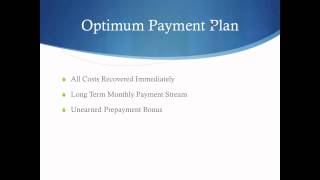
Module 5, thinking like a banker. This is the borrower workout forbearance part of the whole thing. And we had, we had a gentleman from the east coast talk about this because he's a master at it. He thinks like a banker, which historically I have not. And we talked about the three Cs of loan underwriting, which I'll get into in a minute. Two steps to a payment plan. We use a software program and I'm going to mention a couple of them here called T Value. And I went through it in detail, I highly recommend it for analysis and amortization schedules. And we had David Phelps come on later in our, in our program and talk about valuable note solutions. Creating a valuable note, but thinking like a banker, you need to think this way. You hold all the cards, they owe you the money, all of it. Keep that in mind. And they have breached their commitment. They need to earn the right to financial alternatives, solutions, options and your time. A lot of these people are going to have an attitude. They're not going to like you. You need a bit of a thick skin to get started with. And we had Steve G. Steve Gyglowski, who's a bank workout pro, give you his perspective. Because a banker, that's the way they think. You sign these documents, you owe us the money. And my time is valuable. So don't be continuing to jerk me around by not following up, not doing what you're saying or giving me an attitude. I don't take attitude from people on these deals. I say, you know, for the consideration of a loan modification, you need to do this, this, this, this and this. I make them fill out all these forms, send me all their information. You're the bank. They need to earn the right to your time and these alternatives. If they don't want to do it, that's fine, you'll just continue your foreclosure. The three Cs of loan underwriting, this is from a banker's perspective how they underwrite a loan, which effectively is what you're doing when you're writing a reperformer capacity or cash flow, the ability to repay. Can they repay? Do they have a source of income, the collateral, the secondary or alternative source of repayment. So if they can't, whatever or they fall down in the future, is there something, a piece of collateral where you can take that in lieu of getting the payments and their character. A lot of people have the ability to pay, but don't and have a history of not doing that. So their willingness and History of repayment Two steps to a payment plan you 1. Evaluate the borrower's motivation and current financial situation. We consider their taxes, income, savings, retirement, investment accounts, outstanding lines of credit, credit reports. 2. Provide them with the win win option and solution. You want them to feel that they're also getting a benefit because they know that you paid a reduced amount for for this note, which is irrelevant. But if you can get the situation to where you're not in that same boat with the original lenders that they see as bad guys who created these subprime and crazy loans, you don't want to be seen as one of those guys. You want to be seen as a win win option solution for these people. And not to make this complicated, but it actually is simpler than it appears because effectively on most of these notes, if they can't afford between 250 and $500 per month, if that's above their budget, they probably can't afford the house debt to income. That's their income that they've got coming into their household as opposed to their outgo. So from a banker's perspective, 30 to 38% is the sweet spot. If they're over that, you know you've got issues. And I'm not saying don't approve somebody if they're over that, but be careful. So you need to search for other clues. There's always a story to these notes. You're fixing broken notes, these aren't standard blue chips, gold plated notes. You need to understand these things. We did T Value. I talked about that earlier. T Value is a software program that I highly recommend. I'm not going to go into it tonight. Obviously we did that and it will give you the ability to do a different analysis of how to create a reperformer. We normally create low interest rate long term loans to make it simple for the borrower and this program helps us the solutions. It's not if but it's which. So give them two solutions. Give them an A and B. That's what I found to be successful with. And you need to understand that most of these borrowers aren't going to understand this stuff and they feel a little bit, you know, intimidated and they really haven't done well frankly in the past with their other lenders. So you're in that same boat. But give them what they want. I normally don't throw all of my ideas out there. I ask them what they want. I'm a listener, as I said earlier, and it's a key to this workout process and the time value of money, which is a concept that no one understands. I'm going to go over that later in our advanced concepts that we went through. But here's an optimum payment plan from a note that we're doing here. We bought a note, say $100,000 note for $15,000. We try to get all our costs recovered immediately either through the arrearages, as I mentioned before, that's the optimum. Get all our money back up front and then do a long term monthly payment stream, say a 1, 2, 3, 4% fixed 30 year loan to where we're getting monthly payments. And then, you know, most loans don't go 30 years. 30 year loans don't go 30 years, they go about 7 years on average. So if it does pay off early now you've got all your money back, you've had a monthly payment stream and then they pay it off early and you make another chunk. That's the optimum plan for what we're seeing in this marketplace right now. And a valuable note which we'll touch later. It's about the collateral, it's about the borrower's credit, it's about the paperwork. We rewrite these people and in today's terms. So if someone's doing a loan modification with us, I'll ask them for everything, taxes, income, everything, savings accounts. So now I've got a current file. You need a current file if you're going to resell this note to another investor. Make it valuable. And the story is key. These people aren't going to be perfect. You need to have a story. When you're coming to me and saying I want to sell you this reaper former. Tell me about the borrower, what's his new job? Now tell me the whole story, their story and, and then the terms. That's a sophisticated concept about how to make these loans. But terms are important. So I say this. Payment terms or unpaid principal balance upb, you want to avoid principal reduction because a lot of these loans that are underwater one day. Well right now I think we might be at a low end of the market. I could be wrong and I sometimes am. But if things appreciate, if the property goes back up, then your phantom appreciation actually makes your note more valuable. So your $100,000 house with $100,000 first, that actually goes up to 150 over the next three years and you've got a second behind it for 50,000. That was actually out of the money before, but now because the property's appreciated, it's now phantom appreciation that's a good thing. So don't principle reduce the note if you can. I did it once in that last example. But don't do that. So and I got this whole theory about loan restructuring. I try to keep it simple. You can do all kinds of fancy things. We talked about it. You can do balloons, you can do, you know, adjustables, you know, because if you give them a 3% interest rate right now, the market changes in 10 years and you're thinking you know what, I should have made it adjustable to where I could change it in five years. We're not doing that. We might change that strategy but right now we're keeping it simple. The key is this. Build a relationship with the borrower where they think you're helping them and you are. Don't try this tricky stuff in my opinion, carrot versus the stick. We try to do positive things for the borrower negotiating the arrearages. We do a partial waiver for payments made on time. We'll tell somebody if you'll pay on time for three years we will waive the arrearages or a part of them. We'll also say, well guess what, if you come in some money from your ex husband or your uncle, you could, you know, also have the ability to take that $100,000 note, pay us 75,000 and pay it off early. So and once again a below market long term interest rate increasing the value. You can add additional collateral to that note. You can additional co signers, balloons and other things. I talked about that forbearance agreements or a modification agreement. What we do, I talked about this in detail is keep that original banknote paper. We like that people because the banks have been doing this for thousands of years. They have good paper, you're buying bad bank paper and they've written it well. So we normally put our forbearance modification agreement on top of that paper and when they, if for some reason they default on your new forbearance agreement it goes right back to the original document. And we gave you several examples of that. Let's talk about some more real deals. Payment plan plus reinstatement money. The profile in Sylmar, California $300,000 fair market value. The first was 180. The second that we bought, once again a very small one for 27,000 on a quality single family house. We paid $9,000 for that second. That's a high price. But we went for the door knock, filed a notice of default. We ended up with a $243 a month payment and almost a $7,000 reinstatement. So once again, we talked about in our program the banter back and forth with these borrowers. There's a lot to it, but here's a summary. So another one in Las Vegas, a payment plan with reinstatement money, $180,000 value, nice house, $97,000 first $43,000 non performing junior lien, which we paid $14,000 for. Another, we paid a pricey amount for that quality single family house, owner occupied, door knock, notice of default filed. We got a 464, almost 460, 500, $465 per month payment and a $15,000 reinstatement. We got almost all of our money, all of our money back.