San Diego Note Investment Club - 2014 Non Performing Note Update Part 2
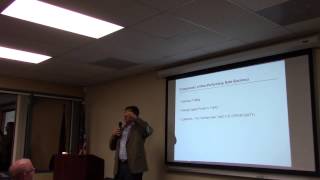
Coach G (speaker) frames a practical approach to note investing by contrasting "good debt" and "bad debt," arguing that mastering bad debt—especially through hands-on collections—creates outsized opportunity for smaller investors. He relates anecdotes about a friend’s seller-finance portfolio (roughly $5M with ~1/3 non-paying notes), describes attending the Residential Distress Debt Meeting in Manhattan to study hedge funds and market participants, and lays out three central criteria for evaluating players: sourcing (who gets notes), raising capital (how funds are financed), and collections (the operational Achilles’ heel and the key opportunity for small/high-touch investors). The talk emphasizes that large funds often avoid collections (outsourcing or trading instead), creating a niche where diligent, hands-on buyers can succeed.
Chapters
So let me just kind of frame what I think the real value of this skill is though. I call it good debt and bad debt. If you can master bad debt, you are unlimited in my opinion. Because if you have some notes and time goes by, you're gonna have some bad debt and you're gonna feel different about it if you know how to fix it and work with it. So I've got other people who say, I would never do what you do. Too risky too this too that I buy gold plated, fully secured, first trust deeds on nice property seller finance guys, you guys probably know a little bit about the seller finance game and some of you know a lot about it. I have a friend of mine who over the last seven years bought about a five million dollar portfolio for his family of seller finance notes. Now if you know that game, here's kind of how it goes. The marketing is different than what I do. You send postcards out to people that have carried a note and people that have carried a note. In most markets it's on funky property, off property, a mobile home and land, a gas station. You know, some little weird thing. The collateral is not stellar and the borrower might not be stellar. So without getting into detail about it, fast forward five, six years into it, a third of the notes that he's got in his five million dollar portfolio are not paying. Has he got bad debt? I look at that and say, why not go pay 10 cents on the dollar instead of paying 80 cents like he paid on the dollar and you're gonna end up with some bad debt. Why not pay 10 cents going in and get half of it fixed? And you kind of feel good about that. You know he's kind of feeling bad because he's got a third of it not working anymore. I feel great because I got half of mine working and only 10 cents on the dollar. That's the way I look at this market. The good debt, bad debt. Does that make sense? So all these things that we fear, bankruptcy, foreclosure, the more you get into this and you experience them, we can talk about it all day. But once you live it and you kind of embrace it, you're like, I heard it wasn't so bad and it wasn't so bad. You know, once again, I love bankruptcy now. I thought I was my first bad one coming bankruptcy. Nope, I love it and I buy them all the time. So that good debt, bad debt, I think no matter what you're going to do, I think the note business should be a key part of your Strategy. And then in the note business, I think at least learning it from a cursory overview. The bad debt piece is. Will make your tool belt and make your confidence level soar. Does that make sense? Okay. Okay. There has been a meeting for the last five years in New York City in Manhattan. It's called the Residential Distress Debt Meeting. It's right here. Was anybody there? Were you? Is anybody serious about this business? Really serious. Who am I going to see there next year? Yeah, I took my brother. My brother's seeing what's happening here. He wants to get in his business. I said, okay, let's go look. Let's go look at the marketplace. We turned all the hedge funds in Southern California. Then we went east last week. We went to Manhattan and all over New York and visited hedge funds there. Went to New Jersey, went to Pennsylvania. Had some fun, too. We saw the Book of Mormon on Broadway and we went to the Gettysburg. Anybody done that? It's a blast. So we had some fun. I stayed at the YMCA there in Manhattan. Only place with a basketball court. My brother's taller than I am, had a pool, basketball court. It's right there by the World Trade Center. It's a great, great location. 110 bucks a night. Is the room much? Nope. But I wasn't there very much. I was out because those guys are maniacs. You got to go see that circus over there. The people in this business, it's a tiny niche. It's a tiny niche, and if you're going to play in it, they all know each other. They all talk about each other. And my brother and I were there to kind of analyze, saying, hey, are there still notes? Are they still coming? How do the people feel about it? Are they raising money or are they folding? What about these two or three major hedge funds, the big gorillas that aren't here anymore? What about that? I went five years ago, and there was a panel, and I gotta tell you, this thing cost $1,200 to get into. I didn't. I didn't pay. I did not go in the meeting because I've been there three times, and it's the deputy executive chief from Fannie Mae, blah, blah, blah, blah. All these kind of titles going along, and they give you some stats. A billion dollars. And they've always predicted, well, there's $8 trillion coming and it never comes. So most of us sat in the lobby and interviewed the guys coming out saying, hey, what'd you think, Rich? You know, what you think? What do you think they know? So My point is, you guys should go to this. There's not that many. There's 200 people there. They were all there. And you get to do cool New York stuff. We went to the rooftop bars and just went crazy. These people are crazy. And it's just entertainment to watch them. And you learned a lot. So let me kind of give you a. What I want to do is talk about who's in this business, what they do, how they do it. I'm going to break it down into go one more forward, one more. Okay, whatever. We're going to look at these hedge funds by three criteria. There's three criteria in this business to do it. Sourcing, meaning getting the notes. Okay? And there's a chain. So the big banks, the bank of America, The Citibanks, the PNCs, they sell. There's a chain, people buy different levels. We usually buy at the bottom of that chain and the price goes up. So sourcing, who's got the best contacts, the best leads, who's buying the most notes? Who can I deal with? Who do I know, like and trust? Some of them trade, they trade with each other. Some of them, you know, have collection shops, some don't. They just buy big notes and sell chunks of them. We got to know these guys and you think, you know, why do I got to know these guys? Well, you know, how are they going to deal with me? I got told a real nice story. Someone said, if you watch these hedge funds, a lot of them are set up in three year windows. And he's watched them and said, hey, this guy's got a three year window, it's closing next month. He went to them and said, got any extras? Yeah, we do. And we've got to sell them. He got some real nice notes out of that. You would think, why would a hedge fund, because they've got other commitments, things like that. But you need to get in there in the mix and find out who's who, what's what, what things are selling for. So next year, go to this. It's the best meeting in the country in our field. Okay, what else do they do? They source notes, they raise capital, and I'll talk about that. So I'm going to like lay out five or six, seven funds, hedge funds, investment firms, and tell you how they do it. Some of them have their own money, some of them use private money, a JV or whoever. Some of them use public money, like an sec, private placement memorandum, that type of thing. And there's different nuances to all of it, there's different rules, there's different guidelines. This, that word right there, Collections, creates the opportunity for us. That's it right there, Collections. I call it the Achilles heel and the opportunity. I only bolded three words on this whole slide all my presentation. It's the opportunity for us. The little guy. I'm gonna tell the story of the underdog, but here's the bottom line. Is it easy? Some are easy, like the first one that you said. Every once in a while that happens, but for the most part, it's not easy. And many have tried and failed. Big headbutts and are in this business. They're junior lien buyers. They tried to outsource it. Didn't work. They tried to insource it, they did this, this, this, and I'll leave that out for you. Didn't work. Now they're trying plan C. That's after seven years. All they're making money doing is sourcing and trading. They buy $10 million worth of notes, sell 3 million to us at a premium. They made money, but the ones they kept, not making any money. Interesting, isn't it? So the little guy, kind of what I've done, if you go the high touch route, do it yourself, get involved, build a relationship with the borrower, go make it happen. And I'll tell some stories about that. That to me is the opportunity and it's huge. Where else do you see, you know, the little guy not getting squashed by the big money? You know, look at the owner, you know, excuse me, the courthouse steps, the trustee sales, okay? Those guys figured that out four or five years ago. The hedge funds, the big money, they pushed it, they showed up, they started paying too much, they're buying hold guys. And then the average guy who's trying to do a flip can't, can't play anymore. And that's always happened through history, but here, once again, because collections is so hard and nobody wants to do it. These big hedge funds, they would sit around and smoke cigars and drink calacia or cognac and what'd you do? I sold a million dollars of milk today. Yeah? Yeah. I didn't get my hands dirty. I just sold them to those guys. That's what they like to do. That's the sexy stuff. That's the cool thing, doing collections. That's a grind. It's like a dark cloud. If you go over to these collections areas, these things, these people get hammered. It's an emotional draining thing. Just so you know. Sabrina Allen, anybody know her? Anybody sees she put it so well. She said every home. I didn't say house. Every home has a heartbeat. She's had some real challenging situations with people that, you know, wouldn't pay and wouldn't leave. And it's tough. It's a tough business. But I'll tell you what, you can make a lot of money sa.