In this Hack Club AMA, producer Melody introduces Guillermo Rauch, the creator of seminal JavaScript tools such as Socket.IO, Mongoose, and the Vercel platform, as well as the Next.js framework. The conversation, hosted by Lachlan Campbell and moderated by Zach Latta, explores Guillermo’s early life in Buenos Aires, his self‑taught journey through Linux, MooTools, and open‑source contributions, and his decision to drop out of high school to pursue a startup in Switzerland. He discusses the philosophy behind Vercel’s rebrand from ZEIT, the importance of simplicity versus ease, and how community‑first values drive product decisions. Throughout the AMA, Hack Club students ask about education reform, the tabs‑vs‑spaces debate, Linux distro preferences, building large open‑source communities, and future technology trends. Guillermo shares advice for immigrants entering tech, ideas for making education more open and competition‑driven, and his vision for cities that streamline talent immigration and transparent systems. The session ends with a showcase of Hack Club projects and a call to action for the Summer of Making program.
Chapters
Good.
Mm-hmm.
All right. Hello everyone. So my name is Melody. I'm the producer here at Hack Club and we are super excited to have you joining us for today's AMA with Guillermo Rauch. So in a few short minutes, we're going to be kicking things off first, but first I wanted to tell you about Guillermo. So he is one of the most prolific names in JavaScript today. So you may not know Guillermo by name, but he has built some of the most popular JavaScript tools and libraries that you probably use over the past decade. So here's a quick look. So Guillermo has— is the person who created Socket.IO, which is a JavaScript library that powers, you know, like real-time communication and messaging across the internet. So for example, you know, a lot of chat apps have been built over Socket.IO. So Here's an example of a chat app I found on the internet. So let's just enter my name and I'm gonna enter some random name and let's see here. So hello, hi, it's me, Valerie.
Yay.
So what Socket.IO is, is basically a JavaScript library that allows for real-time communication and You know, even if you never built anything with Socket.IO, chances are you pretty much probably use something, uh, that something built with Socket.IO. So another cool thing that Guillermo has worked on, um, is Mongoose. And we're not talking about, uh, the Mongoose, uh, bicycle company, although they do make good bicycles. We're talking about Do do do do do. Of course, a JavaScript, a really popular Node.js library that allows you to connect to MongoDB databases. So, you know, that's super cool. He's also the person behind Slacken, which is a tool that allows you to create like public Slack invite links. But what he's working on right now is Vercel, or Vercel. Which is basically a platform for deploying web applications to the internet, which is pretty cool. And this company is working on some pretty cool stuff. So I do know that he's also working on this company behind this really cool JavaScript framework built on top of React called Next.js. And I personally use Next.js myself and it makes like using React super easy. So yeah, so that's basically a quick overview of Guillermo and what he's been working on lately. So, so yeah, that's my super quick overview of the cool stuff Guillermo is working on. So yeah, so let me tell you a little bit of how the stream will work. So in about a few short minutes, we're gonna kick off our AMA. Our friend Lachlan will be hosting Guillermo for an ask me anything chat with our Hack Club students. Afterwards, we're going to be announcing a new program for the community by the community called Summer of Making. So if you're high school students, feel free to check— stick around after the stream and check it out. And then afterwards, we're going to be showcasing some of the super cool projects our community has been working on lately. So check out our ship showcase and— All right, so it looks like we're about ready to get started. But first, can we get some— couple claps in the chat really quickly. All right, wonderful. So feel free to share this link to your friends and be sure to sit back, relax, and enjoy the AMA.
So— I'm Zach, I'm founder of Backlog.
Feel free to share this link to your friends.
Oh, sorry. Yep. We first started this AMA series about 6 weeks ago because we wanted to create a place in Hack Club where folks who are stuck at home can have interesting conversations with people that they really look up to, like yourself. So we're so grateful to have you join us today. I'm gonna kick it to Lachlan, who's gonna be running this call, but thanks again for being here. Thank you for having me.
Thanks so much, Zach. So yeah, first I just want to thank everybody who's here, who joined all the Hack Club students who joined and everybody who's watching the livestream. My name is Lachlan Campbell, I'm @lachlanjc, I'm 18 and I'm the head of storytelling here at Hack Club. It is honestly such an honor to have Guillermo here today. I have looked up to him for years and so to be able to host this conversation is, is just pretty remarkable. So Guillermo, yeah, I guess I'll let you kind of introduce yourself, but we're gonna spend the first like 10 minutes of this just having a conversation, the two of us, and then we'll open it up to questions from everybody.
Awesome. Yeah, thanks for having me, everybody. It's especially nice to have this opportunity amid the coronavirus crisis and kind of be able to test out this new way of connecting with people online and live streaming, so I'm really excited. Yeah, so my background is in engineering. I've always been a contributor to the open source community. I started way back in the day getting busy with PHP development and started contributing to open source to some early PHP projects. Before that, My door to the software development world was very much open source as well with Linux. I always attribute Linux to being one of the things that kind of launched me into this world of open source and contributing to projects and learning how to use computers quite deeply. We had a Windows machine at home, but I would get really busy with trying to compile my own Linux kernels and the Linux from Scratch project and so on. But one of the things that kind of defined my career early on was I noticed that with all the open source things that I was doing, the web was this fascinating medium for me. And I noticed that the web was becoming more dynamic. I started doing some odd jobs online. I was starting to gravitate very strongly with not so much like PHP as a backend language, also what PHP could do when you would combine it with JavaScript running on the client side and the web kind of becoming alive and starting to do lots of fascinating things like real-time communication. So I started contributing to a project called MooTools. It was one of the biggest JavaScript libraries at the time, competitor to jQuery in some times. MooTools ended up being quite remarkable because It was kind of the framework of choice of a lot of quite influential projects. Notably, it inspired a lot of the early investments into JavaScript at Facebook but also projects like Joomla and lots of other open source CMSs were starting to take Mootools as a dependency. And what's remarkable about this story, I think, now looking back is that I think I became an official open source contributor to this project when I was 15 or 16. That was kind of like the opportunity for me to rise to more notoriety online and like say who I am and put my face on about pages of these projects. And then my career kind of started with this interest, deep interest in making things very dynamic, interactive, animated. One of my big early contributions was a thing that went viral all over the internet. Before Reddit was kind of dominant in the social media file link sharing space, Digg.com was a big thing. And getting to the front page of Digg.com was so remarkable at the time that people would call it the Digg effect. You would get so much traffic to whatever would make it to Digg.com, And I made it to Dig.com several times. One important thing that I contributed there was a MooTools plugin for creating animations for menus that looked like Flash. So kind of always working on this super dynamic JavaScript interactive things and that led me to then later on focus a lot on real-time communication. A friend of mine credits me with like my obsession with real-time was so big even when we were working on MooTools. That I created the plugin ecosystem for Mood Tools and I created a category called Real-Time Communication and it had only one entry, I think, or two, but I was obsessed with that nascent category so much so that I discovered that some people were starting to create this idea that later became WebSocket to add the capability for websites to become real-time and enable applications and things like Zoom or Google Docs or anything that today is all about collaborating in real time with your peers or your friends. The web was not capable of doing that at the time. So I created this foundational project called Socket.IO that kind of served to give people the ability to do real time before all the infrastructure pieces were even there in web browsers. It's crazy how many hacks you could actually use to do real time back in the day. Everything from hiding an iframe in a page and things like that. And it was always about also observing what other companies were doing, and this is a property of the web that I think we could all appreciate, which is the ability to reverse engineer and very quickly understand how things that other people create work. So I spent a lot of that time kind of as a teenager, but later on in my early career trying to reverse engineer how everything worked. And I was obsessed with a project at the time called Gmail Chat. So Gmail, when they first launched, was just email, obviously just freaking awesome, but it was very much a pioneer in this category of they were pushing the web browser to the absolute limits of what it could do. It was more real-time, it could store things on the client side, it had autocomplete, it had all these awesome features that today we take for granted on websites, but Gmail is a super pioneer. And yeah, I spent a lot of my early days kind of putting things in, like kind of reverse engineering them and putting them back in place. Doing so for even third-party websites is kind of a big thing for me in the early days. So MooTools, then Socket.IO, Then I kind of in some ways was super curious about how far we could take JavaScript and my early interest in PHP kind of moved into JavaScript quite decisively and I became an early contributor to Node.js. And around the same time I was also starting my first company and we became sort of the first production user of Node.js and we became a very important contributor to that project. So much so that we took Express.js, a very popular project since it was like 0.1 version, and we contributed it all the way to where it could actually be used by lots and lots of people today. And yeah, so my passion then became creating the best possible developer tools and kind of try to give everybody the gift of being able to express their creativity online. I started a company called Vercel and a new framework called Next.js for making this idea of publishing to the web really, really easy and really simple and really scalable as well. Kind of one of my dreams early on was, and this is starting to become real, is what if we can give so much power to the frontend developer, to the engineer, that they can publish a thing that can take over the entire world? I was watching the AMA with Chris Cox with Hack Club and one of the things that stands out about Facebook is how much power they gave to their engineers, how much power they gave to their contributors, how much power they gave to young people. And one of their early mottos was like, "Move fast and break things." And I think they kind of then later transformed that into "Move fast with stable infra." And I think this idea of Moving fast at scale, giving the individual the power to put things online, making those things scale and reach millions of people has sort of become the kind of focus of my career so far. And that's how I met Leclerc actually. I was presenting about Next.js at React Conf and he kind of has this endless curiosity and reached out to me and we've been chatting on and off for a long time. I think I'm also very grateful to have an interviewer like this.
Amazing. Thank you so much. Yeah, I mean, I think most Hack Clubbers here are like 14 to 18, and so like you're talking about contributing to MooTools at 16 and stuff, it feels like a lot of people in our community are kind of at that stage right now. Awesome. And so, yeah, I think first I want to really kind of dig into your early days because I think a lot of people here are very familiar with Vercel and your work. We use Vercel at Hack Club and Next.js I use every day. And so I guess I want to kind of start just like in your early days. So what was your life like growing up? I know you were in Buenos Aires. Do you remember the first time you used a computer?
Yeah, yeah. So for context, just because I don't want to assume that everyone knows about Buenos Aires. Yeah, I grew up in Argentina. I grew up in the outskirts of Buenos Aires. So Buenos Aires is kind of this duality of it's a city, which is pretty famous, but it's actually a massive province as well. It's kind of like New York State and New York City now that I think about it. And we all think about New York City to the dismay, I'm sure, of everyone in Buffalo or other places. But that's kind of how Buenos Aires is. Everyone thinks of the city. Tiny, a federal district, kind of like Mexico, but I lived in the outskirts. And obviously in the early days of when the internet was nascent, we didn't have much access, right? We had to go by some of the early things that would be imported into the country by kind of pioneers of the internet that would typically come to the US or pay attention to US media, read US newspapers. And then once in a while, we'd get lucky and there would be someone that would sort of say, "We need this in Argentina. We'll give people early access." So our first access to computers was we bought a desktop machine that had, I believe it was Windows 95, probably even earlier. We might have even experimented with earlier versions of Windows. And because everything in Argentina is kind of delayed by a few years, I think it was probably 1997 and we got, you know, that's the first time we had access to Windows 95 and things like that. But one of the things that caught me and caught my attention early on was obviously video games. And the process of what kind of one of the early obsessions that I developed was the process of acquiring them, installing them, and just hoarding them. That whole process of interacting with the operating system and the video games, not too unlike what I do these days with Steam where I shop for games, I install them, and then I forget to play them. But yeah, that was kind of like the big thing. It was like the computer as a device that was enabling this sort of endless entertainment and the ability to just deploy new software onto it was kind of one of the early things that I got really interested in. And my dad was also, he was by training an industrial engineer, but he was kind of obsessed with like living behind what he was taught at school. Not too unlike what I ended up doing myself, only that I didn't go to college. I didn't finish high school, but his thing was like, ah, I feel like whatever I was taught at college is already outdated. So he was always kind of like looking for the next thing. So always thinking like an engineer, but always kind of on the lookout of like, what's the next thing? And you know, like, this is not advice that I would just give everybody in the world, but I do feel pretty strongly that by the time that something gets institutionalized into a course, it's probably gonna be outdated at that point, and like, you're not really at the cutting edge. So that's how he felt about like computers, the internet, networks feel like the future, and everything that I've been doing kind of is the past. So that's why We're really lucky that even though we kind of lived in the middle of nowhere, it's hard to explain now, but one of the images that I always give people is like, it was very frequent that people would— we had horses on the road and we had cars on the road, and this is not even that long ago. The people that were on the horses were just like, you know, people that were either begging or collecting cardboard or whatever. It was kind of like a weird place to grow up in, in the sense of like, it was kind of like an emerging city. Having signs of progress, but at the same time, lots of poverty, lots of violence, and things like that. I don't want to paint the picture that it's like the slums in City of God. Parts of it were, but it was— parts of it were really nasty, parts of it were really lovely, like small communities, small town, and things like that. But we always had to be really careful with any access that we would have to technology because if other neighbors would hear, like you never know if you're gonna get robbed and things like that. And like that part was kind of weird, but like we were lucky that, you know, we pushed through all those kind of boundaries of fear or thinking that we couldn't access those things. And we tried to get technology into our house early on. And the thing that I was, I think pretty strongly that kind of defined these early days was that this kind of constant upgrading of our software and looking for what the next thing was. And that's why, as I was saying earlier, us making the transition from Windows to Linux and just kind of working so hard to make Linux work, which is an operating system that a lot of people joke today, and I'm sure there's a lot of Hack Clubbers that are trying to use Linux for the desktop. And I say trying because it is always riddled and fraught with challenge. Yeah, Linux gang. It is challenging. The drivers don't work. So imagine that we're talking like '98 or '97 and I was trying to install Red Hat. Red Hat was a distribution— today everyone knows about Red Hat because it's big for enterprise and servers. At the time, Red Hat's strategy was go to consumer. Which is kind of like, you hear a lot about this in startups, lots of people try first to sell to consumer, then they realize, "Ah, actually this technology is better to sell to companies." That was Red Hat. So we got the big early boxes of Red Hat CDs and just the process of trying to make Linux work at my home. We had this running joke at the house that I broke the computer again at home because I made it boot only to Linux. Sometimes I would negotiate with my mom, "No, I promise I'm gonna make it— I discovered this thing called GRUB and I'm gonna give you the option to make it boot to both," and things like that. So it was a lot of fun just growing up constantly breaking things. Before the interview, I was thinking like, what is one of those defining moments that I remember fondly at home? It was literally breaking stuff all the time. My brother also developed kind of a reputation for breaking the hardware because we would try to take components out of the computer and then put them back in. And I don't know, we would get the voltage wrong or we would just forget to plug in a fan or whatever. We went through so many computers. So I also, looking back, I'm really grateful that our parents were so kind of understanding of that process of just trial and error, which frankly in the early days was probably like 99% error and occasionally some success. But yeah, like, you know, like we frankly, like we use computers in a very weird way. You know, like I think most founders would just like embrace Microsoft Word and I would just spend my time trying to like uninstall it and install OpenOffice and just hack around it and compile it from source. So those were the early days. Yeah.
Awesome. Yeah, I mean, I, I super relate to that. Like, I feel really privileged to have grown up where I did, but, um, especially like the— like having, having access to the internet on my own just like totally transformed like what I feel like I do with my life. That like I was able to like, now that I have Twitter and everything, and like I could like be someone in the world even if I didn't know anybody else who was coding.
That was a big leap for us too, right? Yeah. Going from the world of you have to get dumps of software in a CD-ROM and insert it into the computer to go to dial-up, 56 kbps connection and it's really slow, but getting information and connecting to the world. And then the next big leap was us getting DSL. Which gave us 256 kbps. And like, we're one of the earliest homes in our little neighborhood that even had that technology. But that is the thing that started connecting me to the world. And I started joining these IRC servers where I started getting in touch with people, usually older people that had the same interests that I did. So one funny story that I have is that I was going through one of my cycles of really trying hard to make Linux work and installing the drivers for making the modem work and making our DSL connection work. And this was kind of like one of the biggest obsessions that I had was I had secured a CD-ROM from a magazine that I very likely found that had this software called RP-Link. PPPO, and that you had to compile from scratch. The complexity there was you also had to recompile the kernel to get the right kernel module to work so that your network device would work. Insane stuff, really. And just me, I was starting to hit a wall of like, I cannot do this. And then I joined that IRC channel and this guy, his name was Diego, he was already working for a company, like I think it was even like an international company. And he took the time, this stranger took the time out of his day to call me because now at this point, I had to reboot into Windows.
Yeah, I've had this happen.
Windows had internet, go into Linux, and this random guy offered to call me at my house and help me through the process. So I kind of early on, I took a leap of faith because obviously the advice is always don't talk to strangers, right? Your parents or whatever. But I took a leap of faith. I was like, this guy actually ended up helping me. And gave me lots of amazing information. So for me, community was so important. I became friends with all these weird stranger nicknames online. Like one of my friends, his name was Netroot. I'll never know who Netroot was, but that was my friend and we were like on the Linux channel and like learning together and it was a really fun time.
Yeah, super connect to that. I like, there were so many times when I like, screen shared with some developer who I'd never heard of, offered to help me fix my Ruby configuration or something, and I was just like, yeah, okay, here it goes. Um, cool. So, um, jumping ahead a little bit, um, you mentioned, um, dropping out of high school, um, and, um, you know, that's a, that's a very, uh, relevant topic here. Um, like, I can imagine Not very many people do, but you know, a lot of our community like thinks about that and then like finds that.
At the very least you think about it.
Yeah. Finds that not really like supporting their dreams. So for you, like, do you remember the day that like you decided to drop out and what that was like?
Like what was the— Yeah. For context, I credit my high school with a lot of my success because here's the weird thing. I quit it. It's kind of— I mean, I'm not going to make a comparison here like, uh, dot to dot with Steve Jobs, but he talks a lot about like he dropped out of specific classes and he wanted to learn about typography. It was very similar to me. Like, I loved my high school because first of all, I made a gigantic effort to get in. So it was a, it was a high school that you had to take an entry exam, and I was kind of obsessed with being in the top position of the entry exam, like getting the most points. And it was 4 subjects math, language, history, geography, and then each exam gives you 50 points. And then this is supplemental to elementary school, so you already had to get started with training for these exams. Later on, I learned that I think there is a similar dynamic in the US with regards to the SAT, where like people are thinking way ahead of time and so on. So we knew that we wanted to do that, my parents were like— my dad specifically was like, "Whoa, that sounds awesome. People that go to that school learn lots of things that you're never going to learn at any other school." And this school is actually a public school, which is also really awesome. You had to really work hard to get in, but it was called an experimental school. So what they would do is they would give high school students access to college-level professors and subjects as well as exams. So that school really opened my mind to lots and lots of things that I still use every day because they taught us everything from like chemistry, physics, accounting, mathematics, calculus, like early on, and I loved it. In the first year, I loved it. I was— so I studied really hard. I got into the school in one of the first positions, but then when I was in, I was continuing my MO of, "I'm gonna try to get every point," right? And that literally lasted 2 quarters or less, because then I discovered a new system of points. Quite clearly, I discovered that I could work online and make money, or, you know, contribute to open source projects and so on. So like I had this crazy 2 competing systems. I cannot be the best student that gets the most points because actually once you got in, it was also pretty freaking hard. So the entrance exam was hard, but like after you get in, there was no like free ride either. So what I started doing was like, I was paying attention a lot in class and I was trying to like get good enough grades in the exams without having to study at home because all my time at home was for working with my crazy clients in the Netherlands and all these clients I started getting for development and doing freelance work. And also the economy in Argentina was kind of collapsing at the same time. So I was starting to make money for my family. So I had all these competing sort of problems. And obviously the story goes, obviously tech and work and open source won, so much so that I didn't even get the degree. But what I want to say too is that sometimes you hear these stories of like, oh, X high school dropout or college dropout. And I think sometimes not enough credit is given to lots of amazing things that you can learn that I don't know that you would necessarily learn on your own. But yeah, to go more concretely to your question of the specific time that I dropped out, Mootools was a defining moment for me. This library was starting to get used by lots of important companies. And that hadn't happened a lot with me before. I had written a pretty cool plugin for an ORM in PHP, but I had never had this scenario where companies are reaching out to me to try to hire me. Facebook tried to hire me when I was 17. But one company did hire me that kind of took a chance was a company in Switzerland, a startup. And that was kind of where I kind of forgot about the rest of the world. Not only because it was kind of my ticket out of Argentina, I didn't think of it that way. I was like, this is my ticket into a whole set of amazing new experiences. And I was like, see ya everybody. I literally told my mom one day, "Mom, I'm going to Switzerland in 2 weeks. You have to sign here," because I was under 18 at the time. So props to my mom that she's always tuned in with all these crazy ideas. Because she was like, "All right, I get it, you know, like it's not crazy stuff on its own. It's like actually you're going there, a company is using your project, they are needing to hire people that are experts in this framework and you're one of the contributors to the framework, so you're an expert." And that was kind of the moment where I was like, "Oh, so high school, I'm gonna start skipping exams." And yeah, it just I probably never even looked back from them.
Yeah, yeah. I totally understand that feeling. I remember when I was in 10th grade, I got a scholarship to go to ReactConf in San Francisco, and that's actually where we first interacted. And it was my first time going to the West Coast, and I went to San Francisco with my dad. Going to a tech conference. And it was just like, it was so kind of validating of like that anybody like cared about anything that I did. And also just like really eye-opening of like seeing what the tech world looked like and everything.
I had a very similar experience like that. Like Richard Stallman, the creator of GNU and the creator of Emacs, which I don't love, I love vi, was speaking in Argentina. And he's a super controversial figure and he's even become more controversial in recent days, but when that happened, it was a big deal for Argentina. Like, "Oh, wow, this guy is coming to give a talk here." I had that same experience. I went with my dad to the conference and I got to meet some of the people that I had already been chatting with. And it was a very, very validating experience. So that kind of taking it into the real world is very, very important. You know, you have to also take that leap of faith outside of just, you know, being a nickname online. Yeah.
Amazing. So I'm going to start opening it up to other questions. So when— we're going to have Rishi up first, but when you just give your name and where your hack club is. And so take it away, Rishi.
Hi there, Guillermo. I'm Rishi, as Loknath already said. I'm 14 years old and I run a hack club out of Brampton in Canada. So I have a hypothetical for you. You've had an enormous impact on the open source community throughout the years, pioneering some of the biggest software projects in the world and making them open from the very start. It's no doubt changed the world. However, the education system in America and Canada is incredibly competitive, with people competing for the best marks in exams or the most amount of extracurriculars and putting each other down to gain a small advantage. And if you were shot back into the early 20th century to the beginnings of this education system, and you're given full access and full power, right? What is one thing that you would change to make it a little bit more open for, for people? And why would you do it? But more importantly, how would you do it? Remember, you're still you, but you don't have any of the tools of the 21st century.
Yeah, that's a fascinating question because as I mentioned earlier, I've always been in between these two worlds, right? Like, as I mentioned, for me, getting into that school, and I had to work so hard to get those grades and learning those skills. And I was so proud of it too because I remember taking the SAT online just as a comparison point. And I was doing so well with it even though I was very young. So I've always been conflicted by these two realities of like, well, I also started working online when I was 13 and contributing to important companies. I had clients that were early e-commerce, like big e-commerce websites. I was contributing to their PHP codebases. So one of the things that I would say is that we need a lot more understanding about the individual and what is that— what is the path that is optimal for the individual. Like, if you think about the tools that we use today, which are just like age and location and a lottery system for what school you go to in the early days, it seems to me that we're not really getting the most out of each person. I very much like one of, uh, kind of Naval Ravikant's sayings around, you know, no one is going to be better in the entire world at being you. And there is a specific set of skills and talents that you have that nobody else has. And I'm very, very convinced of that. And when I've hired for my company, I've seen that firsthand. There's so many incredible people that I found online They have all these incredible skill sets and interests that I don't feel close to ever attaining. And that's a beautiful thing. So I would find the ways that the education system could recognize and give that freedom to each individual's expression and search while providing a structure around fundamental things that are shared in all of this endeavor. So an example would be, for me, it's very important to have a competition. This is probably for my personality, right? I was involved in the math Olympiad of my school since I was, you know, like maybe like 7 years old. And competition and how I'm doing in comparison to myself and others, that was very important for me. I wrote a blog post recently. Called An Ode to Code Golf because I think there's all these really cool little competitions that you can partake in that are fun and get you into that mindset of just doing better than you were doing before. So I did a competition like that early on. So Math Olympiad was one. There was a hack— becoming a hacker competition. This was amazing for me. I discovered this website where you started being the lowest ranked, I don't know, soldier in this fake military and you had to hack your way. Each lesson was a hacking challenge and I kind of became obsessed with this idea of hacking systems and you made it up to like general, general master, super general, right? And the first step was so simple. It was like view source and there was an HTML comment that took you to the next step and you could do it in like 5 seconds. Level 16 was you had to receive— you had to download a binary that would only run in Linux, so if you had Windows, like, good luck. Um, and then you had to disassemble it to find the password to crack the— if you run the binary, it would ask you for a password. And then you had to submit the password. This idea of giving people ladders of games and challenges, not unlike modern games, like World of Warcraft, you wanna be level 70, whatever. We're lacking enough of those games in general, I think. I'm talking about even startups and tech companies. I'd love to see people get better at their jobs through games. So that's one of the things that I would do is like try to invigorate that sense of fun combined with competition. And by the way, something that was critical for me growing up is like I spent a lot of time gaming. Like I wrote about this recently too, it's like I would have periods of intense like career progression followed by intense Counter-Strike progression. And there would be like night and day, like 3 months of like awesome, I'm becoming the best hacker in the universe, to 3 months of like all I'm doing is like, you know, loading new maps into Counter-Strike servers, like playing with my friends all day long. So yeah, like I'd love to see how education systems can like adapt to this reality of like people don't want this boring structure. Give people like the freedom to create and experiment and play.
Yeah, so we only have 25 minutes left, so if you could keep the answers a little shorter, then we can get some more questions. Yeah, for sure. Harrison, do you want to take it away?
Oh yes. Hi, my name is Harrison and I lead a Hack Club in Agoura Hills, California. So a lot of us were wondering about the rebrand for Vercel. What encouraged you to rebrand it from Zeit to Vercel?
Guillermo Rauch: So there were some logistic issues that kind of forced us to rename, but I always tell people that there were— we think of our company as kind of this intersection of, you know, to reuse Steve's kind of metaphor, liberal arts and engineering. You've all probably seen how much attention and care we put into the design of our tools. So we also see this intersection, awesome intersection between designers and developers. Vercel simplifies our product lineup quite significantly. So we had Zeit, Zeit Now, Now, and to me, the fact that now you just have Next.js and Vercel as a platform promotes that simplification that is so important to us. And if you really think about the development of any product It's all about removing that kind of complexity and that's what takes a lot of the hard work for us is finding that simplicity. So the rebrand accomplished that. Another really important value for us in really building a company is— or building a country is all about that, it's about a strong set of values. One of the important values for us is reliability and the name is just more reliable. So that was another extra bonus that we got out of that situation that really frankly happens once in a lifetime of a company. But the fact that the name, you hear it in any situation and you can write it more easily and you can interpret it more easily and it works across every language in every country was a very important value for us because we want to apply that reliability to everything. So in short, it was an opportunity that came up. We grabbed it and we're very happy with with what it's done for us.
Awesome.
Great question, by the way.
Thank you. JP, do you want to go next?
Awesome.
Hi, Guillermo Rauch.
My name is JP. I'm a 14-year-old. I'm an 8th grader in Colorado. Excuse me. And so I'm running a Hack Club at my school. I was wondering how you build communities with your projects. Because it's so cool seeing open source projects kind of created by a small amount of people or like one person and they just grow into thousands of contributors and just so many people relying on these tools every day. And I was wondering how you manage and support such a large community. Yeah, going back to values, community is one of our guiding values, a foundational value for us. We started the company thinking first and foremost about our community. So like everything that we would start, we think about that first. How do we get that community engaged? The very first thing we did when we put our website up was let's get people into our chat room. Let's get people connected to us. Let's start organizing meetups and conferences and ways to get in touch with, with people. I honestly think that that's the— again, values allow you— values are preserved through iterations of products and technology. We're creating a company that will be around for decades to come, right? So the community being together with us at every step of that iteration is kind of what allows us to retain that momentum and that evolution throughout time. So more tactically speaking, we try to make everything that we can make open source open source. This is something that Matt Mullenweg, who bought my previous company, would always say, "We open source everything except for our passwords." I love that. I think my refinement of that is I open source everything that we— well, obviously our passwords, we're not open source them, but we open source everything that will allow people to make the product and platform their own. And sometimes we don't open source things that would allow you to run the platform because we don't think that that's something you would even want to do. So we want to be careful with like— we have such a big megaphone nowadays that like we have the opposite problem of a lot of people that are creating, trying to get a community off the ground, our community is so large that we have to be mindful of our signal being very clear, right? Like, even I have to be careful nowadays of like every tweet has to be very carefully worded so it is not open to misinterpretation because someone thinks, oh, I have to change my code to be that or that. So that, and that's the other good point, is like being super mindful about your interactions with the community. Everyone is listening and we're all super connected. So yeah, make that your value and you'll, you'll, you'll build a great community. Awesome, thank you.
Amazing. Pradyan, next.
Hi, I'm Pradyan. I lead a hack club at Doherty Valley High School and I direct DB Hacks. So my question for you was, in our society nowadays, we're very much more tech-oriented. You have a lot more kids going to STEM fields. And, you know, we are trying to push kids extracurricularly into STEM more. But do you think that given our societal structure, are we equipping kids to properly pursue these kind of fields, not with knowledge, but with like actual sort of like personality and such? Yeah, I think the drive towards STEM is a really awesome thing in a sense. One thing I get a little bit concerned about is one of the things that's made me really successful in particular has been my own obsession and interest in the art of this problem space. I never got into it because of society's pressure, right? I got into it not because of positive economics. In fact, I didn't even understand at the time that like Bill Gates is the richest man in the world because you can replicate the software so cheaply. You build it once and you reach everybody in the world. So I would say, I think efforts like Hack Club are absolutely critical to guiding society towards the right place in terms of making people become legitimately interested in these topics, right? And exposing them to the right people and right role models. So yeah, I think society is probably now overcorrecting a little bit. Like we have too many hacking schools that are promising people that are gonna learn everything about computer science and engineering in 30 days and get a job that's high paying. You've probably heard this. So I'm still navigating this myself. I don't know what the best strategy for this is but I feel like things are still very much in a state of flux. Also a couple questions from our chat. So A, tabs or spaces and B, Arch versus Debian Linux. So tabs or spaces is a great one because the right answer which is tabs is not what gets used in practice and I had a call with Google this morning where they contributed Next.js— and it's so funny that I get this question because I used that metaphor today to explain to them, "Well, look, we all know that theoretically the right solution for this problem is this, but I know that that's not what people are gonna want or do. So let's find the ways to eventually try to get to that ideal place, but be realistic about what is the momentum." So going back to the previous question of community, Being super in touch with that momentum of that community is really what enables amazing engineering as well because notice that there's this gap between theory and practice. In a lot of cases, you succeed by tuning in to what the, in this case, developer, customer, whatever, actually wanna do. So I'm gonna say, I use Spaces begrudgingly in a world that, you know, should be using tabs.
Wow, that is, that is like the best answer to that question I've ever heard. I don't think I've ever heard anyone like give a philosophy behind it.
That is fantastic. Yeah, and Arch Linux versus Debian Linux? Say it again. Arch Linux versus Debian Linux? Oh, Debian all the way. Debian was like the thing that I was like, before Arch was the distribution that all the cool kids were doing, that was more like, I'm going to make everything custom, Debian was there. And for me, it was huge. Red Hat had a novel installer because they were in this direction of desktop Linux that was all graphics. They would boot into X11 for their installer and Debian was like this beautiful, like, ncurses just like terminal graphics, and that really made me fall in love with the terminal. So Debian all the way. APT is still like pretty, pretty much the most successful package manager that I know of in terms of security, practicality, just pretty all-around awesome. But I truly respect the Arch philosophy. Gentoo was big when Debian was also taking off because they had this also system of like compiling from scratch and optimizing for your architecture and so on. So, you know, if I were— went back in time to when I was a teenager, I would be the arch Linux teenager today, actually, realistically. But, you know, Debian all the way in my heart.
Amazing. So if you want to ask a question, you can just raise your hand on Zoom. Theo, up next.
Oh, okay. Yeah, so I'm Theo, I'm 16, I run a hack club in Boston, and I've worked for Hack Club for the past year and a half. So I have a question about kind of how Next.js came about. So you talk a lot about like PHP and how like PHP was so fundamental because like if you made a file and you put it in a directory and then you went to that path, like it's there.
And I agree, like it's so awesome, right? Yeah, yeah, done.
So like, like at which point— I assume there was like some time when you got into React. Like after you got into the React, at which point were Were you like, "Shit, this needs to exist in the React world." Yeah, great question.
This is a great question because it really is one of the defining moments for our company and it was one of the defining moments for where we started seeing lots of success in the industry and where were the signals that we had to double down on that. It was very simple. I had to create the website for Vercel. Or Zeit at the time, and I had to create 3 pages. One to introduce your email, privacy policy, terms of service. And I knew that React was the programming model of the future. I had become convinced myself through lots of research and experimentation. And yet creating 3 pages was the biggest pain in the butt ever. I was like, I couldn't believe this gap. And by the way, this is really like, if you want a tip, for like, um, uh, successful invention at scale, it would be this: when you find those gaps of like, oh my God, how come the technology is so great if this basic thing is, uh, unattainable, right? It was practically unattainable. Like, I had to configure a web, I had to download this, I had to download that just to put 3 pages online. Um, and that was, as I said, it was kind of defining for the entire company because like I explain to people our platform today as like it's pages as a service. It's just publish pages next to where your customers are at scale. And yeah, like that, and this is why simplicity is very hard as well. Retaining that level of simplicity is always a challenge. It sounds so easy to say, oh, like PHP, let's just be like PHP. It was easy at the time. Let's make it that easy. But making it easy and also making it simple and making it work well when it gets tested with the largest websites of the world, that was a challenge for us. A lot of thinking went into, can it be both easy and simple? And simple is actually the property that you most likely want. I would even argue that a lot of the things that I've created that are great and got a lot of stars on GitHub and whatever were easy, but they weren't simple, robust, scalable systems. So combining the two is like where like the magic happens.
Thank you so much. Yeah, I actually like, I got scared away from React until like I discovered how to use like Next.js with functional components and now like I build websites in it and it's great.
Anyway, thank you. Thank you.
Amazing. Yeah, I had a similar experience. Like I also used React in the early days and configuring Babel and Webpack and stuff site after site and like everything upgrading. It was just like, oh my god. And I've been using Next.js since the very first version and like now it's still powering all of Hack Club's websites. Um, so amazing. Um, Sam, you're up next.
Hi, uh, my name is Sam. I'm a Hack Club leader in Singapore.
I'm 15.
My question is, um, so schools like about STEM education with like humanities and the arts. How do you think we can apply the principles we learn in, um, the humanities and the arts to STEM?
Great question. So, um, it builds very well on top of the early question about community. I think, um, scalable, respectful community management is absolutely essential. I'll give you a very practical example of this. As soon as I released Socket.IO, I got trolled on Reddit, like pretty hard. And it was the most silly troll in the history of trolls. And I could have reacted in a number of ways to that. A, I could have engaged the troll. I immediately noticed that the troll was just trolling for the sake of trolling, not on technical basis. So I kind of ruled that out. I could have given up on humanity. It was a very valid option. This guy was, or girl, whoever, was just wanting to destroy the commons because this is an open source project, right? Or I could have stop doing what I'm doing and not try to build a community or not try to push forward the project and so on. And I think kind of understanding that sociological side of things, psychological side of things. One of the partners that Andreessen Horowitz talks a lot about, like a CEO skill being managing your own psychology. And not because I think people should strive to do that, but it's is one of the challenges that comes up. It's like you have to manage yourself and your psychology. So many of the skills that have gone into making this thing successful are not at all technical. They're all about building community, being socially skillful. And what I mean by that practically is, again, like we've learned really well how to engage with critics, for example. How to engage with people and detect that people are just out there to try to troll or whatever. How to respond to that with positivity. On the art side, how to apply great design to everything we do. On the communication side, how do you use fewer words, right? A lot of technical blog posts are gibberish, gibberish, gibberish, gibberish, gibberish. Effective communication is just one of the most powerful tools you could— I see this a lot with the AWS blog. A lot of the writers there, they're dealing with incredibly complicated technical things, but they make such an effort to bring it down to reality. So I would say, I would pay— and this is why I can't possibly dismiss traditional schooling and so on, because It's very hard to pick up a lot of these things on your own. I was very lucky to like take a lot of psychology classes in high school. Again, going also back to that other great question about like changing this education system, I think a lot of Hack Clubbers are gonna relate, is I love the idea of just exposing younger people to very difficult concepts. So like throw them into the woods, see what happens, like expose them to like advanced everything. Not advanced in the sense like, oh, overwhelming since day one, but kids are not necessarily, how to put it, like children. They're just adults in development that can, given the right tools, learn any skill and understand any hard concept. So to your question, we can apply that to art, sociology, psychology, and so on. It's just be great.
Yeah, okay.
Thank you so much.
We have 6 minutes left and we have 3 questions to fit into that. So up first, Melody.
Let's fit them all.
Hey everyone, so I'm Melody. I started one of the very first hack clubs in America right here in Philadelphia. Guillermo, I noticed that you have the Sprinter train in your background and I actually rode the Sprinter train to visit a hack —club out in San Marcos a few years ago.
Nice.
So, yeah. So, I am looking over Twitch chat and one of the questions in the chat is, "What do you think are some cool new technologies in the near future we should be watching?" Oh, that's a great question.
It actually anticipates a blog post that I wanna write. I'm gonna answer with two things. I'm gonna answer with what system do I use to identify the best technologies? And then what technologies I've identified so far. So the system that I use goes related to the question that Theo asked about Next.js. I identified React as a great technology and then I identified the gap. So one thing that I noticed a lot about the world and my blog post is gonna be kind of like identify useful primitives. So I think the best technologies already exist. They're widely used. They're already there for you to grab. And there's this gap of them being utilized because they're only being presented as recipe form. Another great example is I use Postmates a lot and I get all my food delivered from this amazing real-time menu to my door. And I'm not a person that cooks a lot. And I love the idea of it. I've always thought, "Oh, I'm going to cook a lot." No. In practice, I just get my food delivered. And I think of like great primitives as like the ingredients of a great recipe. And I think, maybe it's just me, but I think most people prefer to go to the In-N-Out drive-through and get a great majestic burger. I love In-N-Out, just random tangent, rather than try to make it, make their own burger at home. So this is how I identify great technology. So find those primitives that have not been turned into this delightful presentation and you can bridge that gap in that process of finding the delightful presentation for the technology, you evolve the technology itself. So we've now made amazing contributions to React even though we're using it as a primitive of our system. But now, because we exposed it to this huge world of data, we've now been able to tell the React team, hey, let's improve X, Y, and Z. Here's the patches, this, here's that. Let's work together on this. So that's the system. Then practically speaking, technologies that I'm excited about. I'm excited about TypeScript a lot. I'm excited about improving performance of infrastructure systems with Go, Rust, WebAssembly. I'm excited about creating new languages. I'm gonna throw this out for hack lovers. I think developers nowadays are typing a little bit too much and my spider sense is tingling that I lived through this with Jade way back in the day or Hamel in the Ruby community. I think there is a lot of room for experimenting with people typing less. Whether that's with cool IDE stuff for autocompleting imports in components, but also just like, I think this is kind of an axiom of our human condition. We're all hominids that get tired by typing a lot, tired by reading a lot, tired by coordinating a lot with people. I think you're never gonna beat making things really brief. And so I'd love to explore things in that direction. Yeah, I'm gonna be sharing more of these ideas on Twitter because I love answering this question. I can't think of more now, but I should. Thank you.
Amazing. Okay, we have 2 minutes, 2 questions. So, Kat. Hi Guillermo, I'm Kat.
I'm a Hack Club alum and currently attending college in Boston. I absolutely love your idea of approaching things and thinking about the primitives. I'm especially excited to see URLs as primitives for collaboration. So my question is, I think you mentioned a few weeks ago on Twitter that tools like Notion and Roam are much closer to accomplishing Google's mission of organizing the world's information than Google ever has been. And I was wondering if you could just elaborate on some of your thoughts on that. Oh, wow. That is a great question. Thank you. One minute. Oh, wow. Okay. Because that's the nature of Twitter. Drop these bombs and then you never elaborate. Okay. So here's the thing. The world has lots, infinite amounts of information, some of which can be captured by search engines, some of which will never be captured by search engines, like the contents of your Slack, the contents of your Notion, your personal notes, and so on and so forth. I'm a big, big, big fan in reducing latency, not in the individual primitives, but in the combination of primitives. And I think what Chrome and Notion are doing is they're reducing the latency to information capture. So capture as opposed to search, right? Like you go to Google with— they capture your intent for search immediately, but they're not capturing your input of data. So when you think about like going around the world and very sympathetic to Snapchat's awesome experiment with the glasses and like trying to snap things that happen in reality just super quickly. I love that. I love reducing the information capture latency. And also, that's one trend, like, let's make it so that, like, you know, I can input a quick idea, a dream even. Like, this happens to me when I dream and I want to capture my dream really quickly. Um, so these tools are now becoming the first stop to that information capture process. I don't go to Google Notes, Google Keep, or whatever, and no one is really. So that's one part. And the other part is privacy. And organizing the world's information cannot just have one big pipe of public search associated with it. It's like you only have a hammer for every type of nail, right? Or however that saying goes. So my point being there, Google has over-optimized on public information. Now the world, A, is naturally very private or very small circles of friends and so on, or very small circles of collaborators like at your company. So let's optimize for that too, right? Like let's make searching your past, searching your ideas, capturing your ideas really quick and relating those ideas. So Roam is doing interesting things, right? Because like, Sergey and Larry were all about the information links of public information, but who's building the links of private information? So that's super interesting as well. I mean, there's just so much innovation to do in that space that you mentioned the URL as a primitive for collaboration. I think very much the direction that we need to go and explore this a lot more.
Thank you. Amazing. Okay, and then we have one last question before the final question, and that is from Adrian. Take it away.
So what is some advice— nice Zoom background, by the way, sorry I had to jump in. Thank you. So what is some advice you would give for like someone who like grew up in South America and also moved to the United States and that wants to get into the tech industry? Oh, that's a big one. Let me think really quick. I like the idea of, in general, the place that you decide to move has to be based on you having a great overlap of values. I see this a lot also with like the best way to hire for a company. Or the best way to apply for a company is that like symmetry of values that makes your new home feel like home. And for me in particular, it was very easy because I loved some of the values, not— once I would perceive at least from my home in South America around innovation, competition, striving for doing the best that you can. Some of those things that I really loved about the US resonated with me way more than the values that I had, that I saw were being upheld in Argentina. So I think it's that will and identification that is really what enables that translation rather than the logistics of it. Like, "Oh, I need to approach my visa process like this or that." The visa process is super broken. It was really broken for me. It was broken for the founder of Zoom. He had to apply 6 times. But I think that identification with where he wanted to develop himself and what he had to contribute can overcome any gap of that nature. And that goes for any place that you would want to move, right? Like, I think I have a friend of mine that is from Brazil and he really identifies with the culture of Finland. Yeah, I'm from Brazil too. And I talked to him and I was like, how can you possibly like Finland? It's cold and it's like this, like, and you know, but that's what he identified with. So that was my, that's my point is that you're gonna find that this is also the best way to approach the best place for you to work at. It's you making that demonstration of that compatibility that will compel people to hire you. Thank you very much.
Awesome. Okay, and so then to close this out, Zach, founder of Hack Club, has our final question.
Yeah, so it's actually kind of piggybacking off of Adrian. One thing I've been thinking a lot about recently is how do we keep America to be the place where most of the world's smartest people want to do their life's work? And it's notable that you moved across the world from Buenos Aires to San Francisco. And a lot of people try to do the same thing and they run up against many barriers. So my question to you is, if you ran a major city in America, whether it's San Francisco or New York City or Chicago or something in that class, and you could basically do whatever you wanted with the city, change housing policy, do whatever you want, what would you do to build the best city for people to do their best work? That's a great question because I have given this a lot of thought. One of the things that I would do is I would make the process for incorporating new people into the system very, very transparent and clear and efficient. Even if that means that you turn down a lot of people because it's a reality of the numbers of, you know, the asymmetry between number of applicants and so on. But what gives people, I think, a lot of unnecessary anxiety is just like dragging the process and like it feels like a battle against bureaucracy and so on. As I mentioned, even in Argentina, like I loved competing for a spot. Like I went to that school knowing that I wanted to compete for a spot. I think that's essential in a lot of systems. What's tragic is when there is some frantic competition for some applicants, and then other applicants have found loopholes into systems, whether political or, you know, just cheating the system in different ways. So I think I look at this very much like technology systems that we build, with the knowledge that, you know, we're dealing with people and we're dealing with people's dreams and with people's livelihoods. So it's definitely always going to be a very, very difficult subject to manage, but I think we can make just very basic improvements with technology to transparency of the systems. I don't want to throw in the blockchain word, but I'm going to throw in the blockchain word. The reality is that this is— right? Yeah. This is an open system, and it should be. America should be an open place for everybody. And then that kind of system requires lots of transparency. And I think we need to eventually gravitate towards that. And yeah, it's an excellent question. I think when it comes down to like where I see San Francisco today as well, I think it's really challenging. It's, I think, politically, the way that it's being managed and the way, like the gaps of disparity in like rich and poor, homeless and not homeless, the taxation system, there's so much that's wrong that that needs fixing, but I think to your point, the most important value that needs to be preserved is that people from all places in the world can identify with the value system, can feel like they can be a part of it, and then giving them the tools to make that possible. Thank you very much.
Amazing. Well, I first thank you so much, Guillermo, for coming here and and spending your time with us. That was amazing and just like such an honor to have you. For our final send-off, I think we should do a traditional Hack Club outro. So everybody put your hands in and then we're gonna do a 3, 2, 1, and then we're gonna shout hack. Okay. 3, 2, 1. Hack! Hack! Hack! Amazing. Okay, thank you again, Guillermo. That was incredible.
And thank you so much. Thank you. Thank you. Thank you. Thank you. Thank you. All right.
Wow, that was super cool to like finally talk to him. Um, what did you all think?
I think that was my favorite AMA, honestly. Same. Yeah, mine too. Yeah, that was really cool.
Yeah, I love the questions as usual.
Yeah, I really like the, like, um, the hypothetical question about fixing the school system. That was especially good.
We got this AMA structure down. Yeah, you guys are awesome. I love this format. I I loved not feeling like we have to just quickly jump between questions because there are 100 people who want to ask questions. We could just listen to him talk. And he had so many great things to say. He had by far the best answer to the tabs versus spaces question of any AMA guest. That's right. The right answer is neither.
Yeah, cool. It sounds like I'm going to hand things off to Melody.
All right, wonderful. So thank you all for tuning in, coming to this AMA. I believe my outro, instead of like saying it on stream, is actually gonna—
my outro is gonna play on stream, live on stream instead of the Zoom call.
But I just wanted to Alright, so thank you all so much for tuning into our livestream today. So in a few short moments, we're going to be showcasing some of our really cool projects that our students have built. But first, I wanted to tell you a little more about Hack Club. So Hack Club is a 501 nonprofit, and we rely on people like you to bring coding to high schoolers around the world. So By contributing today at hackclub.com/donate, you can help empower the next generation and bring our programs to even more high schoolers. Now, as of right now, we currently do not have any future AMAs scheduled, but we have some exciting, some more exciting events in the pipeline. So if you're interested in hearing more about our future AMA stream or events, follow us on Twitter @HackClub. Feel free to follow us on Twitch as well. Recordings of this AMA will be up on our YouTube channel at hack.af/youtube. And if you're a high schooler, we have a community full of other high schoolers interested in coding waiting for you. So just, if you're a high schooler, check out hackclub.com and join our community where you get to hang out with people like you. So, and if you're a high schooler, one of our community members Sam is working on a program that you might be interested in called Summer of Code. Sam, take it away. Hello!
Uh, if you don't already know, my name's Sam and I'm a Hack Club leader in Singapore. This summer, me, Roshan, and Neil, all Hack Club leaders, are running a summer program called Summer of Making, and I'd like to introduce it to you today. The goal of Summer of Making is to allow you to gain some awesome project experience with the assistance of your very own personal mentor. It's a 6-week program where you go from an idea to a complete project, and we're open to anything even remotely related to technology and STEM. Every participant will be receiving their own industry expert mentor to support them every step of the way. You'll be paired with a mentor who shares similar interests to you. So if you want to make a video game, that's awesome! You'll be paired with someone who's experienced game design. You'll have weekly digital meetings with your mentor, as well as being able to message your mentor throughout the week. If you don't already have it, you'll be able to redeem the Hack Pack, and whilst we can't make any promises, if you need something else to make your project possible, let us know in your application and we'll do our best to get it for you. Once your project is complete, we'll promote it to the rest of the world, as well as supporting you with your own marketing efforts to get the word out about the amazing things you built. We'd really love to have you join us, and we're excited to see what you make. So apply now and submit your idea before May 31st. It's completely free, and we're trying to accept as many people as possible. So thank you everyone, enjoy the rest of the stream, and we can't wait to see what you make this summer. Thank you.
Thank you so much, Sam. So again, if you're interested in our Summer of Making program, check out summer.hackclub.com. Next up, we're going to be sharing some of the super cool projects our students have built. So sit back, relax, and enjoy SHIP Showcase.
Burton! Burton! Burton! Burton! Burton! Burton! Ahh— Burton! Hello, throne.
¡Hola! My name is Ruth Aguimudia, and I'll be presenting COVID-19 by the Numbers, aka an email updater to provide people in my area COVID-19 statistics so that they'll be updated. A few facts about me is that I live in Long Island, New York. And I'm from Africa, and I really like machine learning and coding, obviously. I hope you enjoy my video. Bye! So COVID-19 by the Numbers starts with my Google Form that I created basically to collect data from users who would like to receive email updates. We are currently trying to expand to SMS updates, which is why I have that on the form. But right now we're only doing email updates. So it provides information on cases, recoveries, hospitalizations, and a bunch of other information such as that. In the form, you basically provide your information, like I said, name, age, just for just demographic information, just for me to understand. And you obviously provide your email and and notifications if you would like. Then, to show you the backend of what I do, it's basically Python code that sends web scrape data from Wikipedia and other COVID-19 tracking websites and puts all that data into an email. And I basically put all that data I scraped into a nice clean HTML file so that when I send it, it looks like a nice table. I also made it pink just because, I mean, I just wanted to make it look cute. So as I'm scrolling down, I basically have a bunch of more Python code, and as I said before, it sends the email. So once it sends the email, it should look a bit like this. Um, as I am typing And I will click. And voilà! It looks like that. I wanted to have it in table form so it would look more concise and show the data in a very, well, fun way. I didn't want it to look depressing.
So, 2 years ago, I was in quarantine for a month due to a rare disease. During that time, receiving cards from friends and family meant the world because it showed that I wasn't alone. Learning that thousands of patients and healthcare workers are experiencing isolation on the front lines inspired me to create Notes4Support. How it works is you first go to notes4support.org and then you can choose to send a message to a patient or a healthcare worker. Next, you send in a note of encouragement, choose a hospital location, and click send. I then read through every single message and get them categorized by text length and location. The notes are then printed out and sent across 30 hospitals in 12 states. The hospitals then receive the notes and distribute them among patients and staff. So far, we have sent notes to over 2,000 individual patients and healthcare workers. I've gotten several responses from hospitals saying that these notes are invaluable to their patients and staff, and that they're so deeply touching and encourages them to fight on in the midst of this difficult time. After every shipment and response, I post them on the blog for our note writers to see their tangible impact on the lives of thousands. Being a part of Hack Club and learning by creating has been a fundamental stepstone to this project. I can't wait to see the many more lives we will transform for. Thank you.
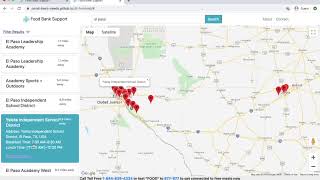
This is Food Bank Support, a web application that connects those in need with food pickup locations. A user begins by entering their location. Let's say I'm in El Paso, Texas. This opens up an interactive map with the nearest food bank locations or food pickup locations. There's information such as the des— the distance from the inputted address, uh, the address of the location itself, um, and when provided, there's also breakfast times, lunch times, and also contact information. I started making this during the COVID Global Hackathon after learning that many are struggling to get food. Because of the crisis, especially students who depend on schools for their meals. Normally, food banks publish the data themselves, but due to COVID, timings have changed and syncing all the information is a nightmare. During the hackathon, I also met some talented developers who joined the team and worked on data collection. Up to date, we've collected tens of thousands of records. All the data you see on the website here was collected through web scraping and volunteer input, and we have since partnered with national organizations like No Kid Hungry and Hunger Free America to exchange this data. Going forward, I hope to keep it as up to date as possible. We're working on automating the web scraping so that it can provide real-time updates if any of the information changes. I hope that this tool can help people find the food they need.
Alright, so that concludes our livestream today. Um, thank you all so much for tuning in. Remember to follow us on Twitter and Twitch, and we'll see you again soon!
Do it! Do— do we? Oh my God...
More from Guillermo
Guillermo Rauch at Founders in Arms Live: Simplicity, Focus, and the Bet That Built Vercel
The Man Who Built a $9B Dev Platform Thinks You're Overcomplicating AI | Guillermo Rauch


Inside v0: How Guillermo Rauch Is Building 100 Million Engineers | Lenny's Podcast - EP.89
Architecting for model step-changes: A fireside with Vercel's Guillermo Rauch
Keynote Interview: Vercel's Guillermo Rauch on the Agent Era | Azure Cosmos DB Conf 2026
Vercel CEO: 70% of Our Traffic Is Now AI Agents "Nobody Was Prepared" | Anthropic, OpenClaw, OpenAI
Why being "terminally online" is more important than ever, with Vercel CEO Guillermo Rauch
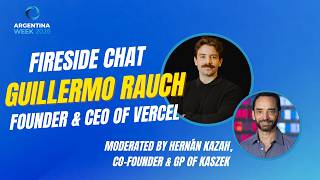
Argentina Week 2026 | Argentine Talent Powering Global AI | Guillermo Rauch & Hernán Kazah