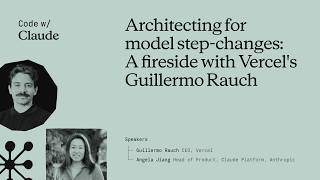
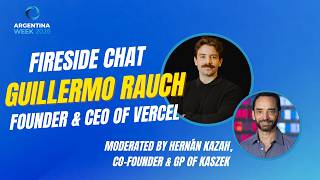
In a concise "10 Minutes or Less" interview, Vercel CEO Guillermo Rauch discusses his unconventional leadership and work habits. He explains his "terminally online" mindset, checking Twitter frequently and using unstructured time for product tinkering and customer support. Rauch favors large‑group communication over one‑on‑ones, employing long‑form writing and public threads to disseminate information. He emphasizes hands‑on engagement with users, reading every email and DM, and handling support himself to stay close to the product. Growing up in Argentina, he cites scarcity and lack of safety as shaping his relentless work ethic and appreciation for quality. He highlights a recent hire, Tom Leonard, acquired via the Lagoon project, as an example of valuing high‑agency engineers. Rauch argues that individual contributors are now "agents" rather than static roles, encouraging founders to act like mini‑CEOs within larger firms. As an active angel investor, he looks for founders with compelling ideas that align with his personal thesis, citing Scale AI as a case where his own interest guided investment. Finally, he challenges the notion of avoiding public listings, asserting that being a public company offers regulatory rigor and competitive pressure that he welcomes, and that CEOs who fear criticism miss the point of growth.
Chapters
I don't understand why you wouldn't want to take a company public. If you're a CEO that's saying, "I don't want to go public because they're going to be mean to me," then you've missed the point.
Guillermo, welcome to 10 Minutes or Less.
Thanks for having me. I love this format, by the way.
Do I have your permission to cut you off if you're going a little long?
Of course.
Then let's get started. How many times do you check Twitter a day?
It's hard to say because, um, okay, so I'll tell you actually my framework.
Yeah, please.
I still have meetings. I still do the, you know, traditional company running, like weekly business review. I don't do as many one-on-ones and I did this before it was cool. Like Jensen Huang doesn't do one-on-ones, whatever. Like, love Jensen. I was also always kind of against one-to-one information sharing when I could actually disseminate information more efficiently with a larger group. And so I do a lot more like long-form writing, write threads, bring customer feedback to the team and publish it to bigger groups and things like that. But then I set up unstructured time when I can go on Twitter, I can play with our products, I can do customer service, I can do whatever I want that I feel is productive at that given time.
What's one way growing up in Argentina, growing up outside of Silicon Valley, has shaped how you lead?
I don't take anything for granted, and I've— I grew up in a place where we didn't have very much. Nothing was guaranteed. Even, I mean, this is sad to say, but like, not even like our personal safety was like I could take for granted, right? And so I— maybe the way that I approach work, working hard and earning everything and competing and, um, and but also like huge appreciation for when I see something that's like so much better than what I grew up with. I think I enjoy it so much more than the average person. Just more appreciation for things that are better and great.
What's one thing you're still personally doing that other CEOs at your stage might have delegated?
I sadly, and I use that word purposefully, I sadly get credit for giving people customer support, like doing customer support myself. And people like literally say like, oh my God, you're a CEO, what are you doing? Like, it was like, and I always consider what is the alternative? Like, what are the other CEOs doing? They don't know their product. They don't talk to customers. And, or they think that some customers are just like not as important as some other customers. Like, Of course, there's customers that we get more revenue from, but even the free tier developer is informing how I can build the best platform in the world so that then, you know, the largest companies can use and benefit from. So I do a lot of support. I talk to a lot of people every day. I read every email, DM that I get, and I use our product a lot. I think it's becoming more popular now, for what it's worth, but like it's shocks some people.
Who is one hire that has changed the company's trajectory?
I have one that I was just really excited about earlier today because I was reviewing some data of some performance benchmarks. We acquired a single-person company with a really exciting project called Lagoon. So this, this guy's named Tom Leonard and he's just an extraordinary infrastructure engineer. I always come back to individuals with high agency, high intelligence, high integrity that push themselves really hard. There's a lot of people at Vercel that don't wait for a PM to give them things, for customers to complain. They just go out and seek info and seek alpha from the world.
Do you ever wish you could go back to being an IC?
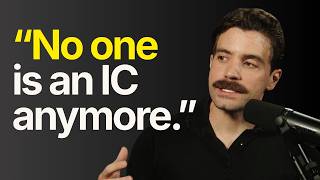
Not really, because I I think my mental model right now is that the IC is the agent. If you thought, if you identified too strongly with a particular skill or individual contributor line of work, I have bad news for you because an agent might do that particular thing better, right? I think we're in the era of leverage and we're all kind of like mini CEOs at this point. So going back to like why Tom, succeeds out of Vercel, he was a CEO of his own company, and now within Vercel, he acts like the CEO of his own company, and that gets rewarded and nourished and incentivized. You've probably heard about a lot of companies that focus on hiring founders. We love hiring founders. It's hard to say, I'll go back to like writing lines of code when in reality they can just have all of this agentic leverage.
Got it. So no one's going to be in IC anymore.
No one is in IC anymore.
You're an extremely prolific angel investor. What do you look for in founders?
I build thesis in my mind of like what the relevant things are. So obviously I pay a lot of attention to like, is the idea that the founder has an idea worth exploring so that I can almost like use an investment as You know, running with a hypothesis in the background. What I want to do ultimately is create a system where all of my ideas can be executed on. My most successful investments are things that I wanted to pursue myself, and there were competing interests. Like, I simply do not have the hours in the day. But for example, Scale AI, I was obsessed with an idea similar to Scale AI. But I had just started Vercel and I was like, Vercel is my favorite idea, but I would love for somebody to do this other thing.
Do teams need to be working 80 hours per week to stay competitive?
My gut tells me even more so because the pace of innovation, acceleration, all of the new things that you have to learn about and to stay up to date. I think, I feel like you have to be more online than ever. I call it terminally online sometimes. I do think obviously you want to balance like taking in a lot of input with being productive and shipping and creating high quality things. So it's a balance. But yeah, I do think, I mean, I don't have an exact number of hours. I'm basically, I work all the time because I enjoy it.
Some founders in Silicon Valley don't actually want to take their companies public. Stripe being the number one example. Do you one day want to take Vercel public?
I don't understand why you wouldn't want to take a company public, especially when you're a company that is a public good. Ultimately, I see Vercel as an extension of the web and the internet. And a lot of the things that we've put in place, and I mean we as a community and country, the regulations, the audits, the compliance, the reporting, those are great things. Those are interesting things. So many news get written up. I mean, who wouldn't want to like have— I mean, okay, you can have bears and people that are really negative on your company. No one would want that. But also part of me that is competitive and wants to be pushed wants that too. If you're a CEO that's saying, I don't want to go public because they're going to be mean to me, then you've missed the point because I actually thrive in customers being somewhat harsh and mean and critical. Of our products. Maybe not every company is ready for that, but certainly we want to be.
I love it. All right, that's it. Thank you so much.