Guillermo Rauch on Building Vercel With Purpose in an AI-First World | 2026 Upfront Summit
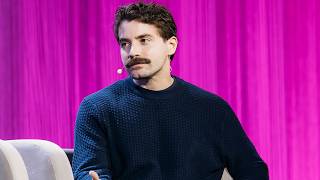
In a fireside interview at the 2026 Upfront Summit, Vercel founder Guillermo Rauch reflects on the company’s ten‑year journey from a developer‑focused deployment platform to an AI‑first infrastructure provider. He explains the original purpose of Vercel – to give anyone the super‑power to turn an idea into a production‑grade web app instantly – and how that democratizing mission has guided every strategic pivot. Rauch describes how Vercel’s operating framework, built around the Next.js open‑source framework and a obsessively crafted command‑line interface (CLI), serves as a moat and a cultural north star. He details the shift from serving developers to serving autonomous AI agents, introducing concepts like “agent evangelism,” “brand and trust,” and “quality curation” as new defensible advantages in a world where software costs approach zero. Throughout, he emphasizes the importance of incorruptibility, restraint, and mission as a forcing function, arguing that trust built through open‑source, public development, and transparent feedback loops is a critical asset. The conversation concludes with advice for investors and board members: prioritize mission, integrity, and quality over short‑term ROI, and coach founders to stay aligned with their core purpose.
Chapters
So I thought maybe just to start, like, Vercel is such the classic overnight success, 10 years in the making. And unlike a lot of AI companies, you know, you, you have this long history and I just can't believe the acceleration. So first of all, congratulations on such an epic run. I think the last time we did an interview you were like $3 billion, now it's at $9 billion. It just seems like it's, it's been amazing. But I was reflecting on it, you know, the goal of this session is to talk about how do you, grow a company like this in an environment which is like so insane. And we've got the hype-driven mania and money flowing like crazy without losing your soul. Because we've all seen it. We've all seen how many companies like cease to be that mission-driven, purpose-driven thing once the money gets involved. And I just thought maybe you could start with, you know, what was your original purpose or what was your original intention in creating Vercel? And how has that helped you navigate through this like truly epic pivot from, you know, from web hosting into the world of AI agents?
Yeah, first of all, thank you for the nice words. Uh, it's been 10 years in the making, but it does feel like it's been a day, right? The days are long, the, uh, the decades are short. The first intuition that I had when I started Vercel was that going from idea to application, going from idea to cloud production-grade application, needed to be instantaneous and available to everybody. So part of me, I spent decades, you know, learning the Blade and becoming a software engineer, and, uh, there was a bit of a, like an ego death moment of like, what if I could give this superpower to everybody? It's not just for me. It's not just for the exclusive club of software engineers who, you know, I grew up in Argentina. Since I'm like 10 years old, I've been spending like 18 hours a day on a computer, like memorizing lines of code and APIs and commands. And so there was something about my personal journey of I felt like if you could publish anything to the web, you were one hyperlink away from changing your life. Because that was my story. When I was in Argentina, I would— I built my resume. I didn't go to— I didn't finish high school and didn't go to college. And so I built my entire resume by— we can call it vibe coding. Didn't exist back then. But I basically vibe coded my way to success. And I needed a platform that could do that. My biggest struggle, if I go back in time, was just setting up everything before the idea. Yeah. Setting up the servers, setting up the infrastructure, setting up the framework, setting up the compilers. It was like weeks or months until you could actually say, okay, this is where I'm gonna add value. Mm-hmm. And so progressively got better. But when the cloud came out, which is basically as around the time that I started Vercel, I felt like that was a perfect moment to start a company like this. Yeah. Because it meant that I could delegate to the hyperscalers all of the data center work, creating these massive networks like AWS and Google are laying out like submarine cables to connect continents. And I could create a developer experience that harnessed all of that power and put it into the hands of as many people as possible. So if you think about AI and what's happening with Vibe Coding today, it's just a continuation of that. Yeah, it's about making it easier and giving it to more people, giving the superpower to more people.
So help us see the through line of that democratization energy into the world of AI agents. So, you know, I think most people here know that like milking a cash cow is actually considered to be like a strategy best practice going back decades. Yeah. And we, again, we've all seen it. We've all been on boards. We've all been around companies where when something's really working, there's tremendous pressure to double down on that and not to go on some speculative other thing. Now, obviously, Everyone's talking AI crazy nonsense, but I think it would've been pretty easy for you to just say, like, do dabble in AI a little bit, but to really fundamentally keep the company going in that same direction. And I can imagine for a lot of employees, you know, as the company grows, you know, the beginning mission-driven true believers, of course, are there, but as you grow, you start to accumulate more and more employees, you know, who never saw the company as a startup, for whom this company's always existed, it's always been a success. It can be hard, I think, for such people to realize it's time to bet the whole company again and to follow you on this kind of crazy journey. So just talk about how you were able to do that for Vercel, what it was like internally, and how the sense of having that broader mission played into that.
Yeah, in a way, I think the secret sauce is that we've been incorruptible for 10 years. I've been so— to your book's title— I've been so dedicated to being true to myself. Of course, over time, sometimes you're more true to yourself, sometimes less true. I always just keep coming back to my principles and our values. A pivotal moment for the company was when we— and now I'm an active angel investor. I spend a lot of time teaching the younger generation ways of starting companies. And I've always been a framework person. A lot of the success of Vercel comes from creating this framework, Next.js, which now powers everything from Claude.ai to Walmart to most of the 5-coded applications. So it's everywhere. And a framework gives you the guardrails, gives you the North Star. And so our framework for to operate the company was really, really important. And the values that we've created for ourselves as we were noticing this AI thing happen. And what I always challenge the team with is how can we have a very authentic, a very Vercel approach to whatever market trend is happening? And so number one, we have to be deeply convinced of it. We have to really believe it. We have to be patient zero and customer zero of this technology. And so one of the principles that I laid out as part of our operating framework to the company was— and this happened, you know, around the time that Copilot came out in the early days of ChatGPT— was we're not going to do any random acts of AI. We're not just going to slap AI onto things to try and claim that we're something we're not.
Yeah.
Instead, what ended up giving us all of this success— we were talking about it earlier— is that as software's cost fundamentally goes to zero, you know, that all of that software is going to be generated in the next decade, which is— it's even hard to imagine how much software is going to be generated. It all has to be hosted, secure, and scaled somewhere. And so that very first idea that was true to us of like, we're going to be the easiest way to deploy software on the planet, which started with a command line program, which is like the nerdiest thing. And I was telling you, old school, I obsessed about this command line and And over time, as the company grew, we really professionalized it. It wasn't just me anymore, like the high school dropout. We have an amazing team of executives. But I found myself sometimes having a hard time, like, selling some people on, like, hey, this CLI thing is really important. And now fast forward to 10 years later, you know, someone was telling me backstage that they had Claude Bot deploy 91 applications to Vercel this week. Just let that sink in, right? Like, you're talking over Telegram or WhatsApp to an agent sitting somewhere that is talking to Vercel with this nerdy command line thing that we obsessed about 10 years ago. And this is where all of this growth is coming from, right? The rate of acceleration of software creation and the ability to absorb it and scale it. You know, we— Vercel now— someone was saying like, any— if I see another .vercel at App URL, I'm gonna lose it because we're kind of everywhere. Uh, but with that, with that Power comes also the responsibility of, you know, what is the future of software? And one of our now— I had to reorient the company again the other day because I was saying, okay, Vercel and many companies in the Valley were known for their velocity. Yeah, we can ship software fast. We hired highly motivated, mission-driven engineers who come to Vercel because they want to ship fast. I hired a lot of great people from Google who were telling me, like, if I have one more meeting, I'm going to call it, right? And so they come to Vercel because they can ship. Of course. But now everybody can ship. And so there's almost this sort of inversion in what the value that you can bring to the world. And it's obviously been discussed a lot in the last couple of weeks is taste. It's curation. And one of the things that I've been talking about a lot with the company is restraint. The job of the PM used to be to motivate and cheer the team on to ship more things.
Yep.
Let's ship. Let's fix this for this customer. Sometimes I find myself in the role of like, all right, that is a great thing. It's a great internal tool. That is a great internal agent. Not everything has to go to this very limited bandwidth of attention that X has a limited throughput in how much you can put out there. And so you have to pick your battles. You have to lead with taste and quality and safety and security. And so we're going back again to the fundamentals of what are the things that then the customers of the future are going to care about. And I think whether you vibe good or not takes a second place.
You know, that's a really important lesson for— we have a lot of board members in the audience here, obviously. And so I want to hone in on the command line for a second because, first of all, it's just— I love the story so much because I can just imagine how many years you had to go with your team, but also with your board, with everybody, people asking you like, what is the ROI of making the command line beautiful and perfect? It reminds me of when Steve Jobs would like fight with engineers about the—
Typography.
The typography, but also like, I remember he used to get angry about the beautifulness of the wiring on the inside of the Mac Plus that you were not even allowed to open the case to see because he was such a control freak, but still it had to be just so. And a lot of people, when they are trained to be a board member, they're trained to think about governance in terms of efficiency, in terms of ROI, but also I think a little bit in terms of just extracting as much value from the company as possible. Craft, taste, quality can easily be thrown by the wayside. Obviously, we live in the era of shareholder primacy, and it's very easy for people to say, "Wait a minute, how does having this command line help us make money for shareholders?" And yet, we see this over and over and over and over again, that those seemingly irrelevant obsessions often become the foundation of a company's future success. And so, given that the cost of software production is going to zero, everyone knows that, right? Right. Yeah. Everyone knows.
So there's— everyone dumped your SaaS stocks already.
Yeah. Yeah, I assume that's already— that's already been done.
Do that.
Sure. Everyone's already looked at their portfolio and absorbed the pain. Leaving all that aside, in a world where there's going to be 100,000, 10,000 times more software than there is today, like, what are the new moats that people should be looking out for as we think about what are going to be the defensible businesses of tomorrow? You mentioned one, which is obviously quality curation. The limited bandwidth of people to absorb is always going to be a fundamental constraint.
Yeah.
What do you view as the other—
Yeah, one of the principles of our operating model is in how we approach this particular challenge is brand and trust. The value of that has increased dramatically.
Totally.
Clarity of vision, right? So in a world in which you can do everything, you have to choose what are the areas where I can go deep. And so we think a lot about infrastructure investments here, right? So if we're going to be the infrastructure underneath all of these AI agents, there is tremendous value that we can bring in depth. And actually, it's a kind of engineering that has been somewhat, you know, you've seen the meme, mark yourself safe from, from Facebook. If you're an infrastructure engineer, like you're not coding all day long, right? Like there's a seriousness to the challenges, security, privacy, confidentiality implications. And so we're, we're putting a lot of effort into what are, what is this foundational layer on top of which all of this software that is now approaching a cost of zero is going to sit on, right? And so the other thing that I encourage the team to think about is the customer is now an agent. So we grew up selling to developers and later on, you know, VPs of engineering and later on CTOs. Now I'm selling to agents. Which sounds a little funky, right? But the technical decisions, the infrastructure purchases are being made by the agent that the developer chose. These agents are becoming more autonomous. They're running for hours, they're running for days, and they're going to be making a lot of decisions, not without your consent. I think you're going to still going to provide the guardrails. But for example, be very influential. Since we're talking about command line, we're bringing a subcommand that allows the agent to make infrastructure purchasing decisions. It can say, I want to purchase this database because I need a database to solve this problem. And so if you're on the supply side of this problem, you have to think about how do I make myself compelling to agents? And that, that requires a mindset shift. For example, the hot thing to do in Silicon Valley if you wanted to appeal to developers was to do developer evangelism. To do developer relations. So now you have to do agent evangelism. Of course, this has implications to how we create content on the internet. Because content, what I think is happening with the web is that it's flattening out. The web used to be this very carefully designed hierarchy of pages, right? Because you start at the entry point, the front door of a website, the homepage, and then you have to like narrow in on what you want to find. And so you have to click. Click, click, click, click. So as a rule of thumb, imagine that any software with sufficiently complex navigation structures and UI that goes deep and deep and deep, that's going to be not optimal for agents.
Agents— thousands of wasted tokens.
Exactly. And agents just need to cut to the chase. They need the raw signal. I remember about a year and a half ago, the head of training for Anthropic came to our office, and I was giving him the challenge of like, I have all these customers that are building massive internet properties. What should they do with their content? And it's like, look, what the model prefers is having no noise, no HTML tags.
Sure.
No styling, just pure signal. The overarching point is you have to be customer-focused. There are a lot of companies out there that are trying to fight AI. They're trying to block it. They're trying to throttle it. They're trying to prevent it. But if you think about you as an end user, what is the ideal user interface to you? I always center myself in that easy principle, and I like to use the metaphor of Star Trek when the gentleman walks into the room and talks to the room. The entire room is a computer. Yeah, it's almost now real because of things like Open Claw. Of course, the interface of the future is clearly natural language, whether you're typing it, whether you're gesticulating it and whether you're speaking. And so we have to work backwards from how do I position my company to be the most customer friendly and have the best possible user experience?
And that's also the language by which we're going to have agent-to-agent communication. Like so many people were talking about agent protocols and stuff, and it's, oh nope, actually just natural language. Yeah. Yet, you know, I think about my, my Answer AI co-founder Jeremy Howard created LLMs.txt. Yeah. And it's like Such a simple protocol, it was almost too stupid and too simple.
It got criticized a lot. Oh yeah, people— it's almost like a founder story in itself. Like, everyone's like, ah, that's too dumb.
It's too dumb, it's too simple.
Simplicity wins.
That's what the agents like. Let me come back though to the question of trust. And first of all, I thank you for plugging the book, that was very nice. I have a new book coming out in May called Incorruptible. I'm sure, uh, you guys should know. Anyway, but in the book, one of the things that really astonished me in my research for it is that basically trust and and trustworthiness is one of the most underrated assets in all of business. And because we're not teaching people to think about how to be trustworthy, like as an asset, we tend to build companies where the work, the extra work you have to do for guardrails, for safety, for compliance, for product quality, for design, we can see the expenses of the ledger of those things. Yep. But we don't calculate what the return is because we're not seeing this, is valuable. So we miss big opportunities in the positive externalities that we create. Obviously, you know, you've had such a background in open source. Open source is the ultimate positive externality because you bear all the costs of giving the software away for free.
I have an interesting insight there, right? A lot of people ask us like, why is Vercel so favored by the agents? Well, it turns out that because we bet on open source, that became the training data for the agents.
Yeah.
And so this is a positive externality that it's something we're designing for. Like, yeah, like when I started this company, I knew that— end-dimensional chess— if we knew When was this going to happen? It was— okay, so I don't know if it was Steve Jobs or someone said this, it's really clever, which is education is the best kind of marketing.
Yeah.
I ingrained that in my head when I started this company and I kept thinking, I was a little naive, I was like, I don't even— I don't need a CMO, I don't need a VP of marketing, I don't need anything. I just need to teach people cool things. And one of the best ways of teaching is open source because it just self-propagates. In that sense, it is very agentic. I didn't have to go and tell the world, you know, one conference at a time, one workshop at a time, here's how to use Next.js. In fact, I had the opposite experience before I created that open source framework. I was going to a lot of conferences. I was getting invited everywhere, which eventually, we discussed, it helped me with my O-1 visa, but it was awesome.
Very good for our country that it worked out that way.
I was gonna, I was going to one conference at a time teaching the principles of faster, more dynamic applications. And I was like, this isn't scale. There's too much demand, too many conferences to go to, too many miles to fly. And I created Next. And so open source is this incredible bet. Naval has this awesome quote that the idea of software should be that because of open source, the foundational software only has to be written once, right? And that is also another maybe contrarian thought to what's happening with AI. You're going to experience this at your companies or the companies that you invest in. There's going to be a temptation to regenerate all software because just because you can.
Just because you can.
Because you can spend tokens and tokens and tokens. In reality, you know, I give this example of like, imagine joining a company that decided to regenerate Linux, right? And regenerate Slack. You join and there is the regenerate X. And so We're going to enter an era where making that judicious decision-making is going to be, is going to be so important. And I think this goes back to brand. This goes back to trust and communication with the audience, right? Vercel is a company that is well known for building in the open. It's not that we just open source code. We build in the open. We take it one week at a time. We, you know, it's very hard to think about an AI roadmap several quarters down the line. We have to like be super adaptive. And, and one of the things that we've become known for is this building public energy that earns a lot of trust with the audience. You feel like you're actually building the software with me because you can chime in and offer a thought. I saw a really cool startup that is now requesting prompts from their customers. So you know how every, every successful piece of software has always had a send feedback button. Just to, just to picture where software is headed and how everybody's going to be able to influence its future, its direction, its design. We're at the point where you can just take in prompt requests from your customers because in that prompt, maybe vetted by you and your AI product manager, will find its way to an agent for implementation.
Right?
Yeah. So there's going to be this continuous of customer feedback to implementation agent, back to the customer where software is going to be completely transforming in real time.
I won't name it because it's a little bit sensitive, but I was working with a company that had an open source project that had been vibecoded and they had a rule. They said, look, if you can make a pull request, no code. Yeah, send us anything. We don't want your code. Our model can generate code just as well as your model can. It's a waste of time.
Send me the requirements.
The requirements and send me tests. It requires some tests. We'll have the model do the thing. And it was like such a mind-melting moment for me, you know, as a former engineer, as you said, the ego of like, wait a minute, but that's— I'm so used to thinking of the code as the, as the product. One thing that I really found interesting in your approach to managing this project has been using mission as a forcing function. So I think a lot of discussion about being mission-driven, having a purpose, it just— people think like there's a bunch of marketing BS. I hear that a lot. Yet, companies that lack the crispness of having a really clear non-financial higher purpose have massive communication and prioritization problems. First of all, because they can't get the different divisions of the company to prioritize the same way, so they're all at war with each other. Secondly, when you have times of high turbulence, high change, it's actually really hard to tell which of these directions is actually ROI maximizing when we have no idea what the eff is coming next. Whereas when you have, as you said, I think I want to pull this out for people, the ability to say this is authentic to our principles. Yeah, this is our way of navigating the situation. Then you get away from all the fad chasing, you get away from just like slapping AI and stuff. Like there's so many mistakes that we see all around. I work with a lot of startups, a lot of companies of different sizes, and just this epidemic of these kind of lame, non-quality, non-product-oriented, like non-positive externalities-oriented decisions. That are being made in the name of efficiency. So help people understand how mission can be that kind of forcing function.
Yeah, I'll use a nerdy metaphor since we're talking about AI.
Here we are. Look around.
A lot of model parameters and the discussion around models have to deal with the context window. Yeah. What makes a model good? It's its ability to reason effectively over a context window. And today It's a limitation, right? The latest version of Opus goes to like 1 million, and sometimes there's arguments between engineers like, what is the optimal context window and whatever? And a lot of anxiety that engineers have is, does my problem fit in the context window? This is called context management. And context management is not that different from a very normal problem that every business faces. We have to stay focused and the North Star starts with the mission. So I'll continue the metaphor. Every AI agent you use has a system prompt. It says you are a helpful assistant, right? And a lot of what people— a lot of the modes and innovations that people do on top of models is they add to that system prompt. It's funny how much models can even change. We've been doing a lot of cybersecurity research at Vercel And you'd be fascinated to learn that even by just telling the, the, the model you're a cybersecurity expert.
Oh yes. Oh, makes a huge difference. Yeah.
At— because it orients it. And so I, I'm very conscious of not underloading the system. Like I can't just hire people and give them no context. That's right. You're raw intelligence. Go make great things. I, and I also can't overload them. I have so many creative people that come to Vercel because they operate with agency and autonomy. Yeah, there's founder energy. We, we take a lot of pride in that. We have almost like a nested founder hierarchy. I'm the founder, but I hire other founders to work with me. I actually think the future of companies might end up resembling venture capital a bit, which is hilarious. So venture partnerships are very flat. People have their own rails, their own independence. There is a mission, there's a commonality that brings those people together.
Yeah, common thesis.
I'm constantly thinking about how do I make the mission omnipresent? How do I make sure that it doesn't slip away from the context window and continue to iterate on the frameworks underneath it? Because a mission is not enough. Like, I also have to provide this guidance that's becoming so important in AI so the team stays focused.
Yeah, I think you called it recursive founder mode, right?
Recursive founder mode.
All right. We're running— we're running low on time. Before we wrap, just— you look back on this whole moment. Of this massive change that is just cascading through every part of our economy. You have so many investors here who are thinking about what they should be looking for in the next gen. Like, if you could give out one piece of advice when they want to be value-add to someone who's trying to navigate this right now, what would you have them say?
I think the best board members and investors that I've had have always been great coaches insofar as motivating me to pursue my mission. So we talk a lot about mission. I think at some point the founder is confronted with, do I follow my instincts? Do I follow my gut? Or like, there's just so much noise in the world. And so to the extent that we can operate with a framework of high integrity, quality, and values in dispensing that advice to founders, I think we're going to build a great future.
Ji, thank you very much.
Thank you, Eric.
Thanks, everybody.
More from Guillermo
Guillermo Rauch at Founders in Arms Live: Simplicity, Focus, and the Bet That Built Vercel
The Man Who Built a $9B Dev Platform Thinks You're Overcomplicating AI | Guillermo Rauch


Inside v0: How Guillermo Rauch Is Building 100 Million Engineers | Lenny's Podcast - EP.89
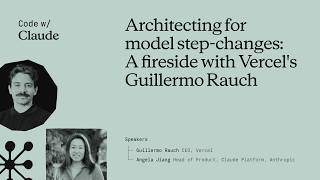
Architecting for model step-changes: A fireside with Vercel's Guillermo Rauch
Keynote Interview: Vercel's Guillermo Rauch on the Agent Era | Azure Cosmos DB Conf 2026
Vercel CEO: 70% of Our Traffic Is Now AI Agents "Nobody Was Prepared" | Anthropic, OpenClaw, OpenAI
Why being "terminally online" is more important than ever, with Vercel CEO Guillermo Rauch
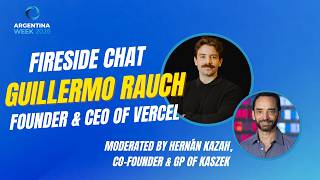
Argentina Week 2026 | Argentine Talent Powering Global AI | Guillermo Rauch & Hernán Kazah