Discussing The Problem With AI Tools with Guillermo Rauch, CEO of Vercel, Part 2
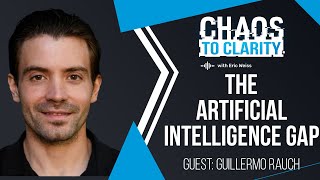
In this interview, Guillermo Rauch, CEO of Vercel, discusses the challenges and opportunities of AI tools across several domains. He begins by highlighting the friction in current SaaS support workflows, arguing that AI could be trusted to execute actions directly for users when human agents are constrained by security red tape. He critiques the wave of thin‑layer AI startups that merely wrap ChatGPT, suggesting real value lies in AI that guides users through complex workflows and provides context‑aware plans that can be approved and executed. Using analogies to early voice assistants and self‑driving cars, he explains that most AI value is in handling the long tail of edge cases, not just simple shortcuts. Rauch then describes Vercel’s v0.dev product, an AI‑driven UI generator that produces code and multiple design options, noting practical challenges such as buggy code, accessibility issues, and the need for extensive engineering to align AI output with the UI domain. The conversation shifts to the open‑source versus proprietary LLM debate, where Rauch draws a parallel to Linux’s evolution, arguing that open‑source ecosystems can eventually dominate AI infrastructure despite current data‑access advantages of closed models. Finally, he predicts that every business will become AI‑powered, with internal functions adopting specialized copilots and developers using AI as a default partner. He emphasizes a consumer‑driven AI wave that simplifies complex enterprise tools for mass adoption, positioning Vercel as an AI platform enabling fast‑path AI integration for developers and end‑users.
Chapters
So the one thing that, that came to mind is, is in terms of AI, uh, automated support, um, when I, maybe I'm, I'm, I'm a, I'm a bit impatient when it comes to dealing with SaaS platforms especially, or, or technology that, that doesn't work the way I would expect it to. And whenever I do have to reach out to customer success, like, this isn't working and And they come back with a big doc or a set of instructions. And I'm always like, can you just, can you just do this for me? Why do I have to do this at all? Like, you know, you spent just as much time telling me what to do and you could have just gone into my account and done it.
It's an excellent point too. Like, I think folks think that we are, we, we should be afraid of AI. We should mistrust it. Oh, they can make mistakes, et cetera. But think about why that happens. The support agent, there's all this red tape rightfully in place because we actually can't trust humans with access to data, private data. There's all this systems and checks in place so that you can't perform actions on behalf of somebody else. You actually have to tell the person to do them themselves. And that's a point where actually I would trust an AI more. Like I'm out of time. I'm short on time. Yeah. Please propose a plan and execute it. That's, I think, where it is true that AIs are not to be trusted, not because, at least this is my point of view, not because they're Skynet and they're going to kill us all, but because they might get it wrong. They might hallucinate. They might misinterpret folks also tend to be lazy when they don't provide a ton of context. Like, they give short instructions. So we do need the AI to come back to us with a plan and then we approve that plan.
Yeah. Yeah. So, so that's actually an issue where a lot of startups, especially when last week when, uh, when ChatGPT released, you know, the GPT marketplace or whatever it is. Yep. Um, it was like, oh, that's it. You know, all the AI startups are all dead now. Right. Every one of them. Because they're just a thin layer on top of ChatGPT. And, and yeah, there's a lot of startups that are going to fail because all they were was just a little thin layer, an additional feature on top of this existing platform. But where the real opportunity is, as I see it, is to really guide people through a workflow. And that's actually the problem with a lot of these, with, with ChatGPT and a lot of these open-ended AI tools is I don't know how to use it to get what I want. So if I want to use ChatGPT, let's say to write a blog post or whatever, there's actually a process and there's actually a lot of context that I have to give it. And if I'm either lazy or I just really am not aware of what that takes, well, that's really where another, you know, a platform could come in and really help me here. So part of it is, yes, let's use the chatbots to come in and enable certain things, but part of it as well is like, guide me through an experience, guide me through a workflow, and that is going to require, I think, a lot of tuning. And that's where I think the innovation comes in. It's not just the LLM. It's, well, we actually understand this domain and understand this workflow, and we know how to marry that well to an AI.
Absolutely. I think it's going to be a hybrid of both, right? When Siri came out, Or when Alexa came out, there was the same debates because they could provide shortcuts to perform actions and they could aggregate demand of user input in a way, right? That was the threat or that was the opportunity in some ways that you could go to Siri and say, hey, get me an Uber. And then the obvious question is, so do I need an Uber app now? It's just all Siri. And I think we have the same version of that playing out today where folks oversimplify the real-world essential complexity of these workflows. And again, the limits of a text-based interface are too significant for what folks actually need to do on a day-to-day basis that they go to specific applications to solve. Now, that doesn't dismiss that there could be some cool GPTs or bots, but I think in the real world, most of the complexity accrues towards the long tail of user interactions. So I liken this to the issue with self-driving cars where we got a prototype of a working self-driving car pretty quickly. 95% of the challenges were like done. Solving the last 5% of getting a self-driving car to actually be a production-grade product that can replace Uber has only really happened now, at least from my experience. We might see one self-driving car behind us now through my window. It really only happened with Waymo and it's still full of kind of like interesting edge cases. I have had maybe like 50 rides now and there's been a few remote overtakes already where a human had to like step in and take over the car because it got into like some edge cases. So it's a fantastic, almost fully production-ready product. And that last 5%, man, it's been challenging for them. Well, sorry.
Well, the one edge case that keeps coming to mind when it comes to Waymo is people being mean to it.
Oh, there's so freaking many. I'm actually in awe. Like, as an engineer, I'm like, you know how like when websites go down, people say HugOps? Because like they know the pain. If you've been operating infrastructure at scale, you know how difficult it is, like categories of failures, of cascading failures, metastable failures. It's really freaking difficult. And I have a lot of respect for like when one of the overtakes was, I was on the lane on the right-hand side of Van Ness and the car in front of us suddenly stopped. On a green light. And Guillermo was like, what the fuck is going on here? Like on the other lane, cars are passing and they're going really fast. All of a sudden we're blocked here, but the light is green. The driver of the car left and walked into a grocery store. And yeah, so Guillermo couldn't reconcile the fact that we're on a green light and like it turned out that his car had broken down. So truly an edge case that this car had not seen yet, right? Or maybe if it had seen it, it deemed that it was too dangerous to try to get around it. And like, so I think this is what's going to happen with a lot of this ChatGPT wrappers, to your point, if they're too simplistic, well, I'll just go to ChatGPT or whatever, but most real-world problems that get enhanced with AI have a way more style problem. There's a 5% of edge cases. Of UI tweaks, of representations of the data, of non-AI solutions, frankly, like things where you have to do error correction on top of what comes out of the LLM, where you have to augment it with real-world data, where you have to do the checks and balances and verify that the information is correct before we render it to the user, maybe to give the user many options. One such example for Vercel is we're building this product called Be Zero. So it's like v0.dev where you can write text and we convert it into user interfaces. So you can say, for example, give me a website to advertise a podcast and we create the UI and we give you the code. You can copy paste the code into your code base. When we do this, we give you actually 3 options, almost like Midjourney, if the audience is familiar with that, where you kind of want to infuse creativity and want to give folks options to choose from. And this is an implementation of an AI product that is very specific to the problem of generating user interfaces. It also is very visual in nature. And a lot of the challenges that we have relate to really the limitations of AI, that the code that they produce is wrong, unreliable. Sometimes it has accessibility issues that we have to patch over. So the value that customers are getting is all of the engineering that we did to get the AI— now this is a hot term— aligned to the problem space of user interfaces. Yeah. I think folks will discover that in many different industry verticals like healthcare, finance, biotech, law, there's all these opportunities to solve problems for that 5% of issues that apply to each of these verticals.
Yeah. Well, the first thing that comes to mind with that is just, man, the designers are going to be so happy because the product manager, they always come with a half-baked idea of what they want and they got to go back and come back and nope, that wasn't it. More like this, more like that.
So just hand them this. You read my mind. Not just the product managers, but also the CEOs. Because I was having a conversation the other day with one of our folks and instead of just, I was like, okay. I'm about to explain a bunch of stuff on Slack. What can I do instead? I just want to be zero. And I actually kind of gave them— this is why it's called v0, version zero. I kind of gave them the starting point of what I thought was going to be the right solution in a way that is very compelling. It's like now they can see it and they can actually copy and paste the code if they want and get something going.
And then add their genius to it, right? Make it perfect or make it production ready. I love that. So I want to take a bit of a left turn here because something I definitely wanted to talk to you about with respect to open source. So obviously you're very big on open source platforms and how that marries with AI is obviously a philosophical and also a practical debate. So with all of these big AI models, mostly being closed source, how do you think that, how do you think this all plays out? I guess, where do you want to take this in terms of AI.
Yeah, I mean, it's a fascinating question, right? So there's so many dimensions to the battle between open source and proprietary LLMs. We could discuss safety. We could discuss whether something as important as AGI should be controlled by one entity or should be like the IP of the world, like Wikipedia. The aspects where I think things will get really interesting are actually sort of ecosystem. For example, when the, the, the example that I give folks is when I was growing up, Linux was this sort of toy operating system. There were only a handful of companies that were trying to make it truly production grade. One of them was called Red Hat. And in fact, the first time that I was able to install Linux successfully at our home computer was because this company called Red Hat was putting all of this work on top of the open source Linux project to actually make it attractive to end users and plausible to the point where a kid in Argentina could put it on their computer. If it was only up to the Linux Foundation, and I don't mean the foundation sort of in a, in the nonprofit sense, because it didn't exist at the time. It was sort of as the technology, it was too raw. It was too uncooked. It was almost the, it was for specialists, right? But what happened is the core technology, the kernel, literally the core was so promising as an energy source, so to speak, that a bunch of companies emerged that built on it and built on it and built on it. Linux went from this thing that was introduced originally by Linus Torvalds out of the University of Helsinki, describing it in the mailing list post where he announced as a toy that he didn't think, he completely downplayed it. He was like, I don't even think this is going to go anywhere, y'all. It's just a toy here. And Linux went on to power every Android device on the planet. Most of the IoT hardware in the planet. It's powering every server in every data center. AGI will run on Linux, right? So now there is an opportunity for the Linux of AI to emerge, and it's not clear which one it's going to be. In fact, Linux— so this is why I love this metaphor. It's like there's so many parallels. Linux had a lot of competition. There were proprietary implementations of Unix, companies like IBM, Novell, Sun, they all had the implementation of the Unix system specification in other kinds of microkernels or even other approaches to creating kernels were competing with Linux frantically early on, but open source ended up winning the data center. Uh, even Microsoft capitulated on Windows Server. And now when you go to Azure, the default is Linux. It's amazing. They gave up on their own operating system for the data center. So that's what makes me so bullish about AI. And there's this project called LLaMA that Meta put out. They said they're open source AI. There's another one called Mistral. Now there's also a bear case for open source AI, which is, look, the dynamics that makes software 1.0 let's call it better over time, are not the same as the dynamics that make models better over time. For example, so much of the models is access to— model quality is correlated with data quality and how you prepare the data that you have and the data that you license, because not all the data is public and publicly used. So everything around how you train is not even being open source right now. So even the open source model Monocle is kind of misleading in some ways because it's almost like an open licensed model weights to get Vedantic. So the battle is really interesting. I do think that there's going to be an inflection point where it becomes clear if one of the two wins and history does show us that there's a ton of promise behind open source being the thing that ends up taking over at the end.
Yeah. Yeah. Well, I think it sounds like, you know, they can sort of peacefully coexist and they they play different positions in the market. And obviously one can, you can have open source tools that implement maybe the proprietary or integrate with the proprietary models without necessarily—
And abstract them out as well, which is another big opportunity.
Say it again.
Abstracting them out as well.
Abstracting. Yeah. Yeah. Yeah. So what do you think is, is, you know, kind of the future here for, let's just say within the context of of application development. What's next? What's, you know, when this all shakes out and the smoke clears, what do you think is going to be the capability of developers and then where do you see yourself being positioned to help them?
Yeah, I think every business will fundamentally become an AI-powered business. I think we're going to see this in two domains. Number one is the internal operations and implementation details, how the company operates. Developers basically being the architects in the loop that delegate the work to AI copilots is certainly already here. It's only going to become more and more of the default way of operating. The way that all of the other sort of functions within the company operate will get their own copilots. We just heard of one of our customers that's creating a Copilot for sales engineering, seeing a lot of success where you go to companies that are selling very technical products. And one of the biggest obstacles that go-to-market teams have is how do I quickly get up to speed on the product? And so sales engineers are getting their own Copilots and AEs are going to get their own Copilots and SDRs are going to get their own Copilots. Support, we're already at Vercel, uh, sort of doing an internal pilot, no pun intended, of a tool that drafts the responses for cases. Meaning you walk in and you're that person says yes or no, yes or no. You're basically the executive of every function, literally the executive. You're not doing the actual work. The IC is the AI. I think that's going to streamline companies. It's going to massively increase efficiency. It's going to make us all about What is the unique perspective that we're bringing to the market? What is the thing that we excel at? And we focus on executing. Now on the customer-facing side, I do think that most companies are going to find themselves an opportunity to either disrupt themselves through the AI or get disrupted. Because if you look at even what we're doing, right? Like we're providing infrastructure to create frontend applications, but our bet is that frontend applications are not going to be created the same way over the next 5 decades. And if we have to make a bet about, okay, what is, how are these frontend applications going to get created? The answer is most likely with the help of AI. So we have to say, okay, this is. How AI can help our customers and we ourselves become an AI company. And the meta thing that we're trying to solve now is how can we now enable this fast path to AI for everybody else? And all of the verticals that I mentioned are all of the examples of the companies that are either because of startups or or the incumbents transforming themselves, are now going to bring this AI-powered products to consumers. The flip side is, by the way, that consumers themselves are demanding these products. What's really fascinating about this new wave compared to the last wave of cloud is that primarily the demand is coming from consumers rather than enterprises.
Oh, interesting. Yeah.
It's the— is the end user buying the product for themselves. So think about this from the example of like GitHub and Copilot. GitHub is a typical kind of application that the company buys and says, okay, now this is how you push code. That's true also for Vercel. Like a CTO, like for example, one of our customers, Under Armour, says, okay, this is how we're gonna deploy underarmour.com. We're gonna use the Vercel platform. Pinterest, this is how we're gonna deploy Pinterest. You're going to use Vercel. What's happening with AI is that the individuals are looking for opportunities to themselves become more productive, and they're going and buying the AI products. I, I'm really excited about this because to me, there's been so many waves of disruptive tech that have not had that direct-to-consumer approach. And I think those are probably the businesses that are the most difficult to unlock. If you look at Web3 and crypto, I'm very bullish long-term on crypto, but in the short term, they didn't provide that direct utility to every consumer on the planet the way that ChatGPT, Copilot, v0, Midjourney are doing for end users. So when you see a technology wave that is so end-user focused, what you're seeing is a platform disruption. Or a platform shift. I bought an iPhone and by the time Uber came, I was ready. I had the device and I was able to get more value. That, that's a very definition of a platform. It only becomes more valuable over time because of the work that other participants put into it. AI is clearly the new platform. And I think folks have to be ready for getting onto that wave that accrues more value over time.
I like that. So, so one thing you're talking about here that's really ringing bells with me is, um, how when it's driven by the customer, things tend to be more simple and they can, and it's easier to build up on top of something that is simple as opposed to trying to dumb down something that's very complex. So in, in enterprise software, this, this happens a lot where if something is built for the enterprise, they have a really hard time making it simple enough for the mass market. So I'm thinking like Jira, for example, or Atlassian in general, you know, nobody uses Jira to manage their day-to-day personal life, right?
Because it's big, complicated, you know, and how do you even show the nuances, right? Because like it requires such a suspension of disbelief. Trust me, my to-do list is so much more powerful than that other to-do list that you have. Because it has what? Enterprise complexity, enterprise features, and kudos to them because it is true. You know what? Now I run an enterprise. Vercel is 450 folks, and I can see it as clear as night and day. I look at a simple or simplistic, actually, to use the right vocabulary, I look at a simplistic solution for a business problem and they start poking holes. Oh, it doesn't solve for this cross-organizational problem. Oh, it doesn't have this security feature., oh, this compliance thing breaks down. So that's why enterprise software is both so valuable and so hard. It's this death by a thousand freaking cuts. And to your point, the sales process gets so much more streamlined with AI. When we show folks what they can do to streamline their application creation process and we show them our AI tools, they immediately lose their minds. They're like, okay, Sold. When we show them v0, when we show them the AI SDK, which is the infrastructure that powers a lot of this like chat type functionality, they can immediately see, they can put themselves in the shoes of someone that's acquired that product. Whereas if we show you like the list of enterprise readiness features for infrastructure at scale, you're like, okay, I need to take a nap. Like it's just It's a lot.
It's amazing. So you guys have managed to take something incredibly complex and sophisticated and make it really easy to use and accessible to the mass market. That's pretty amazing. Well, Guillermo, it was so great to talk to you today. I don't want to take up much more of your time, but thank you so much. This has been a really enlightening experience for me.
Yeah, I really, really enjoy your questions and insights. Thanks for having me on.
Awesome. Well, thanks so much, man. Have a good day.
More from Guillermo

Guillermo Rauch at Founders in Arms Live: Simplicity, Focus, and the Bet That Built Vercel

The Man Who Built a $9B Dev Platform Thinks You're Overcomplicating AI | Guillermo Rauch


Inside v0: How Guillermo Rauch Is Building 100 Million Engineers | Lenny's Podcast - EP.89

Architecting for model step-changes: A fireside with Vercel's Guillermo Rauch

Keynote Interview: Vercel's Guillermo Rauch on the Agent Era | Azure Cosmos DB Conf 2026

Vercel CEO: 70% of Our Traffic Is Now AI Agents "Nobody Was Prepared" | Anthropic, OpenClaw, OpenAI
Why being "terminally online" is more important than ever, with Vercel CEO Guillermo Rauch

Argentina Week 2026 | Argentine Talent Powering Global AI | Guillermo Rauch & Hernán Kazah