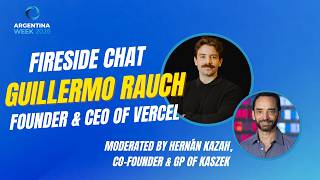
In a live interview hosted by Lisa, Guillermo Rauch, founder and CEO of Vercel, shares his personal journey from a modest childhood in Lanús, Argentina, to becoming a leading figure in the web development ecosystem. He recounts early exposure to computers, self‑teaching through Linux and open‑source forums, dropping out of high school to freelance, and the financial pressures of Argentina’s hyper‑inflation that motivated him to earn in dollars. Rauch explains his decision to move to the United States, the challenges of securing an O‑1 visa, and how building a public speaking and open‑source reputation became a strategic immigration tool. He describes the founding of Vercel and the creation of Next.js as a direct outcome of teaching principles at conferences, emphasizing the “worse‑is‑better” dynamic where seemingly weak technologies (JavaScript, early AI models) evolve into dominant platforms. The conversation covers the San Francisco startup culture of the late 2000s, the importance of community, product‑market fit heuristics, fundraising philosophy (storytelling vs. engine proof), and advice for new founders. Rauch also reflects on Argentine cultural traits he wishes to bring to the U.S., his love for France, Japan, China, and Africa, and his vision of a future where open‑source, AI‑augmented tools, and web‑based payments reshape the workplace. The interview concludes with audience Q&A covering topics such as replication of Silicon Valley’s ecosystem, language monopoly, AI in the workplace, and practical immigration support.
Chapters
Tonight, I'm privileged to be joined by Guillermo Rauch, founder and CEO of Vercel. Guillermo is a once-in-a-generation entrepreneur and has built one of the most popular developer frameworks that powers Adobe, eBay, Walmart, and many more. Guillermo was born in Argentina before moving to the US. And we're really excited to hear his thoughts on startups, San Francisco, and so much more. Tonight's event will run for about an hour, and we'll save 30 minutes for audience Q&A. So without further ado, everyone, please welcome Guillermo Rauch. So there's so much for us to cover here tonight. We're in a room full of immigrants, And I want to start at the beginning, at your childhood in Argentina. What was that like?
Okay, so childhood in Argentina, I grew up in the outskirts of Buenos Aires, a city called Lanús, which is kind of funny if you write it out. I'm not gonna spoil the joke, but it's kind of funny. Lanús. And it was a pretty— I'm not gonna use the word poor, but it was a very, very humble neighborhood, especially at the time. For example, the idea of having a computer in my neighborhood was kind of a weird thing. My parents worked really, really hard to even just buy our first computer. The neighborhood was kind of funky in the sense of even just having technology was something that we couldn't— I wasn't allowed to tell my friends that we had technology in the house because there were some safety and security risks, to put it mildly. But my parents were both engineers, educated at the Public University of Buenos Aires, and they gave me a great upbringing in the sense of like always aspiring to learn science, technology. The things that we looked up to at home and the things that we respected were amazing technology and the things that people were doing to innovate and the great new things that were coming out, especially out of the United States. And things we were finding out about. And the other thing was my dad was extremely curious about software. I've shared in a few interviews that I think something that he was so visionary about was he studied industrial engineering, but he had grown convinced that software was eating the world before it was cool. Like the idea of software is eating the world. And he kind of wanted to give up on everything he'd learned and all his degrees and everything. He was like, No, no, no, the way is software. And he didn't really know how he could apply that or how we could bring that into fruition, but anything we could get our hands on that was software related, we were going to go after it. And this is from when I was really, really young. I was 7 years old at the time that I started really thinking about I need to build my own software.
So just fast forward a little bit from 7 years old and you decided to drop out of high school school and start the entrepreneurial journey. What gave you the conviction to start building and kind of going against the grain? You went to a very competitive school in Argentina.
Should I use this?
If you can, but I'll try if it works.
I just want to make sure. Yeah. Yeah. So, okay, perfect. Oh, thank God. All right. So from the moment I was like 7 years old like 12 years old, this is like, I would say like chapter 1 in my development, which was very, very curious about software, could not really find a quote unquote platform that it could get traction on. So the best way to think about it is lots of false starts in trying to learn software engineering. I literally tried everything. I wrote code in Visual Basic, C, C, even setting up the toolchain for programming C on Windows at the time was very, very difficult. You had to use this janky compiler called DJGPP. If you're out there, DJ, I think that was his last name, you put in amazing work, but it was really, really hard to write software on a Windows computer. One of my big breakthroughs was we managed to get a hold of Linux. So I started playing with Red Hat Linux. I started playing with what if I could just replace Windows on my home computer with Linux? And that was kind of like a breakthrough moment for me because it opened up the world of open source. It opened up the world of actually programming because programming in Linux felt like it was kind of meant to be. Like, oh, I can now use a type of operating system that welcomes the art of hacking and writing software. So it was a really, really big deal for me. The other big piece was I started teaching and sharing everything that I was learning online. So I don't know if I've shared this in an interview, it's kind of funny. So there was a website in Argentina called datafol.com.ar, Datafol, and there was a section called the guru, el guru. And you would go on it and you would answer questions that the community had about software. It was kind of like a mini Stack Overflow before it was cool. Yeah, Argentinian Stack Overflow. Again, actually super visionary founder. This was like very, very early days, like in the '90s. And I became obsessed with internet points as one does. Like you would get obsessed about karma on Reddit. And I worked my way up to being the top guru on this platform. And a lot of the things that I was doing is like learning so that I could teach it back to the world, learning so I could teach it back to the world. And towards the end of it, I started really obsessing with the Linux subsection of— I would answer questions about how to compile software 'cause back then it was very, very hard to get packages working. Maybe this is actually still true of Linux, no diss to the Linux community, but just getting software installed was a huge thing. So compiling it from scratch, I would tell people how to run configure, make, make install, and then what were the flags that you had to use, what are the secret incantations to actually get your software to compile. And part of that was getting Linux at home working with our internet connection. We're probably one of the first homes in Lanús, Argentina that got DSL. So like getting internet that was higher speed was like a big thing for us. So long story short, I really got myself immersed into the world of open source. I really developed a passion for teaching people. And then towards the end of it, I developed a passion for making money online. So I remember this anonymous contributor of a forum that I kind of became like internet friends with. He was like, you're spending a lot of time teaching people, which is great, but there's this website that has similar questions, but they'll pay you money. For you solving those problems and questions. So I kind of became like an internet freelancer. And this is where like a lot of the conflict in my early days sort of started. I simultaneously got accepted to one of the best schools in Argentina that is a public school that is called like, in Spanish they call it like an experimental school in the sense that college professors come and teach at this school and they try to see if they can teach new content to kids. Earlier than they're ready for that content, which is kind of fun. Like you get chemistry classes early. And I worked really, really hard to get accepted into that school and get enough points to make the cut and whatever. And simultaneously I started making money online and I was supporting my family financially. So I had this conflict of like, what should I focus on? And I ended up focusing on software. And I was one of the best students in year 1. And then by year 5 of high school, I was the worst student and I dropped out. So kind of like a high-risk, high-reward take at the time, but with a lot of conviction that my work was becoming very valuable overseas.
Were your parents worried that you were spending so much time online in these internet forums?
It was bizarre. It was genuinely bizarre because First of all, there was very little understanding of what the actual day-to-day was for my parents. It was almost like they gave me the platform. And once I found that platform, I just started like learning at a rate that they couldn't keep up with and developing this sort of like internet connections. I was like networking, like social networking online. I started to get into projects. For example, one of my earliest clients was this guy from the Netherlands who was creating a lot of innovative online— his focus was on bringing new ideas to the web. And we created one of the earliest calorie counting softwares on the web. So we had this awesome, super dynamic JavaScript-based calorie counter that we launched in the Dutch market. And this was the Netherlands just for no specific reason other than we made this connection online. So my mom would see that every year I would just make more money. And if you know about Argentina, you've probably seen on the news about the things that Argentina is famous for is— apologize for my ringtone— is so one is Milei, the new president, and the economic problems that he's talked a lot about. Argentina has wrestled with a lot of inflation, with a very weak Currency. Famously, when I was a teenager, a lot of people that had deposits in US dollars lost them and they got converted into Argentinian pesos, and then the peso subsequently got devalued. So you lost 4/5 of your savings or something along those lines kind of arbitrarily from one day to the next. And then, so making money in dollars was becoming really, really a really big deal, especially if you're a teenager. And so at that point I was making probably more money than my parents were just due to the rate of currency conversion from US dollars to pesos. So my mom had this weird, like, what's going on here? It doesn't seem like it's real. But at the same time I was becoming a rich teenager. So it was a wild time.
Very wealthy 17-year-old near Buenos Aires. And you were working with these folks in the Netherlands and all around the world. Why did you decide that you wanted to move to America and build here?
Yeah, part of it was that sort of incredible cultural export that I think the US has made, which is it feels like whatever gifts we have here, we also invest a lot of time in sharing them back to the world. And first they take the form of, I would even crudely call it marketing, right? Being in Argentina, we knew that there was a better future or, and again, better in the sense of more aligned with the values that especially my parents had, both being engineers. For example, my mom would always talk about how she really loved the engineering standards of the petrochemical companies that she had to work with in her job as a sales engineer for an Argentinian company in this industry. She just really looked up to how she would always tell me about how the documentation was better and more clear. If it resonates, it's because for software engineering firms, documentation still matters a lot. And just like the overall quality and pursuit of excellence and efficiency. So those values were really instilled in my mind. And being a geek who loves software and technology, it felt like this is the place that I wanted to go. But at the same time, it was kind of like a fuzzy vision too, because I also feel like San Francisco for me, it kind of was almost like an inevitable destination in some sense. My first, I would call it serious job, beyond the freelancing was a startup based out of Switzerland that kind of again brought me here because they ended up opening an office here to launch in the US market. And when I was here finally as a, at the time under a tourist visa, I was really blown away by what I saw. When I saw it firsthand, I think there was a sense of like, before that there was a sense of like, I don't know if it lives up to the hype. I don't know if like, especially 'cause I saw Europe and the US back to back. Again, just to frame it, I'd never left Argentina before. I was 17 the first time I was offered to fly to Switzerland. I needed a parental consent form to be signed to leave the country and to like fly. And then I saw back to back two pretty outstanding places, by the way, like having been, from Argentina, especially from the place where I grew up, seeing Switzerland, Lausanne, Switzerland and San Francisco back to back is pretty freaking awesome, two awesome places. But to me, SF was my true calling in the sense of anything is, you can build anything here. That's the vibe that I got and why I wanted so badly to move here later.
Could you share a little bit more about that decision you made? Because you had the full-time job offer between the Swiss company and they really wanted to keep you. You were the star engineer, but you had this dream of wanting to build your own company. How did you navigate that tension? Because imagine a lot of folks here, they work in great jobs, lots of people have opportunities. How did you have that conviction to start building your own company?
Yeah, a part of it was I really built some really good friendships at that company, and two of the folks that I really got along with had had some exposure to the Silicon Valley ecosystem. And I remember them telling me the stories of the kinds of things that were possible here. And we also really liked to work a lot. So the 3 of us could just spend all hours of the day just nerding out on tech, building. It's a whole thing about when you find what you love, it doesn't feel like work. So we had that kind of vibe going on. We can rebuild, we had this feeling of we could just rebuild anything because we were kind of overhauling a lot of the infrastructure, especially on the frontend side for that company. We're redesigning a bunch of stuff. We're moving really, really fast. And we were like, okay, if we love moving this fast, I think we could start something new and kind of bring that energy into it. There wasn't a lot of clarity. And now I found a lot of founders that feel similarly in their early days. And I think when I started Vercel, it was when I felt that thing again where you know that you just want to build something and you know that you can bring a unique point of view and energy into it, even though you don't have the full crisp vision of what exactly it is. And that was truly the case back then. But again, we felt like it was the right time, right place, right team to start something new.
It's really special when you find your community and you're like, okay, I'm just going to go for it and see what happens. What were your recollections of the SF ecosystem when you started building? Who did you admire and ended up getting close to and gave you support in those early days?
Yeah, this is way back, I guess, in some ways, because this is like 2008, 2009, 2010. One thing I do remember not remembering, which is funny, or not thinking about is the macroeconomic climate, which actually if you look it up on Wikipedia, it was bad. When we first raised our seed round, it was amid a financial crisis. And I always actually point this out to new entrepreneurs because there's always a sense of like, where do I spend my creative energy and my just day-to-day on? Do I spend thinking about the future? Do I spend time thinking about the present? Do I spend time thinking about the past? We were talking backstage, one of the things that I disliked about Argentina is a lot of my friends were extremely focused on the past. In fact, one of the, I guess one of the two subjects that were giving me a lot of trouble before I dropped out, one was history and there was Portuguese, which is hilarious because not because I dislike Brazil or Portugal, but it was hilarious because I could have chosen English and I chose to give myself a hard time and try to overperform. And I chose an optional subject in high school that I, really had trouble with, but the other one was history. And it was a lot of this history about why Argentina's in such a bad place and a lot of the narrative was blaming others, blaming our circumstances on others. And that really didn't resonate with me. The other thing that didn't resonate with me was a lot of the narrative in early days social media in Argentina, a lot of it was about politics and politics and politics. And I wanted to move on from that. I was like, okay, I want to go into the headspace of creation. And I think part of that early vibes that I was getting with my co-founders was like, I can tune out a lot of the things that don't really matter to me and just devote myself wholeheartedly to the pursuit of this new mission. And I think overall the San Francisco landscape was very supportive of that. So the first coworking space where we landed, It was just people working on their startups day in and day out. I mentioned and I've shared this and continues to sort of strike me that at that coworking space, Pier 38 on the Embarcadero, you can still see the building. Unfortunately, the actual office space is not active anymore.
We have to bring it back.
We should bring it back. We would be so back if we brought it back. But so Twilio was getting started there. Instagram was getting started there, TaskRabbit, a lot of awesome startups that then later on got acquired. There was a startup called Soch, got acquired, SitePoint, Etherpad got started there, got acquired by Google. So just an amazing batch of companies and people. And I was chatting with Kevin from Instagram the other day and I was like, remember the good old days of that coworking space? And he's like, Yeah, you know what I remember is that people worked really hard just day in and day out. And so there is a magic to devoting yourself so wholeheartedly to something. And I think I'd never seen that actually previous to SF. And I'm sure it exists in other places. In fact, I saw some funny tweet about how Goldman analysts apparently work really hard. So New York maybe has places like this as well, but San Francisco had that energy of creativity in grind that, at least to me at the time, just like, it made me fall in love.
I think that's true. I mean, I speak to so many immigrants every day, and people come here to work and find other people who are kind of obsessed with building and creating. And do you think there's something kind of special when you feel seen? I came from the UK, and like, a lot of my friends were going into consulting and banking, and coming here, it was like, okay, we want to create and we want to build the future. Technology is, is the focus. So it's cool to find your communities. You were sharing earlier that actually your immigration journey played a role in your initial insight to Vercel. So I was curious if you could just share a little bit more about that immigration journey and then how it led you to build.
Yeah, it's really funny. So I had every odd against me possible from an immigration point of view because I was a dropout, high school dropout. I was very young. A lot of the criteria when I would look at the O-1 and things like that, a lot of the criteria was, oh, you've held a job for 10 years and things like that. So I set out to really present myself as who I truly believed I was, which is someone that can bring a lot of value to this country, right? And at the time, I was very involved with open source. I was mentioning that even since the early days of Linux, I had contributed to so many projects in the open source world that ended up being very, very influential. So I was a contributor to early days of a lot of PHP projects. I then became an early contributor to Node.js, created a bunch of projects there. I was a core contributor to a library called MooTools. So I had quite a bit of an open source portfolio, but when I started my first startup here, it wasn't quite related to open source or serving developers like Vercel is. Which is more like a general edtech file sharing collaboration platform. And there was not really an open source angle. So while I was working on that startup, I was kind of working two jobs. One job was I need to build up my profile so that I can lawfully move here. So I started going to basically every conference in the world to speak on open source. And it ended up being extremely influential and positive for my career. But it was kind of interesting, like looking back, the things that I needed to do to build my immigration case ended up being really great for me, but I did a very extreme version of it. So I spoke at like every conference under the sun. I wrote a book. I actually don't know what the requirements even are these days, but I wrote a book that ended up in the Amazon bestselling list book for software engineering. I presented a lot of conferences. I think I presented on, I earned an award and I presented on that. There was a lot of the different criteria and a lot of them, oh, letters of recommendation, all the things that I guess people do these days, but I worked really, really hard on it. And I think part of doing the conference circuit and speaking on open source ended up being extremely influential in the creation of Vercel. Number 1, I kind of built a reputation and a community around me. That's even more valuable these days. Sometimes people joke if you have a good X account, if you have followers, you've built yourself a platform. It's your marketing avenue. So I was very early to Twitter too. I don't know, signed up maybe the year or the year after it was created. So that ended up really panning out. The other thing was I realized that in order to influence developer behavior at scale, it was not enough. And this seems obvious in retrospect, but I was spending a lot of time just teaching people, hey, here's like 7 things you need to do to create a really high-performance web application. And then I realized, well, what if I could create some software that delivers these best practices for me. And Next.js was actually a direct consequence of a talk I gave at Brazil.js called The Seven Principles of Rich Web Applications. So this has been a theme in my career, that forcing function of explaining back to people something you know or even something you're learning currently. So you sit down and you teach people even when you're not currently the expert, but you really, really try hard to synthesize your own understanding and put it back into the world. That has served me extremely well. It was a muscle that I developed when I was giving all these conferences, but it was also what I sat down and write down right before starting Vercel. I said, here's a vision that I have for how much better web applications could be And it's a really long and truthfully kind of boring essay. But then when I decided to leave my previous job, which I sold my startup to WordPress, when I left, I kind of had a lot of my thoughts written down, almost like the Tesla master plan. I had written down what I believe the future should be. And then I went and spent 8 years, not true amount of time, building it. But it's certainly a working formula.
I'm curious, what is your writing process like? I mean, because you run a number of essays online, your own book, amazing programmer, but how did you start writing?
Yeah, you might have seen something went viral recently, which is that Peter Thiel predicted that there is going to be a pendulum swing back from shape rotators to word cells. So meaning people that are really good at math or computer science, it's so over for them. And the people that are good at talking and communicating are so back. And the prediction is based on the idea that AIs are going to become so proficient at the, especially like the closed loop systems for which synthetic data or proof systems can be used in the process of training these AIs. And I think we got some evidence the other day with DeepMind getting silver medal. So every year it seems that there's more evidence that a lot of the reasoning skills could be, to a large extent at least, automated. And I think this would be an incredible thing for the universe, by the way, that a lot of the technical things and the actual How do I put my idea and bring it into reality? A lot of that could be just automated by AI. And the idea was like, okay, if we extrapolate and we solved math, physics, software engineering, finally we've solved how to center a div in HTML and all those hard problems, what's left? And I think what's left, which even again, even if this doesn't pan out to be true, I think it's very valuable, is what's left is your ability to build community, your ability to teach, your ability to influence, positively hopefully, your ability to get ideas out and get people excited about, get behind you, et cetera. So going back to your question, I have spent a non-trivial amount of my life perfecting language. So in Argentina, main language, Spanish. Not English, but I did want it really badly to master English. This was also advised by my mom. She was like, she had this intuition that in Argentina, all you had to do to stand out was speak English really well. And I think this is from her seeing that colleagues that spoke English were getting ahead relative to where she was. She was a math whiz, really good at chemistry, of course, but her English, she always like had this longing for like, I wish I could speak better English. So I had that sort of idea in my head of English matters a lot, but it was also kind of a self-fulfilling prophecy because back then all of the learning materials for programming were in English. There was so little in Spanish that I had to really, really— My mom sent me to English classes and I completely just murdered every class. And I remember one year I spent an entire year preparing for an exam and then at the last minute I said, I'm good, I'll take the next level from that exam, and I crushed it. And all of this because I was spending every day of my life just like reading voraciously in English. And the other thing I was doing a lot is writing down essays. So Paul Graham talks a lot about this too. Probably the best way to develop clarity of mind, clarity of vision, is to sit down and write an essay. It's actually excruciatingly difficult, I feel like maybe this is me just getting old, but I feel like it's getting more difficult because of our attention spans dwindling and social media becoming this hyper-context-switching mechanism. And actually there being a great return on investment on quick thoughts. Like if you get a banger tweet out, that is legitimately cool. Like you've got an idea out and whatever, But you might have to force yourself to develop the harder, longer-form writing skill that actually pays handsome dividends in creating that clarity of mind and also positively influencing others. So I always get a lot of feedback about like, oh, I read that blog post or I read that essay, and people come back to me and saying like, that really helped me out. So I don't have a specific process or, hack other than sitting down with your thoughts and just really putting something out.
Yeah, it's amazing. I'm a big fan of your essays. I'm curious to kind of dive a little bit deeper into your thoughts on AI at the moment because I think a lot of the niche conversations we've historically had about AI, open source versus closed AI models have now become super mainstream. So I'm curious how you think about how important is leading AI models being open source versus closed and how do you predict the future of the web changing as a result of that?
Yeah, it's a fascinating topic. So lots of things come to mind. You're speaking to someone that has made a career out of building on top of what used to be and perhaps still is considered the worst programming language on the planet. Which is JavaScript. In fact, I feel like I found alpha in the global market of programming languages because JavaScript, when I first picked it up, it was strictly considered to be a joke. And my dad believed that there were better and more hardcore programming languages that were worth pursuing. And I tried them out and I kept coming back to JavaScript for its unique ability to run inside a web browser. And I think I had just been wired this way, but when I first saw that JavaScript could mutate state on the client side without hitting the network, I was so blown away that I kind of went all in on this idea of frontend side engineering of animation and creating really cool user experiences and real-time communication. And it paid out because even just a few years after I started developing this skill, companies like Facebook were saying, oh, in order to build the best possible newsfeed, in order to build FB Chat, we need to actually develop a huge collection of JavaScript libraries and investments. So I mentioned I contributed to that library called MooTools. Facebook in the early days ended up hiring basically the entire team of MooTools and then built React off of that. So My early obsession with this language, which we'll call it almost like worse is better, which is a famous essay. Worse is better was written about the web and how sometimes the limits in capabilities create tremendous scale benefits. The fact that HTML, for example, was not Turing complete had very interesting properties in development of the web. So I believe that technologies sometimes evolve and they look weaker in the beginning. And this is kind of my main thought process around where Llama and open models stand today. They certainly look weaker. And again, the gap is narrowing every single day, but like you looked at Llama 1 and you looked at GPT or you looked at Claude and, oh, it's worse. And then you looked at Llama 2, oh, it's worse, but it's like less worse. And you look at Llama 3, 3.1, So the value of creating an ecosystem around technology ends up paying tremendous dividends down the line. And things that appear to be worse in some fashion end up being better for a number of reasons. Number one is technologies are very quick to evolve. A lot of the weaknesses that people would criticize about JavaScript has— have been addressed by TypeScript. A lot of things that seemed like weaknesses have been tremendous strengths. For example, the fact that it's one of the world's largest libraries of reusable modules and software. So I would never bet against open source because we have so much evidence of the things that like appear to be a toy or appear to be worse in the beginning ended up dominating because of the ecosystem effects. And you mentioned the browser as well. The other thing I'm paying a lot of attention to is the idea of running models, especially open models, directly inside the browser. We can now run AI everywhere, which is very, very exciting, right? Like we can run it on the client side, we can run it at the edge, we can run it server side, we can run all kinds of specialized models. And I think just like when I first came to San Francisco, it felt like there was just endless opportunity due to the newer platforms that were coming into the world. The iPhone had just come out, the cloud was being born. It feels like that again, whereas there's all this raw material and there's a huge opportunity for developers to build on top of that raw material. It's just out there up for grabs.
I love that. I love kind of like that framing of just like there's this huge opportunity. If you were starting out in San Francisco today, what advice would you give to this group of individuals in the room around where they should kind of go looking for ideas?
There's a bunch of things that I've learned over the years that I think could have saved me some time. So one of them is there's a lot of talk in the Valley about product market fit. And I think it's one of the things that I encourage everyone to sort of develop a taste for what does product-market fit actually look like. There's a difference, and I like Paul Graham's recent take on perseverance versus stubbornness. Perseverance means you're working towards a goal and building up, and there's probably a positive feedback loop associated with it, which in the case of product building, it should be growth. Of course you have to persevere and work really, really hard, but you're not just spinning your wheels in place. Whereas being stubborn could be sometimes confused with that kind of positive trait, except you're just hitting a wall nonstop. And at the edges, these two properties are extremely difficult to tell one from the other. It's like, hmm, I mean, I go to night home and I was like, was I being stubborn or was it persevering? Am I right or am I wrong? It's truthfully hard to know, but I'll tell you every time I feel like I've wasted time, it was because I didn't have a good feeling about was this actual product market fit or not. And when I encountered it, it's been an amazing difference between what I perceive to be a successful product and a product that the market actually wants and will deploy resources behind. So I feel like in the early days, I didn't have quite the bar, I will say. I should have held a much higher bar for what that looked like. And by the way, open source has actually been super beneficial here. Why? And why I love open source, when you put your product in a marketplace, there's a price for it. And then there is some demand for your product, right? And sometimes I think the price point can influence the feedback that you're getting from the market. Like maybe you price it too high, but it's still a good product. Maybe you have to rethink the way that you distribute it. Maybe you have to rethink your free tier, your free plan, things like that. But open source has different dynamics, right? Because you're just putting your software up out into the world And anybody can do anything with it, especially with liberal licenses like MIT, which Next.js is licensed under. So if the market is not responding with a positive feedback loop to an open source project, then I think that is the ultimate fitness test for product market fit. If it's free and if it's liberally licensed and you've done meaningful work to make people aware of its existence, and people are still not using it, it's really not them, it's you. You know what I mean? So I think open source has really taught me that because when we put out Next.js, I got that feeling of like, it almost felt like I wasn't working even though we were working extremely hard. It was like I wasn't working towards its adoption and it's kind of like a magical feeling. And I think if I had had that kind of bar, I just didn't know it was possible, I guess, before. I would've probably saved a few years of my life pursuing other things. So that helped a lot. Another piece of advice would be avoiding distractions. I know it sounds cliché, but every time I log into X, I guess, and it might also be because of the algorithmic changes that have gone on, it does remind me a little bit of what I experienced. Sometimes it does, and this varies from day to day, because of the algorithm, but it does remind me a lot of the circumstances that I sometimes found myself in, in Argentina of like, I have two paths ahead of me. I have a fork in the road. Will I focus on positivity, optimism, world-building, like creating valuable things that solve people's problems and telling people about it? Or there's other ways of getting feedback loops of attention and likes and whatever. There's just like things where you can misuse your creative energy and just like go down rabbit holes that I wouldn't go down. So I think every day we face that choice of like how we use our time and how we pursue our interests and to what we give energy and what takes energy away from us. And I think I would encourage people to be careful with their time and careful with their attention as well. And again, I think there is always an element, especially here in Silicon Valley, of optimism and positivity that has been tremendously helpful in my career. I have faced tremendous adversity here, even here in Silicon Valley. At one point, unfortunately, my house burned down in the Mission. Our neighbor was smoking at night and they flipped their cigarette butt And San Francisco is a very fire-prone place and I faced tremendous adversity and there was always a sense of there's just a better tomorrow and I'm supported by my community and I'll just trust the process and trust the system that has served me well over the years. But there's been discouraging moments where again, positivity and optimism really saved the day.
Wow. I didn't know your house burnt down. That sounds Crazy.
And I have a funny side story or not so funny. The reason that Firebase is called Firebase is because the founders of Firebase had a similar story, believe it or not. I don't remember the specifics, but yeah. And again, it's like the things that happen to your life and finding the right balance between your own mental energy and managing your psychology and again, pushing forward and being optimistic that have made a difference for me.
Wow, that's really special. So I have two last questions before we can open it up to the audience. I think there's going to be a mic coming round, hopefully. So my first last question is, what is one element from Argentine culture that you wish you could bring to the US?
I think we have some of it here, but I think in Argentina we have it in spades, which is I think people are emotional in a way that can be very, very positive in Argentina. I think friendship is a very strong value in Argentina as well. Family and friendship are very strong values. I think the culture can sometimes, at least my lived experience of it, can be like a little trollish is the way that I would describe it, especially what I experienced with my friends in high school and whatnot. Argentina has a fun demeanor to it and there's also, and this can also be sometimes be portrayed or it can be catalyzed negatively, but there's a sense of like, we want a more prosperous future but we don't know really how to accomplish it, that I think I've experienced. And this, as a tourist, you really see this because you go to certain parts of Buenos Aires that are extremely freaking nice. Like they're so world-class. So there's a sense of like, you know, not, not we lost the plot, but there's a sense of like, okay, people here really had a vision for a great future. They had the investment into the arts. They had the taste for quality. They had the cultural mix to make it happen. But it didn't sort of become that self-sustaining loop. Sometimes I think about how important culture is and building culture as an engine of that sustainability. How do you make it, how do you turn it into a flywheel? So going back to kind of the initial question, I would say, I love some of the energy that people can bring when they really get their vision together in Argentina. And individuals have gone on to do amazing things. I think teamwork is perhaps the part where like, bringing this to soccer, as an Argentinian should do, I think Argentina finally won the World Cup when we stopped saying it's just all Messi and there's one plan, just give the ball to him and he'll figure it out on his own, to when we started working as a team with a vision, with a direction, with a great coach, it actually made me really proud of like, wow, like that to me is like the same thing that would make a company successful. So yeah, it's a mixed bag, but I love it, so.
Awesome. And my very last question is, if you could live in any other country apart from Argentina or America, where would you live?
Oh, that's an interesting one. There are so many places, so many elements of so many places that I love. So I recently spent some time in Paris, and I just love— I think France— and people always joke, and part of it is serious, part of it is exaggerated, that Buenos Aires is the Paris of South America. Have you heard this? People in Argentina like to say this. And genuinely, a lot of things were similar. And I think there was a pursuit of quality there that I really, really appreciated. I don't think it's a culture that embraces the future into the abyss and into the unknown at any cost like America does, which is a property that I love about here. But I really enjoy my time there. I respect a lot of elements of Japan. And again, for me, I guess my soft spot is quality and just pure and dedication to the quality. So I get inspired every time I spend time in Japan. I love the hardworking nature of when I've spent time in China. And a lot of the, there's a newfound hope and vision for the future that a lot of young people have and the sky's the limit and stars are the limit and everything is possible. And I'm also extremely optimistic about the future of Africa as one of the fastest growing places, especially for technology. I've seen incredible startups being developed there I think Stripe's largest acquisition to date is a payment processor in Africa. So as the world becomes more connected, I think a lot of the differences get blurred and becomes a hyper-local and hyper-global world at the same time. So I think the difference will be made by culture and community. And so, so far America has the edge.
Yeah, America's lucky to have you. There's so many places you want to move to. So we'll keep you here. So we have some time for some questions from the audience. If you want to just pop your hand up and we can just— I think there might be a mic. Oh, Carl's got a mic. So if you could speak into the mic, that would be great. And the hand next to you.
Thanks. Thanks so much. I'm curious what you learned about fundraising over the years, specifically curious about Series A, but feel free to take it more broadly, of course. Yeah, so I'll tell you that this is the best place to fundraise in the world, San Francisco, bar none. There's a number of reasons for that. Number 1 is you can raise from people that truly believe in what you're building because they've likely wanted to build it themselves or they built the previous version of it. It's amazing to always hear from people like, oh, I'm building, I don't know, the next Yelp. Guess who's on the cap table? Oh, the founder of Yelp. It's amazing how many times I've heard this. And imagine how sort of inspiring and influential that can be for an entrepreneur to raise money from the people that have done it. I also believe that, and again, I never get caught up in the news cycle and I only have like 15 years of data of lived experiences. But every time someone has made a prediction about the funding market, It's been wrong. They've said, oh yeah, seed stage is drying up. And then 3 months later I learn OMG, record numbers of seed investments or whatever. I literally, I tune out a lot of this thought leadership around fundraising and I focus a lot on the fundamentals of the business that I'm putting forward. My fundamental advice is that the early rounds are a lot about storytelling. The middle rounds are more about the proof of the engine that you've built. And interestingly enough, the later rounds go— it's like going back to your roots. It's like revival. It's both storytelling and of course the engine is operating efficiently, right? And it's really interesting 'cause I'm in the third phase now and it's amazing because companies as they grow and have a high reputation and they have a lot of revenue and whatever, they still need to prove themselves to the markets very much like early-stage startups. A lot of students of the game talk about how companies need to build a second product or third product when they're in their more mature ages. But to your case specifically, Series A, I still consider to be very firmly in the storytelling phase. With, and it depends on each company how much, if the story is so overwhelmingly powerful, it can be more biased toward that. But also if you're starting to have solid revenue traction, it's like, hey, like this product is just being taken off the shelves, I need to pour more fuel into the system so I can just like serve all these customers that are just like trampling over one another to buy my product. So it can be more on that side of things. By Series A, what I recommend a lot of the people that I invest in is you must have figured out your zero-to-one story. So zero-to-one, I use this metaphor a lot when I advise entrepreneurs, is who's your first case study of a customer that you legitimately feel proud of, that you can create a narrative around? So that goes back to the storytelling. So let's say that you sold your product to a car manufacturer. And I've actually used this example, I think, for our Series A or B. Said car manufacturer, very hard to sell into, extremely high brand equity and value, very concrete mission-critical production use case. And you let the investor dream. The investor knows there's probably another 100 of those just in that industry segment alone. And if you could sell to that sort of like company that is not like a classic tech buyer, just imagine how easy it would be to sell to all the other industries. So that's a technique that I've used a lot. I really want to have very strong conviction on that like initial land. And if it's a consumer product, it still applies, right? Because you kind of want to talk about a group that your application is resonating with and build a narrative around it and almost leave a lot of room for the imagination that within reason is like, okay, if I could extrapolate from I've landed here, my customer acquisition costs are sort of constant as I expand into more places. It's a lot about the customer and the customer and the customer and their relationship with you. Sometimes it can be community. So a lot of companies are now having a lot of traction in fundraising because of open source. I feel like it took one for the team. I did a lot of the groundwork because when we were at our first startup, I always tell this story of we reported GitHub stars in one of our investor updates of Socket.IO. And Socket.IO, we were using it for the startup, but it wasn't a focus of the company. But we just casually mentioned it in an otherwise pretty brief investor update. Say, "Oh, hey, by the way, this Socket.io thing seems to be blowing up." And I remember an investor got back to us and was like, "Why are you working on that?" He was kind of peeking into, I think part of it was curiosity from him because in those times, the idea of having a successful open source project wasn't seen like an obvious win. Are they distracted? Is it a liability for the business? Or maybe there's something legitimately interesting. Fast forward to today and people raise rounds based on like, and by the way, I think is that legitimately a good thing? Like, oh, I have a huge community of people interested in my product. I was reflecting on this the other day. Like, I think people still somewhat underestimate popularity. Creating an extremely popular anything in a valuable market means a lot. So I wouldn't be surprised if you were raising Series As on the back of creating something extremely popular that is not yet monetized. Of course, it comes with risks, but Facebook was in that position once upon a time.
Cool. We'll take a question from this side, maybe over here. Thank you, Guillermo Rauch.
I'll start giving briefer answers, by the way.
Got a lot of questions in the audience.
Thank you, Guillermo and Lisa, for this conversation. What was the most difficult time during your immigration process when you came here, and how did you overcome that stressful time? Yeah, and the struggle. Yeah, great question. Just to be super candid, it was pretty bad. It was excruciatingly difficult for me. Number one, it was the distraction from my day-to-day work. So putting together all this evidence and of course we didn't have amazing platforms and know-how. And I guess I took one for the team too. It was super painful for me. It took me, I guess, over a year or two just to put together all the evidence. So managing my time, remaining really optimistic that it was going to be possible. So for me, the fact that I didn't know what could happen, Added to this stress, of course. But again, super optimistic that, hey, like, I fundamentally believe in a value exchange in everything that happens on a day-to-day basis, right? Like, you will do better in socials if you bring value to the world in what you communicate. You will do great with customers if you bring them a product that gives them value. And I think for me in my immigration case is, okay, I'm bringing value. But again, managing my time and having that uncertainty about where am I going to finally land was kind of the most difficult part.
Wow. Well, that was in a year journey. Plymouth, we can do it in 4 weeks. So a little plug here.
Yes, believe in belly.
Let's go over here.
I guess I don't need a mic for this. I'm 18. I'm very early in my career right now, and 2 years ago, I was— my main concern on my mind was that I really like coding, I made a project, and now how can I find an internship? But now I've seen so many, I've been to so many events like this, I see what's possible. Now people are building startups, um, talking about Y Combinator, um, and there's also an opportunity. So I guess my question is, when is it enough? Because as you keep going higher, when you got your first job at 17 years old, um, you thought that was good, but then as you saw greater heights, you thought you wanted to go achieve those goals. So was it ever enough for you? And if not, then what motivated you to keep going on, get those higher achievements, heights, or your personal goals?
Yeah, I never— I guess this is a personality thing that I— this is pretty funny— that I have in common with Lady Gaga. So I went to a dinner with Lady Gaga recently. She was talking about how she and her team don't rest a second to celebrate. And that she was actually sharing like candidly, like it's not great. Like we should celebrate more. I always have to remind myself, like I should appreciate this moment a little bit more that I've achieved that thing that it was like 2 years ago, I thought it was like impossible to achieve. I'm just very prone to, when it seems like I'm approaching the landing spot of the place that I wanted to be at, I'm already thinking about what is the next cool thing that I could be working on. And I guess that's also part of the software engineering in me. I've always been thinking about just building more and more ambitious things and then building things on top of those things and things on top of those things. The other thing, and this goes back to the essay writing, I set out to do so many ambitious things that come from first principle reasoning. But when I do the math, we're very far from the first principle reasoning. So whenever I think like, have I come far enough? I root myself in those carefully calculated numbers that I know are possible. Sounds kind of weird, but like, you know, I have like 3 or 4 metrics that I know are possible to hit. And we're just not even close. So that's kind of hitting the limits of what's possible and reminding myself that nowhere, not our competitors, not me, I'm my biggest competitor right now. I need to get there. It's what's kept me going.
Really resonates actually. I think we've got a question there.
What?
I'm curious to know your thoughts on mobile web payments instead of the future of tokens?
Yeah, I gave that whole rant on worse is better and things that seem worse end up winning. And I think mobile web is a great example. When I grew up, desktop software was the best. It was prestigious to ship native desktop applications. The web was garbage. Until Gmail came out or some pretty amazing things that Google was doing with search. And then people started getting the sense of, hmm, this web thing has legs. And fast forward to today and a lot of the software that we use on desktop is web software packaged in a shell that makes it look like what used to look like a native desktop application. And I can't tell you exactly when the flipping is going to happen when more software is actually mobile web rather than native web. But I wouldn't be surprised when it happens. I actually think it will happen because fundamentally the web is a better economical system. And it goes into your question about payments. The web is just fundamentally more fair. It's fair to the— and a lot of the properties are the same things that are touted and people look up to in decentralized systems. The web is not fully decentralized, but it's actually probably the most successful semi-decentralized system on the planet. And so what do you want out of a platform to bet your life on like I have is you want it to be free of interference by any third party. You can't be censored, blocked. You shouldn't have to ask for permission, so permissionless. To create and publish onto the web. And you also want a robust software toolchain, which is why Vercel is building a robust software toolchain for the web. And so for payments specifically, I couldn't fathom, sorry Tim Apple, but I couldn't fathom working on a platform that decides how two parties should transact, whether it's in the form of a fee or an approval or what kinds of currencies are accepted or not. If you check these 10 boxes, you're allowed in. And I think that's not the future. So I would anticipate that we're going to see a lot more peer-to-peer payments and other kinds of subscription systems and native forms of currency that just happen entirely inside the web browser as part of fully decentralized, semi-decentralized, and fully decentralized networks. And yeah, I think the future of the mobile web is very, very bright.
We have a question over here.
Oh. I have two parts to my question. One is, what does your ideation phase look like for just sort of managing your existing success and new ideas? And second part is that you mentioned that you encountered product market fit. So it's sort of a, can you just break that down for us? What does that phase look like? So design process or sort of ideation process is I think fairly unique, although I wouldn't be surprised if a lot of people do it and it's underdiscussed. I design things in graphics software. Even when I'm designing APIs or command line interfaces or the nerdiest thing, I always work backwards from the user interface representation of the technology. So what should it look like? And even to what extent, what should it feel like from a presentation or brand perspective? And then work backwards to the technology. I do infuse a certain level of plausible, it can be done thing, which is why I spent time thinking about what are the first principles that underlie the system. Think of it this way, right? I want to build a fully decentralized payment network and I'm going to design what the Venmo application looks like. I might have to work within the constraints of what that system's definitions allow for. So I can't design something that's overly or promises and then underdelivers, right? To summarize, I think like a graphics designer almost, but I infuse the engineering, which is why Vercel is all about design engineering. It's the merging of the skills of the presentation layer, the frontend layer, and the channel, the ability to communicate something that looks good, that is meaningful, that makes people interested, So I design everything. I even like, I care a lot about like even what my words look like. In fact, one of my most popular essays, when I tell people this story, it's like, it's kind of funny. I wrote it down on Sketch, the graphics app, because I wanted to write in the formatting that the essay was gonna come out in. Now there's better ways to do this today with CMSs and like frontends and whatever, But I wanted to live in the medium. So that's how I come up with ideas. On the question of product-market fit, I think what a lot of people will tell you is that it feels a lot like you stumbled upon it rather than like you worked really, really hard and you spin your wheels to unlock it. And again, the other thing that I found with startups is like there are no hard rules. But even for me with Next.js, I put it out, I was very enthusiastic about it, but I had no idea it was going to be that level of adoption since the very beginning. In fact, at some points due to our own sort of like skill issue, like there would be a couple weeks that it would go and like, it was like, I don't know about this Next.js thing. Like, yeah, yeah, it's important, it's getting all this traction, but like there's this, and then we're like, oh, another customer is asking about it. And like almost like, Think of it, maybe a heuristic would be when you have product-market fit, you can't even choose not to pay attention to that thing because someone will find you and be like, "Hey, fix it for me. It's so important to me." And that's why a lot of product builders are now increasingly asking the question instead of NPS, which is like how likely are you to recommend to a friend from 0 to 10, they're asking, "How sad would you be if we shut this thing down tomorrow?" Which is a more acute, product market fitness test.
Awesome. I think we have time for a couple more questions.
We have a question over here.
Oh, okay.
Yep.
Hello.
Can you hear me?
Yeah.
A bit of a two-part question, or maybe two separate questions in a way. One, do you think San Francisco's secret sauce can be replicated in any other city, either in the US or somewhere else in the world, maybe Singapore, maybe Shenzhen, China, or is there something limiting them? Second question, you speak a few different languages. Do you think there's something unique about English that leads to all these technological innovations happening in these English-speaking countries? I know in the 1800s, this German philosopher Humboldt argued that, you know, Germany produced so many philosophers because the German language itself was conducive to logic. Did you notice anything like that with English being, you know, having learned English at a later age?
Or— Yeah, I'm a huge fan of the question and the hypothesis. I do believe strongly that the monopoly on language that the United States has today is a tremendous advantage. The fact that you have to learn English, it's actually very similar to the most successful software businesses. So there's a company called Salesforce that among the people that really love design like myself, and like, we're sometimes puzzled about like, oh, like, something went wrong with that UI and like, oh, this is like taking a little while to load. And then I remind myself of why they're so extraordinarily successful. They built the ecosystem that everybody must participate in. It's like they unlocked this new language. In fact, they have a language called Apex, but they unlocked this new language called their APIs and ecosystem. And then everybody must participate. Even the people that maybe don't like Benioff, they need to participate in it. And I think English is a lot like that. Like you must participate. The unfair advantage that SF has is that it has that even more to a degree of like, you can just live here and everybody will come to you. There hasn't been a single person that has had an interest in technology that is not putting SF as part of their itinerary to discuss partnerships, to talk about their technology, to present it, et cetera. And that's the thing that to your question about like, will this be replicated elsewhere? I think nothing lasts forever, number one. I think it might be replicated, even exceeded, right? On a long enough timeline. And that's why you also have to be smart about protecting it and fostering and whatever if you care about it. But I do believe that it'll definitely take a different form. It cannot be replicated by, it's a classic thing with startups too. Typically when you disrupt an incumbent, you're not doing the same thing. You didn't come here and copy all the homework. I'm going to start the Z Combinator in some other country, and Graal Graham is going to be the CEO of it and whatever. And Tham Zadman will be the AI guy or whatever. So I think there's a sense of what is next to your question. And I don't know, but there will be a next thing for sure.
Okay, so we have time for one last question, so let's make it a good one. I think we're gonna go over there. Okay, so maybe— I'm Argentinian, so thank you.
I can answer in Spanish, but it would just be the two of us.
There's something about what you said about learning and then giving back in this tech knowledge to the people was very intriguing. How do you feel the workplace will be when AI has to interact in this way in sharing technology to people and back? How will the workplace look like?
Yeah, I think people still underestimate the extent to which AI will be infused in our lives and intermediate the very words we're saying. Right now we're having a very interactive conversation which AI is hopefully not participating unless there's mysterious ways in which it's intervening. But even in my day-to-day, I've noticed that sometimes I do this sort of page faults to switch context, look up something with AI and bring it back to the conversation. The rate at which that speeds up is something I would pay a lot of attention to. If more and more, as you're crafting a thought, AI becomes fast enough and contextual enough to bring a meaningful contribution into your speech, it's very likely that more and more, like more of your words, more of the words that come out of you, the you identity, like @RauchG on Slack will be AI. In fact, I think it was in 2018 or 2009 that, I realized that I became obsessed with autocompletion. I had been obsessed with autocompletion for a very long time, actually. One of the reasons that I fell in love with JavaScript is it was the only language with which you could do autocompletion, meaning you're on a web browser. If you start typing, going back to the systems that you must participate in, if you start typing on a search box, and Google was the first one that put this out, and they blew my mind into a million pieces when I was like, 12-year-old in Argentina, they had this product experiment called Google Suggest. And it was a separate product, which is super weird. In order to get autocompletion as you typed your search term, you had to go to either google.com/suggest or suggest.google.com. And of course, you needed JavaScript to implement the UI. And to me, that was like, even looking back, that felt already like you're being augmented by artificial intelligence. You're at a loss for words and the AI is completing them with you. Now let's look at 2018, 2019. One of the most popular AI products of the current generation is clearly Copilot. Very few developers today are saying outright no to the idea of, well, there's an AI here that can autocomplete your code. And statistically, the odds are you should take it. You were going to write that anyways. So imagine the next version of that. Most technologies, by the way, start with the geeks, start with gamers or devs. This was the case for Twitter when it came out, mostly the web dev community. So what is the normie version of Copilot autocompleting everything you write? We haven't seen it yet at broad scale. I was playing with SearchGPT this morning. And they are implementing the ghost text pattern in your every search. So if you search what's happening, or actually I typed into it, what's the weather? So I foresee a world in which a lot of this sort of like autocompletion interaction happens on everything you do, whether it's you're drawing something and then the stroke completes, or you're typing something on Slack and the context is provided, or you don't type anything at all and the suggestions are put forward of what's the thing that you're likely to communicate next.
Amazing. So before we close, I just want to let folks know that if you are a future Guillermo sitting in this audience, please come talk to us if you need some support with your immigration journey. You'll see our team wearing Plymouth shirts. Got Caleb, Carlos, and me over there. We're also hiring for our engineering team. So if you're an immigrant looking for a job, and you're a brilliant engineer, please also do come talk to us. And I just want to say thank you so much, Guillermo, for sharing your story.
Thank you.
More from Guillermo
Guillermo Rauch at Founders in Arms Live: Simplicity, Focus, and the Bet That Built Vercel
The Man Who Built a $9B Dev Platform Thinks You're Overcomplicating AI | Guillermo Rauch


Inside v0: How Guillermo Rauch Is Building 100 Million Engineers | Lenny's Podcast - EP.89
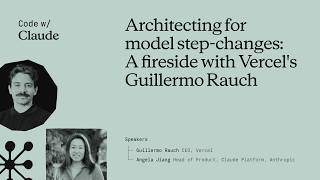
Architecting for model step-changes: A fireside with Vercel's Guillermo Rauch
Keynote Interview: Vercel's Guillermo Rauch on the Agent Era | Azure Cosmos DB Conf 2026
Vercel CEO: 70% of Our Traffic Is Now AI Agents "Nobody Was Prepared" | Anthropic, OpenClaw, OpenAI
Why being "terminally online" is more important than ever, with Vercel CEO Guillermo Rauch
Argentina Week 2026 | Argentine Talent Powering Global AI | Guillermo Rauch & Hernán Kazah