Vibe Coding, Tech Jobs, & Democratizing the Web with Vercel’s Guillermo Rauch | Fortune Term Sheet

In this Fortune Term Sheet episode, host Ali Garfinkel interviews Guillermo "G" Rauch, CEO and founder of Vercel. Rauch recounts his early life in Buenos Aires, his engineering‑focused family, and the path that led him to Silicon Valley and the creation of Vercel. He explains how Vercel was born from frustration with the complexity of building production‑grade web applications—configuring cloud infrastructure, setting up React, and handling undifferentiated heavy lifting—and how the company’s mission is to democratize developer experience by providing a platform that lets anyone ship "Netflix‑grade" products with a few clicks. The conversation then shifts to "vibe coding," an AI‑driven, prompt‑first development paradigm that lets users describe desired outcomes and have agents generate functional code, turning the process into a collaborative communication tool. Rauch predicts a shift in engineering careers: junior engineers will increasingly become orchestrators of AI agents rather than manual coders. He addresses cybersecurity concerns, describing Vercel’s long‑standing security practices, benchmark‑driven AI hard‑steering, and his personal experience with sophisticated phishing attacks. Rauch also shares his investment thesis—favoring companies that hide complex real‑world problems behind simple developer APIs (e.g., Stripe, Twilio, Auth0, Clearbit, Scale AI)—and how this framework guides his over‑$100 M personal portfolio. Finally, he reveals his personal "overinvestments" in security incident analysis, productivity tooling, and ongoing vibe‑coding experiments, and issues a warning to would‑be hackers that Vercel is preparing for an AI‑augmented security war.
Chapters
I literally get very sophisticated attacks, novel ones, every single week.
You personally?
Yeah, personally.
Hello, hello. Welcome to Termsheet. I'm Ali Garfinkel, senior finance reporter here at Fortune. And every week on the Termsheet podcast, we go over the latest news and insights in venture capital, private equity, and startups. Here's where you can watch and listen to us speak to the most exciting figures in the private markets. There's always a lot going on in the private markets, and this week was no exception. Here's what's been especially on my mind. Last week, crypto exchange Bullish went public in a rollicking $13 billion IPO. Now, after the success of IPOs like Figma and Circle and Chime over recent months, it's starting to look like we are so back. Important caveat here: some of these IPOs, not all of them, but some are happening at discounts to the highest valuations. For example, Chime was at a more than 50% discount to its highest possible evaluation. That said, for a long time I talked about us sort of being at the top of the roller coaster, but now it looks like when it comes to IPOs, at least, we're pretty much on the ride. Elsewhere, I've been thinking a lot about the state of startup hiring. Last week I published a story trying to codify some of the changes in the tech hiring marketplace, and there's a lot going on. On one hand, you have entry-level hiring dropping precipitously, which of course makes me think of the haves and the have-nots across startup hiring right now, because the haves are the AI researchers, the AI talent. We're talking go-to-market, engineering, anybody who's worked at OpenAI, Anthropic, one of these giant AI companies, and they are highly sought after. The pursuit of that talent is extremely competitive, not only from $100 million checks from Meta, but from startups really across the ecosystem. At the same time, there's sort of another interesting dynamic at play. It's kind of a subplot. It's called 996. It's the push to have people working in an office from 9 to 9, 6 days a week. This is also happening sort of amid a push towards RTO for a lot of startups. And one of the things that this really makes me think is that the market dynamics are getting very strange because on one hand, you're pursuing this talent, and on the other, you're trying to get them to work as much as possible. It does make sense, but personally, I think this is all a little bit of a trend, and it's going to be one of those things, again, back to the haves and the have-nots. Entry-level workers in tech maybe have less leverage than they've ever had, whereas a very specific set of talent maybe has more leverage than they've ever had. Now, I'm so excited to introduce our guest this week, Guillermo Rauch, CEO and founder of Vercel, a cloud platform that simplifies web development. He goes by G, and I'd argue his role in tech really transcends the unicorn company he's built. Someone once told me that every great technology has to have its P.T. Barnum, like a Steve Jobs, or in the case of AI, Sam Altman. And I would argue that Gee is the P.T. Barnum of vibecoding. Now vibecoding is the process by which I can use language like I'm using right now to become a programmer. Gee is super candid about what this means for the future and what it means to truly democratize the internet. Here's Gee. Gee, welcome to the podcast.
Great to be here.
I'm excited you're here. I am. With you, I really want to start at the beginning because I've always been fascinated by your origin story. Tell us the quick version. Of the G origin story.
In the beginning of time, I was born in Argentina, Buenos Aires, the outskirts of Buenos Aires. And I grew up in a humble but very engineering-focused family. My parents were both engineers. They got me into software very early on, and I developed a passion for the web, for open source, and for basically building businesses online. So what I do at Vercel today is sort of an intersection of all my interests for the longest time. Empowering developers, empowering developers with great tools. All of those things were things that I, even as a kid, loved doing, breaking things apart, hacking things, and then presenting them in a better way. And eventually, of course, I moved to Silicon Valley to start companies. I started a startup, sold it, later on started Vercel. Which is the biggest mission I've ever had to date.
I was gonna say, what do you consider day one of Vercel?
The most poignant memory that I have that was like, this is the key founding moment of Vercel was I knew I wanted to start another startup after I sold my previous one. And then I sat down to work on what you would do today to start any business, right? That you started online. So you want to make a website? And I sat down and I've been at this point, I've been making websites for decades and it was just so freaking hard.
How bad? Like hair pulling out bad? What are we talking about here?
You know, the idiom of like, I'm not mad, I'm disappointed. It wasn't even like hair pulling. I was like so disappointed with the industry. And on one hand, I knew that the future was here, but not evenly distributed. So I'll explain exactly what I mean by website. Like there's lots of ways of making easy websites. I wanted a production-grade application that was going to be the foundation of my company, right? So I needed to set up cloud infrastructure, which is basically configuring AWS or Azure or Google Cloud. And then I also needed the toolset for creating a web application. So at the time, React was starting to pick up, open source by Meta. It's like the tool that every web engineer wanted to use. And so what I mean by future was there, just not evenly distributed, is like it was kind of becoming clear that these were going to be the foundations of the modern internet, but they were so inaccessible even to an expert like myself. And I thought at the time, if this is so hard for me taking weeks, months, taking all this configuration, doing what we tend to call at Vercel undifferentiated heavy lifting, it's like heat loss. Like we're all doing the same things, we're all doing the same exercises and they're in no way distinguishable to anybody that's accessing your business. Like if I go to fortune.com, and you set up the best cloud infrastructure in the world, that's not going to come across. It's not a measure of success that's going to come across all the way to the consumer of a product. It's going to be something that's more like, you know, like maybe like engineering pride or makes you feel good that you jump through all those hurdles and whatever. So I wanted to build a cloud that was very easy to use and it was very focused on those end user outcomes. Meaning when you go to this application, you're just, you know, taken aback by how awesome it is in some way.
I would say, what do you think it was about the inaccessibility that so ground your gears?
Yeah, accessibility for me is— and obviously this word is a little tired and people say it a lot, but it's truly around democratizing access to something. Once upon a time, I guess, and Vercel has obviously contributed a lot to this, only a handful of companies in the world had cutting-edge tools and infrastructure to build great products that could reach millions or billions of people. So you had like the manga, people call it manga or FAANG or whatever, right? Like you had Facebook, Apple, Amazon, Netflix, Google. These companies are not just known for their products, If you were to ever join those companies as an engineer, you'd be taken aback by how good you would have it. I would sometimes, we call in the industry, the developer experience. And when I say developer experience, some people might think, oh, it's like when the Google lunch buffet cafeteria, like the, I can get a haircut at work. Yeah, though, you know, that the Valley became known for those things. But it's actually the fact that you can just ship things as a developer. Like you join, you go through a very brief bootcamp at this company. It's like they basically onboard you to how the sausage is made. And then you become very productive very quickly. A lot of these companies celebrate what is the time to your first ship, meaning you join, you know, a company like Netflix.. And now you can put out an experiment or a feature to billions of people within weeks of working there. And so that's what I wanted to democratize. I wanted to give people a platform for invention that was very accessible, so much so that with 2 clicks of going to Vercel.com, you're gonna get a Netflix-grade platform, a Facebook-grade platform. And now after all of this investment and time and energy, I would even dare say many ways better. And one of the ways that it's better is that it's open. It's built on open source. What happens with a lot of companies like Google is that they build their own little silos of the world and you become a Google engineer. You don't become an engineer that has skills that are durable and maybe transportable to another company. So Vercel is really powering a generation of people that can just build and ship things. Democratizing what other companies consider to be a competitive advantage.
And I assume that's part of why you put, "You can just ship things" on a billboard.
Yes. A lot of people have, like maybe the older generations, "Wait, are you a company that's like, are you FedEx? Are you like shipping things?" So, you know, kind of a compliment taken, great company, FedEx. But yeah, I think, we're seeing this with AI pretty acutely right now, right? Everybody can ship. There's basically two mottos that we repeat a lot. One is that anybody can cook. It's a saying from Ratatouille, but in the AI world, people talk about models as their cooking models. And I believe that with AI, everybody can now contribute to software, which is part of that genesis of Vercel was, hey, Let's make it so easy that we involve a lot more people in this software development process. So there's that part. And then there's the "you can just ship things" is that the world is built off of a lot of things that started out very small, that started out as prototypes, that started out as experiments. I used the word experiment very consciously earlier. When you're at an established enterprise, You might argue, well, can you just ship things? Are you just going to ship my social security number to the internet? No, you have to be very careful with certain systems, but that doesn't mean that you can't experiment at a small scale and enable people, product engineers, PMs, designers, et cetera, to convert their ideas into reality more quickly. And those are the two pillars of a lot of what we do at Vercel.
Ratatouille is actually kind of a great segue to vibe coding, as it turns out, because the central idea of Ratatouille, right, is that not everyone is a great chef, but a great chef can be everyone. And the central idea of vibe coding is maybe not everybody is a great coder, but a great coder can actually now be anyone. How has the discourse around vibe coding evolved?
Yeah, it's been super interesting because it starts off with a tweet by Andrej Karpathy. Noticing that even though he was an expert, he was getting into a mode, he was getting into a mindset of, I'm not even looking at the code, I'm transfixed by the output. Immediately that actually really stood out to me. At this point, our Vibe Coding platform, V0, already existed, but it really resonated with me because I've always been a person that likes to work backwards from the end result of products. I've always liked to start with the user experience and then I start thinking about the infrastructure, the data structures, the algorithms, the computer science. And Vibe Coding is all about doing exactly that. It starts with the intention of the user. If you go to v0.app, you can just put in a prompt and then you say, what do you want to see built in the world? And to your point about the mirror with the movie, It doesn't mean that everybody's going to ship products to production directly from a prompt, but it does enable everyone to get into the conversation. One of the emerging things that we've seen is enterprises are really excited by quote unquote, "Vibe Coding," because everybody that was not an engineer has traditionally been a little out of the loop., right? Like you have an idea on how you wanna make this product that we're using now to record this. You have an idea about how to make it better. You just go and tell the AI, hey, draw me up this idea that I just had for how to better configure volume and camera preferences. And now instead of that being sort of this dead document, it becomes a quick app that you can share with people. So for us, VibeCoding is evolving to become more of a communication tool. It better delineates conversations that teams have when they're doing their day-to-day work. And again, as every company becomes a software company and every business becomes a digital business, these tools are even more important than ever before, especially for the people that are making that migration from where they are to where they want to be online. A lot of what the world deals with in software is daunting migrations. You asked me about what was grinding your gears, what was frustrating about that world that you wanted to leave behind. And I'll tell you, one of the things that really frustrates me and frustrates a lot of people is you can have a vision for where you want to be, but getting there feels daunting. Migration has become a bad word in our industry. Like, I don't know, you want to think about the next big way of writing your stories and you're like, well, Ali, let's talk because we're in the midst, we're amidst a platform migration from one content management platform to another content management platform and it's going to take several months and things are going to be kind of broken in between. And so pipe coding is promising to become even more than just a quick way to prototype, but agents are now allowing us to modernize software at scale, to do a lot of the work that engineers have always considered to be daunting, very much like I mentioned, configuring the cloud and the infrastructure and all of that is heat loss. There's a lot of our tasks that we do day to day that are heat loss, that are very much like a translation process. I think, you know, Being a native Argentinian Spanish speaker really benefits me because I've been able to sort of over time grade the different translation systems. And I can tell you that if you ask ChatGPT today, translate this thing into Argentinian Spanish, it's gonna do a perfect job, like problem solved. You know, my aspiration to become a full-time English to Argentinian Spanish translator Done. I believe that a lot of the work that we do as software engineers ends up being a little bit like that, that you're just translating from A to B. And then there's a whole bunch of work that is very much creative and accruing value to the business. And that's the work that, you know, with Vercel's AI Cloud, we want people to focus on that work and then we'll delete all of the stuff that is sort of repetitive and daunting.
Well, and this actually gets into some questions about the future. Right. For example, how do you see the future of computer science jobs?
So there's a, there's one common meme that's emerging, which is there's no jobs anymore for junior engineers. And it's kind of become like a funny thing, right? Because like people say like, oh, if you have a computer science degree, you're cooked and make jokes about it and whatever. There's an inkling of truth insofar. There is a kind of work that a junior engineer could do, which is somewhat deterministic, like I mentioned, like it's repetitive. It's a set of easy tasks to sort of, you know, start contributing to that code base, that first ship when you join the company. It's very true that an AI, an agent today can probably do that job better than a person that's fresh outta college. So I have an idea, hey, like change this thing to the website, make that your first ship. You can do that with Vercel today and we're probably gonna outperform every junior engineer. But the other side of the world that I think is being left out of the discussion is that we've never hired junior engineers to just do those tasks. Those tasks were just the proxy for how we on-ramp them to you know, the code base to the jobs to be done, et cetera, and how we get them up to speed so they can actually ultimately really understand the business, really understand the customer, and take on larger challenges. What's going to, what's going to change quite profoundly, I think, is that you're going to go from being a person that writes code to being a person that orchestrates agents. The act of writing code does seem to be getting automated away. This is not new in sort of the computer science world because over the years we've been building compilers and frameworks and technologies whose entire job is to raise the abstraction level. Writing code is becoming easier and easier and easier to the point where we don't write it anymore. But the human that's in charge of sort of orchestrating all those agents and sort of being the— you can think of it as moving from being a junior engineer to a junior engineering manager. And that's somewhat of a completely different skillset, right? Again, your first day at the job was write some code. Your first day at the job would be like, hey, like round up this team of agents, make them productive and make them do something that we need to do for the business.
When you think about the future and how vibe coding can sort of revamp our world, I know there are concerns, say, about cybersecurity. Or concerns about jobs. What do you see?
Yeah, on one hand, anytime there's a new revolutionary technology like AI, I think people's alarms go up a little bit. So people are more fearful of what could the consequences of this technology be? And I think in the world of coding, it's rightfully applied. To put it this way, Even one line of code being in the wrong place can be devastating for a business. One line of code can be, and we're talking about like 20 characters, can be responsible for authenticating a user, can be responsible for enforcing a permission, can be responsible for applying the right price to a product that's being sold. So I have an enormous amount of respect for the problem. Building public cloud infrastructure at Vercel, security has been a concern for now 10 years. So we also have a lot of the methodologies, processes, and infrastructure to create secure software by default. I mentioned one of the things that motivated me to start Vercel was I wanted applications to be delightful and fast by default. I also wanted them to be secure by default. Security is really hard. A developer, we talk about a junior developer, it's like fresh out of school. They might not know all of the best practices in every detail, every dot and every i that goes into securing production-grade software. And so the security problem has already existed before AI. I don't know if you heard about the T-Dating app that, you know, there were a lot of women on this app uploading photos to do identity verification, their driver licenses, their selfies, very private photos, obviously, and they all got leaked to the internet. I did a huge analysis on X of the attack because I, not only at Vercel, we invested a lot into cybersecurity, like I'm also personally super interested. I mentioned one of the things that motivated me to learn coding in Argentina was the idea of like the hacker, the movies, the, you know, getting into systems, et cetera. So I nerded out really hard on this because I actually wanted to get to the truth of like, Is Vibe Coding responsible for this? And so the answer is actually no. It was an engineer that unfortunately didn't know better. And so I think therein lies the answer to this problem, right? Like the securing of code in the AI age is very much like the same problem of an autonomous car where we will compare, you know, how many accidents is Waymo or Tesla Robotaxi causing versus the benchmark of how many accidents are human drivers causing. And so when you think about security in the cloud, there are a lot of accidents caused by human drivers, junior developers, tired developers. You know, I'll be the first one to admit, you know, when your brain power is not at full throttle and you're a little tired, you might slip and not have that one line of code that I just talked about, right? And so then you have, and also to also do justice to humans, AIs also make mistakes. That's why a lot of people thought that T dating incident must have been caused by bytecode. How could someone be so sloppy? But when we did the forensics, it turned out the timeline didn't add up. That bucket of photos that was unprotected had been created before bio coding even existed. So, you know, not AI to blame in this case, but yeah, people are rightfully concerned. AIs can also make those mistakes. The approach that we've taken at Vercel is we hard steer the models and we write benchmarks and tests and evaluations to make them meet and exceed the human standard. So we check that all of the best practices of all of the experts of the internet that we've hired at Vercel, the people that started those frameworks and platforms at Google, we've had them sort of like write down the tests. It's almost like you're grading AIs all the time, right? Like anytime a new model like GPT-5 comes out, people are wondering like, is it smarter than Grok? Is it smarter than Anthropic? And so on. And so you get these benchmarks, right? Those benchmarks are sort of like, think of them as like the SAT. They're standard. Everyone is taking the same tests, but it's really important for companies to have their own tests. So for Vercel, we keep tests of, hey, is this the right AI agent to use for this kind of problem? And when we write code and review it, we say, hey, What is the percentage of real problems that these agents are finding when we do security scans and so on? So my very optimistic take here, and also from the data that I've seen, an example is v0 preventing thousands of security vulnerabilities per day that the LLM would be tempted to introduce. I'm very optimistic that very much like a self-driving car, we will prevent a lot of these security incidents. And the AI will be so alert, and so steered and aligned and focused on this problem, that will end up being in that area, I think we can exceed the human potential, or at the very least, be a trusted advisor of the human that's doing that final review and saying, I sign off that this code is secure.
Gee, you've also invested in more than 100 companies. On your own. What role does all of this awareness sort of bring to your experience and time as an investor?
Over time, I collect frameworks of ideas. So very much like Vercel creates frameworks to help people build applications. You know, I didn't mention this, but one of the things we're known for is we have a framework called Next.js. We have a framework called the AI SDK. And developers love it because instead of giving them like a bag of Lego bricks, we give them almost like prefabricated structures that are easier to reason about. That's what this frameworks, this developer tools do. And over time, my success as an investor has been predicated on I built frameworks for how to reason about successful companies instead of always starting from scratch and looking at every detail of like Where was this founder born? And you know, like what school did they go to? I look at broad strokes. Does it fit within a framework of how I see the future evolving? And so when I started Vercel and right around that time, I started to notice that companies that hid enormous amounts of real world complexity behind very simple APIs for developers. Were going to be very successful. And so at the time, I noticed Stripe was doing that for payments. Twilio was doing that for communication. And then I went on to invest in 3 companies that fit that criteria. One was Auth0, which was doing that for authentication and identity. Same formula. World of authentication, extremely complex. Presentation to developers, handful of lines of code. And that company ended up being acquired by Okta for $6.5 billion. Then I invested in another company called Clearbit that did that for lead enrichment or augmenting information about converting an email to who is this email, who is this person, what can I sell them? So basically like an information API and they're being acquired by HubSpot, did really well. And then the other one, perhaps the biggest one of this bunch was Scale AI, which was doing basically the API to knowledge and evaluation of data that could be used for training models. It's very much an extension of what I want to do at Vercel, right? So it's about taking very, very, very difficult processes, whether it's the cloud, whether it's frameworks for creating AI agents and condensing them, removing all of the complexity away from the would-be buyer. And I think the bet was that buyer was gonna be increasingly a developer and someone building software and not necessarily like, we didn't even have to build up a lot of the traditional marketing artifacts. You know, the very complex PDFs and webinars and things like this. We just skipped right through, hey developer, here's how to implement the software. Here's some really good documentation. So here's some really good examples.
All right, G, we are at time, but in a few words, one last question for this segment. We're calling it Overinvested. What is one thing you are overinvested in right now that's like a saga on the internet, a news story, a TV show, It can be anything.
There's a couple of things that come to mind. One is if you follow me on X, I do this amazing deep dives into security incidents or hacks. I'm obsessed with this problem. One fun fact, or not so fun fact, actually kind of a sad fact for the internet is there are a lot of scams or a lot of phishing attacks that are going out there, many of which are getting enhanced by AI. So someone out there, a hacking group or whoever, really wants to get my X account. And I literally get very sophisticated attacks, novel ones every single week.
You personally?
Yeah, personally. And by the way, they've been really effective. So they hacked the OpenAI account one day. I know by looking at the forensics of this that it's probably one group or a handful of groups of people that are going after really high-value X accounts to run crypto scams, by the way. It's kind of hilarious. But anyways, I get really invested. Like anytime they try something new, I go like crazy analyzing every aspect of this thing. And then I do this deep dives. And I've always been super obsessed also with productivity. So like personal productivity, like how to make myself more efficient and tools that I download and things like that. So it's one of those things that I, you know, there is obviously value, but there's also at some point you've improved your productivity so much it has diminishing returns. It almost becomes like a game. And another thing that comes to mind is vibe coding. So you'll see that I post a bunch of little things, experiments that I'm making. These days I don't write code anymore. Anytime I have an idea, I can just throw it into a prompt. And so you'll see some of my creations over time.
Gee, do you have a message for the would-be hackers?
For the would-be hackers, Vercel will defeat you. But it's going to be, I do anticipate a war between good and evil, both sides augmented by AI. And so we have to be at the forefront of these problems and we have to invest in AI security today to be prepared for what's to come and protecting all of these internet workloads. And it's going to be a fascinating challenge.
And the stakes are high. Ji, thank you so much.
Thank you, Allie. That was fun.
Now that was Ji. You know, I don't know if we spend enough time truly talking about what it means to be an entrepreneur and an investor. We talk a lot about sort of how someone needs to be an operator to really understand entrepreneurs, but we don't necessarily talk about how that informs perspective. And for Ji, it's all about what it's always been about for him, the democratization of the internet, which really goes back to the ways in which being an investor and entrepreneur, you're actually still the same person. And that's something I'm going to be thinking about for a while. The ways in which, even though context might change, somebody's mission stays the same. And that's it for Term Sheet Episode 4. Thank you so much for joining me, and I'll see you next week. Term Sheet is a Fortune magazine podcast. Our producer editors are Elena Stev and Allison Rogers. Our executive producer is Lydia Randall. Our production manager is Sam Freund. Fortune's head of video Is Adam Banachy.
More from Guillermo
Guillermo Rauch at Founders in Arms Live: Simplicity, Focus, and the Bet That Built Vercel
The Man Who Built a $9B Dev Platform Thinks You're Overcomplicating AI | Guillermo Rauch


Inside v0: How Guillermo Rauch Is Building 100 Million Engineers | Lenny's Podcast - EP.89
Architecting for model step-changes: A fireside with Vercel's Guillermo Rauch
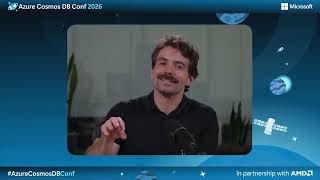
Keynote Interview: Vercel's Guillermo Rauch on the Agent Era | Azure Cosmos DB Conf 2026
Vercel CEO: 70% of Our Traffic Is Now AI Agents "Nobody Was Prepared" | Anthropic, OpenClaw, OpenAI
Why being "terminally online" is more important than ever, with Vercel CEO Guillermo Rauch
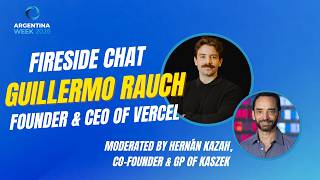
Argentina Week 2026 | Argentine Talent Powering Global AI | Guillermo Rauch & Hernán Kazah