Define your LLE transformation
Saleh Amiralai breaks down how to design a three-day Life Launch Event that moves people from unclear vision and self-doubt to a concrete plan and first wins. The three core elements are clarity through journals and roadmaps, handling objections with case studies and calculations, and ownership through naming exercises and custom resources.
Chapters
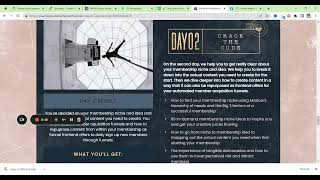
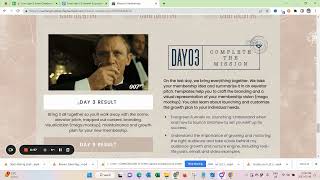
Your life launch event, may that be a bootcamp, a life learning experience. A challenge needs to offer a transformation. And this is what we quickly will discuss in this video. So when you open up the resource, you see the the Life launch transformation should be in a nutshell, always three days to help you develop a plan, plus give you first wins. So as you can see, before your potential clients have a problem or a desire, but, but they're unclear on multiple levels. Their vision hasn't fully developed yet. There's not a lot, there's a lot of uncertainty about the right path, the right tools, the right strategies. They might think that they aren't ready for the transformation yet. They think they will need help, but they don't know whom to trust. And sometimes they doubt if the transformation is even possible at all. Or if it will work for them specifically, or if it will be worth it in the end, right? Or if it's just going to to be too much work and the likelihood of succeeding might not be high enough. After. After working with you through the life launch event, your potential clients have a clear and well developed vision of what they want to achieve. They have gained a deep understanding of the right path, tools, strategies and to make their vision a reality. Your clients are now confident and ready to take the necessary steps towards transforming knowing and that with your guidance, they can achieve that goal. Clients trust you and have formed a first sorry about that relationship with you. Knowing that you have their best interest at heart, they have a renewed sense of belief in themselves and the transformation that they seek. So now it's exactly the opposite, right? It flipped. Now they are clear on what they want. They clear on what it needs to look like. They clear that they might need help and that you are very likely the best person to move forward with. And I think it's actually doable for them because now they have the clarity and the insight.
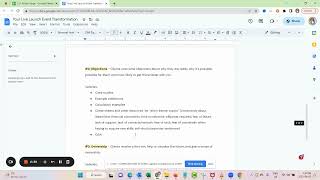
Okay, so for the clarity, there are different vehicles. We need them to have clarity about the purpose, the systems and underlying values. The vehicles we have for them to use in the challenge are why work elements. So you know, the why work elements can be journal prompts, it can be questionnaires, it can be certain worksheets. But that means we need to help our participants to understand their why and to really carve it out to form a conscious connection to their why. We have storytelling, we have roadmaps, we have systems, overview charts, terminology, cheat sheets, and the Q and A's in the life. Those are all clarity elements. Then we have handling objections. So clients overcome objections about why they are ready, why it's possible, why it's possible for them, and most likely to get there faster with you. Our vehicles to handle those objections are case studies, example collections, calculation examples, cheat sheets, and other resources for entry barrier topics. So entry barrier topics are, for example, uncertainty about the niche, financial constraints, time constraints, how much willpower is required. Most time constraints like, okay, I'm a young mom and I already have my family and I work part time, I'm in a tight time situation, what do I do? Right? And if you have resources like the daily self management worksheet, you're like, okay, it can actually work. I just need to be really, really mindful about how I spend my time. Just need to manage myself and set priorities accordingly. So this is what I mean with these kind of entry barrier topics is like, yeah, I would love to do that, but I don't know how this, how this works. You know, the same goes, for example, if you're business coaching and people have uncertainty about their niche, it makes sense to provide cheat sheets about what kind of niches are available. How, like how high is that likelihood of success in each niche? Just to take off this initial barrier of I wouldn't even know where to start, right? Another one would be fear, failure, lack of support, right? My family's not on board with me starting a business or my family is not on board with me getting my husband is not on board with me getting relationship coaching, lack of contact or network, right? So they say, well, I think in order to make it, you need to know somebody. Fear of tech, fear of overwhelm when having to acquire a new skill, self doubt imposter syndrome. So all kinds of cheat sheets and resources you can help to overcome those entry barriers are great for handling objections and what's needed in your challenge. Again, here you also have the Q and A because you can address specific situations where for example, somebody says to you, well, I don't have kind of the financial resources to run ads. How much do I really need to spend? Right? And then you can say, okay, what's your specific situation? What's your goal? What do you hope to get out of it? How, how much time would you have available for organic marketing, for joint ventures, for doing promotions in the free group, right? So you can then use the Q and A to address specific objections for a single person. And that will also show other people not only how you actually help in the Q and A, but it might also resolve their objections. Then we have ownership. So clients need to receive a first win and you want to help them visualize the future and gain a sense of ownership. The vehicles we can use in our challenge to facilitate that is to together with them, take a look inside.
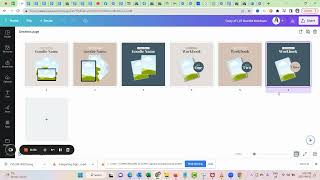
Or inside the program and to walk through or explain a concept or answer a question by sharing the resources from within. When you ever have attended a challenge of mine, very often in the Q and A's, or when I'm explaining something, actually open up the portal for funnels and Aspro or coach Groove Hub or coaching mini membership method and I'll explain. Well, that's a great question. Let me share this research with you because this is something we actually cover here. I open the portal, they see how much is in there, they see the quality of the resource that I'm sharing. It's really giving this sense of ownership. Another way to do this is to work with vision boards, with mapping out a concept, with naming or designing something. So you'll see that in the mission membership challenge we will actually go about naming the membership, defining the brand colors, creating a mock up. And that already is very, very powerful for making this in the beginning, you know, maybe intangible dream more tangible and help with the visualization and with developing the sense of this is already my membership. Then it's. You can help them to come up with a custom plan, right? So that will be taking your roadmap and help them to understand how it applies for their specific use cases. Then that will be the custom version of your roadmap. And again in the Q and A we will do a lot of this. Giving a sense of ownership by sharing from within, by sharing.
The roadmaps, the tools from within and explaining how the concepts would work for them. Okay, so this is the transformation we have to recap. The need to have a clear vision, understanding what it looks like and the trust that it's possible with you and the transformation elements you need to deliver throughout the challenges, you need to give them clarity here, the tools, how you can give them clarity. You need to handle their objections. Here are the tools, how we do that. And you need to give them a sense of ownership. Of ownership. I also explained the tools and how we give them to them.