Episode 64 - Why Iranians Now Want the Bomb: Hooman Majd on Israel’s Strikes and Nuclear Ambitions
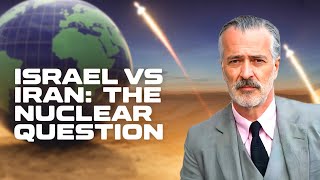
Hooman Majd, an Iranian-American author and journalist, discusses how Israel's recent strikes on Iran may push the regime toward nuclear weapons. Iranians rallied around their homeland despite criticizing the government, and the 60% uranium enrichment level serves as a bargaining chip tied to national pride and energy independence.
Chapters
Hello and welcome everyone to this episode of the Kianistan Podcast. Joining me today, I have Hooman Mojt. Hooman is an Iranian-born author, journalist, and a political analyst, um, currently living with his family in the USA, as I understand. Hooman, thank you for joining us. It's a pleasure to have you.
My pleasure, my pleasure.
Great. Hooman, I'm really excited to be speaking with you today. I think it's an excellent opportunity for us to better understand the Iranian culture, politics, and people through your experiences. Um, because I think a lot of information that's coming out of Iran, but also about Iran is often very biased one way or the other. And I can think of no one else better than yourself, um, with the experience and background that you have. You, as I understand it, your granddad was a prominent religious cleric and a philosopher. Your father was a diplomat under the Shah regime. Um, also you've been interpreter and translator for two Iranian presidents as they visited USA, President Khatami and President Ahmadinejad. Um, if I'm not wrong, I think you might also be related to President Khatami as well. Correct me if I'm wrong. Correct. And also, I've heard that you were also mentioned in GQ magazine. So you're very kind of, Mashallah, very varied kind of a personality. So it's lovely to have you here. I've heard many of your talks and it's really amazing the way you are able to put things as they've been talked about Iran, to put them in the context that we can kind of better understand them if we realize that actually a lot of the things are not— if we see, because I've talked, I've heard people say to you, why, why doesn't Iran allow its system to be changed? Or, um, there's no system, there's no process within the system where people can choose a different system. But that's exactly the same in any culture. It's like in the USA, in the UK, we can't choose that today we want communism or we want Um, so, so things like that, I think it's a really good opportunity. So, um, I'll shut up now. Um, tell us a little bit more about yourself.
Well, you basically introduced me correctly. Um, yes, I am an Iranian American now, uh, living in New York City, born in Tehran, but spent most of my life outside of Iran. Um, mainly because my father was a diplomat, as you pointed out. And so we traveled all over the world when I was young. We lived in San Francisco, Washington, London, India, Tunisia, and of course a little bit in Iran. But I always went to American schools except for high school in England and then back to the United States for college. And I was in the music business for a very long time. And after the music business collapsed in the early 2000s because of Napster and free downloading and, and the MP3. Um, it's since recovered, but when it collapsed, I then moved into journalism and writing and ended up writing for various newspapers, magazines, and then went to Iran for the first time in many, many, many years, um, in 2005. And, uh, then decided to write, um, my first book about Iran to give a Americans, and of course others, the Westerners mainly, a better idea of what Iran really is like and what Iranians really are like. That was my first book, and then I subsequently wrote two other books. And, uh, I'm a contributor at NBC News. Yes, go ahead.
A little bit about your books as well, because, um, I'll be honest, I haven't had the pleasure to read them yet, but I really plan to. And the titles are so intriguing, and several actually.
Oh, thank you.
Can you tell us the titles of the books and a little bit of a synopsis of what they're about?
Yes, yes. And they've all been, all three have been published in the UK. Um, the first one was called The Ayatollah Begs to Differ. Um, and it was really a kind of social, cultural examination of Iran. I went there for a couple of months, um, spent time with various people, both political figures and cultural figures. Family, uh, traveled around the country and kind of wanted to give a sense of what Iran was really like. We had this image of, you know, crazy bearded men and chador clad women, all being very angry at the West and screaming all the time, death to America and stuff like that. And, you know, the reality is, sorry, when did you write that? That was, that was published in 2008.
Okay.
Um, Then my second book was more political because it was published right after the Green Movement, right after the disputed election of 2009, where Ahmadinejad won, despite the fact that it appeared that the other candidate, Mousavi, was going to be the winner based on the crowds and the polling and so on and so forth. Because of that very political movement at the time. That book was really, it's called The Ayatollah's Democracy, and it was really trying to explain both what happened during the Green Movement as a civil rights movement more than a revolution, and also describe what this Islamic democracy that Iran boasts about is or can be. And people like Khatami, who you mentioned, former President Khatami, um, still at that time believed that you could have an Islamic democracy. There could be a definition of an Islamic democracy where Islamic values were there, but democratic, uh, rule was still possible. So, um, those, those two first books, and then the third book was I really wanted to go to Iran and spend more than just a couple of months, um, and live there among Iranians, as I'd never done as an adult. I'd never lived there as an adult on my, on my own or with my family. And so that was called the Minister of Guidance invites you to not stay because they, um, the Minister of Guidance, Ministry of Guidance and Islamic, uh, Islamic Guidance and Culture and Islamic Guidance is the ministry that gives press passes to people. And they refused to give me a press pass and were fine with me being in Iran as long as I didn't write or didn't do any, uh, Journalism. So that's where that title comes from. And that was really just my own sort of memoir-ish kind of, it had both political and cultural elements, that particular book. And that was published in 2012. So, and then, you know, I've written articles over the past 20 years at this point of journalism and books. And I have a new memoir coming out at the end of middle of September, which will be just a personal life story. What basically I, what I've described in the last 5 minutes in a book. Yeah.
Amazing. Herman, when we first spoke about having you join us on the podcast, it was before the Israel-Iran war started. Yes. And then all of a sudden all of that happened. And I was thinking of you, I was hoping everything's okay. And I was also hoping that we don't have to postpone this episode because I'd really like to know your views about everything. So thank you for still kind of committing to the schedule. How is everything? How's your family, first of all? Is everyone okay in Iran?
Yes, thank you for asking. Everyone's okay. My cousins, I have a lot of cousins who still live in Iran. I've lived in Iran since the revolution. And They're all okay, thankfully. It was very difficult during the early days of the war, um, and even toward the middle of the war to contact Iran. Um, the Iranian government had, uh, uh, had shut down, uh, phone service from anybody calling from outside Iran. Um, because they didn't want, you know, uh, obviously spies in Iran. They knew that there were spies. We knew that the Mossad had infiltrated and there were, you know, assassins and all kinds of things. Things going on, and so they didn't want them to be able to communicate with the outside world with regular phones. Now, I don't know if they had satellite phones, if they were able to block that, but we couldn't, all the Iranians in the diaspora couldn't contact our family by phone. And then of course the internet was also, um, shut down at times or down to a crawl. So it was very stressful in the early days cuz you know, uh, civilians were dying and apartment buildings were being hit.
Yeah.
Um, you know, the Israelis claimed they weren't attacking civilian sites, but the reality is that civilians did die, more than 400 as we know. And, um, infrastructure was hit. For example, the water main in north of Tehran, one of the water mains was struck. And when I did talk to my, one of my cousins, they didn't have any water. So it's, um, a lot of infrastructure as well as military targets were hit. And, um, whether by accident or on purpose, apartment buildings where target, the target may have been a, uh, a general. I mean, you know, generals live in apartment buildings sometimes. Sometimes they live in homes and apartment buildings have other residents. So if you hit it, as we know from Gaza, you know, civilians will die. Um, that's just the way it is.
You know, I also heard, um, the Iranian government was advising citizens to not use WhatsApp and Instagram because it can help the enemy kind of tap in. WhatsApp normally used, and is it back now, or how are you communicating?
I think WhatsApp is not used. I think you can with a VPN, as in the past. I think Telegram is open. I'm not sure, but I believe the Telegram messaging is open. I've been seeing a lot of, ever since the war ended and even a couple of days before, a lot of Iranians from Tehran on social media. So there's definitely some ability and the internet is not as slow or throttled as it were by the government as it was. You know, the ceasefire right now is holding. So, one should expect that that will continue at this point anyway.
I hope so, because if Israel has a very bad history of never abiding by any ceasefires, so let's hope this time it will because Iran is a more powerful um, um, um, um, enemy.
Yeah.
So let's see how it goes. But, um, how do you think, from your experience, how are the people, um, generally, the community? Normally it happens that whenever there's an attack from outside, people unite, um, they get behind the government. Is that what you're seeing, um, or how— what's the reaction generally? Because Like any society, obviously there's lots of different viewpoints in Iran about politics and governance and everything. How have different viewpoints kind of, have the differences gone larger or have people come together? How are people coping with everything?
Well, I mean, all the evidence we have is that I wouldn't call it rallying around the flag so much of the Islamic Republic, but definitely the people rallied for the homeland. Inside Iran, even activists, even people who are against the regime, even people who've been jailed and were in jail were all saying that they would defend the homeland against a foreign attack. So if Israel or the pro-war contingent in the world against Iran thought that the Iranians Knowing that there is a lot of dissatisfaction with the regime and with the government and with the inflation and sanctions, et cetera, et cetera, and social restrictions. If they thought, if anybody thought that the Israelis attacking Iran would make Iranians rise up against their own government or would welcome an Israeli regime change operation, they were proven wrong. Iranians actually did rally around their own homeland, as it were, if not directly for Ayatollah Khamenei, for example. But when you start assassinating, you know, your generals and you start, you know, hitting apartment buildings and infrastructure and you start destroying what Iran's defense is, missiles, for example, and things like that, nationalism takes over. It doesn't matter that you don't like the government. It doesn't matter that you don't, you know, we saw that in New York City. I was in New York City when 9/11 happened and George Bush was extremely unpopular, especially in New York City among liberals, I should say. And New York City probably was the city that most despised George Bush. And yet post-9/11, I was here. It was like a real rally around the flag. And even George Bush popularity went sky high. Um, because Americans were attacked by, you know, at that point, not a foreign country, but by foreigners. And just, you know, a country getting attacked, people are going to, are going to brag. Now what happens in, you know, the longer term future, no one can say, but certainly right now, there's probably no movement for regime change. There's no, there are no demonstrations against the government. I think there's going to be some anger toward the government for, for, not being able to predict this, for allowing so many Israeli agents to be so easily infiltrating Iran, um, at will, um, a certain humiliation, um, of the Iranian security services, um, and understanding how, um, Israel's superiority, war, military superiority, obviously because of America's backing and the arms that America and Western Europeans give to Israel and or sell to Israel. Means that Iran's in a very weak position vis-à-vis other countries. And it's, it may end up that many Iranians will actually back Iran developing a nuclear weapon, for example, as a deterrent.
Hey there, I hope you're enjoying this episode. Let me just take a moment to introduce our sponsors for today. This episode is kindly being sponsored by the Worldwide Listings Company Limited, or WLC for short. WLC is a complete A to Z Amazon account management service. So if you're looking to start an e-commerce business or you already have a business that you want to take to the next level, then get in touch and WLC will be able to help. Just for transparency purposes, let me also mention that WLC is a company that I firstly created and I'm a director of. So when you get in touch with WLC, you will be speaking with directly myself or my team, and we very much look forward to speaking with you to see how we can serve your needs. Thank you. And with that said, let's get back to the episode. I think you're absolutely right. I wonder how that's going to pan out, because partially I do believe— correct me if you disagree— but I do believe that it wasn't Iran's policy to make nuclear weapons. They generally didn't want going down that path. And I think there's good reason for that because basically at the moment within the Middle East, Iran is a dominant player, despite all the restrictions, all the sanctions that have been placed on by USA. But if Iran does develop nuclear weapons, then other countries will start developing nuclear weapons like Saudi Arabia, Turkey, all other countries. And then Iran will lose that edge that it has.
Yeah.
What, what do you think, um, the people, um, what are they saying in Iran? What was the war actually about? Was it to get rid of Iran's nuclear, uh, program? Was it regime change? Because whichever way you look at it, uh, it's difficult to see what the whole thing was about other than the fact that it was Bibi's ambition for over 3 decades to attack Iran. And that kind of, to me, makes more sense because if you look at it from nuclear program point of view, I think now USA, Israel, the West is going to be worse in the worst place than where we started because there was uranium enrichment going on, but at least it was being monitored. It was being monitored more than any country's ever been monitored. They knew exactly where everything is, what's being done, how it's being done. But now they have no idea. They have no idea where that 60% enriched uranium's gone. They have no idea what the labs, what damage they suffered. And they're kind of in the dark. So from that point of view, it makes no sense. From a regime change point of view as well, as we talked about it. Um, invasions generally, generally normally makes regimes stronger, at least in the short term, not weaker. So that doesn't kind of make sense as well. But what, what are your thoughts and what are people's generally their thoughts about what this war was about?
Well, I think, I mean, you're right in saying that Iran wasn't developing a nuclear weapon. I mean, that's not what I'm saying. It's what the, and not what the Iranians are saying. It's what the IAEA was saying, which is the UN agency that monitors nuclear.
Even Tosekabat, the center.
Yes, and US intelligence was saying that. So, Iran had no reason to move to a nuclear weapon, which would have been easily detected by the Atomic Energy Agency and by Western intelligence. If the Israelis have this kind of intelligence on Iran that they can you know, penetrate Iran, they would also have known that Iran was not developing a weapon at that time. I think especially Benjamin Netanyahu, but some other Israeli leaders have also wanted to knock Iran down a couple of notches. Iran's ambition has been to achieve strategic parity with Israel. And it was getting there with Hezbollah, Hamas, Syria, the Houthis. There was this almost strategic parity despite Israel's obviously military superiority. So attacking Iran was always more about reducing that strategic parity or the chances of a strategic parity. Making, getting Israel to be in a superior position, um, in the Middle East, be the dominant power in the Middle East, and not to be challenged by Iran more than anything else. I don't think the Israelis necessarily were looking for regime change. I think they're looking for a weak Iran more than anything else. Iran has challenged Israel and has sometimes foolishly said things publicly that gives Israel an excuse to then say, well, Iran is looking to destroy us. So of course we're going to have to go back and destroy them or destroy the regime or degrade their capability to be able to destroy us. So once Hezbollah was decapitated basically, and once Hamas has been, um, not decapitated completely, but Gaza is in ruins and Hamas doesn't have anywhere near the power that they could have had prior to October 7th or did have prior to October 7th. Of 2023, then I think they decided this is the time, and with Syria gone, decided that this was the time to defang Iran. And that was the purpose. And also to stop diplomacy with the US because if, you know, two days after Israel attacked, Iran was supposed to be meeting with Steve Witkoff, President Trump's negotiator, to negotiate. And things were looking better than they had. You know, in the last 2 years in terms of a deal with the U.S. And it was Trump's preferred, uh, way to get the nuclear program resolved. So, um, clearly, I mean, it's not just my opinion. Many other people's opinion is that Israel was afraid, I should say, or Netanyahu and his cabinet were afraid that someone, that, that Iran would make this deal. With Trump and then would start rebuilding and with, you know, sanctions relief, being able to rebuild the economy and get all kinds of benefits from a deal with President Trump and then be able to perhaps rebuild its strategic parity with Israel despite the fact that it has lost Hezbollah, Hamas, and Syria.
So with that in mind, how successful do you think Israel's been in reducing Iran's influence?
Well, in the immediate future, it's been successful, clearly, because Iran, it has shown that Iran can't, I mean, Iran can hurt Israel. We saw that with its missiles and with the civilian death toll in Israel. So I'm sure something that the Israelis probably didn't expect on the scale that Iran was able to accomplish. Um, so on the one hand, Israel has been able to show military superiority. On the other hand, uh, it doesn't seem as if it's something that they want to repeat because they, Iran still has a lot of missiles and still has shown, has shown that it has an ability for those missiles to penetrate Israeli airspace despite all the air defenses that it does have. So, um, what has it accomplished? Has it, has it degraded Iran in the short term? Yeah, sure, it has. Uh, nobody could deny that. Um, has it degraded it so that Iran can no longer reconstitute its, uh, military or its, uh, nuclear program?
No.
First of all, Iran has the knowledge to enrich uranium, probably has the knowledge to build a bomb because that's the least difficult thing once you have all the elements together, um, and knows how to build centrifuges. If every single centrifuge in Iran was destroyed, They know how to build not just rudimentary ones, they can build incredibly sophisticated centrifuges. We don't know if Iran has centrifuges hidden away somewhere, if they have the uranium hidden away somewhere. That will all come out in the longer term. In the short term, I don't think we're going to know very quickly. I don't think Iran's going to allow international inspectors to go and look at where this stockpile of 60% enriched uranium is, if indeed it survived, as they claim it did. It or that they had hidden it. Because why would they? The minute the international agency says, oh yeah, we found the 400 kilograms, it's here in this location, you're just inviting Israel to go and bomb it. So Iran's not going to do that. At least I doubt that they're going to do that. Short of a deal. I mean, they might, they might do that. They might allow the inspectors in if they make a deal with the U.S., which it seems that this is something that Trump Iranians have indicated they were going to talk to the U.S. on a new nuclear deal as long as Israel stopped bombing, which has happened now. So we don't have a date. Um, but if they make a deal with the U.S., then I would imagine they will show the 400-kilogram stockpile if that's still intact. Um, because at that point, the assumption would be that Trump wouldn't allow Israel to attack that and that 400-kilogram. Stockpile would be in any new deal would be either downgraded or sent overseas.
Yes. I read Russian Foreign Minister Lavrov's comment today. I think it was from yesterday maybe, but he was expressing the same concerns that it would, under the current circumstances, it would be understandable why Iran may now have concerns and may not want to give access to IAEA, um, to examine their sites and examine the enriched, um, stock that they have. Because a lot of this information gets leaked, a lot of these international organizations are very much dominated by Western powers and sometimes act like private departments, he was saying. So Um, so yeah, so I think Russia was agreeing to that extent as well. But just going back to your point about Iran being weakened as a result of this 12-day war, I think you're absolutely right. But I think any country that goes through war comes out of the war weakened. But, but we have to see that in, in context. If Iran's weakened, then Israel's weakened as well. And I actually think that if Israel could have carried on and taken the punches, the blows that it was receiving, but given Iran bigger damage, they would have continued. Iran is a massive country. I had no idea actually. I'm living in England. I was born in England, but I lived in Pakistan where my family is for more than 10 years. And obviously Pakistan is right next door to Iran, but I still had no idea how massive Iran is. It's a huge country and Israel in comparison is tiny. I think it's maybe, I don't know, 10 times smaller. So it would be very difficult for Israel to sustain those blows that it was getting. But also Israelis, despite the fact that from their point of view, they have been living under fear for a long time, but they haven't actually got that experience of of, um, being attacked the way they have. I mean, Iran's got a huge long history of— I mean, I know it was a long time ago, but Iran's gone over through like 8 years of war. There's not many countries in the world that can kind of claim that. So, um, personally speaking, I think Iran— if Israel didn't do this, if Israel had stopped at doing what they did to Hamas, to Hezbollah, to Syria, to Yemen and not gone and attacked Iran, I think they would have made, put Iran in a more difficult situation. But now that they've attacked Iran and nothing really happened, I mean, apart from them kind of sustaining the damage that they have sustained, if they aren't able to eliminate Iran's nuclear program, if they're not able to do regime change, if they're not able to do anything substantial, it actually, I think strategically, it strengthens Iran, I think.
Yeah, I mean, that's certainly one possibility that it strengthens Iran. It certainly strengthens Iran's resolve against, you know, foreign attack and against Israel. It strengthens Iran's resolve to build a better defense system. Build better missiles, and perhaps even build a nuclear weapon. Certainly when you, up until the attack by Israel, Iran probably thought building a weapon would be going one step too far where they would get attacked. And, or, you know, if it was found out that they were building, then they would get attacked, which is not something that they welcomed, um, which is why they were talking to the United States, why Iranians were talking to President Trump, the guy who withdrew from the first nuclear deal that the U. S. made, um, the guy that assassinated their top general, Qasem Soleimani. They were talking to him. And, um, so, you know, there wasn't really an intention, I think, at that point of the decision to build a nuclear weapon. People say, well, why were they then enriching at 60%? There's no civilian reason for that. So the cause to enrich at 60%. And the Iranians, I mean, it's very clear they were enriching to 60% as leverage. I don't know why was Trump constantly or US constantly putting more sanctions on Iran. The whole idea is you enrich from the Iranian perspective, you enrich at a higher level so that you can then give it up and agree that you'll enrich only for civilian purposes. Um, the Tehran reactor, um, research reactor, which is really for medical isotopes and, and that's it. Uh, so it's a medical reactor, nuclear reactor that the U.S. provided to Iran under the Shah. That one needs 20% enrichment. So if anybody says they don't need to enrich more than 23, 3.5%, that's incorrect. Um, so, um, But, you know, Iran could make a deal where they do get the 20% enrichment for that, or the fuel rods for that particular reactor from abroad. And they would, I'm sure they would agree to that and stick to the JCPOA deal, which was 3.5% enrichment. Um, and a very small pilot program. Um, so yeah, but you know, in the longer term, you know, going back to what your question was, uh, does, does this make Iran stronger? It can. It can make Iran stronger. In the immediate future, as you point out, it has weakened Iran and shown a weakness against a militarily stronger country. But let's not forget that Israel on the second day of the war at first was, oh, we're just going to go in and we have the ability to destroy their program. And the second day of the war was asking the United States to come in and destroy the nuclear program. So, and the US did, as we know, bomb. And without the US bombing those sites, whether they did in fact completely obliterate, as Trump says, or partially damage, as the Iranians say, the nuclear sites, it remains to be seen. But even a complete obliteration doesn't mean anything. Given that Iran can reconstitute a nuclear program.
How do you see America's involvement in this war? How do you see it as an Iranian, as an American? How are people in America and generally, what's their opinion of US involvement in the attacks that they did do with the B-2 bombers and everything? How do you see that?
Well, every poll showed that before the attack, most Americans were against the US getting involved, including some very right-wing politicians like Marjorie Taylor Greene were saying, we don't need to be involved in a foreign war. Why do we have to do this? Post the attack, I guess some Republicans, mostly Republicans, are okay with it, are okay with it. But, um, still polling numbers show that the majority of Americans are against, um, entering another war. In many ways, people are like relieved that it didn't end up turning into a long, you know, war with the, with Iran. The U.S. didn't get involved in a long war or, you know, have a situation like the Iraq War or the Afghanistan War. Come out, come about, which is what some of the people were worried about if the US ended up bombing Iran. So I think Iran actually played it well by not, you know, retaliating against the US in a way that would invite the US into a real war with Iran, which would be another situation like Iraq, except with, as you point out, a country 10 times the size of Iraq. We're not 10 times, 3 or 4 times the size of Iraq. Population 3 or 4 times bigger. So yeah, I mean, no, the attitude in America depends on how you look at it. Some people think that Trump didn't have the right to bomb Iran without congressional approval under the Constitution. But in general, now that it's over, I think there's just relief that it didn't end up being worse. But overall, I would say most Americans were not happy that the US got dragged into this. Yeah.
Yeah. I think in the short term, as we were talking about populations, citizens normally kind of rally behind what decision the government takes. So we'll see what happens in longer term, but I don't know, part of me, I'm no kind of Trump fan. I'm not a huge critic of Trump as well. I think it's just hard to assess what Trump's doing, but in some ways I think compared to Biden, I don't know, sometimes I think that we're better off to have him, but at the same time, you never know which side of the bed he's going to get out of and what Trump we're going to be facing. But to an extent, I'm kind of partially thinking as well that like from both sides, I mean, I don't think there was any way, to be honest, that USA could have stayed completely out of the conflict and just let Israel deal with it, especially because Israel was actually getting a hammering. If Israel was completely on top, I think USA could have just sat it out and could have just kept providing them with weapons and let them get on with it. But the fact that Israel was panicking and were getting a good beating, I think there was no way for USA not to get involved. But given that, I think the level of involvement that he did put in where no Iranians died from the attacks that the USA attacks, the installations weren't actually completely damaged as well. It was going to be impossible really to do that properly until, unless you had multiple bombs dropping one on top of the other. to kind of support each other. So, so that didn't happen as well. And then Iran's reaction. So I think from both sides, they kind of played it safe and maybe there was a pattern behind it. Maybe they did want to give each other an out to, so that Trump can say, yes, I did it. I bombed Iran and I saved the day. I, I am the best. And also Iran can then also say that, yes, we, we said that if USA gets involved, we will start attacking the installation. So both of them kind of can have face-saving. So I think there's part of that. What do you think?
No, I agree. Listen, I mean, I think Trump, um, it's not so much a question that he had to get involved, but I think the question was in his mind, uh, this is the person who campaigned on a peace, being the peace president and not getting involved in, in, in Middle East wars. I think he probably recognized that the only way he could get the Israelis to stop the war was to get involved and do this thing and give himself an excuse to tell Netanyahu, you, you've got to stop because I just did this for you. Um, at great expense, by the way, those bunker busting bombs are hugely expensive flying B2 bombers. I don't know what it costs per hour, but it's going to be millions and millions of dollars that it cost this particular one. I think there's a similarity to what he, how he viewed the Houthi situation with the US. Let's go bomb the Houthis because they're hitting our ships. Once we realize that actually the Houthis aren't going to be defeated, and we've lost two F-35 planes or whatever it was, planes they lost on their ships, and the Houthis aren't being really cowed by the U.S. Let's just declare victory. We hit them. The Houthis said they're not going to hit us anymore. Great. Wonderful. That war's over. As you know, there's been no mention whatsoever of the Houthis by the U.S. administration since then. And so this is again another, not exactly the same, but similar situation. Okay, I went in, I bombed, I did that. Now I'm telling the Israelis, you stop, you're not allowed to do anymore. The Iranians, oh, I mean, this is the first president in the history of the Islamic Republic saying God bless Iran. He was, you know, in his statement at the end of the thing saying, you know, thank you, Iran, for giving us heads up when you were going to hit our base in Qatar, which enabled us to evacuate and, you know, defend against your missiles. So, He's like, you know, yeah, let's make Iran great again. So that's it. Um, so yeah, I think that, uh, um, he, to your original question, whether the U.S. had to get involved, yes, it, in Trump's mind, it had to get involved in order to get to this conclusion here. And then to be the peacemaker, and now he's the peacemaker. He's the guy who brought about peace, um, despite going to war to bring about the peace, but he did bring about peace. which without that attack, I don't know if Israel, I mean, the thing is Israel also wanted to stop. Um, you know, you start running out of those, uh, THAAD batteries and the Iron Dome wasn't working exactly with, with every missile. And, you know, the U.S. had to shoot down Iranian missiles. I'm sure Israel, you know, I can't say for sure, but I'm sure they, they, uh, um, wanted this to end as well, and this gave them the excuse.
Yes, like, because I've heard a lot of people, even on this show, a lot of people have expressed the opinion, why is, especially if Iran isn't interested in making nuclear weapons, then why is it so insistent that it needs to be enriching uranium, it needs to have a civilian nuclear program? It has every right to do so, but why is it so insistent given the consequences that that brings with it? And I actually heard you talk about this previously and explain it in really good terms, which, um, it's, it's not as straightforward as people may think. This is actually a really important thing for the Iranian government. Can you explain this a little bit?
Yeah, I mean, first of all, Iran has said going back, way back, even during the Shah's time, that France gets 40% of its energy from nuclear power plants. Why shouldn't Iran have nuclear power plants? That's the first argument. Iran has always thought, even under the Shah, that oil and gas would run out. And so some argue that, well, Iran has oil. Why does it need nuclear power? It can just use oil or gas. And the argument is that if we don't prepare for the day that we can't have oil or can't have gas to sell or to use for ourselves, then we have to have nuclear power as the most efficient. We know from every country that does have nuclear reactors that it's an efficient, clean energy source. And we have a population that's 90 million now. It could be over 100 million. We have to provide electricity. We have to provide energy. So that's the first argument that we want power plants. The second argument is once we have power plants, we want to have independent energy source, sorry, fuel source for those power plants. Because if we don't, if we have to rely on the West to provide us, to sell us the energy, what if we disagree with them on something? What if, you know, we have an issue with the West on something? And they just cut off our fuel supply to our, they're suddenly cutting off our energy to our people if we do. In the same way, and if you look at the history of energy independence, the US decided it had to be energy independent, which it pretty much is after the 1973 oil crisis where the OPEC decided to, not sell oil to the United States because of the war, the Arab-Israeli war, taking the side of the Arab nations that were fighting and the Palestinians against Israel. So at that point, the US was like, well, we have to be energy independent. We can't rely on Arab countries to supply our oil or an enemy to supply our oil. And then Iran has been shown to have been cut off, whether it's through sanctions by the West, whether it's through sanctions or indeed even on nuclear fuel. Um, when Iran asked, they didn't have 20% enrichment and they didn't have fuel rods for that power plant that I was talking about in Tehran, the medical reactor. So they asked every country in the world that has enriched uranium for 20% enriched uranium, more for fuel rods. And they were refused by every country. So they said, we're going to have to do it ourselves. And they did. And they said, oh, with the, some experts here in America say, oh, the Iranians, yeah, they can enrich to 20%, but they can't build those fuel rods that go into them. They did. They built the fuel rods and they kept the power plant going. So that further showed them that they have to have their own supply of energy. Now, in order to do that, You have to have some form of energy, um, in, uh, nuclear, uh, fuel capacity inside the country. So let's say they have a very small, in a deal, um, like the JCPOA, they have a small enrichment program and they're enriching. And every time they have excess enriched uranium, they send it off so that everyone's assured that it's, this is not a pro, um, nuclear weapons programs. And everybody knows exactly how they're monitored. There's cameras. Straight to Vienna 24 hours a day to the UN. They can monitor all their enrichment, but it's there for when they can no longer buy fuel rods or when Russia decides they don't like Iran anymore and they're not going to supply the Bushehr reactor, the one reactor that does work, which the Russians are supplying fuel for, that they can just ramp up and, and because they have the knowledge and they have their centrifuges spinning. Um, so that's it. And there's, on top of all that, there's a sense of pride. Well, if everyone, every other country in the world has the ability or the, uh, is allowed as they are under the Non-Proliferation Treaty, which Iran has signed to enrich uranium, if they're allowed to enrich uranium, why should Iran be the one country that isn't allowed? And it goes back to that independent nationalistic thing. Now there are people inside Iran who think. That unfortunately, um, the Iranian government has taken this too far and that they would prefer that, you know, we didn't have to pay the price, you know, in the minds of Iranians there, that we paid this enormous price to defend that right to, to enrich. When I say an enormous price, at most recently being bombed, um, but even before that, heavy sanctions, you know, not being able to, um, to integrate into the international banking system, uh, terrible inflation, um, all the things that Iran has suffered, isolated from the world in so many ways, outside world, um, and no investment from foreigners, uh, foreign investment. Uh, so, you know, some people argue that this was not a price worth paying, that had Iran not insisted on enrichment for this many years, that it obviously knew how to enrich. It could have dropped that and left it alone until when it became necessary to enrich. So I'm just saying, you know, you've got to look at both sides, but there are people in Iran who think that. But on the other hand, defending Iran's right to have a nuclear program is something that most Iranians would agree with.
Personally speaking, I think even if Iran completely abandons this new nuclear program, I don't think Iran's problems would be over. Like, even in these negotiations, it started by saying Iran needs to get rid of all of its missiles, Iran needs to get rid of all its proxies, Iran needs to stop meddling in, or what they call meddling, in Middle Eastern kind of, so I don't think it's really about nuclear program at all because even when Iran was abiding completely by JCPOA, And USA pulled out and Iran still continued to abide by its commitment and Europe was still there. Um, if none of the sanctions were lifted, um, apparently USA made it clear to, to European powers, um, that they'll face consequences if they start banking and if they start doing business with Iran again.
So yes, the choice, the choice was the choice for Europe was you know, do we protect our American side or do we protect the JCPOA? And the choice was the Americans. They went with the Americans.
Exactly.
Um, and I think, but yeah, no, I think there's no question that Iran, that Iran's nuclear program isn't the only issue. Um, you know, the Iranian government says, the Iranian regime, if you want to call it that, says, well, if we give up the nuclear program, then they're going to come after our missiles. But after, If we give up our missiles, then they're going to come after human rights. So there's this sense that, you know, there's nothing Iran can do, um, short of complete surrender that, uh, that would satisfy the U.S., at least satisfy the U.S., maybe not the Europeans, satisfy the U.S. And the U.S. is the only one that's important. It's not, they've realized that the Europeans are unimportant when it comes to anything to do with Iran. Uh, so they're just going to. Look at America and what America and Israel say, because Israel has a lot of influence on US policy towards Iran. And yeah, the idea that Iran needs to give up its missiles is basically to say, well, we want you to be a sitting duck. We want you to be able to be so weak that we can attack you anytime we want. So going back to that idea of strategic parity, well, that's the ultimate, you know, um, you know, breaking of that strategic parity if they can't even defend themselves when they're attacked. Yeah.
I think it's just ever since the revolution started, the whole episode of the hostage taking.
Yeah.
I think it was basically a matter of pride for America to get rid of this regime.
Yeah. Well, I don't think that there's necessary to get rid of the regime, but there is an anti-Iranian sentiment, um, throughout American political system. And it obviously started with the hostage crisis, but then after that with the, um, anti-Western, anti-Israeli, uh, anti-imperialist stance that Iran has taken ever since. And there's been other issues too. For example, the bombing of the marine barracks in Lebanon, um, taking U.S. hostages. I don't mean the original embassy hostage. I mean dual citizens hostage, American citizens hostage, um, or imprisoning them. So there's, there's been many, many reasons that over the years and the rhetoric coming from Iran. I mean, Americans don't, no matter how hard you try to explain this, Americans don't understand that when Iran say death to America. They don't literally mean that they want all Americans, all 300 million Americans to die. It's not a literal thing. Or that when they say, even when they say, yeah, even when the Iranians say, you know, they want Israel to be wiped off the map, whatever you want to call it, wiped off the map, which was mistranslated. Iranians have never said they want to kill all, you know, however many, 18 million Jews in the world. They don't want to kill them all. That's not, if they wanted to kill Jews, they would start inside Iran where there's still synagogues and kosher restaurants in Tehran as we speak today. If they wanted to kill Jews, they don't need to go very far.
No, Iran's got the biggest—
Oh, they definitely don't want Israel.
Jewish population outside of Israel in the Middle East.
Correct. Yes.
Yes.
I mean, a lot of Iranian Jews did immigrate, emigrate from Iran after the revolution, like many Muslims unhappy with living under an Islamic system. Um, and that's not just Jews, Christians and Muslims immigrated too. Um, or stayed, you know, stayed outside of the country, but yes, there's still a sizable, small by, by, by percentage-wise, but sizable Jews. I mean, I've been to synagogue in Tehran, you know, and it's, uh, the functioning synagogues and there's no armed guards outside afraid that, you know, people are going to go kill the worshipers. It's, um, yeah, I mean, it's, it's, it's, it's, it's the, unfortunately, the Iranian government has given an excuse to people to, to believe with this rhetoric that Iran is you know, out to destroy Israel, which means when you say destroy Israel, also destroy the Jewish population. Whereas Iran's tried at least to be clear about this, that what, and it doesn't work really because once you start saying Israel has to be destroyed or death to Israel, it's hard to then explain it, you know, give the nuance that what they mean is they think it should be a Palestinian one-state solution. Where the Palestinians and the Jews, the Arabs and the Jews all have an equal right, an equal vote. And by the way, there's people in Israel and there's American Jews who even believe that the two-state solution is dead. Therefore, it has to be a one-state. If you want a democratic land there, it has to be one state. I'm not saying I'm one of those people. I'm just saying there are arguments on both sides. There should be a two-state solution. Which clearly this government in Israel doesn't want to happen. Some, many Palestinians do want to happen. Then there are other Palestinians, there's other people who say, well, that's not even practical because what kind of Palestinian state's gonna be there when Israel is a superior power? So there are people who say it should be one state equal for everyone, the Palestinians and the Israelis. That's Iran's argument is there on the one-state solution. But, you know, Khatami himself, when President Khatami was president and I interviewed him, he himself said, look, we're not going to be more Catholic than the Pope on this issue. We're going to go with whatever the Palestinians choose, whatever they choose, we're not going to stop them. It's none of our business. If they choose to have a state with the Israelis and be at peace with them, that's fine. If they choose to fight Israel, that's fine too, for their rights, is what he would say.
After the revolution, I think, if I'm right, there were three main principles for the Iranian state, which was democracy, Islam, and independence. Now I think it's that third thing, the independence, that is the whole problem for the West. I think if Iran stops being independent, they don't really care if they have nuclear program, if they have missiles. They just need to be in the Western camp. And I think that's kind of the one thing that the Western system, the domination system that relies on complete domination, zero-sum games, I think they just can't tolerate independent policies at the end of the day?
Yeah, I think, you know, the logo outside the Iranian Foreign Ministry is neither West nor East, Islamic Republic, which means we're not going to ally ourselves to the East, Eastern Bloc, back then at the time of the revolution it was communism, um, Russia and China, uh, nor West, the obviously the American, uh, led West. And yes, that is a problem for, because, you know, the greater powers, whether it's England, France, Germany, the US, the Western powers like to be able to dictate to other countries. I mean, you know, they're just the language. You listen to the language coming out. Iran will not be allowed as if the permission has to first come from the West. We will never be allowed to do this. Iran shouldn't be allowed to to do that. Um, so it's just the language itself is an imperial kind of colonial language. Um, and that's something that Iran has rejected time and again, perhaps to its own detriment. Um, if it had, you know, not taken the U.S. embassy, if it had good relations with the U.S., if it had entered into the U.S. camp, as it were, at the very beginning, it would have been maybe a different country. But it wouldn't have been, I mean, the whole point of the revolution was to be independent, much more than the Islamic side. You have to remember when the people in Iran rose up against the Shah, not all of them were looking for an Islamic Republic. Many of them were just looking for independence. One of the biggest things apart from what people say about the Shah, his torture, you know, torturing dissidents in jail or or not allowing free speech and so on and so forth, human rights abuses. That was one element. The other main element that especially the young, the youth objected to the Shah's regime apart from the restrictions in not social but political restrictions that he had imposed on Iran, the dictatorship, was that he was considered America's funky. He was considered someone that the, you know, the U.S. ambassador in Tehran could boss around. And for a lot of Iranian nationalists, that was just intolerable for a country that had 2,000-year, 2,500-year history is like, oh, we have to bow down to, you know, some American ambassador or the American troops. You have to remember Khomeini's first big thing against the Shah, one of the big things against the Shah, I shouldn't say a first thing, was that the status of forces agreement that the Shah signed with the U.S., where U.S. military inside Iran could not be prosecuted by the Iranian government. So what Khomeini said, I think it was in '66, I can't remember what year it was, it could be looked up. He said, if an Iranian were to run over an American's dog, he's going to go to jail in Iran. And as you know, in Islam, dogs are unclean. So that's why he said run over an American's dog. But if an American runs over an Iranian citizen, he can't be prosecuted. I mean, that was for his supporters, but also for a lot of other Iranians. Like, wait a sec, is that real? I mean, really? We have No ability to prosecute an American soldier if he commits rape or anything. Um, we can't do it. And as we know from historically, the US doesn't like it when other countries, um, try to prosecute one of their citizens, even when it's legitimate.
Actually, there's a, a US diplomat in the UK that actually ran over a child, children, and got away scot-free. Killed, killed it.
Yep.
Yeah. By the way, so talking about the Shah, how popular is the Shah in Iran now? Um, because I've also heard the, is it his grandson, the Crown Prince, um, make some statements about, uh, no, it's his son. His son. Yeah. Is it his son? Wow. Saying Khamenei needs to step down and we, we will, we will give him justice and we won't be, um, as cruel as he is and all of those things. So has he got backing in Iran?
He has. He certainly before this attack on Iran by Israel had some backing. Before he went to Israel and hung out with Netanyahu and showed that, you know, he's on Israel's side, Before that, he had even more backing. So he lost some backing when he got together with Netanyahu, visited Israel. I mean, he went to Israel, he prayed at the Western Wall, but didn't go to the Al-Aqsa Mosque, for example, which is kind of odd. If you're a Muslim, you go to Israel, even if you go to Israel and you're, and even if you want to pray at the Western Wall to show solidarity with your fellow, you know, with the Jewish population, surely you'd want to show some solidarity with the Muslim population and go to the Al-Aqsa Mosque and pray there as well. But he didn't do that. So he lost some popularity then. And once Israel attacked Iran, he lost a lot of popularity, especially since he didn't condemn it. And he didn't even show any kind of sympathy for his fellow Iranian citizens, civilians, let's say, who were dying in this war. Not once, not once did he say, you know, I'm really sorry. I wish that Israel would stop killing my people. Never said that. And did the opposite. He did, you know, like, oh, Khamenei has to step down. We have to give up our nuclear program. And we have to like, you know, have a new government. There needs to be regime change and I'm going to lead it. I'm going to be the one. Who will, who will lead this new government? Um, well, you know, he lost, I think he lost a lot of popularity, but yes, there, there's some, he's always going to have some support because there's either people who just hate the regime in Iran so much that they'd take anyone to change the regime, just let you know, let's please change it. The ones who wanted democracy, Western style democracy, I should say, where, you know, you could have bars and you can have, you know, women wearing miniskirts if they want to, for example, certainly no hijab, if no hijab rules or stuff like that, have nightclubs and just, you know, be like Dubai or be like, you know, Turkey, Istanbul. Um, so there are those people and they think someone like him, you know, some like what someone like him would be fine, you know. Um, but I wouldn't say that he has a great amount of support. And certainly, you know, now that there's no regime change, at least not on the horizon, he's, he's, he's not gonna be, he's not gonna be the Shah again anytime soon.
Actually, that, um, leads me up to, I was gonna ask, how religious is the Iranian, um, population? Like, how is religiosity, like what mosques and stuff, um, things that aren't forced? I don't know. Is it forced? Like when it's time for prayer, like Saudi Arabia, are people forced to go into the mosques or is it up to you? And if so, how full are the mosques or how empty are they? What is the situation like? Is there any way to assess religiosity in Iran?
Yeah, sure. I mean, one thing is you don't really hear the azan. You don't hear the call to prayer in Tehran, much less than in other Muslim countries where You know, you hear it at the time of prayer. No, no, the mosques are pretty much empty during the week, except for the ones who want to go. Obviously Muslims want to go. The Iranians can be quite spiritual and religious, but they tend to be quite private about it. There isn't, you know, even Tehran, the Friday prayers in Tehran, 10,000, 15,000, but when you think of the population of Tehran being 15 million and only 15,000 show up for Friday prayers, it tells you that people feel, it doesn't mean they're not religious, it just, they don't feel like they need to exhibit that religiosity. Although there are those who do, no question. And there are those who pray every day at the correct time. They don't need the call to prayer to know when it is. People know when to pray. I'd say Iranians can be quite spiritual inside the big cities. There's quite a lot of secular, secularism. I wouldn't say it's secularism and atheism at the same time. I think it's secularism, but private, privately Islamic, private Muslim. You know, my own mother prayed while she was alive, always prayed, you know, correct at the correct time, even living abroad. Her whole, pretty much her whole, most of her adult life. She never went to mosque, but she did pray and she kept, you know, tried to have halal food. If it didn't happen to be halal, you know, it wasn't going to kill her. And I think she just kept it to herself, didn't wear a headscarf, you know, and just lived as an Iranian. I would say, you know, secular Muslim, if you want to call it that. It's both, both religious and, um, believe that the religion shouldn't be necessarily imposed publicly in the way that it is in other places. But most people who visited Iran, tourists included, Western tourists included, say they're, they're actually taken aback by how little you see of that Islamic character. You see, Persian character more than you see Islamic character because, you know, in places like Dubai or Saudi Arabia, you really see Islam, you know, in Dubai, you have to obviously see actual Emiratis, not the expats who live there to see that, but you definitely see it.
I think that's, I heard a little bit about that and I thought that's really interesting to think that Islamic Republic of Iran, a lot of mosques, if they're not empty, they're not overflowing. But then on the other hand, you see the secular state of Turkey, and I've been to Turkey, and they literally are overflowing. So I think it's, for me, it kind of tells that like when you impose something on people, whether it's secularism or religion, people will react, people will resist. So I don't know if I'm wrong, but that's kind of what I think from it.
No, no, I think you're right. And I think that Iran— I'm sorry, I didn't hear you.
No, sorry, go ahead. I'm sorry, I interrupted you.
No, no, no, I was just going to say, um, yeah, I mean, Iranians have traditionally been more, um, private about their expression of Islam traditionally. And even there have been many ayatollahs over the years who've been in the quiet, what's called the quietest school of Shia Islam, which means that you don't impose the religion, you don't get involved in politics, that the clergy should not get involved in politics. So yes, I think you're You're, the idea that you impose this religion and try to make it very public in, in society backfires in a place like Iran.
How do Iranians see Saudi Arabia, um, from a political point of view, but also from like a religious point of view, from like going on Hajj and things like that?
There's, yeah, well, they go on Hajj, obviously. And yeah, the Iranians go on the one, the religious Iranians go on Hajj and, and, and the believers. you know, perform the Hajj every year when they're allowed to. Um, but you have to remember Saudi Arabia is at least the government and the system is the regime is Sunni, a quite strict Sunni, uh, regime that is quite different in many ways from Iranian Shias. Saudi Arabia does have Shias, but it tends, Iranians have viewed, um, the Shias as being oppressed in Saudi Arabia. And in terms of Saudi Arabia, I mean, I think now they are looking at it more positively than they did before. Many Iranian young people kind of like the idea that MBS is opening up society there and making it more, less restricted and less restrictive and would probably like to see Iran do the same thing in terms of attracting Western investment and so on and so forth. But generally speaking, no, there isn't like this, you know, among the population, this, this enmity with Saudi Arabia. Iranians have always, well, the Iranian governments have always been somewhat, you know, they've had this rivalry with Saudi Arabia, the two big, the two big Islamic nations in the region. But, but I think that right now. At least today, there isn't that kind of, I mean, if Saudi Arabia were to make peace with Israel while Israel is attacking Iran and going after Iran, I think you'd start to see, you'd start to see Iranians be less, uh,
More from Hooman

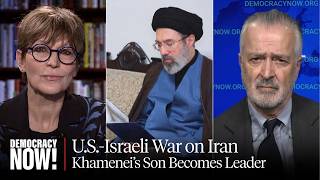
Iran Picks New Supreme Leader; Toxic Black Rain Falls After Israeli Strikes on Iranian Oil Depots

Protests and Power Plays: From Tehran to the Arctic Circle | The Intercept Briefing