Will the Iranian Regime Survive?
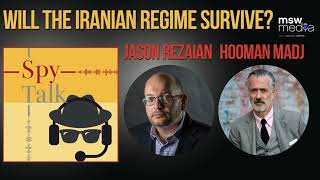
Michael Isikoff, Karen Greenberg, and Jeff Stein talk with Washington Post journalist Jason Rezaian and writer Hooman Majd about Iran's protests and regime stability. Death tolls range from official figures of 2,000 to opposition estimates of 20,000. The panel argues the regime will likely survive without war or elite defection, but says restoring internet access could be the most effective U.S. lever.
Chapters
MSW Media. Spy Talk, a podcast at the intersection of intelligence, foreign policy, national security, and military operations.
Hi, I'm Michael Isikoff.
And I'm Karen Greenberg.
And this is another edition of the Spy Talk podcast. And we've got a real special show for our listeners today with two prominent writers about what's going on. Gone inside Iran. A big flashpoint right now, a lot of uncertainty and a lot of apprehension. Our guests are Jason Rezaian of The Washington Post, who's had his own unique experience with the Iranian regime, having been imprisoned by it for over a year, and Hooman Majd, an Iranian-American writer and contributor to NBC News. Jason and Hooman, welcome to Spy Talk. Jason, I want to start with you. You had a very powerful column in the Post yesterday. The headline, I've waited for this electrifying moment in Iran for 10 years. Tell us why you feel that way. And also, there's been quite a bit of head-spinning news since you wrote that, and I don't know where that leaves you at the moment.
I appreciate it, Michael. Without going into a lot of detail, as everyone knows, we don't always write our own headlines. And I hope people actually read the column because it's tempered with a little bit of not just skepticism, but anxiety, right? I do think that the resilience and bravery of Iranians is something to be applauded. And I do think that they will achieve the destiny that many of them have long hoped for at some point. But there are also a lot of different ways that not only the United States but other allies could get in the way of progress in Iran. And I think we've witnessed that time and again. Just in the last hour or so, for the first time in over a week, we've been able to communicate with relatives in Iran. But that was only because someone who was a friend of a friend of a friend was able to connect to Starlink and hold up a telephone to call a landline of a relative who, after much waiting, actually picked up the phone and said, we're okay, all things considered. But it's a very trying situation. And the reality is, I mean, I think The people of Iran have not enjoyed a lot of good friends over the years. Certainly not in their own government, not in the US government, clearly not in the Israeli government, and not too many other quarters as well.
So less than 48 hours ago, the president of the United States, Donald Trump, was threatening to attack Iran if it continued to execute demonstrators and the estimates now are they are over 2,500. Trump then says yesterday, late yesterday, he's been informed that the executions have stopped and that the planned execution of one of the protesters had been put off. And then Senator Lindsey Graham, right after that, says, no, they haven't stopped at all, and the Iranian regime is continuing its crackdown. Tell us what, uh, starting with you, Hooman, bring you in. Tell us what you are hearing. Who's right right now, Donald Trump or Lindsey Graham, or do we just not know? Uh, and, um, what are your expectations for over the next few days of what's going to happen?
Well, to the best of our knowledge, uh, Donald Trump is correct and not Lindsey Graham. Well, he's half correct. Executions did not start. Crackdown depends on what you mean by crackdown. Very few people are going out on the street, and anybody who does venture out on the street, as far as I know, after dark, which is basically 4:30, 5 o'clock, is sort of encouraged by the heavy, heavy security presence on the streets to go back home. So there are on every corner of every major intersection cops, riot police, motorcycle police, things that Jason and I have both seen inside Iran after the 2009 crackdown on the Green Movement, similar to that, perhaps even more intense than it was then. So that is the crackdown. Yes, the crackdown exists. There's no internet, as Jason pointed out, that exists. No phone connection to the outside world, that exists. So that's the crackdown. And if that's what Lindsey Graham means, yes. Executions, no, he's wrong about that. Donald Trump is correct. I think I just literally 5 minutes ago saw that Donald Trump is taking credit for saving 800 people, which is exactly what he wants to do, is to say that I stopped the executions, I stopped the crackdown, and I stopped 800 people from dying. Where he got that number from, I have no idea.
Can I just ask a question? When you said where he got that number from, I have no idea, I'm curious where we're getting any of our information from. Communications are broken down. There's a geopolitical sort of shuffle going on in terms of Iran. It's sort of being a lot of a gray zone in many ways. How do you think people who are getting any information, what is it?
The government itself has admitted to a little over 2,000 deaths throughout the country. That's the Iranian government. Now, we don't generally like to believe everything the government says, either them or Hamas in Gaza. So you can take that with a grain of salt. Estimates from human rights organizations, videos that people have seen of morgues, of hospitals, uh, estimates go from that 2,500 number, which is sort of the number that I think Donald Trump has, has mentioned. I believe I could be wrong. Maybe I, I know he started out at like something like 500, but I think he may have said 2,500 as well, as high as 12,000. A few people have said as high as 20,000. Um, but the numbers are— that's what you're saying is correct. As Jason pointed out, there are videos coming out through Starlink. There are witnesses right now. There are flights available. One of my cousin's kids just left yesterday, left Iran and landed in London. And so these are the eyewitnesses that we know, and some of them are bringing videos out with them. They're obviously allowing people to take their phones with them that have these videos on them. So based on all these estimates, it's still— it's not very clear what those numbers are. And again, I'll let Jason jump in here too to see if he has any specific people that have contacted him?
No, I, you know, and I think anytime you're dealing with a situation like this, it is a lot of speculation. And I think that's helpful, uh, for the authorities in the country where, you know, uh, potential atrocity is taking place to say, well, how do you know, right? You're not here and we've shut down communication. I think it's going to be a very long time before we know the extent of this. And I'm not going to say that the number is not relevant because certainly every assassinated, executed, murdered person is beyond relevant. But I think the idea is that we talked about the 2009 protests a bit. At that time, protests were mostly peaceful. And the state did unleash violence and 100-something protesters were killed in those protests back then. We saw more protesters killed in protests in 2019. And then of course, during the Woman Life Freedom Movement in 2022, many more protesters. And it sounds as though even by their official count, they're acknowledging a higher number. Than, than in any of those. But I think the willingness to unleash that kind of force onto people shows that they don't have other methods of responding to the society, the demands that people have over a whole swath of issues, whether it's, you know, the decline in purchasing power, the repressive nature of life in the country, environmental degradation, all of these things, they don't have credible responses to them. They've shown themselves incapable in recent years to respond to very natural demands from people. And I think that's in large part why we've kind of come to this this head.
Of the two factors you mentioned, Jason, the economic distress for the Iranian people and inability to get basic goods at reasonable prices on the one hand, and then also the repressive nature of the regime, how do you judge among them? Which is the driving factor for these protests? And Hooman, I'd like you weigh in as well.
Look, I mean, I, I think it's a, it's, it's, it's the common culmination of many factors, right? Um, and, you know, in a, in a place where, uh, civil society has not been allowed to operate freely, uh, ever, but, you know, has been more and more and more restricted over time. And at the same time, everybody has one of these and is able to to clearly, most of the time, except during this crackdown, see all of the ways that they're missing out on modern life. It's very frustrating for people, and it's an incredibly educated population, a connected population, as Hooman Majd said. Flights are still coming and going. You know, everybody has relatives that live in the US or in Europe. The brain drain is a real phenomenon. Anybody who can in recent years has left. And so I think it's not one factor. It's the combination of things and a restless society who doesn't see any hope for a brighter future. And, you know, I applaud that bravery. I would like to see more forethought into what they would like to see come next and hear about that. And see if that's feasible. And one last thing that I want to say is that this idea of freedom and democracy is very different for people who've never experienced it before. And I think the strength of Iranian spending power in the early 2000s up until about 2011, when US sanctions really started to kick in, was almost enough. You know, people could travel fairly freely, take trips to Thailand or Turkey or Dubai, and, you know, kind of turn down the pressure a little bit. None of that stuff is available to people anymore. There are no options of pressure release inside the country, and people can't afford to go outside the country. And so, you know, it's a tinderbox. Hooman?
Absolutely. I mean, Jason's right. I mean, people are fed up, really. They're at their wit's end. That's the best way to describe it. I mean, everyone from, and we talk about the bazaar merchants, this latest round of protests at the end of December started in the bazaar because people could no longer afford to sell goods. Because if you sold your goods today, tomorrow it would be 20% more expensive. How are you going to restock? Especially people who deal with imports such as mobile phones. It actually started in the mobile phone sellers. Protests, and which really sparked this thing among the people who said, wait a sec, I can't afford meat anymore. I can't afford to buy, I can't even afford to take a taxi anymore. All the kinds of, I need 3 jobs just to make a living. And as Jason pointed out, a dead-end society where there's just no hope whatsoever. The sanctions that Donald Trump has put on Iran is part of the equation, of course, Sanctions mean things. The rial is the Iranian currency is in freefall almost at Zimbabwe levels. And I mean, I'm talking about Zimbabwe back in the '70s and '80s, not now. And nobody can really see what the endgame is. The president, Pesechian, has come out and said it before even these protests, my hands are tied. There's nothing I can do. If anybody has a good idea, please tell me. I mean, if you're an Iranian citizen, what do you say when your president says, I have no idea what to do? So they came up, they did actually after the protests, the first, they were initially peaceful protests started. People were like, we need real change, which is why you, for the, not the first time, but in large numbers, you saw people saying, wait a sec, this system doesn't work anymore. So that's where you hear, you know, regime change ideas and where people start talking about Pahlavi because he's the most visible of the exiled opposition leaders, because people really don't see a solution because they don't believe that Supreme Leader will allow anyone to make a deal with Donald Trump, with the US under Donald Trump. And if they don't make a deal with the US under Donald Trump, then it's either war is coming or the economy is going to get worse. So what is your solution then as a person? As a person, you go out and say, please do something. And that something is either change the regime or have the regime change itself. And neither of those are happening right now. And so I think this tinderbox that Jason says, it's there. I mean, they've clearly put down this round of— this crisis is sort of over in terms of the streets, but the crisis is certainly not by no means over in terms of the people's dissatisfaction, unhappiness, misery in many ways. And we have to see, again, the predictions are very hard, but certainly Donald Trump appears to have been satisfied initially last night anyway with Iran and is sort of willing to not interfere at this point, which I'm sure disappoints a lot of Iranians who want regime change.
You know, I think one thing that we should point out is that the velocity and spread of protests in Iran has been quickening and growing in the last decade or so, especially since these 2017 protests. And then you had the Woman, Life, Freedom protests in 2022. The number of cities, towns, villages where that saw protests has never been as much as they are. And there's also, at certain points, protests would happen in Balochistan or in Kurdistan, right? More regionalized. At this point, there's no ethnic, religious, linguistic, socioeconomic divides. Everybody's disaffected, dissatisfied. And Hooman's right. I mean, you know, Donald Trump wants to say, you know, I helped put these down. But, you know, it's only a matter of days, weeks, or months before people come out again. And, you know, this system still doesn't have an answer for any of these demands. And they're not going to be able to come up with one. As he said, when the president of the country says, I don't know, you got ideas, I mean, I think that there's a lot of people with a lot of ideas and most of them include get the hell out of here and let somebody else do it.
So I just want to contextualize this in terms of the United States and just get your guys' take on a couple of things. One is the JCPOA, the nuclear deal and Trump pulling out of it and how that, does that have any impact on this or it's just a totally separate thing because you sort of, you know, in terms of the economic fallout, et cetera, et cetera. That's the first thing. And the second thing in terms of past, but more recent than the far past, US policy is Trump has been sort of both sides of it here. Well, we might attack, we might not attack. Oh, now we're satisfied, now we're dissatisfied. One of the things that happened in the Soleimani attack was that the Trump administration writ large made the determination that killing Soleimani would not get any kind of backlash right away from Iran, right? Remember the answer was, "We'll take our time to respond the way we want." And they turned out to be right about that, right? And I wonder how much of that kind of attitude on the United States' part might still be in play here. And I'm just curious about how both those factors from our recent past might play into this or are just totally off the table now?
Yeah, I mean, Trump getting out of the JCPOA was sort of a bit of a shock to the system in Iran. The JCPOA was quite popular because it opened up the economy. Sanctions were slowly being lifted. It wasn't universally welcomed by everyone, but generally speaking, it was popular, certainly among the merchant class. And Iran really didn't have an answer for the JCPOA withdrawal. And so Iran didn't really have an answer for what to do once the sanctions were reimposed on Iran. And it was 2018 when Donald Trump withdrew, and for 2 years Iran tried to get the Europeans to stick to the sanctions, and then Iran started, probably in hindsight, mistakenly ramping up its nuclear program. And then Joe Biden got elected and Joe Biden decided he was going to go back to the JCPOA. And then of course, Iran didn't react very well to Joe Biden going back to the JCPOA. So there were a lot of missed opportunities to try to get the nuclear deal back on track. And it didn't happen either with Joe Biden or with Donald Trump in the second term, where he also said he wanted to make a New Deal that was better than it. So to say that it had no effect on US-Iran relations or no effect on Iran's economy would be wrong. But there's also a huge number of reasons why the Iranian government mismanaged its own economy, why the structure of the economy is such that Iran couldn't, it can't take care of its people unless it has some radical changes economically. So it's a combination of the two that have caused the economic misery in Iran, the combination of the sanctions, which clearly have hurt the economy and hurt ordinary people, and the mismanagement of the economy. In terms of Soleimani, and, and yes, he was— Donald Trump was right that Iran wasn't going to react in the way that, um, some people thought he was going to react. Um, I think that just because that one time, um, he was right and Iran was being very cautious, doesn't mean that they won't throw caution to the wind this time. If the US decides to attack, I think that this time they really have a lot more to lose than, yes, their most famous general, yes, their most accomplished general, which they lost, and they now know how accomplished he was and how good he was for Iran's benefit in terms of their own view of what, what he could accomplish. But in terms of what they, right now, an attack is, is existential for Iran. And I think they would throw everything they have. And I think that's been communicated. It was communicated by Qalibaf, the Speaker of Parliament, a couple of days ago. And I'm sure Donald Trump heard that. And throwing everything they have against, um, American interests and Israel is potentially quite damaging. Which is why we've also seen the Saudis.
Is that a credible threat?
Yes. Well, the fact that they were able to get through the Iron Dome with some of their missiles the last time and killed 37 Israeli citizens showed the Israelis that it's credible on some level. And they have thousands of these missiles now. And everyone in the region, according to what we're reading, has been very worried about this. The Turks have publicly urged the US not to attack Qatar. Now we've heard that Qatar, the UAE, and Saudis have urged privately Donald Trump to not attack Iran because they're worried about the fallout. Because now everyone believes, you know, you have a— Iran is basically a cornered animal. And what's it going to do if it's attacked? The Iranian, the top leadership of Iran are not going anywhere. They're not going to seek refuge in Moscow. They're not going to go to, they don't, they can't go to Damascus, a place they could have gone if they were, if there was going to be a war and a regime change. Um, they're going to stick it out and sticking it out means they're going to throw everything they have against, oh, I believe I, in the case of an attack.
So. Last fall, we had on this podcast Scott Anderson to talk about his really gripping book, King of Kings, about the fall of the Shah in 1979. And I am struck at the parallels with what we're seeing today and what we saw then as he recounted the demonstrations against the Shah started spreading throughout the country in 1978 to more and more cities becoming more and more combustible, and to the point where the Shah was truly on his last legs. But the difference between then and now seems to me, then there was a singular organized opposition represented by the Ayatollah Khomeini, then in Paris, flies back to Iran, and that signals the final days of the Shah. Here, it is not clear there is a single opposition leader who can bring the country together. The best we have is Reza Pahlavi, the son of the Shah, and it's totally unclear just how much support he has. I'd be really interested in hearing from both of you on the parallels and the differences, and in particular, whether Pahlavi is the de facto alternative at this point, or whether there's some other configuration that could replace the regime. Jason, why don't you start?
Look, I've been asked this question a lot in recent days, and Hooman knows that I'm a diplomatic person and don't want to disparage anybody, so I won't. But I think when a resume is son of a deposed dictator and there's not that much else on the resume, it begs the question, you know, what has he led and how would he presume to lead a country of Iran's size? And I understand that, you know, a lot of folks out there will tell you that, you know, the ability to lead and charisma and all these sorts of things are genetic and passed down by generations and He's the son of a monarch. Remember that the monarchy that his father ruled over, or symbolized, was invented by his grandfather. And I think in the history of Iran, it's probably the shortest-lived tenure of leadership besides the Islamic Republic, right? I think it was 54 years. If you think of the—
I was always puzzled. They used to call it like the, you know, the 10,000-year-old peacock throne. In fact, the grandfather who created the monarchy had no hereditary ties to Cyrus the Great, as I recall.
And again, I'm not trying to disparage or, you know, cast doubt on anybody, but I think it just demands a lot more inquiry, right? And I know that there is a support structure around him in diaspora, and they've created some plans, transition plans that they talk about. I also know that he has a lot of followers on social media that do not display democratic tendencies at all and how they go about anybody who questions them. And they would say, well, no, no, no, those are regime agents that are posing as— I mean, what I would like to see happen here is the incredibly talented and powerful Iranian diaspora, which wields massive amounts of capital and influence. In this country, just not politically, figure out how to come together and constructively plan for a future of Iran that would be a connected society to the rest of the world. That's only going to happen if Iranians living abroad play a role in that. And so far, we haven't even been able to kind of decide on, you know, what the right flag is for a future free Iran. And that seems to me to indicate that one, we might be missing the moment or two, that we're not built for it.
I agree. I mean, Jason, you are being very diplomatic about the Shah because, and, or the pretender Shah. And because some of his closest advisors have threatened people like Jason and myself, both Jason and myself, and have called us regime stooges, um, and in some cases threatened us with violence. And these are not just people, random people on social media. These are some of his close advisors, people that he associates with. And other people have said, look, if you want to be a leader, you have to disassociate yourself from these people who, who, who are, you know, just cause— or Tearing people apart on the internet, on social media and all that. And Jason's right. I mean, I wrote about this a couple of days ago for The Intercept about, about Pahlavi, um, and his chances. I, I really don't see, um, any kind of evidence that he has created any kind of network inside Iran. Um, yes, his name is very well known. Yes, he can say, come out please and march on Thursday night. And people did. But when he said, come out and, or go out on strike to the workers in Iran, they didn't. When he said in June of last year, after the 12-day war, he said, I have, I'm going to recruit people to defect from the security forces, the IRGC, the Basij, the security forces in Iran, and then subsequently claimed that he had 50,000 defectors ready to go at the right time. Well, the right time was a week ago. And not a single one defected. So the evidence is not there for him to have any kind of real organization. Remember, as you pointed out, Michael, Khomeini had every single local mosque in the entire country as his base. Every single one. He was sitting in Paris, first in Najaf and then in Paris, but he could disseminate his views or the revolution through every single mosque in Iran. And there's plenty of mosques. Imagine being able to get to every church in America and every synagogue in America. That was the, that was the power that Khomeini had that you mentioned. And that doesn't exist right now. And the only other regime opponent is Maryam Rajabi, president-elect of the National— I can't even remember the, whatever it's called, but it's the MEK, who are despised in Iran. And the reason you never hear her name. You never hear the MEK chant in any of these protests, 10,000, 100,000 people protests, is because they're reviled for having taken Saddam Hussein's side in the Iran-Iraq War. They're in exile in Albania right now. They do have foot soldiers in Iran who have committed terrorist acts, have taken out various scientists, assassinated people, but it's a small group of people. The other thing that Jason mentioned, which is a very valid point, is about all the ethnic minorities. And there is a concern among Iranians inside Iran with some of these ethnic minorities who are armed, such as the Lurs from Lorestan and the Kurds especially, who have armed separatist movements, that someone weak like Reza Pahlavi could unleash those forces and would not be able to control the cohesiveness of the Iranian nation.
I think that cohesiveness, before we move on from that, I mean, this for most of us is the biggest concern, right? Like the territorial integrity of Iran has to stay intact. And when you look at it, there are a handful of ethnic groups bordering countries with large populations of those same ethnic groups. In my experience of being, you know, of Iranian origin and meeting people of Iranian origin and in Iran, their Iranian-ness has always trumped their Kurdish-ness or Jewish-ness or Muslim-ness. This is something to protect, you know, not just for Iran, but I think for for the world, right? And I think probably Bibi Netanyahu sees a partitioned Iran as advantageous to him. I don't think that that's true. I think a stable, intact Iran with a free economy and open society would be in the world and the region's interest.
Listen, I want to follow up on just something he said before, which I don't want to lose, which is you talked about the diaspora. And the potential of the diaspora to sort of communicate, get together, help rebuild whatever is coming next in Iran.
Yeah.
Any signs that that's happening?
No, unfortunately. And, you know, if you look at some of the, you know, biggest tech companies in the world, at or near the top, there are Iranians in all of them, right? The fact that we can't even to get these people back online means that very powerful and connected people in this country who are Iranian are not using their influence effectively. CEO of Uber has born in Iran and has talked sometimes about his desire to help. I think he's probably in a pretty good position to pick up the phone and talk to people in Washington, whether they're in Congress or in the White House or the NSC, is that we've got something called, uh, direct-to-cellular internet service that exists now. Anybody who has a smartphone that was made after 2020 can, uh, access this, but it requires flipping a switch. And to flip that switch, Congress would have to legislate doing that for Iran, or, you know, the White House would have to do an executive order. I'm not sure that anybody in Congress or the White House knows about this, right? So, you know, the messaging, the organization, and really, I mean, you know, we are, we should be, we're somewhere between 1 million and 2 million people living in this country. We're the highest educated, highest income earning non-European immigrant population. We should have some political influence. We don't. That's our fault.
That's absolutely correct. That's absolutely correct. And you know, the one organization that was started by someone, um, to, to be that kind of umbrella organization has become something that every, most of many Iranians in the diaspora consider to be pro-regime. And that's NIAC. And whether they are or not is—
Tell us who they are.
National Iranian American Council. Um, and they have two branches. One is, uh, to be a lobbying group, which, and they're registered as lobbyists in Congress. And the other is to just be a council for Iranian Americans to kind of come together.
And they're supportive of the regime?
Well, people accuse them of being supportive of the regime because they've been anti-war, anti-sanctions, uh, anti-attacks on Iran.
Engagement.
Yeah.
Who heads it?
Jamal Abdi is his name. It's based in Washington. Before it was Trita Parsi, who a lot of people again consider to be a regime stooge. So Iranian, what's happened in the Iranian diaspora, and I think Jason was absolutely right about this, is a lot of the people have, who are very powerful, and I'm, by the way, in tech and banking. There's a lot of very, very powerful bankers. There's people in the oil business, very, very wealthy billionaires, Iranians. And many of them have looked at the diaspora politically and said, I don't want no part of that. That's not something I want to be involved with. Because if you look at the vitriol that's spread, that's passed out between pro-monarchy, anti-Islam, pro-Islam, pro-regime, anti-regime in social media or even in essays or op-eds. It's just, it's like they don't want to be involved. You know, people have careers, they have businesses, they have things going on. Their kids are American. It's like, okay, there's no, there's no unity to be seen. And so the ones who are the most powerful Iranians, the most visible The most high-profile Iranians generally, unless they're political or unless like Jason, a writer, myself, a writer, um, are just like, you know, leave me out of this. Uh, you know, he mentioned Dara Khosrowshahi, who's the CEO of Uber, who lived in Iran, I think until he was 11 and grew up in some, in New York, in Westchester County, New York. Um, you know, he, he has occasionally said things and apparently he met with the Iranian president this last time the Iranian president was here. The president was here in September for the UN. But realistically, there's, you know, he said his biggest contribution has been if Iran changes, if the regime changes, we'll be the first to invest in Iran. Of course, he'll have to go up against Snap, which is their version of Uber inside Iran.
By the way, Hooman, you mentioned the MEK before. They were, of course, for years considered a terrorist group by the United States. Eventually got that lifted. But I was scrolling through X the other day and I came across a post from, of all people, Rudy Giuliani attacking Reza Pahlavi, saying he's got no support, he has no claim of legitimacy to lead the Iranian people. And I thought, that's seemingly odd. And then I remembered why he has been long time on the payroll the MEK, uh, along with John Bolton and others. Yeah, and, and, and others. I think Louis Freeh, the former FBI director, was on it. I mean, um, they managed to recruit quite a few, um, folks to their cause. Um, Jason, can you, uh, remind us, um, why it is you were imprisoned by the regime in 2016 and why they kept you locked up for a year and a half before they let you go?
You know, and I'm glad to be on with Hooman because, you know, he's one of the individuals who had, you know, the most close-up view to all of that. But, you know, my own interpretation is that I was taken by the Revolutionary Guard to disrupt the nuclear negotiations.
And you were reporting for the Washington Post at the time.
I've been living and working in Iran for 5 years, reporting for The Washington Post with full accreditation for 2 years. Coincidentally, or worth mentioning, that literally the morning of the day that I was arrested, I was given a 1-year extension of my press credentials. As Hooman well knows, there are competing security services inside Iran. The ones that oversee press credentials are linked to the Ministry of Intelligence, which is a professional intelligence service comparatively. But my wife and I were abducted at gunpoint in our home by the Revolutionary Guard Corps intelligence service, which are terrorists. I mean, the Revolutionary Guard Corps Writ large has been designated as a terror organization by the United States. I have argued against that kind of blanket designation, all blanket designations, but the Quds Force and the intelligence service, you know, there's a very strong case to be made that these are terrorists. Anyway, they took me hostage, held me for a year and a half, and And I think it did disrupt the negotiations. It certainly became a spanner in trying to get the deal done. And then, you know, it was part of the implementation of the JCPOA in 2016 was the release of myself and several other Americans and several Iranian Americans being held in U.S. prisons on sanctions violations. Um, so I tell people that, you know, as far as I'm concerned, the JCPOA, uh, was a wash. You know, it got me, it got me taken hostage and it got me out.
Michael, the thing— and Jason, you know, um, and as he, as he mentioned, I was covering the, the JCPOA talks with Ann Curry, uh, and, um, with NBC News. And so we were virtually at virtually every single round of negotiations, and we're doing documentaries and all that. And so because of that and access to the Iranian team who were on the reform side, I would, as Jason and his brother and his mother know, would press the Iranian team, especially the foreign minister, to, you know, what is going on? Jason's brother would come to some of these events, some of these rounds of negotiations, especially in Vienna with the very long drawn-out negotiations. And I'd see him and we'd go and talk, and the foreign minister was like, yes, I'm doing everything I can. And but, you know, clearly the foreign minister did not have the power to get Jason released. And as we have seen since then, and I know Jason knows this as well, the competing The competing power centers do not like the former foreign minister, to the point where today there was a rumor that some of them put out, MPs in parliament, that he had been arrested. He and Rouhani had been arrested. Now, I doubt that that's true. I haven't been able to confirm that, but he is particularly despised for having done the JCPOA, for having defended people like Siamak Namazi and other longtime prisoner, Iranian American prisoner, defending Jason Rezaian saying, you know, this is ridiculous. This is, and you know, you could even argue in his case that even if you, even if you thought, um, Jason deserves to be in prison, even if you just thought Siamak deserves to be in prison, it's harming Iran's image. So on that very cynical view, you should be releasing them. But he tried everything I know and unfortunately was unsuccessful. Unfortunately, Jason did get out.
Not that I want to draw any comparisons, but given we were just talking about Jason's arrest by the Iranian regime, this week another Washington Post journalist had her home raided by the FBI who seized her devices as part of a leak investigation. So just want to put that out there in terms of when we're talking about freedom of the press. But I'd like to wrap up here with two questions for both of you. And number one, is there a role for the United States to play here, either overtly or covertly? And number two, this is January 2026. By the end of the year, Will the regime still be in power? Hooman, you go first.
Well, I don't know about a role. I don't know what role it can play short of just, I mean, you know, the, the internet is probably the, the place it can be the most effective in helping if it wants to, if, if Trump administration really does want to help the people in Iran to communicate and be able to organize. That would be literally the only way America could be effective without actually hurting the cause of people who are hoping for change, whether they're hoping for change internally or whether they're hoping for a complete regime change. And I think we don't know how many want a complete regime change and how many people want a serious change inside Iran that allows things to dig. So that's the first thing. Secondly, um, What was the second part? I'm sorry, I forgot.
A year from now.
A year from now.
Or by the end of the year.
By the end of the year.
Will the regime still be in power?
That's an impossible thing to gauge. I think if short of war, unless there's a war, unless there is a decapitation of the regime, I think the answer is probably yes. But I also think that it will be around unless, you know, I don't see a regime collapse. At this point, I don't see a defection or cracks in the, in the security services. Um, we haven't seen it yet. I don't think it will be there. Um, unless again, unless there's external forces. Um, I think that my answer would have to be yes, the regime will be there and will be cracking down on future protests that probably will erupt.
Jason, same two questions.
Yeah, I mean, I'll take the second one first. Um, I don't think that it's wise to, you know, make predictions about these sorts of things. If they are still in power, I think they'll be even weaker, uh, than they are today, but also probably even more brutally repressive, right? And we see, you know, how that goes, you know, in places like Syria and and others. So, you know, I'm just hopeful that bloodshed can be limited and that people's dreams and aspirations are, that the country starts moving in that direction rather than away from it. Second, how the US could help. I think the internet is clearly the piece of the puzzle where we could be doing something right now. We could have been doing something for years. We claim to have been doing things for years. And we haven't been doing it, right? So that's one place to help.
When you say the internet, what do you mean? Using it how?
Ensuring that Iranians are able to continue to access it. Okay. Right? For the ability to—
You're not talking about cyber attacks shutting down the electric grid or something along those lines.
No, no.
Just wanted to clarify. Okay.
Keeping people online. The other thing that I would say is, you know, I'm no historian, but if I remember correctly, before the fall of the Soviet Union, there was a lot of dialogue with not only dissidents inside the Soviet Union, but the leadership of the Soviet Union. It was a foregone conclusion that that system was not long for the world. And you have to find the people within these systems who understand that their, their, uh, current situation is no longer tenable and that, you know, um, stability is preferable to chaos, right? Gorbachev was not a Jeffersonian Democrat, right? Uh, but he understood that the Soviet Union wasn't gonna last. And there are those people inside the Iranian system right now, and I think we need to be communicating with them and understanding better. I'm not saying make deals with them or prolong their, their, their power, but understand better what's happening there. Because I do think that, uh, to Hooman's point, that, you know, there haven't been defections yet, and there might not be, but, uh, not having clarity about what's going on inside this country is no longer a valid excuse.
I agree.
I agree. And I would finally say, I would not be surprised if there are members of the Trump administration foreign policy team who are communicating with some of the people inside Iran who might be like that. We know that Steve Witkoff has, you know, the Iranian foreign ministers, they text each other. They've admitted it on both sides. But I also think that, um, the, As a last point, that the people, it's exactly what Jason says, those people inside Iran who are pragmatic and do want to see some change and do want to help the people and are perhaps, if you will, for want of a better word, the reformists, they know that even though the crackdown has been successful or can be successful for the near future, that long-term it's not tenable. And those people, I think, need to be encouraged to help because there's no other option right now.
Well, clearly the Trump administration is communicating with somebody because Trump said, "We've been told." Right.
Yes.
Exactly.
Last night, right, that the executions were stopped. So somebody from inside is telling him something. But look, I want to thank both of you for a really illuminating discussion.
Yeah. Thank you.
Discussion about a very murky subject right now, uh, and, uh, this has been enormously helpful, uh, for us and hopefully our listeners. And we'll want to stay in touch with both of you as, uh, events proceed. So thanks a lot for joining us.
And that's it for this week's Spy Talk. Be sure to check out our complete podcast archive on Apple or wherever you get your podcast. And if you haven't already, do check out the SpyTalk.co news site on Substack, where we offer a steady diet of scoops and original analyses from the intersection of intelligence, foreign policy, and military operations. Just Google SpyTalk and you'll quickly find your way there. This edition of the Spy Talk podcast was smoothly produced, as always, by Kanai, and expertly edited by Molly Hawkey for MSW Media. That's it. See you around. I'm Jeff Stein.
I'm Michael Isikoff.
I'm Karen Greenberg.
Thanks for listening. For more original reporting and insights like this, subscribe to SpyTalk.co on Substack and follow us on Twitter @talk_spy. If you enjoyed our podcast, subscribe and leave a review on Apple Podcasts, Spotify, or wherever you get your podcasts. MSW Media.
More from Hooman
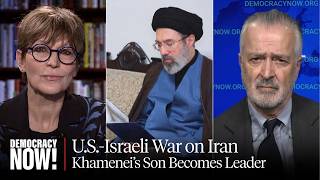
Iran Picks New Supreme Leader; Toxic Black Rain Falls After Israeli Strikes on Iranian Oil Depots

Protests and Power Plays: From Tehran to the Arctic Circle | The Intercept Briefing
Episode 64 - Why Iranians Now Want the Bomb: Hooman Majd on Israel’s Strikes and Nuclear Ambitions