Episode 95: The Hidden Struggle of Belonging by Hooman Majd
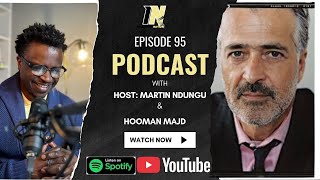
In this Immigrant Nation Podcast interview, former music executive‑turned‑political commentator Hooman Majd discusses his memoir Minister Without Portfolio, using the title as a metaphor for his lifelong role as a “minister without a specific portfolio” – a jack‑of‑all‑trades who never fully belongs to any single nation or profession. Majd recounts his personal history: growing up in diplomatic families, witnessing the 1979 Iranian hostage crisis, the 1979 revolution, and the Iran‑Iraq war; navigating illegal‑immigrant status, political asylum, and eventual U.S. citizenship; and the emotional toll of displacement. He reflects on the rise of Islamophobia after 9/11, the Trump administration’s immigration enforcement and Muslim‑ban policies, and the broader pattern of racism against non‑white immigrants. Majd links his own resilience—shifting from music executive to writer and commentator—to the challenges facing today’s immigrants, warning that AI and automation will erode traditional low‑skill immigrant jobs. He shares the impact of COVID‑19 on his family, especially his mother’s death, and describes the Iranian Jewish community’s precarious yet historically rooted position in Iran. The conversation moves to the prospects for U.S.–Iran reconciliation, noting the 2024 Israeli‑U.S. strike as a major obstacle, while arguing that long‑term Iranian public opinion still favors better relations. Majd critiques Western misunderstanding of Iran, citing the Obama‑Kerry nuclear negotiations as a rare moment of empathy, and laments the lack of diplomatic channels. He explains why he chose to write the memoir now—age, accumulated life experience, and a desire to document the immigrant journey—while acknowledging that the book neither heals nor reopens emotional wounds, but serves as a cathartic record. The interview ends with practical information about Majd’s social‑media presence and a call for immigrants to stay strong.
Chapters
Yeah, I mean, the minister without portfolio is interesting because it was a title given to me by my boss in the music business because it wasn't— I didn't have a very specific role initially when I started, and, but that also became my life. Because if you look at all the different careers that I've had to have or wanted to have, it's also just moving from one thing to another And never be, you know, it's the old cliché, you know, jack of all trades, master of none. That you can do all these different jobs, you can do all these different things, but you're not actually a master of any of them. Even though I'd like to think I could be a master of, you know, writing, for example. But that wasn't my original profession. Music wasn't my original profession.
Welcome to the Immigrant Nation Podcast. Today we are speaking with none other than Hooman Majd, former music executive turned political commentator, to unpack his powerful new memoir, Minister Without Portfolio, a raw, intimate journey through exile, identity, and what it truly means to belong to two countries and more. Uh, if you're just jumping into this show at the moment, follow us please on TikTok and Instagram at Immigrant Nation and share with your friends on Facebook Facebook, you will find us at the Immigrant Nation Pod, and on LinkedIn and YouTube, the Immigrant Nation Podcast. Please share, subscribe, and welcome to this story and to the journey of Hooman Majd. In Minister Without Portfolio, there is a quiet but persistent thread of searching for home. We've been talking about home, a way to feel like you belong. From for a meaning that inside of you is displaced. What's the one story or emotion you choose not to include in your memoir regarding that and why?
Well, I don't think I kept anything out of it, to be honest with you. I really, I mean, there was emotions. I mean, I didn't talk very much about what it felt like to be Iranian when the hostage crisis happened in America. I was here. When I say the hostage crisis, in Iran, the U.S. embassy was taken over by young students, and there was a hostage crisis from '79 to 1981. For a long time, American diplomats were held hostage. I didn't get into a lot of what it felt like then. You know, back then it was really interesting because a lot of the Iranian immigrants at the time who had fled Iran because of the revolution or who just stayed here because they were students and didn't go back, but had grown up in Iran. You know, they changed their name, or not legally necessarily, but you know, someone called Faramaz changed his name to Fred so that he wouldn't be immediately identified, he or she wouldn't be immediately identified as Iranian. Because, you know, we had mass demonstrations and rallies saying Iranians go home, screw Iran. I mean, really nasty things about Iranians. And it felt very uncomfortable to be here. At the same time, didn't really have much choice. I mean, I was here and I think a lot of other Iranians, most countries in the world required you to have a visa to go there. Iran had just had a revolution. All visas were canceled. People didn't want, I mean, you couldn't get on a plane and go to France and live there or go to England and live there, go anywhere really. Really in the world without a visa. So you'd have to go and apply for all that. And plus, you didn't know anything about where to go. Even if I had been educated in London, so I potentially could have gone to England, but I don't think England would have been much better than America. At least Americans— not all Americans, but many, many Americans— sympathize with immigrants and sympathize with people who aren't— who could— they can judge that if you're assume, you know, if you're not in Iran and shouting death to America, that you're probably not anti-American if you're living here. Most Americans, I'm not saying all, some still think you are anti-American if you're here. But yeah, I didn't talk about that much in the book, but it was a very, twice there was a very strong feeling of displacement. It was one time then and then many, many years later at 9/11. 2011, where the idea of being Muslim in America felt very uncomfortable. Again, not that— we talked about this earlier— not that I am a practicing Muslim or go to mosque every Friday for Friday prayers or am visibly Muslim in the sense that, you know, the way people think Muslims look like in America, if they stand outside of mosque, they see people with, you know, Islamic gear if they're from Saudi Arabia or wherever. So despite that, you also knew that Americans had suddenly become very Islamophobic after 9/11. And so that was an uncomfortable time to be someone who couldn't identify, you know, going back to the idea of home, you know, how could this be your home if so many Americans felt like you are the enemy because you're a Muslim.
Talking about Islamophobic, is there a correlation to how it felt around 9/11 and years after? And while America as a nation has practiced the idea of deporting those they consider undocumented immigrants out of the country. Has that feeling changed over the years, and does it feel the same way now with the flamboyant way the Trump administration is executing deportations?
Well, I mean, it just seems, apparently, it feels like, you know, the Trump administration just doesn't like brown people. Brown and black people. And when I say brown and black people, it doesn't like people who don't— aren't like white European, of white European stock. I have yet to see ICE go after an Italian or French illegal immigrant in a restaurant in New York City serving food or whatever. You don't see that happening. They only go after the bus. Yeah, yeah. And, um, you know, I'm sure there's, there's so many English people living in New York City, British, I mean, I've never seen them get deported. I only see, or even get approached, let alone to ask for their green card. But it's always the Latin Americans or Africans or, you know, Muslims or whatever. So yeah, there's, I think there's a real sense of, I mean, Islamophobia is a separate thing from, you know, getting rid of or deporting immigrants who are who are not white Anglo-Saxon Protestant WASPs. But there's clearly Islamophobia has grown substantially since the Trump administration's come back into power. And certainly in the first term where he had a Muslim ban, what he did, he didn't call it a Muslim ban. You ban people from Muslim countries, it's basically to come to the United States even for a visit, you're talking about a Muslim ban. That's what it was. And it's reactivated again, and the Supreme Court allows it. So, you know, almost all the— almost all, not all, but almost all the countries that are on that list of countries that can't get visas, citizens of those countries that can't get visas, are Muslim countries. So it's, you know, it's clear that the Trump administration has negative feelings about immigrants who don't fit the kind of immigrant that he, in his mind— Germans, Scandinavians, English, French— he's happy to have those people. But, you know, not you or me. We're not included in the kind of people that he wants.
I find that very interesting and cynical, especially on the religious perspective, because reviewing data, it seems to me that Christianity in America is losing faithful followers in dramatic numbers. And on the other hand, if you juxtapose that against Islam, Islam has been gaining quite a momentum in the country, not just in growing numbers of people who are converting to Islam, over 30,000 people each year, But also even in political arena, you're seeing a lot of Islam-educated, Islam-influenced, born immigrants, citizens in America who are running for office. Is the current administration out of touch?
Yeah, yeah, the current administration is very much out of touch. I mean, you know, Mamdani's win in I mean, in New York City, Zohran Namdani as mayor just proved it, basically, how out of touch he is. I mean, he got more than a third of the Jewish vote in New York. Everyone talks about how New York is the biggest Jewish city in the world, bigger than Tel Aviv in terms of population. More than a third of those Jews in New York voted for Zohran Namdani, an avowed practicing Shia Muslim. So yeah, I think the administration is way out of touch, and the Islamophobic attacks on Zohran Even by people in Congress, even by people who— politicians. It's just been astonishing to watch. And, you know, people forget that America— I mean, a lot of the people who are Islamophobic, who are— many of them are white and have had families who've lived here for generations, in some cases 100 years or 200 years, are Islamophobic. They forget that Thomas Jefferson had a Quran. Thomas Jefferson, George Washington, they all said that Muslims are welcome in America. In George Washington's case, he said Muslims are welcome on my estate where he lived on Mount Vernon as long as they're hardworking people. Why would he say that? Because he had slaves, and I'm sure he knew that some of his slaves were Muslims. People forget that many of the slaves that came to America, I don't know what the exact percentage is, but certainly some of them were Muslim from West Africa. So the idea that Muslims don't belong in America— I mean, many of those slaves then obviously lost their religion or were converted to Christianity by their masters or by the church, and then their children and their descendants became Christians, as you know. There's a strong Christian faith, faithful among Black Americans. The Black American church is a very strong church and has been since slavery times. But some of those people were descendants of slaves. So it was— America was, you know, in some ways built by, by some Muslims because many slaves worked on building houses, building railroads, building things. So the idea that it's Islamophobic now to today is just ridiculous. I mean, it's just ridiculous, but it is the truth. And people tend to like to blame a minority group. It used to be a different minority group. They used to blame Jews for things. They used to blame other immigrants. Now it's just convenient to blame Muslims for, you know, especially after 9/11, especially after Islamic terrorism. That is a real thing. It is a real thing. It's not— you can't deny that there is Islamic terrorism. And then of course with the wars against the Taliban in Afghanistan and against Iraq, Saddam Hussein, and Americans losing their lives to Muslim forces, whether it's the Taliban or whether it's the forces, the insurrection in Iraq. So there's a lot, you know, the Islamophobia all the way from 9/11 onwards has been marked and has gone up, I think, a lot now. And you can see it just the way that people talk about Zohran Mamdani, as if he's going to bring Sharia law, for example. It's a ridiculous notion. Yeah.
So you've, in your book, you've described the phrase minister without portfolio as both a joke and truth. How does the metaphor capture the disorienting yet permanent status of what I would have summarized after reading your book, which is a reluctant exile?
Yeah, I mean, the minister with that portfolio is interesting because it was a title given to me by my my boss in the music business because it wasn't— I didn't have a very specific role initially when I started. And, and, but that also became my life because if you look at all the different careers that I've had to have or wanted to have, it's also just moving from one thing to another and never being, you know, it's the old cliché, um, you know, jack of all trades, master of none. That you can do all these different jobs, you can do all these different things, but you're not actually a master of any of them. Even though I'd like to think I could, I could be a master of, you know, writing, for example. But that wasn't my original profession. Music wasn't my original profession. And to minister with that portfolio, this reluctant exile also fits in with that, even though at the time that title was given to me as a kind of half jokingly. It wasn't referring to the idea of home or anything, but it does fit. It fits into that idea of not quite being an American, not quite being an Iranian, just being this person, not with any identifiable, you know, persona. You know, someone looking at me, you know, if I get in a taxi cab in New York City, No one's going to ask me where you're from, what you're doing, or anything like that. I'm not obviously, you know, if I— in the old days when you used to get into a car service to go to the airport, or nowadays if you get into an Uber, they know your name, so they might ask you, well, oh, where are you from? Um, you know, because just the name is not an American. It's not Dave Smith, you know, it's just, this is a name that obviously is foreign. But again, that notion of being neither here nor there, neither associated with one specific, whether it's a job or country or another, is that minister without portfolio. In government, when they say someone's a minister without portfolio, it means because he's not foreign minister, he's not the labor minister, he's not the economic minister, but he can do all of those things. He can be He doesn't have a portfolio that says he has to do this one thing. And then again, in terms of home, that feels the same way for me, that it's— I can't be Iranian 100% or say that I'm, oh, I'm from Iran, because that indicates something to the person I'm talking to. And I can't say I'm from America because that also indicates something to the person who's who I'm talking to, I'm conversing with.
From earlier you said it almost feels like it's disingenuous when you really don't start by telling somebody where you come from, and when I say that I mean where you were born. Although the majority of your life you did not live where you were born, you've lived in a variety of countries.
Correct, yeah.
Most of it in the US. When I converse through your story, I have this feeling that you wrote the memoir so that it could stand out from the rest of your work. You did not write the memoir as a political commentary or as a journalist. It almost feels like you demanded vulnerability. What emotional risks did you take writing this book that you hadn't taken before?
Well, I mean, as a journalist or as someone who wrote political, social books about Iran or articles in newspapers or magazines, You try to be very neutral in terms of what your biases are, and everybody has biases, and their biases come through. But, you know, you try very hard when you're writing something nonfiction to make sure that there is— there are no biases, but, you know, and no emotion attached to those stories that you're telling as a journalist. In this case, it's all about emotion. It's all about. It was all about who I am, what, what, what I felt. And writing that made it easier for me to even deal with my own emotional thoughts about what home was. And so just the process of writing it, you know, I hope that it appeals to other people, especially people interested in immigration and interested in the immigrant experience. Um, even though it's only one person's experience as an immigrant. But as you pointed out earlier, I think every single immigrant in the world sitting in America or Europe or anywhere else in the world, there are going to be elements of this book and the emotions contained in it, or that come out of it, that will resonate with their stories as well. Even if they are someone who, you know, listen, I mean, it's really interesting because before the revolution in Iran, I had an Iranian passport. Sometimes it was a diplomatic passport when I was younger, under 18, with my parents being, my father being a diplomat. And back then, even though I had an American accent because I, in English, because I went to American schools, if somebody asked me where I was from, without question I'd say Iran. Without question I would say Iran. Because even though I wasn't raised there, my intention was to be Iranian and go back to Iran, you know, follow in my father's footsteps, join the foreign ministry, you know, become a diplomat. So it was very easy for me to say that I'm from Iran. After the revolution, I still said that for a long time until I became a green card holder, a political asylum green card, then a citizen. Then it became like, well, where am I from? Then it became more of a question after, you know, I don't have a home. I thought I was going to have a home later in life by going back to Iran, and that didn't happen. So what is my home?
So, yeah, you reading your book, I felt that earlier part of your life was this very loyal almost obsession to discovering and to finding out a land that you were born in but never lived in and but wanted to provide and contribute. When did that dream fade away? When did you give up on that passion?
Almost immediately after the revolution, it was pretty clear that my father losing his job, um, and, uh, being someone that couldn't go back to Iran, at least not immediately, uh, you know, his friends were being executed, you know. And, um, so it just felt like, okay, that, that's over. That's, you know, I, I gotta forget about that notion. I still felt strongly connected to Iran. And of course, when Iraq attacked Iran in the Iran-Iraq War with Saddam Hussein. I felt terrible that I, you know, that I was living in America while my fellow Iranians were getting killed on the battlefield. I did feel bad about that, but I also knew that if I went back to Iran, um, it wasn't gonna be pretty. I mean, I— they may have accepted me as a soldier, I don't know, but I didn't know at the time. So I I, I had a very difficult time adjusting to the idea, but I did get it right away. I did understand right away that, uh, that, that dream was over once, once, especially once my father lost his job. You know, after the first few weeks of the revolution and then the Islamic Republic was declared in a referendum to be an Islamic Republic, and it was clear that things were changing drastically. Um, I would say 2 months after the revolution, I knew that that dream was over. I could never, never be, um, a contributing citizen of Iran. And then I had to try to find out where I was going to do that. And because I lived here, I just decided that this was going to be where I had to try to find, find a way to make it my home and, and make a career and find a way to make a living, basically. And it was not easy at first. Yeah, because being an illegal immigrant meant that you couldn't get certain kinds of jobs. Being— because I was illegal by definition, my student visa expired, and you normally, you go back to your country when you finish your studies. But I wasn't going to go back, so I had to get political asylum. And until the political asylum is granted, you're actually illegal, even Even before I applied for political asylum, I was already illegal. So, you know, it was harder to get a proper job, I should say. So it was little jobs, drive a taxi, drive, you know, whatever, drive a limo, do little odd jobs here and there to make a living.
What was that like? You know, you had lived this beautiful, if I may say, life of affluence. Because of your father and his—
Yeah.
As a diplomat. But then that was snatched away from you and all of a sudden you had to figure out survival and what it meant to really in some time, in certain part of your life, live as an illegal immigrant in a Western country. What was that experience like and how did that transition eventually build your character.
I felt I had to be resilient and had to find a way to make a living, um, and I wasn't embarrassed necessarily by anything that I did. I just thought, you know, this is America, this is what you do, you find a way to make a living. You know, when I was in college, I had a classmate who was getting his bachelor's degree in electrical engineering and was from Nigeria and drove a cab Washington, D.C., like many other Nigerian students who had come to study but got a work permit because they didn't have enough money to, to pay for tuition and live. So they did odd jobs. And I always thought, well, that's fine, that's nothing wrong with that, even though I did grow up, as you say, you know, with in privilege where I didn't have to work, where my parents paid for my tuition and paid for my housing and college and all that. But it wasn't that difficult. I mean, I just quickly learned to be resilient, I think. I felt it was not that difficult to just do anything. I didn't think it was embarrassing. I, you know, I had friends who were in college who were royalists, monarchists, who believed in the Shah, believed in kingdom. I had right-wing friends and I had left-wing friends. I had communist friends who thought that, you know, everybody should be equal and it didn't matter if you were a taxi driver or if you were the king, everyone should have the same salary, the same things like that. Those ideas that people had in college. So I grew up around, you know, liberalism, even though I did grow up around privilege and have privilege. So it was really all about resilience. How do I navigate this? As you know, I don't want to compare myself to the illegal immigrants of today who come from, let's say, Latin American countries, El Salvador, Honduras, and places like that and cross the border. I'm not talking about that. That's a much more difficult, much more arduous journey that they have to take. I was already here. I, you know, I didn't have to cross a border. I have to find a way to, um, and, and, and I don't want to even compare. Because of my privilege, I had the ability to very easily, you know, go to a limo company and get a job, you know, and, and my language skills and, and be able to, if I become a salesman in a Gucci store, because I knew how to, you know, behave as a, as a, in the way that those people think you should behave if you're going to be a salesman in a fancy store in Beverly Hills, they have a certain idea of what you should look like, what you sound like, what you— how you behave, correct? Um, and I had those advantages. So I did have those advantages. I understood that I had those advantages. But at the same time, I also had to be resilient and accept that there are going to be times when I have zero money, I have no money, um, and, uh, have to rely on friends to sleep on couch, for example. And I've done all that. And how did it build my character? I think, um, I think the only way it— the main way it did contribute to what I— who I am today is resilience. Again, you know, when I— when the music business collapsed in America, um, in, in the early 2000s, it was literally collapse. So many people lost their jobs, so many people could no longer work in that business, who had worked there for 20 years, worked in the business for 20 years. My resilience allowed me to say, well, I can write, I can do that, I can become a writer, I can become a journalist and figure out a way to do that. So that's how my— I think how that experience of coming from privilege to losing it— I wouldn't say it's the same as, you know, during the Russian Revolution, a lot of the aristocrats aristocracy of Russia fled and they went to Paris. And then, you know, you got people who were massively wealthy in Russia and had many, many servants suddenly going and cleaning homes for French people because that's the only job they could get in Paris. It wasn't quite like that, that I felt it was demeaning in any way. But, but yeah, resilience is what I, I would say, resilience.
Talking about resilience, And I am almost certain that you're not a professional in this area, but you're an accomplished author in a variety of many ways, and you have a very broad perspective of what modern society is looking like and how seasons translate over and over again. Artificial intelligence is starting to play a key role in how the world functions, in how countries go to war, on and on and on. On for immigrants who are migrating to other countries, have already migrated to other countries. Your resilience happened over time and you were able to pivot from music to becoming a commentator. How would that translate for other immigrants today with AI?
I have no idea. I mean, honestly, to be honest with you, AI is going to be— is going to take away, if it hasn't already, so many jobs. AI and robotics. Between robots and AI, you just look what Amazon firing all those thousands of people because now they can have robots do some of those jobs. So a lot of jobs that would have been available to immigrants who just are happy to be resilient and happy to go work, you know, night in a factory or go, you know, in a meatpacking place. A lot of those jobs are going to be taken by AI and robots and AI. And so it's going to be more difficult for, I think, for, for a lot of immigrants to find work that is meaningful, that can support them and their families. And so, yeah, so I think you're going to see a lot of traditional jobs that immigrants have held, which is, you know, in agriculture, obviously that's something. But even in agriculture, if you have these machines that are doing a lot of the work, I don't think machines can still pick strawberries because they'll— but one day they will. One day they'll have robots picking strawberries. And so immigrants will have to be perhaps have skills that, that, that would enable them to be— join the white-collar workforce instead of blue-collar workforce. So yeah, I think AI is going to upend— AI and robotics are going to really upend the industry. Things that, you know, jobs that Americans didn't want to take, immigrants took. You know, the average American, even if he went— only graduated high school, isn't going to go stand outside a Home Depot waiting to be picked up by a contractor to go work on a building. They're just not. Most Americans, they're all going to be immigrants, and almost all illegal immigrants, which makes them an easy target for ICE, the Immigration and Customs Enforcement here in the United States. So, um, and, and the average British person isn't, you know, there are people in America born and raised here, not immigrants, families here, white people who don't go to college and become plumbers. But a plumber can make $200,000 a year here, more than somebody who graduates from college and enters a job. It's not like, you know, those are bad jobs. You can become a police officer, you can join the military. There's a lot of jobs you can do, but they're not going to stand outside Home Depot waiting to get picked up for a construction job. They're not going to clean toilets. They're not going to become maids. They're not going to become— they're not going to work in the average, you know, American, even if they're uneducated or poor. They don't want to do the jobs that immigrants are not happy to do, but will do. They'll do it because they want to survive and be resilient, like I said, and then provide a future for their children. And hope their children can be more successful than they are. That's what, you know, the history of American immigrants is that they wanted their children to at least— if they couldn't have a great life, they wanted their children to be able to, which in many cases has happened.
Exactly. I like the way you started that, that finding meaningful work, right? And so that over time has translate. And I believe for me that was what you meant, uh, when you said being resilient in terms of finding a new path and rediscovering yourself. Immigrant— if today you are joining us on the Immigrant Nation pod, we're speaking with Hooman Majd, former music executive turned political commentator, to unpack his powerful new memoir, Minister Without Portfolio, a raw, intimate journey through exile identity and what it truly means to belong to two countries and none other. If you're following us on TikTok and Instagram, it's @TheImmigrantNation. On Facebook, it's The Immigrant Nation Podcast. LinkedIn and YouTube, The Immigrant Nation Podcast. Hooman, tell our listeners where they can find you on social media.
They can find me at @HoomanMajd on Instagram, sorry, and on Twitter, TikTok, which I haven't posted on TikTok yet, but I will. And on Twitter, I'm @Hooman Majd, H Matched, yeah, on Twitter. So Twitter and Instagram, I'm more— Twitter, I'm most— what, X nowadays— most active on, partly because that's most people who are commentators, journalists, political analysts are on X more than any other platform. TikTok is obviously a lot of young people are on TikTok. And so if you want to appeal to young people, you have to be on TikTok and Instagram to some degree also. I'm active to some degree on Instagram.
If we can pivot to—
I'm not active on Facebook.
Okay.
All right.
Very good. So if we can pivot it into your identity as an exile and an Iranian American experience, going back to something that I caught in your book, COVID-19, and how the pandemic confined the entire globe, but mostly how it physically separated your family. Walk us through that experience for us.
Well, I mean, I think it— yeah, the pandemic was, I think, hard on a lot of people. It was impossible for a lot of people because they obviously lost family members. Tragic for some people, I should say, rather than impossible. And impossible for other people to see their parents who didn't live next near them, or especially if they lived in a different country. So in the way that it impacted me more than anything else was, you know, just not seeing my family. My mother especially was very quite old and was living in England. Yeah, I couldn't see her. And when I was able to fly to England and see her, they had all these restrictions, and she was much, much older, living in a at home and didn't really understand the pandemic because she was over 90 years old. And then she passed away during the pandemic. So it was, it was difficult. I was fortunate enough to be there when she passed away in England. But, you know, I think it impacted everybody differently. In some cases, people had similar experiences that I had, lost a parent during COVID In other people's cases, they had family members who died of COVID My mother didn't die of COVID she never got COVID, but she passed away during COVID And so, yeah, I mean, just being isolated, as you know, I mean, I think, you know, being isolated from from family and friends even was a deeply unpleasant experience. I would not want to go through it again.
Yeah, it's obvious reading your memoir how supportive and strong your mom was when it came to supporting your dad to be successful in his mission as a diplomat. But what was her role in your life?
Well, she was, you know, some people would say typical Persian mother, very, you know, very emotionally connected to her kids, very always wanting to be there for her kids, making sure they ate well, making sure they were safe all the time. A very strong connection. You know, especially there were times when my father would have to be on a mission somewhere away from home, something like the UN General Assembly. I remember as a child, he used to go to New York to accompany the foreign minister for the UN General Assembly, and my mother would be alone with her two kids, me and my brother, in Tunisia, for example, for 6 weeks. She was our rock. She was what gave us stability. She was a very emotional person and so incredibly loving and caring about her children. So yeah, my relationship with my mom, and I think same thing with my brother and then my sister who's much, much younger, it was very strong emotional bond. And I'm not saying that Persian Mothers are unique in that way. Mothers can be like that everywhere in the world, but not overbearing, but certainly very strongly supportive of their children. Yeah, and constant worrier, worrying about their children.
Yeah, yeah. Hooman, you've lived between cultures your entire life— Iranian, British, American. When did you realize you we weren't just a cultural displacement, but here's my favorite word, psychologically exiled.
When did I discover that? I think probably pretty early on, you know, after the— well, probably early on in my life, you know, when I remember, you know, going to American schools For example, in Tunis or in India, back then American schools used to do the Pledge of Allegiance every day, which nowadays they don't do in public schools at least. And everybody would stand up and pledge allegiance to the flag of the United States of America. I did too, you know, because I was oftentimes the only non-American there. These were you know, children of American diplomats, like in India or Tunis, mostly children of American diplomats. So it was, you know, they did the Pledge of Allegiance and you did too. So I understood, I think, pretty early on that I'm not American, but I'm also connected to it through this, through my friends in these American schools and all that. So, but I did, yeah, I definitely felt not I mean, I was Iranian. I knew I was Iranian. I knew my father was Iranian, my mother's Iranian. Not going to be living in Tunis and going to American schools, you know, throughout my career or school days. But at the same time, there was this weird kind of sense of like, well, yeah, I can identify with this as well. I can identify with these Americans who are pledging allegiance to the American flag.
For someone who has lived in the idea of neither here nor there, not quite Iranian, not quite American, after the fall of the Shah, you live with constant anxiety for your family's safety in Iran, possibly arrest, execution, exile. How did that fear transform your experience of safety and the idea of really being American?
Well, the idea of being really being American has never been 100% in my mind ever. But in terms of safety, and I just realized how life can put you in a situation where you are unsafe. Unsafe in terms of where you can live, where you can be. And I had no illusions. I mean, right after the revolution, after the hostage crisis in Iran, President Jimmy Carter, you know, wanted to have all Iranian students go and register with immigration. And many of them got deported. I don't even— I don't think I had to at that time yet. But at that, I had already become illegal. So the idea of going to immigration was a non-starter because I would have gotten potentially deported. I don't know where to, but because I hadn't applied for political asylum yet. But, but yeah, I mean, so the idea of safety, you know, when the Shah fell, I realized how easily how easy it was for people who felt completely safe and secure in their homes in Tehran could not be suddenly. In many cases, my uncle had to escape dressed as a woman with a chador, cross the border into Turkey, and then come to America because he was wanted and they would have executed him, the revolutionaries. So the idea of safety suddenly I realized, and I say if that can happen in Iran, which during the Shah's reign felt like, I mean, 2,500 years of monarchy. The idea that there would not be a king in Iran was like ridiculous. The idea, if you'd gone to Iran in 1977, for example, the year before the revolution started, it was incredibly stable in the Middle East, as one of the most stable countries. The idea that that would not be stable, would not be safe. So then you just transfer that notion to America. Well, maybe it's not going to be safe here. And by the way, we just proved it with what immigration is doing to immigrants here. It's not safe for them. It's not safe for— and they've arrested American citizens. Forget about, you know, illegal immigrants. They've arrested American citizens. They put American citizens on planes to El Salvador. So safety, you realize, even in America, you're not safe. Unsafe. So you're never safe. You just have to make a life for yourself and be cautious and be aware, in my opinion, that there is no such thing as being safe.
If we may explore politics, religion, and cultural complexities, because I feel like this is where we need to go at the end of the day, you know, what you and I's definition of what safe or safety can be. Iran and the US have had a deeply antagonistic relationship for the last 5, 6, maybe decades. Despite the entrenched hostilities, do you see any credible path, at least from your mind as an author, proficient reader, and an observer of society, do you Do you see any credible path toward what many may consider reconciliation? If so, what and who moves first?
I don't see a path now. I mean, you know, the United States joined Israel in attacking Iran in June, and I think that put an end to the possibility, at least near-term possibility, of a reconciliation between the between the US and Iran. I think there are elements inside Iran, quite a lot of elements, who do desire a reconciliation between the US and Iran, understanding that this antagonism and this challenging environment has made it very difficult for America— I mean, sorry, for Iran, but not necessarily difficult for America. So the equation is very unbalanced. It's unbalanced against Iran's interest. You know, sanctions have crippled the Iranian economy and affected its ability to become a successful economic power. It's affected its people. And I think so, so those elements in Iran understand that and would like to see some reconciliation negotiations with America to come to some kind of entente, if not actual détente, you know, an understanding with the United States that we shouldn't be enemies. We don't have to be friends, but we should also not be enemies. But the war, the 12-day war in June, kind of like put that to rest for now anyway. And so I don't see, as long as this leadership in Iran is in power, and I think a lot of other Iranians who would've been pro, detente with the U.S. prior to the war and were negotiating with the U.S. in some cases on the nuclear issue, this government was anyway, the Iranian government, that they would have been for moving forward, figuring out a solution to the nuclear issue, and then if that was successful, then continuing with other issues that the U.S. and Iran are in conflict on or disagree on. But today I don't see that in any, any way or form happening. And, you know, the US's unconditional support basically for Israel is an obstacle to that as well, because Israel doesn't want to see that. The Israelis don't want to see the US and Iran making, making up or having friendly relations or even just neutral relations. They see Iran as a country that is looking to harm Israel, is pro-Palestinian. So that equation also would always be problematic. But longer term, I think, you know, eventually, yes, you've got a nation of 85 million people in Iran. Very, very, um, not Arab, not fundamentalist in, in the sense that some people believe, you know, the Taliban are, or the way that the Taliban are. People believe that Iranians might be that way. Very Western-looking. When I say Western-looking, looking to the West for their influences. Uh, you look at any scenes from Tehran or any big city in Iran, the citizens are all look like they would in Paris or London. They go to the cafe, cafes. They— there's a cafe society. There's, you know, people have very Western-looking thoughts. So long term, I can't see how there can't be a reconciliation with the U.S. and/or the West in general, because that's where the Iranian people want Iranian people want that. They're proudly nationalistic and patriotic and were very, you know, incensed about being attacked by Israel and then the United States. But longer term, Iranians will want good relations with the US.
The— and correct me if I'm wrong, but Iran has is the largest Jewish community outside of Israel in the Middle East. The Israeli military strike on Iranian infrastructure in 2024, reportedly supported by US intelligence, has raised concerns about regional escalation. What impact do you believe this has had on Iran's vulnerable Jewish community? In Iran?
Well, the Jewish community in Iran, the ones who remain in Iran and live there and work there, generally speaking, when you speak to them, they don't feel especially vulnerable because they don't— choosing to live in Iran, in many cases they could leave, they could go and, you know, immigrate to Israel because Israel will take, will accept any Jewish immigrant from anywhere in the world. So they choose to stay there despite the hostility between Israel and the United States, but they don't consider themselves to be Israeli. They consider themselves to be Iranian, and they don't necessarily approve of everything. In some cases, they have family in Israel, but they don't approve of everything the Israeli government does. They just prefer this, you know, 8,000 to 10,000 Jews who live in Iran. They have their synagogues, they have their kosher butcher shops, they have Jewish schools for educating, Hebrew schools. So, and they have a member of parliament in the Iranian parliament. By law, they have to have a member of parliament, and they're the ones who— the Jewish community votes for their member of parliament, who has been there since before the revolution and then continued after the revolution. So they, you know, they're a quiet community. They don't go around making a big fuss about, you know, anti-Israel or pro-Israel. They feel sometimes, especially the ones who are more visible, like the member of parliament, feel like they have to support the government's stance on Israel. But how does— I mean, Israel attacking Iran, if Iran wanted to take— Iranians aren't necessarily antisemitic, the Iranian people. They know the long history of Iran and Jews and how many Jews have lived in Iran through from Babylonian times and how the ancient Persian king Cyrus freed the Jews. And so there isn't that strong anti-Semitic sense in Iran, and the Jewish community in Iran knows that. I mean, a perfect example is you can go to synagogue, which I have done in Iran, on a Friday afternoon for, you know, Shabbat prayers, and there's no police outside. They're safe. I mean, everybody knows where the synagogue is. If they— if Iran— if the Iranian people or the Iranian government wanted to punish Jews, um, when Israel bombed Iran in June of this year and killed 1,000 people in that bombing campaign, 1,000 Iranian citizens, you know, the synagogues were still there, and nobody went and, you know, sprayed, you know, swastikas on the synagogue. Nobody went and went and, you know, burned the synagogues. Nobody went and attacked Jewish community centers. So there isn't that. So I think Jews feel like, despite the fact— I'm sure it was uncomfortable to see Israeli planes bomb Iran for— if you were Jewish, especially if you had family in Israel. But the result wasn't that Jews became suddenly vulnerable after Israeli attacks twice, once, as you pointed out, 2021. 2024, and then the serious attack in 2025.
Hooman Majd, if we can revisit some of your earlier work, your book, The Ayatollah Begs to Differ, tried to decode Iran for Western readers. I was thinking if evolved about the role of Western misunderstanding, if so, in prolonging this conflict?
Well, yeah, I think, I don't think I have revisited any of that. I think there's still a strong misunderstanding of Iran, a misunderstanding of where both politically and socially Iran understands among Western politicians. I think the closest we got to an understanding was, you know, with John Kerry during the nuclear negotiations. I think he made a real effort to understand the Iranian point of view, the Iranian government, the Iranian sense of where they should stand in the world as a country. And I think that's partly because I think, I believe his daughter is married to an Iranian, John Kerry, who was Secretary of State at the time. So he understood Iranian culture, understood pride, understood why Iranians— and I think Barack Obama also understood that as well, again, being someone who could identify with a third-world mentality, if you you want to call it that. I don't like the word third world because it makes it sound like we're less than first world, which I don't accept. But I do understand. Yeah, but I think that Barack Obama, despite the fact that he didn't have a relationship with his father who's Kenyan, understood. I mean, he visited Kenya. He knows. He could understand If somebody told him, well, this is how Iranians feel because they have a certain pride, I think he could understand that immediately, whereas someone like George Bush couldn't understand that because steeped in an American way of thinking. I think, again, one of the reasons it was successful to have that entente, to have John Kerry and Barack Obama deal with the Iranians on a personal level, in the way that they did and have a successful outcome, which was the nuclear deal, which was working, by the way. Trump blew it up, but it was working. It was fine. I think they were the exception to the rule that American politicians and American society in general knows very little. And by the way, I blame the Iranians partly for this because they haven't made it easy for Americans to travel to, to Iran and witness things. There's no American embassy. They've never figured out how to, you know, get that diplomatic relation back on track. I mean, you know, America has diplomatic relations with some of its worst enemies and has embassies in Moscow and Beijing— not, not worst enemies, but people that they're not necessarily allied with. Why shouldn't they have embassy in Tehran. Why shouldn't Iran have an embassy in Washington so that there can be more understanding, more communication? But, uh, so Iran is partly to blame for this. But yes, there, there's, um, I, I believe whether it was in The Ayatollah Begs to Differ, my book talking about Iran, trying to present an image of Iran, and my work with NBC News, and they've been quite good about trying to present an Iranian point of view or Iran as it is, both in documentaries and in interviews they've done inside Iran. But generally speaking, no, there is a fundamental lack of understanding and empathy for the Iranian position and what Iranians would like to be seen as in the West.
Reading your book, I felt As if certain emotional wounds had not been addressed in my life. Did writing this book bring closure to anything for you, or did it open emotional wounds that you thought had long been healed?
No, I think, I think it did neither. I don't think it closed any emotional wounds, and I don't think it opens any new ones. Um, I think it— as I said, you know, as you get older, and I'm again much older now, uh, I, I've come to terms with whatever emotional wounds that I've had, and I just understand that they're going to be there, um, for the rest of my life. And, and that's okay. It's okay. You just have to be okay with it. It's like, uh, I'm not gonna pity myself. I'm not going to get into self-pity, and I'm not going to be— I'm not going to let emotional wounds prevent me from doing what I need to do to provide for myself and my family. So, you know, goes back to a little bit of that resilience. It's like, yeah, no, the writing of the book, yeah, is cathartic in its own way because you, you start exposing yourself in and you feel like, okay, that makes me feel good now that I've written that. But wounds aren't— no, the emotional wounds aren't necessarily healed. No.
You describe the memoir as reluctant. Why now? What changed in your life that made you finally ready to write it?
Well, I think if you— I mean, I think, again, age more than anything else. You know, you get older and you can say, you know, writing a memoir at the age of 40, unless you've had an incredible experience in life or unless you're some big celebrity and everybody wants to know how did you become that big actor, singer, whatever, songwriter, and you're 40, 45. That's one thing, or a politician. But otherwise, a memoir by someone who's not famous or a big celebrity— I have some name recognition, but it's not like, you know, I'm not Kamala Harris, who just wrote her memoir. But yeah, so I think that it was just time. It was time because whatever the future holds, and there may be interest interesting things for the rest of my life. But, um, but I felt like this, this so-called— to use a cliché— this so-called journey from childhood to adulthood to having a family to, you know, going through the immigrant experience, everything from illegal immigrant to political asylum to green card to citizenship, and yet— and then going back to Iran later on in life after an absence of, you know, 30-plus years and revisiting that place that you thought could have been your home. All that experience is something that I felt I could talk about now as an older person, not— I certainly couldn't have talked about in the year 2000, for example.
Definitely, definitely.
So I have about another 3 or 4 minutes.
Yeah, that's fine. We'll kind of walk it through to summary, but I would be remiss if I do not ask this one question. The massacre at Cinemax in 1978 helped galvanize the revolution. You were watching from afar.
Yes.
When do you think, when you think back to the event, how do you emotionally hold the space between justice and horror, and has that space remained the same or sealed?
You know, the horrific things that happened in revolution, I mean, at the time, you know, some Iranians believed believe the Shah's people started the fire. Some people believe the revolutionaries started the fire to blame— in order to blame the Shah. Um, I, I don't know. I don't— there's never been proof one way or another. I think the chances are pretty good that it was the revolutionaries, more likely than, than the Shah's people, um, to start that fire at Cinema Rex which killed so many people, because But for a lot of reasons, but don't really want to get into why it could have been the revolutionaries. But the horrific things like that, I think people who are after power or after maintaining power, that kind of power, are perfectly capable of doing the most horrific things in the world. And I see that today with Israel. The Israeli leadership, I mean, what they're capable of doing. I've seen it with Islamic terrorism, so I don't want to make it only one side. It's always, you know, the very— I've seen it with the Taliban, I've seen it with the Iranian revolutionaries, and in some cases with the Shah's people before the revolution, the way that just to maintain that system, they're willing to torture people, for example. In jail. And you see it throughout the world, in every country in the world. People are willing, whether it's revolutionaries or whether it's the people in power, they're willing to commit the most horrific crimes. And I've always felt that way. I always felt that politics is a very, very dirty business, and it continues to be a very dirty business. Now, that's not to say every single person who gets into politics every single leader is horrible. I don't mean that by any stretch of the imagination. I'm just saying there are so many people who are capable of the most horrific things. And, you know, in that case, whether it was the Cinéma Rex or in the immediate aftermath of the revolution, the way they dragged the former prime minister and shot him, you know, killed him, executed him without a without a trial, basically, or fake trial. The way they took people up to the roof of Evin Prison and just executed them. It's all horrific. It's all horrific. And that was the revolutionaries who were supposedly people who were not going to do things like that. They did. And they immediately killed their people who potentially could have been their opponents. So yeah, it's, it's not good. We've seen it time and time again.
The final one, I have to ask this one. When the book is closed and you're behind walls in your privacy, you're not the author or the analyst. I'm just curious, where does your heart go?
To my family.
Always.
That's what I care about, what I care about most. I mean, I think it's natural as a father, that's, that's what you care about. You want to provide the best for your your kid or kids if you have more than one. That's where it goes. And I'm not an author from hidden.
Thank you, man.
Thank you.
Ladies and gentlemen, Minister Without Portfolio is available now. Raw, thoughtful, and painfully timely. Follow Hooman Majd on his website and stay with us at the Immigrant Nation Podcast for more voices at the intersection of displacement and identity. This is a place where we immigrants stand tall and shine. Tell our listeners where they can find you again and where they can find your work.
My work is available on Amazon. My website, hoomanmajd.com, shows the articles I've written. I'm on Twitter, X, @hmajd. Majd, and on Instagram @HoomanMajd, the full name.
Perfect. And all your links will be connected on the show notes. Immigrants, remember to share and follow the Immigrant Nation Podcast at TikTok and Instagram, Immigrant Nation, Facebook at the Immigrant Nation Podcast, LinkedIn and YouTube, the Immigrant Nation Podcast. Hooman, one final word for our listeners, please.
Um, be strong in these times. That's it. As an immigrant, be strong.
Hey, sir, thank you. We appreciate you. Welcome to the Immigrant Nation Podcast anytime, and let us know how we can help you every day. It's been a pleasure. Let's talk soon, sir.
More from Hooman

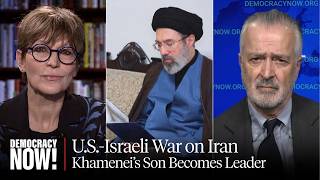
Iran Picks New Supreme Leader; Toxic Black Rain Falls After Israeli Strikes on Iranian Oil Depots
Protests and Power Plays: From Tehran to the Arctic Circle | The Intercept Briefing
Episode 64 - Why Iranians Now Want the Bomb: Hooman Majd on Israel’s Strikes and Nuclear Ambitions