Iran and the Fog of Regime Change (w/Hooman Majd)- The Fifth Column #547
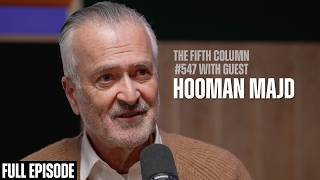
In this episode of The Fifth Column, host Matt Welch and co‑host (Speaker A) interview Iranian‑American author, journalist, and NBC contributor Hooman Majd. The conversation moves from a critique of common Western misconceptions about Iran’s power structure—particularly the over‑emphasis on “the mullahs” and the under‑appreciation of the Islamic Revolutionary Guard Corps (IRGC)—to a broader discussion of Iran’s regional proxy network, including Hezbollah, Hamas, the Houthis, and the fallout from the Syrian civil war. Majd explains how Iran’s loss of influence in Syria and Hezbollah would be far more consequential than the loss of Hamas, and he describes the complex, often contradictory, relationships among these groups. The interview then shifts to Majd’s personal experience as a journalist covering Iranian politics. He recounts translating for former President Mohammad Khatami, being asked to translate for Mahmoud Ahmadinejad at the UN, and the challenges of navigating Iranian state security, including passport confiscation, interrogations by the Ministry of Culture and intelligence agents, and death threats from exile opposition groups such as the MEK and monarchists. Majd reflects on how these pressures shape his reporting, emphasizing his attempt to remain unbiased despite being labeled an “apologist” for the regime, the United States, or specific negotiators. Majd also critiques the Western media’s stereotypical image of Iran—bearded, austere “mullahs” who are the sole drivers of policy—arguing that the IRGC and a broader ideological cadre are more decisive. He discusses the 2015 JCPOA nuclear agreement, praising the technical expertise of negotiators on both sides and lamenting the later Trump‑era approach. The conversation ends with promotion of Majd’s memoir, Minister Without Portfolio: Memoir of a Reluctant Exile, and an upcoming book‑talk event at McNally Jackson in New York. Overall, the episode blends geopolitical analysis, personal memoir, and media criticism, offering listeners a nuanced view of Iran’s internal dynamics, external proxies, and the challenges faced by diaspora journalists.
Chapters
But we should be skeptical of Iranian accounts from Iranian state media.
We can be skeptical.
I'm not even saying just of this, just in general.
We can be skeptical. Absolutely.
We can be. We should be.
Well, we should be skeptical of American—
uh, it's not the same thing.
We know of new methods of attack.
Ladies and gentlemen, boys and girls, comrades, compañeros, welcome to The Fifth Column. Um, obviously a lot going on in the world. We've covering it quite a bit. Last— was the last episode that we did, we had an Israeli journalist.
The one before the last.
It was the one before the last. We didn't want to say, but Nadav Eyal, who came on, who's a very anti-Netanyahu journalist, considered quite a liberal in Israel, came on.
Although he played it pretty straight in the episode.
Played it very straight in the episode.
You wouldn't even know how much he hates Netanyahu from that episode.
But he made the case for the war against Iran from the Israeli perspective. We have been skeptics of this from a constitutional perspective, from a practical perspective in where this is going to go. So we decided to have somebody else to come in who was born in Iran and who, by the way, before we started, I just want to say, he said, you know, my grandfather was an ayatollah. And I was like, mine was a bit of an ayatollah too. And he's like, no, no, literally an ayatollah. So, So, Humayd Majid is Iranian-American author, NBC News contributor. Correct. Thanks for joining us.
My pleasure. Nice to be here.
There's way too much to ask you, but let's do the most basic thing. What do you make of everything that's happening right now in your country of birth?
Where does one begin? What I make of it? I mean, it's It's tragic, and that's the word that comes to mind. Partly because it's an immoral, illegal war. Illegal from the standpoint of international law against the UN Charter, which the US is a part of.
Constitutionally suspect.
And more than suspect, some would argue illegal. If you don't call it a war, sure, you can go and attack anybody you like, but it is a war.
Seems the administration, by the way, is making this delineation that it's not a war if there's not boots on the ground. That seems to be the hexagon.
Mike Johnson, who again is the Speaker of the House of Representatives, has said in the last— which is a body of the US government, I think, sort of specified in the Congress— said that we're not at war with Iran, Iran declared war against us.
Yeah, we seem to have missed that memo from Iran. Usually when you declare war, you actually declare war at the UN. Anyway, that's not happened. So it's tragic in the sense that it's also immoral and tragic in the sense that people are dying and tragic in the sense that Tehran, the city of my birth and where some of my family still live, is being Gazafied, reduced to rubble in certain quarters. Some of those videos have been verified or coming out of Iran. Al Jazeera actually has correspondents on the ground. Pretty much no, I don't think any other non-Iranian network has correspondents on the ground with camera crews. Um, the Chinese, I think, have maybe, uh, Chinese media. But, um, and I have been able to have—
you didn't list a lot of reliable media, by the way. The Chinese media, Al Jazeera, I have my questions of. In the Iranian media, I mean, Gazafide seems to be That's an exaggeration.
Absolutely. When I say Gazafied, there are streets that have been Gazafied. Let's put it that way. I shouldn't argue that the entire, you know, huge Tehran metropolis has been Gazafied, but it's starting to feel that way to Iranians. It doesn't matter what I think. What matters is what they think.
Well, let me ask you about that. I mean, because this is the thing that when you don't have access to sort of independent media in a country. And this was a big criticism of the Gaza War, that you can't get in there and actually the Israelis prevent that, which was something I was sympathetic to that argument too, is that we don't know what people think. You have contacts on the ground there, you come from a particular perspective, but you know, we see videos of some people celebrating.
Oh, no, no, that happened.
You see LA, you see London of people celebrating. That can give an impression, but you know, there's also a big number of people who support the government, et cetera. What is the sense that you get of Iranians in Iran in their reaction to what's happening?
[Speaker] No, no, I think initially when on the very first day and in the very first moments of the war, the Supreme Leader was killed and some of the top military figures were killed, there was celebration even inside Iran and there were people who were happy. I mean, let's remember in January there was a huge, There were huge protests and demonstrations. There was a huge crackdown that resulted in thousands of deaths. Now, human rights organizations say 7,000. They're still counting. Others keep throwing out numbers, 20, 30, 50, you know, as much as 80,000. It's irrelevant because as far as I'm concerned, even the Iranian government's number of 3,117 is too many people.
Which is interesting to point out. They admitted to that publicly. Saying that we had killed 3,000-plus people who were unarmed protesters, right?
No, not all 3,000 they claim were unarmed protesters.
They claim, right?
The Iranian government claimed that some of them were rioters, instigators, agents of the Israelis, agents of the CIA, whatever. They claimed that they weren't all innocent, but they do absolutely claim that there are innocents who were killed, thousands of innocents. So, you know, you're talking, you know, 9/11 numbers.
One of the biggest repressions, murderous repressions we've seen in the last—
In a long time, no question.
Since Tiananmen.
So, yes. Iranians generally, both inside and outside the country, but many, many inside the country blamed specifically the Supreme Leader for giving the orders to crack down on January 8th. January 8th is when the crackdown happened. January 8th, 9th, and 10th were the days The 3 days, 60 to 72 hours of crackdown, violent crackdown. So yes, some people, we don't know what the number is. Is it the majority? Is it the minority?
But it's a staggering number of people who were killed and we don't know the number of people who support the action.
And so yes, there was that initial happiness that the Supreme Leader got what's coming to him, basically, let's put it that way. Then as the war has progressed, there's less of that sentiment coming out. Because now it's like, okay, the Supreme Leader's dead. We don't know what the goal is here for Iranians. The ones I have been able to contact now, we have to remember the internet is very intermittent in Iran. It does come on. A cousin of mine will send me a voice message overnight because of the time difference. I'll wake up in the morning, there it is on WhatsApp, a voice message. We're safe. This is this and that.
And it's intermittent not because of the war, but because of—
They cut it off. Yes. Well, what the government does in times like a crisis is to cut off the internet so that you know, agitators, agents from foreign agents, foreign militaries can't communicate if they're on the ground.
And because so information can't get out.
And information can't get out. Or in the case of wars, generally they've not been so much about the information. They almost would like to see, have some of this information get out because their own media goes around Tehran filming a lot of stuff. Al Jazeera goes around filming stuff and puts it out on the internet. The internet's fine for the Iranian state media.
Yeah, but they don't want people with phones filming dead bodies on the street.
Correct. Yeah, there's that.
Um, you said, uh, that, um, a lot of people were happy that the Supreme Leader died.
Were you?
Were your—
No, I'm never happy. No, I'm never happy when someone dies because I don't— I mean, I, I, I'm not going to rejoice in someone's death. I just don't. That's my own feeling. I, I don't, um— it— that's a very personal thing. Am I happy that there's going to be a different leadership in Iran. Yes, that is true. Supreme Leader was 87, I think, going to be 87 years old this year. He'd had cancer. He was not a well man. He was going to die in the next few years anyway. But assassinations, I'm generally against assassinations. It doesn't matter who it is. I wouldn't want Kim Jong-un to be assassinated. Beyond that, I don't think the assassination of the Supreme Leader It makes a huge difference for the Iranian people at this point. There hasn't been, even though President Trump's reasons for the war have been all over the place. Oh, it's going to be regime change. Oh, it's going to be to get rid of their nuclear program, get rid of their missiles, get rid of the threat to the US interests in the region. It's never clear exactly what that is, and killing the Supreme Leader is only effective if regime change is your goal. Carry through with your regime change? What is your regime change? Now he's talking about a new Supreme Leader, about someone else taking over in Iran. So killing him, assassinating him was not going to be—
Yeah, let's talk about that a little bit, because I mean, I think that this kind of very odd conversation that we have about regime change, is this regime change? I mean, of course it is. I mean, even if the Supreme Leader's son takes over, that is a difference in regime.
No question.
We can kind of, you know, be nitpicky about it.
Decapitation.
Yeah, but it's like, I mean, you're trying to change the dynamics within a government, right? Legitimate or illegitimate government doesn't make a difference. But you just pointed out with Trump, Trump's been all over the place. We have no idea what the actual motivation is here. But the thing that he has said in the context of regime change or not regime change is, you know, you saw him the other day, he's like, we had guys lined up, but we killed them. We killed everybody. But That saying that, and you know, other people, Marco Rubio saying similar things, is that we want to do something like Venezuela.
Yeah, yeah.
We want a Delcy Rodriguez thing. We're not after democracy. We don't really give a shit about the Iranians. We don't give a shit about the Venezuelans. We are looking—
Your words, not theirs.
My words, for sure. I mean, because if you care about democracy, and democracy is the idea, which they consider to be a very discredited idea after the the Bush administration, the second George W. Bush administration, is that we are after, you know, a pliant, pliant state, basically, in a way.
As pliant as it can be.
As pliant as it can be. But, you know, it's an interesting thing because they don't care really about the government in Iran, provided it plays ball with them, right? Is that the impression that you get?
Absolutely.
And does that change the dynamic for people on the ground in Iran at all?
It absolutely does. I mean, people were very disappointed in January, protesters were disappointed that Trump said, you know, "Help's on the way, go and take control, you know, rise up and take over the government and help is on the way," and then help didn't appear and then thousands died. So—
Which they keep on saying, by the way, "Take over the government." Yeah. This is your chance, you won't get another one.
Right, but how?
How?
Who's your leader? I mean, if you say, you know, I wrote a piece for The Intercept just this week and I called it regime adjustment. It's not regime change that President Trump's after. He wants to adjust the regime to be, as you said, more pliant. Not necessarily a client state, but he wants Iran to listen to America. When we say something, we want them to be like, oh yeah, yeah, we're on your side. Like the Persian Gulf countries, like Saudi Arabia to a large degree, not 100% when it comes to Israel, but at least Saudi Arabia and Qatar. But he wants that kind of Iran. That's the Iran Trump wants, and that's the Iran— and by the way, you can't fault the United States for looking after its own interests. If it's in the United States' interest, well, yeah, I get it. If it's in Israel's interest for Iran to be a weak country, I get it. Israel has to think about Israel. It doesn't have to think about Iran. But Iranians, I think, in answer to your question, Iranians on the ground in Iran probably, and again, as you pointed out, there's not really easy way to gauge what the numbers are and what the percentage is, but Iranians on the ground probably have now come to the realization that the US and Israel are not after democracy. They're not after the They're not looking to the benefit of the Iranian people, what works for the Iranian people. It has to be what works for America. For Israel, it has to be what works for Israel. For what was working for America was the JCPOA, the nuclear deal. It wasn't working for Israel, and which is why Bibi Netanyahu was working so hard to undo the JCPOA, worked so hard before it was signed, came to the joint session of Congress with Obama, the president, and basically said, "Your president is screwed. He's getting screwed by the Iranians. Don't let this happen," to the US Congress, which meant that Obama couldn't put it forward as a treaty because of the support the Congress had for Israel's position on the JCPOA. So it didn't work for Israel, and I get it. I mean, and I think Iranians get it. This is world international relations, politics, It's complicated and every country looks out for its own interests. For Iran, at least this regime's interest was always to back what they call the Axis of Resistance, you know, the Hamas, Hezbollah, Houthis, you know, the Shia groups in both Syria and in Iraq. And this was all to protect Iran, to keep Iran protected from US, Israel, and terrorist groups like ISIS and Al Qaeda.
They have to squeeze and try to cause an enormous amount of pain for Israel too.
Of course, of course.
A ring of fire around Israel.
Yes, a ring of fire around Israel, exactly.
What kind of revolutionary moment does this thing create? Or another way of asking that is, so you've decapitated this regime adjustment and then the next layer's getting adjusted as well. People who have been cracked down on and shot in cold blood in the streets and who have been repressed as to their personal conduct for a long time. Has a spell been broken? How do you sort of weigh that versus the amount of organization within the country and the superstructure of a revolution that's been around for 47 years or whatever? Will the modal street Iranian accept a situation that looks like the country did 9 months ago?
No, it won't. I mean, the spell has already been broken. It was broken once after the Mahsa Amini protests, which I have always argued were successful despite the fact that there was a crackdown, 500, 600, 1,000 people were killed in that crackdown, which was a longer, not over a period of 3 days crackdown. But what was the result? The Mahsa Amini protests started out as a protest against the hijab and against enforced hijab rules, especially social restrictions. What's happened since then, certainly in the last year or two, is as we've seen from evidence, video evidence by American journalists who've been there, that people walk around Tehran without hijab. Boys and girls walk hand in hand in parks, all the things that are not supposed to happen socially in Iran under an Islamic Republic. So that spell is broken. People are saying, "We're not going to listen to you anymore." Then they have a president they elected, Pashinyan, who has said, "I don't want to enforce these hijab rules. I don't want to enforce these social rules." Now, whether he has the power not to or whether he has the power to or not, It's happened. So obviously the regime, as you want to call it, the regime with Supreme Leader's office, all the people that encompass the regime have allowed this social freedom to come about. I'm not saying it's absolute, the social freedom. Of course it's not. It's not like the United States. It's not like Western Europe. But there's a big difference now between now and pre-Masamini protests. And with what's happened—
Less presence of the sort of morality police.
Well, they're not even present at all. They're gone. I mean, they exist, but they're not on the streets. They use different ways. I mean, somebody without a hijab, if they have facial recognition, they'll send them a text 3 days later saying you have a 100-riyal fine for, or 2-month fine, or 100,000 fine for being out without a hijab.
God, that sucks.
So they do stuff like that. Yes, they do. But it's far and few between.
What do you think of that kind of sort of social regimen, to be very generous about it, that, you know, somebody can have facial recognition in a sort of Orwellian way and then they're being punished for not wearing a particular garment.
Oh yeah, it's terrible. Yeah, I mean, no question. And I, but the Iranians have, as I said, they've really kind of ignored social rules by and large, have ignored. And then of course there are people who want to wear the hijab and they do. I mean, it's not like, you know, everybody is out in a bikini on the streets of Tehran, but they're—
Sadly.
Yeah. Islam has definitely, I wouldn't say given up, that's too strong of a word, but has allowed this to sort of slowly happen.
Did the Islamic Revolution of 1979 fail?
Well, not according to the people, the revolutionaries, no. Did it fail in terms of providing what it promised to the Iranian people? Yeah, I would argue that it did fail and a lot of other people would, but certainly I'm not a historian, but historians would argue it failed in its promise. And the promise was, and I'm unfortunately old enough to be an adult, to have been an adult at the time of the revolution, the promise was very simple and it's why the Iranians revolted against the Shah was this idea that there was going to be democracy, there wasn't going to be an authoritarian government, there was going to be a distribution of wealth, there was going to be a sort of socialist democratic/capitalist revolution. Not communist, but socialist and democratic. And people bought into it, and they bought into Ayatollah Khomeini's words, which were all good words that were being sent back to Tehran from Paris. And, you know, they all believed that that was going to happen. As we saw, the first couple of months, other than the revenge the revolutionaries took on the previous regime by executing the former prime minister, top generals, and like that. Generally speaking, there was a sense that maybe— and there wasn't the hijab rule in the first few months of the revolution. People were going around in jackets and ties, the men. It was not what it became, but very quickly it became an authoritarian country.
That's promising. [Speaker:TREVOR_BURRUS] But was it a mistake also in the sense that we can go through the litany of mistakes and crimes of the Shah's rule.
Yeah.
And what the SAVAK was doing, the secret police. And that was replaced by something that was less democratic and over time more authoritarian.
Yeah. Yeah.
I mean, what was— would the right move have been, just in a, in a sort of counterfactual world, that the Shah stays in power and is weakened and the people force democracy over time versus that being replaced by something that ultimately gets not only much worse, but in a global sense becomes an antagonist on the global stage in so many ways.
Well, yeah, it probably shouldn't have ever become an antagonist. That's for sure. In terms of much worse, I mean, you know, again, unfortunately being old enough, I remember the time in, I think it was '76 or '77, when the Shah suddenly decided that there weren't going to be any more political parties. But he was going to invent one, the Rastakhiz Party. Not only was he going to invent one, which was his party, but everyone, every adult male and female in Iran had to join. I remember asking my dad, who was the Iranian diplomat ambassador, do I have to join? He was like, no, don't bother, you know, because I was living in America, but everybody had to join. I know I would have had to.
Your dad was a diplomat for the Shah's regime. So basically your family is straddling both sides of this.
We could absolutely spend the next hour talking about your crazy family.
Of course, yeah.
Grandpa Ayatollah, dad works for the Shah, you like—
Uncle works for the Shah.
Uncle works for the Shah.
That's what we call a mixed family in Iran.
The aunt is a folk singer.
Aunt was a folk singer in London, yeah. Uncle was a painter in Paris. Yeah, there's— but a lot of families have that kind of background. Do they? Yeah. Do they? Not a lot, I guess.
Everybody has an Ayatollah.
Well, I write about this in my new memoir, but it's, yeah, I mean, families are families. I have the revolutionary side. I should point out though that my grandfather, the Ayatollah, died way before the revolution, was not a revolutionary in the sense, I mean, he was against Reza Shah, but against him only because Reza Shah had forced men to not wear a turban to go out on the street. So my grandfather, who was philosophy professor, theology and philosophy at the University of Tehran in the 1930s refused to leave his house because he wouldn't leave his house without his turban being an Ayatollah. And so all his students would come to my grandfather's house, the house my mother was born in.
But you still have people in your family now that are supporters of the Islamic Republic?
Yes, absolutely, absolutely. And I've had cousins who have been supporters and through marriage not my own marriage, but through the marriage of my family, family marriages related to President Khatami as well, who was the hope for the reformist in the late 1990s and into the 2000s. Yeah, but in terms of, I mean, we do have to, and I was talking about the Shah and the single political party. The Shah, first of all, would have died within a couple of years.
He was very sick.
He was very sick in a couple of years. Would he have, had he not been sick, would he have accepted a constitution? Constitutional monarchy? Probably not. And a constitutional monarchy on the model of the Netherlands, the Scandinavian countries, or even England. I mean, the Shah's son himself, in an interview here in America, has said, I don't want to be a constitutional monarch. I want to have a say. So like father, like son. I doubt that—
He was rebuked by his mother. Yeah, I did see that.
Yeah, I did see that.
It should be decided, the leadership of Iran should be decided from within Iran, which is like That's a way to slap down your kid.
Your own kid, yeah. Yeah, if your mother doesn't want you.
If your mother doesn't want you as—
In fairness, it's not the greatest job.
Not a great job. No, no, no, no.
But it would be a great job if he was king. And I won't deny, and one shouldn't deny, that he does have support, and his name was shouted out in the protests.
Oh, really?
Oh yeah, he does. Internally, absolutely. Because, you know, when people, you know, who are the two biggest opposition groups outside of Iran.
The MEK?
Yes, who are absolutely despised. Lunatics, cult, despised because they sided with Saddam Hussein.
Mike Pompeo likes them a lot.
So does Rudy Giuliani.
Yeah, they like the paycheck and they like the first-class airfare to Paris once a year and the big conference. John Bolton. Yeah, the conference. So, they are generally despised in Iran despite the fact that they do have one or two— no, I shouldn't say One or two of this minimizing it. They do have agents on the ground. They've committed assassinations in Iran of nuclear scientists, perhaps on behalf of Israel, but they've been MEK who've done it. They exist. Then there's the Pahlavi clan, the monarchists. Some of them are monarchists. Many of them are monarchists who want a monarchy, either a constitutional monarchy or an actual real king reigning, ruling over Iran. And then others who think that, who have bought into this idea that he should be a transitional figure and then people should have referendum. Do we want a constitutional monarchy? Do we want a full-on monarchy or do we want a democracy? The last time I voted in the last referendum, it was 1979 and it says, do you want an Islamic Republic? Yes or no?
And?
I said no. But because it was a simple question, it was the wrong referendum. It's like, you know, but I will admit that over 90% of the people said yes. They had just completed a revolution. Millions of people had come out on the street for Khomeini when he arrived in February from Paris. So, that number was not disputed by the US, by the CIA, no one, that it was a very popular revolution.
And it included non-Islamic— Oh, absolutely. The Tudeh Party, the Communist Party, who were then quickly purged and got rid of.
Yes, and the MEK. And the MEK, Massoud Rajavi, who was the head of the MEK, wanted to be be prime minister. And that's one of the reasons why they fell out, because he wanted power in Iran and he fell out with the Islamists.
It's, by the way, amazing with the MEK of how many Republicans that they've managed to get on their side, considering you could make an argument that it's an Islamic Marxist party. It's like, guys, I wouldn't think that either of those things would be appealing.
Yeah, no, I mean, What I don't understand is, you know, all this stuff about hijab and all this stuff about Marxism and communism, or sorry, Islamism, Islamist parties. You look at any of these rallies that they have in Paris, every single woman's wearing the same hijab. Everyone. Maryam Rajavi wears a hijab. They're not allowed not to, at least the cadre that are in Albania in the base. It is, it's a cult. I mean, there's no question. It's a cult. So with these two alternatives that people are faced with, if you're miserable in Iran, if you really want the regime to change, yeah, some people are saying better him than what we have now.
There's a notion that we've talked about on this program in the past, the difference between what happens when a regime is changed from within and from without. What happens, or decapitated within, within, without adjusted. And then what happens when it's in a country that had its own homegrown revolution as opposed to having its system imposed from abroad? What is your sense of that particular question right now? Like, will, will, how do people in Iran think about the way that the ground was created for whatever comes next. Will it be considered as something that was homegrown coming out of some of the dissent that came out from the streets or coming from some reformers who are going to show up and reveal themselves in ways that are obscure to me now? Or is it going to be seen like once again, the US imposed something on us?
Well, I think, you know, it depends on how this war goes. It depends on if there's a ceasefire soon, and the people will, I won't say take over the government, but because the Supreme Leader has been assassinated, because some of the top generals have been assassinated, top military figures, security figures have been assassinated, is there room for a, like you say, homegrown revolution to happen, but it would be with people who are already there, who are against not— or haven't been able to say they're against the regime, partly because they would be, you know, signing their own death warrant, but have been arguing that there should be either a constitutional change or a radical change. Whether it's people like former Prime Minister Mousavi, who's been in jail, house arrest for 15 years. He has put out a statement there should be a new constitution. So that is regime change. That's more than adjustment. That's actually change, even though it's from a figure who was in the country. So if something like that were to happen after a ceasefire, if something would, if the surviving IRGC, surviving military figures were to think, well, you know, we don't want this to happen again. We don't want to be bombed again. We don't want to get into another situation like this. Why don't we see if there's a way to change or adjust the regime, either one, if you want to say, if you want to put it that way.
Do you suspect that that's possible in the sense that, I mean, the IRGC, whose, you know, leadership has been, shall we say, greatly minimized in June of last year. And again, now again, again, and that is possibly the most dangerous job in the world is being anybody above the rank of colonel in the IRGC.
Hezbollah in Lebanon, Hezbollah in Lebanon is a very similar, similar thing.
But is it possible within an organization like that, which has and holds an enormous amount of power, to have an internal tumult where they say, okay, there's an opportunity here. Like, I mean, you know, in every coup and revolution, particularly in Latin America, it's always like you got to get the army on your side. Is there any possibility? Because what we hear in the United States is that Donald Trump doesn't want boots on the ground, doesn't want regime change. It's going to happen from within. We're going to try to help pick a guy. But is, which is, I mean, and then we kill them. But can that actually happen? And is there a kind of spirit for it in a country and in a regime that is so deliberate about keeping people with opposing views out of leadership positions and out like any sort of dissent? I don't suspect that exists within the IRGC. No, no.
Well, I would point out, and I've pointed this out previously, that the IRGC as a body, 70% of IRGC members voted for Khatami twice, more than 70%. And when it was very abundantly clear that the Supreme Leader didn't want Khatami to win, at least the first time he didn't want his candidate.
How do we know that, by the way? We have good polling on that?
Well, Khatami's people had the polling.
Yeah.
And I believe him. There was no reason to not believe him at the time. So now, that doesn't mean the top echelon of the IRGC were voting for Khatami, but it certainly means the body. And we also have to remember the IRGC, there are conscripts in the IRGC. So every male over the age of 18 has to serve in the military, either the army or the IRGC, and you don't get a choice. You know, it's like, "Oh, you're going to go to here, you're going to go there." So that number makes sense when you think about the huge number of conscripts that are in the IRGC.
But there isn't a thing about, you know, political or religious zeal that sends you in one direction or another, you know, more army, more IRGC, more ideologically committed?
Probably, probably a little bit more like that for the IRGC. Certainly the more religious and the more, you know, people from rural rural areas, less educated, absolutely tend to end up in the IRGC. People in Iran have always told me the IRGC is a softer— if you're going to do your 2 years conscription, it's softer than being in the army.
I wouldn't imagine that.
Yeah, because you end up a lot of time with a lot of ideological lessons and prayers and being in the mosque and stuff like that instead of like, you know, doing hard work. Sit-ups.
Sit-ups. Yeah.
Or push-ups. But yeah. But no, When I say there's 70% have in the past voted for reformists, there's no reason to believe that this body is completely uniform, that everybody in the IRGC absolutely wants one thing and are ideologically committed to that. What the IRGC today is committed to ideologically is self-preservation, to preserve their power and interest in Iran. And if that means that they have to change their direction and their loyalty and their ideology to adjust to a new leadership of sorts, whatever that new leadership is. I think they probably will. I mean, you know, I think at the end of the day, whatever happens at the end of this war, Iran is different. You don't go to this kind of— you don't have this kind of war with nothing changing afterwards. I don't think. It's not Venezuela where very little change. Yeah, very little has changed for the people. Unfortunately, yeah. I mean, it might get better in Venezuela with, you know, US investments and stuff like that and not having this antagonistic relationship. But Iran, I mean, you know, as I said earlier about this bombing and, you know, the videos that we have seen that have been verified, the killings of schoolchildren, which has been verified now.
It has been?
Yes, that was not Who verified it? The— it's a couple of forensic journalists have verified it. The Guardian is there. The Guardian is verified.
They don't have anyone on the ground, do they?
Guardian doesn't know, but based on geo stuff—
and this happens in war, and I would— and I said on the show the other day that I— my presumption is this is probably true. Well, it was right next to an IRGC base, so it was one of the targets. Yeah, but you know, those numbers that go all over the place, like, you know, it's a 10, it's it's 400, it's whatever, but I'm remaining skeptical because that is probably a smart position to have when the information is, that's a choke point for, I mean, that was the first thing, I mean, Marjorie Taylor Greene, the first thing she tweeted about about that was about that school and it's become quite a talking point.
[Speaker] But most people consider it, most journalists who are legit journalists consider it to have been, I mean, the map that they showed today at the briefing, the press briefing, had, that town as a target.
No, if I had to bet on it, I would say this happened. But again, the casualties, we don't know.
Well, there are 160 funerals, so we do know that. That's something that is real. I mean, they're not making that up.
But who is the they on this?
Well, the state TV, Iran state TV is showing it.
They're not making this up. Iranian state television.
Well, they're not using AI. We know it's not AI. And we know that from satellite imagery, we can tell what happened yesterday. So we do know that. That's not, you know, I would—
But we should be skeptical of Iranian accounts from Iranian state media.
We can be skeptical.
I'm not even saying just of this, just in general we should, right?
No, we can be skeptical, absolutely.
Not we can be, we should be.
Well, we should be skeptical of American accounts.
It's not the same thing.
I shouldn't say, I wouldn't say it's the same thing, but we should always be skeptical.
I mean, I would say it's not even close to being the same thing in the sense that we have independent journalism in this country that does not exist in Iran, right?
We don't have independent journalism in Iran that is— well, we have independent journalism, but it's under self-censorship. So that's the difference.
Well, self-censorship means that you know that if you say the wrong thing, you can end up in jail.
Correct.
Which is otherwise known as censorship.
Correct. Well, but it's self-censorship because they decide the independent journalists who work for the independent newspapers, which are not state newspapers. There's no independent television or independent radio. There is independent press. And the independent press, yes, self-censors. When it doesn't self-censor, it gets shut down. And there have been occasions where journalists have ended up in jail. Absolutely. And editors have ended up in jail. Usually not for long periods of time. The paper gets shut down for 60 days, 30 days, they come back on.
And yes. But you create the environment.
Yes. But to say that we should be skeptical, yes, we should be. But it also doesn't mean that they're always lying. Everyone's always lying. Is there propaganda? Of course there's propaganda. Does our Pentagon put out propaganda? Absolutely. Does Donald Trump come out and lie and say things that he doesn't know?
Not to hammer on this point, but it's a very different thing in the sense that when the Pentagon lies and they lie, you know, as Mary McCarthy said about Lillian Hellman, every word is a lie, including 'and' and 'the.' I assume everything they're saying is a lie. The next day you can see something in the Washington Post, New York Times, very good journalists saying, we got people, you know, off the record talking to us, et cetera. That does not exist in Iran.
No, there's not at this moment. Not at this moment. But when the state TV puts out video, we do have people who can tell if it's AI. We do have people if it's faked. We do have satellite imagery of funerals. We have that. We have it. I mean, that's not— that's our independent people having the satellite imagery. So to be skeptical when Ali Larijani says, we have killed 500 American soldiers in the last 4 days. Sure.
And they release AI videos of planes blowing up things from video games.
But that's easy. That's easy. That's easy to discredit. And of course they're—
Why do they do it if it's so easy to discredit?
Because I think they do it mostly for a domestic audience. I don't think they're doing it for us. I mean, he's not saying 'We killed 500 today,' tweeting that so far 500 American soldiers have died.
But is Twitter available to Iranians?
Yeah.
That's not censored?
No, it's censored, but with VPNs, people are on it.
But the average Iranian who doesn't have a VPN connection cannot get it?
No. Most Iranians, and it's a huge, huge number of Iranians outside of war where the internet is intermittent, or protest when the internet is shut down, huge, huge numbers of Iranians have VPNs. In fact, it's argued that the IRGC are the ones who are selling VPNs.
I once was judging in a national magazine awards competition for the best reported essay or something like that. I forget what. And fantastic article, I think in the Virginia Quarterly, which is always up for these things. And this is a good 10, 15 years ago, but it was about Iranian online or phone-based hookup culture in Tehran.
Yeah.
Blew my mind. I was like, my conception of what was happening in that country was definitely not that. Very, very explicit and how things were going on.
That happened.
And that's a good 15 years ago or 10 years ago.
But you also have to remember the Iranian journalists are online and their internet's not cut off and the Iranian journalists will report his tweets. His tweets will get reported inside Iran. So whether it's— I mean, Avi Larijani knows that we know that 500 Americans haven't been killed, but he's putting that out. So yeah, I mean, of course the state is going to put stuff out like that.
Let me ask you a Brian Lamb question just to follow up on that. Remember Brian Lamb from C-SPAN? And he would do these interviews where he have a World War II historian on and he'd say, what was World War II? A version of that is, just because I'm interested in your take on this, why is there such strict censorship in Iran?
I mean, I guess it's an authoritarian regime. That's what they do. I mean, you know, there's strict censorship in Saudi Arabia. I mean, there's strict censorship in many countries that are allies of the United States, that are close allies of the United States. And strict censorship, as we know, in China, not an ally. Strict censorship in Russia, as we know. Every authoritarian regime believes that an open society is a danger to its power. You cannot be an authoritarian if you're going to be open. The minute you're open, I mean, this is, I guess Donald Trump is going to figure this out. You know, if you want to be an authoritarian, you can't have democracy. You just can't. You can't have a free press. You can't, I mean, a fully free press. So there are places that will allow some things to happen, some criticism to come out, and there has been that in Iran over time. Some of the reform newspapers have criticized the government. They don't go as far as criticizing criticizing the supreme leader, but they definitely go as far as criticizing government actions, the hardliners and so on and so forth. And when they do cross that line, sure, they get shut down. And it's true in other countries. I mean, with Saudi Arabia and we know Khashoggi incident, these countries can't abide by criticism because they believe that the criticism will lead to their losing power. End of story. We hate it. We don't like it. But that's just the reality of what it is. Now, in Iran, speaking specifically about Iran, do I know for a fact that whatever regime comes after this or whatever adjustment there is to the regime, will that change dramatically? I don't know. Would I hope that it changes? Yes. I think the Iranian people right now, especially after a war and especially after the economic misery that they've been under, which started the, the protest at the end of December last year and then continued into being regime change protests. Um, would they be happier if the economy was better and there was still the censorship or self-censorship and less political freedom? Probably to some degree, because they could feed their families and they can't right now. I mean, not even outside of the war happening, sure, there will be people who will be okay with an authoritarian regime as long as their livelihood is protected. And this is especially true in places like Iran in rural areas, farmers, people like that who are not that engaged in politics to begin with. And that was the case in the Shah's time as well. So, and that's the case in Saudi Arabia. You don't see a lot of people in Saudi Arabia getting up and saying, hey, you know, we We want a free press. We want to be able to have an independent television station. You don't because the people are taken care of. And not that there isn't that sentiment in Saudi Arabia. There is, or in Bahrain or in Qatar. But these countries take care of their people economically. Those countries take good care of their people. I think Qatar has the highest per capita income in the world because if you're a Qatari—
There's 12 people and there's a lot of oil. Yeah.
And we don't count the guests.
Workers too much. No, no, we don't have to count that.
What is— I see your Twitter feed having some good kind of like, hey, don't trust this source right here. You know, make sure to get this confirmation right in this time of war with an authoritarian country who's getting bombed right now and freaking out. The usual propaganda that comes from the side of the bombers as well, and also the collapse of the news in the Washington Post Russia just eliminated its foreign desk right before this war started. What is your kind of tips for people as they are seeing information come across their transom to make sure that that information is good? What's a proactive place to go that's doing good information and what's a pitfall to avoid?
Well, the pitfalls to avoid anything you just automatically see online, which is, you know, whether it's on Instagram, the two, I'll say the two biggest, Instagram and Twitter. Especially if you don't know the source. If it's the Guardian newspaper, the Financial Times, well, even the New York Times and American papers, well, look at that closely. I mean, I'm not saying don't believe everything they necessarily say or jump on automatically. The perfect example—
They get things wrong, but they try to get them right.
They try to get them right. I mean, I'll give a perfect example. Yesterday evening, there was this thing, the rumor started that, and it came from Iran International, which is an opposition television network based in London, saying that they picked the new Supreme Leader, it's Mojtaba Khamenei, Khamenei's son. It became semi-viral all over. I had calls from NBC who I've worked with as a contributor. So what do we know about the new Ayatollah? And I said, new Ayatollah? No, no, there is no new Ayatollah yet. It's not happening yet. It's fake news.
Because they would let you know first, right?
Well, I think— I think— White smoke. Yeah, white smoke versus black smoke. I said it's fake news, and it went all over the place. And there were people on Twitter who were legitimate people, legitimate Twitter, you know, who don't lie, who don't put out fake news, who were saying this is the new— oh, look at the new Supreme Leader. And so I was off saying, be cautious until the state says we have any, you know, announces it. It's like the white smoke for the Pope until they say there's been white smoke.
They might not want to announce it these days, by the way. And this is the street he lives on? No, no, don't do that.
Well, these days, exactly, that's it. And some other people were pointing out, why would Iran even do that when he's got a target on his head? I mean, first of all, Mojtaba Khamenei, the Supreme Leader's son, is hardly qualified to be a Supreme Leader because he doesn't have the credentials. But beyond that, he just lost his mother. His wife and his father in an assassination attempt. I mean, whether he's prepared to become Supreme Leader or if he does become Supreme Leader, I mean, how much is he going to hate America for what— I mean, it's— I mean, and the idea that if he does, and I'm not saying he won't be, I'm just saying if he does become Supreme Leader, that he'll be someone that Trump can, you know, one of our guys, is very unlikely.
Is that, you know, one of our guys and it becomes obviously dangerous for people within the country if you are then conducting a particular type of negotiations, not the sort of negotiations we've had with Iran for many, many years, that is one that says, okay, stop the bombing, you know, get rid of the sanctions, and we'll play ball. I mean, it's a dangerous position to take amongst a lot of people who don't want to see that happen, obviously. I mean, what do you think that You know, you've been a critic of the sanctions. Matt is obviously often a critic of sanctions. I mean, I don't think you've ever said anything positive about any sanction anywhere.
South Africa.
Oh, South Africa works. Yeah, you like South Africa.
Well, it's the one in the literature. Although, I mean, I haven't re-upped on some of the literature, but sanctions have bitten Iran.
Oh, no, there's no question, but they've hurt the people. They've hurt the people more than they— which is what happens. Because I think South Africa, we have to remember—
Which is the goal, obviously.
Yeah, the vast, vast majority of the population of South Africa were fine with sanctions because— and that's not true in a country like Iran.
It's not been true with any other sanctions country.
Any other country. Because what happens is the sanctions, you could argue it weakens the country. Yes, it weakens the country, it weakens the regime in general because it can't get money, it can't fund these—
These people out in the streets, you said, because of—
Absolutely, but sanctions have not, to my knowledge, again, not being a historian, have not brought about a revolution, as far as I know. The sanctions by themselves have not.
It's a good negotiating position for the Americans, though, isn't it?
It has been, but, you know, sanctioning people, for example, is very different from sanctioning a government. If you sanction a person who's committed a war crime, sanction, you know, say that you You're sanctioned now. You can't do business with the United States. You can't have a bank account in America. You cannot buy property in America. You are sanctioned and especially designated individuals, what it's called here. If you do that to people who are suppressing or oppressing people, that's one thing. When you sanction a country and say, you can't have any money, you're an Iranian citizen, you can't send money abroad, you can't get money from abroad. You know, in Cuba we had a special thing where you could, Cuban Americans could send money to their families in Cuba, which is one of the only ways the Cubans managed to live for the last 60 years. An Iranian American citizen cannot send money to his family in Iran. There's no way to do it. There are ways to do it. I shouldn't say that.
That's not fair because legally there's no obvious way.
There's no legal or obvious way to do it.
And there's a horrible, horrible agency in the United States Treasury. I believe, called the Office of Foreign Assets Control. Yeah, OFAC. That controls that. And I've been on the receiving end of OFAC in the past as well. And it's just like, it is what it is.
No, I mean, it's no question that sanctions, I mean, it doesn't make a ton of sense in a lot of ways. I understand that short of military kinetic responses, it's one of the few tools in the toolkit if you're trying to really pressure a government. But I mean, the, the kind of knock-on effects of that can be horrible, not only to the people but to their sentiment towards the people who are trying to change their minds and say, hey, get rid of this regime. What are the odds in, in that Iran— let me just put it in a very frank way— that Iran can become a normal country? And I say this because thinking about the water crisis in Tehran And talking to a few people who's, even Nadav, whose parents and grandparents who were Israelis in the '70s were working on actual construction projects in Iran. And the water situation could probably be solved by 40 engineers coming from Israel, like having a normal relationship with the state of Israel, having a normal relationship with its neighbors. Having a non-aggressive outlook in the world with Hezbollah and the Houthis and funding Hamas, etc. Do you see that happening and do you want that to happen?
Well, I mean, it could happen. I don't know about a normal relationship with Israel. I mean, there are Arab states that don't have a normal relationship with Israel.
Not publicly, but some of them have very normal relationships behind, you know, Abraham Accords happen, things like that.
Well, the Abraham Accords, yes, have Bahrain and the Emirates, but Qatar and Saudi Arabia are not part of that. Saudi Arabia has been very clear that they won't have a normal relationship. Not that Israelis can't talk to Saudis, but a normal—
And the Saudi government and the Israeli government don't talk a lot.
They do, yes, but they don't have a normal relationship. And Saudis have said until there's a Palestinian state, or at least there's a path to a Palestinian state, we're not going to have that normal relationship. So I think that's probably also going to be true of Iran for a while. Long, long term, I can't tell you. I mean, if Reza Pahlavi is helicoptered in and boots on the ground are helping him get to the palace and become king, yeah, there'll be a normal relationship.
Why not have a normal relationship with Israel?
I think it's not a question of why not. It's a question of being realistic about who could be, what the next government in Iran could be.
No, but just from your perspective. Is there a kind of an intellectual case for having such an aggressively hostile relationship?
No, no.
And you can say I don't like Zionism, 1948, the Nakba, you can say whatever you want, but it exists. And it's a very modern, very sort of economically prosperous country that it would be beneficial just to treat it like a normal country and have disagreements about foreign policy and about You could absolutely make that argument.
And it's not a dumb argument. I'm not disputing that at all. What I'm— I'm not even trying to dispute whether it'd be good or bad. I'm just saying that to be realistic and not have wishful thinking, unless you have a pro-American, pro-Western government in Iran, regime in Iran, which is unlikely to happen anytime soon. Unless you have that normal relationship.
No, I mean, but you personally.
Oh, personally? Yeah, I just did a podcast with Haaretz. I've done it twice. I've been interviewed by Haaretz. I have no problem with—
Left-wing newspaper?
Yeah. With the Intercept of Israel? The Intercept of Israel.
No, of course not.
I have Israeli friends.
I mean, I'm not an ideologue anti-Israeli ideologue. I'm against what the Israeli government is doing in Gaza. Yeah, no question about it. And I'm for Palestinian rights. Absolutely. I would never just dispute that. But in terms of Iran becoming what we call a normal country, well, that's what a lot of people, Iranians want. They want it to be a normal country. A normal country doesn't necessarily say, oh yeah, I'm going to be best friends with Israel. That's the argument I'm making.
But also, what does it mean to go to South America in 1994 and blow up a bomb and kill 85 people?
That's a psychotic way of looking at the world. I know, but you're arguing about the 1980s.
I'm arguing about the '90s, but I'm also—
Oh, mid-'90s.
Mid-'90s. But you can also say none of this would have happened without October 7th, which was one of the biggest own goals in the region's history.
Absolutely.
And that, to say that Iran was not But behind it is the wrong word. It was responsible for a lot of that in funding and arming and the rest of it. And it's like, yeah, the tiger ate your face.
Yeah. But, but by the same token, Bibi Netanyahu constantly supported Hamas in Gaza and by allowing the— by telling the Qataris to pay them, send the money to them.
So, I mean, this is not me saying that this is Israeli balance on your own. Borders, whereas Iran is interfering, but we're not creating a situation or helping create a situation by arming Hamas and saying, oh great, October 7th happened. I mean, that's, that's, you know, the largest killing of Jews in one day since the Holocaust. It's a big, big deal.
I, I get that.
And again, regardless of what you think of the response to it, right?
That's a totally different issue. The response is a different issue. Condemning what happened on October 7th is easy.
And of course, of course, every No, I'm not suggesting in any way that you're not condemning it.
Of course. And I would argue that most Iranians would condemn it. Just because a few handful of people in the top echelons of the regime, including the Supreme Leader, didn't condemn it or even celebrated it, doesn't mean that the vast majority of Iranians were like, yeah, fine, go ahead and kidnap a bunch of Israelis, kill 1,200 people. No, of course not. But in terms of why Iran would, I mean, talking about the past doesn't really help Iran in the future.
But the past is what motivates Israel now.
The past up until now, up until now, yes. But what Israel wants from Iran, this Iran cannot give, which is no missiles. You can't have missiles. Well, what country could accept to not have a defensive strategy, because that's their only defensive strategy. They don't have anything else. They don't have an air force that can compete with any air force in the region.
Navy's getting smaller right now.
The Navy, even when it was fully functional, couldn't compete with any navy in the region, certainly not ours and not the Israeli Navy, which has nuclear submarines. So it had no conventional army that could fight a war against any other army in the region. The only thing it had are these drones and missiles. And for Israel to say, or for the US in the most recent negotiations to say, you have to give up that ability. You're saying, okay, so make me a sitting duck. Well, they are a sitting duck anyway right now, but at least in their minds, I'm just giving you the view of the Iranian regime, is they can retaliate with these missiles and they have been. And so far they've killed people with these missiles, including inside Israel. They've killed people.
Yeah, but I mean, you have 95 missiles at Israel in the first day and then 20 the second day. I mean, this is becoming a, I mean, there's diminishing returns already. I mean, how effective, I mean, are they holding everything back from getting close?
We don't know. Maybe they might be. They might be. I mean, by the intelligence agencies, US intelligence agency estimation, Iran had between 2,000 and 3,000 missiles. They have some very accurate ones.
They probably have fewer today because of American strikes.
Well, we know they probably have fewer today, but a lot of those missiles have been underground, have been on mobile launchers or whatever. So yes, they have fewer and they've shot some of them out. Some of them have been used. Are they, I mean, the Iranians have always maintained that they can fight a war for 60 days. Can Trump forget about, I mean, leave aside Israel right now, can Trump tolerate a 60-day war that includes continual American casualties?
He said we're at 8 weeks now, is what Texas said this morning.
It's every day, it's different. And you know, we talked about this.
8 weeks and maybe boots was the latest.
And maybe boots.
Well, he hasn't ruled out boots, yeah. I don't think that'll happen. But I mean, I think your question—
Americans are This is unpopular with Americans.
With Americans, yes. But let's get back to your question, because I think it's a very good question. Can Iran be a normal country? Yeah, the answer to that is yes, because Iranians are normal people.
Yeah.
So that's the straight answer. When I say that, you know, the vast majority of the Iranian population, they're normal. They want the same things you want, the same things I want in life. Their government has not provided it. The government's, current government, not regime, current government The president, Pesechian, has admitted that he hasn't provided it. The Supreme Leader, the former Supreme Leader, admitted that they have been lax in providing it. So everyone knows that Iran is not a normal country today. It's definitely not normal under attack. Can it be in the future? Yes. Now, I would be foolish to sit here and tell you this is what's going to happen. I don't know what's going to happen. Is it going to turn into Egypt with a Sisi-like authoritarian IRGC general running it, which would probably make Donald Trump very happy and do business with?
I fear that you're right about that.
Yeah. So that's one alternative. Could it break into a civil, break into different regions and civil war and the Azeris and the Kurds separatists and the Balochis and the Arab separatists? Fighting a central government on all these fronts.
Do you worry about that?
Yeah, I think it's just me, I think it's a big picture for everybody.
Oh yeah, for sure, but you personally?
Yeah, personally, absolutely.
What is it, 10% of the population is Kurdish, right?
Oh yeah, yeah, it's a high percentage.
It's a high percentage, I mean, and you know, we see these reports from the Wall Street Journal that made me wince. And the CIA's. And by the way, I think that this is propaganda, CIA doesn't, leak stuff like this. We're arming them, we're ready to get the Kurds ready, there's Kurds in Iraq that are ready to go, etc. But that seems to me to be really playing with fire.
Oh, absolutely, and I think what's interesting is even the monarchists are really unhappy about that.
Is that right?
Oh yeah, Pahlavi is like, oh no, I mean, and by the way, Kurdish separatists, Azeri separatists, Balochis, they despise the monarchy as much as they despise the Islamic Republic because the monarchy is very much about keeping the country together. Absolutely. The Shah absolutely was, previous Shah, was absolutely repressing the Kurds. Any sign of rebellion would be put down very harshly by the Shah's army, as much as by the Islamic Republic's army. So, yeah, I mean, that could happen. We could have anything can happen. And it's just, first of all, it's too early to tell what the direction is going to be. What also could happen is they pick a Supreme Leader over the next 3 days. The former Supreme Leader has a funeral, a million people show up for the funeral. I mean, there have been estimates that there are between 10 and 20% hardcore loyalists of the regime. In a population of 93 million, I don't know how many are probably 60, 70 million adults.
Yeah, I said in the show the other day that there was a video that was a fake video that was a real video. I mean, it was, it was out on Twitter and saying, look at the number of people that have come out for the Supreme Leader has been killed. And I said, oh, that's not actually from— and it's like, yes, but it still says something because it, it was from the Soleimani funeral. And there's a lot of people that come out for that. And you can't look at that as an American military planner and say, oh, this is going to be a cakewalk, this is easy, because, you know, there are people that support regime.
No, there are, and I would argue they're in the minority and the vast majority want— it's hard to say what people want exactly. And anybody who says, oh, I know what the people want, you get people on Twitter saying, oh, they want a constitutional monarchy, absolutely want a constitution. Then you got other people saying, oh, they want the king, they want Reza Pahlavi. Well, you don't know what they want because, as you pointed out earlier, there's no real polling as to what people want or polling something that can be trusted. It runs the gamut. There are people who want constitutional monarchy, there are people who want a presidency, a normal republic, what you call the normal republic that has normal relations with the rest of the world, isn't pursuing nuclear weapons or even the ability to make nuclear weapons. Doesn't—
I call it that because that is normal. It'd be like a normal republic in the sense that not somebody that is projecting power in a negative way.
No, they have no, that would have no reason. And by the way, on Hamas, I should also point out that yes, they are supportive of Hamas and were supportive of Hamas at the time of October 7th. But you have to remember during the Syria uprising, they were on opposite sides. Syria being the Muslim Brotherhood was on the rebel side. Iran was on Assad's side.
Confessional details in the Middle East.
Yeah. Very complicated. But my point is this, My point is it's complicated in terms of how much influence they had at the time of the Syria crisis, civil war on Hamas versus how much influence they had on them later.
And Assad now playing video games in Moscow.
In Moscow, yeah.
Has been a huge, it really boxes the regime in Iran in a couple of ways.
Well, the Syrians, losing Syria is a big issue. Losing Hezbollah, those two are much bigger than losing Hamas. And the Houthis were the Houthis are never a real proxy. It's a different form of Shia Islam, even though it's Shia Islam. They're a part of the Axis of Resistance. But as we've seen, the Houthis haven't even come out yet and done anything. Hezbollah is the only—
They've just danced.
Yeah. Crazy dance.
What is the thing that, and even like kind of take the politics, domestic politics away from it, what is the thing that when commentators on television or just anyone is talking about Iran that they just kind of commonly get wrong? Like assumptions about the country. Yes, in the context of War II, that's what we're talking about right now. But what is a typical thing that people kind of just miss or get wrong or don't understand about Iran that you know and that I don't?
Well, I wouldn't argue that you don't. I would.
Not a hard one.
And I wouldn't argue that I know everything about it. The common misperception of Iran, whether it's an analyst or whether it's a think tank person or whether it's a US government person is, And not all, obviously, but many just assume it's monolithic. Iran is monolithic. And there's also this giveaway that is one of my pet peeves when people say, oh, the mullahs in Iran, the mullahs in Iran. It's always the mullahs, as if that's what is the most important thing about the Iranian regime. I mean, the IRGC are not mullahs. They are probably the more important important factor than a bunch of mullahs in Qom. Not to say that the Supreme Leader isn't a mullah, an ayatollah, and isn't ultimately supreme, but to constantly say, oh, that we got the mullahs in Iran, we got the mullahs, this is like— would stop saying that. That's very amateurish.
In some ways, I wonder if that is a way to, um, either like almost unintentionally say it's not the Iranian people. Yeah, it's this cadre of super religious kind of authoritarians. And if we remove that cadre, we'll have a natural, normal relationship. Because if you live in—
Psychologically, that's true.
Southern California, like where I'm from, and other parts of the country, Iranians are around you. That's part of your life. And you don't, it never occurred, okay, occurred to us in 1979. But it doesn't occur to you in 1983 and '85 and '87 and going on that these people are strange and different They're just like, no, they're like Americans.
Yeah, they're Italians. Italians are just Italians.
Even like more gross.
And I agree with you 100%. When people use that word, the mullahs, you know, Lindsey Graham is constantly the mullahs, the mullahs. You know, the image of a mullah for an American comes from originally 1979. These dour bearded guys wearing weird clothes because, you know. It's weird. It's weird.
Don't call your grandfather weird.
No, for Western audiences, I'm sure it is this image of people who are anti-American by definition.
Yeah.
And have this, you know, they're not just theocratic, but they also have these strange ideas about how women should dress and, you know, whether men and women should have sex, you know, before marriage, or whether boys and girls could be in the same classroom. All that stuff makes them very, you know, weird to most people. I mean, I can see if you keep saying— it's as if the world's impression of Jews was the Hasidim in Williamsburg.
Sometimes I see that on Twitter, though. They think that's it. But you know what I mean?
Do you understand? If that was the common perception of what— I mean, yeah, of course, antisemites will have that caricature of of the Hasidic Jew. But if that was, you know, because Iran, most Americans haven't traveled to Iran, most Americans haven't been there, haven't had a lot of experience with Iran. Fortunately, you know, over time with Iranian film and with, as you pointed out, people in California, especially having friends who are Iranian and large Iranian Jewish population and say, oh, there are Jews in Iran? Wow. Okay. Yeah. Yeah, and there still are about 10,000 in Iran and most outside Iran in between Israel, America, and Europe. But yeah, I mean, when you say mullah, you have this image. That's who we're fighting. We're fighting the mullahs. And in fact, they're a small part of this equation. It's not just the mullahs. You've got ideologues who are either religious or just ideologically revolutionary. I would argue that I know some of them who are religious and but are more ideologically revolutionary because they were part of the revolution. They believed in the revolution, even if they think that the revolution has gone astray. Yeah.
Um, before we let you go, I would be remiss in not bringing this up, um, just because it's in the news and you You had in the past discussed controversies about yourself and Mahmoud Ahmadinejad. Yeah. Translating for him, et cetera. You got in a lot of trouble for this. You held your ground and you pushed back on this. Ahmadinejad was apparently killed in a strike.
Apparently, it's been confirmed. Not confirmed. His office has denied that he's been killed.
They have denied it?
Yes.
Okay. So that is interesting because I hadn't seen that denial.
He denied, his office denied it to Patrick Bet-David.
Oh, that weird podcast guy?
Weird podcast guy, yes.
Is he Iranian?
Yeah.
Yeah, yeah, okay.
He's a Syrian, I believe, a Syrian-Iranian.
A Syrian, yeah, yeah.
But he's Iranian, yes. Born in Iran, raised in Iran, I think until he was 10 years old. So that's the latest that I heard. Very quickly, the Ahmadinejad controversy was very simple. First of all, I'm not a translator. I don't know how to translate. I'm not an interpreter. My Farsi skills are decent. Spoken Farsi is very good. Reading and writing is not so good because I never went to school in Iran. So that's there. Khatami, who is a relative through marriage, was coming to America in 2005 at the invitation of a bunch of universities. His people asked me, his himself through his people asked if I would accompany him as sort of an advisor. I was a freelance person, I wasn't employed, I could do that, and he was no longer president. So I accompanied him on that trip and I wrote about it for the New York Observer, that wonderful newspaper that Jared Kushner destroyed. Anyway—
Who was it, Kaplan that was the editor?
Yes.
Yeah, he was a great crazy guy.
Anyway, so he arrives in New York, get on a plane, go to Chicago for his first speech. We're sitting in the lobby with his people, his brother, who's chief of staff. And okay, so this is going to be the speech. And of course, Khatami speaks in Farsi. And I say, "So who's going to be the interpreter?" They all look at each other and say, Oh, the guy who asked who's got to do it.
Yeah. You're like, I guess it's me.
Yeah, I didn't. I didn't say, I guess it's me. I said— they said, well, why don't you do it? And I said, well, I can't be interpreted. I'd seen the speech because they had it translated in Iran. And so we came to the conclusion, oh, well, you'll sit next to him, Khatami, and, you know, he will say 3 sentences. And you understand the Farsi, so you'll read the English and you'll just read the 3 sentences. Great. So that became the thing we did. Did it everywhere. Cathedral in Washington. I'm standing next to Khatami doing all this. Now, this is at a time when Ahmadinejad has just become president, right? So he has just become president and Iran is still in that reform mode. It's not quite— hasn't quite become conservative yet. So Iranian television is showing Khatami, you know, even though Ahmadinejad hates him and the Supreme Leader is happy he's rid of him. So they're showing him and they're showing me speaking. Ahmadinejad's people see this in Iran. And so he comes to the UN for his speech and he says, or not him personally, but his people say, would you do the same thing that you did for Khatami at the UN?
Is this a version of the Onion piece? Why do all these Iranian presidents keep using me as a translator?
So, I said, having written about the Khatami trip, I did a big piece for the Observer again. Susie Hansen was my editor there. I did a big piece about traveling with Khatami, going around with Khatami and doing all that stuff. So I said, "I will do it at the UN if I can write about it." And so they said, "Yeah, sure, you can write about it." So it was the front page, the big, huge article on the front page of the New York Observer. And it was kind of scary for me for a moment because I said, "They're going to see this caricature of me sweating bullets and Ahmadinejad screaming behind my head." So that's the story on that. To me, it wasn't a controversy. To me, it was— this is fun journalism. Yeah.
Did it— did you worry in any way? You know, my— it's interesting because my question is more about him being killed.
And yeah, you're telling me that he's been denied. I don't know if it's—
yeah, yeah, yeah. But even on the Supreme Leader, the denial was like very meek. They were like, not that I'm aware of. That was the first response from like the foreign ministry.
Yeah.
But, you know, to go back to that then, if we don't know about his condition right now, did you worry that that would have a negative effect on— because of your background, because of your family background, whatever it is, because you go to Iran, that you would be seen as somebody that was either too close to the government, too sympathetic to the government? You know, you're seen on stage sitting next to him, photographed like this. I mean, I mean, what was— it's, yeah, I mean, I love going into all these situations because you can get some good journalism out of it, but did you have that calculation at all? I don't know, but it came back to you in a way, didn't it?
Yeah, a little bit, yeah, sure. I mean, especially from, yeah, in the diaspora it was, yeah. Sure, yeah.
How are you considered in the diaspora?
I have supporters and I have enemies.
But what's the split? I can't tell. Is it 1 supporter to a thousand enemies?
I would say in the journalism world, it's mostly almost, whether it's Iranian journalists, professional journalists, I'm talking people who work as journalists, it's supportive.
That's in the US and in Europe and stuff. Yeah, generally.
Yeah. Yeah. And even in Israel. Barack Ravid is a friend. So I think it's supportive by But outside, especially the monarchists and definitely the MEK, very negative. I've had death threats, open death threats. So, you know, it's going to be that. I understand that. Up until 2013, when I could still travel to Iran, and I did with NBC a bunch of times with Ann Curry and NBC to report on NBC stories, it was fine. And then, as I outlined in my memoir, getting into trouble in Iran, being accused of being anti-Iran. So you get it from both sides.
But you weren't arrested in Iran?
I wasn't arrested. I had my passport taken away at the airport, told to report to intelligence headquarters. I was interrogated once before that. One time I was just interrogated and told to be careful. A second time I was with NBC, with Ann Curry actually, and I got an anonymous phone call saying, "What are you doing in Iran?" And in Iran, nobody is allowed to have blocked phone numbers unless you're from the government. So you knew it was a government person calling you. And NBC decided to take me out right away that day and not even finish reporting. So I left Dubai. Then President Rouhani was elected and we went there to interview him with NBC anchor. He did the first interview with him and it seemed to go okay. No, it didn't go okay. I'm sorry. That trip, that was the trip where we arrived in Tehran airport. My name comes out, I go through immigration, my name is on the loudspeaker, says, "Mr. Madj, where are you? Mr. Madj, we're looking for Mr. Madj, we're looking for Mr. Madj." And I'm standing around on the other side of immigration waiting for the NBC crew to come out. And because I went through the Iranian side and not the foreign passport holder side. And this guy comes out and looking for me, he's like, what? 'Are you Mr. Matt? Come here, come here, come to the office.' I go in an office, 'Give me your passport,' and then like say, 'You have to go to this office 3 weeks from now. You have to report to this building here.' You know, we know it's 3 weeks from now. Yeah, 2 or 3 weeks.
Were you planning on being there?
We were planning on being there for 1 day, um, or 48 hours. Wow.
And the idea then is that you're not leaving the country.
The idea is that I'm not leaving the country. So meanwhile, um, The NBC crew come out, what's going on, what's happening? I'd say they've taken my passport away. It was like, so David Verdi, who was this executive vice president of worldwide news gathering, this is a big deal for Iran, for NBC. They're getting the first interview with the new reform president after Ahmadinejad, after 8 years of Ahmadinejad, after the Green Movement and everything else. This is an opening. So the first interview, and he says, well, no, no, this is unacceptable, we're not leaving the airport. At all NBC. We're not leaving the airport until you give him his passport back. Well, we can't give him his passport back. We're not leaving the airport until you let him get back. We were arriving on Emirates, on an Emirates flight from Dubai that was going back to the Emirates in 2 hours later. So, well, let's let him go back to Dubai with his American passport. No, can't do that. He can't leave the country. So then I call people I know in the government. Oh, don't make a fuss. Don't make a big deal out of this. Anyway, long story short, and I've written this. I know we don't have a lot of time in the memoir. And I'm explaining to the intelligence guy, I don't know if he's IRGC intelligence or Ministry of Intelligence. I say, we're here to interview the president. That's what we're doing tomorrow.
It's been approved by the president's office.
By the president. And we're interviewing him and then we're leaving the next day. As soon as we interview him, we are leaving the next day. Anyway, long story short, the president's office, did interject, and they said, you can't get your passport back tonight. It's not going to happen. It's like 10 PM Tehran time, 11 PM Tehran time. They wouldn't give me a hotel room because the Ministry of Culture wouldn't approve me to go to a hotel with the NBC guys. I had to go to a friend's house that night. And the next morning, anyway, through all this machinations, the president's office This took care of it. I got out and I got my passport back 2 days later when we were leaving. And we left.
But you did at one point have to visit intelligence headquarters.
Oh, yeah, yeah, yeah, yeah.
What is that feeling knowing that, you know, for instance, like a Washington Post journalist very famously was arrested and spent time, a long time in prison in Iran. You're an Iranian American. Walking to intelligence headquarters, I mean, what is that?
Well, the intelligence people where I was interrogated was not at the intelligence headquarters, it was at the culture ministry. They had kicked out the head of foreign relations at the culture ministry and two intelligence agents came in and they played good cop, I called it good cop, sorry, bad cop and worse cop. And the worse cop was really quite nasty.
Farsi, um, and threatening you.
Yeah, all kinds of things.
And what are the type of threats? Threatening your family? Threatening?
Just, you know, jail? Why are you— why did you say this? And they had all my books translated into Farsi, and they're reading in the Farsi.
And I said, well, have they been translated into Farsi? No, but they just made their own translation. I mean, yeah, but hats off for the effort. Yeah, I mean, because that's pre-AI. You could do that now with AI pretty quickly.
Yeah, yeah. They had articles and stuff saying, oh, so you were, you know, and it was a lot to do with the Green Movement, the fact that I wore green shoes on Bill Maher's show right during the Green Movement. I was supportive of that uprising, which is probably the biggest reason why that I was in trouble. But when Rouhani came into power, it seemed like that was going to dissipate and it didn't. I got out that time with my passport, as we know, and then the following year, Rouhani sent a message back that, oh, I enjoyed that interview with NBC. Let's do it with NBC again, because they always like to do an interview right before the UN to give the American audience an idea of what the Iranians are looking for. Sort of also a message to the White House a little bit. So, Ann Curry, We're going to do it again. So I head to the airport. We're getting ready to go. Their visas are all done.
He's not really good at taking the hint. That's what I'm getting out of these stories.
Yeah, yeah. No, third time you're doing this.
Okay. So we're going to the airport. I'm assuming that, okay, last time they got my passport back and the president's office was able to do this. On the way to the airport, Jesus, I get a call here and on the way to JFK with the NBC crew. True. Um, don't come to Iran.
That was 2013?
'14. '14, the second time that—
when was the last time you were in Iran?
Last time I was in Iran was 2013. '14. Yeah, no, '13. '13, I didn't go again in '14 because we got to the airport, we're at Emirates lounge waiting to board the plane. I'm talking to NBC, I'm getting calls saying don't come, don't come to Iran from people I trust that it's going to be bad if you come and they're not going to be able to protect me. That even though we're going to interview the president of Iran, they're not going to be able to protect me. So NBC decided, said, well, you know, you're there, just get on the plane, go to Dubai because we have to go to Dubai first and you stay in Dubai and the rest of the crew go to Tehran. So you're on the same time zone, virtual half-hour time difference. And you can monitor. We'll make a feed into your hotel room from the interview, and you can help us with anything we need, because at least the people in the interview, they don't have a problem with you. It's the Rouhani's people. So yeah, that's what happened. And so let me ask you one tiny follow-up.
Sorry, that was my French goodbye question. Does that— look, I, you know, I understand that this, it affects everybody's reporting. Does that kind of stuff affect your reporting about Iran, in the fact that you have family there, etc., and that they have bullied you in, in private, pulling you into an intelligence interview, threatening you, presumably threatening you with jail? If you come back, you'll go to jail, etc. I mean, if you want to maintain access and you again have family there, I mean, how do you keep reporting about this stuff without that affecting it?
Because I try to be as unbiased as I can be and not put my own sentiments— to not be like, you know, did I hate the people who interrogated me? Yeah, because they're assholes. I'm sorry. And they're cruel. And the people who have, you know, another time before that in 2010, right after the Green Movement, I arrived in Tehran and I was pulled into another room, interrogated, but they didn't take my passport away that time. So every time they interrogate you, yeah, it's terrible. I haven't changed. I haven't decided, oh, because I hate what happened to me, now I'm going to report negatively on the Islamic Republic. Hey, I really hate these people.
I wouldn't be surprised though if you did, in the sense that cruel regimes hire cruel people.
Yeah, yeah, but I think that if I want to be— I can decide to be an activist and be against the regime and work to be against, work against the regime, or I can decide I want to be a writer and try to write the, you know, it sounds clichéd, the truth of what is real. So in that, there's going to be criticism of the regime and there's going to be things that are not, you know, congratulatory of the regime, but certainly of the people of Iran, including— and I would argue this case because I saw it with my own family— just because you grew up with a regime and it's almost, you know, half a century that this regime has been in place. You grow up, you go to school, you go to university, then you go get a job in government in the foreign ministry, for example. You work in the foreign ministry, you're a loyal patriot to your country. You may not like everything that your regime does or the authoritarian does, but you're loyal. I'm not going to say that that person is a bad person because he's working for the regime, because I know from my own experience that my family didn't approve of everything the Shah did. I mean, gave you the example, my father, when I said, do I have to join the— he's like, no, don't Don't, you know, snarling at me like, don't, you know.
So that's the defense when people say, and you know very well that they do, that you are pro-regime.
Yeah, yeah, absolutely.
You're a mouthpiece of the regime.
Sure, that happens.
Apologist for the regime.
Yeah, you get that all the time. Anytime you say anything that could be viewed as being positive is you're an apologist. Absolutely, yeah. If I defended, you know, from a practical standpoint, the JCPOA, for example, I mean, there are Iranians in the diaspora who hated that, you know, you're an apologist because you're there interviewing Zarif, the foreign minister. I was doing that with NBC, and I was saying good things about Zarif. Yeah, I was, because I think the Iranians were being reasonable in those negotiations with John Kerry. I was, you know, complimentary to John Kerry and his team. I thought the American negotiators were great. I mean, I've, you know, found it in hindsight now astounding that Donald Trump would send two real estate guys who have practically zero experience in nuclear matters to negotiate with Iran. I'm actually now in hindsight astounded the Iranians agreed. To have two real estate guys come and negotiate with him. It seems like in hindsight that wasn't ever going to work and not demand that, you know, John Kerry brought Ernest Moniz with him, the Secretary of Energy who went to MIT, who was a nuclear scientist, who sat across from Ali Akbar Salehi, who was the Iranian atomic energy chief who also went to MIT. So they knew what they were talking about.
And they knew each other.
And they knew to each other. They knew what they were talking about. I mean, was I supportive of that? Does that make me a regime apologist, or does that make me an Obama apologist or a Ben Rhodes apologist? I mean, Ben Rhodes is getting crucified on Twitter for saying, like, he kind of shouldn't have torn up that deal.
Um, it was the worst deal ever in the history of deals.
Isn't that what Ben Rhodes has? A bit of a punchable face.
There's no problem. It does. Yeah. Ernest Muniz, who I've interviewed, has great hair though.
He does have good—
he has like a shock of, uh, long wild hair. Yeah, he's like— he looks like— he actually looks like a scientist. Like he has a scientist—
he is a scientist. He is a scientist.
He had a scientist look. Um, Uman, thank you so much for this. My pleasure. I happy to have somebody bring a, a different, uh, perspective. The memoir is coming—
is it's out now?
It's out now.
Now? Yes, it's out now. And next week, next Wednesday at McNally Jackson, for anybody who's in New York and has nothing to do on a Wednesday evening. Yeah.
And loves the regime in Iran.
And is an apologist for the regime. And an apologist for Obama and Ben Rhodes. Just generally an apologist.
I mean, I can understand apologists for the regime, but Ben Rhodes?
Ben Rhodes.
That's a little bit too far.
We are having an event at McNally Jackson, South Street Seaport. It's me and Ann Curry, formerly of NBC News. Oh yeah, nice, Ann Curry.
Great bookstore.
Yeah.
And she will be interviewing me or talking, we'll be having a conversation, and the book will be available for sale.
What's the name of the book?
Minister Without Portfolio: Memoir of a Reluctant Exile.
All right, well, thank you for being a not-so-reluctant guest. I appreciate it.
Not at all. Very happy to be here. Thank you for the questions, which were all challenging and good, and happy to do my best to answer them.
Very good.
He's an apologist for Ryan Nisbet. I'm kidding, I'm kidding. All right, we'll be back soon. You know the schedule. Be back soon. Bye-bye.
Bye-bye. We know of new methods of attack. The Trojan horse. The fifth column. The fifth— fifth— the fifth column.
More from Hooman

Iran Picks New Supreme Leader; Toxic Black Rain Falls After Israeli Strikes on Iranian Oil Depots
Protests and Power Plays: From Tehran to the Arctic Circle | The Intercept Briefing
Episode 64 - Why Iranians Now Want the Bomb: Hooman Majd on Israel’s Strikes and Nuclear Ambitions